General Dynamics Mission Systems has received a $20.54 million U.S. Navy contract modification to deliver information assurance software builds for the AN/BYG-1 Submarine Combat Control System, supporting the software infrastructure used aboard the Navy’s submarine fleet.
The Naval Sea Systems Command awarded the cost-plus-fixed-fee modification to exercise an option under an existing contract, N0002424C6210. Work is expected to continue through December 2027.
The award focuses on software development and information assurance rather than the procurement of new submarines or a separate combat control system. Its scope connects to the Navy’s ongoing requirement to maintain and update the digital systems supporting submarine combat operations.
AN/BYG-1: The digital backbone of submarine combat operations
The AN/BYG-1 is an open-architecture combat control system that brings together several functions needed to manage a submarine’s tactical operations. These include processing sensor information, tracking potential threats, supporting command decisions, and controlling weapons and other payloads.
According to General Dynamics Mission Systems, the system integrates three major functional areas:
- Tactical Control System (TCS): Combines information from submarine sensors and communications systems to build a tactical picture and support target analysis.
- Payload Control System (PCS): Supports planning, command, control and launch functions for submarine payloads, including torpedoes, missiles, unmanned vehicles and countermeasures.
- Information Assurance (IA): Provides cybersecurity functions, including user permissions and intrusion detection, to protect the combat system and its connected infrastructure.
The distinction matters because information assurance is not an unrelated administrative software function. It is part of the architecture supporting the wider combat control system. Security weaknesses in connected software and networks could affect the reliability and integrity of information used by submarine crews.
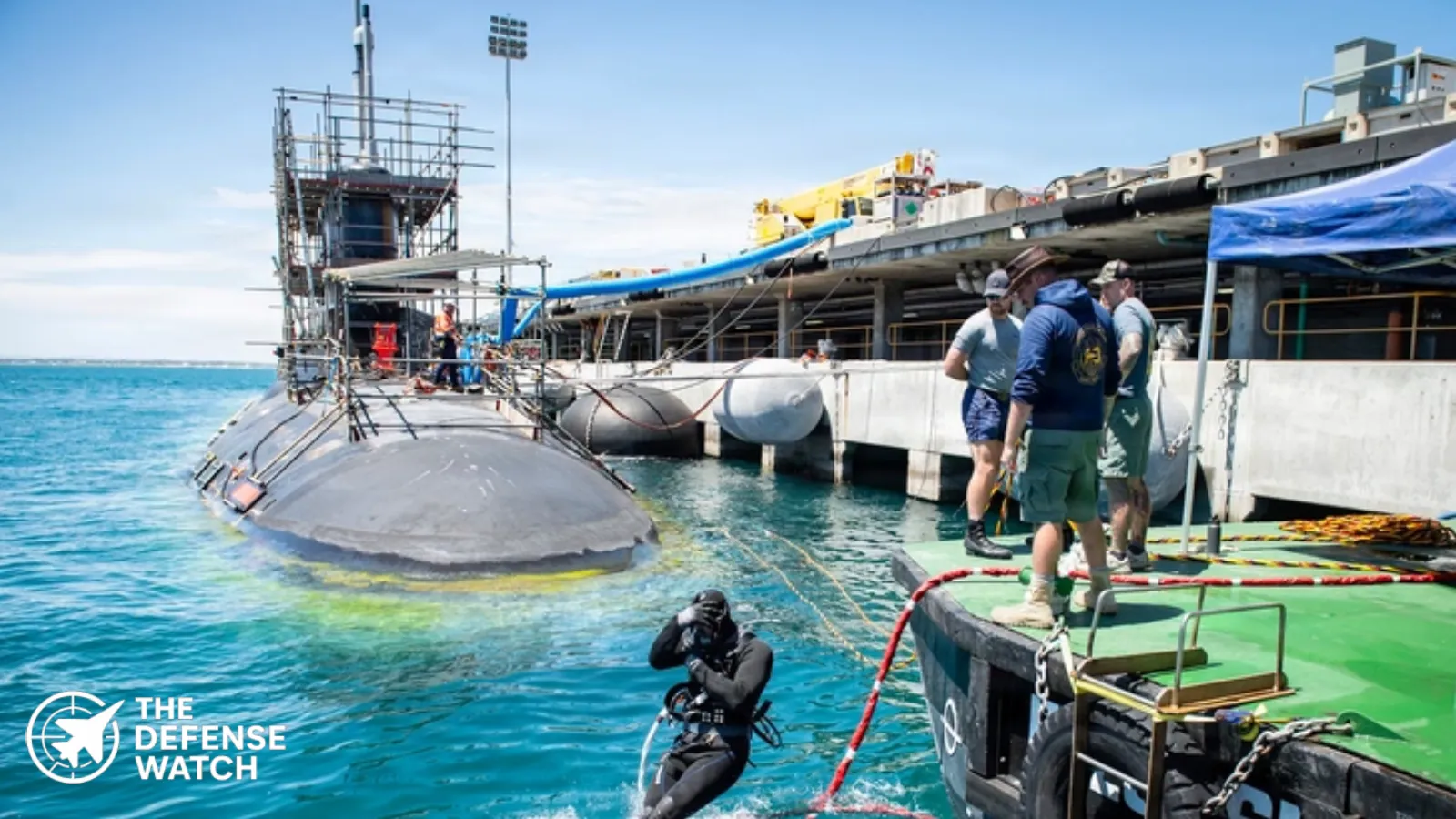
General Dynamics identifies the AN/BYG-1 as deployed across several U.S. Navy submarine classes, including Virginia, Los Angeles, Ohio and Seawolf, as well as the Royal Australian Navy’s Collins-class submarines. The company also lists the Columbia class in its system documentation.
Contract funding and delivery schedule
The $20,542,038 modification covers the exercise of an existing contract option. It is therefore an extension of an established procurement arrangement, rather than evidence of a new submarine combat system acquisition.
Work will be distributed across three locations:
| Location | Share of work |
|---|---|
| Manassas, Virginia | 80% |
| Middletown, Rhode Island | 10% |
| Chesapeake, Virginia | 10% |
The work is scheduled for completion by December 2027.
The Navy will use four funding sources:
| Funding source | Amount | Share |
|---|---|---|
| FY2027 Other Procurement, Navy | $2,010,779 | 51% |
| FY2025 Shipbuilding and Conversion, Navy | $1,377,750 | 35% |
| FY2027 Research, Development, Test and Evaluation | $372,749 | 9% |
| FY2026 Research, Development, Test and Evaluation | $185,625 | 5% |
A total of $3,946,903 will be obligated at the time of award. Of that amount, $185,625 will expire at the end of the current fiscal year.
NAVSEA in Washington, D.C., is the contracting activity.
Why submarine cybersecurity is a procurement priority
Modern submarines depend on interconnected software to combine sensor information, maintain tactical awareness and coordinate weapons operations. Keeping those systems secure and functional requires continuous software maintenance, testing and updates.
The Navy’s investment in AN/BYG-1 information assurance reflects this requirement. Cybersecurity measures must protect not only individual computers but also the software interfaces and networks connecting different combat system components.
General Dynamics describes its information assurance software as providing customizable security controls, including access permissions and intrusion detection. The company also identifies continuing research and development as part of its approach to addressing changing cyber threats. These are manufacturer descriptions, not independently verified performance assessments.
The wider importance of AN/BYG-1 extends beyond the U.S. submarine fleet. The system is also operated by Australia, while the U.S. Navy has discussed its relevance to future allied submarine interoperability.
In a February 2026 report, NAVSEA described demonstrations of AN/BYG-1 capabilities to British personnel and identified the system’s planned role in the SSN-AUKUS submarine design. The system’s inclusion in that design reflects the importance of common combat system architectures among the three AUKUS partners.
Part of a longer modernization effort
The latest modification follows years of investment in the AN/BYG-1 architecture.
General Dynamics has previously received Navy contracts for upgrades to the system’s weapons control functions and software technology insertion. A July 2015 company announcement, for example, described a $20 million contract modification covering AN/BYG-1 Weapons Control System modernization and advanced processing software for U.S. and Australian submarines.
More recently, the Navy has continued pursuing broader software modernization. A 2026 NAVSEA solicitation for AN/BYG-1 applications covers software development, testing, integration, delivery and lifecycle sustainment. This indicates that the Navy is addressing the combat system as an evolving software architecture rather than a fixed installation.
The $20.54 million option exercised for General Dynamics is a separate contract action. Publicly available award information does not establish that it covers the entire modernization effort or specify which submarine classes will receive the resulting information assurance software builds.
The distinction is important. The award supports a defined software requirement, but it does not establish a new operational capability, a fleet-wide deployment schedule or a specific cybersecurity performance improvement.
For the Navy, maintaining the security and reliability of AN/BYG-1 remains part of sustaining the digital systems that support submarine detection, tactical decision-making and weapons employment.
Enjoying our coverage?
Make The Defense Watch a preferred source on Google to see more of our geopolitical and defense insights when relevant to you.