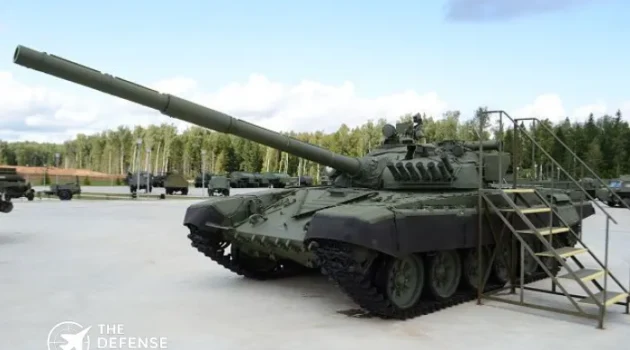
Executive Summary: Ukraine plans to transfer selected captured Russian T-72 tanks to museums in Lithuania, Latvia, Estonia, Denmark and the Netherlands. The vehicles will be demilitarized and displayed as historical evidence of Russia’s invasion, giving European audiences direct access to equipment recovered from the battlefield.
Ukraine Expands Museum Program For Captured Russian T-72 Tanks
Ukraine is preparing to send captured Russian T-72 tanks to museums in five European countries under a government-approved program designed to document the war and preserve physical evidence of Russia’s invasion. The planned transfers include museums in Lithuania, Latvia, Estonia, Denmark and the Netherlands.
Ukraine’s Cabinet of Ministers has approved a mechanism allowing selected captured or destroyed Russian military equipment to be transferred to foreign museums free of charge. The Ukrainian Ministry of Defence is involved in the program alongside the Ministry of Culture.
The equipment selected for museum use will not return to military service. Ukraine says the vehicles designated for exhibition are no longer combat-capable and contain no explosive components, allowing them to be displayed safely.
The decision gives captured armored vehicles a second role after their battlefield use. Instead of being retained for military purposes, selected examples can become physical records of the conflict for visitors, researchers and future generations.
Five European Countries Set To Receive Tanks
The first announced recipients are museums in Lithuania, Latvia, Estonia, Denmark and the Netherlands.
The selection is significant because all five countries are European partners that have maintained close political and security ties with Ukraine during the war. The Baltic states, in particular, have consistently emphasized the security implications of Russia’s military actions in Europe.
For museums, the arrival of an actual Russian T-72 provides an opportunity to explain the conflict through a physical artifact rather than photographs, video footage or written accounts alone.
The Ukrainian government says the program is intended to provide foreign audiences with physical evidence of equipment used during the war and support broader efforts to document its consequences.
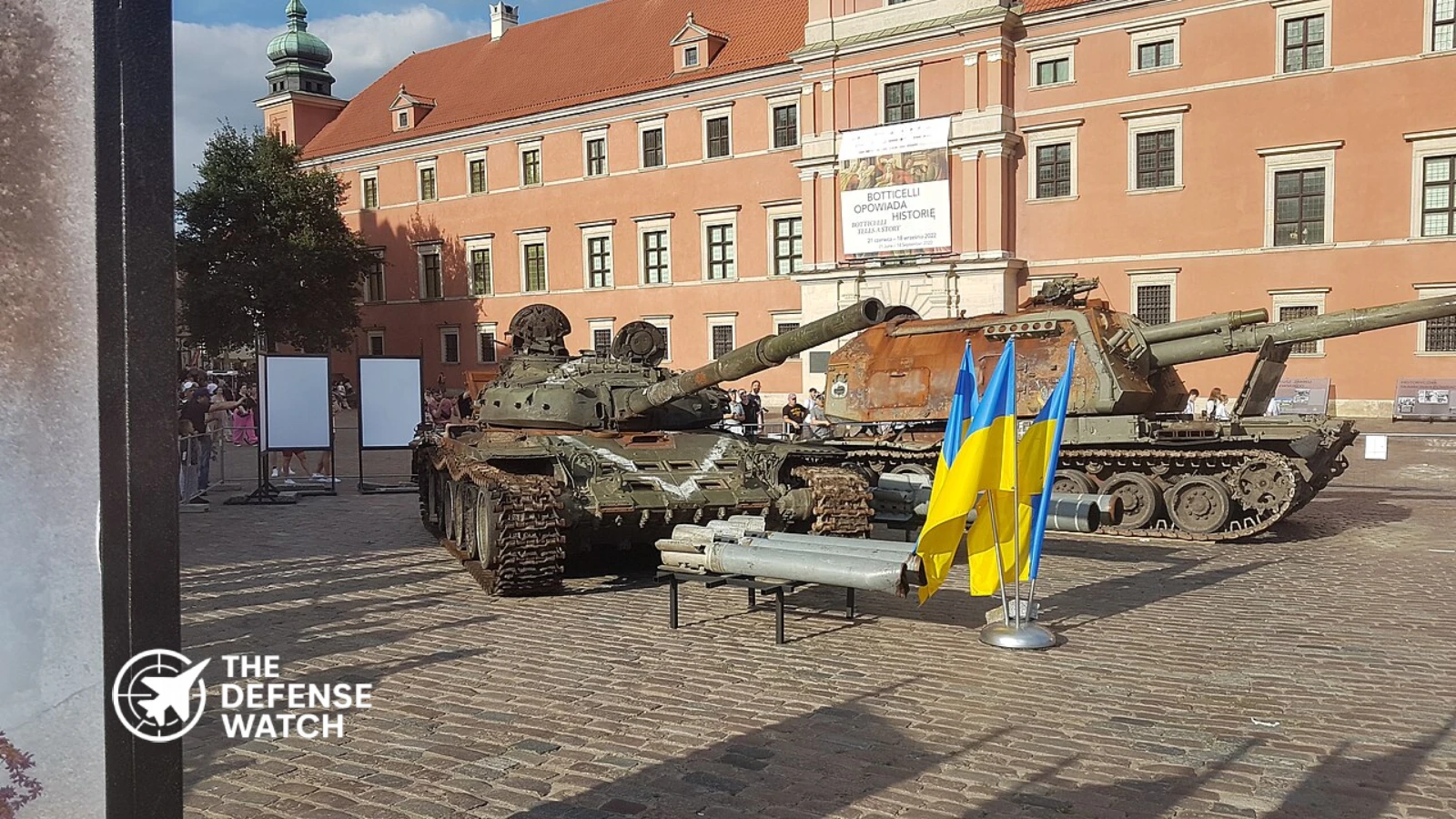
This approach also builds on Ukraine’s earlier use of captured and destroyed Russian equipment in public exhibitions.
In 2022, Ukraine’s Ministry of Internal Affairs organized an open-air exhibition in Kyiv featuring captured and destroyed Russian equipment. The display included a Russian T-72B3, a Pantsir-S1 air-defense system and other vehicles. Similar exhibitions later appeared in several European capitals.
Ukraine’s Ministry of Internal Affairs exhibition record
Why The T-72 Matters
The T-72 is one of the most widely recognized Soviet-designed main battle tanks and remains an important part of Russia’s armored force.
Its basic design dates to the Soviet period, but Russia has operated and modernized numerous versions, including the T-72B3 and other upgraded variants. The platform has also been used extensively by Ukraine, making the T-72 an important example of the armored technology shared across the region.
The war has demonstrated that the value of a tank is not determined solely by its armor, gun or mobility. Modern armored warfare increasingly involves drones, electronic warfare, mines, precision weapons and persistent battlefield surveillance.
That makes captured vehicles valuable for more than their historical significance. Intact or partially intact equipment can provide technical information about enemy configurations, components and battlefield modifications.
Ukraine has already created a separate mechanism for this purpose.
Museum Displays Differ From Technical Exploitation
In June 2026, Ukraine launched TrophyLab, a government platform intended to provide approved foreign governments, defense companies and research organizations with technical information derived from captured Russian equipment.
Defense News reported that the platform contained more than 115 samples of seized Russian equipment across 79 categories, supported by more than 225 studies. Access is controlled and intended for vetted organizations.
Defense News coverage of Ukraine’s TrophyLab program
The museum program serves a different purpose.
TrophyLab is focused on technical examination and defense research, while the overseas museum transfers are primarily intended for public education and historical documentation. The distinction is important because the tanks selected for museums are being removed from combat use.
From a defense perspective, the two initiatives show how captured equipment can serve different functions after battlefield recovery. Some systems may contribute to technical intelligence, while others can be preserved as historical evidence.
A Growing Record Of Russian Equipment
Ukraine has accumulated substantial quantities of captured Russian military equipment during more than four years of full-scale war.
Ukrainian airborne forces, for example, documented the capture of Russian armored vehicles during fighting in the Kursk region in 2024, including T-72 tanks alongside newer Russian platforms.
Captured equipment has also been returned to Ukrainian military units when its condition made continued operational use practical. In September 2025, Ukrainian authorities reported that two captured Russian T-72 variants had been transferred to an Armed Forces unit after being seized during operations in the Donetsk region.
The contrast between those vehicles and the tanks selected for museums illustrates an important point. A captured tank is not automatically a museum piece. Its destination depends on its condition, military value, technical usefulness and the government’s decision on how it should be used.
The museum scheme specifically concerns equipment that Ukraine has determined should be preserved for exhibition rather than returned to combat.
Museums Become Part Of The War’s Historical Record
The planned transfers also reflect a broader effort to preserve material evidence of the conflict outside Ukraine.
The Tank Museum in Britain has already incorporated the Ukraine war into its educational work. Its 2025 exhibition, Ukraine: Armoured Warfare in the Modern World, included a Russian T-72 and a British Challenger 2 to help visitors understand the armored warfare dimension of the conflict.
The Tank Museum’s Ukraine exhibition
For European museums, displaying a captured Russian tank can provide visitors with a tangible connection to a conflict taking place on the continent. It can also help preserve details that may otherwise disappear as damaged vehicles are scrapped, repaired or returned to operational use.
The historical value is likely to increase over time. Battlefield photographs and digital records can document when and where a vehicle was captured or destroyed, but a preserved vehicle allows future visitors to examine its physical characteristics directly.
What The Program Means For Ukraine
The transfer of captured Russian T-72 tanks is unlikely to have a major direct effect on Ukraine’s battlefield strength because the vehicles selected for museums are already considered unsuitable for combat.
Its importance is instead political, educational and historical.
For Kyiv, distributing captured Russian equipment among partner countries creates a network of physical evidence of the war. It also gives museums in those countries an opportunity to explain the conflict through equipment recovered from the battlefield.
The program may also strengthen cooperation between Ukrainian institutions and European museums. Ukraine’s government says the mechanism could be used for additional captured or destroyed Russian equipment in the future.
That could eventually produce a wider collection covering tanks, armored vehicles, artillery systems, electronic warfare equipment and other military hardware used during the conflict.
For now, the T-72 is the most visible symbol of the initiative. Once demilitarized and transferred, these captured Russian tanks will move from the battlefield into museum collections, where their purpose will shift from combat to documentation.
The Bottom Line
Ukraine’s decision to transfer captured Russian T-72 tanks to museums in five European countries marks another stage in the effort to preserve physical evidence of the war.
The program is separate from Ukraine’s technical exploitation of captured Russian equipment and focuses instead on public education, historical preservation and international documentation.
The planned displays will also give European audiences direct access to a type of tank that has played a major role in the war. As the conflict continues, such vehicles are likely to become increasingly important historical artifacts, helping museums document how conventional armored warfare has evolved under the pressure of drones, precision weapons and modern surveillance.