
U.S. Army Launches Rapid-Response Anti-Drone Team
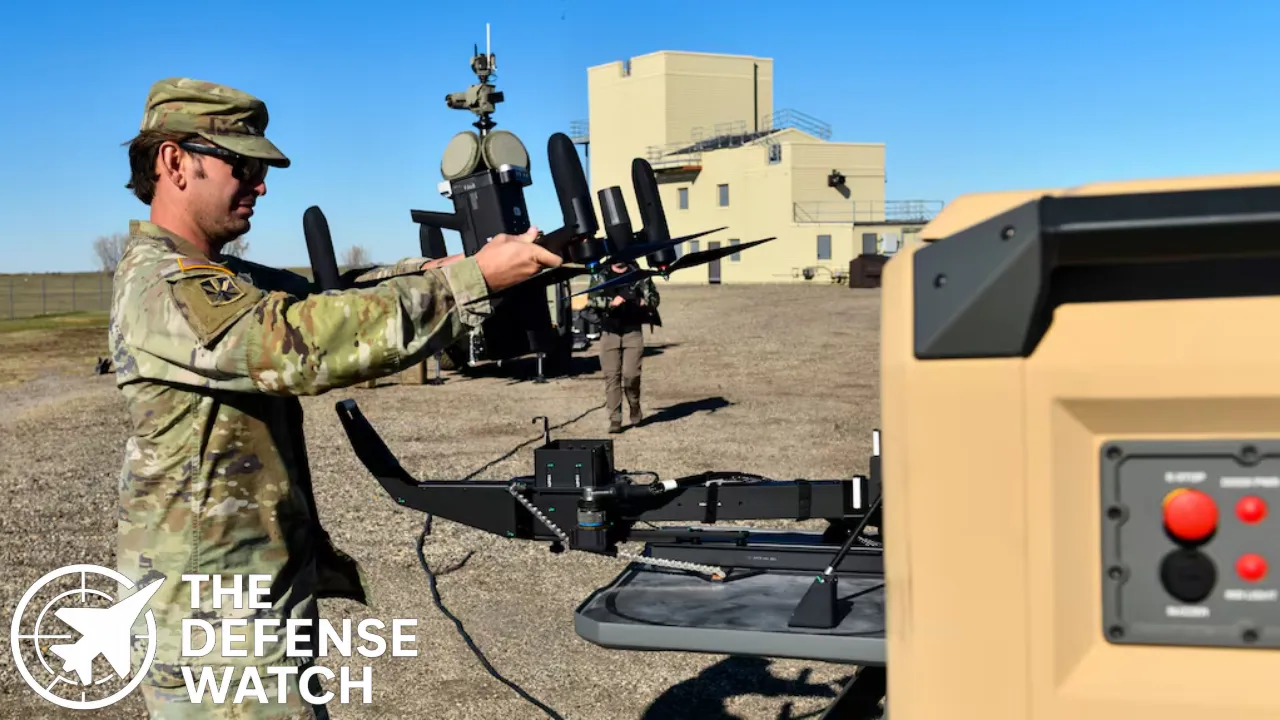
The U.S. Army, in coordination with U.S. Northern Command (USNORTHCOM), has officially certified a specialized team to counter small unmanned aerial systems (sUAS) threatening domestic military installations. Following rigorous field exercises in Florida and North Dakota, this unit of 11 soldiers has been declared operational, marking a significant advancement in the Army’s domestic drone defense capabilities.
“The validation and certification of our Counter-small UAS fly-away kit is an important step in supporting installation commanders across the United States against drone incursions,” said Gen. Gregory Guillot, USNORTHCOM commander, emphasizing the team’s rapid-deployment capability.
Counter-sUAS Fly-Away Kit: Advanced Technology in Action
The team is equipped with the Counter-small UAS fly-away kit, developed by Anduril Industries. This integrated system combines layered sensors and effectors to detect, track, and neutralize rogue drones from multiple directions.
Key components include:
- Wisp: An AI-driven infrared sensor providing 360-degree motion detection.
- Pulsar: An AI-enhanced electromagnetic warfare platform capable of identifying and disrupting electronic threats.
- Heimdal Mobile Sensor Trailer: Utilizes thermal optics and radar to detect incoming drones.
- Anvil Interceptor: A self-guided aerial system capable of physically colliding with or destroying intruding drones, including variants with high explosives.
This layered technology allows the team to deploy rapidly and employ both non-kinetic and low-collateral kinetic measures, enhancing base protection without significant risk to personnel or infrastructure.
Training and Operational Success
The certification followed Exercise Falcon Peak 25.2, conducted in September. During the exercise, the team defended key sites such as the 5th Bomb Wing at Minot Air Force Base, successfully neutralizing more than 100 drones over several days. Operators, many of whom had no prior drone experience, demonstrated adaptability and proficiency with the new system, according to Chief Warrant Officer 3 Joey Frey, program manager for NORTHCOM’s counter-sUAS initiative.
“This team far exceeded expectations, learning complex air defense tactics in just 30 days,” Frey noted.
Analysis: Strategic Implications for U.S. Domestic Security
The establishment of an operational counter-drone unit underscores the growing recognition of sUAS threats within U.S. airspace. With commercial drones becoming increasingly accessible, the potential for accidental or malicious incursions poses a significant risk to military and critical infrastructure. The integration of AI-powered detection and kinetic interception represents a shift toward rapid, automated response capabilities, aligning with broader defense modernization efforts.
This development also demonstrates the U.S. military’s focus on multi-domain defense, combining cyber, electronic warfare, and traditional kinetic tools into cohesive countermeasures. By deploying small, highly trained teams capable of swift intervention, the Army strengthens domestic resilience against asymmetric threats.
Future Outlook
As drone technology evolves, counter-UAS strategies will likely expand to include swarming drone threats, stealth detection, and more automated engagement protocols. The certified team serves as a model for potential scaling across other U.S. military installations, potentially becoming a template for allied forces facing similar domestic drone challenges.
FAQs
It is an integrated system of sensors and interceptors designed to detect, track, and neutralize rogue drones around military bases.
The operational team consists of 11 certified soldiers.
The kit includes AI infrared sensors (Wisp), electromagnetic warfare systems (Pulsar), mobile sensor trailers (Heimdal), and Anvil drone interceptors.
Exercises were conducted in Florida and North Dakota, including Minot Air Force Base.
While initially focused on individual threats, future upgrades are expected to enhance swarm response capabilities.
Get real time update about this post category directly on your device, subscribe now.

1 comment
[…] use of shotguns as anti-drone weapons is not unique to Russia. Other militaries, including NATO members, have experimented with similar […]