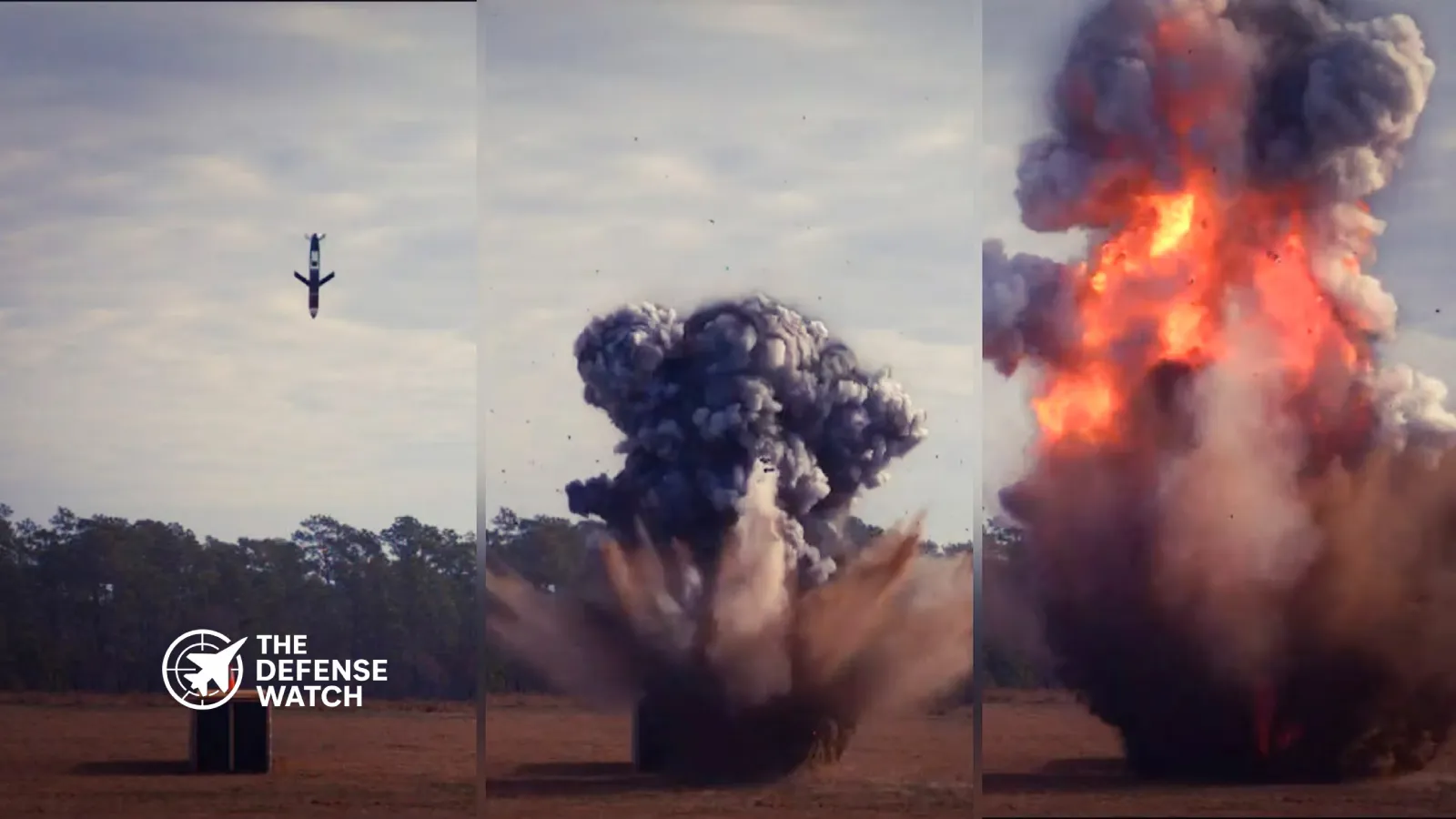
PAC-3 MSE Production Enters a New Expansion Phase
Lockheed Martin is significantly expanding PAC-3 MSE production while introducing a lower-cost interceptor intended to complement the Patriot family, according to company announcements and U.S. Army acquisition documents. The effort comes as the United States and NATO members seek larger inventories of air and missile defense interceptors and greater resilience across the defense industrial base.
- PAC-3 MSE Production Enters a New Expansion Phase
- Takeaways
- PAC-3 ACE Adds a Lower-Cost Layer
- Why Production Capacity Matters
- NATO’s Missile Defense Industrial Base Is Also Changing
- The Cost Equation Is Becoming More Important
- The U.S. Is Building a Larger Interceptor Base
- What PAC-3 ACE Could Mean for Allied Defense
- A Broader Shift in Missile Defense Procurement
Takeaways
Lockheed Martin is pursuing a two-track approach to expand allied air and missile defense capacity, combining sharply increased PAC-3 MSE production with the newly introduced lower-cost PAC-3 ACE interceptor.
The centerpiece is a seven-year U.S. Army procurement framework that raises the ceiling for PAC-3 MSE production to $58.62 billion. The July 2026 modification provides up to $53.86 billion in additional contract authority on top of a $4.7 billion action awarded in April. The Army said the arrangement is designed to provide industry with a predictable demand signal for labor, raw materials and manufacturing investment.
Lockheed Martin says the program is intended to reach roughly 2,000 PAC-3 MSE interceptors per year under the broader seven-year production agreement, compared with approximately 600 annually at the beginning of the acceleration effort. The company has also said that production capacity is expected to triple by the end of 2030.
PAC-3 ACE Adds a Lower-Cost Layer
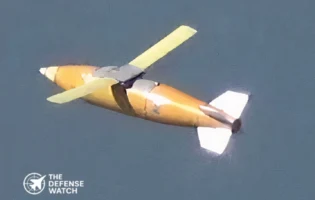
The second part of the strategy is the PAC-3 ACE, or Adapted Capability Effector. Lockheed Martin introduced the interceptor at the Farnborough International Airshow in July 2026, describing it as a lower-cost weapon designed to defeat a broad range of air and missile threats.
The company says PAC-3 ACE will cost less than half the unit price of PAC-3 MSE. Rather than creating an entirely separate air-defense architecture, Lockheed Martin says ACE is built around the proven PAC-3 fire-control system and is linked to the Patriot weapon system and the Integrated Battle Command System, or IBCS.
That distinction matters operationally.
Developing a cheaper interceptor that can operate within an existing command-and-control architecture can potentially reduce the need for allies to establish an entirely new air-defense ecosystem. It also creates the possibility of using different interceptor types according to the threat, mission and cost of engagement.
Lockheed Martin has not presented PAC-3 ACE as a replacement for PAC-3 MSE. Instead, the company describes it as a complementary effector. That approach allows the MSE to remain the higher-end interceptor while ACE is positioned to expand the number of affordable interceptors available to Patriot users.
Why Production Capacity Matters
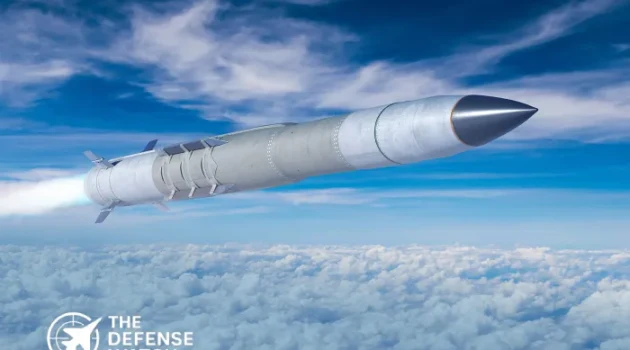
The PAC-3 MSE is a hit-to-kill interceptor. Unlike traditional surface-to-air missiles that primarily depend on a fragmentation warhead, PAC-3 MSE uses kinetic impact to destroy incoming threats.
The U.S. Army describes the interceptor as capable of engaging tactical ballistic missiles, cruise missiles and aircraft. Army budget documents also identify its integration with Patriot and IBCS, while the U.S. system has demonstrated integration with the THAAD architecture.
Its role has therefore expanded beyond a conventional point-defense missile. PAC-3 MSE forms part of a layered architecture in which sensors, command systems, launchers and different interceptor types work together.
That architecture creates a basic industrial challenge: an interceptor can only provide protection if enough rounds are available.
The Army increased the maximum annual PAC-3 MSE production rate from 550 to 650 missiles in 2024. The service subsequently moved toward a much larger multiyear production model as demand increased.
The latest procurement framework represents a substantially different scale.
PAC-3 MSE Production Indicator Current Position Earlier annual production target 550 missiles Increased annual production rate 650 missiles Earlier production level cited by Lockheed Martin About 600 annually Long-term production capacity target About 2,000 annually July 2026 multiyear ceiling $58.62 billion Additional July 2026 contract authority Up to $53.86 billion Production expansion target Triple capacity by end of 2030 The figures show that the U.S. approach is moving from incremental production increases toward a sustained industrial expansion.
NATO’s Missile Defense Industrial Base Is Also Changing
The production effort is not limited to Lockheed Martin facilities in the United States.
Lockheed Martin has been expanding European participation in the PAC-3 MSE supply chain. In Spain, Grupo Oesía and Sener are developing production capabilities for specialized components, including cables, harnesses and actuators. Sener’s new facility is scheduled to support PAC-3 MSE component production from 2027.
The company has also identified Germany and Poland as parts of its wider European industrial network for PAC-3 MSE.
At the July 2026 NATO Summit Defense Industry Forum in Ankara, the United States, Germany, the Netherlands, Poland and Sweden signed a joint statement of intent concerning a potential European PAC-3 missile maintenance facility. The proposed facility would support maintenance, recertification and repair within Europe.
This is important because missile defense readiness depends on more than manufacturing new interceptors.
A deployed interceptor eventually requires inspection, testing, maintenance and, where applicable, recertification. Establishing more sustainment capacity inside Europe could reduce reliance on transatlantic logistics for some activities and make it easier for NATO members to maintain readiness.
The Cost Equation Is Becoming More Important
Air and missile defense has a difficult economic problem.
An interceptor may be considerably cheaper than the missile or aircraft it is defending against, but repeated engagements can still consume expensive stocks quickly. The problem becomes more acute when an adversary employs large numbers of relatively inexpensive systems.
This is where PAC-3 ACE could become significant if the program reaches operational production.
The publicly announced concept does not eliminate the need for high-performance interceptors. Instead, it points toward a layered inventory in which expensive, highly capable weapons are complemented by cheaper rounds where appropriate.
The result could be a broader magazine without requiring every engagement to use the most expensive available interceptor.
However, the ultimate value of that approach will depend on testing, production maturity, integration, reliability and the actual cost of the complete engagement chain. A lower missile price alone does not guarantee lower overall defense costs if additional sensors, launchers, software or sustainment requirements offset the savings.
The U.S. Is Building a Larger Interceptor Base
The PAC-3 expansion is part of a broader U.S. effort to increase missile production.
The Army’s fiscal 2027 budget documents include funding for 2,798 PAC-3 MSE missiles, consisting of 244 discretionary and 2,554 mandatory procurements. The same budget material calls for major increases in THAAD interceptor production and additional investment in lower-tier air and missile defense sensors.
This suggests that the production strategy is increasingly centered on inventory depth rather than simply maintaining existing manufacturing rates.
For the United States, that has implications across multiple theaters. Patriot systems are operated by numerous allies, and PAC-3 MSE has become an important element of allied air and missile defense procurement.
Lockheed Martin currently lists 17 partner nations for PAC-3 and more than 2,500 PAC-3 MSE interceptors produced.
As more countries acquire Patriot and PAC-3, production capacity becomes a collective NATO concern rather than only a U.S. procurement issue.
What PAC-3 ACE Could Mean for Allied Defense
The most important feature of PAC-3 ACE is therefore not simply its claimed lower unit cost.
Its potential significance lies in the possibility of expanding the number of interceptors available within an established Patriot ecosystem.
If the interceptor can meet its stated performance and integration objectives, allied operators could gain another option for managing different classes of threats while continuing to use PAC-3 MSE for missions requiring its full capability.
That would support a broader principle increasingly visible in U.S. missile-defense procurement: magazine depth matters alongside interceptor performance.
The challenge will be turning that concept into a reliable production program. New suppliers must meet strict quality requirements, production lines must achieve consistent throughput, and the weapon must complete the necessary development and testing before operational adoption.
The PAC-3 MSE expansion is further along that path. The Army has already established multiyear procurement arrangements and is investing in the industrial capacity required to support substantially higher output.
PAC-3 ACE is earlier in its development cycle.
A Broader Shift in Missile Defense Procurement
Taken together, the PAC-3 MSE expansion and PAC-3 ACE announcement point toward a change in how the United States and its allies are approaching missile defense.
The emphasis is no longer limited to improving the performance of individual interceptors. Production volume, supply-chain resilience, European industrial participation, maintenance capacity and cost per engagement are becoming equally important considerations.
For NATO, that approach could help address one of the central problems of modern air defense: maintaining enough interceptors to remain effective during sustained, high-intensity operations.
For the United States, the PAC-3 program also demonstrates how multiyear contracting can be used to give defense manufacturers the demand visibility needed to expand factories, recruit workers and secure critical suppliers.
The immediate objective is straightforward: produce more PAC-3 MSE interceptors.
The longer-term objective is broader: create an air and missile defense industrial base capable of producing a larger number of interceptors, supporting them across their service lives and giving U.S. and allied forces more options for matching the cost and capability of defensive weapons to the threats they face.