
L3Harris Expands VAMPIRE Counter-Drone Arsenal With European Munitions Partnership
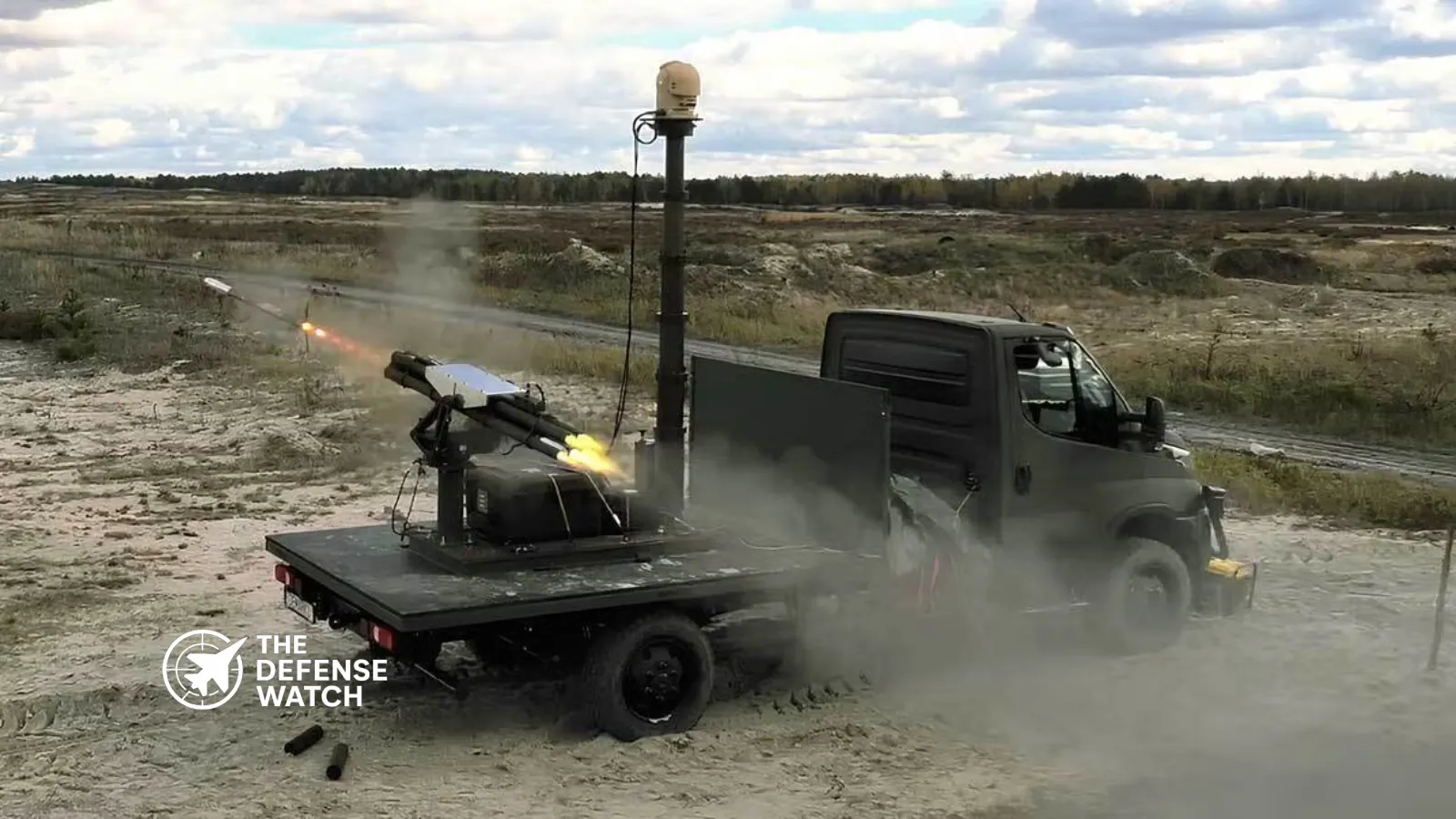
L3Harris Technologies has successfully integrated its VAMPIRE counter-unmanned aircraft system with Thales Belgium’s FZ275 laser-guided rockets, marking a significant expansion of the platform’s operational flexibility. The live-fire demonstration conducted at a Polish military installation validates the system’s ability to rapidly incorporate different weapon types to meet diverse mission requirements.
During the February 2026 test event, the VAMPIRE system destroyed multiple ground targets using Thales’ 70mm FZ275 rockets launched from an FZ605 rocket launcher. The demonstration showcased the integration of L3Harris’ WESCAM MX-10D electro-optical/infrared targeting system and Widow mission management software with Belgian-manufactured precision munitions, achieving what officials described as high accuracy against stationary targets.
Technical Integration Demonstrates Rapid Weapon System Adaptation
The Poland demonstration represents more than a simple weapons test. L3Harris engineers integrated three distinct technologies—the VAMPIRE platform, WESCAM targeting sensors, and Thales rocket systems—in a compressed timeframe designed to prove the system’s modular architecture.
Tom Kirkland, President of Targeting and Sensor Systems at L3Harris, emphasized the operational significance during the announcement. The company’s approach allows military customers to select from multiple munition options based on specific mission parameters, threat environments, and logistical considerations. This modularity addresses a critical requirement as European nations enhance border security capabilities and prepare for evolving drone threats.
The FZ275 represents a proven European munition option that complements existing VAMPIRE weapon configurations. The 70mm laser-guided rocket provides precision strike capability against small unmanned aircraft systems and light ground targets, adding to the platform’s engagement envelope without requiring extensive system redesign.
VAMPIRE Family Expansion Addresses Multi-Domain Threats
L3Harris announced six new VAMPIRE variants in October 2025, expanding the original counter-UAS concept into land, maritime, air, and electronic warfare configurations. This diversification reflects the evolving nature of unmanned threats across multiple operational domains.
The expanded family incorporates additional sensor packages, precision weapons, electronic countermeasures, and non-kinetic effects. Each variant maintains the core VAMPIRE architecture while optimizing for specific mission sets. The land variants demonstrated in Poland focus on ground-based counter-UAS operations, while maritime configurations address threats to naval vessels and coastal installations.
Artificial intelligence and machine learning capabilities feature prominently in the latest VAMPIRE iterations. In September 2025, L3Harris partnered with Shield AI to demonstrate AI-enhanced drone detection systems capable of identifying hostile unmanned aircraft at extended ranges, even when targets are partially obscured by terrain or weather conditions. These technologies reduce operator workload and improve engagement timelines in complex electromagnetic environments.
Advanced Targeting Systems Enable Precision Engagement
The WESCAM MX-Series electro-optical/infrared systems provide continuous surveillance and targeting capabilities for VAMPIRE platforms. These multi-spectral sensors offer stabilized imaging across visible and infrared wavelengths, enabling operators to detect, track, and engage small unmanned threats regardless of lighting conditions.
L3Harris has delivered more than 8,000 WESCAM MX-Series systems to nearly 90 countries worldwide. The sensors equip more than 280 different platform types, from fixed-wing aircraft to ground vehicles. This extensive fielding history provides a mature technology base for VAMPIRE integration efforts.
The MX-10D variant demonstrated in Poland represents a compact targeting solution suitable for vehicle-mounted applications. Its integration with the Widow mission management software creates a unified operator interface that simplifies target engagement procedures and reduces training requirements.
European Security Requirements Drive System Development
The Poland demonstration directly supports Europe’s Readiness 2030 initiative, which emphasizes enhanced military capabilities and cross-border interoperability. European nations face increasing drone-related security challenges ranging from border surveillance to critical infrastructure protection.
L3Harris’ decision to integrate Thales munitions reflects strategic considerations beyond technical compatibility. European defense customers frequently prefer indigenous or European-sourced weapons systems for logistical, industrial, and political reasons. The FZ275 rocket manufactured in Belgium provides a NATO-compatible munition option that aligns with European defense industrial objectives.
The demonstration also validates VAMPIRE’s ability to operate within existing European military logistics networks. Rather than requiring completely new ammunition supply chains, the system can leverage established rocket inventories and maintenance infrastructure already supporting European forces.
Counter-UAS Market Responds To Growing Threat Environment
Small unmanned aircraft systems have proliferated across military and commercial sectors, creating new security challenges for defense forces worldwide. Recent conflicts have demonstrated the effectiveness of small drones for reconnaissance, targeting, and direct attack missions, prompting accelerated development of counter-UAS technologies.
The VAMPIRE system addresses this threat through kinetic and non-kinetic options. While the Poland test focused on rocket-based engagement, the platform’s modular design accommodates electronic warfare systems, directed energy weapons, and other emerging counter-drone technologies.
L3Harris’ approach emphasizes affordability alongside effectiveness. Precision-guided rockets like the FZ275 offer a cost-effective engagement option compared to surface-to-air missiles traditionally used for airborne threats. This economic consideration becomes critical when defending against swarms of inexpensive commercial drones modified for military purposes.
Integration Timeline Highlights Engineering Flexibility
The rapid integration of Thales munitions into the VAMPIRE platform demonstrates L3Harris’ engineering capabilities and the system’s open architecture design. Defense contractors typically require months or years to integrate new weapons onto existing platforms due to software, safety, and testing requirements.
L3Harris officials indicated the Poland demonstration occurred relatively quickly after initial integration work began, though specific timelines were not disclosed. This responsiveness addresses a key military requirement: the ability to adapt weapon systems as threats evolve without lengthy development programs.
The test series in Poland included multiple engagement scenarios against various target types. Operators demonstrated the system’s ability to transition between targets, adjust engagement parameters, and maintain accuracy across different ranges and environmental conditions.
Platform Versatility Expands Operational Applications
VAMPIRE’s vehicle-agnostic design enables deployment on numerous ground platforms. Previous demonstrations have shown the system mounted on pickup trucks, military transport vehicles, and specialized tactical platforms like GM Defense’s Infantry Squad Vehicle.
This platform flexibility provides military customers options for integrating counter-UAS capabilities into existing vehicle fleets without requiring purpose-built systems. Forces can select mounting platforms based on mobility requirements, protection levels, and mission-specific needs.
The Poland test utilized an unspecified ground vehicle platform, maintaining focus on the weapon integration rather than the carrier vehicle. This approach reflects L3Harris’ emphasis on modular components that function across different base platforms.
Global WESCAM Fielding Supports System Maturity
L3Harris leverages decades of WESCAM sensor development and operational experience for VAMPIRE applications. The company’s targeting systems have accumulated millions of operational hours across military and civilian applications worldwide, providing extensive reliability data and proven performance.
This fielding history reduces technical risk for new VAMPIRE customers. Rather than adopting immature sensor technologies, military forces gain access to targeting systems already validated in combat and demanding operational environments. The sensors’ multi-spectral capabilities and stabilization performance have been refined through continuous customer feedback and technology upgrades.
WESCAM systems support intelligence, surveillance, reconnaissance, and target acquisition missions beyond counter-UAS operations. This versatility enables VAMPIRE-equipped platforms to perform additional mission sets when not engaged in drone defense, improving overall capability utilization and return on investment.
Future Development Paths Signal Continued Evolution
L3Harris continues expanding VAMPIRE capabilities through ongoing development programs and partnership initiatives. The company’s roadmap includes enhanced sensor integration, additional weapon options, improved artificial intelligence algorithms, and network-centric operations capabilities.
The Thales partnership demonstrated in Poland may represent the first of multiple European defense industry collaborations as L3Harris pursues international markets. Similar integration efforts with other munition manufacturers could provide customers additional weapon choices tailored to regional preferences and existing inventories.
Electronic warfare variants of VAMPIRE incorporate jamming and spoofing technologies to defeat drones through non-kinetic means. These systems complement kinetic weapons by providing engagement options in environments where physical projectiles pose unacceptable collateral damage risks or when ammunition conservation is necessary.
The integration of artificial intelligence technologies promises to accelerate target detection and engagement processes. Machine learning algorithms can analyze sensor data more rapidly than human operators, identifying drone threats earlier and recommending optimal engagement solutions. These capabilities become increasingly important as adversaries deploy drone swarms requiring simultaneous engagement of multiple targets.
Get real time update about this post category directly on your device, subscribe now.
