
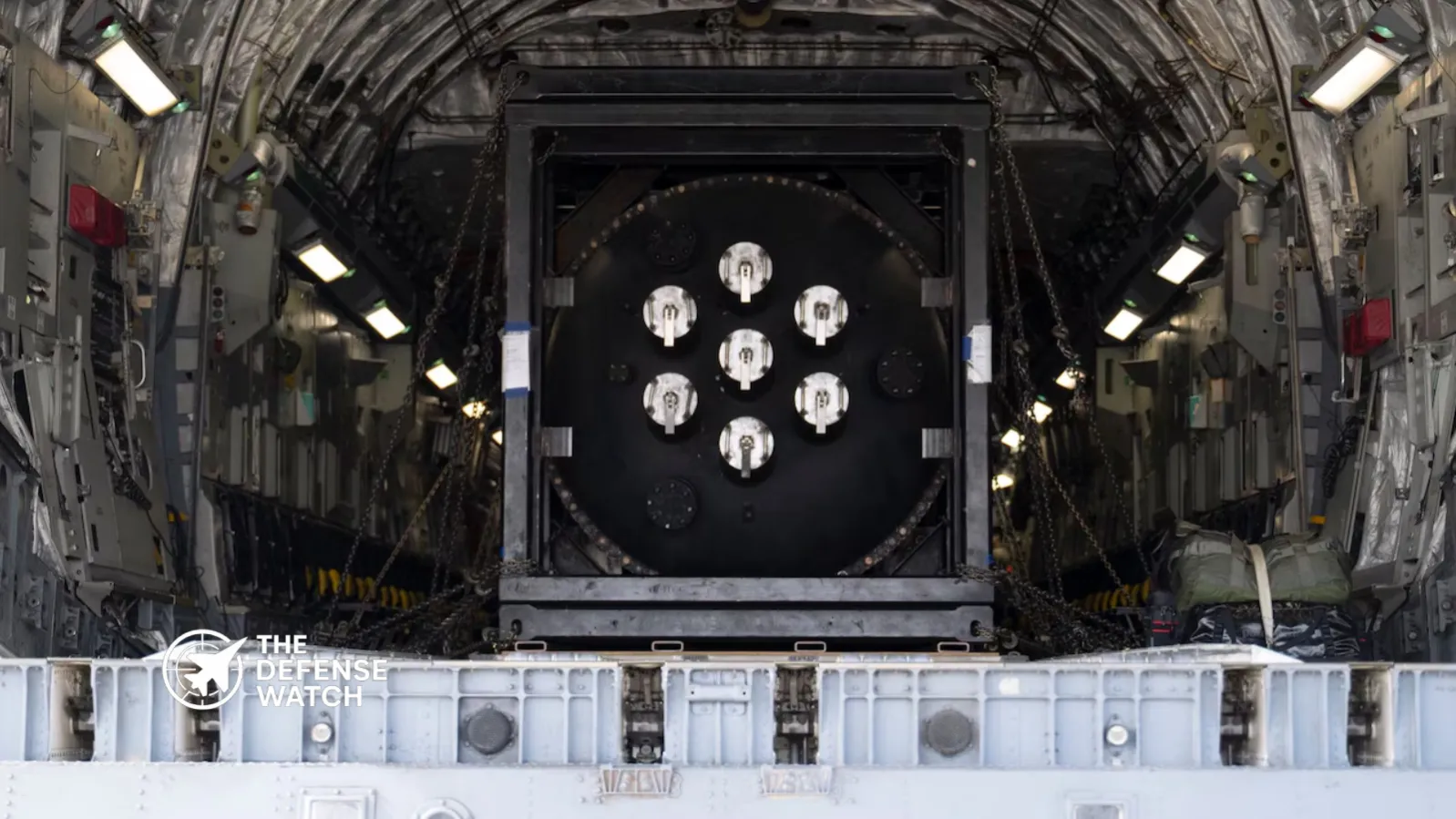
Military Nuclear Power Initiative Begins Reactor Transport
The War and Energy Departments began a key step in the military nuclear power initiative as a next-generation nuclear microreactor was loaded onto a C-17 transport aircraft at March Air Reserve Base, California, Feb. 15, 2026. That reactor is headed to Hill Air Force Base, Utah, for evaluation and testing under the joint effort to build resilient base power systems.
Reactor Airlift Marks First Phase in Nuclear Power Push
The reactor, known as the Ward 250, is a compact unit capable of about 5 megawatts of power, roughly enough to serve 5,000 homes if used in a civilian grid setting. Military planners see potential for such units to reduce dependence on local power grids and boost military base energy resilience both in the United States and at forward operating locations overseas.
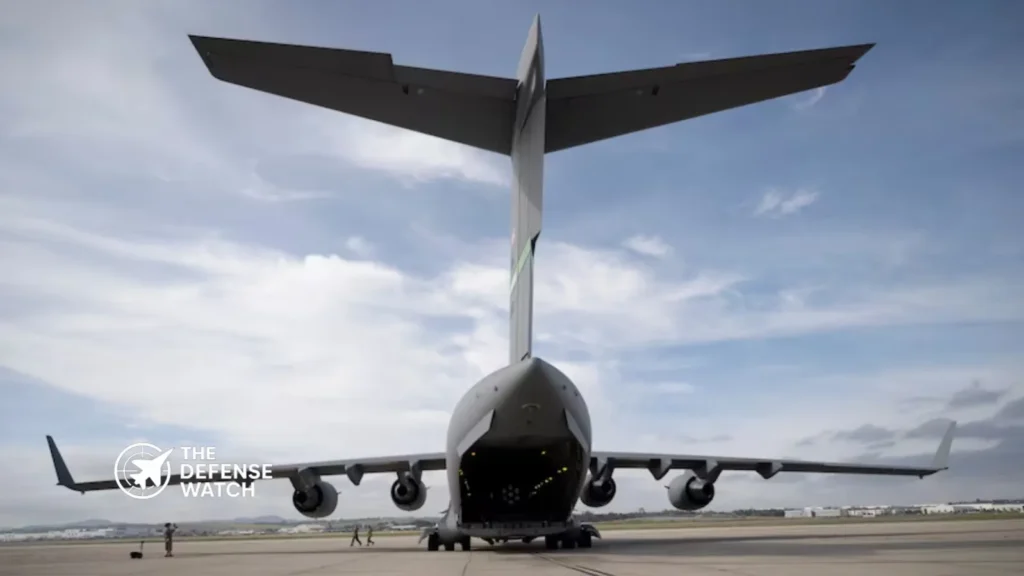
Officials from both departments described this operation as a milestone in expanding American nuclear power for national security uses. Michael Duffey, Undersecretary of War for Acquisition and Sustainment, said close coordination with the Department of Energy is essential to advancing the nation’s nuclear energy posture.
National Policy Drives Nuclear Power Deployment
The initiative aligns with a series of executive orders signed by President Donald J. Trump in May 2025 designed to modernize and accelerate development of advanced nuclear technologies for national security. These orders include directing reform of regulatory processes and setting deployment goals for advanced reactors at military installations.
Chris Wright, Secretary of Energy, said the United States aims to spark a nuclear energy renaissance by working with private innovation and capital to overcome past barriers to deployment. He noted expectations that three small reactors could be operational or in advanced test phases by July 4, 2026.
Broader Context And Long-Range Plans
The Pentagon and Army have been exploring nuclear microreactors as part of broader energy resilience plans. The Janus Program is an Army-led effort to bring secure, on-site nuclear power to installations by 2028, supported by the Department of Energy and commercial partners.
Officials have discussed potential deployments at multiple bases and have sought commercial designs capable of reliable, resilient production. Microreactors are defined by their small size compared with traditional reactors yet are large enough to power entire facilities independently.
Why Nuclear Power Matters For Bases
Military energy demand is rising as installations adopt artificial intelligence systems, directed-energy weapons, cyber infrastructure, and other high-power systems. Traditional civilian power grids were not designed for this load or threat environment. On-site nuclear power could help reduce vulnerabilities tied to grid failures, fuel supply disruptions, and natural disasters.
What Comes Next
The Ward 250 will be transported from Hill Air Force Base to the Utah San Rafael Energy Lab for detailed analysis and testing. Officials say findings will help shape how future reactors are designed and deployed.
Longer-term plans under the Janus Program envision fielding multiple microreactors at U.S. Army bases by the late 2020s. These efforts reflect growing emphasis on resilient power independent of local grids.
Get real time update about this post category directly on your device, subscribe now.
