US Stockpiles Massive Bunker Busters To Strengthen Deep Strike Arsenal
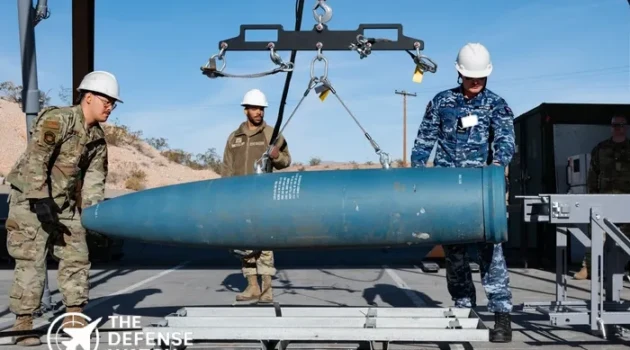
The United States is expanding its inventory of massive bunker busters, reinforcing its ability to strike hardened and deeply buried targets. Recent procurement activity shows continued investment in the GBU 57 Massive Ordnance Penetrator, the largest conventional bunker busting bomb in the US arsenal.
According to budget documents and defense reporting, the US Department of Defense has allocated additional funding for upgrades and replenishment of these heavy penetration weapons. The move reflects sustained focus on holding at risk fortified military infrastructure, including underground command centers and weapons facilities.
The GBU 57 Massive Ordnance Penetrator, commonly referred to as MOP, is designed to penetrate reinforced concrete and rock before detonating. Developed by Boeing for the United States Air Force, the weapon weighs approximately 30,000 pounds and is optimized for use by strategic bombers.
Designed For Deep And Hardened Targets
Massive bunker busters such as the GBU 57 were developed to address increasingly sophisticated underground construction. Many potential adversaries have invested heavily in hardened facilities buried beneath layers of concrete and natural terrain.
The bomb uses a hardened steel casing and delayed fuse system, allowing it to penetrate before detonation. This design increases effectiveness against deeply buried targets compared to smaller precision guided munitions.
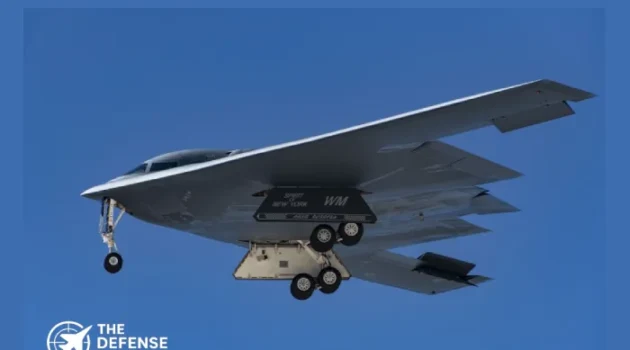
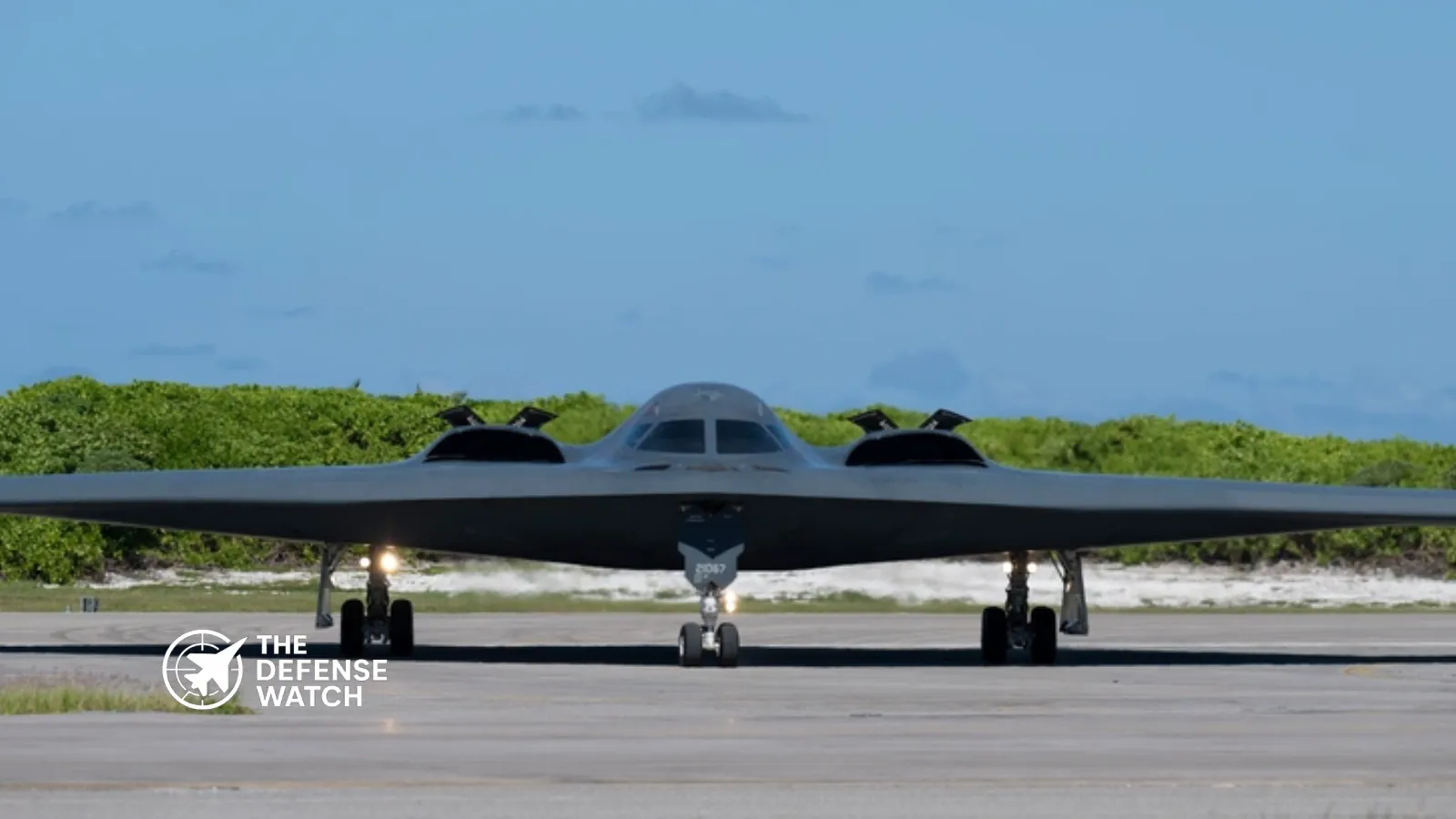
The primary delivery platform for the GBU 57 is the B-2 Spirit, the US Air Force stealth bomber capable of penetrating advanced air defenses. The integration of massive bunker busters with stealth platforms enhances survivability while maintaining long range strike capability.
Future integration with the B-21 Raider is widely expected, though operational details remain limited as the aircraft progresses through testing and initial fielding.
Procurement Signals Long Term Commitment
Recent US defense budget materials indicate continued funding to modernize and sustain the massive bunker busters inventory. This includes refurbishment of existing stockpiles and potential upgrades to guidance and fuze systems.
The Pentagon has not publicly disclosed precise stockpile numbers. However, funding lines within Air Force procurement accounts point to an active effort to ensure readiness and availability of the weapon.
Analysts note that such investments are consistent with US strategic planning. Hardened and underground facilities are central to several nations’ military doctrines, particularly for missile forces and nuclear command and control. Maintaining credible options against these sites supports deterrence.
The expansion of massive bunker busters also aligns with broader US modernization efforts. The Air Force continues to invest in next generation bombers, stand off weapons, and advanced targeting systems to ensure flexibility across contested environments.
Strategic Context
Deep strike capability remains a cornerstone of US military doctrine. The ability to hold at risk hardened infrastructure underpins deterrence strategies, particularly in regions where adversaries rely on underground basing.
The US has previously used bunker busting munitions in combat operations, though not the GBU 57 specifically. Smaller penetrators such as the GBU 28 were employed during conflicts in the Middle East to target fortified positions.
The GBU 57 represents a significant increase in size and penetration capability over earlier systems. Its sheer mass and reinforced design distinguish it from other conventional munitions.
While the Pentagon does not publicly identify specific contingency scenarios, the existence and continued procurement of massive bunker busters send a clear signal regarding US preparedness for high end conflict.
Integration With Modern Bomber Fleet
As the Air Force transitions toward a future force built around stealth and long range strike, heavy penetration weapons remain part of the mix.
The B 2 Spirit currently provides the only operational platform certified to carry the GBU 57. With a limited fleet size, sustainment of both aircraft and weapons is essential.
The forthcoming B 21 Raider, developed by Northrop Grumman, is expected to enhance flexibility and survivability for deep strike missions. Although detailed loadout configurations have not been released, the aircraft is designed to support a range of conventional and strategic munitions.
This pairing of advanced stealth bombers with massive bunker busters strengthens the United States’ ability to penetrate defended airspace and strike hardened targets at long range.
Budget And Policy Considerations
Defense budget debates in Washington continue to emphasize modernization in the face of evolving global threats. Lawmakers have supported investments in long range strike systems, including heavy penetration munitions.
The Air Force’s procurement strategy indicates that massive bunker busters will remain relevant in future force planning. Maintaining a credible capability against underground and hardened targets reduces reliance on alternative escalation options.
At the same time, officials stress that such weapons are part of a broader deterrence framework that includes diplomacy, alliances, and forward presence.
Looking Ahead
As geopolitical tensions persist in multiple regions, the role of massive bunker busters in US strategy is unlikely to diminish. Advances in underground construction and fortification are expected to continue, requiring parallel innovation in penetration technology.
The US approach combines upgraded munitions, stealth delivery platforms, and enhanced targeting intelligence. Together, these elements reinforce a layered deep strike capability intended to deter adversaries and, if necessary, neutralize hardened threats.
Get real time update about this post category directly on your device, subscribe now.