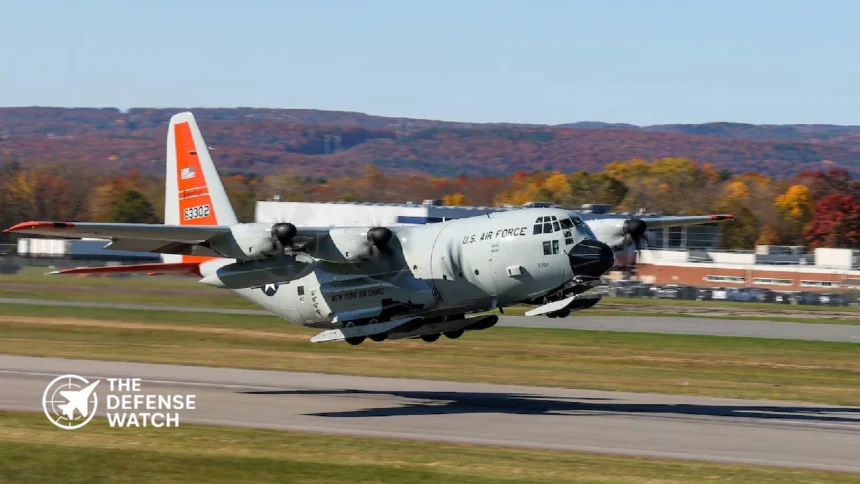
The New York Air National Guard has deployed five ski-equipped LC-130 Hercules aircraft and 75 personnel to support the United States Antarctic Program during the 2026-27 Operation Deep Freeze season, reinforcing the military’s role in sustaining scientific research across one of the world’s most difficult operating environments.
The 109th Airlift Wing completed the departure of its aircraft from Stratton Air National Guard Base in Scotia, New York, on November 12, with the aircraft heading to Christchurch, New Zealand, before supporting operations in Antarctica.
According to information published by the Defense Department’s Defense Visual Information Distribution Service (DVIDS), the deployment will run from November 2026 through February 2027. The aircraft will operate primarily from McMurdo Station, the largest U.S. research and logistical facility in Antarctica.
The mission is part of the Pentagon’s recurring logistical support to the National Science Foundation’s U.S. Antarctic Program. It is not a combat deployment. Instead, it provides the airlift capacity needed to transport personnel, equipment, fuel and other supplies to research facilities that cannot be reached through conventional transport networks.
Five LC-130s will support three major Antarctic camp activities
The 2026-27 deployment has several specific logistical priorities beyond routine resupply.
The 109th Airlift Wing will support three major activities across West Antarctica:
- WAIS Divide Camp: Decommissioning the research facility and relocating its equipment and infrastructure.
- Byrd Camp: Moving research operations and associated infrastructure to this historic deep-field facility.
- Siple Dome Camp: Reopening the facility to provide aircraft refueling and weather observation services.
These activities are important to maintaining access to remote research locations where ground transportation is limited and aircraft provide a critical connection with larger Antarctic facilities.
WAIS Divide previously supported ice-core research that allowed scientists to examine historical atmospheric and environmental conditions. Researchers drilled more than two miles into the ice to obtain samples containing information about Earth’s climate history.
Byrd Camp will take on a larger role in supporting deep-field research activities following the transition. Siple Dome, meanwhile, will provide refueling and weather observation support for aviation operations across West Antarctica.
The arrangement demonstrates how military airlift supports more than the movement of cargo. Aircraft access, fuel availability and reliable weather information are essential to maintaining operations at isolated scientific facilities.
Why the LC-130 remains essential to Antarctic logistics
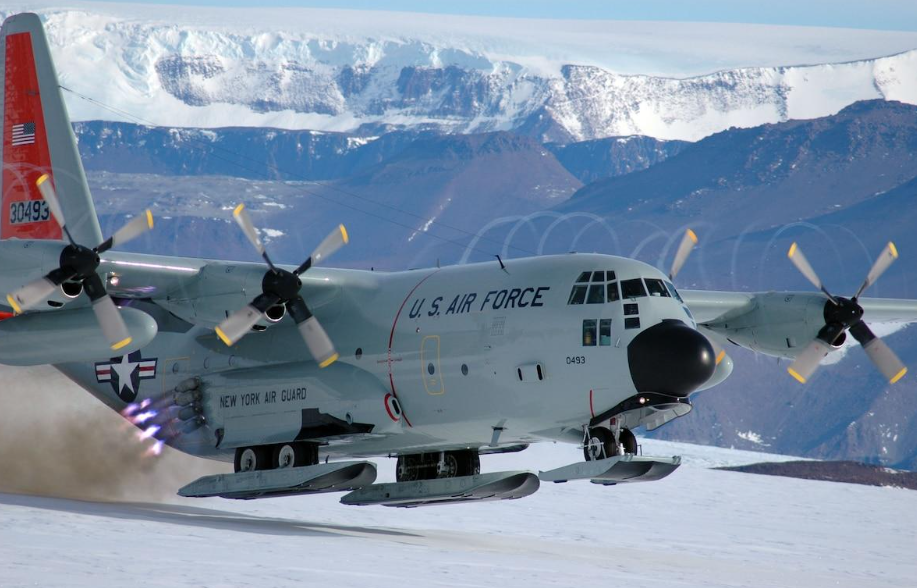
The central aircraft in the deployment is the LC-130 Hercules.
Developed from the C-130 Hercules transport family, the LC-130 is configured for operations on snow and ice. Its landing ski system allows it to use prepared polar surfaces that are unsuitable for conventional wheeled transport aircraft.
The 109th Airlift Wing operates the Department of War’s only ski-equipped LC-130 fleet, according to the latest military reporting. This gives the unit a specialized heavy-airlift role that is difficult to replace with standard military cargo aircraft.
Its operational value is particularly clear in West Antarctica, where research camps can be separated by substantial distances and lack conventional road infrastructure.
The aircraft can transport scientific equipment, construction materials, fuel and personnel between major stations and remote field locations. This reduces the logistical burden on ground teams and helps research organizations maintain facilities during the Antarctic summer.
The LC-130 capability also requires specialized training and support. Crews must account for snow and ice conditions, changing weather, limited landing infrastructure and the challenges of operating far from conventional maintenance and emergency facilities.
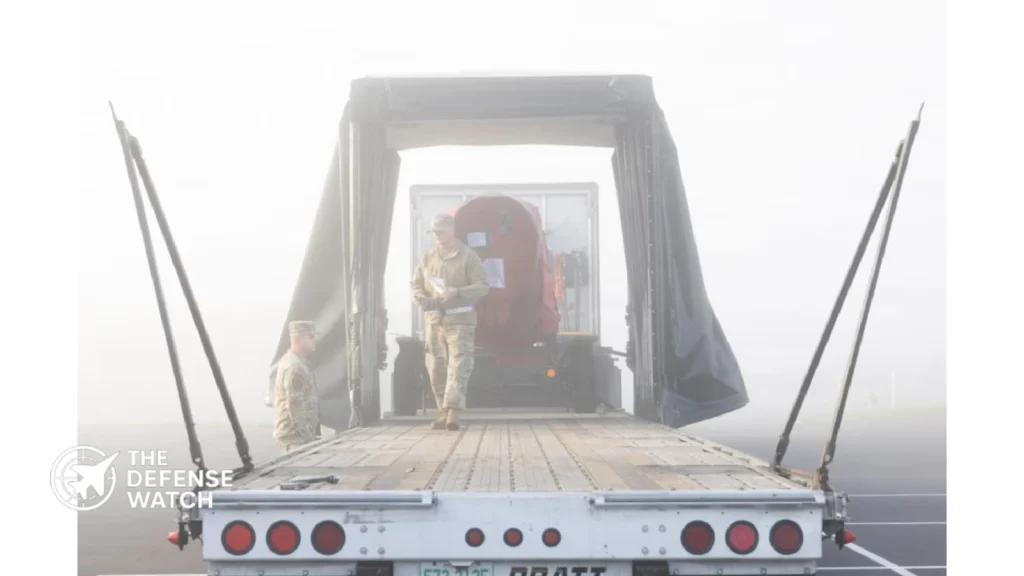
Air Force Master Sgt. Frank Kennedy and Air Force Tech. Sgt. Josh Byerwalters, traffic management specialists assigned to the 109th Airlift Wing, load cargo pallets for Operation Deep Freeze at Stratton Air National Guard Base in Scotia, N.Y., Oct. 19, 2026. From November through February each year, the 109th supports Antarctic research efforts as part of Operation Deep Freeze.
Consequently, the mission depends on more than aircraft availability. Maintenance personnel, cargo specialists, weather support and experienced flight crews are all necessary to sustain the deployment.
Previous season shows the scale of the airlift requirement
The 2025-26 Operation Deep Freeze season provides a useful indication of the workload facing the unit.
The 109th Airlift Wing reported completing:
| Operational activity | 2025-26 results |
|---|---|
| Missions to South Pole Station | 63 |
| Missions to WAIS Divide Camp | 17 |
| Aeromedical evacuation missions | 9 |
| Flight hours over Antarctica | 986 |
| Passengers transported | 1,086 |
| Cargo delivered | 2.6 million pounds |
| Fuel transported | 1.04 million pounds |
These figures were reported by the 109th Airlift Wing through DVIDS. They describe the previous season, not projected results for the newly started deployment.
The nine aeromedical evacuation missions also illustrate an important part of the operation. In an environment where medical facilities and transportation options are limited, military airlift can provide a route for moving patients from Antarctic locations to more capable medical facilities.
Christchurch serves as an important staging and support location for these operations, connecting the U.S. Antarctic logistics network with New Zealand.
Operation Deep Freeze involves a wider military logistics network
Although the 109th Airlift Wing provides the specialized ski-equipped LC-130 capability, Operation Deep Freeze is not exclusively an Air National Guard undertaking.
The wider mission involves military air and surface transportation support for the National Science Foundation. Its requirements include moving scientific and support personnel, delivering supplies and maintaining access to research stations and remote field camps.
A 2024 Department of the Air Force operational manual describes Operation Deep Freeze as the military’s inter-theater and intra-theater air and surface logistical support to the U.S. Antarctic Program. It identifies Joint Task Force-Support Forces Antarctica as the standing joint task force responsible for managing this support.
Other military platforms contribute to the mission. U.S. Air Force C-17 aircraft provide additional Antarctic airlift, while the U.S. Coast Guard’s icebreaking capability supports maritime access to the continent.
A March 2026 U.S. Indo-Pacific Command report identified the LC-130H Hercules and the Coast Guard’s USCGC Polar Star as two important platforms supporting Operation Deep Freeze.
This combination of air and maritime capabilities is necessary because Antarctica has no conventional commercial supply network capable of sustaining the U.S. research presence.
Arctic experience also supports the wing’s wider mission
The 109th Airlift Wing’s responsibilities extend beyond Antarctica.
The unit also supports scientific and military training activities in Greenland and conducts Arctic exercises with Canadian forces, according to its latest deployment announcement.
Experience in polar aviation is particularly valuable because operations in both the Arctic and Antarctic demand specialized knowledge of weather, remote airfields, aircraft performance and logistical planning.
For the United States, maintaining this capability supports scientific access and the ability to operate in geographically isolated regions. It also preserves a specialized military transport skill set that would be difficult to recreate quickly if the aircraft, personnel and supporting infrastructure were allowed to lapse.
The 2026-27 deployment therefore continues an established logistical mission rather than introducing a new military capability. Its immediate priorities are the transition of research camps, the movement of equipment and the continued support of U.S. scientific operations across Antarctica.
The effectiveness of the season will ultimately depend on the wing’s ability to maintain reliable airlift throughout the Antarctic operating period, particularly as research infrastructure is relocated between remote sites.
Enjoying our coverage?
Make The Defense Watch a preferred source on Google to see more of our geopolitical and defense insights when relevant to you.