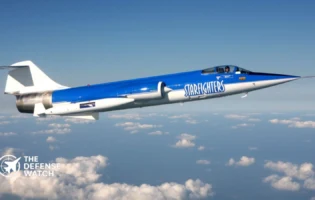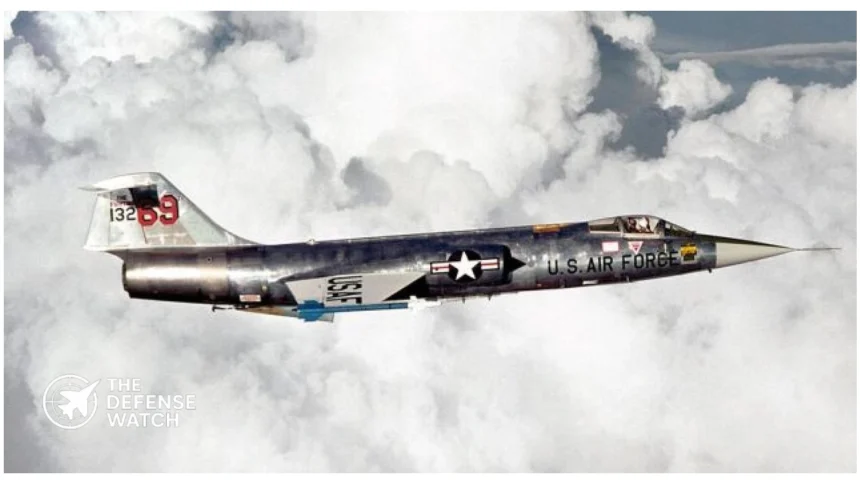
The Lockheed F-104 Starfighter was designed during the Cold War to intercept high-speed aircraft. More than six decades after its introduction, the distinctive supersonic jet is finding another purpose, this time as a commercial airborne test platform for aerospace and defense technologies.
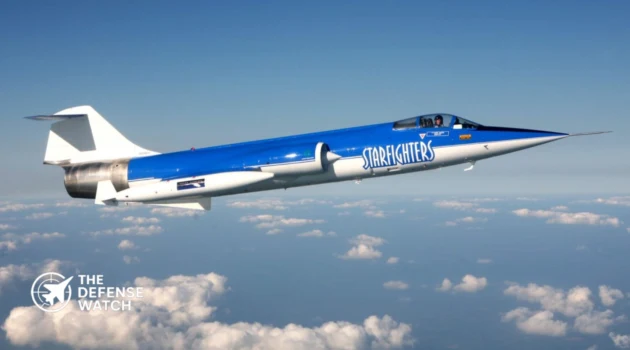
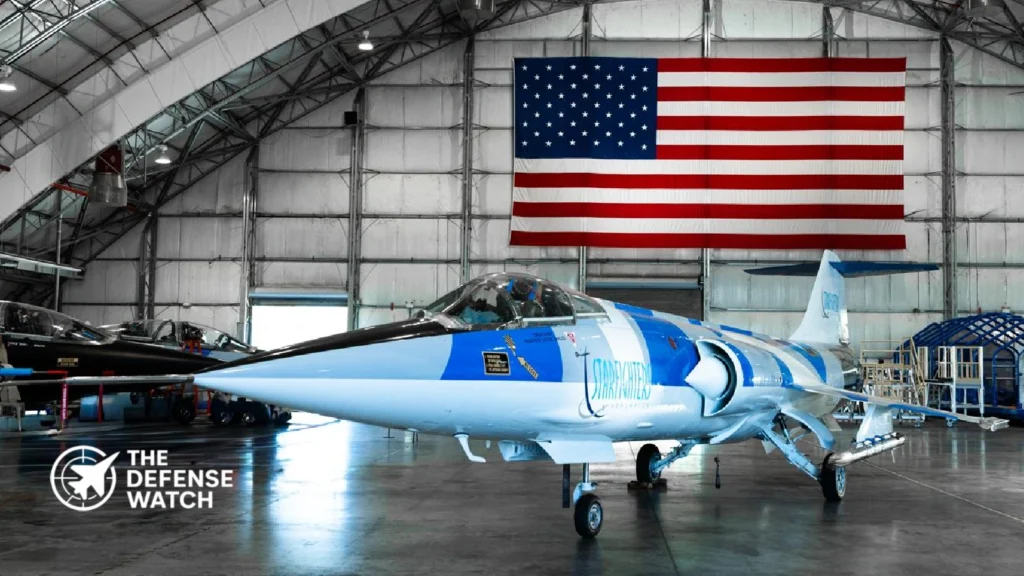
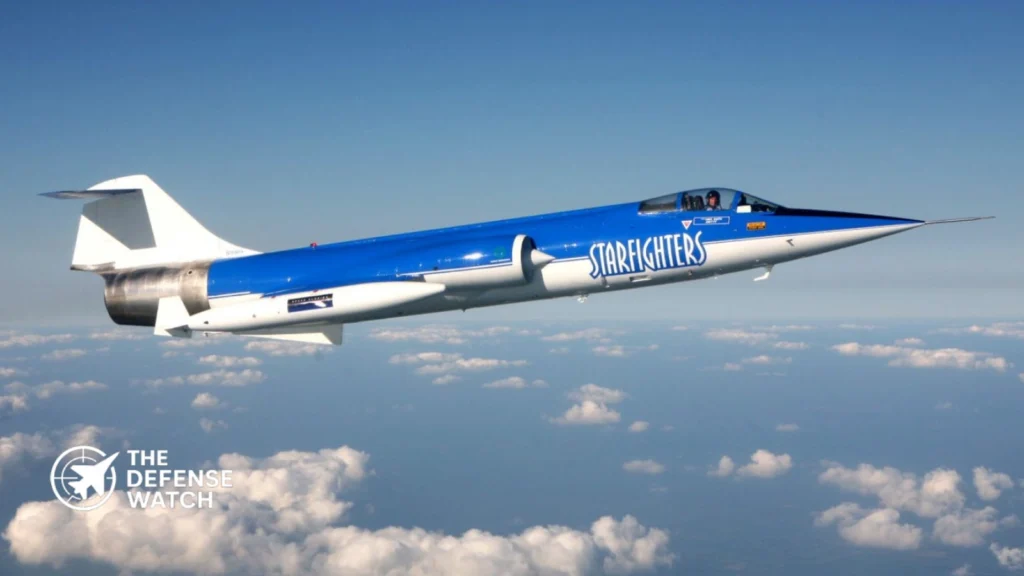
U.S.-based Starfighters Space is using its surviving F-104 fleet to support high-speed research, experimental payload testing and potential air-launch operations. The company’s plans also include supporting development of hypersonic vehicles and propulsion systems.
The latest example involves a proposed flight-testing partnership with Horizon Apogee. Announced on November 16, 2026, the arrangement would use an F-104 to carry and release experimental hardware associated with the company’s Reaver hypersonic interceptor and Orthrus propulsion system.
The proposal illustrates how an aircraft developed for Cold War air defense can still provide a specialized service in modern aerospace development. However, the planned testing remains subject to further agreements and technical milestones.
From Cold War Interceptor to Commercial Flight-Test Platform
Developed by Lockheed during the 1950s, the F-104 Starfighter became one of the most recognizable American supersonic aircraft of the Cold War.
Its design emphasized speed, climb performance and high-altitude interception. The aircraft’s narrow fuselage, short wings and powerful turbojet engine gave it a distinctive appearance and a performance profile suited to its original interceptor mission.

F-104 The F-104 also had a substantial research history beyond military operations.
According to NASA, the agency began operating F-104 aircraft in August 1956. Eleven aircraft eventually served at the Dryden Flight Research Center in California, supporting research, chase operations, aerodynamic testing and pilot training.
NASA recorded more than 18,000 F-104 flights during approximately 38 years of operations. The aircraft also supported the X-15 research program, including work that helped pilots develop experience with reaction-control systems relevant to rocket-powered flight.
NASA’s last F-104 research flight took place in February 1994, while the remaining two-seat aircraft continued operating until September 1995.
That history provides an important connection to Starfighters Aerospace’s current business model. The company is not attempting to return the F-104 to frontline military service. Instead, it is adapting an established high-performance aircraft for specialized testing that would otherwise require access to expensive experimental aircraft or dedicated flight-test infrastructure.
Why the F-104 Still Has a Place in Aerospace Testing
The F-104’s continued usefulness comes from its ability to operate at high speeds and altitudes while carrying external test equipment.
Starfighters Space says its aircraft can sustain speeds above Mach 2 and support research involving advanced materials, propulsion technologies, missile-defense systems, electronic equipment and hypersonic vehicles.
One of the company’s proposed services is known as Wind Tunnel in the Sky. The concept uses an aircraft to carry experimental hardware through real atmospheric conditions at high speed.
This approach can help engineers examine how test articles respond to aerodynamic loads, temperature changes, vibration and other conditions encountered during flight.
Ground-based wind tunnels remain essential to aerospace development, but they cannot reproduce every aspect of an actual flight environment. Airborne testing can provide additional information about integration, handling and performance under operational conditions.
The F-104 offers a relatively unusual option because of its supersonic performance and existing infrastructure.
However, an aircraft carrying an experimental vehicle does not automatically demonstrate that the vehicle itself can achieve hypersonic speeds. The F-104 serves as the carrier and test platform. The experimental system must undergo separate testing to establish its own performance.
New Hypersonic Testing Partnership
The proposed partnership with Horizon Apogee provides a practical example of how the aircraft could support modern defense technology development.
Under a non-binding memorandum of understanding announced on November 16, the companies plan a 2027 flight-test campaign involving Reaver, a hypersonic interceptor development project, and its associated Orthrus propulsion system.
Horizon Apogee is developing Reaver under the U.S. Army’s xTech|Search 10 competition.
The proposed campaign includes several stages:
- Aircraft integration: Aerodynamic analysis and compatibility checks to determine how the experimental vehicle can be carried beneath the F-104.
- Captive-carry testing: Subsonic and supersonic flights with the test vehicle attached to the aircraft.
- Drop testing: Planned release tests to examine the vehicle’s behavior after separation.
- Flight-data assessment: Analysis of collected information to evaluate the design and determine potential follow-on testing.
According to the companies, captive-carry flights are planned for the second quarter of 2027, with drop tests targeted for the third quarter.
The campaign would follow a planned vertical launch test of a Reaver prototype at White Sands Missile Range in New Mexico.
Horizon Apogee says its Orthrus propulsion architecture is designed to transition from ramjet to scramjet operation as vehicle speed increases. The company previously completed a subscale hot-fire test in June 2026.
These are development objectives and company-reported milestones, not evidence that a complete operational hypersonic interceptor has been demonstrated.
Importantly, the memorandum is non-binding. The companies still need to negotiate a definitive agreement covering pricing and the terms of the planned flight-test phases.
The Fleet and Its Current Operating Base
F-104 Starfighters Space maintains a fleet of seven F-104 aircraft, according to its September 2026 SEC prospectus.
The company’s disclosed fleet condition provides a useful picture of its actual operating capacity:
Fleet condition Aircraft Flight-ready for customer or development flights 3 Flight-capable 3 Not flight-capable 1 Total fleet 7 The aircraft operate primarily from NASA’s Kennedy Space Center in Florida, with an additional operating location at Midland International Air & Space Port in Texas.
The company says it operates the only commercial fleet of F-104 aircraft. This is a company-reported distinction rather than an independently established global inventory assessment.
Its business includes two broad areas:
- Existing services, including pilot training, specialized flight operations and equipment testing.
- Developing services, including hypersonic research, airborne test platforms and air-launch systems.
There is an important commercial distinction between these activities. Starfighters’ September prospectus identified its newer hypersonic research and launch-service activities as development-stage business lines that had not yet generated revenue.
Consequently, the expansion of its proposed services should not be confused with an established, large-scale operational flight-testing business.
Could the F-104 Become a Platform for Space Launch?
Hypersonic research is only one part of Starfighters’ longer-term plans.
The company is also developing its STARLAUNCH program, which is intended to use an F-104 as an airborne carrier for small launch vehicles.
The proposed approach would involve transporting a rocket to an elevated release point before separating it from the aircraft for the subsequent launch sequence.
Air-launch concepts offer potential advantages over conventional ground launches, including flexibility in launch location and the ability to begin the rocket’s flight at altitude.
However, developing a commercially viable system requires more than an aircraft capable of carrying a rocket.
The launch vehicle, separation mechanism, propulsion system, flight-control architecture, regulatory approvals and payload integration arrangements must all work together.
Starfighters has described plans for STARLAUNCH I and STARLAUNCH II, but its SEC disclosures identify these as development activities rather than established operational launch services.
The company has also disclosed work on an inert flight article for the suborbital version of STARLAUNCH, with a captive-carry test planned for December 2026.
That milestone would help demonstrate aircraft integration and carriage capability. It would not, by itself, establish successful orbital launch capability.
What the F-104 Can and Cannot Offer Modern Defense Programs
The continued use of the Starfighter highlights a particular requirement in aerospace development: access to specialized flight environments without building an entirely new research aircraft.
For defense companies and research organizations, an airborne test platform can provide useful information before committing to more expensive full-scale demonstrations.
Potential applications include:
- Hypersonic vehicle aerodynamic research.
- Propulsion-system integration testing.
- Evaluation of advanced aerospace materials.
- Missile-defense technology development.
- Electronic equipment and sensor testing.
- Experimental payload separation and carriage trials.
The proposed Horizon Apogee partnership is particularly relevant because hypersonic development involves substantial integration challenges.
Engineers must understand how a vehicle behaves during carriage, separation and subsequent flight. Testing these stages can help identify design problems before more advanced propulsion demonstrations.
Nevertheless, the F-104 has limitations.
It is a legacy aircraft designed around technology and engineering practices from the 1950s. Its age creates maintenance, parts availability, structural life and reliability considerations.
The fleet also has limited scale compared with modern military test organizations operating dedicated research aircraft and extensive ground facilities.
Its value therefore lies in providing a specialized service, not replacing the United States’ broader hypersonic research infrastructure.
The Commercial Opportunity Remains Dependent on Execution
Starfighters’ business strategy depends on attracting government, defense-industry, academic and commercial customers that require high-speed airborne testing.
The company has identified potential applications across hypersonic technology, advanced materials, missile defense and spaceflight hardware.
Its recent partnership with Horizon Apogee offers a specific example of how those services could be used in a defense development program.
But several questions remain unanswered.
The financial terms of the proposed Horizon Apogee campaign have not been finalized. The companies have not announced a completed flight-test campaign, and the proposed 2027 schedule remains subject to further agreements and technical preparations.
Similarly, the commercial viability of STARLAUNCH will depend on successful testing, regulatory approvals, customer demand and the ability to deliver launches at competitive costs.
For now, the F-104’s renewed purpose is best understood as a specialized airborne research capability.
Its Cold War interceptor design is no longer being used for its original military mission. Instead, its speed, altitude performance and ability to carry experimental equipment are being applied to a different generation of aerospace challenges.
Enjoying our coverage?
Make The Defense Watch a preferred source on Google to see more of our geopolitical and defense insights when relevant to you.