

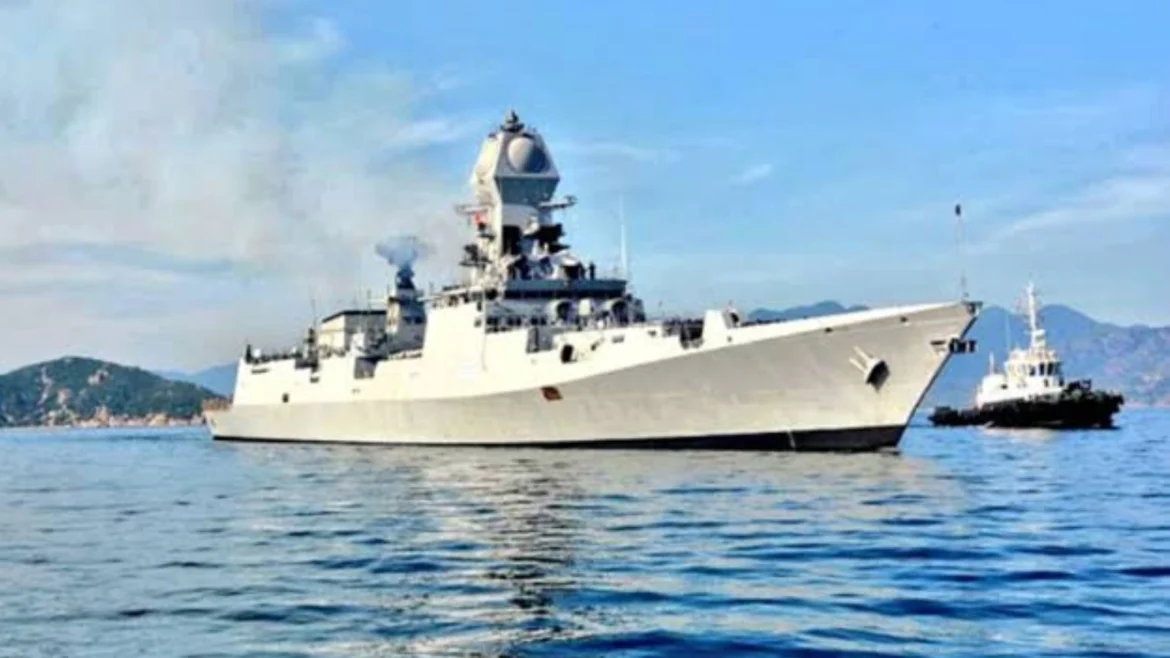
A September 15 naval collision in the Arabian Sea has triggered simultaneous diplomatic protests from India and Pakistan, with the two governments offering conflicting accounts of the encounter.
Takeaways
India and Pakistan have both lodged diplomatic protests following a September 15 naval collision in the North Arabian Sea, but the two governments disagree over how and where the incident occurred.
India Pakistan Naval Collision Triggers Mutual Protests
The India Pakistan naval collision in the North Arabian Sea has triggered diplomatic protests from both governments after an Indian Navy warship and Pakistan Navy vessel PNS Hunain came into contact on September 15, 2026. India and Pakistan have issued conflicting accounts of the circumstances surrounding the incident.
The incident occurred against a backdrop of heightened tensions between the two nuclear-armed neighbors. According to the Associated Press, Pakistan said the encounter occurred inside its Exclusive Economic Zone during a naval exercise, while India said the collision took place in international waters.
Neither side has accepted the other’s account.
What Happened Between The Two Naval Vessels?
Pakistan identified the Indian warship involved as INS Kolkata, a Kolkata-class guided-missile destroyer.
Pakistan’s Foreign Office said INS Kolkata was operating near Pakistani naval units participating in the SEASPARK-26 exercise. Islamabad accused the Indian warship of conducting dangerous maneuvers and said the vessel eventually came into contact with PNS Hunain.
Pakistan said the Indian ship’s actions were provocative and violated international law as well as the bilateral agreement governing military activities between India and Pakistan.
India has presented a substantially different account.
Indian officials said PNS Hunain approached an Indian Navy frontline warship at high speed and maneuvered unsafely, resulting in a minor collision. India said its warship was conducting a routine surveillance mission and was operating in international waters.
Indian reporting said the encounter occurred approximately 120 nautical miles from the Gulf of Oman. It also reported that the Indian vessel was not damaged and continued its mission, while PNS Hunain sustained damage and returned toward a Pakistani port.
Pakistan Lodges Protest Over INS Kolkata
Pakistan’s Foreign Office summoned India’s chargé d’affaires in Islamabad following the incident.
Islamabad described the Indian vessel’s reported conduct as highly provocative and unacceptable. Pakistan said the Indian Navy had repeatedly attempted to enter the area where Pakistani naval forces were conducting SEASPARK-26.
Pakistan’s Foreign Office said the Indian vessel’s movements near Pakistani ships created a serious risk of escalation. It also argued that the incident represented a breach of the 1991 India-Pakistan military agreement.
Pakistan said it would also convey its protest through its diplomatic mission in New Delhi.
India Also Summons Pakistan’s Diplomat
India responded by summoning Pakistan’s chargé d’affaires in New Delhi and lodging a formal protest.
India described the conduct of Pakistani naval units as unacceptable and unprofessional. New Delhi said the Pakistani vessel approached an Indian warship at high speed and failed to maintain safe separation, resulting in the collision.
India also directed its diplomatic representative in Islamabad to lodge a corresponding protest with Pakistan’s Foreign Ministry.
The reciprocal diplomatic action is significant because neither government has accepted responsibility for the incident.
Dispute Over The Location Of The Incident
One of the central disagreements concerns where the encounter occurred.
Pakistan says the incident occurred inside its Exclusive Economic Zone during the SEASPARK-26 naval exercise.
India says the collision occurred in international waters.
An EEZ gives a coastal state specific rights over natural resources and certain economic activities. It does not generally provide the same jurisdiction over navigation as territorial waters.
That distinction is important when assessing the competing claims made by the two governments.
Publicly available information does not independently establish the precise coordinates of the collision or resolve the competing claims over the vessel movements.
The 1991 Agreement Is Also Involved
Both sides have referred to the 1991 Agreement Between India and Pakistan on Advance Notice on Military Exercises, Manoeuvres and Troop Movements.
The agreement includes provisions intended to reduce the risk of accidental confrontations between Indian and Pakistani military forces.
India has cited the agreement’s naval separation provisions in its protest, while Pakistan has also argued that India’s actions breached the bilateral framework.
The agreement is particularly relevant because the incident occurred while Pakistani naval forces were conducting a major exercise.
For naval forces operating near each other, separation and communications procedures are designed to prevent routine military activity from developing into an accidental confrontation.
PNS Hunain Sustained Damage
Indian media reports said the Pakistani vessel sustained damage during the collision and subsequently headed toward a Pakistani harbor. The Indian warship was reported to have continued its surveillance mission.
The publicly available reports do not provide a detailed independent assessment of the extent of damage to PNS Hunain.
There have also been no independently verified indications in the available reporting of significant casualties resulting from the encounter.
The incident therefore appears to have remained limited to a naval collision and its subsequent diplomatic consequences, although the two governments have described the conduct preceding the contact in sharply different terms.
Why The Incident Matters
The India Pakistan naval collision demonstrates the operational risks that can arise when military forces from rival states operate in close proximity.
Unlike a planned military engagement, a collision at sea can develop within seconds. Warships operating at high speed have limited time to react, particularly when several ships, aircraft and exercise areas are involved.
The incident also shows why bilateral military agreements remain important even during periods of political tension.
The 1991 agreement was created in part to reduce the possibility that military exercises or movements could produce misunderstandings between the two countries.
In this case, however, the two governments are now interpreting the same incident differently.
Pakistan’s position centers on the alleged presence and maneuvering of INS Kolkata near its naval exercise area.
India’s position centers on what it describes as the unsafe approach and maneuvering of PNS Hunain.
Those competing descriptions mean that responsibility for the collision cannot be established solely from the public statements issued by either government.
Diplomatic Fallout
The immediate response from both countries has been diplomatic rather than military.
Pakistan summoned India’s diplomatic representative and issued a formal protest. India took the same step against Pakistan’s diplomatic representative.
Reuters reported that India’s Foreign Ministry described the actions of Pakistani naval units as unacceptable and unprofessional, while Pakistan accused the Indian vessel of provocative and dangerous behavior.
The Associated Press similarly reported that the incident intensified diplomatic tensions between the two countries.
The reciprocal protests also demonstrate that both governments view the incident as serious enough to require formal diplomatic action.
What Is Known And What Remains Disputed
Several elements of the incident are established by multiple reports.
An Indian naval warship and PNS Hunain came into contact in the Arabian Sea on September 15.
Both governments subsequently summoned the other’s diplomatic representatives.
Both sides accused the other country’s naval forces of unsafe or improper conduct.
However, important details remain disputed.
Pakistan says the encounter occurred in its EEZ during SEASPARK-26 and blames INS Kolkata for dangerous maneuvering.
India says the incident occurred in international waters and blames PNS Hunain for approaching its warship at high speed.
The available public reporting does not independently establish which vessel initiated the maneuver that resulted in the collision.
For that reason, the incident should be described as a disputed naval collision, rather than as an independently established act of aggression by either country.
Executive Summary:
Pakistan’s first Chinese-built submarine is set to enhance the Pakistan Navy’s undersea warfare capabilities. The acquisition reflects Islamabad’s push to modernize its fleet amid evolving regional maritime competition. The move also deepens defense ties with China and strengthens deterrence in the Arabian Sea.
Pakistan Chinese Submarine Strengthens Naval Capability
Pakistan’s Chinese submarine program has reached a major milestone as the country prepares to field its first Chinese-built submarine, marking a significant upgrade to the Pakistan Navy’s undersea warfare capabilities. The submarine is part of a broader effort to modernize Pakistan’s aging fleet and enhance maritime deterrence in the Arabian Sea.
The platform is expected to be one of the new Hangor-class submarine vessels, developed in cooperation with China Shipbuilding Industry Corporation. The program includes multiple submarines, with some being constructed in China and others assembled domestically in Pakistan, reflecting a technology transfer component.
This Pakistan Chinese submarine initiative comes at a time of increasing naval competition in South Asia, particularly in response to India’s expanding maritime capabilities and broader Indo-Pacific dynamics.
A Key Step In Pakistan Navy Modernization
The Pakistan Chinese submarine program is central to Islamabad’s long-term naval modernization strategy. The Pakistan Navy currently operates older French-designed submarines, including the Agosta 90B-class submarine, which have undergone upgrades but are nearing the limits of their operational lifespan.
The introduction of the Hangor-class submarines is expected to significantly enhance Pakistan’s undersea endurance, stealth, and strike capabilities. These submarines are widely assessed to incorporate advanced air-independent propulsion systems, enabling longer submerged operations compared to conventional diesel-electric platforms.
From an operational standpoint, the Pakistan Chinese submarine fleet will likely improve anti-ship and anti-submarine warfare capabilities, while also providing a more credible second-strike deterrent at sea.
This transition reflects a broader shift in naval doctrine, where undersea warfare is increasingly prioritized due to its survivability and strategic value in contested maritime environments.
Strategic Implications In The Arabian Sea
The deployment of a Pakistan Chinese submarine has direct implications for regional security dynamics, particularly in the Arabian Sea and the wider Indian Ocean Region. Pakistan’s maritime strategy has traditionally focused on coastal defense, but the new submarines suggest a move toward more extended operational reach.
India’s naval expansion, including nuclear-powered submarines and aircraft carriers, has altered the regional balance. In response, Pakistan appears to be investing in asymmetric capabilities, with submarines offering a cost-effective means to counter larger surface fleets.
The Pakistan Chinese submarine program also highlights the deepening defense relationship between Islamabad and Beijing. China has emerged as Pakistan’s primary defense partner, supplying a wide range of military platforms, from aircraft to naval vessels.
For China, the deal reinforces its position as a major exporter of advanced naval systems and strengthens its strategic footprint in the Indian Ocean, a region critical to global trade routes and energy flows.
Industrial And Technological Dimensions
A notable aspect of the Pakistan Chinese submarine project is its industrial component. Several of the submarines are being assembled at Karachi Shipyard, enabling Pakistan to develop indigenous shipbuilding expertise and reduce reliance on foreign suppliers over time.
This approach aligns with broader trends in defense procurement, where countries seek not only to acquire platforms but also to build domestic industrial capacity. The transfer of technology associated with the Pakistan Chinese submarine program could have long-term benefits for Pakistan’s defense industry.
However, integrating advanced submarine technology poses technical and operational challenges, including crew training, maintenance infrastructure, and lifecycle support. Ensuring operational readiness will be critical as these platforms enter service.
Operational Outlook And Future Fleet Composition
Once fully inducted, the Pakistan Chinese submarine fleet is expected to form the backbone of the Pakistan Navy’s undersea forces. The combination of new Hangor-class boats and upgraded legacy submarines will provide a layered capability across different mission profiles.
In practical terms, the Pakistan Chinese submarine program enhances Pakistan’s ability to conduct:
- Sea denial operations
- Intelligence, surveillance, and reconnaissance missions
- Strategic deterrence patrols
These capabilities are increasingly relevant in a region characterized by growing naval presence from multiple powers, including the United States and China.
From a U.S. perspective, developments in Pakistan’s submarine fleet underscore the evolving maritime balance in the Indo-Pacific and highlight the expanding role of Chinese defense exports in shaping regional military capabilities.
Analysis: A Calculated Investment In Undersea Warfare
The Pakistan Chinese submarine initiative reflects a calculated investment in undersea warfare as a strategic equalizer. Submarines remain one of the most survivable and effective platforms in modern naval conflict, capable of operating undetected and delivering significant combat effects.
While the addition of new submarines does not fundamentally alter the regional balance on its own, it complicates operational planning for adversaries and enhances deterrence by increasing uncertainty.
At the same time, the program illustrates how middle-tier naval powers are adapting to shifting geopolitical realities by prioritizing cost-effective, high-impact capabilities.
For Pakistan, the success of the Pakistan Chinese submarine program will depend not only on platform performance but also on integration into a broader maritime strategy that includes surface forces, air assets, and networked command systems.
Executive Summary:
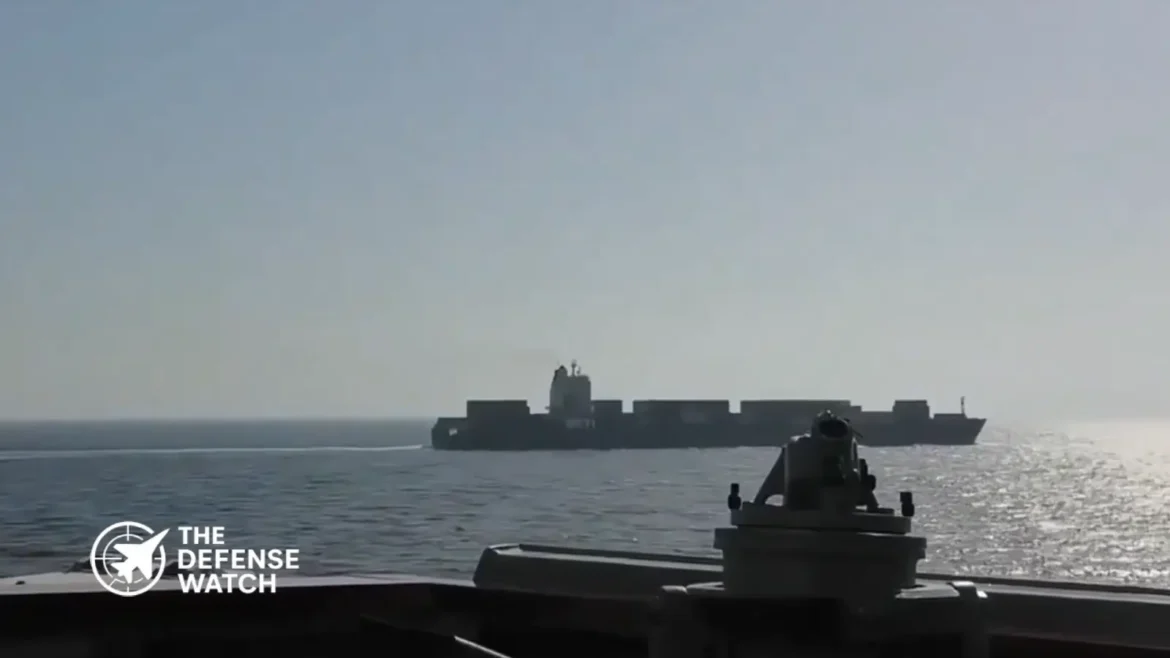
Pakistan has safely evacuated 22 crew members from the seized Iranian container vessel MV Touska, in coordination with Iran and the United States. The operation reflects a rare instance of trilateral cooperation aimed at maritime safety and regional stability. The vessel is now being returned to Pakistani waters for repairs before repatriation.
Pakistan Oversees Safe Evacuation of MV Touska Crew
Authorities in Pakistan confirmed that twenty-two crew members from the Iranian-flagged container vessel MV Touska were successfully evacuated and flown into the country overnight. The individuals are scheduled for transfer back to Iran following standard processing.
The vessel had previously been seized under unclear operational circumstances, though officials have not disclosed specific details regarding the initial interdiction. The safe recovery of personnel was prioritized as a humanitarian measure.
Coordinated Diplomatic and Operational Effort
The evacuation and subsequent vessel handling were carried out with support from both United States and Iranian authorities, underscoring a coordinated approach despite broader geopolitical tensions.
Key elements of the operation included:
- Air evacuation of all crew members under secure conditions
- Medical and logistical support upon arrival in Pakistan
- Planned repatriation of crew to Iran within 24 hours
- Backloading of the vessel into Pakistani territorial waters for inspection and repairs
Pakistani officials described the effort as a confidence-building measure, highlighting its role in reducing friction in a sensitive maritime environment.
Vessel Recovery and Repatriation Process
The MV Touska is currently being transferred back into Pakistani waters, where it will undergo necessary technical repairs and inspections before being returned to its original owners.
Operational Priorities
- Ensuring structural integrity of the vessel
- Verifying cargo safety and documentation
- Coordinating secure handover procedures with Iranian stakeholders
No timeline has been publicly confirmed for the vessel’s full return, though officials indicate the process is underway.
Comparison: Seized Vessel Handling vs Standard Maritime Incident Response
| Parameter | MV Touska Operation | Standard Maritime Incident Response |
|---|---|---|
| Range | Regional (Pakistan–Iran corridor) | Typically localized |
| Payload | Commercial container cargo | Varies by vessel type |
| Status | Seized, then stabilized and released | Usually distressed, not seized |
| Key Technology | Coordinated logistics and airlift | Search and rescue systems |
Strategic Context: Maritime Stability and Confidence Building
The operation comes at a time of heightened sensitivity in regional waters, particularly across the Arabian Sea and Gulf corridors, where commercial shipping lanes intersect with geopolitical fault lines.
Broader Implications
- Demonstrates functional cooperation between traditionally adversarial actors
- Reinforces Pakistan’s role as a regional mediator
- Signals commitment to maritime safety and lawful navigation
- Reduces risk of escalation tied to commercial vessel seizures
While limited in scale, the MV Touska operation reflects a pragmatic alignment of interests centered on safety, diplomacy, and controlled de-escalation.
Outlook
Pakistan has reiterated its commitment to facilitating dialogue, diplomacy, and mediation in regional security matters. The successful handling of the MV Touska incident may serve as a model for future cooperative maritime interventions, particularly in contested or sensitive waterways.
Pakistan Navy Conducts Air Defense Interception Test
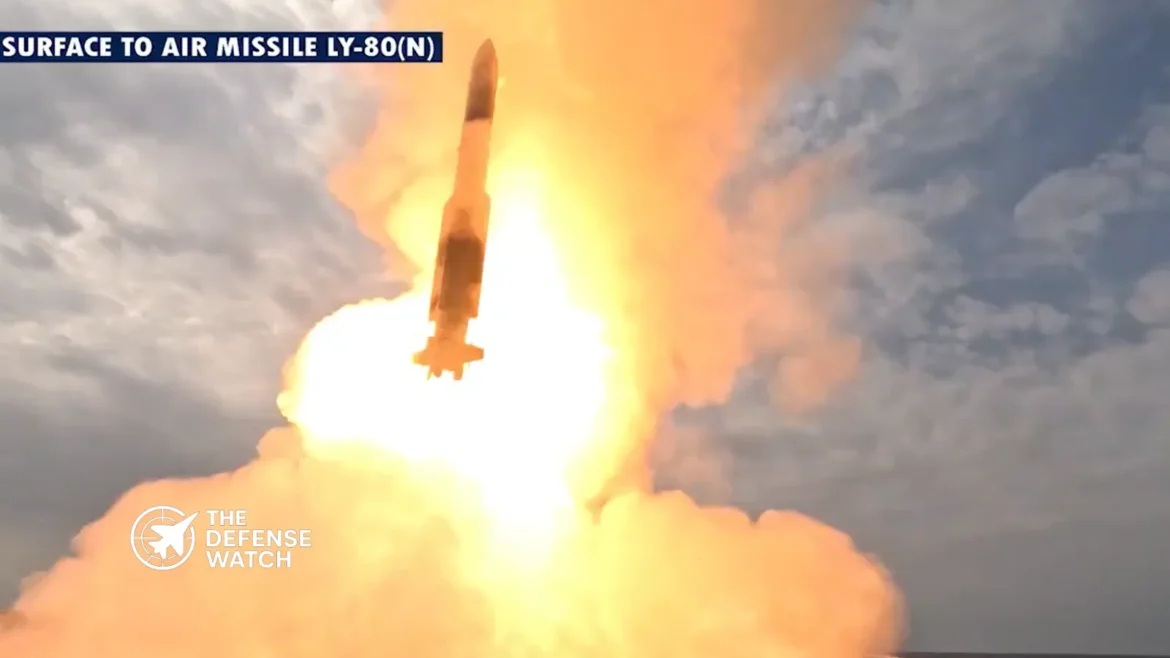
The Pakistan Navy has conducted a live fire air defense interception test at sea, demonstrating the ability of a frontline warship to engage and destroy an aerial target using a ship launched missile system.
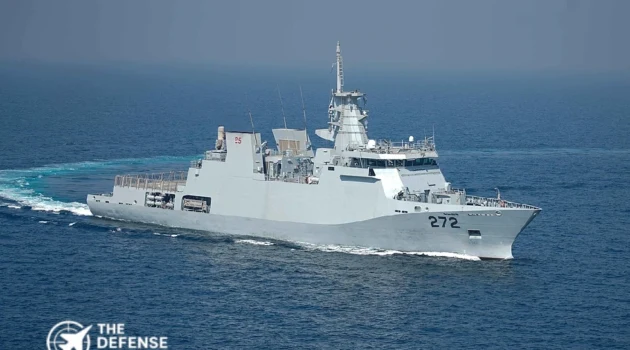
According to an official Pakistan Navy statement, the test was carried out from a Tughril class guided missile and air defense frigate. The warship fired the LY 80 naval surface to air missile from its vertical launch system to intercept a low flying and low observable mobile air target.
Vertical Launch Missile Fired at Sea
The missile was launched using a hot launch method from a vertical cell, a key capability for modern naval air defense. The interception validated the combat readiness of the frigate and the effectiveness of its integrated sensors, command system, and missile engagement sequence.
The LY 80 naval air defense system is the maritime variant of the Chinese HQ 16 family and is designed to counter aircraft, helicopters, unmanned aerial vehicles, and cruise missiles. It provides medium range area defense for surface combatants and task groups.
Boost to Naval Modernization Efforts
The Tughril class frigates form the backbone of Pakistan Navy surface fleet modernization. Equipped with modern radars, electronic warfare suites, and vertical launch missiles, the class is intended to strengthen maritime security and fleet air defense in the North Arabian Sea.
Pakistan Navy stated that the successful firing reflects a high level of crew proficiency and operational preparedness. The service regularly conducts live fire drills to validate weapon systems under realistic operational conditions.
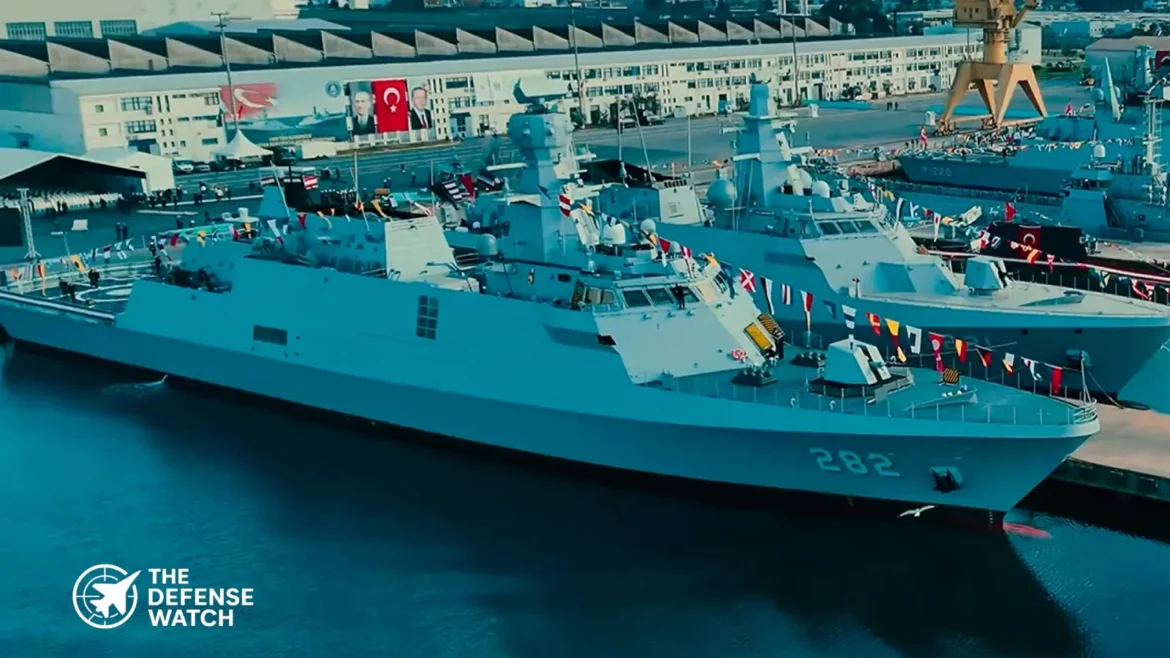
Turkiye formally handed over the second MILGEM-class corvette, PNS Khaibar, to the Pakistan Navy during a ceremony in Istanbul on December 20, 2025. The delivery marks the second major milestone in the Pakistan-Turkiye naval cooperation under the MILGEM programme, aimed at modernizing Pakistan’s surface fleet and building a long-term defense industrial partnership.
President Recep Tayyip Erdogan presided over the ceremony at the Istanbul Naval Shipyard Command. Pakistani Chief of Naval Staff Admiral Naveed Ashraf was among senior officials representing Islamabad. Erdogan highlighted the historic bond between the two countries and underlined the strategic value of the defense partnership.
Background
The MILGEM programme for Pakistan began with a 2018 contract between Pakistan and Turkiye for four customized corvettes. The deal placed Türkiye’s ASFAT, the state-owned military shipbuilder, as the prime contractor responsible for designs and early production under the agreement.
The MILGEM project itself is rooted in Turkiye’s indigenous corvette design efforts, originally developed as the Ada-class for the Turkish Navy. Pakistan’s version, commonly designated the Babur-class, scales up the baseline Ada design into a roughly 3,000-ton class vessel with enhanced weapons, sensors and multi-mission capability.
The first delivery under the contract, PNS Babur, was commissioned into the Pakistan Navy in 2024. PNS Khaibar follows as the second of four planned hulls, with PNS Bedir and PNS Tariq expected to enter service in 2026 and 2027 respectively.
Platform Details and Capabilities
PNS Khaibar is built around a multi-role combatant concept that combines anti-surface, anti-air and anti-submarine capabilities. The corvette’s hull measures about 108 meters, powered by a combined diesel and gas turbine (CODAG) propulsion system enabling speeds above 26 knots and an endurance of approximately 15 days.
Armaments include a 76mm main gun forward, a 12-cell vertical launch system for medium-range air defense missiles and twin triple launchers for Pakistan’s indigenous Harbah cruise missile system. The ship also carries lightweight torpedoes and supports a medium naval helicopter for extended sensor reach and anti-submarine operations.
Sensors and electronic systems are supplied by Turkish defense firms such as Aselsan. These include a 3D air search radar, low-probability-intercept navigation radar, torpedo countermeasure suite, a 35mm close-in weapon system and 25mm remote weapon stations. All systems integrate into a modern combat management architecture designed for network-centric operations.
Strategic Impact
For Islamabad, the induction of PNS Khaibar and its sister ships represents a shift toward a more capable, balanced surface fleet able to address multiple mission sets in the Arabian Sea and Indian Ocean. The MILGEM corvettes enhance Pakistan’s ability to conduct layered area-air defense, sea denial operations and coordinated anti-surface warfare with longer reach than legacy platforms.
The technology transfer provisions of the MILGEM deal also aim to build local capacity. Under the agreement, the third and fourth ships are under construction at Karachi Shipyard & Engineering Works with Turkish support, moving Islamabad closer to independent design and construction of future surface combatants.
Geopolitical and Defense Ties
The handover reflects broader political and military cooperation between Turkiye and Pakistan. At the ceremony, President Erdogan framed the event as evidence of a “brotherly” relationship, rooted in shared history and strategic interests, particularly in the wider Indian Ocean and Middle East region.
From Ankara’s perspective, the MILGEM export contract underscores its growing defense industrial base and ability to deliver advanced naval platforms on the global market. The project ties Ankara and Islamabad in long-term industrial cooperation beyond a simple sales deal, including design rights and future support logistics.
What to Watch
With PNS Khaibar joining the Pakistan Navy’s order of battle, attention now turns to the construction and delivery schedules of PNS Bedir and PNS Tariq. How Islamabad integrates these platforms with other naval assets, including Chinese Type 054A/P frigates and indigenous aviation or submarine forces, will shape its surface warfare and deterrence posture.
Observers will also watch how the technology transfer and local construction roles evolve in Karachi and whether Pakistan uses the design rights from the MILGEM project to launch its own next-generation surface combatant class.
Conclusion
The delivery of the second MILGEM-class corvette PNS Khaibar to the Pakistan Navy underscores a maturing defense partnership between Islamabad and Ankara while bolstering Pakistan’s maritime capabilities. As two more hulls proceed toward completion, the programme is set to reshape the surface fleet composition in the region and deepen industrial ties across both defense sectors.