
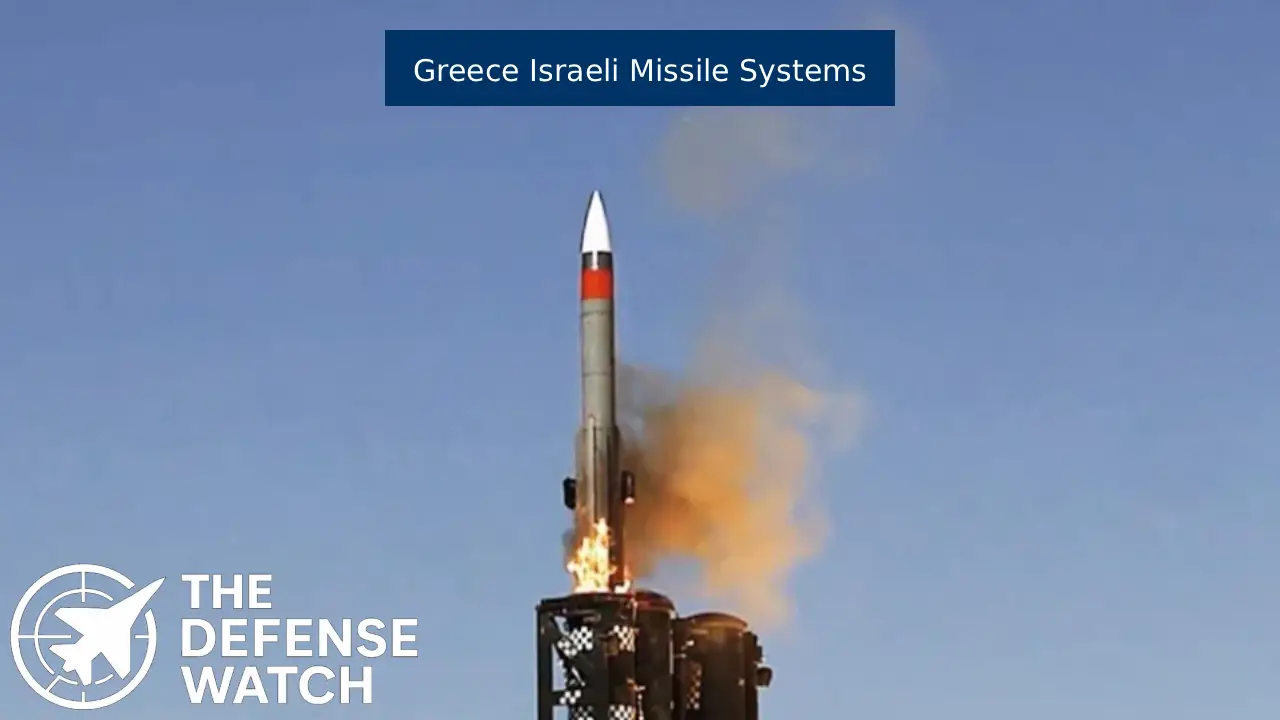
Athens, Greece – 12 November 2025 – The Achilles Shield national air-defense program will see the Hellenic Republic purchase approximately US $3.5 billion worth of missile systems from Israeli defense firms, according to a report by Army Recognition published on 12 November. The deal marks a significant step in Greece’s efforts to modernize its ageing air-defense infrastructure and shift towards networked, layered missile capabilities.
Background: Why “Achilles Shield”?
In April 2025, Greece launched the Achilles Shield program under its broader 12-year defense modernization plan, with an initial budget of roughly €2.8 billion (approximately US$3 billion) and up to €25 billion envisaged for the full program through to 2036. The aim: replace outdated Soviet- and U.S.-built air-defense systems operated by the Hellenic Armed Forces and build a modern, multi-layer missile defense posture aligned with the nation’s strategic environment in the Eastern Mediterranean.
Details of the Procurement
The report indicates that Greece intends to source primarily Israeli systems for each tier of air defense under Achilles Shield.
- For short-range defense: the Israeli SPYDER (Surface-to-air PYthon and DERby) system—developed by Rafael Advanced Defense Systems and Israel Aerospace Industries (IAI)—is slated to succeed Greece’s current Russian-made OSA-AK and TOR-M1 platforms. The SPYDER includes rapid reaction time and mobility suited for countering low-flying UAVs, cruise missiles and aircraft.
- For medium range: Greece is looking at the Israeli Barak MX system to replace its legacy U.S.-supplied MIM-23 Hawk batteries. Barak MX is a modular, software-defined launcher integrating multiple interceptors across threat domains.
- For long range: The selection reportedly leans toward the Israeli SkyCeptor (a variant of the “Stunner” missile co-developed by Rafael and Raytheon) to replace the Russian S-300 PMU-1 systems in Hellenic service. SkyCeptor is designed for ballistic and cruise missile threats and marks the shift toward NATO-standard equipment.
Greece’s shift from Russian-origin systems to Israeli platforms reflects both operational necessity and geopolitical recalibration. Older systems such as the S-300 and TOR-M1 are increasingly difficult to maintain and may not meet evolving threats posed by drones, precision-guided munitions and advanced cruise missiles.
The report emphasizes that Israel’s systems were chosen in part for shorter delivery lead times, lower life-cycle costs and opportunities for local industrial participation. For example, IAI’s past acquisition of the Greek defense-firm Intracom Defense in 2023 reportedly enhances Athens’ ability to integrate domestic content into the Achilles Shield rollout.
While contract signatures, delivery schedules and integration timelines have not been publicly disclosed, sources indicate the first tranche of systems is expected to begin deployment in 2026, with full operational capability targeted by end-2028. If the deal proceeds at the reported value, it will represent the largest missile procurement in Greek history.
Implications and Strategic Perspective
From a policy and strategic viewpoint, this procurement has multiple implications:
- Enhanced deterrence: By transforming its air-defense posture, Greece aims to reinforce national sovereignty and bolster its deterrence in a region marked by complex threats and tensions, notably with neighboring Turkey.
- NATO and interoperability: Choosing Israeli systems compatible with NATO standards signals Athens’ intent to align more closely with Western defense infrastructures and reduce reliance on ageing Russian systems.
- Industrial benefits: The local content participation element may stimulate Greece’s defense industry and support longer-term sustainment of the air-defense network.
- Regional signaling: The decision may reverberate across the Eastern Mediterranean defense market, potentially influencing future acquisitions by other states and reshaping regional supplier relationships.
What’s Next
As Greece moves forward with the Achilles Shield program, key milestones to monitor include: the formal contract award, delivery schedules for the Israeli systems, integration testing with existing Hellenic Armed Forces capability, and how the Achilles Shield architecture meshes with Greece’s broader 12-year modernization plan. The success of deployment will hinge on maintaining coverage during the transition, training personnel, and integrating multiple layers of sensor-shooters into a coherent national network.
Get real time update about this post category directly on your device, subscribe now.

7 comments
[…] Survivability and reach: By combining high-speed transit with stealth and long-range sensors, the aircraft could penetrate deep into contested airspace and evade or outrun sophisticated air-defence systems. […]
[…] deepens Franco-Hellenic industrial cooperation and strengthens Greece’s defense industrial […]
[…] after the collapse, maintenance crews from the 509th Maintenance Group and the B-2 System Program Office used airbags to lift the aircraft, manually locked the main gear, and towed the bomber into […]
[…] procurement follows broader Philippine efforts to modernize its armed forces, drawing on South Korean defense industry products in recent years. Manila has previously acquired […]
[…] the Ministry of Defence announcement, the ballistic missile will be ground-launched, carry a conventional warhead of about 200 […]
[…] at Redstone Arsenal in Huntsville, Alabama, is serving as the contracting activity for the SHIELD program under contract number […]
[…] programs exist across European armed forces, though specific structures vary by nation. Germany’s Bundeswehr operates technical schools for […]