Greece C-390 Transport Aircraft Decision Nears
Greece C-390 transport aircraft plans appear to be moving closer to a formal decision as Athens looks to restore strained military airlift capacity. Reports indicate Greece could select up to three Brazilian-built Embraer C-390 Millennium aircraft by May 2026 as a replacement path for parts of its aging C-130 Hercules fleet.
- Greece is reportedly considering an initial purchase of three Embraer C-390 transport aircraft.
- The aircraft would help replace aging U.S.-made C-130 Hercules transports in Greek service.
- Only a limited number of Greek C-130 aircraft have recently remained operational.
- The C-390 offers higher cruise speed, modern avionics, and multi-mission capability.
- A Greek decision would further expand the C-390 footprint across Europe and NATO.
The issue is operational urgency. Greece has long depended on C-130 transports for troop movement, humanitarian response, island resupply, and NATO commitments. But fleet age, maintenance delays, and spare parts challenges have reduced aircraft availability in recent years. Previous reporting indicated only a small number of Greek C-130s were mission ready.
That makes this more than a procurement story. It is a readiness story.
Why The C-390 Is Gaining Ground
The Embraer C-390 Millennium has emerged as a strong global competitor in the medium airlift market once dominated by the Lockheed Martin C-130 Hercules.
The twin-engine jet transport offers:
- Payload capacity around 26 tons
- Faster cruise speed than legacy turboprop rivals
- Troop, cargo, medevac, tanker, and firefighting roles
- Modern fly-by-wire controls and digital avionics
- Compatibility with NATO-style missions and logistics networks
For Greece, speed matters. The country must support dispersed islands, remote garrisons, and rapid contingency movement across the Aegean and Eastern Mediterranean. A faster jet transport can shorten response timelines.
Strategic Meaning For Greece
A Greece C-390 transport aircraft purchase would also signal a broader shift in defense sourcing. Greece remains a major customer of U.S. and European systems, including fighters, helicopters, and naval platforms. Choosing a Brazilian aircraft would show Athens is willing to diversify suppliers when capability and delivery timelines align.
That does not mean abandoning U.S. systems. Instead, it reflects a practical trend seen across Europe, where governments increasingly seek faster acquisition cycles, lower lifecycle cost, and wider industrial partnerships.
Growing European Momentum
The C-390 has already secured customers including Portugal, Hungary, Austria, the Netherlands, Czech Republic, Slovakia, Sweden, and South Korea, helping Embraer build credibility in NATO-aligned markets. Reuters previously reported Austria and the Netherlands formalized a joint nine-aircraft order.
If Greece joins that list, the aircraft’s European presence would deepen further, improving training, sustainment, and interoperability opportunities.
What Happens Next
No official contract has yet been announced by Athens or Embraer. Final timing will depend on budget approvals and defense priorities. But if a May 2026 decision materializes, Greece could move quickly to rebuild a transport fleet that has become increasingly stressed.
For the Hellenic Air Force, replacing old aircraft is not optional forever. It is becoming urgent.
Greece Arrests Military Insider in Espionage Case
Greece military espionage arrest has sent shockwaves through the country’s defense and security establishment, after authorities confirmed the detention of a member of the armed forces accused of spying. The case, reported by Reuters and Greek officials, involves allegations that sensitive military information was passed to a foreign intelligence service, raising serious concerns about internal security, operational secrecy, and NATO information protection.
Greek police and intelligence services said the suspect was arrested following a counterintelligence investigation that focused on unauthorized access to classified military material. The individual, whose identity has not been publicly disclosed, was described as an active member of the armed forces with access to sensitive information related to national defense.
According to Reuters, prosecutors are treating the case as a matter of national security, and formal charges are expected to follow under Greece’s strict espionage and state secrets laws.
What Greek Authorities Have Confirmed So Far
Greek officials said the arrest followed months of monitoring and intelligence gathering. Investigators reportedly identified suspicious communications and movements that pointed to a possible intelligence leak from within the military.
Authorities have not publicly named the foreign state allegedly involved, citing the ongoing investigation. However, officials stressed that the information in question related to military capabilities and operational matters, making the breach especially serious.
The Greek Ministry of Defense said it is cooperating fully with judicial authorities and intelligence services. In a brief statement, officials emphasized that internal security procedures are being reviewed to prevent similar incidents in the future.
Reuters reported that the suspect is accused of collecting and transmitting classified information over an extended period, rather than a single isolated incident.
Why the Case Matters for Greek Defense and NATO
Greece is a frontline NATO member in southeastern Europe, with strategic responsibilities in the Eastern Mediterranean, the Aegean Sea, and the Balkans. Any breach involving military espionage has implications beyond national borders, particularly when classified NATO or allied information may be involved.
Greek armed forces routinely participate in NATO exercises, intelligence sharing arrangements, and regional security missions. A confirmed insider espionage case raises questions about information security, personnel vetting, and counterintelligence coordination across allied forces.
Defense analysts note that modern militaries face growing challenges from insider threats, especially as digital systems increase the volume of sensitive data accessible to individual personnel.
Espionage Risks in the Modern Military Environment
Military espionage cases in Europe have increased in visibility over the past decade, driven by geopolitical competition, regional conflicts, and rapid advances in defense technology. Sensitive data no longer consists only of paper documents. It includes digital communications, sensor data, operational plans, and information on weapons systems.
Insiders with legitimate access can pose a higher risk than external cyber intrusions, since they may bypass many technical safeguards. This has pushed defense ministries across NATO to invest more heavily in behavioral monitoring, access controls, and continuous security vetting.
Greek defense officials have not indicated whether cyber systems were compromised in this case, but the investigation reportedly includes both digital and physical evidence.
Legal Framework and Potential Charges
Under Greek law, espionage and disclosure of state secrets carry severe penalties, including lengthy prison sentences. Prosecutors can pursue additional charges if the case involves cooperation with a foreign intelligence service or if classified NATO information was compromised.
Legal experts in Athens told Reuters that the case is likely to move quickly through preliminary hearings due to its national security nature, though a full trial could take months or longer.
The suspect remains in custody as investigators continue to assess the scope of the alleged information leak and identify any potential accomplices.
Broader Regional and Geopolitical Context
The arrest comes at a time of heightened security awareness across Europe. Ongoing conflicts, defense modernization programs, and increased intelligence activity have led governments to prioritize counterespionage efforts.
Greece in particular occupies a sensitive geopolitical position, balancing relations within NATO, managing tensions in the Eastern Mediterranean, and modernizing its armed forces with new aircraft, naval platforms, and surveillance systems.
Any compromise of defense information could affect procurement programs, operational planning, and alliance trust. For this reason, officials are expected to brief NATO partners if the investigation confirms that allied data was involved.
Defense Ministry Response and Next Steps
The Greek Ministry of Defense has said it will conduct an internal review of security procedures and access protocols. While officials stressed that the case appears to involve an individual actor, they acknowledged the need for stronger safeguards against insider threats.
Military units are also expected to receive updated guidance on handling classified information, secure communications, and reporting suspicious activity.
Greek intelligence services declined to comment on whether additional arrests are expected, but said the investigation remains active.
What Comes Next
As the judicial process unfolds, more details are likely to emerge about the nature of the information involved and the duration of the alleged espionage activity. For now, Greek authorities are keeping specifics limited to protect operational security and the integrity of the case.
For NATO and U.S. defense planners, the Greece military espionage arrest serves as a reminder that counterintelligence remains a critical component of military readiness, especially in an era of rapid technological change and intensifying geopolitical competition.
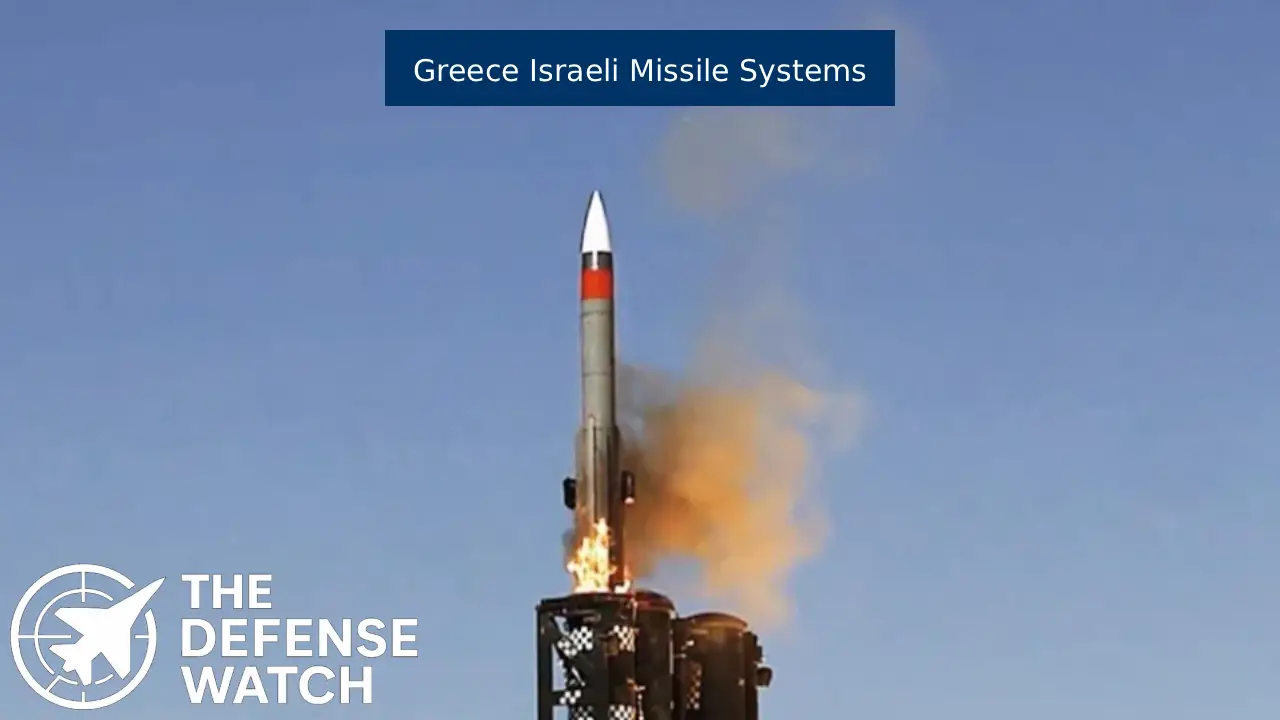
Athens, Greece – 12 November 2025 – The Achilles Shield national air-defense program will see the Hellenic Republic purchase approximately US $3.5 billion worth of missile systems from Israeli defense firms, according to a report by Army Recognition published on 12 November. The deal marks a significant step in Greece’s efforts to modernize its ageing air-defense infrastructure and shift towards networked, layered missile capabilities.
Background: Why “Achilles Shield”?
In April 2025, Greece launched the Achilles Shield program under its broader 12-year defense modernization plan, with an initial budget of roughly €2.8 billion (approximately US$3 billion) and up to €25 billion envisaged for the full program through to 2036. The aim: replace outdated Soviet- and U.S.-built air-defense systems operated by the Hellenic Armed Forces and build a modern, multi-layer missile defense posture aligned with the nation’s strategic environment in the Eastern Mediterranean.
Details of the Procurement
The report indicates that Greece intends to source primarily Israeli systems for each tier of air defense under Achilles Shield.
- For short-range defense: the Israeli SPYDER (Surface-to-air PYthon and DERby) system—developed by Rafael Advanced Defense Systems and Israel Aerospace Industries (IAI)—is slated to succeed Greece’s current Russian-made OSA-AK and TOR-M1 platforms. The SPYDER includes rapid reaction time and mobility suited for countering low-flying UAVs, cruise missiles and aircraft.
- For medium range: Greece is looking at the Israeli Barak MX system to replace its legacy U.S.-supplied MIM-23 Hawk batteries. Barak MX is a modular, software-defined launcher integrating multiple interceptors across threat domains.
- For long range: The selection reportedly leans toward the Israeli SkyCeptor (a variant of the “Stunner” missile co-developed by Rafael and Raytheon) to replace the Russian S-300 PMU-1 systems in Hellenic service. SkyCeptor is designed for ballistic and cruise missile threats and marks the shift toward NATO-standard equipment.
Greece’s shift from Russian-origin systems to Israeli platforms reflects both operational necessity and geopolitical recalibration. Older systems such as the S-300 and TOR-M1 are increasingly difficult to maintain and may not meet evolving threats posed by drones, precision-guided munitions and advanced cruise missiles.
The report emphasizes that Israel’s systems were chosen in part for shorter delivery lead times, lower life-cycle costs and opportunities for local industrial participation. For example, IAI’s past acquisition of the Greek defense-firm Intracom Defense in 2023 reportedly enhances Athens’ ability to integrate domestic content into the Achilles Shield rollout.
While contract signatures, delivery schedules and integration timelines have not been publicly disclosed, sources indicate the first tranche of systems is expected to begin deployment in 2026, with full operational capability targeted by end-2028. If the deal proceeds at the reported value, it will represent the largest missile procurement in Greek history.
Implications and Strategic Perspective
From a policy and strategic viewpoint, this procurement has multiple implications:
- Enhanced deterrence: By transforming its air-defense posture, Greece aims to reinforce national sovereignty and bolster its deterrence in a region marked by complex threats and tensions, notably with neighboring Turkey.
- NATO and interoperability: Choosing Israeli systems compatible with NATO standards signals Athens’ intent to align more closely with Western defense infrastructures and reduce reliance on ageing Russian systems.
- Industrial benefits: The local content participation element may stimulate Greece’s defense industry and support longer-term sustainment of the air-defense network.
- Regional signaling: The decision may reverberate across the Eastern Mediterranean defense market, potentially influencing future acquisitions by other states and reshaping regional supplier relationships.
What’s Next
As Greece moves forward with the Achilles Shield program, key milestones to monitor include: the formal contract award, delivery schedules for the Israeli systems, integration testing with existing Hellenic Armed Forces capability, and how the Achilles Shield architecture meshes with Greece’s broader 12-year modernization plan. The success of deployment will hinge on maintaining coverage during the transition, training personnel, and integrating multiple layers of sensor-shooters into a coherent national network.