
What Happened
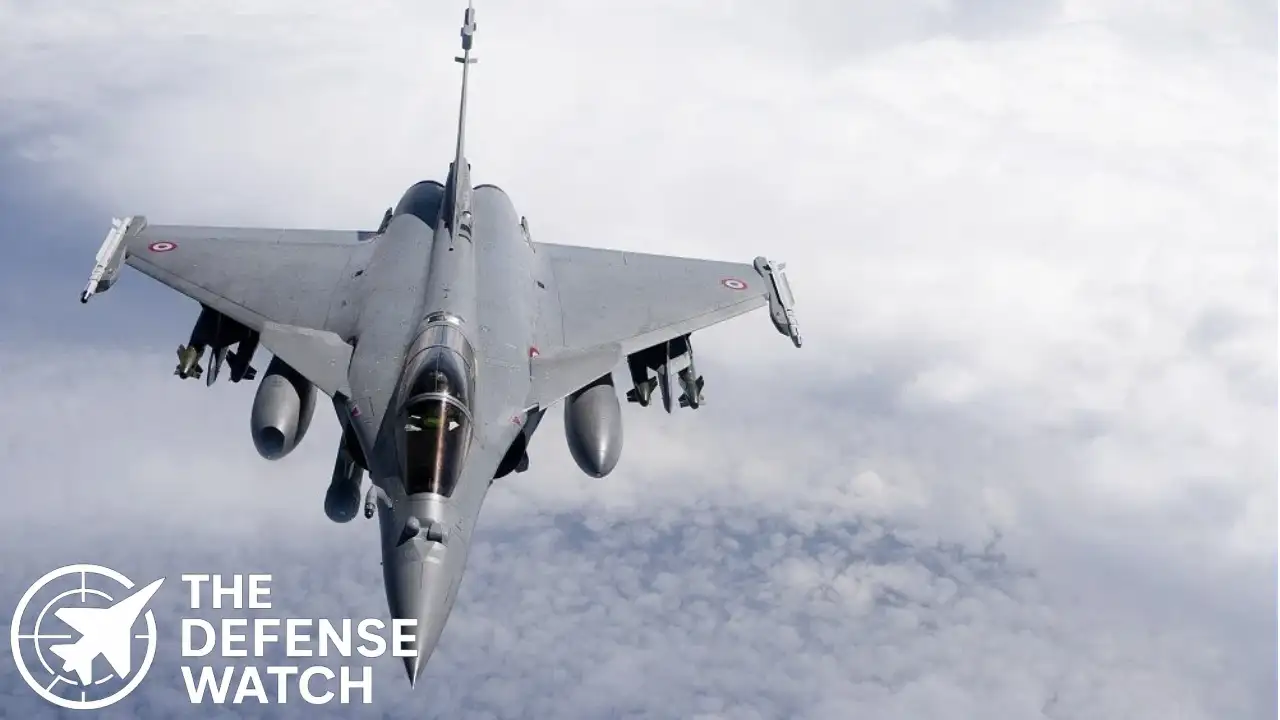
A bipartisan report from the U.S.-China Economic and Security Review Commission (USCC) accuses China of mounting a coordinated disinformation campaign to discredit the French Rafale fighter jet following a tense India–Pakistan confrontation in May 2025.
According to the report, Beijing deployed fake social media accounts, circulated AI-generated and video-game images of supposed aircraft wreckage, and leveraged its diplomatic missions to spread narratives undermining the Rafale’s performance.
French intelligence contributed to the assessment, claiming that Chinese defense attaches actively lobbied other governments—notably Indonesia—to halt Rafale purchases in favor of Chinese alternatives.
The report also claims that China used the conflict as a sales opportunity—highlighting Pakistan’s purported use of Chinese weaponry to shoot down Indian Rafales as proof of its systems’ “success.”
Beijing, however, strongly rejected the allegations. A Chinese Foreign Ministry spokesperson called the report ideologically biased and lacking in credibility.
Background: Why It Matters
The Rafale, designed by Dassault Aviation, is a key export for France’s defense sector, with more than half a dozen countries operating the multirole fighter.
Tensions flared in May 2025 when India and Pakistan engaged in a four-day military clash, during which Pakistan allegedly used Chinese-made J-10 aircraft and PL-15 missiles.
The U.S. commission’s report argues that China leveraged that conflict not only as a real-world test of its weapons systems (including the J-10, HQ-9 air-defense system, and PL-15 missile), but also as a public relations and marketing tool.
Key Findings and Claims
Disinformation Tactics
- The USCC report states China employed fake social media accounts to amplify imagery of what it claimed were wrecked Rafale jets—images that were in fact generated through AI or extracted from video games.
- Chinese embassies allegedly publicly celebrated “successes” of their weapons during the India–Pakistan conflict to bolster broader arms export messaging.
Targeting Rafale Sales
- According to French intelligence cited in the report, Chinese diplomats persuaded Indonesia to stop an in-flight Rafale procurement deal.
- The report also claims that China offered Pakistan up to 40 J-35 fifth-generation jets, along with KJ-500 early warning aircraft and missile defense systems, shortly after the conflict.
Disputed Combat Claims
- While Pakistan reportedly shot down at least one Indian jet, the commission notes that only three Indian aircraft were lost—and it’s not confirmed that all were Rafales.
- French military leaders and analysts argue that the narrative of Rafale losses was weaponized by Chinese messaging to boost confidence in Chinese-made aircraft.
Chinese Denial
- Beijing has dismissed the report as politically motivated. The Chinese Foreign Ministry spokesperson said the USCC “has always held an ideological bias against China and has no credibility.”
- China’s Ministry of National Defense has called the claims “pure groundless rumours.”
Expert and Policy Implications
Geopolitical Competition in Arms Exports
This report underscores how geopolitical rivalry now extends deeply into the information sphere. By allegedly executing a disinformation campaign, China appears to be pushing its military-export ambitions not just through direct sales, but also via narrative warfare.
For France and Dassault, damage to the Rafale’s reputation could translate into lost orders, making this more than just a marketing risk—it’s a strategic threat to a cornerstone of France’s defense-industrial base.
Conflict as a Testbed
The May 2025 India–Pakistan clash may have offered Beijing more than battlefield credibility: according to the USCC, it served as a “live” demonstration of Chinese systems. For China, using a real-world conflict to validate and then promote its platforms to third-party buyers reflects a sophisticated model of leveraging conflict-driven optics for defense diplomacy.
The Role of Diplomacy in Arms Sales
The report’s claim that Chinese embassies actively lobbied against Rafale sales illustrates how states are integrating diplomatic channels into their arms export strategies. Such tactics muddy the line between statecraft and commerce.
Information Warfare Risks
If confirmed, this disinformation effort signals a broader risk in modern defense sales—namely, the weaponization of digital platforms to manipulate perceptions. It’s a warning for Western defense exporters: even superior hardware can be undercut by well-coordinated narrative campaigns.
What to Watch Next
- Responses from Dassault and France: Will Dassault issue its own rebuttal, and how will Paris respond to these reputational allegations?
- Indonesia’s Decision on Rafale: Will Jakarta clarify whether it postponed or cancelled any Rafale deal under pressure?
- Global Arms Market Effects: Will this cycle of information warfare affect other major defense-exporters, particularly in Europe?
- Further U.S. Policy Action: Will the U.S. Congress or other institutions respond, perhaps with measures to protect European defense firms from state-led disinformation?
Conclusion
The USCC’s report, if accurate, highlights a new front in strategic competition—one where narratives and images, not just missiles and aircraft, are central to power projection. For France and its Rafale jet, the stakes are high: reputational damage could translate into significant financial and geopolitical losses. For China, the effort shows how it is increasingly integrating its defense-industrial ambitions with diplomatic tools and digital influence. As arms export battles become more closely tied to state-led information campaigns, the future of aerospace competition may be reshaped not only by platforms, but by perception.
Get real time update about this post category directly on your device, subscribe now.

4 comments
[…] allege several Indian fighters were downed by J‑10CEs during the engagements, including Rafale jets and other types. These claims remain contested, as India has consistently withheld public […]
[…] Sukhoi Su-30s, F-16s, and training aircraft. The enhanced sensor suite and weapons load of the Rafale jets are seen as key upgrades to the nation’s air combat […]
[…] delivered the required notification to Congress under Section 36(b) of the Arms Export Control Act on behalf of the Government of Israel. The sale, transmittal number 25-87, covers 3,250 […]
[…] November 2024, French Rafale jets deployed to Germany, Croatia, and Poland, practicing ACE procedures at NATO bases with minimal […]