U.S. Awards Major Infrared Sensor Contract to Strengthen Taiwan Air Defense
The United States government has awarded Lockheed Martin a $328.5 million Foreign Military Sales (FMS) contract for the production and delivery of advanced infrared sensor systems to the Taiwan Air Force, the defense contractor announced February 2, 2026. The contract marks Taiwan as the first international partner to receive Lockheed Martin’s Legion-ES configuration of the IRST21 infrared search-and-track system.
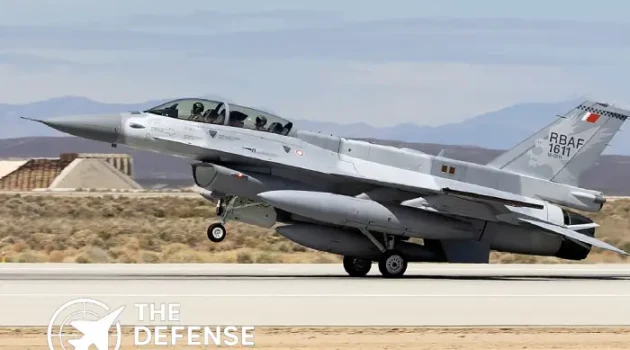
The Legion-ES system represents a critical enhancement to Taiwan’s air defense capabilities, providing F-16 fighter aircraft with passive detection technology capable of tracking airborne threats at extended ranges without emitting detectable signals. According to the company’s announcement, the low-profile sensor system is specifically designed for integration with F-16 platforms to complement existing aircraft performance.
Advanced Passive Sensing Technology
The IRST21 Legion-ES is a long-wave infrared system that passively detects and tracks airborne targets without the use of active radar emissions. This passive capability offers significant tactical advantages in contested airspace, allowing pilots to detect threats while maintaining a lower electromagnetic signature that reduces the risk of detection by adversary systems.
“This award marks an important milestone as Taiwan becomes the first international partner to receive the Legion-ES IRST21 configuration,” said Cristin Stengel, program director for Lockheed Martin IRST21. This system will bring advanced passive sensing capability to strengthen situational awareness, accelerate decision-making and support our allied air forces.”
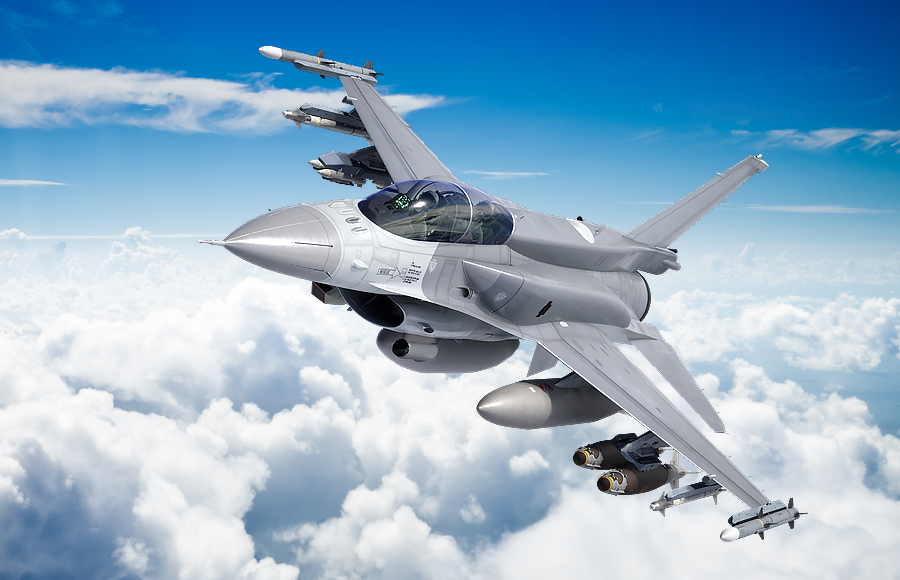
The system’s embedded and fully integrated design provides critical technology to detect and track airborne threats with high accuracy, directly increasing pilot reaction time and enhancing survivability for Taiwan’s fighter fleet. The integration with F-16 aircraft aligns with Taiwan’s existing fighter inventory, which includes both legacy F-16A/B Block 20 aircraft and newer F-16V Block 70/72 variants acquired through previous FMS agreements.
Proven Track Record
Lockheed Martin’s infrared search-and-track systems have accumulated more than 300,000 combined flight hours across various platforms, demonstrating operational reliability and effectiveness. The Legion-ES configuration builds on this extensive operational heritage while incorporating advanced sensor technology specifically optimized for the F-16 platform.
The system’s passive detection capability is particularly valuable in modern air combat scenarios where electronic warfare and radar warning receivers have become increasingly sophisticated. By detecting targets through their infrared signatures rather than relying on active radar emissions, the Legion-ES allows pilots to maintain situational awareness while operating in electromagnetic silence.
Strategic Context
The contract award comes amid ongoing U.S. efforts to strengthen Taiwan’s defensive capabilities in the face of growing regional security challenges. Taiwan has been modernizing its air force through multiple acquisition programs, including the procurement of 66 new F-16V Block 70/72 aircraft announced in 2019, representing an $8 billion deal that marked the first new fighter sale to Taiwan in decades.
The addition of advanced infrared sensor technology enhances the effectiveness of Taiwan’s fighter fleet without requiring new aircraft platforms. The Legion-ES system provides capabilities that complement existing onboard radar systems, creating a multi-sensor approach to threat detection and tracking that improves overall mission effectiveness.
Taiwan operates approximately 140 F-16 aircraft, including upgraded F-16V variants that feature active electronically scanned array (AESA) radar and modernized avionics. The integration of Legion-ES sensors will provide these aircraft with enhanced detection capabilities, particularly against advanced aircraft that employ stealth characteristics or operate in electronic warfare environments.
Foreign Military Sales Process
The Foreign Military Sales program enables U.S. allies and partners to purchase defense equipment through the U.S. government, with the Department of Defense managing the acquisition process. FMS agreements undergo congressional notification procedures and receive approval from multiple U.S. government agencies before contracts are awarded to defense contractors.
The $328.5 million contract value includes the production and delivery of multiple Legion-ES sensor systems, along with associated support equipment and technical services. Lockheed Martin’s Missiles and Fire Control division, headquartered in Orlando, Florida, serves as the prime contractor for the IRST21 program.
Regional Implications
The technology transfer represents confidence in Taiwan as a security partner and demonstrates U.S. commitment to supporting Taiwan’s defensive capabilities through access to advanced military technology. The Legion-ES system will provide Taiwan’s air force with capabilities comparable to those employed by U.S. forces, improving interoperability and shared operational concepts.
Regional security analysts note that enhanced air defense capabilities contribute to overall deterrence by improving the defensive posture of U.S. allies and partners. The passive detection capability provided by infrared search-and-track systems is particularly valuable in scenarios involving advanced aircraft that may employ reduced radar cross-sections or operate in support of electronic attack platforms.
System Integration and Delivery
Lockheed Martin has not disclosed specific delivery timelines for the Legion-ES systems under the new contract. However, FMS programs typically involve multi-year delivery schedules that coordinate with recipient nation training programs and integration planning. The company’s production facilities and integration teams will work with Taiwan’s air force to ensure successful fielding of the new capability.
The embedded design of the Legion-ES system simplifies integration compared to podded infrared search-and-track systems, reducing aerodynamic drag and preserving weapon station availability. This configuration advantage makes the Legion-ES particularly well-suited for the F-16 platform, which benefits from maintaining its full complement of external stores stations for weapons and fuel tanks.
Technology Leadership
Lockheed Martin’s development of the IRST21 family of sensors positions the company as a leader in passive detection technology for fighter aircraft. The Legion-ES configuration joins other IRST21 variants, including systems designed for different aircraft platforms and operational requirements. The company’s investment in infrared sensor technology addresses growing demand for passive detection capabilities as electromagnetic spectrum operations become increasingly contested.
The more than 300,000 flight hours accumulated by Lockheed Martin infrared systems provide extensive operational data that informs continued system refinement and capability enhancement. This operational heritage gives customers confidence in system reliability and performance under real-world operational conditions.
Broader Defense Relationship
The contract award adds to the substantial defense relationship between the United States and Taiwan, which has seen multiple major equipment sales in recent years. Beyond fighter aircraft and sensors, U.S. defense sales to Taiwan have included air defense systems, naval platforms, precision munitions, and support services that collectively enhance Taiwan’s defensive capabilities across multiple domains.
The Legion-ES contract demonstrates that defense cooperation extends beyond platform sales to include advanced subsystems and technologies that enhance the effectiveness of existing equipment. This approach allows Taiwan to maximize the capability of its current inventory while preparing for future modernization requirements.
The Foreign Military Sales framework provides structured processes for technology transfer, training, and sustainment support that help ensure successful integration of new capabilities. Lockheed Martin will work through established FMS channels to deliver the Legion-ES systems and provide associated support services.
Industry Perspective
For Lockheed Martin, the Taiwan contract represents the first international sale of the Legion-ES configuration and validates the system’s appeal to U.S. allies seeking advanced air defense capabilities. International sales help support production lines and reduce per-unit costs while expanding the customer base for continued system development and enhancement.
The defense contractor’s Missiles and Fire Control division has developed a robust portfolio of sensor systems, precision weapons, and fire control technologies that serve customers worldwide. The IRST21 family of products represents a key capability area that addresses persistent demand for advanced detection systems.
As regional security dynamics evolve and air defense requirements become more complex, passive detection capabilities like those provided by the Legion-ES system are expected to see continued demand from U.S. allies and partners operating F-16 aircraft and other compatible platforms.
The contract award underscores the strategic importance of sensor technology in modern air combat and highlights the role of Foreign Military Sales in strengthening defense partnerships through access to advanced U.S. military technology.
Get real time update about this post category directly on your device, subscribe now.