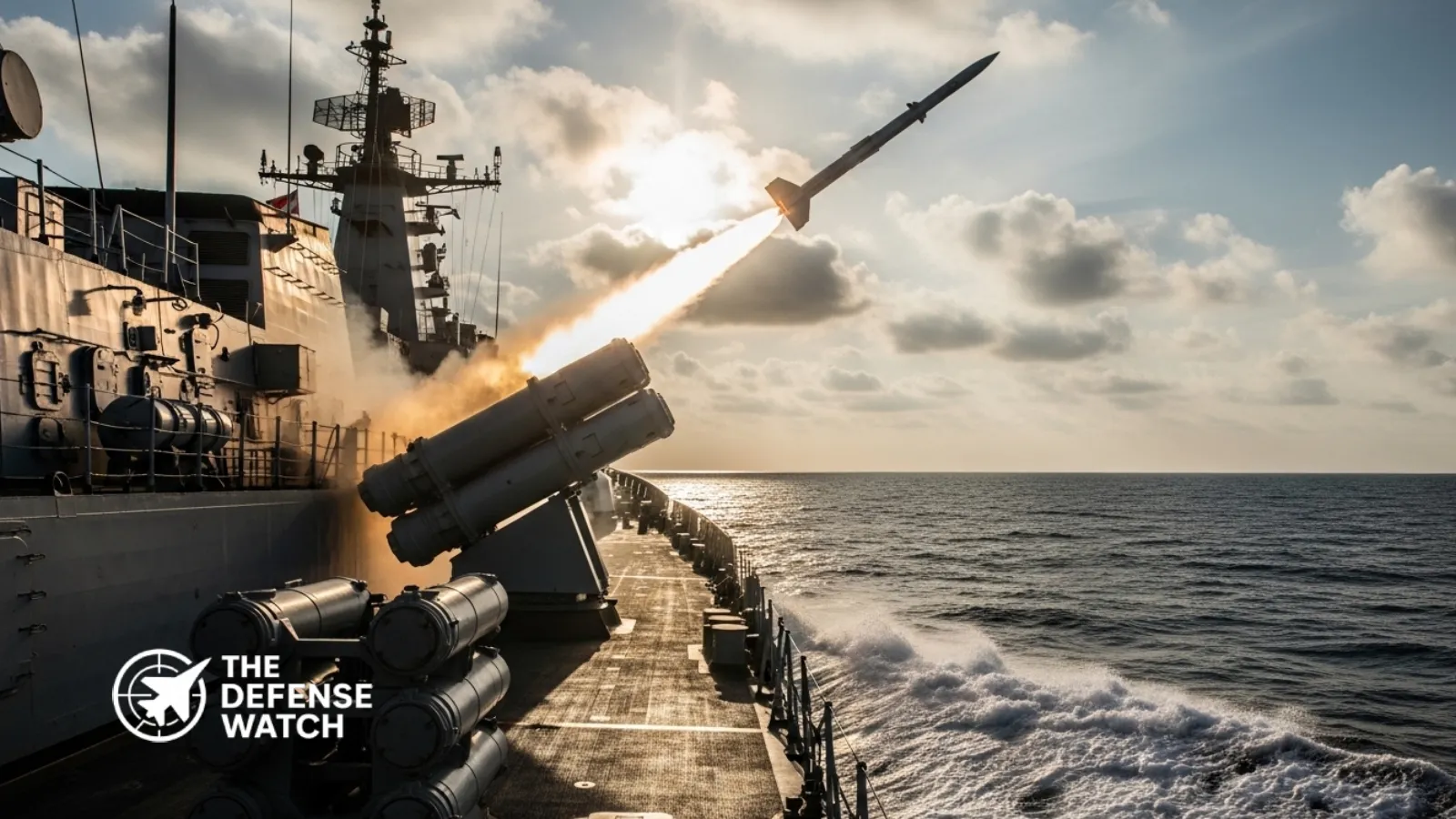
- ► India’s Ministry of Defense signed a $238 million missile contract with Russia’s Rosoboronexport.
- ► The agreement covers Shtil-1 naval air defense system missiles for Indian Navy frigates.
- ► The missiles are expected to include 9M317ME medium range interceptors designed for ship based air defense.
- ► The weapons will equip Project 11356 class frigates serving in the Indian Navy.
- ► Two frigates were delivered in 2024 and 2025 while two more are being built in India at Goa Shipyard Limited.
India Orders Russian Shtil-1 Missiles For Indian Navy Frigates
India has signed a $238 million contract with Russia’s Rosoboronexport for Shtil-1 naval air defense missiles, strengthening the defensive capabilities of several Indian Navy frigates. The agreement focuses on supplying 9M317ME medium range missiles for the Shtil-1 system installed on Project 11356 class warships.
According to information released by defense officials, the Russian Shtil-1 missile deal will ensure continued missile stocks for the Indian Navy’s frigate fleet. The contract reflects India’s long standing naval cooperation with Russia, particularly in the field of shipborne air defense systems.
The missiles will be deployed aboard Project 11356 class frigates, a series of guided missile warships developed from the Russian Admiral Grigorovich design and adapted for Indian naval requirements.
Shtil-1 Naval Air Defense System
The Shtil-1 air defense system is a modernized naval variant of the Buk family of surface to air missile systems. It is designed to protect warships against a range of aerial threats including aircraft, helicopters, anti ship missiles, and certain types of unmanned aerial vehicles.
The system uses the 9M317ME missile, a vertically launched interceptor capable of engaging targets at ranges of up to roughly 50 kilometers depending on operational conditions. The missile uses semi active radar guidance and is integrated with shipborne fire control radars.
Compared with earlier naval Buk variants, Shtil-1 introduces vertical launch capability, allowing ships to fire missiles without rotating launchers toward the target. This improves response time and allows multiple intercepts against incoming threats.
For modern naval combat environments, such rapid response air defense capability is essential, particularly as anti ship missiles and drones have become more common in regional conflicts.
Integration With Project 11356 Frigates
The Russian Shtil-1 missile deal specifically supports the air defense systems installed on India’s Project 11356 class frigates.
Two of these ships were constructed in Russia and delivered recently:
• INS Tushil (F70) delivered in 2024
• INS Tamal (F71) delivered in 2025
Both ships are equipped with the Shtil-1 system as their primary medium range air defense layer.
Two additional ships of the same class are currently under construction in India at Goa Shipyard Limited, under a technology transfer arrangement between New Delhi and Moscow.
The ships, reportedly named Triput and Tavasya, will also carry the Shtil-1 system, making the new missile supply contract critical for their operational readiness once they enter service.
Strategic Role In Fleet Air Defense
For the Indian Navy, the 9M317ME missile plays a key role in layered fleet defense.
Modern warships rely on several defensive rings:
- Long range air defense missiles
- Medium range systems such as Shtil-1
- Short range missiles and close in weapon systems
Within this structure, the Shtil-1 system protects ships against incoming aircraft and cruise missiles before they reach close range defenses.
As maritime threats evolve, naval planners increasingly emphasize integrated air and missile defense across surface fleets. Systems like Shtil-1 allow frigates to operate independently or within task groups while maintaining credible air defense coverage.
India Russia Naval Defense Cooperation
The Russian Shtil-1 missile deal highlights the continued defense partnership between India and Russia, particularly in naval platforms and weapons.
Russia has been a long term supplier of naval equipment to India, including submarines, frigates, missile systems, and aviation assets. Several major Indian Navy platforms remain Russian designed or based on Russian technology.
At the same time, India has been gradually expanding domestic shipbuilding capacity. The Project 11356 program reflects this hybrid model, combining Russian design and technology with Indian shipyard construction.
Defense analysts note that such arrangements allow India to maintain operational compatibility with existing Russian systems while expanding its local shipbuilding and integration expertise.
Future Outlook For Indian Naval Air Defense
As regional naval competition intensifies in the Indian Ocean and Indo Pacific, India continues to invest in both indigenous and imported defense technologies.
While the Russian Shtil-1 missile deal focuses on sustaining existing systems, India is also pursuing other air defense projects, including locally developed missile systems and integration with advanced radar networks.
Maintaining sufficient missile inventories remains a critical part of naval readiness. Surface combatants must carry enough interceptors to counter potential saturation attacks involving multiple incoming missiles or drones.
The new missile supply contract therefore supports not only current frigate operations but also the long term combat sustainability of India’s expanding surface fleet.
Get real time update about this post category directly on your device, subscribe now.