
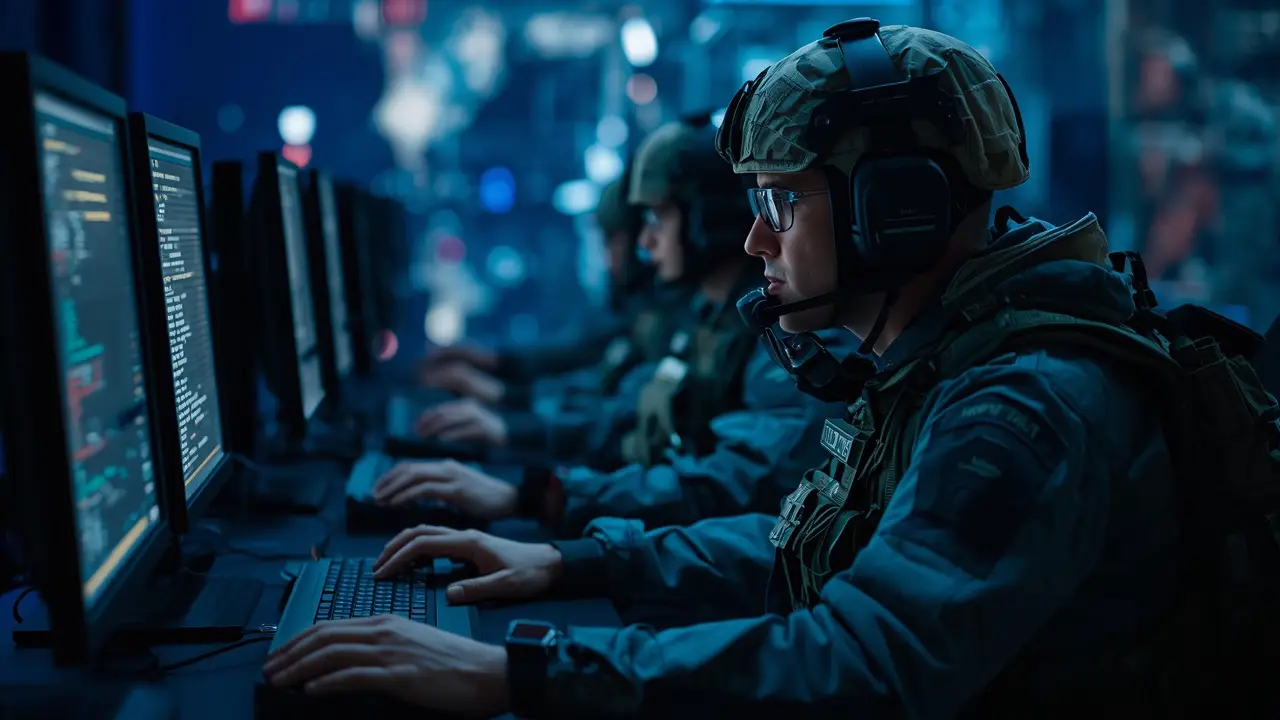
Subheading: Military Cyber Training in an Evolving Threat Landscape
The increasing complexity of cyber threats in 2025—ranging from AI-driven phishing to strategic attacks on critical infrastructure—has made military cybersecurity training a top national security imperative. Across branches, U.S. military services are enhancing programs to ensure personnel remain mission-ready in both offensive and defensive cyber operations.
Subheading: Space Force’s Cyber Combat Course (C3) Sets the Standard
The Space Force’s Cyber Combat Course (C3), offered by Combat Training Detachment 1 (CTD 1) at Schriever SFB, Colorado, stands out as a leading-edge program. Launched in 2023 under Space Delta 6, the 15-week, self-paced course splits into two phases: red-team offensive tactics and blue-team defensive operations. Each culminates in a capstone exercise and awards industry-recognized certifications.
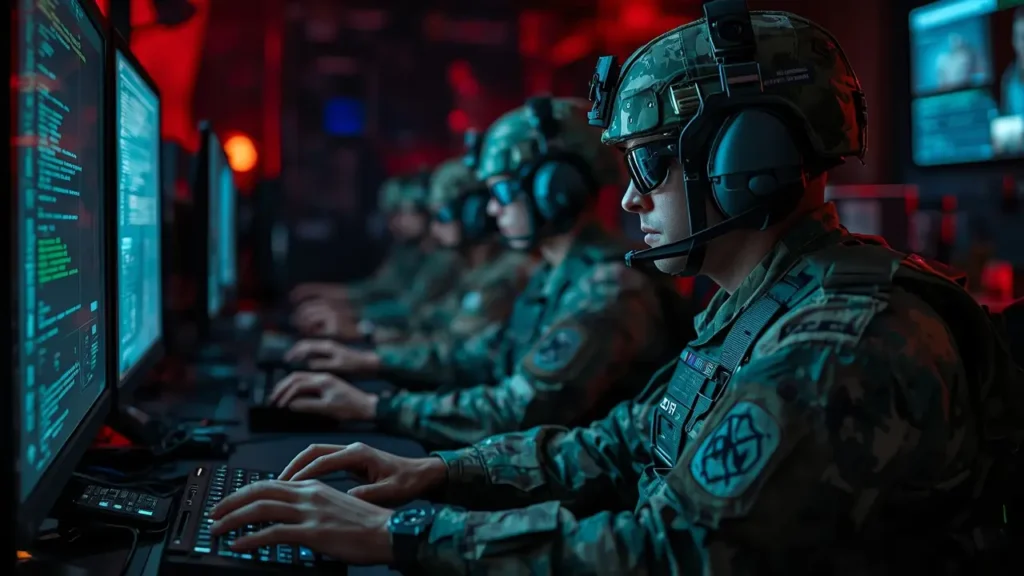
By mid-2025, C3 had produced more than 277 cyber operators across 22 sessions. Since July 2024, the program has transferred to the 533d Training Squadron under STARCOM, signaling its expansion across the Space Force.
Subheading: DoD Cyber Crime Center (DC3) Cyber Training Academy
Since 1998, the DoD Cyber Crime Center’s (DC3) Cyber Training Academy has delivered foundational cyber training across the Department of Defense. This includes over 30 distinct classroom, online, and instructor-led virtual courses. The Academy supports entities like Cyber Mission Forces, Cyber Protection Teams, and Mission Defense Teams with essential digital forensics and cybersecurity skills.
Subheading: Army Cyber Protection Brigade’s Role in Readiness
While not a training institution per se, the U.S. Army Cyber Protection Brigade (CPB) at Fort Gordon under U.S. Army Cyber Command plays a critical role. Since 2015, the CPB provides regular cyber training exercises for its subordinate units—most notably the 1st and 2nd Cyber Battalions and the 60th Signal Battalion—ensuring robust defense posture for defense pipelines
Subheading: Civilian-Academic-Military Partnerships Boost Cyber Workforce
Programs like the National Centers of Academic Excellence in Cybersecurity (NCAE-C)—run by NSA’s National Cryptologic School and partners such as CISA, FBI, DoD, and USCYBERCOM—facilitate academic institutions in aligning curricula with national cybersecurity standards. Though not direct military training, they support the cyber talent pipeline into DoD and other security agencies.
Subheading: Civilian Auxiliary Support – Marine Corps Cyber Auxiliary
The Marine Corps Cyber Auxiliary enlists cybersecurity professionals—typically veterans or civilians—to volunteer in simulated environments and strengthen Marines’ cyber readiness. Though not hands-on cyber operators, these experts help shape training scenarios and bolster cyberspace awarenes.
Subheading: Broader Training Ecosystem – Skills Transfer for Transitioning Personnel
Beyond uniformed training, programs like DoD SkillBridge, RapidAscent, and NPower support transitioning service members and veterans entering cybersecurity careers:
- RapidAscent provides VA-approved, GI Bill-eligible cybersecurity training with hands-on, employer-aligned courses geared toward placement in entry-level cyber roles.
- NPower, as a DoD SkillBridge and Army CSP provider, offers virtual bootcamp-style training—including CompTIA Sec+, Linux+, and Splunk—tailored for those within 180 days of separation from service.
These initiatives deepen the overall cyber workforce pool and improve defense-industry readiness.
Context & Analysis
The U.S. military’s cyber training ecosystem in 2025 reflects both maturity and innovation. From specialized pipelines like the Space Force’s C3 to institutional anchors such as DC3’s Cyber Training Academy, the services are building both scale and depth. The integration of civilian volunteers and academic partnerships further broadens the talent base, ensuring that emerging threats are met with adaptable, mission-relevant training. Collectively, these programs enhance both operational readiness and the strategic pipeline of cyber professionals.
FAQs
The C3 is a 15-week cyber training program by USAF Space Force’s CTD 1 at Schriever SFB, combining red- and blue-team modules, ending in capstone exercises and industry certification.
It provides over 30 cyber courses—classroom, online, and virtual—for DoD cyber teams, including forensics, intrusion analysis, and incident response
Based at Fort Gordon, CPB conducts regular training and operational readiness exercises for its cyber battalions to safeguard military networks.
Veterans can tap into SkillBridge programs via RapidAscent or NPower to receive hands-on, VA-approved training in cyber roles using GI Bill or DoD funding.
The NCAE-C program aligns academic institutions with cybersecurity standards, feeding a qualified talent pool into military and national cyber defense roles.
Get real time update about this post category directly on your device, subscribe now.

15 comments
[…] between high-bypass and low-bypass modes mid-flight. These engines offer the dual benefits of fuel efficiency and powerful thrust—ideal for long transits and sudden bursts of speed, while generating greater electrical power and thermal management for […]
[…] in 2025, President Biden’s executive order proposed Pentagon programs using AI for cyber defense, reinforcing the policy framework enabling DARPA’s […]
[…] frequency capabilities, enhancing search, track, and discrimination performance. Installed at Clear Space Force Station, it forms part of the Ground-Based Midcourse Defense (GMD) system, tasked with […]
[…] missions within a single sortie. The aircraft is currently operated by the French Air and Space Force and the French Navy, with exports to India, Egypt, Greece, Croatia, and the United Arab Emirates […]
[…] of space assets for military […]
[…] for the first field unit — a critical step toward operational viability. The Army also plans to transition program oversight from the Rapid Capabilities & Critical Technologies Office (RCCTO) to the formal PEO […]
[…] Random Polygraph Tests:The initiative proposes unannounced polygraph examinations for staffers who hold access to sensitive data. Unlike existing clearance-renewal polygraphs in the intelligence community, this program would extend into areas traditionally exempt within the DoD. […]
[…] of transition brigades testified that these additions are reshaping how infantry operates. In one training rotation at the Joint Multinational Readiness Center, 90 percent of fire missions were observed via drone, allowing the unit to fire 50 percent […]
[…] warn that adversaries could exploit these weaknesses—either through supply manipulation or cyber disruptions—to delay U.S. and allied force readiness. The Pentagon’s emphasis on “just-in-time” manufacturing, efficient in peacetime, may need to […]
[…] Meadowlands and RMT enter operational service, the Space Force is expanding training for its electronic-warfare squadrons and integrating the systems into joint exercises. The Pentagon […]
[…] 2029, with the full fleet operational by 2035. The extended timeline reflects both the rigorous training programs required for pilots transitioning from Soviet-era platforms and the production capacity constraints faced by Dassault […]
[…] leading defense supporter and security guarantor within NATO structures. While military assistance, training programs, and equipment transfers have dominated policy discussions, diplomatic engagement has typically […]
[…] A comprehensive training and logistics program […]
[…] The firing was described as a technical milestone rather than final operational acceptance. It confirmed that the missile, weapon station, and vehicle platform can operate together under live conditions. Further integration work remains, including receipt of remaining weapon stations, integration kits, and full crew training programs. […]
[…] The dual-track program integrates academic coursework delivered by national education teachers with military training provided by specialized instructors and physical education […]