

IAI-ELTA’s radar systems drive modern air defense coverage
IAI-ELTA’s radar systems have become an expanding backbone of modern air defense networks, with new contracts and updated technology addressing a wider range of threats from long‑range missiles to low‑RCS aircraft and drones. In recent years Israel Aerospace Industries’ ELTA Systems Group has delivered, upgraded and deployed multiple radar families that serve both strategic and tactical roles across allied militaries and integrated air defense systems globally.
The portfolio ranges from long‑range early warning radars to multi‑mission 3D tactical systems, reflecting a continued emphasis on active electronically scanned array (AESA) technology and digital beam forming. These developments coincide with a broader trend in air and missile defense where situational awareness and layered detection are priorities for modern militaries.
The architecture of IAI-ELTA’s radar systems
IAI’s ELTA Systems subsidiary develops a broad set of radar solutions for air defense, surveillance and control. The company’s offerings are rooted in solid‑state AESA technology and digital signal processing, enabling high accuracy detection, tracking and classification across multiple mission sets.
Long‑range detection and early warning
One key product class is long‑range early warning and very long‑range radar systems. Among these, the EL/M‑2090 Terra dual‑band radar combines UHF and S‑band AESA arrays to deliver very long‑range detection and tracking, including ballistic missiles and high‑altitude targets. Its dual‑band architecture allows automatic handover between sub‑systems and enhanced electronic counter‑countermeasures (ECCM) resilience.
Another legacy design in this segment includes the EL/M‑2080 Green Pine series, which has served as a tracking radar for ballistic missile defense systems and has seen export and co‑production arrangements in partner nations.
Multi‑mission radar and air surveillance
IAI‑ELTA’s multi‑mission radar (MMR) family underpins several integrated air defense systems, including national missile defense shields and counter‑rocket, artillery and mortar (C‑RAM) networks. These radars serve air surveillance, weapon location and fire control functions, and have been operational in multiple countries for more than a decade.
In 2025 IAI marked delivery of its 250th MMR unit, a milestone that reflects global adoption and the critical role these radars play in providing a real‑time air situational picture for both layered defense and tactical engagements.
Tactical 3D air defense radars
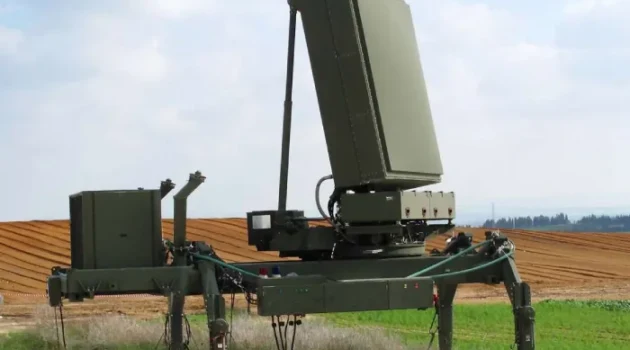
For shorter‑range tactical detection, IAI‑ELTA offers systems like the ELM‑2106NG 3D Tactical Air Defense Radar. This fourth‑generation radar is designed to detect a wide range of airborne threats, from high‑speed fighters to ultra‑light aircraft and UAVs at ranges up to approximately 80km, adding depth to joint air defense networks.
Another key system in this tier is the ELM‑2288 AD‑STAR long‑range 3D air defense and traffic control radar. It supports air defense, early warning and air traffic control missions with solid‑state S‑band 3D scanning and digital elevation beam forming.
Air defense integration and export impact
IAI‑ELTA’s radar systems have been integrated into air defense systems that span national and allied networks. The MMR series is a central element in systems like Iron Dome and David’s Sling, providing detection and tracking data that feed into interceptor launch decision loops.
Exported systems like the ELM‑2084 have been delivered to European and Asian partners. For example, radars supplied to the Czech Army were showcased integrated into their air defense architecture, highlighting interoperability with NATO systems and contributing to regional airspace security.
Contracts with nations for AD‑STAR and ELM‑2106NG radars demonstrate continued demand for flexible and transportable radar solutions capable of meeting specific terrain and mission requirements. These export programs reinforce IAI‑ELTA’s role as a key supplier in the global air defense radar market.
Technology trends in IAI‑ELTA’s radar systems
AESA and digital processing advances
Across its range, IAI‑ELTA’s radar systems leverage advanced AESA technology. AESA arrays use thousands of transmit/receive modules to steer beams electronically with no moving parts, increasing reliability and enabling rapid target update rates. This approach also enhances resistance to jamming and supports multi‑target tracking.
Modern systems increasingly integrate digital beam forming and real‑time adaptive algorithms to improve target classification and reduce false alarms. These capabilities are essential when defending against supersonic cruise missiles, low‑observable platforms and dense UAV swarms.
Networked air defense
Another trend is networked radar operations, where multiple sensors share data across defense networks. Integration with command and control systems allows faster decision cycles and a unified air picture. Radar networking also supports graceful degradation if individual nodes fail, maintaining wider operational coverage.
Operational context and strategic relevance
Modern air defense challenges involve diverse threats across altitudes and speeds. IAI‑ELTA’s radar systems address this with layered solutions that range from tactical surveillance to strategic early warning. These radars serve both standalone defense architectures and interoperable networked systems tied to allied command infrastructures.
Given global geopolitical tensions and the proliferation of advanced aerial platforms, investments in radar technology represent a core element of national defense strategies. IAI‑ELTA’s systems offer a spectrum of options that can be tailored to national requirements, from standalone tactical deployments to integrated long‑range warning networks.
Analysis: Radar evolution and U.S. air defense relevance
For U.S. readers, the evolution of IAI‑ELTA’s radar systems highlights a broader shift in air defense technology. Whereas legacy systems often relied on mechanically scanned antennas and siloed functions, modern AESA‑based radars provide rapid scanning, multi‑mode operation and networked data sharing. This parallels U.S. Department of Defense investments in next‑generation radar and sensor fusion initiatives aimed at countering near‑peer threats.
IAI‑ELTA’s global export footprint also indicates how allied nations diversify sensor sources, seeking systems interoperable with NATO and U.S. platforms while enhancing their own defense postures. For U.S. defense planners, understanding these systems’ capabilities informs both cooperative defense planning and competitive assessments in radar technology.
FAQs
What roles do IAI‑ELTA’s radar systems fill in air defense?They cover long‑range early warning, tactical 3D surveillance, multi‑mission detection, and integration with fire control systems.
How do AESA radars improve performance?They steer beams electronically, offer higher reliability, faster scans, and improved resistance to jamming.
Can these systems track UAVs and low‑RCS targets?Yes. Modern ELTA radars are designed to detect and track low‑observable and small‑target classes alongside traditional aircraft.
Are IAI‑ELTA radars interoperable with NATO systems?Some deployed systems have been integrated with NATO air defense architectures, supporting allied defense cooperation.
What export markets are active for these radars?Europe, Asia, and other regions have procured systems like the ELM‑2084 MMR, AD‑STAR, and tactical radar families.
Get real time update about this post category directly on your device, subscribe now.

7 comments
[…] or midcourse phase. By operating from orbit, these interceptors could reduce response times and expand coverage beyond what ground-based systems alone can […]
[…] radar. This system is a compact, air-cooled active sensor designed to provide fire-control capability while using less power and space than traditional radar arrays. Raytheon describes PhantomStrike as lighter and more energy efficient, making it suitable […]
[…] is intended to reduce development risk, encourage competition, and improve the speed at which new capabilities reach operational […]
[…] Officials have noted that drones are not the only option under consideration for achieving the desired surveillance capability. […]
[…] Radar networks detected the formation approaching the Swedish maritime identification zone, prompting Sweden’s Quick Reaction Alert (QRA) fighters to launch. Saab JAS 39 Gripen aircraft were scrambled to visually identify and shadow the Russian flight, which consisted of a Tu-22M bomber flanked by two Sukhoi Su-35S fighters. […]
[…] sites reflect the global reach of U.S. air and space operations and the need for reliable, standardized weather systems to support flight operations, […]
[…] The Golden Dome initiative is a proposed U.S. missile defense umbrella that the White House says would link advanced sensors and interceptors to defend against a broad set of ballistic and hypersonic threats. Discussions about the concept have included Greenland in part because of its position between North America and Eurasia, which could extend early warning and tracking capabilities. […]