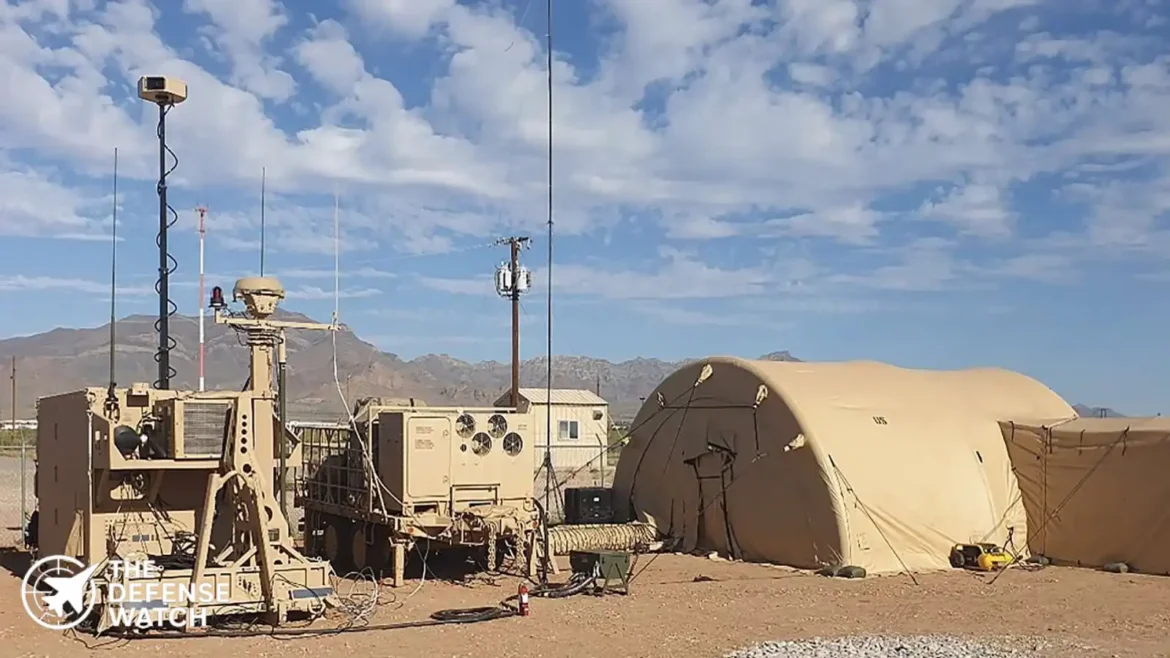
- â–º The US used the 500km Precision Strike Missile in its first confirmed combat operation against Iranian targets.
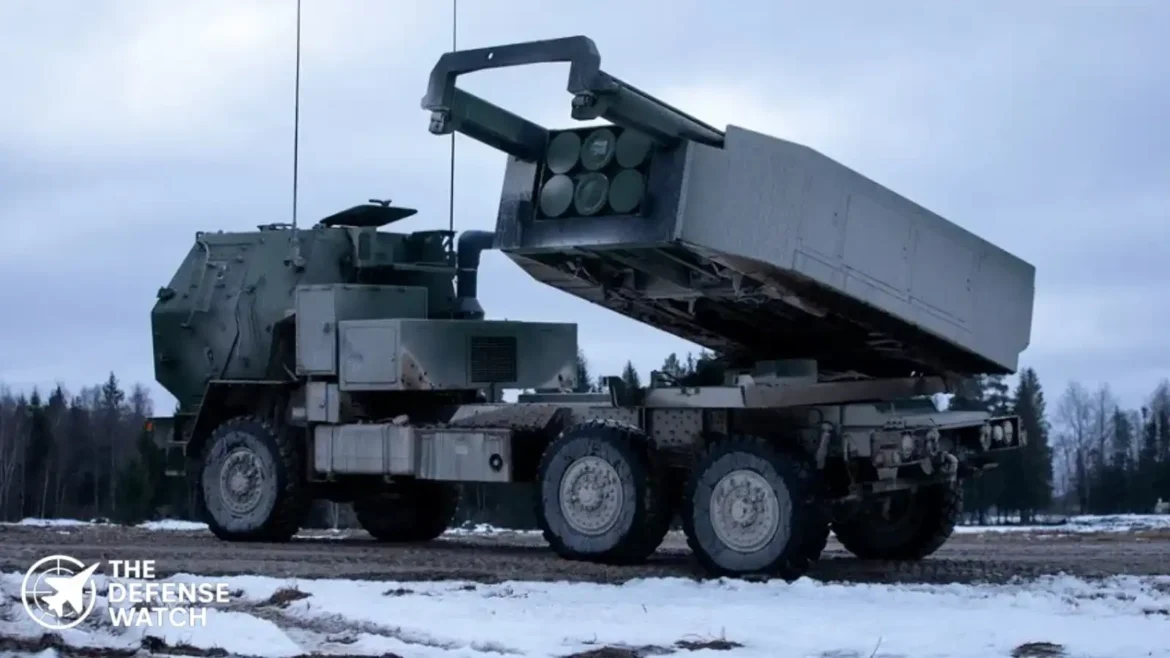
- â–º The PrSM was launched from an M142 HIMARS platform operated by US Army forces.
- â–º The strike reportedly targeted high value Iranian military infrastructure.
- â–º PrSM replaces the ATACMS system and extends US Army deep strike reach beyond 300km.
- â–º The combat debut signals a shift in how the US Army employs long range precision fires in regional conflicts.
US Deploys 500km PrSM Ballistic Missile In First Combat Strike On Iran
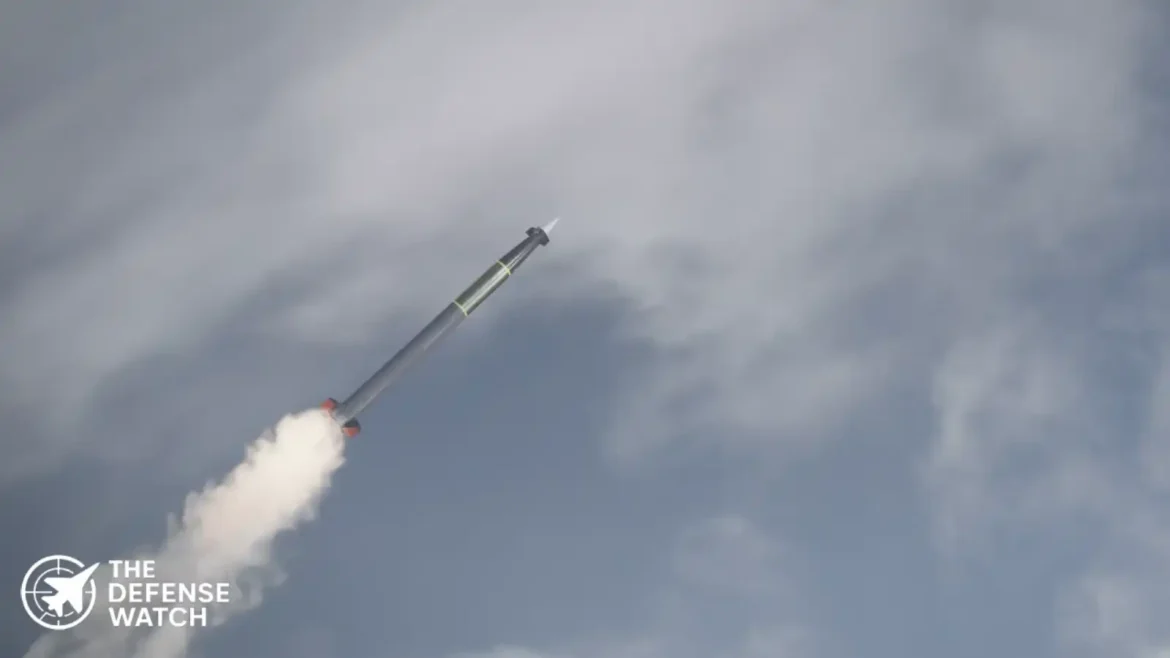
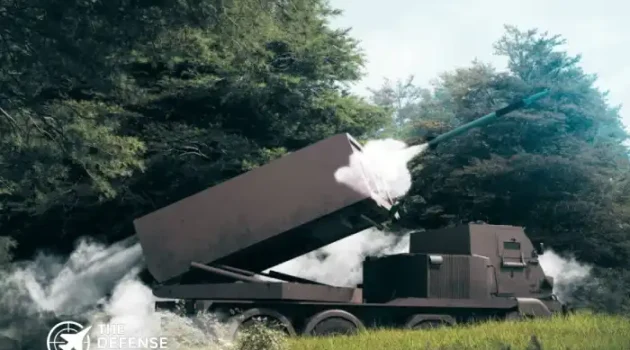
The 500km PrSM ballistic missile was used in combat for the first time during a US strike on Iranian targets, marking a major milestone for the US Army long range fires modernization program.
U.S. Central Command, the strike involved the Precision Strike Missile, or PrSM, launched from an M142 High Mobility Artillery Rocket System. The operation represents the first confirmed battlefield employment of the new missile, which is designed to replace the aging ATACMS inventory.
A New Phase For US Army Long Range Fires
The Precision Strike Missile is a next generation surface to surface ballistic missile developed by Lockheed Martin for the US Army. It is designed to engage high value targets at ranges of up to 500 kilometers under current configurations, with future increments expected to extend that range further.
PrSM is compatible with both the M142 HIMARS and the M270 Multiple Launch Rocket System. Unlike ATACMS, which carries one missile per pod, PrSM allows two missiles per launcher pod, effectively doubling the firepower available from existing platforms.
The reported use of the 500km PrSM ballistic missile in a strike on Iran suggests the US Army is now confident in its operational readiness under real combat conditions. That decision carries technical and strategic weight.
Operational And Strategic Implications
The deployment of the 500km PrSM ballistic missile changes the geometry of land based strike operations in the Middle East. With a 500km reach, US Army units can hold a broader range of fixed and mobile targets at risk without repositioning forward elements.
In a regional scenario involving Iran, this extended range allows US forces to strike command nodes, logistics hubs, air defense systems, and missile infrastructure from greater standoff distances. That reduces exposure to counterbattery fire and ballistic missile retaliation.
The PrSM also improves accuracy and survivability compared to older systems. Open source defense assessments indicate the missile incorporates improved guidance and anti access resilience features, though full specifications remain classified.
The combat debut sends a signal beyond the immediate theater. It demonstrates that the Army long range precision fires program, a top modernization priority, has moved from testing and limited fielding into active operational use.
Replacement Of ATACMS
PrSM is intended to fully replace the MGM 140 Army Tactical Missile System, which entered service in the 1990s. ATACMS has seen combat in Iraq, Afghanistan, and Syria, but its range and payload limits have constrained future use against more advanced adversaries.
By contrast, the 500km PrSM ballistic missile restores overmatch in deep fires while complying with post INF Treaty realities. After the collapse of the Intermediate Range Nuclear Forces Treaty in 2019, the United States was no longer bound by the 500km cap, though initial PrSM variants are reported to operate within that threshold.
The missile forms part of the Army broader Long Range Precision Fires portfolio, which also includes hypersonic weapons development and extended range cannon artillery.
Regional Escalation Risks
The use of the 500km PrSM ballistic missile in a strike on Iran carries geopolitical consequences. Iran has invested heavily in layered air defense systems and its own ballistic missile arsenal. A confirmed US employment of PrSM could influence Iranian force posture and regional deterrence calculations.
At the same time, the operational use of PrSM underscores how the US Army is adapting to high intensity conflict environments rather than counterinsurgency operations that dominated the past two decades.
From a force design perspective, it also reinforces the relevance of ground based fires in joint campaigns traditionally dominated by airpower and naval strike assets.
What Comes Next
Future increments of PrSM are expected to include multi mode seekers capable of engaging moving maritime targets, potentially expanding the missile role into anti ship missions. That would align with US efforts to counter anti access strategies in contested theaters.
For now, the first combat use of the 500km PrSM ballistic missile marks a clear turning point. It confirms the system has transitioned from development and limited operational capability into active combat employment.
The move will likely accelerate allied interest in long range precision fires, particularly among NATO and Indo Pacific partners already operating HIMARS platforms.
- â–º Hypersonix Launch Systems’ DART AE completed its first-ever flight in late February 2025, reaching speeds exceeding Mach 5 after launch from NASA’s Wallops Island facility in Virginia.
- ► The 3.5-meter autonomous vehicle is powered by the SPARTAN scramjet — a fully 3D-printed, hydrogen-fueled engine capable of sustained thrust up to Mach 7 with zero CO₂ emissions.
- â–º The mission, named “That’s Not A Knife” by Rocket Lab and “Cassowary Vex” by the U.S. Defense Innovation Unit, was conducted under the Pentagon’s HyCAT hypersonic testing program.
- â–º DART AE was boosted into the upper atmosphere by Rocket Lab’s HASTE rocket from Launch Complex 2 at the Mid-Atlantic Regional Spaceport before its SPARTAN engine ignited for hypersonic flight.
- â–º The flight followed Hypersonix’s A$46 million Series A funding round backed by Australia’s National Reconstruction Fund Corporation, Saab, High Tor Capital, and other investors.
Australia’s DART AE Completes First Hypersonic Flight In Landmark Test For U.S. Defense Program
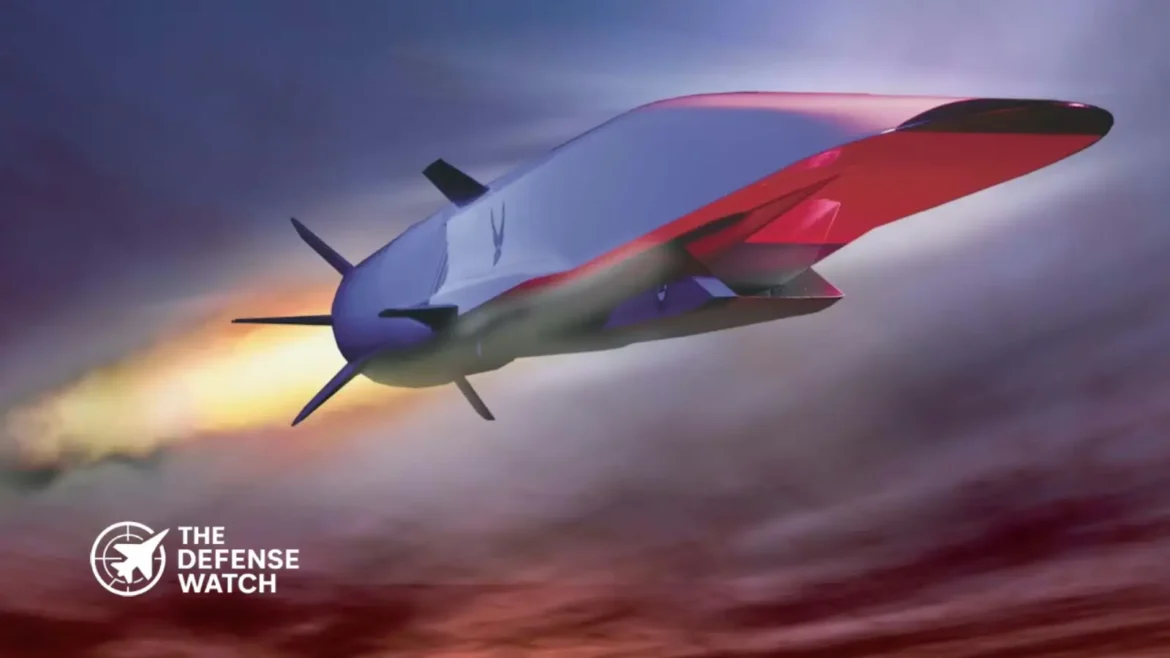
Hypersonix Launch Systems has completed the first flight of its DART AE hypersonic aircraft, which reached speeds above Mach 5 after launching from NASA’s Wallops Island facility in Virginia. The achievement marks a pivotal moment not only for the Brisbane-based aerospace firm, but for the broader U.S.-allied hypersonic development ecosystem — and signals that allied industry is increasingly capable of delivering cutting-edge test platforms to American defense programs.
For a sector long dominated by U.S. and Chinese state programs, an Australian startup achieving sustained hypersonic scramjet flight under a Pentagon contract is no small matter.
The Mission: “That’s Not A Knife”
The mission saw DART AE carried into the upper atmosphere aboard Rocket Lab’s HASTE rocket, purpose-built for hypersonic test missions. At the planned deployment point, DART AE separated and the SPARTAN engine ignited, powering the aircraft through its hypersonic flight profile.
The flight was conducted under the U.S. Department of Defense’s Defense Innovation Unit, with Rocket Lab’s HASTE launch vehicle lifting off from Rocket Lab Launch Complex 2 at the Virginia Spaceport Authority’s Mid-Atlantic Regional Spaceport on Wallops Island.
The dual mission names reflect the collaborative nature of the program — “Cassowary Vex” designated by the DIU and “That’s Not A Knife” chosen by Rocket Lab, a nod to the Australian cultural reference that underscores the flight’s national significance.
What Is DART AE?
DART AE is an autonomous 3D-printed, hydrogen-fueled scramjet technology demonstrator and is the world’s first entirely 3D-printed airframe of a hypersonic launch vehicle. Its SPARTAN scramjet engine, powered by green hydrogen, provides the necessary thrust to propel DART at hypersonic speeds. This air-breathing engine emits zero COâ‚‚ during flight.
The DART AE hypersonic system is 3.5 meters long and can travel up to a range of 1,000 kilometers at a speed of Mach 7. It can be launched via an unguided sounding rocket, a guided rocket, or air-launched.
Unlike solid-fuel or liquid-fuel ballistic test vehicles, DART AE’s scramjet design requires the vehicle to be accelerated to Mach 5 before the engine can sustain combustion — a key technical threshold that distinguishes scramjet-powered hypersonics from conventional boost-glide systems. The SPARTAN engine’s ability to self-ignite, throttle, and restart mid-flight represents a meaningful engineering advancement over prior scramjet demonstrators.
Why This Flight Matters For U.S. Defense
The launch is part of the Pentagon’s Defense Innovation Unit HyCAT program, which aims to develop affordable test platforms for hypersonic technologies. Hypersonix was selected for the program in March 2023, beating out more than 60 applicants.
The DIU’s HyCAT initiative reflects a deliberate shift in American defense acquisition strategy: rather than relying exclusively on large prime contractors for expensive, one-of-a-kind hypersonic demonstrators, the program seeks high-cadence, cost-efficient test assets from allied commercial industry. DART AE fits that model precisely.
Three flights are planned under the HyCAT program, with additional orders available without competitive tender once the technology is proven in flight. Kratos has committed to acquiring up to 20 DART AE systems from Hypersonix as part of an agreement following the successful demonstration.
That pipeline — backed by a U.S. defense contractor of Kratos’s stature — suggests DART AE is positioned not merely as a science experiment but as a candidate for operational-scale hypersonic test support in the years ahead.
The Technology Edge: Hydrogen-Fueled Scramjet
What distinguishes DART AE from competing hypersonic demonstrators is its propulsion architecture. The SPARTAN scramjet is 3D-printed and is designed to fly at speeds up to Mach 7. The aircraft will serve as a testbed for emerging and high-performance technologies.
Unlike conventional kerosene-fueled scramjets, SPARTAN is hydrogen-powered and designed to operate without moving parts. The absence of rotating components in the engine simplifies manufacturing, reduces failure points, and lowers the cost-per-flight — a critical consideration for a program designed around high-cadence testing.
The environmental angle also carries strategic weight. As defense establishments across NATO and the Indo-Pacific face increasing scrutiny over carbon footprints, a scramjet that produces only water vapor as exhaust offers both operational and political utility.
Co-founder Dr. Michael Smart, a former NASA research scientist and former Chair of Hypersonic Propulsion at the University of Queensland, emphasized that flight data is irreplaceable at these speeds. “At these speeds and temperatures, there is no substitute for flight data,” Smart said, noting that the flight allowed the team to test propulsion, materials, and control systems in real hypersonic conditions.
Funding and Industrial Scale-Up
The mission followed Hypersonix’s $46 million Series A funding round, backed by Australia’s National Reconstruction Fund Corporation and Queensland Investment Corporation. The round was led by High Tor Capital, a UK investor in national security and frontier technology, with European defense company Saab and Polish family office RKKVC also supporting the raise.
The composition of the investor group is telling. High Tor Capital’s focus on national security technology, Saab’s participation as a defense prime, and Australia’s sovereign manufacturing fund all signal that DART AE is viewed as strategically significant — not simply commercially interesting.
Hypersonix has linked the funding to expansion plans in Queensland and a faster flight-test cadence, and is also developing its next platform, VISR — Velos Intelligence, Surveillance and Reconnaissance. The company employs more than 50 people in Brisbane across aerospace engineering, advanced manufacturing, and testing roles.
What Comes Next: VISR and Delta Velos
Hypersonix is not stopping at DART AE. The company’s plans include developing the VISR and Delta Velos hypersonic vehicles. The 16-meter Delta Velos is designed to reach speeds between Mach 5 and 12 and can be used for satellite launches and low-Earth orbit resupply missions. The 8-meter VISR is designed to fly at speeds between Mach 5 and 10 and can land on a standard runway, intended for multiple applications including long-range military surveillance and high-speed cargo transport.
VISR in particular has direct military relevance. A reusable, runway-landing hypersonic surveillance platform capable of Mach 5–10 flight would address a critical gap in persistent high-speed ISR coverage — a capability that current satellite and subsonic ISR platforms cannot replicate in contested airspace.
Analysis: A Strategic Win for the U.S.-Australia Alliance
The DART AE first flight is more than a technical milestone — it is a data point in the broader strategic realignment of the Indo-Pacific defense industrial base. The AUKUS partnership has placed enormous emphasis on advanced capabilities, including hypersonics, as a pillar of deterrence. Australia’s ability to independently develop, manufacture, and fly hypersonic test vehicles — and do so under a U.S. DoD contract — demonstrates a degree of sovereign capability that strengthens the alliance’s collective deterrence posture.
For U.S. defense planners, access to allied hypersonic test assets diversifies the supply chain for critical test infrastructure. For Australia, it establishes a commercial pathway into the U.S. defense market that could generate significant export revenue and deepen technological interoperability.
The DART AE dataset will inform the design of Hypersonix’s next vehicles, with further flight tests expected as the company expands manufacturing and development in Queensland.
With two more HyCAT flights still on the schedule and a growing order pipeline through Kratos, Hypersonix is now firmly on the map as a credible hypersonic systems developer — one with direct ties to the U.S. defense innovation ecosystem.
- â–º The U.S. Navy has approved the StormBreaker smart weapon for operational use on the F A 18E F Super Hornet.
- â–º StormBreaker is developed by :contentReference[oaicite:0]{index=0} and designated GBU 53 B by the U.S. military.
- â–º The weapon features a tri mode seeker combining millimeter wave radar, imaging infrared, and semi active laser guidance.
- â–º StormBreaker enables engagement of moving targets in adverse weather and low visibility conditions.
- â–º The weapon is already integrated on the U.S. Air Force F 15E Strike Eagle and F 35 Lightning II.
- â–º Approval expands precision strike options for carrier air wings operating worldwide.
StormBreaker Super Hornet Integration Strengthens Carrier Strike Flexibility
The StormBreaker Super Hornet integration marks a significant expansion of the U.S. Navy’s precision strike toolkit. With approval for operational use on the F A 18E F Super Hornet, carrier air wings gain an all weather, network enabled weapon capable of engaging moving targets on land and at sea.
This matters now because naval aviation is increasingly expected to operate in contested environments, including the Western Pacific and Middle East. Weather, electronic warfare, and target mobility can limit traditional laser or GPS guided munitions. StormBreaker is designed to address those constraints.
Operational Impact For Carrier Air Wings
The GBU 53 B StormBreaker combines millimeter wave radar, imaging infrared, and semi active laser guidance into a single tri mode seeker. That allows aircrews to select guidance modes based on conditions and target type.
For the Super Hornet, this provides several operational advantages:
First, true moving target capability in poor visibility. Naval strike missions often involve dynamic maritime or littoral targets. Traditional laser guided bombs can struggle in cloud cover or dust. Millimeter wave radar provides an independent targeting channel.
Second, increased standoff flexibility. StormBreaker’s glide profile allows launch outside certain short range air defense envelopes. While not a long range cruise missile, it offers greater reach than many legacy unguided or short range guided bombs.
Third, networked targeting. The weapon can receive in flight updates through compatible datalinks. This aligns with the Navy’s distributed maritime operations concept, where sensors and shooters may be geographically separated.
Compared to legacy weapons such as the GBU 38 JDAM, StormBreaker offers greater adaptability against mobile targets. Compared to the AGM 154 JSOW, it adds advanced seeker discrimination in cluttered environments.
For carrier commanders, that translates into a more resilient strike package when operating against near peer adversaries with layered air defenses and electronic attack systems.
Comparison With Competing Systems
StormBreaker sits in a niche between short range guided bombs and larger stand off missiles. Internationally, similar roles are filled by weapons such as the SPEAR 3 from MBDA for the F 35 and Typhoon fleets. Like StormBreaker, SPEAR 3 emphasizes networked targeting and moving target engagement.
-
China and Russia field glide and stand off munitions with varying levels of seeker sophistication. However, few publicly known systems combine tri mode seekers with networked retargeting in a compact 250 pound class weapon.
The integration on the Super Hornet also ensures commonality across U.S. services. The U.S. Air Force already employs StormBreaker on platforms including the F 15E and F 35. Cross service adoption simplifies logistics, training, and procurement planning.
Industrial And Budget Context
StormBreaker is produced by RTX through its Raytheon business. The program has faced schedule adjustments in the past, largely tied to integration and testing complexities. Approval for Navy use signals maturation of the capability.
From a budget perspective, adding StormBreaker to the Super Hornet enhances the relevance of the F A 18E F fleet as the Navy transitions gradually toward a greater share of F 35C aircraft. According to Congressional budget documents, the Navy continues to invest in Super Hornet service life extensions and Block III upgrades.
Providing the aircraft with advanced munitions helps maintain combat credibility during that transition period. It also supports the Navy’s argument that legacy fourth generation platforms can remain viable in high threat scenarios when paired with modern sensors and weapons.
Regional Security Implications
In the Indo Pacific, carrier strike groups are central to U.S. deterrence posture. Potential adversaries field mobile missile launchers, fast attack craft, and dispersed ground units designed to complicate targeting.
StormBreaker gives Super Hornets improved ability to prosecute such targets under degraded conditions. That is particularly relevant in scenarios involving island chains, coastal infrastructure, or contested sea lanes.
In the Middle East, moving targets such as small boats or mobile rocket systems have historically posed challenges. An all weather, multi mode seeker reduces reliance on permissive conditions.
While the weapon does not fundamentally alter the balance of power, it incrementally strengthens U.S. ability to conduct precision strikes with reduced collateral damage risk. Its discrimination capabilities are intended to improve target identification in complex environments.
Why It Matters Now
The approval comes as the U.S. Navy emphasizes distributed operations and survivability. Carrier air wings are expected to operate with greater dispersion and to integrate more tightly with joint and allied forces.
A network enabled smart weapon supports that approach. It allows targeting data from off board sensors, including aircraft or maritime platforms, to feed into strike missions.
At the same time, adversaries are investing heavily in air defense modernization. Precision munitions that can adapt mid course and handle adverse weather help offset those investments.
Strategic Assessment
From a regional power balance perspective, StormBreaker integration reinforces U.S. qualitative advantages rather than introducing a disruptive new capability. It enhances flexibility and resilience within existing carrier strike doctrine.
Deterrence implications are subtle but meaningful. The ability to engage moving targets in bad weather complicates adversary planning. It reduces the likelihood that environmental factors can shield high value assets.
On the procurement side, Navy approval signals continued commitment to common joint munitions. That aligns with broader Pentagon efforts to streamline inventories and increase production scalability across services.
Alliance dynamics may also benefit. Many U.S. partners operate the Super Hornet or F 35. Shared access to advanced precision weapons can support interoperability and burden sharing in coalition operations.
Escalation risks remain limited at the system level. StormBreaker is a conventional precision weapon, not a strategic asset. However, as part of a broader modernization trend, it contributes to the steady tightening of the operational environment in contested regions.
What happens next will likely involve expanded fleet fielding, training integration, and potential foreign military sales interest. The key question is not whether StormBreaker changes warfare overnight, but how it fits into the Navy’s evolving approach to distributed, networked maritime combat.
â– KEY FACTS AT A GLANCE- â–º Israel MOD signed an agreement with Ashot Ashkelon worth approximately $42 million.
- â–º The deal covers rehabilitation and supply of Merkava tank transmissions.
- â–º Work is part of a broader framework for 1,500 and 1,200 horsepower transmissions for Merkava and Namer platforms.
- â–º Cumulative orders under the project now total about $82 million.
- ► The contract supports Israel’s effort to expand its domestic defense production base.
Israel MOD Signs $42 Million Merkava Tank Transmission Deal
The Israel MOD Merkava transmission deal marks another step in strengthening the operational readiness of Israel’s main battle tank fleet while reinforcing domestic defense manufacturing capacity.
The Defense Procurement Directorate within the Israel Ministry of Defense announced the signing of a contract valued at approximately $42 million with Ashot Ashkelon Industries Ltd. The agreement covers the rehabilitation and supply of transmissions for Merkava tanks operated by the Israel Defense Forces.
According to the ministry, the contract is part of a broader strategy led by Defense Minister Israel Katz and IMOD Director General Maj. Gen. Amir Baram, aimed at expanding Israel’s defense production base and supporting ongoing force buildup initiatives.
Scope Of The Merkava Tank Transmission Deal
Under the terms of the agreement, Ashot Ashkelon will rehabilitate transmissions used in the Merkava main battle tank. The total contract value exceeds NIS 130 million, equivalent to roughly $42 million at current exchange rates.
The project falls within a larger framework covering both 1,500 horsepower and 1,200 horsepower transmissions for the Merkava tank and the Namer armored personnel carrier. To date, cumulative orders under this broader program have reached approximately $82 million, or around NIS 253 million.

Ashot Ashkelon specializes in propulsion systems, transmissions, and other complex mechanical components for armored vehicles. Its portfolio includes key subsystems for the Merkava tank family and the Namer APC, both central to the IDF’s armored maneuver formations.
Why Transmission Rehabilitation Matters
The Israel MOD Merkava transmission deal underscores the often overlooked but critical role of sustainment in armored warfare.
Modern main battle tanks are complex systems that rely heavily on reliable propulsion and drivetrain components. The Merkava, designed and produced domestically in Israel, is built to operate in demanding terrain and high tempo combat scenarios. Transmission performance directly affects mobility, acceleration, and battlefield survivability.
Rehabilitating existing transmissions rather than procuring entirely new systems can reduce lifecycle costs and shorten turnaround times. For a military operating under sustained operational demands, maintaining fleet readiness is as important as acquiring new platforms.
Industry data and military logistics studies consistently show that maintenance, repair, and overhaul activities account for a significant share of total ownership costs for armored fleets. By investing in domestic rehabilitation capacity, Israel reduces dependency on external suppliers and strengthens supply chain resilience.
Broader Context: Industrial Expansion And Force Buildup
The Israel MOD Merkava transmission deal comes amid a series of contracts aimed at expanding the country’s defense industrial base.
Israel’s armored forces remain central to its ground maneuver doctrine. The Merkava tank, developed after lessons from earlier conflicts, emphasizes crew protection, survivability, and integration with advanced sensors and active protection systems. Maintaining this fleet in high readiness is a strategic priority.
The Namer APC, based on the Merkava chassis, forms the backbone of Israel’s heavy infantry brigades. Shared propulsion and transmission components between the Merkava and Namer platforms create economies of scale in sustainment and logistics.
From a policy perspective, the contract aligns with a broader trend among advanced militaries to localize critical defense production. Recent global supply chain disruptions and heightened regional tensions have reinforced the importance of domestic manufacturing depth.
According to official statements from the Israel Ministry of Defense, the new agreement is designed not only to support immediate operational needs but also to strengthen long term industrial capacity.
Implications For Regional Defense Posture
While the contract focuses on maintenance rather than new tank production, it carries strategic weight.
Sustainment investments signal intent to preserve and potentially expand armored capabilities. In the Middle East security environment, ground maneuver forces remain essential for deterrence and rapid response operations.
The Merkava fleet has undergone successive upgrades over the years, including improvements in fire control systems, protection suites, and digital integration. Ensuring that propulsion systems remain reliable is foundational to enabling these advanced capabilities.
For U.S. observers and defense planners, the Israel MOD Merkava transmission deal highlights a shared emphasis on readiness and industrial resilience. The U.S. Army, for example, has similarly prioritized maintenance and modernization efforts for the M1 Abrams fleet rather than pursuing entirely new tank designs in the near term.
Industrial Role Of Ashot Ashkelon
Ashot Ashkelon has long been a key supplier within Israel’s defense ecosystem. The company produces high precision gear systems, propulsion components, and mechanical assemblies for both domestic and export markets.
Its involvement in the Merkava and Namer programs reflects its position as a core subcontractor in armored vehicle production and sustainment. The new contract further consolidates that role.
By channeling funds into domestic companies, the Israel Ministry of Defense supports high skill manufacturing jobs and preserves specialized engineering expertise. In a sector where technical know how can erode without continuous production activity, steady contract flow is critical.
Looking Ahead
The Israel MOD Merkava transmission deal, valued at $42 million, may not represent a new platform acquisition. However, it reinforces a key reality of modern defense planning: readiness depends as much on sustainment as on procurement.
With cumulative orders under the broader transmission framework now reaching $82 million, Israel appears committed to ensuring long term mobility and reliability across its armored fleet.
As regional security dynamics continue to evolve, maintaining operational availability of heavy armored units remains central to Israel’s military doctrine. Contracts such as this one reflect a deliberate approach to force buildup, grounded in industrial capacity and lifecycle management.
â– KEY FACTS AT A GLANCE- â–º BAE Systems delivered its 100,000th APKWS laser guidance kit in 2026.
- â–º APKWS converts standard 70mm rockets into precision guided munitions.
- â–º System is widely used by U.S. military branches and multiple allied nations.
- â–º Production growth reflects sustained demand for affordable precision strike options.
- â–º Milestone highlights long term role of guided rockets in modern air and ground operations.
BAE Systems Marks 100,000 APKWS Laser Guidance Kit Delivery
The APKWS laser guidance kit reached a major production milestone as BAE Systems delivered its 100,000th unit, underscoring the system’s central role in precision strike operations for U.S. and allied forces.
The Advanced Precision Kill Weapon System, known as APKWS, converts standard 70mm unguided rockets into laser guided munitions. By integrating a semi active laser seeker and guidance section between the rocket motor and warhead, the system provides precision effects at a fraction of the cost of larger guided missiles.
According to BAE Systems, the 100,000th APKWS laser guidance kit was delivered as demand continues to rise across multiple theaters.
Transforming 70mm Rockets Into Precision Weapons
The APKWS laser guidance kit was developed to address a long standing capability gap between unguided rockets and high cost air to ground missiles such as the AGM 114 Hellfire. By upgrading existing Hydra 70 rockets with a guidance section, operators gain precision engagement capability without replacing entire stockpiles.
The system has been integrated on a range of platforms, including U.S. Marine Corps AH 1Z attack helicopters, U.S. Army AH 64 Apaches, U.S. Air Force F 16 fighter aircraft, and various unmanned systems. It has also been fielded on fixed wing aircraft and ground based launchers.
The U.S. Department of Defense has repeatedly highlighted the need for scalable precision effects in counter insurgency and peer conflict environments. APKWS supports this requirement by enabling accurate engagement of lightly armored vehicles, small boats, and dismounted threats while limiting collateral damage.
Operational Demand And Production Growth
Reaching 100,000 units reflects more than just production scale. It signals sustained operational demand. U.S. military services have used APKWS in multiple theaters, and international customers continue to adopt the system.
The system’s appeal lies in cost efficiency and flexibility. Compared to larger precision missiles, guided 70mm rockets allow forces to carry higher quantities per sortie. This matters in high tempo operations where aircraft payload and cost per shot influence mission planning.
Recent conflicts have reinforced the value of affordable precision munitions. The ability to engage small unmanned systems, fast attack craft, or dispersed ground targets without expending high end missile inventories has become increasingly important. In that context, the APKWS laser guidance kit fills a niche that many militaries now consider essential.
Strategic Context: Affordable Precision In A High Demand Era
The milestone comes amid broader U.S. and allied efforts to expand munitions production capacity. Pentagon officials have repeatedly stressed the need to replenish stocks and increase output of precision weapons following sustained global demand.
The APKWS laser guidance kit stands out because it leverages existing rocket inventories. Rather than building entirely new missile bodies, the guidance section is added to legacy systems. That model aligns with current modernization strategies focused on speed, scalability, and cost control.
In peer conflict scenarios, precision guided rockets can serve as a complement to more advanced long range weapons. They are not a substitute for stand off cruise missiles or high end anti armor systems. Instead, they provide commanders with layered options, allowing high value missiles to be reserved for priority targets.
This layered approach reflects lessons observed in recent conflicts, where both advanced and relatively low cost precision systems have played decisive roles.
Industry And Allied Adoption
BAE Systems has steadily expanded APKWS production to meet U.S. and foreign military sales requirements. The system has been adopted by multiple allied nations seeking to enhance close air support and maritime strike capabilities without incurring the full cost of larger missile programs.
As defense budgets face competing priorities, the value proposition of the APKWS laser guidance kit becomes clearer. It delivers precision using a familiar rocket format, requires minimal platform modification, and integrates into existing logistics chains.
For industry, the 100,000th unit milestone reinforces the long term viability of incremental modernization programs. Rather than waiting for next generation systems, militaries are investing in upgrades that deliver immediate operational benefit.
What The 100,000 Unit Milestone Signals
The delivery of the 100,000th APKWS laser guidance kit is not simply a symbolic number. It highlights a broader shift in how armed forces balance capability, cost, and inventory depth.
As global security challenges evolve, demand for scalable, affordable precision strike options is likely to remain strong. Guided rocket systems like APKWS provide one answer to that demand.
For BAE Systems, the milestone confirms the system’s sustained relevance in U.S. and allied force structures. For operators, it underscores the continued importance of flexible precision tools that bridge the gap between unguided munitions and high end missile systems.
â– KEY FACTS AT A GLANCE- â–º Ursa Major has introduced the HAVOC hypersonic missile system, focused on scalable and affordable military production.
- â–º The system is powered by the Draper liquid rocket engine, designed to be storable and throttleable.
- â–º HAVOC is designed to operate in and above the atmosphere and integrate with multiple launcher types.
- â–º The company draws on prior hypersonic propulsion work, including its Hadley engine program.
- â–º The modular design supports potential launch from air, ground, and vertical systems.
New Hypersonic Missile System Debuts With Focus on Scale and Cost
Ursa Major’s HAVOC hypersonic missile system stands out as a new medium-range hypersonic capability positioned to meet the U.S. military’s demand for scalable, cost-aware strike options. The announcement, made February 24, 2026, highlights a complete missile system designed for rapid production and multi-domain use.
Hypersonic weapons fly at speeds greater than five times the speed of sound and can maneuver during flight, complicating defense efforts against them. In recent years, the United States has sought to advance its hypersonic arsenal amid global developments from Russia and China. HAVOC enters this landscape as a system engineered to balance capability with manufacturability.
Draper Engine Power and Modular Design
At the core of HAVOC is the Draper liquid rocket engine, a storable and throttleable propulsion unit developed by Ursa Major. The engine’s design aims to provide the control and flexibility that traditional solid rockets lack, while easing storage and handling challenges associated with liquid fuels.
The missile’s modular architecture allows integration with a range of booster options. This flexibility could allow launch from tactical aircraft, strategic bombers, ground-based systems, or vertical launch cells without extensive reconfiguration.
Ursa Major emphasizes affordability through advanced additive manufacturing and design choices that reduce reliance on heavy thermal protection systems often required for hypersonic flight. These choices align with broader U.S. priorities to produce more units at lower cost.
Built on Hypersonic Development Experience
Ursa Major brings to HAVOC a decade of work on hypersonic engines and demonstrators. The company previously developed the Hadley liquid rocket engine, which achieved sustained hypersonic speeds on flight tests with Stratolaunch’s TA-2 testbed, showing practical propulsion performance at extreme conditions.
That experience supports Ursa Major’s push to field complete hypersonic systems rather than standalone propulsion units. The Affordable Rapid Missile Demonstrator program with the Air Force Research Laboratory also reflects the company’s efforts to deliver complete all-up rounds for evaluation and potential integration.
Strategic Context and Production Emphasis
The U.S. defense community has signaled urgency in fielding hypersonic capabilities to match or outpace competitors. A recent hypersonic engine contract from the Air Force Research Laboratory underscores government investment in propulsion technologies like Draper, which could be key to both offensive and defensive programs.
By designing HAVOC for manufacturability and modularity, Ursa Major aims to provide the joint force with options that can be scaled more effectively than earlier, bespoke hypersonic programs. The ability to throttle and restart the engine throughout flight could enhance both mission flexibility and survivability against evolving defense systems.
What Comes Next
Ursa Major’s announcement at the Air and Space Forces Association’s Air Warfare Symposium underscores industry focus on delivering practical hypersonic systems. While official details on range and specific deployment timelines remain limited, HAVOC’s entry signals a shift toward more production-oriented hypersonic solutions.
â– KEY FACTS AT A GLANCE- â–º Russia has deployed a 48-missile Pantsir loadout to improve short range air defense against drone swarms.
- â–º The configuration replaces or supplements traditional gun and missile arrangements with higher missile density.
- â–º Designed to counter low cost UAV saturation attacks observed in recent conflicts.
- â–º The Pantsir system integrates radar, electro optical tracking, and surface to air missiles on a mobile chassis.
- â–º The adaptation highlights the growing centrality of counter UAV defenses in Russian military modernization.
Russia Deploys 48-Missile Pantsir Loadout To Counter Drone Swarm Battlefield Saturation
The Russia 48-missile Pantsir loadout marks a significant adjustment in Moscow’s short range air defense posture, aimed directly at countering drone swarm saturation on today’s battlefield.
Russian forces have introduced a modified configuration of the Pantsir-S1 featuring up to 48 ready-to-fire missiles. The new loadout is designed to increase engagement capacity against massed unmanned aerial vehicles, a threat that has reshaped modern air defense doctrine.
The move reflects lessons drawn from ongoing combat operations, where low cost drones have been used to overwhelm traditional air defense systems through sheer volume.
A Shift In Short Range Air Defense Doctrine
The Russia 48-missile Pantsir loadout represents more than a technical upgrade. It signals a doctrinal response to the rise of inexpensive, networked drones used in coordinated attacks.
Traditional short range air defense systems such as the Pantsir-S1 were built to counter aircraft, helicopters, cruise missiles, and limited UAV threats. However, recent conflicts have demonstrated that small drones, often deployed in waves, can saturate defensive systems by exhausting missile inventories.
By expanding the ready missile count to 48, Russian forces appear to be prioritizing engagement volume over mixed weapon flexibility. Earlier Pantsir variants typically carried 12 surface to air missiles supported by dual 30 mm autocannons. The revised configuration increases missile density, potentially trading gun capability for sustained interception capacity.
This approach reflects battlefield realities. Drone swarms, including first person view attack drones and loitering munitions, are frequently used to target artillery, armored vehicles, logistics hubs, and air defense assets themselves.
Technical Characteristics Of The Pantsir Platform
The Pantsir-S1, developed by KBP Instrument Design Bureau and produced by Russia’s defense industry, combines target acquisition radar, tracking radar, electro optical sensors, and vertically launched surface to air missiles mounted on a wheeled or tracked chassis.
The system is designed to protect strategic sites and maneuvering formations from low altitude threats. Depending on the missile variant, engagement ranges typically extend up to 20 kilometers, with effective interception against small UAVs at shorter distances.
The expanded 48-missile configuration suggests either the integration of smaller interceptors or a modular canister approach that increases the number of ready rounds. While detailed technical specifications have not been fully disclosed, the reported design emphasizes counter UAV efficiency rather than long range air defense.
Battlefield Lessons Driving Modernization
The Russia 48-missile Pantsir loadout must be viewed within the broader evolution of air defense seen across multiple theaters.
Drone swarm tactics aim to create target saturation. Even advanced systems can be overwhelmed if forced to engage large numbers of low cost aerial threats simultaneously. Each interceptor missile often costs significantly more than the attacking drone, creating economic asymmetry.
By increasing onboard missile capacity, Russia appears to be addressing two operational challenges:
First, reducing reload frequency under fire.
Second, sustaining defensive coverage during prolonged swarm attacks.This shift mirrors global trends. Western militaries are also investing in layered defenses that include electronic warfare, directed energy weapons, and rapid fire interceptors to manage drone saturation. The emphasis is on resilience and depth rather than single shot capability.
Strategic Implications
The deployment of the Russia 48-missile Pantsir loadout underscores how drone warfare is reshaping force protection requirements.
Short range air defense systems are no longer niche enablers. They are central to survivability on the modern battlefield. Units lacking robust counter UAV capability risk rapid attrition from persistent aerial surveillance and precision strikes.
For Russia, reinforcing Pantsir batteries with higher missile density could improve protection of artillery formations, logistics corridors, and high value infrastructure. It may also enhance layered defenses around strategic facilities.
However, missile based interception alone may not fully solve the drone swarm problem. Integrated approaches combining kinetic interceptors, electronic warfare jamming, and potentially laser systems are increasingly seen as necessary to manage cost and scale.
The Russia 48-missile Pantsir loadout therefore represents a tactical adaptation within a broader strategic shift toward counter saturation warfare.
â– KEY FACTS AT A GLANCE- â–º Israeli officials assess Iran could possess up to 5,000 ballistic missiles by 2027.
- â–º Iran fields short and medium range ballistic missiles capable of reaching Israel and U.S. bases in the Gulf.
- ► Israel operates a layered missile defense network including Iron Dome, David’s Sling, and Arrow systems.
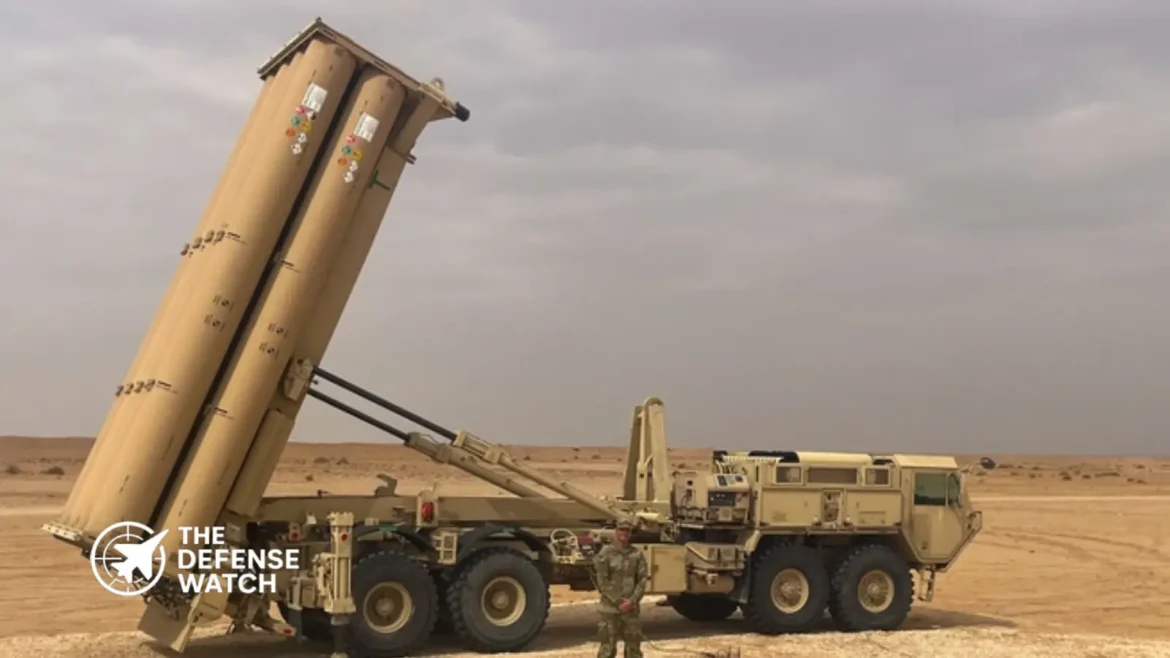
- â–º U.S. forces in the Middle East rely on Patriot and THAAD batteries to defend key installations.
- â–º Iranian missile production has continued despite sanctions and export control regimes.
- â–º Large scale missile salvos pose saturation risks to existing regional missile defense systems.
Israel Iran Ballistic Missile Threat: A Growing Strategic Challenge
The Israel Iran ballistic missile threat is entering a new phase as Israeli officials warn that Tehran could field up to 5,000 ballistic missiles by 2027.
The warning reflects more than a raw number. It signals a shift in regional military balance, particularly for Israel’s layered missile defense architecture and for U.S. forces deployed across the Gulf.
Iran has steadily expanded its ballistic missile inventory over the past decade, despite international sanctions. Its arsenal now includes short range and medium range systems such as the Shahab and Sejjil families, along with precision guided variants that improve targeting accuracy. Israeli assessments suggest production capacity, not just stockpile size, is accelerating.
For Israel and its U.S. partners, the issue is no longer whether Iran has missiles. It is whether existing defensive systems can absorb sustained, large scale salvos.
Operational Impact: Stress Testing Missile Defense
Israel’s air and missile defense network is built around layered interception.
The lowest tier is the Iron Dome, designed primarily for short range rockets. Above it sits David’s Sling, intended for medium range threats. At the top tier is the Arrow system, developed with U.S. support to intercept longer range ballistic missiles outside the atmosphere.
This structure has proven effective against limited salvos from Gaza and sporadic launches from regional actors. A potential inventory of 5,000 Iranian ballistic missiles presents a different challenge.
Ballistic missile defense is constrained by interceptor inventory and reload time. Even high success rates can be strained if dozens or hundreds of missiles are launched in waves. Each interceptor carries significant cost, often in the millions of dollars per round.

For the United States, the operational concern centers on forward deployed forces. U.S. installations in Qatar, Bahrain, Kuwait, and the United Arab Emirates host air assets, logistics hubs, and command nodes. Many rely on the MIM-104 Patriot and THAAD for protection.
Those systems were designed to counter limited missile threats from state actors. A surge in Iranian production shifts the problem from capability to capacity.
Regional Security Context
Iran’s missile doctrine emphasizes deterrence through volume and survivability. Lacking a modern air force comparable to Israel or the United States, Tehran has invested heavily in ballistic and cruise missiles as asymmetric tools.
Over the past decade, Iran has demonstrated the ability to strike regional targets, including U.S. positions in Iraq in 2020. That strike highlighted improvements in accuracy and coordination.
If the projected growth materializes, the Israel Iran ballistic missile threat will not be confined to Israel. Gulf states hosting U.S. forces would also fall within range of large portions of Iran’s inventory.
This dynamic complicates coalition planning. It increases the demand for integrated air and missile defense, data sharing, and coordinated early warning across the region.
Industrial And Budget Dimensions
Missile defense is expensive on both sides of the equation.
Iran’s production of solid fuel ballistic missiles suggests a growing domestic industrial base. Solid fuel systems reduce launch preparation time and increase survivability.
On the defensive side, interceptors are costly and production lines are finite. U.S. budget documents from recent fiscal years show continued funding for Patriot and THAAD modernization, as well as support for Israeli systems through joint programs.
If threat assessments drive increased interceptor procurement, Congress will face tradeoffs. Resources allocated to missile defense may affect funding for other priorities such as next generation aircraft or naval modernization.
For Israel, sustained high interceptor usage in a major conflict would require rapid resupply, likely with U.S. assistance. That creates a direct linkage between U.S. industrial capacity and Israeli homeland defense.
Comparison With Competitors
Other regional actors face missile threats, but few match the scale projected for Iran.
North Korea maintains a significant ballistic missile force, though its focus is oriented toward Northeast Asia and the United States. Russia and China field larger arsenals, but their strategic focus lies elsewhere.

What differentiates Iran is the combination of geographic proximity to Israel and Gulf bases, growing missile numbers, and the potential use of proxy groups to complicate defense planning.
The Israel Iran ballistic missile threat is therefore distinct in its regional density. Distances are short, warning times are limited, and saturation attacks are feasible.
Strategic Assessment
The projected expansion of Iran’s missile arsenal has direct implications for regional power balance.
First, it reinforces deterrence through the threat of mass retaliation. Even if Israeli and U.S. defenses intercept a high percentage of incoming missiles, a small number penetrating defenses could inflict significant damage.
Second, it pressures defense budgets. Sustaining sufficient interceptor stocks requires steady procurement and industrial readiness. That benefits defense contractors involved in missile defense programs, but it also strains fiscal planning.
Third, it strengthens the case for deeper U.S. and regional integration. Shared radar networks, joint exercises, and coordinated command structures become more critical as missile numbers grow.
Fourth, escalation risks increase. In a crisis, preemptive strikes against missile launchers could be seen as necessary by one side and escalatory by the other. The speed of ballistic missile exchanges leaves limited room for diplomatic intervention once hostilities begin.
Finally, the signal to allies and adversaries is clear. Missile capability is central to modern deterrence in the Middle East. Airpower alone no longer defines regional superiority.
What happens next will depend on three factors: the pace of Iranian production, the scale of Israeli and U.S. interceptor procurement, and whether regional states move toward a more unified air and missile defense architecture.
Why This Matters Now
This issue matters now because timelines are compressing. A projected 2027 benchmark is within current defense budget cycles.
Procurement decisions made in Washington and Jerusalem over the next two years will determine whether defensive capacity keeps pace with offensive growth.
For the United States, the question is not only about defending Israel. It is about protecting U.S. forces and preserving freedom of action in the Gulf.
For Iran, expanding missile inventories enhances leverage without crossing the nuclear threshold.
For Israel, maintaining credible deterrence depends on proving that even a large scale missile campaign would fail to achieve strategic objectives.
The Israel Iran ballistic missile threat is therefore not just a numbers game. It is a test of industrial capacity, alliance cohesion, and the credibility of layered missile defense under stress.
â– KEY FACTS AT A GLANCE- â–º China’s Sichuan Lingkong Tianxing Technology unveiled the YKJ-1000 hypersonic glide missile in late November 2025, advertising a unit cost of approximately $99,000.
- â–º The YKJ-1000 is claimed to achieve speeds up to Mach 7 (~8,575 km/h) with a range of 500 to 1,300 kilometers depending on configuration.
- â–º A single U.S. Navy SM-6 interceptor costs approximately $4.1 million; THAAD interceptors range from $12 million to $15 million per round.
- â–º The missile uses civilian-grade components including consumer drone optics, automotive processors, BeiDou navigation chips, and foamed concrete thermal coatings in place of traditional aerospace-grade materials.
- â–º The system is road-mobile and container-launched, enabling rapid concealment and deployment from non-military platforms.
- â–º An AI-enabled swarm variant is under development, designed to coordinate multiple YKJ-1000 missiles against single targets simultaneously.
- â–º No independent third-party verification of the missile’s performance claims or actual production cost has been published as of February 2026.
China’s YKJ-1000 Doesn’t Have to Be Perfect to Be a Problem
The YKJ-1000 hypersonic missile may be the most strategically consequential weapon system announced in 2025 — not necessarily because it works as advertised, but because of what it signals about the direction of Chinese military development and the economic logic it introduces into modern deterrence.
Developed by Chengdu-based private aerospace firm Sichuan Lingkong Tianxing Technology, the YKJ-1000 is a boost-glide hypersonic missile reportedly capable of Mach 7 flight across a range of 500 to 1,300 kilometers. Its claimed price tag of roughly $99,000 per unit — compared to a $4.1 million SM-6 or a $12–15 million THAAD interceptor — immediately dominated defense discussions when the system was disclosed in late November 2025. Whether or not those numbers hold up under scrutiny, they frame a strategic challenge the U.S. missile defense enterprise cannot afford to ignore.
The Real Story Is the Cost-Exchange Ratio
Western missile defense doctrine has long rested on an uncomfortable but manageable asymmetry: interceptors are expensive, but adversary missiles capable of penetrating them are even more expensive. That equation made layered defense architectures — Patriot, THAAD, SM-6, and eventually NGAD-era directed energy — fiscally painful but strategically viable.
The YKJ-1000 directly attacks that assumption.
If a salvo of even 20 such missiles can be fielded for under $2 million and forces the expenditure of $80 to $300 million in SM-6 or THAAD rounds to defeat it, the attacker wins economically even in a failed strike. The Pentagon’s own Missile Defense Agency has acknowledged in successive budget justifications — including the FY2025 and FY2026 submissions — that the cost-exchange ratio in missile defense is a primary driver of procurement strategy. The YKJ-1000 scenario, however credible, places that entire calculus under pressure.
-
This is not a new concept. Ukraine’s conflict demonstrated it repeatedly: Iranian-origin Shahed-136 drones costing an estimated $20,000–$50,000 each routinely forced Ukrainian forces to expend Patriot or NASAMS rounds worth orders of magnitude more. The YKJ-1000 follows the same logic, but adds hypersonic speed and claimed maneuverability — factors that complicate intercept geometry in ways that slow drones simply do not.
What China’s Military-Civil Fusion Model Actually Produces
Lingkong Tianxing was founded in 2018 and initially focused on reusable launch vehicles and suborbital systems. Its pivot to hypersonic weapons reflects Beijing’s military-civil fusion policy in unusually concrete form: a private company with commercial space DNA, leveraging China’s dominant position in global consumer electronics manufacturing to undercut the cost structure of traditional weapons development.

The YKJ-1000’s use of BeiDou navigation chips — commercially available for a few dollars in smartphone and automotive applications — in place of bespoke military-grade inertial or GPS/INS systems is an instructive example. U.S. and allied defense contractors face regulatory, labor, and supply-chain constraints that prevent equivalent substitution. China does not face those barriers at the same scale, and its dominance in printed circuit board production, optical sensor fabrication, and chip packaging gives Lingkong Tianxing access to economies of scale that no Western hypersonics program can replicate through comparable means.
This structural advantage is more durable than any single weapon system. Even if the YKJ-1000 fails to meet its stated performance parameters, the next iteration — built on the same industrial base — may well close the gap.
Verifying the Claims: Significant Skepticism Is Warranted
Serious technical questions surround the YKJ-1000. No independent test data has been publicly released. Available disclosure material consists of promotional imagery, computer-rendered animations, and static display photographs. The company’s publicity officer has confirmed that the widely cited $99,000 figure is not precisely accurate, while affirming that the design does rely on mass-market industrial components.
The most significant technical concern involves thermal management. Sustained Mach 7 flight generates surface temperatures exceeding 1,600°C. Traditional hypersonic programs — including the U.S. AGM-183A ARRW and the Russian Kinzhal — rely on purpose-engineered carbon-ceramic or ablative composites specifically rated for those conditions. The YKJ-1000’s reported use of foamed concrete and industrial cement-based coatings raises legitimate questions about whether those materials can survive full-envelope hypersonic flight without structural degradation, loss of maneuverability, or guidance system failure from thermal ingress.
-
Similarly, integrating consumer-grade optical and processor components into a hypersonic terminal guidance system presents non-trivial engineering challenges. Commercial drone cameras and automotive processors are not radiation-hardened, vibration-qualified, or validated for the electromagnetic environment associated with hypersonic plasma sheaths.
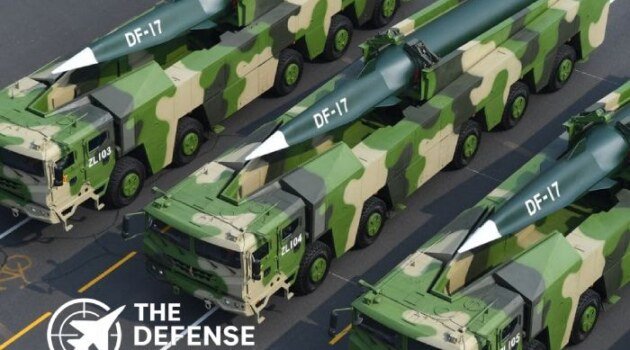
None of this means the program is fraudulent or without merit. China has conducted verified hypersonic tests — the DF-ZF glide vehicle and the DF-17 missile system are real, fielded, and assessed by the Defense Intelligence Agency as operational. Lingkong Tianxing’s principals have credible aerospace backgrounds, and the September 2025 visit by Vice Premier Zhang Guoqing to the company’s facility signals genuine high-level political backing. The question is not whether China can build a functional low-cost hypersonic weapon. The question is whether the YKJ-1000 specifically achieves its stated specifications at its stated price — and that remains unverified.
The Proliferation Risk Is the Most Urgent Concern
Independent of its actual performance, the YKJ-1000’s disclosure introduces a proliferation dynamic that demands immediate policy attention.
If China moves to export this system — even in a degraded or range-limited variant — to aligned states, the strategic landscape in the Middle East, South Asia, and sub-Saharan Africa changes materially. Iran, which already fields Shahed drones and the Abu Mahdi anti-ship missile, would gain a potential first-strike hypersonic capability against Gulf Cooperation Council infrastructure and U.S. naval assets in the Arabian Sea. North Korea, with its established ballistic and hypersonic test programs, could receive design or materials assistance accelerating its own low-cost glide vehicle development. Non-state actors with state backing — Hezbollah, the Houthis — could in theory deploy systems of this class if export controls fail.
China’s own export control regime is more restrictive than its public arms promotion narrative suggests. Beijing has not exported its most capable ballistic missile systems freely, and the YKJ-1000 involves technologies sensitive enough that selective proliferation — calibrated for maximum geopolitical leverage — is a more likely outcome than open market sales. Still, the entry of hypersonic weapons into the export price range of advanced conventional systems is a threshold that, once crossed, is difficult to reverse.
How the U.S. Should Respond: Three Immediate Priorities
The YKJ-1000 disclosure clarifies what U.S. missile defense planners have known but underfunded for years. Three responses are warranted.
First, directed energy. The only sustainable answer to mass-produced low-cost hypersonic saturation attacks is interceptors that are cheaper per shot than the incoming weapon. High Energy Laser with Integrated Optical-dazzler and Surveillance (HELIOS) and the Layered Laser Defense (LLD) programs need accelerated fielding timelines. Congress allocated funding for shipboard laser systems in FY2024 and FY2025, but operational deployment lags development. A $99,000 incoming hypersonic missile defeated by a $1-per-shot laser kill changes the cost-exchange ratio permanently.
Second, distributed defense architecture. Concentrating high-value assets — carriers, large-deck amphibious ships, fixed air bases — in predictable locations within the YKJ-1000’s 1,300-kilometer engagement envelope is a posture problem, not just a missile defense problem. The Navy’s Distributed Maritime Operations concept and the Air Force’s Agile Combat Employment doctrine both address this structurally. They need resourcing that matches the rhetoric.
Third, independent assessment. Congress should direct the Defense Intelligence Agency, in coordination with the Missile Defense Agency, to produce an unclassified assessment of the YKJ-1000’s probable performance parameters, production scalability, and export potential within the next budget cycle. Policy cannot outpace intelligence when the weapons concerned are novel.
Strategic Assessment
The YKJ-1000 represents a convergence of three trends that have been building separately for years: the democratization of precision manufacturing through consumer electronics supply chains, China’s deliberate use of military-civil fusion to compress defense development timelines, and the broader shift toward cost-imposing strategies in peer competition.
Whether or not this specific missile functions as advertised, it reflects a Chinese defense industrial approach that the United States has not yet fully countered at the structural level. American missile defense systems are optimized for quality and reliability at price points that assume adversary systems are equally expensive. That assumption is now actively under challenge.
The deterrence implication is significant. A credible low-cost hypersonic arsenal — even one of uncertain reliability — forces defensive planners to treat every potential engagement as a saturation scenario. That demands more interceptors, more sensors, and more magazine depth than current procurement plans provide. The FY2026 defense budget request, at $849.8 billion, is the largest in nominal terms in U.S. history, but it was structured before the YKJ-1000’s public disclosure and before full assessment of what low-cost hypersonic proliferation means for interceptor inventory requirements.
Regional allies face an even more acute challenge. Japan, Australia, and the Philippines have invested heavily in Aegis-based missile defense. South Korea fields THAAD under political duress. None of these architectures was designed for an environment where a near-peer adversary can field hundreds or thousands of maneuvering hypersonic threats at a unit cost below that of a commercial automobile. The alliance management dimension — specifically, whether partners will sustain missile defense investments if the cost-exchange ratio visibly shifts against them — deserves as much attention as the technical specifications of the missile itself.
-
Finally, the export signal matters more than the current weapon. The narrative that hypersonic weapons can be manufactured and exported at consumer-goods price points — regardless of current technical reality — will shape procurement decisions, threat perceptions, and arms race dynamics across multiple regions for the next decade. That is itself a strategic effect, independent of whether a single YKJ-1000 ever strikes a target.
-
â– KEY FACTS AT A GLANCE- â–º North Korea publicly displayed its 600 mm multiple rocket launchers in new state media footage.
- â–º The system is assessed to have long range strike capability, potentially covering much of South Korea.
- â–º Analysts note the launcher blurs the line between traditional artillery and short range ballistic missiles.
- â–º The display comes amid continued weapons development activity on the Korean Peninsula.
- ► The system reinforces Pyongyang’s emphasis on survivable, mobile strike forces.
North Korea Showcases 600 mm Multiple Rocket Launchers In Renewed Artillery Push
North Korea 600 mm multiple rocket launchers have again been placed in the spotlight, following new imagery and reporting highlighting the system’s operational presence. According to recent state media coverage showed the large caliber launcher system in what appeared to be a demonstration or inspection setting.
The system, often described as a 600 mm multiple rocket launcher, is one of the largest caliber artillery systems fielded globally. While officially categorized as a multiple rocket launcher, analysts widely assess its performance characteristics to overlap with those of short range ballistic missiles.
A Hybrid Between Artillery And Missile Systems
The North Korea 600 mm multiple rocket launchers are typically mounted on heavy wheeled transporter erector launcher vehicles. Each vehicle carries a limited number of oversized rockets, believed to be guided and capable of delivering high explosive or potentially other payloads at extended ranges.
Open source assessments over recent years have indicated that the system may reach ranges in excess of 300 kilometers, placing much of South Korea within coverage depending on launch location. That reach significantly expands the traditional role of tube artillery or conventional multiple rocket systems.
The caliber alone sets the platform apart. At 600 mm, the rockets approach the diameter of some short range ballistic missiles. This has led defense analysts to describe the system as a cost effective way to deliver precision strike capability while remaining within the structural framework of an artillery formation.
Operational Significance For The Korean Peninsula
The renewed attention on North Korea 600 mm multiple rocket launchers underscores Pyongyang’s continued investment in layered strike capabilities. North Korea has long relied on massed artillery positioned near the Demilitarized Zone. However, systems with longer range and mobility complicate defensive planning for both South Korea and United States forces stationed on the peninsula.
Unlike fixed missile silos, mobile rocket launchers are harder to detect and target preemptively. Their deployment enhances survivability in a crisis scenario. From a doctrinal standpoint, the system provides an intermediate option between conventional artillery bombardment and ballistic missile launches.
This layered approach aligns with North Korea’s broader modernization pattern observed over the past decade. Alongside intercontinental ballistic missile testing, Pyongyang has introduced new short and medium range systems designed to penetrate missile defense networks and saturate targets.
Implications For Missile Defense And Regional Stability
The presence of North Korea 600 mm multiple rocket launchers raises important questions for regional missile defense architecture. Systems deployed by South Korea and the United States, including Patriot and other interceptors, are optimized for specific threat profiles. Large caliber guided rockets that follow depressed or quasi ballistic trajectories may stress interception capacity during high volume launches.
While the system does not match the strategic reach of intercontinental platforms, its theater level impact is substantial. It provides North Korea with the ability to hold military infrastructure, air bases, and command centers at risk across a broader geographic area.
From a policy perspective, the system reinforces deterrence signaling. Public displays serve both internal and external audiences. Domestically, they highlight technological progress. Internationally, they communicate continued development despite sanctions and diplomatic pressure.
Technical And Industrial Considerations
The development of a 600 mm multiple rocket launcher reflects sustained industrial capability in large solid fuel rocket production. Precision guidance, if confirmed, suggests incremental advances in navigation and control systems.
Defense experts note that such systems can be produced in greater numbers and at lower cost compared to traditional ballistic missiles. That production dynamic could allow North Korea to field significant inventories over time, increasing salvo size in a potential conflict.
At the same time, questions remain about accuracy under operational conditions, reload rates, and command and control integration. Without independent verification, much of the system’s performance envelope relies on state released imagery and external analysis.
Strategic Context
The timing of renewed coverage of North Korea 600 mm multiple rocket launchers comes amid ongoing regional military activity and continued joint exercises between the United States and South Korea. Artillery and missile modernization on all sides has accelerated in recent years, reflecting heightened threat perceptions.
For defense planners, the system represents a bridge capability. It fills the gap between conventional rocket artillery and more escalatory ballistic missile forces. That flexibility gives Pyongyang additional options in crisis escalation management.
In practical terms, any conflict scenario on the peninsula would likely involve rapid and large scale use of artillery. The introduction of extended range guided rockets complicates defensive calculations and increases the potential depth of strike.
-
-