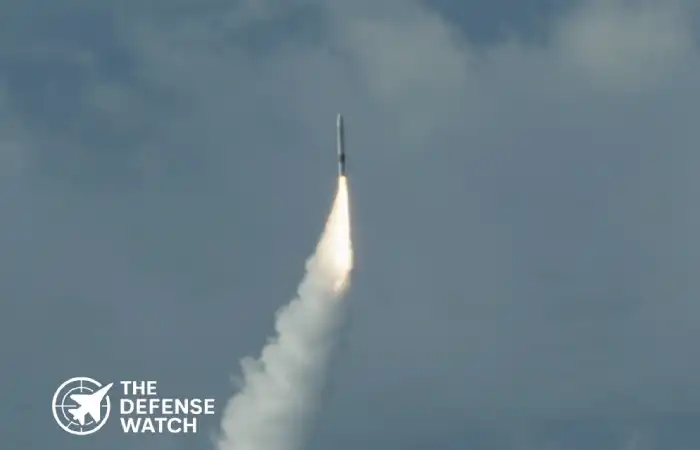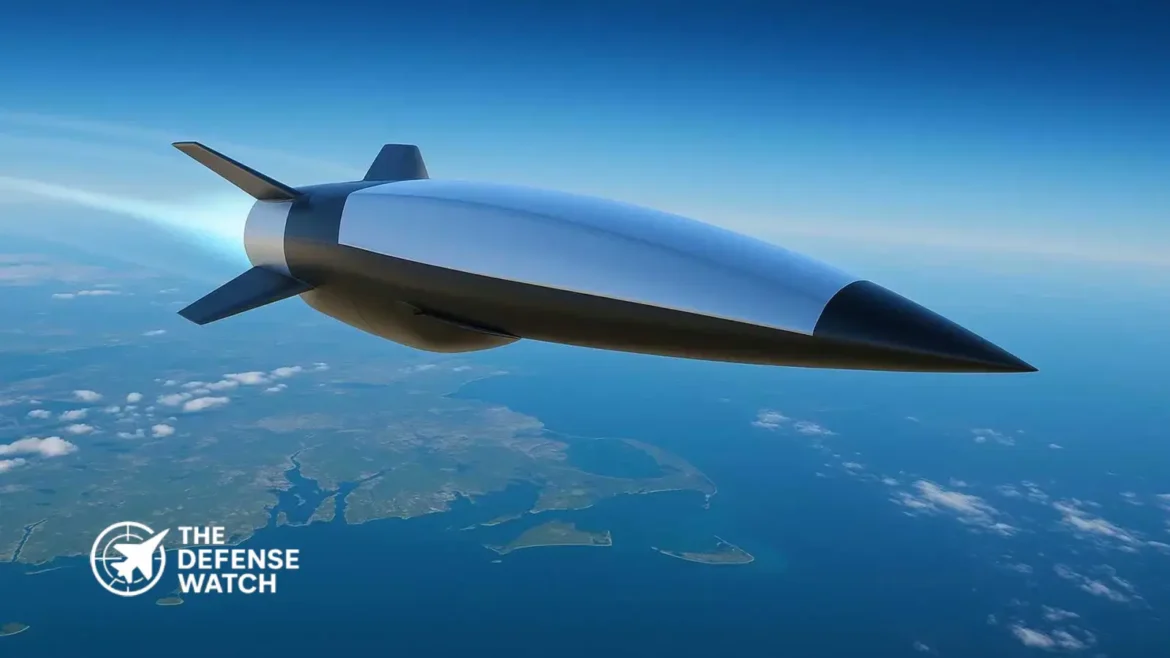
- ► The U.S. Missile Defense Agency selected new industry partners for the Golden Dome homeland defense initiative.
- ► Golden Dome is designed as a layered architecture integrating sensors, interceptors, and command networks.
- ► The system is focused on strengthening U.S. homeland defense against advanced missile threats.
- ► The effort aligns with broader Pentagon modernization and integrated air and missile defense priorities.
- ► The program advances distributed sensing and improved interceptor coordination across domains.
Golden Dome Missile Defense Enters A New Phase
The Golden Dome missile defense initiative has moved into a critical implementation stage following the selection of new industry partners to support homeland defense architecture development.
The decision marks more than a routine contract award. It reflects a structural evolution in how the United States intends to defend the homeland against increasingly complex missile threats, including ballistic, cruise, and potentially hypersonic systems.
At a time when Russia continues to modernize its strategic arsenal and China expands both conventional and nuclear missile inventories, Washington is adjusting its defensive posture accordingly. The Golden Dome concept appears designed to integrate sensors, interceptors, and command networks into a more resilient, distributed shield.
This matters now because U.S. homeland defense architecture, historically focused on limited intercontinental ballistic missile threats, is facing a broader spectrum of capabilities.
Operational Impact On U.S. Homeland Defense
The core operational shift behind Golden Dome lies in integration.
For decades, U.S. homeland missile defense has centered on the Ground Based Midcourse Defense system in Alaska and California, designed to counter a limited number of ICBMs. That architecture remains important, but threat trajectories have diversified.
Cruise missiles, depressed trajectory ballistic missiles, and maneuvering hypersonic vehicles complicate detection and tracking timelines. Golden Dome appears aimed at closing these gaps through layered coverage.
By adding new partners, the Missile Defense Agency is likely broadening sensor fusion capacity, interceptor options, or command and control interoperability. That improves resilience. A distributed network reduces single points of failure and increases shot opportunities.
Operationally, that means faster detection, improved tracking quality, and better fire control solutions. In homeland defense, seconds matter. Integrated architecture can determine whether an interceptor is launched with sufficient confidence.
The shift also signals a move toward greater network centric integration across services. Air Force early warning radars, Navy Aegis capabilities, and space based sensors must operate as a coherent whole.
Industrial And Budget Signals
The partner selection carries industrial implications.
U.S. missile defense has traditionally been dominated by a small group of prime contractors. Expanding participation may introduce competitive pressure, new technologies, or niche specialization in areas such as discrimination algorithms, sensor integration, or advanced interceptors.
From a budget perspective, Golden Dome aligns with congressional emphasis on homeland defense modernization. Pentagon budget documents in recent fiscal cycles have consistently highlighted next generation interceptor development and sensor upgrades.
Selecting additional partners suggests the program is transitioning from conceptual planning to tangible architecture development. That often precedes multi year funding commitments.
-
For industry, early positioning in Golden Dome offers long term sustainment and upgrade opportunities. Missile defense systems typically remain in service for decades, with recurring modernization cycles.
Comparison With Competing Architectures
Globally, layered missile defense concepts are not unique.
Israel’s multi tiered system integrates Iron Dome, David’s Sling, and Arrow interceptors into a coordinated defense network. While the threat scale differs, the architectural logic is similar.
Russia and China, meanwhile, are investing heavily in advanced offensive missile systems rather than expansive defensive shields. Moscow has modernized its A 135 and A 235 missile defense systems around Moscow, but these are geographically limited.
The United States, by contrast, is attempting nationwide resilience. Golden Dome appears designed not as a city specific defense, but as a continental shield integrating multiple domains.
This approach is technologically demanding and financially intensive. However, it reflects Washington’s assessment that homeland vulnerability to emerging missile threats is no longer theoretical.
Regional And Global Security Context
The timing of Golden Dome’s advancement intersects with several trends.
China’s rapid expansion of silo based ICBMs and development of fractional orbital bombardment systems has altered strategic calculations. Russia continues to deploy hypersonic glide vehicles and advanced cruise missiles.
North Korea maintains active missile testing programs. Iran is expanding regional missile capabilities.
In this context, U.S. homeland defense credibility supports broader deterrence. If adversaries perceive a higher probability of interception, their cost benefit calculus shifts.
However, missile defense also influences arms race dynamics. Adversaries may respond by increasing warhead numbers or deploying countermeasures designed to overwhelm or evade defenses.
Golden Dome therefore operates within a delicate strategic balance.
What Happens Next
The next phase will likely focus on architecture validation.
That includes integration testing, sensor interoperability trials, and potential interceptor upgrades. Congressional oversight committees will scrutinize cost projections and schedule discipline.
Expect additional contract announcements tied to radar modernization, command network software, or interceptor development.
The long lead element remains discrimination. Accurately distinguishing real warheads from decoys in complex threat environments is one of missile defense’s hardest technical problems. Any Golden Dome partner specializing in this area could significantly influence program effectiveness.
Strategic Assessmen
Golden Dome missile defense represents a reinforcement of U.S. homeland deterrence at a time of expanding peer competition.
From a regional balance perspective, it strengthens North American defensive resilience against limited missile attacks. It does not negate large scale nuclear exchanges, but it complicates limited coercive strike options.
Deterrence implications are nuanced. Improved interception capability raises the threshold for adversaries contemplating a small scale or demonstrative strike. At the same time, it may incentivize investment in saturation tactics or advanced penetration aids.
Budget signals suggest sustained congressional backing for homeland defense modernization. That indicates missile defense will remain a central pillar of U.S. strategic posture alongside nuclear triad modernization.
Alliance dynamics are also affected. A credible U.S. homeland shield reassures allies under extended deterrence umbrellas. It signals that Washington is investing not only in forward deployed forces, but also in defending its own territory.
Escalation risks exist if adversaries interpret expanded missile defense as undermining strategic stability. However, U.S. doctrine continues to frame homeland missile defense as limited and threat specific rather than a shield against major nuclear powers.
In practical terms, Golden Dome reinforces layered defense principles. It improves resilience. It signals seriousness of purpose.
For industry, it opens a new competitive arena. For adversaries, it introduces added uncertainty. For allies, it strengthens confidence in U.S. commitment.
That combination explains why this partner selection matters now.
■ KEY FACTS AT A GLANCE- ► Bangladesh Army has received a new batch of Chinese VT-5 light tanks.
- ► The total VT-5 fleet in Bangladesh now stands at 44 vehicles.
- ► The tank is armed with a stabilized 105 mm main gun and modern fire control systems.
- ► Modular armor and a low-weight design support operations in diverse terrain.
- ► The acquisition is part of Bangladesh’s broader armored force modernization.
VT-5 Light Tank Delivery Boosts Bangladesh Army Armored Fleet
The VT-5 light tank fleet in Bangladesh has grown to 44 vehicles following the arrival of a new batch from China, according to official Bangladeshi military sources and regional defense reporting.
The delivery marks another step in the Bangladesh Army’s ongoing armored modernization effort. The Chinese-built VT-5 is designed for rapid deployment and operations in terrain where heavier main battle tanks may face mobility limits.
Bangladesh first inducted the VT-5, also known as the Type 15 export variant, from China’s state-owned defense manufacturer Norinco as part of a broader push to upgrade mechanized capabilities.
Designed For Mobility And Firepower
The VT-5 light tank combines firepower typically associated with heavier platforms with a reduced combat weight. The vehicle is armed with a fully stabilized 105 mm rifled main gun capable of firing armor piercing and high explosive rounds. It is also equipped with a coaxial machine gun and a roof mounted machine gun for close range defense.
Its digital fire control system includes thermal imaging, laser range finding, and stabilized sights, allowing day and night engagement capability. These features place the VT-5 light tank within the modern class of network capable armored systems designed for high tempo operations.
The tank’s modular armor package allows operators to adjust protection levels depending on mission requirements. This approach supports both strategic mobility and tactical flexibility.
Operational Context In Bangladesh
For the Bangladesh Army, the VT-5 light tank fills a specific operational niche. Bangladesh’s terrain includes riverine areas, soft ground, and infrastructure constraints that can limit the movement of heavier main battle tanks.
A lighter armored platform offers advantages in mobility and rapid maneuver. The expansion to 44 vehicles suggests the platform is becoming an established component of Bangladesh’s armored brigades.
Bangladesh has steadily modernized its ground forces over the past decade, incorporating new armored vehicles, artillery systems, and air defense assets. The VT-5 light tank program aligns with this broader procurement strategy.
See also: Bangladesh’s ongoing mechanization and force restructuring efforts under its long term defense development plans.
China Expands Defense Footprint In South Asia
The delivery also reflects China’s continued role as a key defense supplier to Bangladesh. Beijing has supplied naval vessels, aircraft, air defense systems, and armored vehicles to Dhaka over the years.
The VT-5 light tank is one of China’s primary light tank export offerings. It is derived from the Type 15 light tank in service with the People’s Liberation Army, adapted for export customers.
Through companies such as Norinco, China has positioned itself as a competitive supplier in emerging defense markets, offering integrated packages that include training and sustainment support.
For Bangladesh, the procurement underscores its effort to diversify and modernize its equipment inventory while maintaining operational readiness.
Technical Overview Of The VT-5 Light Tank
Open source defense assessments indicate the VT-5 light tank typically weighs between 30 and 36 tons, depending on armor configuration. It is powered by a diesel engine designed to provide a high power to weight ratio.
Key features include:
- 105 mm stabilized main gun
- Automatic transmission
- Advanced fire control with thermal sights
- Modular composite armor
- Potential integration of active protection systems
This configuration is intended to deliver main battle tank level lethality in a lighter, more deployable form factor.
Strategic Implications
While the delivery is primarily a force modernization step, it also reflects broader trends in regional defense procurement. South Asian militaries continue to invest in mobile, networked, and flexible armored platforms suited for diverse terrain.
The VT-5 light tank program demonstrates how lighter armored vehicles are gaining traction as complementary assets alongside heavier main battle tanks.
For Bangladesh, the expanded fleet strengthens armored maneuver capability and supports combined arms operations.
UK Rules Out Buying Light Tank Capability As Army Focuses On Heavy Armor
The UK rules out buying light tank capability, confirming that the British Army has no plans to procure a dedicated light tank platform as part of its current modernization strategy.
According to reporting by the UK Defence Journal, the British government stated that there are no active programs or funded requirements to acquire a light tank. The clarification came in response to parliamentary questions about whether the Army would pursue a lighter armored vehicle to complement or replace elements of its existing heavy armor fleet.
Instead, London is concentrating on upgrading and restructuring its core armored forces, particularly through the Challenger 3 main battle tank program.
■ KEY FACTS AT A GLANCE- ► The UK has confirmed it will not pursue a dedicated light tank capability for the British Army.
- ► The decision was outlined in a formal government response to parliamentary questions.
- ► The Army’s armored modernization strategy centers on upgrading 148 Challenger 2 tanks to the Challenger 3 standard.
- ► Challenger 3 will feature a new turret, 120 mm smoothbore gun, enhanced protection, and digital systems aligned with NATO standards.
- ► The UK is prioritizing heavy armor modernization over introducing a new light tracked gun platform.
- ► Budget pressures and broader defense priorities influenced the decision not to launch a light tank procurement program.
- ► The move aligns with the UK’s focus on high intensity NATO deterrence missions in Europe.
No Dedicated Light Tank Requirement
The decision effectively ends speculation that the British Army might follow other NATO members in fielding a lighter tracked gun platform designed for rapid deployment or expeditionary operations.
In a formal response, the government indicated that there is no current requirement for a light tank capability within the Army’s force structure. Officials emphasized that modernization efforts are centered on enhancing lethality, survivability, and integration across existing armored units rather than introducing a new vehicle class.
The British Army currently operates the Challenger 2 main battle tank, which is being upgraded to the Challenger 3 standard under a contract awarded to Rheinmetall BAE Systems Land. The Challenger 3 program will introduce a new turret, a 120 mm smoothbore gun, improved protection, and digital systems aligned with NATO standards.
Focus On Challenger 3 And Armored Modernization
The Challenger 3 upgrade remains the centerpiece of the UK’s heavy armor strategy. The Ministry of Defence has committed to modernizing 148 Challenger 2 tanks to the new standard, ensuring that the Army retains a credible armored warfare capability well into the 2030s and beyond.
This approach signals a continued emphasis on heavy tracked formations rather than lighter, more deployable armored gun systems. While some allies have invested in platforms often described as light tanks or mobile protected firepower vehicles, the UK appears to view its future armored needs through the lens of high-intensity, peer-level conflict.
British defense policy documents in recent years have increasingly focused on deterrence in Europe, particularly in light of Russia’s invasion of Ukraine. Heavy armor, including main battle tanks, has re-emerged as a central element of land warfare in such scenarios.
Strategic Context And NATO Considerations
Several NATO members are reassessing their armored fleets based on lessons from Ukraine, where both heavy tanks and lighter armored vehicles have played significant roles. The British decision not to pursue a light tank capability suggests confidence that its existing structure, supported by allied capabilities, is sufficient.
The Army’s future force design, outlined in previous defense reviews, emphasizes brigade-level combat teams built around armored and mechanized infantry units. Rather than adding a new light tank fleet, the UK is investing in upgraded tanks, infantry fighting vehicles, and supporting enablers such as long-range fires and air defense.
Defense analysts note that introducing a light tank would require significant funding, logistics support, training pipelines, and industrial arrangements. In a constrained budget environment, such a move could have required trade-offs elsewhere in the force.
Budget Pressures And Procurement Priorities
The UK’s defense budget has faced sustained pressure from inflation, equipment cost growth, and competing priorities across air, maritime, cyber, and space domains. In this context, the decision to avoid launching a new light tank program may reflect broader fiscal discipline.
Recent British defense initiatives have prioritized nuclear deterrence, combat air development under the Global Combat Air Programme, naval recapitalization, and armored modernization centered on Challenger 3.
By ruling out buying light tank capability, the government narrows its land procurement focus and reduces the risk of overextension across multiple armored programs.
Implications For Industry
The absence of a light tank requirement also limits near-term opportunities for domestic or foreign manufacturers seeking to enter the UK tracked vehicle market with a lighter platform.
Rheinmetall BAE Systems Land remains the primary industrial partner for heavy armor modernization through Challenger 3. Without a light tank competition, there will be no parallel procurement process that could introduce additional tracked gun systems into British service.
From an industrial perspective, this consolidates resources around existing upgrade programs rather than opening a new acquisition pathway.
Operational Trade-Offs
The debate over light tanks typically centers on deployability versus protection. Lighter platforms can be easier to transport by air or sea and may be better suited to certain expeditionary missions. However, they generally offer less armor protection and survivability compared to main battle tanks.
By choosing not to pursue such a capability, the UK signals that it values heavy armor’s protection and firepower advantages for its anticipated operating environments.
This does not eliminate the Army’s ability to deploy lighter forces. The British Army operates a range of wheeled and tracked armored vehicles for reconnaissance, infantry support, and rapid response. But none are designed as direct light tank equivalents with a large-caliber main gun in a lighter chassis.
Alignment With Broader Defense Strategy
The decision that the UK rules out buying light tank capability aligns with a broader trend of streamlining force structures around defined priorities.
British defense policy since the Integrated Review and its subsequent refresh has emphasized readiness, resilience, and interoperability with NATO allies. Heavy armored units equipped with Challenger 3 are expected to contribute to deterrence and collective defense missions in Europe.
By maintaining a smaller but more modernized tank fleet rather than diversifying into additional vehicle classes, the Army appears focused on delivering depth and quality within constrained resources.
Conclusion
The confirmation that the UK rules out buying light tank capability marks a clear policy choice in the British Army’s modernization path. Rather than introducing a new category of armored vehicle, London is doubling down on upgrading its existing heavy armor and refining its force structure for high-intensity operations.
As European security dynamics continue to evolve, the effectiveness of this approach will depend on how well upgraded Challenger 3 units integrate with mechanized infantry, long-range fires, and allied forces across NATO.
For now, the UK’s position is unambiguous: no light tank program is planned, and heavy armor remains the core of its tracked combat capability.
Ukraine Calls Patriot Most Effective Air And Missile Defense System
Ukraine has described the Patriot air and missile defense system as its most effective air and missile defense capability and is urging partners to accelerate deliveries of interceptors as Russian missile and drone strikes continue.
Ukrainian officials said the US made Patriot system has demonstrated the highest success rate against advanced threats, including ballistic missiles. The appeal comes as Moscow sustains long range strikes targeting critical infrastructure, energy facilities, and urban centers.
According to reporting by Defence Industry Europe, Ukrainian representatives emphasized that while existing Patriot batteries have performed effectively, limited interceptor stockpiles constrain sustained defensive operations.
Proven Performance Against Ballistic Missiles
The Patriot air and missile defense system, developed by RTX, formerly Raytheon Technologies, is designed to counter aircraft, cruise missiles, and tactical ballistic missiles. The system has been in service with the US Army and allied nations for decades and has undergone multiple upgrades, including the PAC 3 interceptor variant optimized for ballistic missile defense.
Ukrainian authorities have previously credited Patriot batteries with intercepting advanced Russian systems, including the Kinzhal air launched ballistic missile. US officials have confirmed that Patriot systems supplied to Ukraine have successfully intercepted ballistic threats during the conflict.
The US Department of Defense has repeatedly highlighted Patriot’s layered defense capabilities, particularly when integrated with other systems such as NASAMS and IRIS T SLM, forming a multi tiered air defense network.
Growing Demand For Interceptors
Ukraine’s call for faster interceptor deliveries reflects the high operational tempo of air defense missions. Each ballistic missile engagement requires a significant number of interceptors, and sustained attacks can rapidly deplete available stocks.
The Patriot air and missile defense system relies on interceptors such as PAC 2 GEM T and PAC 3 MSE. Production capacity for these missiles is expanding in the United States and Europe, but lead times remain a challenge amid rising global demand.
The US has committed billions of dollars in security assistance to Ukraine, including Patriot batteries and munitions. According to the Pentagon, replenishment contracts and industrial base expansion efforts are underway to increase output of critical air defense interceptors.
European partners, including Germany and the Netherlands, have also provided Patriot components and additional launchers to strengthen Ukraine’s air defense coverage.
Strategic Impact On The Battlefield
The effectiveness of the Patriot air and missile defense system has had both tactical and strategic implications. By reducing the success rate of Russian ballistic missile strikes, Patriot systems help preserve critical infrastructure and protect civilian populations.
Defense analysts note that ballistic missile interception capability remains limited globally, making Patriot one of the few operational systems capable of reliably countering high speed maneuvering threats.
Ukraine’s emphasis on Patriot underscores the broader shift toward advanced missile defense as a core element of modern warfare. As missile technology proliferates, integrated air and missile defense networks are increasingly central to national security planning.
Industrial And Alliance Considerations
Accelerating interceptor production will require sustained coordination between governments and industry. RTX and Lockheed Martin, which produces the PAC 3 interceptor, have announced efforts to scale manufacturing in response to increased demand from both US and allied customers.
NATO officials have stressed the importance of strengthening collective air and missile defense in light of the ongoing conflict. The performance of Patriot systems in Ukraine is being closely studied by allied militaries assessing their own force modernization priorities.
For Kyiv, the immediate priority remains clear. Officials argue that maintaining sufficient stocks of Patriot interceptors is essential to counter persistent missile barrages and to ensure that the system can continue operating at peak effectiveness.
Revolutionary Mortar Technology Sets New Standards for Battlefield Mobility
Finnish defense technology company Patria has established itself as the global market leader in turreted mortar systems with its Patria NEMO (NEw MOrtar) platform, a revolutionary 120mm remote-controlled mortar system that fundamentally changes how modern armed forces approach indirect fire support. This advanced weapon system combines mobility, protection, and precision in a compact package designed specifically for the tempo and complexity of contemporary warfare environments.
The Patria NEMO mortar system represents a significant evolutionary step in artillery technology, addressing one of modern warfare’s most critical challenges: how to deliver overwhelming firepower while maintaining survivability in an era where detection technologies can pinpoint firing positions almost instantaneously. Unlike traditional mortar systems that require crews to stop, deploy, fire, and withdraw, the NEMO platform delivers genuine fire-on-the-move capability, allowing operators to engage targets while the vehicle remains in motion.
This unique operational flexibility stems from sophisticated ballistic calculation systems that compensate for vehicle movement in real-time, ensuring accuracy even when firing from moving platforms. The system can deliver Multiple Rounds Simultaneous Impact (MRSI) missions, placing up to five rounds on target simultaneously, and Multiple Targets Simultaneous Impact (MTSI) capabilities, enabling engagement of multiple objectives with coordinated timing.
Technical Excellence Through Modular Design
At the core of the Patria NEMO mortar system lies a single-barrel 120mm smoothbore mortar housed within a fully remote-controlled turret weighing approximately 1,900 kilograms. This relatively lightweight configuration enables integration across a diverse range of platforms, from 6×6 wheeled armored vehicles to 8×8 configurations, tracked chassis, and even naval vessels.

Image : creative commons The turret provides complete 360-degree traverse with elevation ranging from minus three degrees to plus 85 degrees, offering both indirect fire capabilities and direct fire options for self-defense scenarios. This dual-capability approach ensures crews can respond to threats across the entire tactical spectrum without exposing themselves to hostile fire.
Protection represents a fundamental design priority throughout the NEMO platform. The turreted configuration keeps crew members under armor at all times, eliminating the need to open hatches during operations. This enclosed environment protects operators from ballistics, mine and IED threats, battlefield contaminants, weather conditions, and the dangerous overpressure and noise associated with firing operations.
Ammunition safety features include individual tube storage for each round, with fire and gas venting systems that direct any accidental ignition through external chimneys, preventing crew exposure and containing the risk of catastrophic secondary explosions. The system maintains large onboard ammunition supplies, with typical configurations carrying 50 to 60 rounds of 120mm ammunition depending on the host platform.
Network-Centric Warfare Integration
The Patria NEMO mortar system exemplifies network-centric warfare principles through comprehensive sensor-to-shooter integration. The platform’s advanced fire control system enables seamless connection with tactical data networks, command and control systems, and forward observer functions, creating a unified ecosystem for identifying targets and executing fire missions with minimal latency.
Engagement decisions made at fire direction centers transmit directly to NEMO units through these networks, with the system automatically calculating firing solutions based on target data, meteorological conditions, and ammunition characteristics. This automation significantly reduces the time from target acquisition to rounds on target, a critical advantage in fast-moving operational environments.

Image : creative commons The forward observer system integrated into the NEMO ecosystem provides comprehensive battlefield awareness, enabling operators to identify targets, assess damage, and adjust fire missions in real-time. Tactical weather services feed current atmospheric data into ballistic calculations, ensuring maximum accuracy across varying environmental conditions.
Recent Procurement Successes Drive Global Expansion
Recent procurement contracts demonstrate growing international confidence in the Patria NEMO mortar system’s capabilities. In December 2025, Germany concluded two serial procurement contracts worth over two billion euros for up to 876 Patria 6×6 armored vehicles, with specific variants equipped with NEMO 120mm turreted mortars. These deliveries, scheduled to begin in 2026 with German industrial partners ramping up domestic production by 2027, represent the largest single Patria NEMO contract to date.
Hungary selected the NEMO mortar turret in April 2025 for installation on Rheinmetall Lynx infantry fighting vehicle platforms, with at least 24 systems on order. This decision reflects the Hungarian military’s recognition of NEMO’s ability to provide mechanized formations with protected, mobile indirect fire support.
The United States Army has conducted extensive evaluations of the Patria NEMO mortar system mounted on Armored Multi-Purpose Vehicle (AMPV) platforms, with trials at Fort Moore, Georgia, in September 2024 demonstrating the system’s potential for replacing aging M1064 and M1129 mortar carriers. While procurement decisions remain pending, these trials indicate serious American interest in the NEMO platform’s capabilities.
In January 2026, General Dynamics Land Systems UK and Patria unveiled an Ajax armored fighting vehicle variant configured with the NEMO 120mm turret at the International Armoured Vehicles Conference in Farnborough. This collaboration demonstrates the system’s adaptability to tracked platforms and its potential for meeting British Army requirements for armored mortar variants.
Naval Applications Expand Operational Envelope
The Patria NEMO Navy variant extends the system’s operational envelope into maritime domains, providing fast-moving naval vessels with precision indirect fire capabilities previously unavailable in compact platform configurations. The naval version incorporates ruggedization for harsh saltwater environments, corrosion-resistant materials, and specialized mounting systems compatible with patrol boats and coastal defense vessels.
Finnish Navy integration onto Jurmo-class landing craft demonstrates NEMO Navy’s capability to support amphibious operations, enabling landing forces to bring protected, accurate fire support directly onto contested beaches aboard the same craft carrying assault troops. This integration creates tactical opportunities for joint land-sea operations that were previously impossible with traditional mortar systems.

Image : creative commons The UAE Naval Forces acquired 12 patrol boats, with several equipped with NEMO mortars, recognizing the system’s value for coastal defense and maritime security operations. Saudi Arabia procured 36 turrets for integration onto LAV II vehicles, further demonstrating international confidence in the platform’s reliability and effectiveness.
Containerized Innovation Creates New Deployment Options
The Patria NEMO Container represents perhaps the most innovative variation of the core mortar system, housing the complete 120mm turreted mortar within a standard 20-foot ISO container. This modular approach creates unprecedented deployment flexibility, enabling rapid positioning via truck, rail, ship, or even as static defensive installations at military bases.
The container configuration includes integrated power generation, NBC protection, air conditioning, and customizable ballistic protection, creating a fully self-contained firing unit that requires no external support infrastructure. This “plug-and-play” capability allows military forces to rapidly establish fire support coverage in developing operational situations or to reinforce defensive positions with minimal logistical burden.
Japan’s Maritime Transport Group has shown particular interest in the NEMO Container concept, with Patria proposing the system for defense of southwestern Japanese islands stretching from Kyushu to the Okinawan archipelago. The containerized format aligns perfectly with Japanese requirements for rapidly deployable, mobile fire support that can move between islands using diverse transportation methods.
Comprehensive Fire Support System Architecture
The complete Patria NEMO mortar system encompasses far more than the turret itself. The broader fire support architecture includes fire control systems, communication networks, forward observer functions, tactical weather services, and integrated support capabilities that work together to create a comprehensive indirect fire ecosystem.
Fire control systems provide automated fire support planning, mission management, and ballistic calculations while interfacing with higher-level command and control networks. Communication systems ensure reliable data transmission across tactical networks, enabling coordination between NEMO units, fire direction centers, and forward observers.
Forward observer functions provide the critical targeting information that drives NEMO operations, employing advanced sensor systems to identify targets, assess terrain, and provide real-time battlefield intelligence. Tactical weather services deliver atmospheric data essential for accurate long-range fire missions, accounting for variables like wind speed, temperature, and barometric pressure that affect projectile trajectories.
Ammunition Compatibility and Advanced Munitions
The Patria NEMO mortar system maintains compatibility with all standard 120mm smoothbore mortar ammunition currently in service worldwide, ensuring logistical simplicity and interoperability with existing stockpiles. This ammunition compatibility extends to precision-guided munitions, enabling engagement of point targets with minimal collateral damage.
Smart guided ammunition expands NEMO’s operational capabilities significantly, providing terminal guidance for attacking moving targets, hardened structures, or objectives in complex urban environments. The system’s advanced fire control computers interface seamlessly with these sophisticated munitions, providing targeting data and mid-course guidance corrections that maximize probability of hit.
Maximum effective range exceeds 10 kilometers with standard ammunition and charge combinations, with extended-range projectiles pushing this envelope even further. The system maintains burst fire rates of three rounds in 12 seconds, with the capability to execute up to six MRSI missions where multiple projectiles impact simultaneously from different launch times.
Operational Advantages in Modern Combat
The Patria NEMO mortar system’s primary operational advantage stems from its ability to combine high mobility with protected fire support. Traditional mortar systems require vehicles to stop, crews to dismount or expose themselves during firing, and vulnerable pauses while repositioning. NEMO eliminates these weaknesses entirely.
Fire-on-the-move capability means NEMO-equipped vehicles can advance with mechanized formations, providing continuous indirect fire support without breaking stride. This capability proves especially valuable during rapid advances where maintaining momentum is critical, or during withdrawals where pausing to fire would create dangerous vulnerabilities.
Rapid deployment protocols enable NEMO to engage targets within 30 seconds of halting, with departure from firing positions requiring just 10 seconds. These abbreviated timelines significantly reduce exposure to counter-battery fire, a primary cause of artillery casualties in contemporary conflicts where enemy forces employ sophisticated counter-fire radar systems and precision strike capabilities.
The protected turret environment maintains crew effectiveness across extended operations by shielding operators from weather extremes, NBC threats, and the physical and psychological stress associated with exposed firing positions. This protection translates directly into sustained combat effectiveness during prolonged engagements.
Strategic Analysis and Future Prospects
The growing international adoption of the Patria NEMO mortar system reflects broader trends in modern warfare toward protected mobility, network-centric operations, and precision engagement. As detection technologies become increasingly sophisticated and counter-battery capabilities more lethal, traditional mortar employment methods face mounting obsolescence.
NEMO’s success in securing major contracts from NATO members, particularly Germany’s massive procurement, validates the platform’s alignment with alliance interoperability requirements and operational doctrines. The German acquisition specifically addresses Bundeswehr needs for replacing aging TPz Fuchs fleets while providing enhanced capabilities for NATO rapid reaction forces.
The system’s modular architecture positions Patria favorably for future technological integration, including artificial intelligence-enhanced targeting systems, longer-range precision munitions, and deeper integration with unmanned aerial systems for improved target acquisition and battle damage assessment. These evolutionary pathways ensure NEMO remains relevant as battlefield technologies continue advancing.
Market competition from systems like the Polish M120 Rak and other emerging platforms drives continuous NEMO improvement, with Patria investing in capability enhancements, expanded platform integration options, and tailored variants for specific operational requirements. This competitive pressure ultimately benefits end users through accelerated innovation cycles and improved cost-effectiveness.
Conclusion
The Patria NEMO 120mm mortar system represents a paradigm shift in how modern military forces approach indirect fire support, combining mobility, protection, and precision in ways that fundamentally change tactical possibilities on contemporary battlefields. With growing international adoption, proven operational capabilities, and continuous technological evolution, NEMO has established itself as the benchmark against which all turreted mortar systems are measured.
As conflicts continue demonstrating the lethal effectiveness of counter-battery systems and the critical importance of protected mobility, platforms like NEMO will become increasingly central to ground force capabilities. The system’s success in diverse operational environments, from Arctic conditions to desert warfare, naval operations to urban combat, validates its versatility and robust engineering.
For defense planners evaluating future indirect fire requirements, the Patria NEMO mortar system offers a mature, combat-proven solution backed by strong industrial support, comprehensive training systems, and a clear technological roadmap. As modern warfare continues evolving toward faster tempo, greater precision, and enhanced survivability requirements, NEMO’s combination of these attributes positions it as a foundational capability for mechanized forces well into the future.
FAQs
What makes the Patria NEMO different from traditional mortar systems?The Patria NEMO features a fully turreted, remote-controlled configuration that enables fire-on-the-move capabilities while keeping crews completely protected under armor. Unlike traditional mortars requiring crews to stop and expose themselves, NEMO can engage targets while moving and provides 360-degree traverse with both indirect and direct fire capabilities.
Which countries currently operate the Patria NEMO mortar system?Slovenia was the first customer, followed by the UAE Naval Forces and Saudi Arabia. Recent major contracts include Germany (up to 876 vehicles), Hungary (24+ systems), with ongoing evaluations by the United States Army and United Kingdom. Finland also operates NEMO variants for both land and naval applications.
Can the NEMO system fire standard mortar ammunition?Yes, the Patria NEMO maintains full compatibility with all standard 120mm smoothbore mortar ammunition currently in service globally, including precision-guided smart munitions. This ensures logistical simplicity and interoperability with existing ammunition stockpiles.
What platforms can integrate the Patria NEMO turret?The NEMO’s lightweight design (approximately 1,900 kg) enables integration on diverse platforms including 6×6 and 8×8 wheeled armored vehicles, tracked chassis, naval vessels, and even standardized 20-foot containers for maximum deployment flexibility.
How does NEMO’s fire-on-the-move capability work?Advanced ballistic calculation systems continuously account for vehicle movement, speed, and direction while calculating firing solutions. The automated fire control system compensates for platform motion in real-time, maintaining accuracy even when firing from moving vehicles.
What is the maximum range of the Patria NEMO system?Maximum effective range exceeds 10 kilometers with standard ammunition and charge combinations. The system can also fire extended-range projectiles and precision-guided munitions for specialized engagement scenarios.
Romania Otokar Armored Vehicle Dispute Escalates
The Romania Otokar armored vehicle dispute has intensified after Romanian authorities demanded an additional 230.2 million Lei from Turkish defense contractor Otokar, citing delays in the project’s local production schedule.
The new payment request comes weeks after Romania imposed a separate penalty of 191.8 million Lei on January 16, increasing financial pressure on the company and raising questions about the future of the armored vehicle program.
According to statements released by Otokar and Romanian officials, negotiations remain ongoing as both sides seek a path forward for the contract.
Background Of The Contract
Otokar, a subsidiary of Turkey’s Koç Group, secured a contract with Romania to supply armored vehicles and establish local production capabilities. The agreement included provisions for domestic assembly and technology transfer, a key priority for Romania as it modernizes its land forces.
Romania, a NATO member on the alliance’s eastern flank, has accelerated defense procurement since 2022. The country has expanded acquisitions across air defense, artillery, and armored platforms in response to shifting regional security dynamics.
Under the terms of the armored vehicle agreement, Otokar committed to meeting defined production milestones within Romania. Authorities in Bucharest now argue those timelines were not met, triggering contractual penalty clauses.
Second Financial Claim Filed
The latest demand of 230.2 million Lei follows a previous penalty of 191.8 million Lei imposed earlier this year. Combined, the financial claims exceed 420 million Lei.
Romanian officials cited delays in the local production schedule as the basis for both penalties. The Ministry of National Defense has not publicly detailed the specific milestones in question but maintains that contractual obligations must be enforced.
Otokar confirmed it has made the requested payment while formally objecting to the decision. The company is preparing to file a lawsuit seeking annulment of the penalty, arguing that the claims lack sufficient contractual justification.
Otokar Moves To Stabilize Operations
Between the two penalty decisions, Otokar acquired its local Romanian partner, consolidating control over in-country operations. The move was seen as an effort to streamline management, accelerate production adjustments, and address compliance issues linked to the project.
Industry analysts note that acquiring a local partner can reduce coordination friction and allow faster decision making. However, such steps do not automatically resolve contractual disputes tied to prior timelines.
Otokar has stated that it remains committed to the Romanian program and to fulfilling its contractual obligations.
Legal And Contractual Implications
The Romania Otokar armored vehicle case now appears headed toward legal review. By filing a lawsuit for annulment, Otokar seeks to challenge the validity of the imposed penalties under Romanian and international contract law.
Defense procurement contracts often include strict milestone clauses tied to payments, delivery schedules, and local industrial participation requirements. Delays can trigger automatic penalties, particularly in government-to-industry agreements involving domestic production commitments.
Romania has increasingly emphasized local industrial participation in major defense acquisitions, aligning with broader European Union objectives to strengthen domestic defense manufacturing capacity.
If the court sides with Romanian authorities, Otokar may face sustained financial exposure. If the penalties are overturned, it could reset negotiations and ease tension around the project’s continuation.
Strategic Context For Romania
Romania has steadily increased its defense spending in recent years, meeting NATO’s two percent GDP target and committing to further increases. The country has invested in platforms such as the Patriot air defense system and advanced artillery systems as part of a broader modernization push.
Armored vehicles remain central to Romania’s ground force transformation strategy, particularly for mechanized infantry and rapid reaction units.
Delays in local production can affect readiness timelines and industrial planning, especially when projects are structured around technology transfer and workforce development.
Impact On Otokar
For Otokar, Romania represents a significant European market opportunity. The company has pursued expansion across NATO countries and Eastern Europe, positioning its armored vehicle platforms for international export.
The Romania Otokar armored vehicle dispute introduces both financial and reputational risk. While contractual disagreements are not uncommon in large defense programs, repeated penalty actions may complicate future bidding processes in European markets.
Otokar has emphasized its intent to continue negotiations and resolve the matter within legal frameworks. The company has not indicated any suspension of production activities.
What Happens Next
Negotiations between Otokar and Romanian authorities are ongoing. Legal proceedings, if formally initiated, could take months to resolve depending on the scope of judicial review.
Key factors to monitor include:
- Court acceptance of Otokar’s annulment request
- Potential restructuring of production milestones
- Revised delivery timelines
- Any amendment to penalty clauses
Neither side has announced termination of the contract, suggesting both remain interested in preserving the program despite current tensions.
Broader Lessons For Defense Contracts
The Romania Otokar armored vehicle case highlights several recurring themes in modern defense procurement:
- Strict enforcement of milestone-based payments
- Growing emphasis on local industrial participation
- Legal recourse as a standard dispute resolution tool
- Increased scrutiny on delivery timelines in high-priority programs
As NATO members expand military capabilities, defense contractors face tighter oversight and reduced tolerance for schedule deviations.
Conclusion
The Romania Otokar armored vehicle dispute has entered a critical phase following a second financial claim of 230.2 million Lei. With total penalties now exceeding 420 million Lei, Otokar’s legal challenge will play a central role in determining the program’s future trajectory.
Both sides continue negotiations, signaling that while tensions are high, the contract remains active.
The outcome will likely influence how future European defense contracts balance local production commitments with delivery timelines.
German Air Force IRIS-T SLM Marks Major Step In Air Defense Modernization
The German Air Force IRIS-T SLM air defense system has officially entered national service, marking a significant milestone in Germany’s effort to rebuild and modernize its ground-based air defense network.
According to German Air Force announced, the Luftwaffe has received its first IRIS-T SLM system in a configuration tailored specifically for German national requirements. The delivery represents the first operational step in restoring a medium-range air defense capability that Germany had largely phased out over the past decade.
The IRIS-T SLM air defense system is designed to counter a wide spectrum of aerial threats, including combat aircraft, helicopters, cruise missiles, and unmanned aerial systems.
Rebuilding Germany Ground-Based Air Defense
The German Air Force IRIS-T SLM delivery comes amid a broader modernization push following Berlin’s 2022 strategic shift in defense policy. Germany committed significant funding to improve readiness, enhance NATO interoperability, and strengthen territorial defense.
The IRIS-T SLM system fills a critical gap in Germany’s layered air defense architecture. After retiring legacy systems in the 2010s, the Bundeswehr faced limited medium-range ground-based air defense coverage. The new system is intended to restore that capability while aligning with NATO standards.
Germany has also committed to the European Sky Shield Initiative, a multinational effort aimed at building a coordinated and integrated air and missile defense shield across Europe. The IRIS-T SLM will play a key role in that framework.
What The IRIS-T SLM Air Defense System Brings
Developed by Diehl Defence, the IRIS-T SLM air defense system is the ground-launched variant of the IRIS-T missile family, originally derived from an advanced short-range air-to-air missile program.
The SLM variant offers extended range and altitude performance compared to earlier configurations. It typically consists of:
- A vertical launch missile unit
- A multifunction radar
- A tactical operations center
- Support and logistics vehicles

The system uses an active radar-guided interceptor capable of engaging multiple targets simultaneously. Its architecture supports network-enabled operations, allowing integration with other air defense assets.
Germany’s national configuration reportedly includes adaptations tailored to Luftwaffe command-and-control structures and operational doctrines.
Operational Lessons From Ukraine
The IRIS-T SLM has drawn significant international attention following its operational deployment in Ukraine. Berlin previously supplied IRIS-T SLM systems to Kyiv as part of military assistance packages.
Ukrainian officials have publicly credited the system with high interception rates against cruise missiles and unmanned aerial threats. While independent verification of battlefield performance remains limited, the system’s combat use has provided valuable operational feedback.
For Germany, fielding the IRIS-T SLM domestically reflects both confidence in the system’s performance and a desire to accelerate air defense readiness amid evolving security conditions in Europe.
Strengthening NATO Interoperability
The German Air Force IRIS-T SLM system is designed to integrate into NATO’s Integrated Air and Missile Defence framework. Germany remains a central contributor to NATO air policing and collective defense missions.
By restoring medium-range ground-based air defense, Berlin enhances both national resilience and alliance-wide capabilities. The system’s open architecture allows potential interoperability with other European and allied sensors and command systems.
Several European countries have also expressed interest in or placed orders for IRIS-T-based systems, reflecting broader demand for mobile and adaptable air defense solutions.
Industrial And Strategic Implications
For Diehl Defence, the delivery to the German Air Force represents a major domestic validation of its flagship ground-based air defense product. The company has positioned the IRIS-T SLM as a scalable system suitable for national defense, expeditionary missions, and infrastructure protection.
Germany’s renewed investment in air defense is part of a broader modernization cycle that includes aircraft procurement, missile defense initiatives, and upgrades to digital command networks.
The IRIS-T SLM complements other European efforts focused on layered defense against increasingly complex aerial threats, including low-flying cruise missiles and small unmanned systems.
A Shift In German Defense Posture
The fielding of the German Air Force IRIS-T SLM air defense system reflects a wider strategic reassessment in Berlin. After years of reduced emphasis on territorial air defense, Germany is rebuilding capabilities aligned with high-intensity conflict scenarios.
The Luftwaffe’s acquisition signals that ground-based air defense is once again a priority within the Bundeswehr force structure. As deliveries continue, additional batteries are expected to enhance coverage and readiness.
The system’s introduction also underscores Europe’s growing focus on sovereign defense manufacturing and regional supply chains, particularly in critical areas such as air and missile defense.
What Comes Next
With the first nationally configured IRIS-T SLM air defense system now delivered, attention will shift to operational training, integration testing, and full operational capability timelines.
Future procurements and deployment locations have not been fully detailed publicly. However, Germany’s stated defense objectives indicate that expanding layered air defense will remain central to its modernization agenda.
The German Air Force IRIS-T SLM deployment represents more than a single system delivery. It marks a structural return to medium-range air defense at a time when European security dynamics continue to evolve.
US Army Fields M109A7 Self-Propelled Howitzers To 1st Armored Division
The US Army has fielded the M109A7 self-propelled howitzers to the 1st Armored Division, marking another step in its ongoing artillery modernization effort.
The upgraded howitzers have been delivered to units within the division as part of the service’s broader plan to enhance firepower, survivability, and digital integration across armored brigade combat teams.
The move aligns with the Army’s long-term modernization priorities, which emphasize long-range precision fires and improved operational readiness.
Modernizing The Paladin Fleet
The M109A7 self-propelled howitzers are the latest evolution of the Paladin artillery system. Developed under the Paladin Integrated Management program, the platform replaces the older M109A6 variant with upgraded chassis components, electrical systems, and survivability enhancements.
Manufactured by BAE Systems, the M109A7 incorporates a new hull based on Bradley Fighting Vehicle components, improving commonality and sustainment efficiency across armored formations.
The howitzer retains the 155mm cannon but integrates a modernized power generation system capable of supporting future digital and networked capabilities. This allows better compatibility with advanced targeting systems and command networks used by armored brigade combat teams.
Enhanced Survivability And Reliability
The M109A7 self-propelled howitzers feature improved armor protection and upgraded suspension. These enhancements aim to increase survivability in contested environments where counter-battery fire and drone surveillance are growing threats.
The new electric drive and power distribution architecture also support more reliable operations. By addressing obsolescence issues present in earlier models, the Army reduces maintenance burdens and improves readiness rates.
The Army has stated in previous modernization updates that recapitalizing legacy artillery systems is essential to maintaining overmatch against peer and near-peer adversaries. The M109A7 forms a key part of that effort.
Integration Within Armored Brigade Combat Teams
Fielding the M109A7 self-propelled howitzers to the 1st Armored Division ensures artillery units can operate seamlessly alongside upgraded armored vehicles and digital mission command systems.
The 1st Armored Division, based at Fort Bliss, plays a central role in testing and deploying modernized ground combat systems. Integrating the M109A7 strengthens the division’s ability to provide responsive, high-volume indirect fire support during large-scale combat operations.
The howitzer is paired with the M992A3 ammunition carrier vehicle, also upgraded under the Paladin Integrated Management effort, enabling sustained operations and faster resupply cycles.
Part Of A Broader Fires Strategy
The delivery of M109A7 self-propelled howitzers reflects the Army’s broader fires modernization roadmap. While the service is investing in extended-range cannon artillery and precision strike missiles, it continues to upgrade core tube artillery systems that form the backbone of brigade-level fires.
The M109A7 provides incremental but critical improvements in mobility, protection, and digital connectivity. These upgrades ensure compatibility with evolving battlefield requirements while maintaining proven 155mm firepower.
As the Army prepares for multidomain operations, modernized artillery units such as those equipped with the M109A7 will play a central role in shaping the battlefield, suppressing enemy defenses, and enabling maneuver forces.
The fielding to the 1st Armored Division underscores the service’s commitment to maintaining credible and ready armored formations capable of operating in high-intensity conflict scenarios.
Export Talks Gain Momentum For Challenger 3 Main Battle Tank
The Challenger 3 export talks are progressing, the United Kingdom Ministry of Defence has confirmed, though officials have offered few details on who might buy the upgraded main battle tank. Defence Minister Luke Pollard told the UK Parliament that the department has made “significant progress” exploring international interest in the British Army’s next-generation armored vehicle.
In a written response to a question from Conservative MP Ben Obese-Jecty, Pollard said the export efforts remain underway, but the MoD declined to disclose specific countries or buyers, saying that revealing details would risk “commercial sensitivities.”
What UK Officials Are Saying
Pollard’s written answer did not name any prospective customers. Officials reiterated that the department continues to probe export opportunities while developing Challenger 3 as the British Army’s new main battle tank.
Industry analysts note that the lack of named buyers could mean the export push is still in preliminary stages rather than formal negotiations. No export contracts have been publicly announced.
Challenger 3 Program In Context
The Challenger 3 programme is an extensive modernisation of the British Army’s Challenger 2 fleet. It replaces the older turret with a new design, upgrades electronics and fire control systems, and fields a NATO-standard 120 mm smoothbore cannon. The upgrade aims to extend the tank’s operational life and align it with modern battlefield requirements.
Rheinmetall BAE Systems Land, a UK-German joint venture, is building the vehicle under a contract worth more than £800 million. The plan is to upgrade 148 Challenger 2 tanks to the Challenger 3 standard, with initial operating capability expected in 2027 and full capability by 2030.
Export Challenge And Market Factors
The Challenger 3 export push comes as European and NATO countries renew focus on heavy armour capabilities. Main battle tanks remain central to deterrence and ground combat doctrine, but international demand is uneven and depends on interoperability with existing fleets, logistics support, and industrial sustainment. Industry sources have also highlighted the emerging European Main Armoured Tank of Europe (MARTE) programme as a long-term alternative platform that could affect export dynamics.
Some analysts say that potential buyers for Challenger 3 could include nations that already operate Challenger 2 tanks or are looking to modernise existing armour fleets. Official UK statements so far offer no confirmation.
Industry And Strategic Implications
For the UK defence industry, securing export contracts could help sustain domestic production lines and broader industrial capacity tied to armoured vehicles. Export deals can also spread development costs and strengthen long-term support networks for complex platforms like main battle tanks.
However, without named customers or formal agreements, it is too early to assess which markets might commit to Challenger 3 purchases. UK officials continue to emphasise exploration rather than concluded sales.
U.S. Army Tests Next Generation Rocket Assisted Projectile
The U.S. Army has tested a next generation rocket assisted projectile at Yuma Proving Ground as part of its broader effort to extend the range of conventional tube artillery.
According to official Army information and reporting from defense industry sources, the live-fire event evaluated performance, stability, propulsion, and accuracy of the rocket assisted projectile under desert conditions. The trials form part of the service’s long range fires modernization strategy, which remains a core priority within Army transformation plans.
The test focused on increasing effective range while maintaining compatibility with existing 155mm artillery platforms.
Extending The Reach Of 155mm Artillery
The next generation rocket assisted projectile is designed to travel significantly farther than standard high explosive 155mm rounds. By incorporating a rocket motor that ignites after launch, the projectile sustains propulsion beyond the initial gun launch phase.
Traditional artillery shells rely solely on the force generated by the propellant charge in the howitzer. In contrast, a rocket assisted projectile uses that initial impulse to exit the barrel before activating a secondary propulsion system mid-flight. This design extends maximum range without requiring entirely new artillery platforms.
The U.S. Army has been pursuing several parallel efforts to increase cannon artillery reach, including extended range cannon artillery concepts and improved precision munitions. The rocket assisted projectile complements those efforts by offering a potentially more cost-effective range enhancement option compared to entirely new weapon systems.
Army officials have consistently identified long range precision fires as a key modernization priority, particularly in the context of large scale combat operations.
Testing At Yuma Proving Ground
Yuma Proving Ground, located in Arizona, is one of the Army’s primary locations for artillery, missile, and ground system testing. Its expansive desert terrain allows for long distance firing evaluations under controlled conditions.
During the recent event, the Army assessed multiple parameters, including projectile trajectory, motor ignition timing, aerodynamic stability, and impact accuracy. Data collected during the firing will inform further design refinements and validation steps.
The test also evaluated integration with standard 155mm howitzer systems currently fielded across U.S. Army units. Maintaining backward compatibility with existing platforms reduces logistical complexity and accelerates potential fielding timelines.
Defense analysts note that range extension for cannon artillery is increasingly relevant in contested environments where forces must operate beyond the reach of adversary counter battery systems.
Long Range Fires Modernization Effort
The U.S. Army’s modernization strategy has emphasized long range precision fires as one of its top priorities. This includes upgrades to cannon artillery, precision guided munitions, and missile systems.
The rocket assisted projectile initiative aligns with broader programs intended to ensure U.S. ground forces can strike targets at greater distances while reducing exposure to enemy fire.
Extended range artillery offers several operational advantages:
- Increased standoff distance
- Expanded coverage area from a single firing position
- Reduced need for forward repositioning
- Improved survivability against counter battery threats
As near peer competitors invest in longer range artillery and precision strike capabilities, the Army has sought to close potential gaps through incremental upgrades and new munitions development.
The rocket assisted projectile represents one approach that enhances existing systems rather than replacing them outright.
Operational And Strategic Implications
Improving artillery range affects not only tactical engagements but also broader operational planning. Longer range 155mm projectiles can support maneuver forces from deeper rear positions, complicating adversary targeting efforts.
In large scale ground combat scenarios, extended range cannon artillery can provide sustained fires without relying exclusively on higher cost missile systems. This layered approach allows commanders to match munitions to mission requirements.
The U.S. Army has highlighted the importance of scalable and cost conscious modernization. Rocket assisted projectiles may offer a balance between affordability and performance, particularly if production leverages existing supply chains.
While additional testing and validation will be required before fielding decisions, the Yuma trial marks a concrete step in advancing artillery capability.
Integration With Future Artillery Systems
The rocket assisted projectile effort may also support future cannon upgrades, including extended range barrels and improved fire control systems.
By combining improved projectiles with advanced targeting data, digital fire control networks, and sensor integration, the Army aims to enhance overall strike effectiveness.
See also: Extended Range Cannon Artillery modernization coverage at TheDefenseWatch.com.
Continued testing will determine final performance parameters, including maximum range, accuracy metrics, and reliability under varied environmental conditions.
What Comes Next
Following the Yuma Proving Ground evaluation, the Army is expected to analyze collected telemetry and impact data to refine projectile design.
Further developmental and operational testing could include:
- Additional live-fire events
- Environmental stress testing
- Compatibility assessments with multiple howitzer variants
- Production readiness evaluations
The timeline for potential fielding has not been formally announced. However, long range fires modernization remains central to Army force design updates.
Conclusion
The U.S. Army’s test of a next generation rocket assisted projectile at Yuma Proving Ground reflects continued investment in extending artillery range without overhauling existing systems.
As ground forces adapt to evolving threat environments, incremental improvements to conventional artillery may provide practical gains in reach, survivability, and operational flexibility.
The results of ongoing testing will determine how quickly the rocket assisted projectile moves from development to operational deployment.
-