(adsbygoogle = window.adsbygoogle || []).push({});Executive Summary:
Belgian small arms manufacturer FN Herstal has unveiled the new FN ARKA assault rifle, a weapon designed to combine the combat-proven operating system of the FN SCAR with the ergonomics and accessory compatibility commonly associated with AR-pattern rifles. The announcement reflects growing demand among military and law enforcement customers for rifles that can integrate into existing training, logistics, and modernization programs while reducing transition costs.
FN Herstal Introduces the New ARKA Assault Rifle
FN Herstal has formally introduced the FN ARKA assault rifle, marking the company’s latest effort to expand its presence in the highly competitive global military rifle market. According to reporting from Army Recognition, the ARKA is chambered in 5.56×45mm NATO and is intended for modern military and law enforcement users seeking a rifle that combines familiar AR-style handling with the proven reliability of the FN SCAR family.
The launch comes at a time when many NATO and partner nations are reviewing future infantry weapon requirements, replacing aging service rifles, and seeking systems that reduce training burdens while maintaining combat effectiveness.
Unlike a clean-sheet design, the ARKA appears to leverage significant elements of the SCAR’s operating architecture while adopting a control layout familiar to users trained on AR-15 and M4-type rifles. This approach positions the weapon in a market increasingly driven by interoperability and user familiarity rather than radical technological change.
Designed Around Existing Military Training Pipelines
One of the most notable aspects of the ARKA is its apparent focus on reducing transition costs for military organizations.
(adsbygoogle = window.adsbygoogle || []).push({});Many armed forces have invested heavily in training programs, accessories, optics, and maintenance systems centered around AR-pattern rifles. By incorporating familiar ergonomics while retaining the SCAR’s internal operating principles, FN Herstal appears to be targeting customers that want enhanced reliability without requiring major changes to existing doctrine and support infrastructure.

Image Source : FN HERSTAL Industry observers have increasingly noted that procurement decisions are often influenced as much by sustainment costs and training requirements as by raw weapon performance.
For defense ministries facing budget constraints, a rifle that minimizes retraining while maintaining compatibility with existing equipment can offer significant long-term value.
SCAR Heritage Remains a Key Selling Point
The FN SCAR family has established a strong reputation among military users worldwide since entering service in the late 2000s.
The SCAR-L variant, chambered in 5.56×45mm NATO, remains in service with multiple military organizations and special operations forces. Its short-stroke gas piston operating system is widely recognized for reliability under harsh environmental conditions.
FN SCAR-L Key Characteristics
Feature Details Caliber 5.56×45mm NATO Operating System Short-stroke gas piston Origin Belgium Manufacturer FN Herstal Military Adoption Multiple NATO and partner nations Design Focus Reliability, modularity, adaptability Source: FN Herstal and military reference data.
(adsbygoogle = window.adsbygoogle || []).push({});By building on the SCAR’s operational reputation, FN Herstal may be attempting to offer a lower-risk option for procurement authorities compared with entirely new rifle designs.
Potential Relevance to Future Military Rifle Competitions
The ARKA’s introduction is particularly noteworthy given ongoing and anticipated rifle replacement programs across NATO countries.
Recent reporting has linked the rifle to discussions surrounding future infantry weapon requirements, including interest in platforms that combine modern ergonomics with proven combat systems. Publicly available images from 2025 showed a prototype ARKA reportedly being evaluated in connection with discussions surrounding the United Kingdom’s future rifle requirements. While no official selection decisions have been announced, the appearance highlighted the weapon’s relevance to upcoming procurement competitions.
The timing is also significant. FN Browning Group recently announced the acquisition of British precision rifle specialist Accuracy International, strengthening its industrial footprint in the United Kingdom and potentially expanding its position in future British small arms programs.
Why the ARKA Matters Beyond a Single Rifle Launch
The unveiling of the ARKA reflects a broader trend shaping the global small arms market.
For decades, rifle manufacturers often focused on maximizing technical performance. Today, military customers increasingly prioritize ecosystem compatibility, lifecycle affordability, and reduced training requirements.
Key Trends Driving Rifle Development
- Increased emphasis on NATO interoperability.
- Greater demand for modular weapon architectures.
- Preference for compatibility with existing optics and accessories.
- Reduced training costs through familiar control layouts.
- Focus on long-term sustainment and logistics efficiency.
The ARKA appears designed specifically around these priorities. Rather than replacing the SCAR outright, it expands FN Herstal’s portfolio into a segment where AR-pattern ergonomics have become a de facto standard among many military users.
(adsbygoogle = window.adsbygoogle || []).push({});From a strategic perspective, this allows FN Herstal to compete for contracts where procurement requirements specify AR-style controls while still leveraging the company’s decades of experience developing piston-driven combat rifles.
Competitive Position in the Global Rifle Market
The global military rifle market has become increasingly crowded, with manufacturers such as SIG Sauer, Heckler & Koch, Colt Canada, and others pursuing major modernization opportunities.
The U.S. Army’s adoption of the XM7 under the Next Generation Squad Weapon program has also intensified interest in future infantry weapon development and modernization initiatives. Meanwhile, many countries continue to procure advanced 5.56mm rifles while evaluating longer-term transitions to new calibers and weapon concepts.
Against that backdrop, the ARKA represents FN Herstal’s effort to offer a familiar yet modern solution that can compete in both military and law enforcement markets.
Outlook
The FN ARKA enters a market where procurement authorities increasingly seek evolutionary rather than revolutionary solutions. By combining SCAR-derived reliability with AR-pattern ergonomics and compatibility, FN Herstal is positioning the rifle as a bridge between proven combat performance and modern user expectations.
Whether the ARKA secures major military contracts remains to be seen, but its design philosophy aligns closely with current trends in infantry weapon modernization. As armed forces across NATO and beyond evaluate future rifle requirements, the ARKA is likely to emerge as a notable contender in upcoming competitions.
- Beretta Defense Technologies confirmed delivery of 7,000 NARP assault rifles to the Italian Army.
- The 5.56×45 mm NATO rifle uses a short stroke gas piston system and AR style ergonomics.
- The delivery marks one of the first operational deployments of the New Assault Rifle Platform.
- The program reflects Italy’s effort to modernize infantry equipment and align with NATO standards.
- The NARP platform is designed for modular upgrades including optics, suppressors, and advanced accessories.
Beretta NARP Assault Rifle Delivery Signals Italian Army Modernization
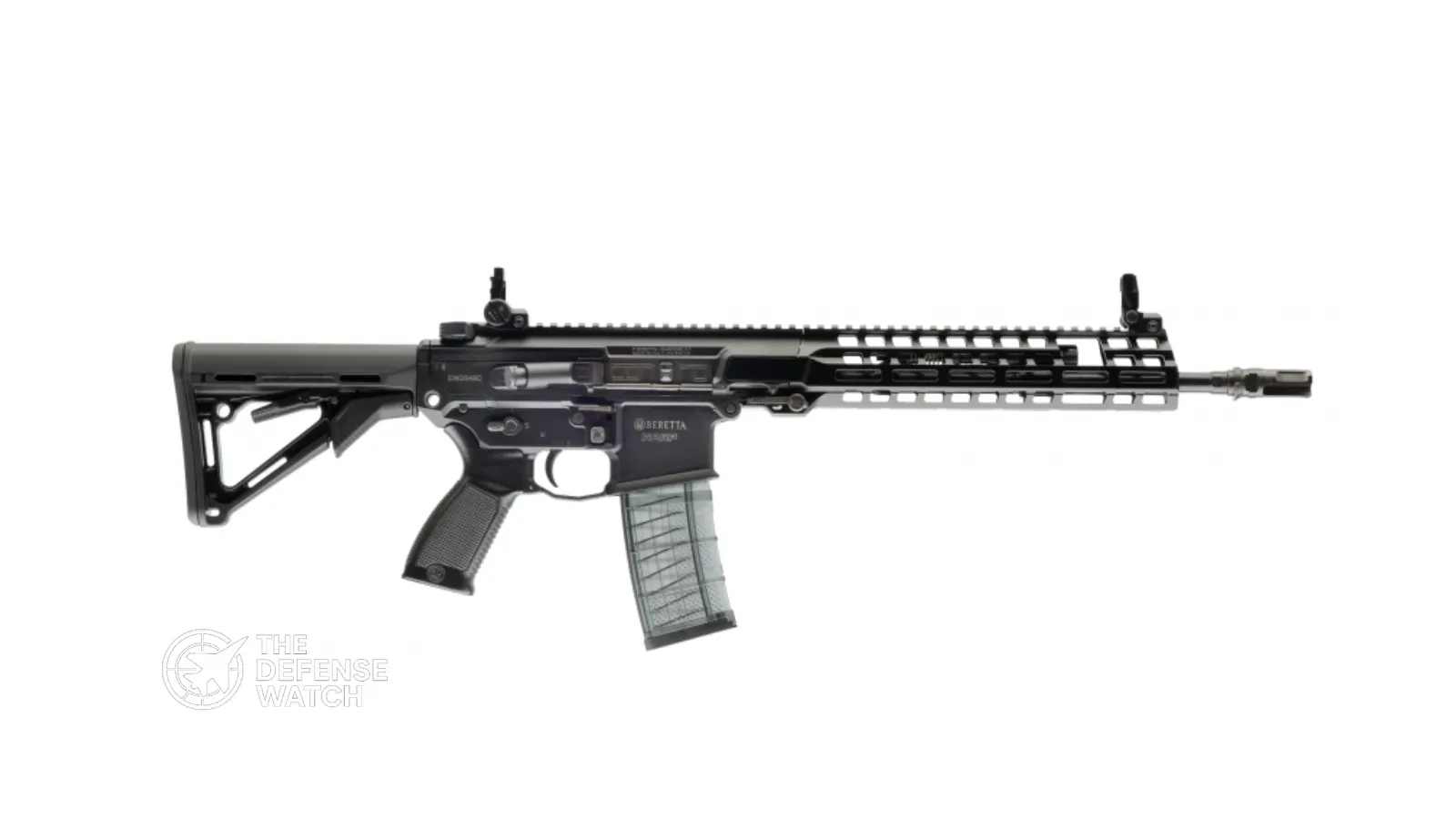
The Beretta NARP assault rifle has entered operational service with the Italian Army following the confirmed delivery of 7,000 rifles under the New Assault Rifle Platform program.
Beretta Defense Technologies disclosed the delivery during the Enforce Tac 2026 exhibition, marking the first significant fielding of the system within Italy’s land forces. The rifles represent an early phase of broader infantry modernization efforts aimed at improving soldier lethality, reliability, and modularity.
The New Assault Rifle Platform program reflects a growing focus across NATO armies on modernizing standard infantry weapons to support integrated optics, suppressors, and digital battlefield systems.
The Big Picture
Modern infantry operations increasingly rely on networked equipment, modular weapons, and adaptable systems that can support diverse mission profiles.
Across NATO, militaries are upgrading rifles to improve accuracy, ergonomics, and compatibility with emerging soldier systems. Programs such as the U.S. Army’s Next Generation Squad Weapon initiative and European modernization projects highlight a broader shift toward enhanced infantry lethality and survivability.
Italy’s NARP program fits squarely within this trend.
By fielding a new generation rifle designed around NATO standards and modular architecture, the Italian Army aims to ensure interoperability with allied forces while improving the performance of its infantry units in both conventional and expeditionary missions.
What’s Happening
Beretta Defense Technologies confirmed that 7,000 NARP assault rifles have been delivered to the Italian Army as part of the platform’s early operational rollout.
The rifles were developed through the New Assault Rifle Platform initiative, a program designed to create a next generation infantry weapon for modern battlefield requirements.
The NARP rifle is chambered in 5.56×45 mm NATO, the standard ammunition used across NATO forces. The system uses a short stroke gas piston operating mechanism, which generally improves reliability in harsh environments compared with direct impingement designs.
The weapon also incorporates:
- AR style ergonomics for ease of training and compatibility with common rifle handling techniques
- Ambidextrous controls for left and right handed operation
- Modular rail interfaces for optics, lasers, and accessories
- Adjustable gas regulation for suppressed and unsuppressed fire
The design allows barrel configurations ranging from compact close quarters variants to longer rifles optimized for standard infantry use.
Why It Matters
Modernizing infantry rifles may appear incremental, but the operational impact can be significant.
Small arms remain the primary weapon system for ground troops, and improvements in reliability, ergonomics, and modularity directly affect battlefield effectiveness.
The NARP platform was designed to enhance several key operational factors:
Reliability
Short stroke piston systems generally reduce carbon buildup and improve functioning in dusty or extreme environments.Modularity
Modern combat rifles must support advanced optics, suppressors, and digital targeting systems.Training Efficiency
AR style controls mirror the ergonomics of widely used NATO rifles, reducing training time for soldiers familiar with similar platforms.These improvements collectively increase infantry unit effectiveness in both high intensity conflict and expeditionary operations.
Strategic Implications
The delivery of the Beretta NARP assault rifle highlights a broader European trend toward strengthening domestic defense industries while modernizing frontline equipment.
For Italy, the program reinforces several strategic priorities:
Industrial Sovereignty
Developing and producing a new assault rifle domestically allows Italy to maintain control over supply chains and reduce reliance on foreign small arms suppliers.
Standardizing around 5.56×45 mm NATO ammunition ensures compatibility with allied forces during coalition operations.
Export Potential
Modern modular rifles developed for national armed forces often evolve into export products. The NARP platform could eventually compete in international procurement programs.
European manufacturers increasingly compete with U.S., Israeli, and German small arms suppliers for global defense contracts.
Competitor View
Other defense manufacturers will closely monitor the NARP program’s operational performance.
Companies producing modular rifles such as Germany’s Heckler & Koch, Belgium’s FN Herstal, and the United States based SIG Sauer dominate many international military small arms contracts.
If the NARP platform demonstrates strong reliability and adaptability, it could strengthen Beretta Defense Technologies’ position in the global small arms market.
At the same time, NATO allies may view Italy’s adoption of a domestically developed rifle as part of a broader European effort to expand sovereign defense production capabilities.
What To Watch Next
Several developments will determine the long term trajectory of the NARP program.
First, additional production batches will likely follow as the Italian Army evaluates the rifles in operational units.
Second, further variants may emerge, including:
- Short barrel carbines for special operations units
- Designated marksman configurations
- Enhanced versions optimized for suppressed fire
Finally, international marketing efforts could expand the platform’s presence in foreign military procurement competitions.
Capability Gap
The NARP program aims to address limitations associated with older infantry rifle designs.
Legacy rifles often lack:
- Integrated modular rails
- Suppressor optimized gas systems
- Ambidextrous controls
- Reduced signature technologies
Modern battlefields increasingly demand weapons that integrate seamlessly with advanced optics, thermal devices, and suppressors.
However, small arms modernization alone does not transform infantry capability. Training, logistics support, and soldier systems integration remain essential factors in operational effectiveness.
The Bottom Line
Italy’s delivery of 7,000 Beretta NARP assault rifles marks a key step in modernizing its infantry weapons while strengthening domestic defense industry capabilities.