U.S. Army Accepts First XM8 Carbine Delivery
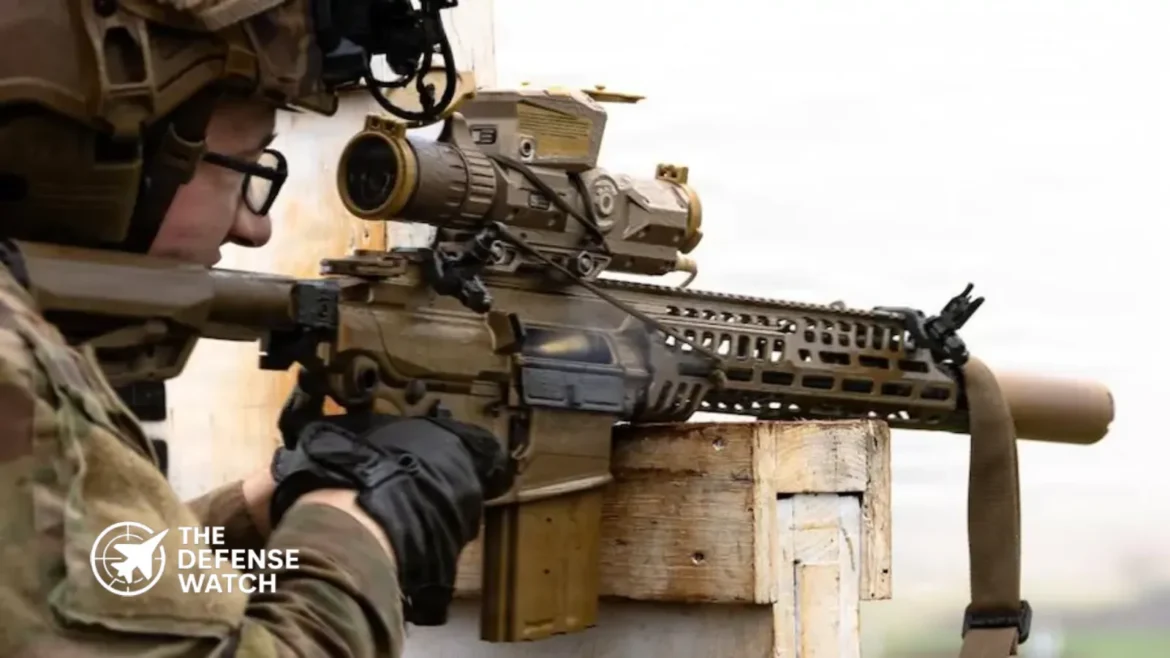
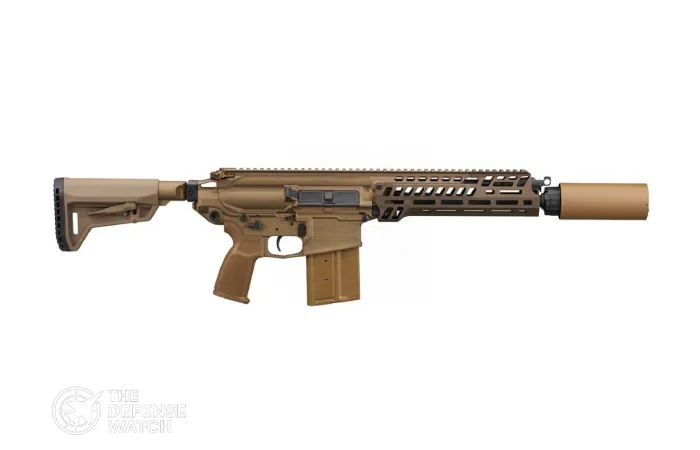
The XM8 carbine U.S. Army program has reached a key milestone with the acceptance of the first delivery from SIG Sauer, marking a renewed push to modernize frontline infantry capabilities.
The initial batch of XM8 carbines has been formally delivered to the U.S. Army, signaling progress in efforts to replace or supplement legacy small arms systems. The move comes as the Army continues to prioritize lethality, reliability, and adaptability in evolving combat environments.
While details on deployment timelines remain limited, the delivery confirms that the XM8 platform is moving from concept and evaluation toward operational integration.
- U.S. Army has accepted its first XM8 carbine delivery from SIG Sauer as part of ongoing infantry modernization efforts.
- The XM8 platform is designed to enhance reliability, modularity, and battlefield adaptability over legacy systems.
- The delivery supports broader efforts to upgrade small arms capability across frontline combat units.
- SIG Sauer continues to expand its role as a key supplier of next generation U.S. Army infantry weapons.
- The move reflects a strategic shift toward more advanced, modular, and future ready weapon systems.
A Renewed Push for Infantry Modernization
The XM8 carbine U.S. Army initiative reflects a broader modernization strategy aimed at addressing emerging threats and closing capability gaps in small arms performance.
For years, the Army has relied heavily on the M4 carbine platform. While proven in combat, the M4 faces limitations in range, lethality, and modular flexibility against near peer adversaries. The XM8, originally developed as part of earlier modernization efforts, has re-emerged as a potential solution to these challenges.
The system is designed with a modular architecture, allowing it to be configured for different mission profiles, including standard infantry use, designated marksman roles, and close quarters operations. This flexibility is increasingly important as U.S. forces prepare for multi domain operations across diverse theaters.
SIG Sauer’s Expanding Role
The SIG Sauer XM8 rifle delivery underscores the company’s growing footprint in U.S. military small arms programs. SIG Sauer has already secured major contracts in recent years, including the Next Generation Squad Weapon program, which introduced the XM7 rifle and XM250 automatic rifle.
By delivering the XM8 platform, SIG Sauer is reinforcing its position as a central player in the Army’s transition toward next generation infantry weapons.
This consolidation of suppliers may also streamline logistics and training, as multiple systems share design philosophies and operational concepts. However, it also places increased responsibility on a single manufacturer to meet performance and delivery expectations.
Operational Implications on the Battlefield
The introduction of the XM8 carbine U.S. Army system could have tangible effects on battlefield performance, particularly in terms of reliability and adaptability.
One of the key advantages often associated with the XM8 design is improved durability under harsh conditions. Past small arms programs have emphasized the need for weapons that can perform consistently in extreme environments, from desert heat to arctic cold.

Additionally, the XM8’s modular design supports rapid customization. Units can adjust configurations based on mission requirements without needing entirely different weapon systems. This reduces logistical burden while increasing tactical flexibility.
From a combat perspective, enhancements in ergonomics, weight distribution, and accessory integration may also improve soldier effectiveness and reduce fatigue during extended operations.
Strategic Context: Preparing for Peer Conflict
The U.S. Army infantry modernization effort, including the XM8 program, is closely tied to preparations for potential high intensity conflict against near peer adversaries.
In such scenarios, small arms are not just individual weapons but part of a larger system of systems that includes sensors, communications, and precision targeting. The XM8’s design aligns with this approach, enabling integration with advanced optics, fire control systems, and digital battlefield networks.
This shift reflects lessons learned from recent conflicts, where adaptability and rapid decision making have proven critical. Modern infantry units must be equipped with weapons that support these requirements without adding unnecessary complexity.
Challenges and Considerations
Despite the progress, the XM8 carbine U.S. Army program is not without challenges.
First, integration into existing force structures will require training, maintenance adjustments, and logistical planning. Transitioning from established platforms like the M4 is a complex process that involves more than simply issuing new weapons.
Second, questions remain about long term procurement scale. It is unclear whether the XM8 will fully replace existing systems or serve as a complementary platform within a broader small arms ecosystem.
Finally, budget pressures and competing priorities could influence the pace of adoption. The Army must balance investments across multiple modernization programs, including armored vehicles, long range fires, and air defense.
What Comes Next
The initial SIG Sauer XM8 rifle delivery is likely just the first step in a phased rollout. Future deliveries, testing, and operational feedback will determine how widely the system is adopted across the force.
If the XM8 meets performance expectations, it could play a significant role in shaping the next generation of U.S. Army infantry weapons. Its success will depend not only on technical performance but also on how well it integrates into the broader modernization framework.
For now, the delivery marks a clear signal that the Army is accelerating efforts to equip its soldiers with more capable and adaptable small arms.


Iron Dome Turns 15: 10,000 Intercepts & Counting
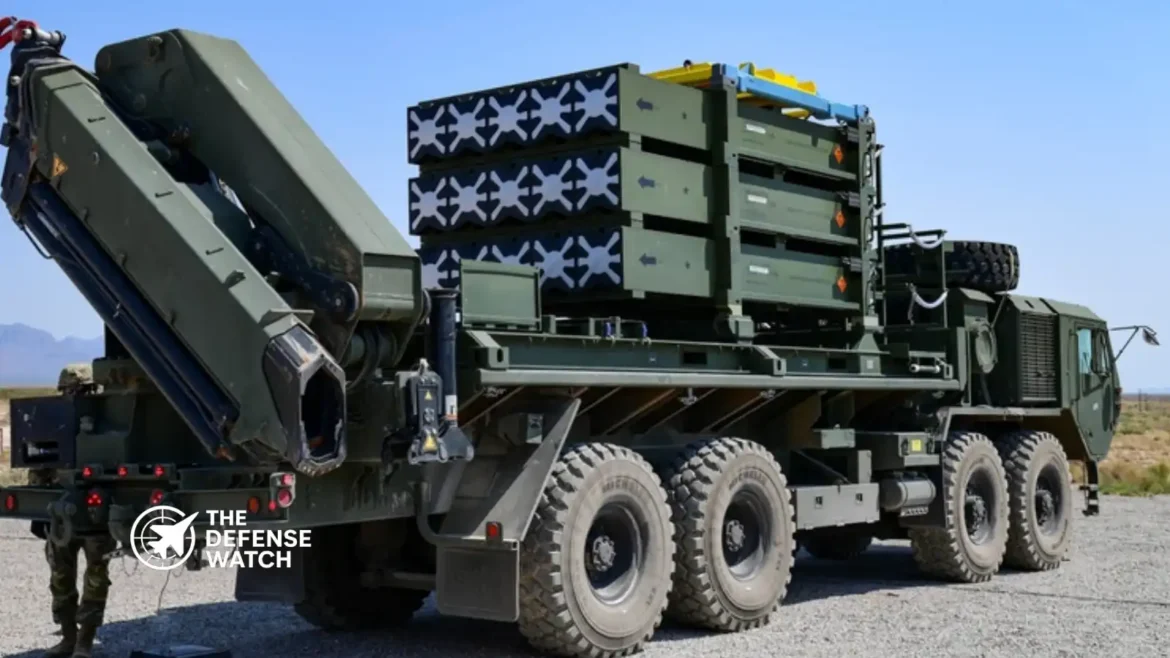
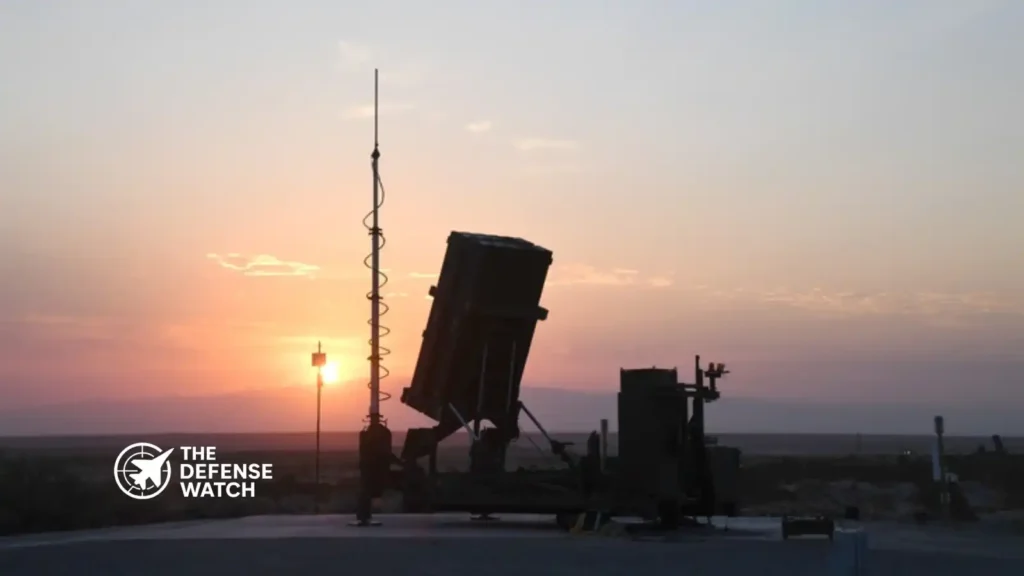
Iron Dome missile defense system has crossed a milestone that few weapons platforms in modern history can claim: fifteen uninterrupted years of combat-proven performance, more than 10,000 confirmed intercepts, and an operational record that has fundamentally altered how militaries worldwide think about short-to-medium-range air defense. On April 9, 2026, Rafael Advanced Defense Systems formally marked the anniversary, underscoring the system’s evolution from a domestic Israeli solution into one of the most replicated and studied air defense concepts on the planet.
- Iron Dome conducted its first successful operational intercept on April 7, 2011, neutralizing a rocket launched from the Gaza Strip.
- The system has surpassed 10,000 combat intercepts over 15 years of active service with a reported success rate exceeding 90 percent.
- Iron Dome was developed in approximately two and a half years and is capable of engaging rockets, cruise missiles, UAVs, and other aerial threats.
- The naval variant, C-Dome, became operational in 2017 and recorded its first at-sea intercept in April 2024 aboard an Israeli Sa’ar 6 corvette.
- The United States Marine Corps has selected Iron Dome to bolster its own ground-based short-range air defense capabilities.
The Shot That Changed Everything: April 7, 2011
The clock started on April 7, 2011, when an Iron Dome battery neutralized a rocket fired from the Gaza Strip — the system’s first confirmed operational intercept. The moment was more than a technical proof of concept. It signaled a deliberate shift in Israeli national security strategy: rather than relying solely on deterrence and ground operations to suppress rocket fire, Israel would field a persistent, high-volume intercept capability designed to protect its civilian population in near-real time.
That first intercept marked a shift in Israel’s defensive approach to countering aerial threats, and the system has since been deployed across multiple large-scale operations including Protective Edge, Guardian of the Walls, Breaking Dawn, Shield and Arrow, the Swords of Iron War, and Operation Roaring Lion.
The speed of development was equally remarkable. Iron Dome was built in approximately two and a half years — an extraordinarily compressed timeline for a platform of this complexity, reflecting both the urgency of the threat environment and the depth of Israeli defense-industrial capacity.
A System Built for the Modern Threat Landscape
Iron Dome is not a single-mission interceptor. It is a short- to medium-range system designed to engage a wide range of targets, including rockets, cruise missiles, unmanned aerial vehicles, and other aerial threats under various operational conditions — capable of functioning independently or as part of an integrated, layered air defense network.

Image : Iron Dome missile defense system That multi-threat adaptability has proven decisive. In today’s conflict environment, where adversaries routinely saturate defenses with mixed salvos of unguided rockets, precision cruise missiles, and low-cost kamikaze drones, a system that can discriminate between threat types and engage selectively represents a significant operational advantage. Iron Dome’s battle management component calculates probable impact points and prioritizes intercepts against threats aimed at populated or strategically critical areas — a feature that directly contributes to its cost efficiency in high-volume engagements.
Over 15 years of service, the system has maintained a reported success rate exceeding 90 percent across more than 10,000 combat intercepts.
Leadership Voices: Confidence Backed by Battlefield Data
Rafael’s leadership did not mince words when assessing the system’s legacy.
Yuval Steinitz, chairman of Rafael, framed Iron Dome’s significance in both strategic and economic terms. He described it as “the only system capable of engaging rockets and missiles across short and medium ranges — and doing so at a cost that makes large-scale deployment feasible,” adding that it reflects the scientific and technological superiority of Israel and of Rafael’s engineers in particular.
Yoav Tourgeman, Rafael’s chief executive, pointed to the system’s continuous performance improvement as its defining characteristic. He stated that ongoing upgrades have significantly enhanced capabilities, noting that what the system can do today across the full spectrum of threats it faces exceeds what it could do at initial delivery by “an order of magnitude.” Tourgeman also credited the system with saving tens of thousands of Israeli lives over the course of its operational service.
Both statements reflect a broader truth about Iron Dome: it is not the same system it was in 2011. Iterative upgrades based on operational feedback — a process conducted in close coordination with the Israel Air Force and the Directorate of Defense Research and Development — have kept the platform ahead of an evolving threat curve that now includes precision-guided rockets, loitering munitions, and salvo tactics designed to overwhelm point defenses.
Expanding to Sea: The C-Dome Naval Variant
One of the clearest indicators of Iron Dome’s strategic staying power is the decision to extend the platform into the maritime domain. The C-Dome naval variant became operational in 2017 and conducted its first combat intercept in April 2024, aboard an Israeli Sa’ar 6 corvette.
The significance of that intercept extends well beyond Israel’s territorial waters. Naval forces globally are grappling with a rapidly deteriorating threat environment driven by cheap, proliferating anti-ship missiles and drone swarms. C-Dome’s integration aboard surface combatants offers a potential model for navies seeking affordable, high-rate intercept capability without the footprint of larger shipborne air defense systems. Its operational debut in a live conflict environment will inevitably draw close scrutiny from allied naval planners.
U.S. Adoption and International Demand
Perhaps the most telling endorsement of Iron Dome’s standing is its adoption by the United States military. The U.S. Marine Corps selected Iron Dome to enhance its own short-range air defense capabilities — a choice that reflects both the system’s combat credibility and Washington’s broader effort to address gaps in ground-based air defense following years of neglect during the counter-insurgency era.
The USMC selection also carries significant implications for allied interoperability. Iron Dome batteries operating alongside U.S. forces in a contested theater would need to integrate with American command-and-control networks, a requirement that accelerates technical cooperation between Rafael and U.S. defense industry partners and potentially opens doors to further foreign military sales.
Analysis: What Iron Dome’s 15-Year Record Reveals About the Future of Air Defense
Iron Dome’s anniversary arrives at a moment when the global air defense market is experiencing its most significant surge in demand since the Cold War. The wars in Ukraine and the Middle East have demonstrated that aerial threats — from crude artillery rockets to sophisticated cruise missiles and drone swarms — are now a fixture of modern combined-arms warfare, not an exception.
Several lessons from Iron Dome’s operational history are already shaping procurement decisions worldwide. First, the value of layered defense architecture is now empirically validated rather than theoretically argued. Iron Dome was never designed to operate alone; it functions as the lower tier of a network that includes David’s Sling and the Arrow systems for medium and long-range threats. That integrated approach, once primarily an Israeli concept, is now being adopted as a template by NATO members accelerating their own air defense investments.
Second, the cost-per-intercept question — long a vulnerability in Iron Dome’s economic case — has become less acute as adversaries increasingly deploy more expensive offensive systems. When the incoming threat is a $50,000 precision rocket rather than a $500 unguided projectile, the calculus of using a multi-thousand-dollar interceptor becomes considerably more defensible. And as Rafael continues to reduce production costs through scale and manufacturing efficiency, the system’s economics improve further.
Third, Iron Dome’s journey from a domestic emergency response to a global export product underscores how battlefield validation accelerates international adoption. No amount of laboratory testing or simulation replicates the persuasive power of a 90-plus percent success rate accumulated over 15 years and across multiple high-intensity conflicts. That record is Rafael’s most effective sales tool — and the reason allied defense ministries continue to study it closely.
What comes next will likely involve deeper integration of artificial intelligence into threat discrimination and intercept sequencing, expanded cooperation with U.S. and European partners on next-generation interceptors, and continued development of the C-Dome naval platform as maritime air defense becomes a priority concern across multiple allied navies.
Iron Dome did not just defend a country. It helped define what effective short-range air defense looks like in the 21st century — and fifteen years on, that definition is still being written.
FAQs
How many intercepts has Iron Dome made in 15 years?Iron Dome has recorded more than 10,000 combat intercepts since its first operational engagement in April 2011, maintaining a reported success rate above 90 percent.
What types of threats can Iron Dome intercept?The system is designed to engage short- to medium-range rockets, cruise missiles, and unmanned aerial vehicles. It can operate across all weather conditions and in dense threat environments.
Has the U.S. military adopted Iron Dome?Yes. The United States Marine Corps selected Iron Dome to strengthen its short-range air defense capabilities, marking a significant international endorsement of the platform.
What is C-Dome?C-Dome is the naval variant of Iron Dome developed by Rafael. It became operational in 2017 and conducted its first live combat intercept in April 2024 aboard an Israeli Sa’ar 6 corvette.
How long did it take to develop Iron Dome?Rafael developed Iron Dome in approximately two and a half years, an unusually compressed timeline for a system of its complexity and capability.
Is Iron Dome still being upgraded?Yes. Rafael conducts continuous capability upgrades based on operational experience, and company leadership has stated that the system’s current performance substantially exceeds its original specifications at the time of delivery.

Ukraine’s Fire Point Targets $1M Ballistic Missile Kill Cost With New Air Defense System
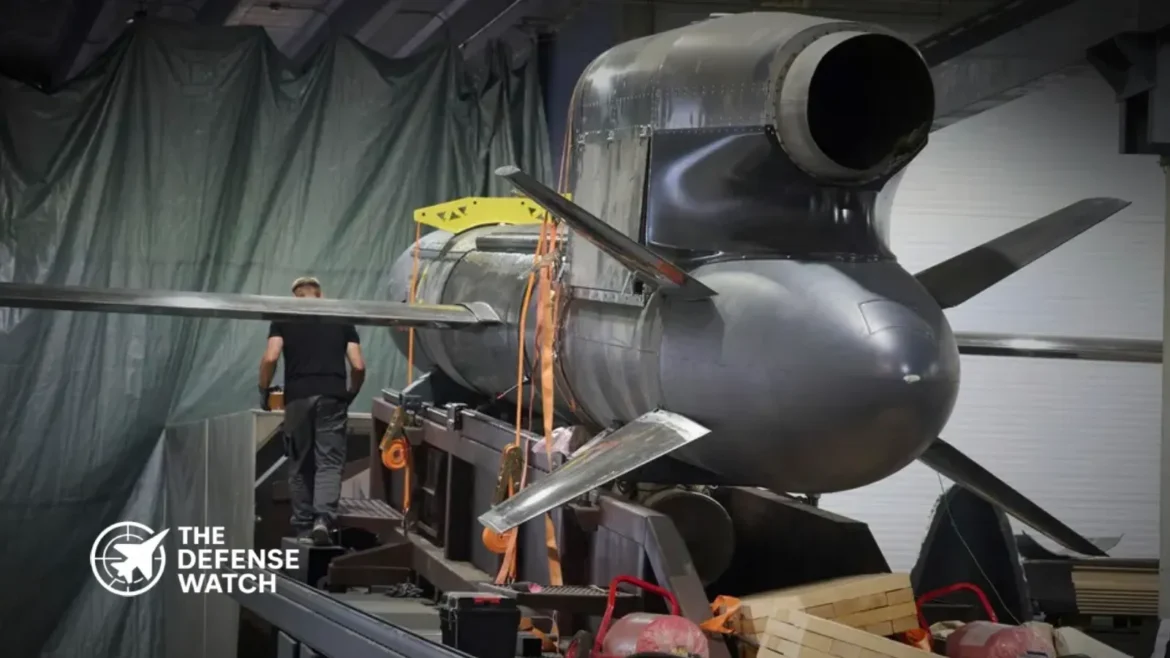
Ukraine’s Fire Point, maker of the Flamingo cruise missile, is in active talks with European defense companies to launch a new air defense system by 2027 — one that its co-founder says could fundamentally disrupt the economics of ballistic missile defense.
Fire Point co-founder and chief designer Denys Shtilierman told Reuters the company aims to cut the cost of intercepting a ballistic missile to below $1 million — a benchmark that, if achieved, would represent a significant departure from current Western air defense cost structures.
- Ukraine’s Fire Point — maker of the Flamingo cruise missile — is developing a new low-cost air defense system targeting a sub-$1 million cost per ballistic missile intercept.
- The system will use Fire Point’s FP-7 short-range ballistic missile as its interceptor; a first live intercept attempt is planned for late 2027.
- A Middle Eastern conglomerate — widely identified in Ukrainian media as Emirati defense firm Edge Group — has proposed a $760 million acquisition of a 30% stake in Fire Point, valuing the company at $2.5 billion.
- Fire Point is also developing two supersonic ballistic missiles: the FP-7 (300 km range) and the FP-9 (850 km range, 800 kg warhead) — the latter placing Moscow within reach.
- The company currently produces hundreds of long-range strike drones daily and three Flamingo cruise missiles per day, with export capacity of up to 2,500 drones monthly pending Ukrainian government approval.
The Big Picture
Western air defense architecture faces a compounding supply crisis. Patriot missiles are in increasingly short supply amid extensive deployment in the Gulf against Iranian attacks, and Europe’s only anti-ballistic system, the Italo-French SAMP/T, is produced in relatively small numbers.
That scarcity has created a strategic opening. Nations seeking to protect their airspace — particularly smaller NATO partners, Indo-Pacific allies, and Gulf states — are actively searching for credible, affordable alternatives to a U.S. system whose production cannot currently meet global demand.
Fire Point’s emergence as a serious contender in this space is not accidental. Years of know-how gained on the battlefield fighting Russian forces have made Ukraine a leading innovator in low-cost defense tech. With the outbreak of war in the Gulf, Kyiv has leveraged that expertise to sign security agreements with governments across the region.
What’s Happening
Fire Point — founded after Moscow’s 2022 invasion — is Ukraine’s biggest maker of the long-range drones used in the majority of strikes deep inside Russia. The company has since expanded well beyond drone production.
Its FP-5 long-range cruise missile, commonly known as the Flamingo, has been used to hit Russian military facilities and arms factories, including a ballistic missile plant nearly 1,400 kilometers inside Russian territory.
Now, Shtilierman says Fire Point is targeting the intercept mission. The Patriot system — manufactured by Raytheon and Lockheed Martin — often requires two or three air defense missiles, each costing several million dollars, to bring down a ballistic projectile.
“If we can decrease it to less than $1 million, it will be a game changer in air defense solutions,” Shtilierman said. We plan to intercept the first ballistic missile at the end of 2027.
Shtilierman declined to name the European companies involved in the discussions but said Fire Point is “deeply interested” in collaboration on radar, missile target-seeking, and communications systems — areas where it lacks expertise. He noted that European companies including Weibel, Hensoldt, SAAB, and Thales have capable radar solutions.
Why It Matters
The cost asymmetry in modern air defense has emerged as one of the defining vulnerabilities of Western military posture. Adversaries have learned to exploit it directly: Russia, Iran, and their proxies fire salvos of inexpensive ballistic and cruise missiles, forcing defenders to expend interceptors worth multiples more than the incoming rounds.
If Fire Point can demonstrate a reliable intercept at under $1 million per kill, it addresses one of the most critical tactical and economic imbalances in contemporary warfare. Even a system with somewhat lower kill probability than the Patriot could justify deployment purely on cost-exchange-ratio grounds.
Fabian Hoffmann, a missile expert and senior researcher at the Norwegian Defence University College, acknowledged Fire Point’s 2027 target was “ambitious.” However, he said that beyond Ukraine’s own military needs, there would be strong demand from governments even if its kill rates per missile were less effective than the Patriot’s.
That analysis carries considerable weight. In markets where Patriot is unavailable or unaffordable, a lower-cost system with a lower — but not negligible — intercept probability still provides meaningful deterrence value.
The Offensive Arsenal Expanding in Parallel
Fire Point is not limiting its ambitions to defense. Shtilierman said the company is now in the final stages of developing two supersonic ballistic missiles.
The smaller FP-7, with a range of around 300 kilometers, will have its first military deployment “in the close future,” Shtilierman described it as similar to Lockheed Martin’s ATACMS short-range ballistic system.
The larger FP-9, capable of carrying an 800 kg warhead up to 850 kilometers, is about to enter testing and would place Moscow within range of Ukraine’s ballistic arsenal.
Shtilierman said strikes on Moscow — which is ringed by some of the world’s most formidable air defenses — would cause a “mass shift in the Russian mind and the mind of top guys in Russia.
Separately, Hoffmann noted that while Russia has experience successfully downing ATACMS, more widespread use of ballistic missiles could stretch Russian air defenses, already degraded by Ukrainian strikes.
Strategic Implications
Fire Point’s trajectory reveals a broader strategic shift: Ukraine is transitioning from a nation consuming Western defense capabilities to one producing and exporting them.
Many Ukrainian defense firms are now seeking to export their excess capacity and cash in on a global boom in military spending. While the government recently loosened wartime export restrictions, each proposed deal is still subject to stringent checks and state approval.
This matters for NATO allies. A credible, low-cost Ukrainian air defense system could fill capability gaps in Eastern European nations that cannot afford Patriot batteries, while simultaneously reducing their dependence on U.S. systems that Washington may need to retain for other theaters.
The potential UAE investment adds another dimension. Ukraine’s anti-monopoly authority has until around October to decide on the proposed $760 million acquisition of a 30% stake in Fire Point by the Middle Eastern investor. Ukrainian media have identified the suitor as Emirati defense firm Edge Group.
The investment would be the first step in a project to build a space launch terminal in the UAE, with the aim of eventually establishing a constellation of low-orbit European satellites. That represents a significant expansion of Fire Point’s strategic footprint — from a battlefield supplier to a multi-domain technology enterprise.
Competitor View
Russia’s military planners will be watching Fire Point’s ballistic missile development with close attention. The FP-9’s 850-kilometer range directly threatens Russian territory and command infrastructure in ways that current Ukrainian drone strikes — while disruptive — do not replicate with the same speed and penetration probability of a ballistic trajectory.
From Moscow’s perspective, the weaponization of Ukrainian industrial capacity represents a compounding problem. Every month the war continues, Ukraine’s defense-industrial base gains experience, scales production, and attracts foreign capital. The proposed Emirati investment, if approved, would substantially accelerate that trajectory.
For Iran, a Ukrainian air defense system exported to Gulf states could directly complicate the ballistic missile attack doctrine Tehran has relied upon in the current Gulf conflict. A low-cost intercept solution positioned in the UAE or Saudi Arabia would reduce the cost-exchange advantage Iran has partially exploited against Patriot-equipped defenders.
What To Watch Next
Several near-term milestones will determine whether Fire Point’s air defense ambitions materialize on schedule.
Ukraine’s anti-monopoly authority is expected to rule on the Edge Group investment by October 2026. Approval would unlock substantial capital and open Gulf export channels. Rejection — or prolonged delay — could constrain the company’s ability to fund radar integration with European partners.
Fire Point will increase production of the Flamingo when a new in-house engine goes into mass production in October and a rocket fuel plant in Denmark comes online later this year — pending two final approvals from Danish authorities.
The FP-7’s first military deployment — expected “in the close future” — will serve as a technical proof point for the broader air defense system concept, since the same missile is intended to function as the interceptor in the new system.
Capability Gap
The core gap Fire Point is targeting is straightforward: the world does not have enough affordable ballistic missile interceptors.
Ukraine and many other Western-allied nations rely heavily on the U.S.-made Patriot system to stop ballistic missiles. But Patriot battery production is constrained by U.S. industrial capacity, and the interceptor missiles themselves remain expensive and prioritized for NATO’s most exposed frontlines and critical Gulf deployments.
The realistic limitations of Fire Point’s approach remain significant. Developing a guidance and seeker package capable of engaging a ballistic missile in terminal phase — particularly against maneuvering warheads — is a technically demanding challenge that Ukraine has not previously solved at scale. Radar integration with European partners will be essential, and those partnerships have not yet been formalized.
The 2027 intercept demonstration target, while ambitious, is also a minimum viable proof of concept — not a fielded operational system. Full production, export certification, and integration with customer fire control systems would extend timelines considerably beyond that initial demonstration.
The Bottom Line
Fire Point’s drive toward a sub-$1 million ballistic missile intercept solution directly addresses one of the most consequential economic imbalances in modern air warfare — and if successful, it will reshape the global market for affordable missile defense at a moment when demand far outpaces Western supply.

Israel Accelerates Arrow Interceptor Production To Reinforce Missile Defense
Israel’s decision to accelerate Arrow interceptor production marks a significant expansion of its missile defense posture, as the country adapts to evolving ballistic missile threats across the Middle East.
The Israeli Ministry of Defense has approved measures to increase manufacturing output of the Arrow interceptor family, a key component of the country’s layered air defense architecture. The move comes amid heightened regional tensions and a growing emphasis on preparedness for sustained, high-intensity conflict.
According to official statements and defense industry reporting, the acceleration effort focuses on boosting inventory levels and ensuring rapid replenishment capacity. This reflects lessons learned from recent conflicts, where high interceptor consumption rates have underscored the importance of industrial scalability.
¦ KEY FACTS AT A GLANCE- Israel approved accelerated production of Arrow missile interceptors to strengthen national air defense capacity.
- The decision reflects growing concerns over ballistic missile threats from Iran and regional actors.
- Arrow systems are designed to intercept long-range ballistic missiles outside the atmosphere.
- The move aims to ensure sustained operational readiness during prolonged high-intensity conflict scenarios.
- The program is jointly developed with U.S. support, reinforcing strategic defense cooperation.
Strategic Response To Expanding Missile Threats
The Arrow interceptor system is specifically designed to counter long-range ballistic missiles, including threats that travel outside the Earth’s atmosphere before reentry. This capability places it at the top tier of Israel’s multi-layered defense network, complementing systems like David’s Sling and Iron Dome.
The decision to expand Arrow production is widely viewed as a response to Iran’s advancing missile capabilities. Tehran has continued to develop and field increasingly sophisticated ballistic systems, including longer-range and more precise variants. These developments have shifted regional threat calculations, prompting Israel to prioritize strategic missile defense.
Defense analysts note that interceptor availability is as critical as system capability. In a prolonged conflict scenario, even advanced systems can face operational strain if interceptor stockpiles are insufficient. By accelerating production, Israel is aiming to mitigate this risk and maintain sustained defensive coverage.
Industrial Surge And U.S. Cooperation
The Arrow program is a joint initiative between Israel and the United States, with significant funding and technological collaboration from Washington. This partnership has enabled continuous upgrades to the system, including improvements in interception range, accuracy, and reliability.
Accelerating production will likely involve expanded industrial activity across Israel’s defense sector, particularly among key contractors responsible for missile manufacturing and system integration. While specific production figures have not been disclosed, the emphasis is clearly on increasing throughput and reducing delivery timelines.
From a strategic perspective, the move also aligns with broader U.S. concerns about missile proliferation in the Middle East. Strengthening allied missile defense capabilities is seen as a critical element of regional stability, particularly in deterring escalation.
Operational Implications For Future Conflicts
The expansion of Arrow interceptor production carries direct operational implications. In a high-threat environment, such as a multi-front conflict involving ballistic missile salvos, the ability to sustain interception rates becomes decisive.
Recent conflicts have demonstrated that missile defense systems can be overwhelmed if faced with large-scale, coordinated attacks. By increasing interceptor availability, Israel aims to maintain a credible defense against saturation tactics.
Additionally, the move signals a shift toward long-duration readiness. Rather than preparing for short, limited engagements, Israel is positioning its defense infrastructure for extended operations, where logistics and supply chains play a central role.
This approach reflects a broader trend in modern warfare, where industrial capacity and resilience are increasingly recognized as key components of military power.
Broader Regional And Strategic Context
The acceleration of Arrow interceptor production comes at a time of intensifying geopolitical competition in the Middle East. Iran’s missile development, combined with the proliferation of missile and drone technologies among non-state actors, has created a complex threat environment.
Israel’s response highlights the importance of layered defense systems capable of addressing a wide spectrum of threats, from short-range rockets to intercontinental ballistic missiles. The Arrow system, as the upper layer, plays a critical role in this architecture.
At the same time, the move underscores the growing importance of defense industrial policy. Ensuring rapid production and replenishment is no longer a secondary consideration, but a central element of national security planning.
U.S. Military Advances Common Hypersonic Missile Program
The common hypersonic missile test conducted by the U.S. Army and Navy marks a significant step forward in America’s push to field operational hypersonic weapons. According to defense-industry.eu, the joint test validated critical components of the shared missile system designed for rapid deployment across multiple service branches.
(adsbygoogle = window.adsbygoogle || []).push({});The test involved a ground-launched system using the Common Hypersonic Glide Body (C-HGB), a key component that both the Army and Navy plan to deploy under separate but closely aligned programs. The Army’s Long Range Hypersonic Weapon (LRHW) and the Navy’s Conventional Prompt Strike (CPS) system are built around this shared architecture.
Officials said the launch demonstrated the missile’s ability to achieve hypersonic speeds, defined as greater than Mach 5, while maintaining maneuverability, a core requirement for penetrating advanced air defense systems.
¦ KEY FACTS AT A GLANCE- The U.S. Army and Navy successfully conducted a joint test of the common hypersonic missile.
- The test involved a ground-based launch system using a shared hypersonic glide body.
- The missile is designed to travel at speeds above Mach 5 with high maneuverability.
- The program supports both the Army’s Long Range Hypersonic Weapon and Navy’s Conventional Prompt Strike.
- The test marks progress toward fielding operational hypersonic systems in the near term.
Joint Development Signals Strategic Shift
The common hypersonic missile test reflects a broader Pentagon strategy to streamline development and reduce costs by using a unified design across services. Instead of separate programs competing for resources, the Army and Navy are coordinating on propulsion, glide body design, and command systems.
This approach is intended to accelerate deployment timelines while ensuring interoperability. In practical terms, it allows the U.S. military to deploy hypersonic weapons from both land-based launchers and naval platforms, expanding operational flexibility.
From a strategic standpoint, this joint development model also signals urgency. Hypersonic weapons development has become a central focus in great power competition, particularly as China and Russia continue to field and test their own systems.
Operational Impact and Capability Expansion
The common hypersonic missile test demonstrates more than technical progress, it highlights how hypersonic weapons could reshape battlefield dynamics. Unlike traditional ballistic missiles, hypersonic glide vehicles can maneuver unpredictably during flight, making them significantly harder to track and intercept.
This capability gives U.S. forces a potential advantage in contested environments, particularly in regions where adversaries have layered air and missile defense systems. The ability to strike high-value targets quickly and with precision could enhance deterrence and provide commanders with new options during conflict.
The Army’s LRHW system is expected to provide long-range, land-based strike capability, while the Navy’s CPS program aims to integrate hypersonic missiles onto surface ships and submarines. Together, they form a multi-domain strike network designed to operate across theaters.
Technical Progress and Remaining Challenges
While the common hypersonic missile test is a milestone, significant work remains before full operational deployment. Hypersonic systems present complex engineering challenges, including extreme heat management, guidance accuracy at high speeds, and integration with existing platforms.
Testing is expected to continue as the Pentagon refines the system’s reliability and performance under real-world conditions. Previous delays in hypersonic programs have highlighted the difficulty of transitioning from successful tests to fielded capability.
Still, the latest test suggests steady progress. By validating key components in a joint environment, the U.S. military is moving closer to operational readiness.
Strategic Context: Hypersonic Race Intensifies
The common hypersonic missile test comes amid intensifying global competition in hypersonic weapons. Both China and Russia have already deployed or tested operational systems, prompting increased urgency within the U.S. defense establishment.
Washington’s focus has shifted toward closing the capability gap while ensuring its systems are reliable, scalable, and integrated into broader military doctrine. The emphasis on joint development reflects lessons learned from earlier acquisition programs that faced cost overruns and delays.
In this context, the recent test is not just a technical achievement but part of a larger effort to maintain strategic balance.
Outlook
The successful common hypersonic missile test positions the U.S. Army and Navy closer to deploying next-generation strike capabilities. As testing continues, the focus will likely shift toward integration, production scaling, and operational deployment timelines.
If the program maintains momentum, hypersonic weapons could soon become a core element of U.S. military strategy, offering rapid, precise strike options in high-threat environments.
U.S. Tomahawk Missile Stockpile Faces Pressure After Record Expenditure in Iran Campaign
The United States has fired at least 850 Tomahawk long-range cruise missiles in just over one month of Operation Epic Fury, the joint U.S.-Israeli military campaign against Iran — a figure that marks the highest single-campaign expenditure of the weapon in its four-decade operational history. The burn rate has prompted serious concern among Pentagon planners and defense analysts, not primarily over the current conflict, but over what depletion means for U.S. deterrence commitments elsewhere — most critically in the Indo-Pacific.
(adsbygoogle = window.adsbygoogle || []).push({});¦ KEY FACTS AT A GLANCE- The U.S. has launched at least 850 Tomahawk cruise missiles in just over one month of Operation Epic Fury, the joint U.S.-Israeli campaign against Iran — the highest expenditure rate in any single conflict in the missile’s operational history.
- The Center for Strategic and International Studies (CSIS) estimates the U.S. retains roughly 3,000 Tomahawks, meaning the current campaign has consumed approximately 28% of the total estimated inventory.
- Each Tomahawk Block V costs approximately $3.5 million and carries a 1,000-pound warhead with a range exceeding 1,000 miles — making it one of the most capable and expensive conventional strike weapons in the U.S. arsenal.
- Raytheon secured a contract in February 2026 to build thousands of additional missiles, including Tomahawks, but analysts estimate it will take two to three years to replenish current expenditures at existing production rates.
- The Maritime Strike Tomahawk (MST) variant, capable of engaging surface ships, has reportedly been employed in Operation Epic Fury and represents a critical capability for any future conflict in the Indo-Pacific.
The Big Picture
The Tomahawk Land Attack Missile has served as the backbone of U.S. long-range conventional strike capability since the 1991 Gulf War. Its combination of standoff range, precision, and launch flexibility — from surface ships and submarines — has made it the weapon of choice for opening salvos against defended targets.
The missile has been upgraded continuously over time, with the Block V being the current operational version. That iterative modernization has kept the Tomahawk relevant across decades of conflict, but it has not solved the fundamental problem of industrial production capacity. Building a Tomahawk is not like producing small arms or even artillery rounds. It requires precision manufacturing, sophisticated guidance systems, and a supply chain that cannot be surged overnight.
The Iran campaign has forced that structural constraint into the open at a strategically inconvenient moment.
What’s Happening
The Washington Post reported that the U.S. launched at least 850 Tomahawks in the first month of Operation Epic Fury, a rate far exceeding the missile’s use in any previous conflict, according to a CSIS assessment by analysts Mark Cancian and Chris Park.
While the Department of Defense does not publicly disclose precise Tomahawk inventory figures, CSIS estimates the U.S. retains approximately 3,000 missiles. That estimate, if accurate, means the Iran campaign has already consumed roughly one-quarter to one-third of the total U.S. cruise missile stockpile in approximately 30 days of combat.
Tomahawks were employed heavily during the early stages of Epic Fury, until the United States and Israel had suppressed what remained of Iran’s air defense network. Once air superiority was established, the rate of Tomahawk use declined — not to zero, but significantly — as shorter-range, cheaper munitions became viable.
The cost differential is stark. A Tomahawk costs approximately $3.5 million per unit and carries a range of 1,000 miles. A JDAM — a precision guidance kit fitted to an unguided bomb — costs around $80,000 and delivers comparable accuracy and explosive effect at a range of roughly 20 miles. Once the threat environment permits, the operational calculus shifts decisively toward cheaper alternatives.
Why It Matters
The immediate operational concern is manageable. According to CSIS analyst Mark Cancian, the U.S. has sufficient Tomahawks and other precision munitions to sustain Operation Epic Fury. The more serious issue is the second and third-order effect on global deterrence posture.
The strategic concern centers on the effect of stockpile depletion on other theaters, particularly Ukraine and the Western Pacific, where a potential conflict with China looms as the primary pacing threat. Defense strategists warn that degraded inventories weaken the U.S. ability to deter — or fight — a conflict in the Indo-Pacific, where standoff precision strike is not a supporting capability but a central pillar of warfighting strategy.

Image : U.S. Central Command The Tomahawk’s role in a Taiwan contingency is not hypothetical. U.S. war planners have long relied on the missile’s ability to hold Chinese naval and ground forces at risk from beyond the reach of China’s formidable anti-access/area denial (A2/AD) defenses. Burning through that inventory against Iran — even in a justified and necessary campaign — directly degrades the depth of that deterrent.
Strategic Implications
The Maritime Strike Tomahawk, a relatively new variant capable of engaging moving surface targets, represents a particularly valuable asset in any Indo-Pacific conflict scenario. In the event of a Chinese invasion of Taiwan, the ability to strike naval vessels at standoff range would be operationally significant. Reports suggest this variant has seen employment in Operation Epic Fury, which, while providing real-world validation of the system, simultaneously draws down an inventory that took years to build.
The parallel Patriot missile situation reinforces the broader concern. CSIS estimated the U.S. entered the Iran conflict with approximately 4,000 Patriot interceptors. After roughly one month of combat, approximately 1,000 have been expended — about one quarter of the total inventory — with the U.S. producing around 600 Patriots annually, split equally between domestic and allied requirements.
The combined drawdown of Tomahawks and Patriots across a single theater engagement illustrates a systemic vulnerability: the U.S. defense industrial base, despite years of effort, has not achieved the production surge capacity required to sustain simultaneous high-intensity operations in multiple theaters. This is not a new problem — it has been documented in DoD reports and congressional testimony for years — but Operation Epic Fury is now providing the most consequential real-world stress test that vulnerability has ever faced.
Competitor View
China’s military planners will draw careful conclusions from Operation Epic Fury’s opening phase. The expenditure of 850-plus Tomahawks in approximately 30 days — well above any historical precedent — provides Beijing with invaluable empirical data on U.S. sustained strike capacity, consumption rates, and the industrial constraints limiting rapid replenishment.
Chinese strategists have long studied U.S. precision strike dependencies. The People’s Liberation Army Rocket Force (PLARF) has developed its own extensive land-attack and anti-ship cruise missile arsenal partly to offset U.S. standoff advantages and partly to impose a cost-exchange calculus that favors attrition of American stockpiles. Seeing that calculus play out in real time — even in a different theater — will inform Chinese assessments of how long the U.S. could sustain high-intensity operations in a Taiwan contingency.
Russia and Iran’s other strategic partners will similarly note the constraints revealed by Epic Fury, potentially calculating that a protracted conflict could erode U.S. conventional strike depth faster than the American defense industry can reconstitute it.
What To Watch Next
Raytheon secured a contract in February 2026 to produce thousands of additional missiles, including Tomahawks. Defense Secretary Hegseth has conducted an “Arsenal of Freedom” tour of defense manufacturing facilities, emphasizing the need to accelerate production rates. The effort reflects bipartisan recognition of the stockpile problem, with groundwork laid during the Biden administration and continued under the current Pentagon leadership.
According to Cancian, replacing the 850 to 1,000 Tomahawks already expended in Epic Fury will require two to three years at current production rates. That timeline assumes no further major escalation and no additional high-intensity campaigns drawing on the same stockpile — assumptions that are far from guaranteed given the current geopolitical environment.
Congressional appropriators will face growing pressure to fund accelerated production contracts. The key decision point is whether Congress will authorize multi-year procurement agreements that provide Raytheon with sufficient long-term demand signal to invest in production line expansion. Without such commitments, manufacturers cannot justify the capital expenditure required to meaningfully increase output.
Capability Gap
The Tomahawk stockpile situation exposes a structural gap between U.S. operational demand in sustained high-intensity conflict and the industrial throughput required to match that demand. The missile’s 1,000-mile standoff range is effectively irreplaceable in contested environments where aircraft cannot safely operate — a scenario that applies directly to early-phase operations against advanced adversaries.
No currently fielded U.S. munition replicates the Tomahawk’s combination of range, payload, precision, and in-flight retargeting capability at comparable cost efficiency relative to its operational effect. The Joint Air-to-Surface Standoff Missile (JASSM) family provides some complementary capability but is air-launched and faces its own inventory constraints.
The deeper problem is structural: the U.S. military spent decades optimizing for technological overmatch and relatively low-volume precision strike, without building the industrial surge capacity required for prolonged peer or near-peer conflict. Operation Epic Fury is not that conflict, but it is demonstrating, in real time, what the industrial shortfall looks like under conditions far less demanding than a full-scale Taiwan contingency would impose.
The Bottom Line
The Tomahawk stockpile pressure revealed by Operation Epic Fury is not simply a logistics challenge — it is a strategic warning that the U.S. defense industrial base must be restructured for sustained high-intensity warfare before, not after, a crisis in the Indo-Pacific forces the issue.
Pentagon Bolsters PAC-3 Seeker Production With New Boeing Framework
The Pentagon and Boeing agreed on a framework to triple PAC-3 seeker production capacity, a key step in expanding the supply chain for Patriot Advanced Capability-3 Missile Segment Enhancement interceptors and reinforcing U.S. air defense production lines.
(adsbygoogle = window.adsbygoogle || []).push({});¦ KEY FACTS AT A GLANCE- The Pentagon and Boeing agreed on a seven year framework to triple PAC 3 MSE seeker production capacity.
- Boeing will expand output at its Huntsville, Alabama production facility.
- The move supports increased Patriot interceptor production for U.S. and allied forces.
- Boeing invested over 200 million dollars in production expansion since 2024.
- Tripled seeker output removes a key bottleneck in missile defense manufacturing.
The Big Picture
The PAC-3 system forms a central layer of U.S. and allied air and missile defense, designed to intercept ballistic missiles, hypersonic threats, cruise missiles, and hostile aircraft. The interceptors rely on a guidance seeker built by Boeing to acquire, track, and engage targets with high precision. The new seven-year framework builds on existing multiyear deals aimed at scaling production of both the seeker and the complete PAC-3 interceptor round, an effort that has gained urgency amid sustained operational use and global demand.
This agreement aligns with Defense Department initiatives to reinforce domestic defense manufacturing under what officials describe as an “Arsenal of Freedom” strategy, emphasizing rapid scaling, supply chain resilience, and direct engagement with critical suppliers rather than traditional prime-only contract routes.
What’s Happening
The Defense Department entered into a seven-year framework agreement with Boeing to triple production capacity for the PAC-3 MSE seeker, the component that enables Patriot interceptors to detect and engage threats. Work will begin immediately at Boeing’s production site in Huntsville, Alabama, where the company has already invested more than $200 million since 2024 to expand facilities and readiness.
Lockheed Martin remains the prime contractor for the PAC-3 interceptor round. A parallel agreement signed earlier this year aims to boost annual production of PAC-3 interceptors from roughly 600 to about 2,000 units by the end of the decade.
Officials note the framework will enable Boeing to scale output more rapidly and provide a basis for negotiating a formal multiyear production contract later in 2026.
Why It Matters
Air and missile defense interceptors such as the PAC-3 MSE are among the most costly and complex munitions in the U.S. arsenal. Ensuring a steady, scalable supply chain for the seekers that power these interceptors matters for both readiness and cost-effectiveness. Historical production bottlenecks at the seeker level have constrained overall interceptor output, even as demand rises due to heightened global security challenges.
Expanding seeker production capacity addresses a key operational chokepoint in Patriot supply chains, enabling the Army and allied partners to sustain higher production rates without interruption. The Pentagon’s approach reflects a shift away from prime-centric procurement toward direct partnerships with essential subsystem suppliers.
Strategic Implications
For U.S. military planners, boosting PAC-3 seeker capacity supports broader efforts to rebuild and expand missile defense stockpiles that were drawn down by recent crises and high operational tempo. A more resilient production base reduces reliance on small inventories and helps deter adversaries by signaling the ability to sustain long-term defense operations.
Allied nations that operate Patriot systems are likely to benefit from expanded production, improving collective air defense coverage in Europe, the Middle East, and the Indo-Pacific. A more robust supply chain also strengthens cooperation through Foreign Military Sales and shared defense planning.
Competitor View
Competitor states such as Russia and China closely monitor U.S. moves to expand air and missile defense production. A sustained increase in PAC-3 outputs complicates potential adversary planning by bolstering deterrent capabilities and reducing vulnerabilities associated with interceptor shortages. At the same time, competitors are investing in advanced offensive capabilities, including long-range strike and hypersonic weapons, which will continue to pressure defenders to innovate.
What To Watch Next
Observers should track the Pentagon’s negotiation toward a formal multiyear contract with Boeing, expected later in 2026. Congressional appropriations will influence the pace and scale of production beyond the framework. Continued coordination between Boeing and Lockheed Martin to synchronize seeker and interceptor assembly lines will also be key to meeting planned output goals.
Capability Gap
This effort seeks to close a long-standing supply chain gap in missile defense manufacturing. Historically, seeker shortages have limited the ability to scale interceptors proportionally to demand, a challenge that became acute with increased operational use in recent conflicts. Tripling seeker production capacity aims to align guidance component supply with interceptor assembly goals.
The Bottom Line
By tripling PAC-3 seeker production capacity, the Pentagon and Boeing are strengthening the U.S. air defense industrial base and enhancing long-term readiness to counter advanced aerial threats.
Can Iranian Missiles Reach the United States? Separating Fact from Fear
The question has surfaced repeatedly in congressional hearings, intelligence briefings, and cable news debates: can Iranian missiles reach the United States? As tensions between Washington and Tehran have fluctuated across multiple administrations, the concern has moved from the margins of defense policy into mainstream strategic discussion. The short answer, based on current verified capabilities, is no — Iran’s existing missile inventory does not have the range to strike the continental United States. But the longer answer demands a much closer look at where Iran’s program stands today, how fast it is advancing, and what U.S. defense planners are actually watching.
▌ KEY FACTS AT A GLANCE- Iran’s most advanced ballistic missile, the Shahab-3 derivative and Khorramshahr series, carries a maximum estimated range of roughly 2,000 km — far short of reaching American soil.
- No confirmed Iranian missile currently possesses intercontinental ballistic missile (ICBM) capability, which requires a minimum range of approximately 5,500 km.
- Iran’s space launch vehicles, including the Qaem-100 and Qaem-110, use solid-fuel technology that could theoretically be adapted for longer-range ballistic missiles.
- U.S. intelligence agencies assess that Iran could develop an ICBM capability within several years if it chooses to prioritize that program.
- Iran launched over 180 ballistic missiles at Israel in October 2024, demonstrating significant operational capacity at regional ranges.
Understanding What Iran Currently Fields
Iran operates the largest and most diverse ballistic missile arsenal in the Middle East, according to assessments from the Defense Intelligence Agency and the Congressional Research Service. Its inventory spans short-range, medium-range, and what Tehran classifies as intermediate-range systems — yet none cross the threshold required to threaten American soil directly.
The Shahab-3, Iran’s foundational medium-range ballistic missile (MRBM) derived from the North Korean Nodong design, carries an estimated range of approximately 1,300 km. Its successor variants, including the Ghadr-1 and Emad, push that figure toward 1,800 to 2,000 km, placing targets such as Israel, Saudi Arabia, and U.S. military installations across the Gulf well within reach.
Iran’s Khorramshahr series — a liquid-fueled missile reportedly capable of delivering multiple warheads — represents one of the more concerning regional-range systems in Tehran’s arsenal. Estimates place its range at roughly 2,000 km with a payload of approximately 1,800 kg. More recently, Iran has displayed the Fattah, claimed by Iranian officials to be a hypersonic glide vehicle, though independent analysts remain skeptical of the most extreme performance claims made at its 2023 unveiling.
None of these systems approach the 5,500 km minimum threshold that defines an intercontinental ballistic missile under standard arms control definitions. The distance from Tehran to Washington, D.C., is approximately 10,800 km — more than five times the range of Iran’s longest-confirmed operational missile.
The Space Launch Vehicle Wildcard
Where the analysis becomes more technically nuanced is in Iran’s civilian space program, which has served as both a genuine scientific endeavor and a highly controversial testbed for ballistic missile technologies.
Iran’s Qaem-100 rocket, which successfully placed a satellite into orbit in early 2023, uses solid-fuel motor stages — a significant technical milestone. Solid-fuel propulsion is faster to prepare, harder to detect before launch, and more suitable for military applications than the liquid-fuel systems that have historically dominated Iran’s arsenal. The Qaem-110 motors used in that program are directly relevant to the potential development of longer-range ballistic missiles.
Analysts at the Middlebury Institute of International Studies and the Missile Defense Advocacy Alliance have pointed out that the same propulsion technology needed to reach orbit can — with modifications to trajectory and warhead design — be redirected to achieve intercontinental range. The physics are not theoretical. They are a known engineering pathway.
The critical distinction, however, is intent and timeline. Developing a functional, survivable ICBM capable of delivering a warhead accurately at intercontinental distances is not a matter of months. It requires substantial additional investment in reentry vehicle technology, guidance systems, warhead miniaturization, and testing — all of which would be observable to U.S. intelligence assets.
What U.S. Intelligence Has Said
Successive U.S. intelligence assessments have maintained a consistent position: Iran does not currently possess an ICBM and has not made a formal decision to develop one. The 2024 Annual Threat Assessment from the Office of the Director of National Intelligence noted that while Iran continues to advance its missile program, its stated rationale has focused on deterrence within the regional context — targeting Israel, Gulf states, and U.S. forward-deployed forces in the Middle East and Europe.
That said, the same assessments have repeatedly flagged the dual-use concern embedded in Iran’s space launch activities. In congressional testimony in 2023, then-Defense Intelligence Agency Director Lt. Gen. Scott Berrier stated that Iran’s space program “provides Tehran with the means to advance technologies applicable to long-range ballistic missiles, including ICBMs.
The implication is clear: Iran may not be building an ICBM today, but it is acquiring and testing the component technologies that would make one possible if leadership in Tehran chose to accelerate in that direction.
The October 2024 Strike: A Demonstration of Operational Scale
One data point that significantly reframed the regional threat picture came in October 2024, when Iran launched approximately 180 to 200 ballistic missiles at Israel in what Tehran described as retaliation for Israeli operations against Hezbollah and the killing of Hamas political leader Ismail Haniyeh. The strike — the largest direct ballistic missile attack ever launched by Iran — demonstrated that the Islamic Revolutionary Guard Corps (IRGC) Aerospace Force possesses not only the missiles but the logistics, launch coordination, and operational will to execute a large-scale salvo.
While Israeli and U.S. missile defenses intercepted the majority of incoming missiles, the sheer volume of the attack exposed important questions about defense saturation thresholds. For U.S. defense planners, the October 2024 strike was less a warning about missiles reaching America and more a demonstration of Iran’s regional operational capacity at scale.
The Diego Garcia Strike: Iran’s Self-Imposed Range Limit Collapses
The most consequential single data point of 2026 — one that fundamentally reframes the entire range debate — arrived on March 20, 2026. Iran carried out a limited long-range ballistic missile attack against Diego Garcia, the joint U.S.-UK military base in the Indian Ocean. The base is located approximately 2,500 miles — or roughly 4,000 kilometers — from Iran. Neither missile struck the base: one suffered an in-flight failure, while the other was intercepted by a U.S. warship.
The strategic implications, however, far outweigh the operational outcome. Just two weeks before the strike, Iranian Foreign Minister Abbas Araghchi had told NBC News that Tehran had intentionally kept its missile ranges below 2,000 km, saying the country did not want to be perceived as a threat to anyone outside the region. The Diego Garcia attempt, at nearly double that stated ceiling, rendered that assurance obsolete overnight.
According to SIPRI Associate Senior Researcher Dr. Markus Schiller, the leading candidate for the system used is the Khorramshahr missile, which could theoretically cover roughly 3,800 km to Diego Garcia carrying a very light warhead and drawing on propellant reserves for extended range. However, Israeli Chief of General Staff General Eyal Zamir described the weapon as a two-stage intercontinental ballistic missile — a characterization that, if accurate, would likely rule out the single-stage Khorramshahr and point instead toward a derivative of one of Iran’s space launch vehicles.
Zamir warned publicly that missiles of this range place the capitals of Europe — Berlin, Paris, and Rome — within direct threat range. Analysts at the Foundation for Defense of Democracies and the Washington Institute for Near East Policy described the strike as evidence that Tehran’s capabilities now extend far beyond previously stated limits, marking a shift from regional containment to a posture with global reach.
Iran denied responsibility, with its Foreign Ministry characterizing the allegations as an Israeli disinformation campaign. NATO Secretary-General Mark Rutte also stated that the alliance could not confirm Israel’s claim that the projectiles were Iranian intercontinental ballistic missiles. The identity of the system therefore remains officially unverified — but the geopolitical weight of the incident does not hinge on attribution alone. Iran had been developing intercontinental-range systems reoriented as space launch vehicles after a self-declared 2,000-kilometer range ceiling was imposed, preserving the technical capability while remaining nominally compliant with the political constraint — until the targeting decision itself removed the constraint.
For U.S. defense planners, the Diego Garcia incident closes a chapter. The question was never purely whether Iran could reach beyond 2,000 km under the right conditions — it was whether it would. On March 20, 2026, that question received a definitive operational answer. A 2025 Defense Intelligence Agency assessment had projected that Iran could develop a militarily viable ICBM by 2035 should Tehran decide to pursue the capability. CNN The events of March now suggest that timeline may warrant urgent revision.
Analyst Perspective: The Real Threat Is Not the Homeland — Yet
From a pure capability standpoint, the threat that Iran’s missile program poses to the United States today is not a homeland strike scenario. It is a forward presence threat.
The U.S. maintains tens of thousands of military personnel across bases in Qatar, Bahrain, Kuwait, the UAE, and elsewhere in the region — all of which fall within range of Iran’s existing missile arsenal. The Al Udeid Air Base in Qatar, home to U.S. Central Command’s forward headquarters and a primary hub for regional air operations, sits roughly 1,700 km from Tehran. That is well within the operational range of multiple Iranian systems.
This is where the actual deterrence calculus plays out. Iran does not need an ICBM to threaten American interests — it needs only to sustain a credible threat to the infrastructure, personnel, and partners through which the United States projects power in the Middle East. In that narrower but practically significant sense, Iran’s missile capability is already a direct threat to U.S. security interests, even if it is nowhere near capable of reaching American cities.
The question of ICBM development becomes a longer-horizon concern — one that U.S. missile defense planners, the Missile Defense Agency, and Space Command continue to monitor but do not classify as an imminent threat.
Where Does Iran’s Program Go From Here?
Several factors will shape whether Iran’s missile program evolves toward intercontinental ambitions over the coming decade.
Nuclear negotiations remain a critical variable. If Iran concludes that a nuclear deterrent — paired with a delivery system that can threaten the United States directly — is the only reliable guarantee of regime survival, the strategic incentive to develop an ICBM increases dramatically. Conversely, a credible diplomatic framework that addresses Iran’s security concerns could constrain the program.
Technology transfer from North Korea has been a persistent concern for U.S. and allied intelligence agencies. Pyongyang has demonstrated functional ICBM capability with the Hwasong-17 and Hwasong-18 systems. The degree to which that knowledge has been or could be shared with Tehran is a question that does not have a fully transparent public answer.
Domestic sanctions and economic pressure have historically slowed Iran’s defense industrial base, but they have not stopped it. The IRGC Aerospace Force has demonstrated a consistent ability to develop and field new systems despite resource constraints.
Technical Comparison: MRBM vs. ICBM
Feature Medium-Range (MRBM) Intercontinental (ICBM) Range Capacity 1,000 km – 3,000 km Over 5,500 km Primary Target Regional (e.g., Israel, Riyadh, Diego Garcia) Global (e.g., Washington D.C., London) Propulsion Often single or two-stage Multi-stage (3+ stages) Re-entry Speed Mach 8 – Mach 12 Mach 20+ (extremely high heat) Iranian Example Shahab-3 / Fattah-1 Simorgh (Satellite Launch / ICBM tech) What’s Next? The 24–36 Month Window That Concerns Pentagon Planners
The failed Diego Garcia strike should not be read as a demonstration of Iranian weakness — it should be read as a proof-of-concept test, one that came closer to rewriting the strategic map than any Iranian missile launch in history. The more unsettling question for U.S. and allied defense planners is not what Iran attempted on March 20, 2026, but what a modestly more mature version of that same program could achieve within the next two to three years.
The technical pathway is not theoretical. Iran has demonstrated solid-fuel multi-stage propulsion through its space launch program, shown a willingness to exceed its own declared range ceiling under operational pressure, and now possesses real-world intercept data on how U.S. naval missile defense systems respond to a long-range salvo. If Iran successfully integrates a third propulsion stage and improves heat-shielding technology capable of surviving the extreme thermal stress of high-velocity atmospheric re-entry, the engineering distance from 4,000 km to true ICBM range — approximately 10,000 km — could potentially be covered within 24 to 36 months. That window would place the program inside a single U.S. presidential term and well ahead of the 2035 estimate the Defense Intelligence Agency published just last year.
Three variables will determine whether that window closes or accelerates. First, the degree to which ongoing U.S. and Israeli strikes under Operation Epic Fury have genuinely degraded Iran’s missile production infrastructure — as opposed to temporarily disrupting it. Second, whether Russian technical assistance, already flagged by U.S. intelligence as actively shaping Iran’s targeting intelligence during the current conflict, extends to propulsion and re-entry vehicle engineering. Third, whether Iran’s post-Khamenei leadership — operating without the self-imposed 2,000 km ceiling that defined the program’s public posture for nearly a decade — decides that a credible intercontinental deterrent is now the only reliable guarantee of regime survival.
None of those variables currently point definitively toward an Iranian ICBM within three years. But none of them rule it out either. What the Diego Garcia incident made unmistakably clear is that the conversation about whether Iranian missiles can reach the United States has moved — permanently and irreversibly — from the realm of long-range hypothetical into the domain of near-term operational planning.
Conclusion: Not Today, But Watch the Trajectory
Can Iranian missiles reach the United States today? No — not by any verified, operational system currently in Iran’s inventory. The distance is too great, and the required technologies for an ICBM remain beyond what Iran has publicly tested or deployed.
But the conversation should not end there. The trajectory of Iran’s space launch program, the dual-use nature of its solid-fuel propulsion development, and the strategic pressures that could drive Tehran toward longer-range ambitions all warrant sustained attention. The threat to U.S. personnel, partners, and forward bases in the Middle East is real and immediate. The threat to the American homeland remains a future-tense concern — but one that defense planners would be imprudent to dismiss.
FAQs
Does Iran have missiles that can hit the United States?No. Iran’s current operational ballistic missiles have a maximum confirmed range of approximately 2,000 km, far short of the roughly 10,800 km needed to reach the U.S. mainland.
Could Iran develop an ICBM in the future?U.S. intelligence agencies assess that Iran has the foundational technologies — particularly from its space launch program — to pursue ICBM development, but has not made a confirmed decision to do so. A functional ICBM would likely require several years of additional development and testing.
What is the longest-range missile Iran currently operates?The Khorramshahr-4 (also called Kheibar) is among Iran’s longest-range operational systems, with an estimated range of approximately 2,000 km and a reported payload capacity of around 1,500 kg.
Can Iran’s missiles reach U.S. military bases in the Middle East?Yes. Multiple Iranian ballistic missile systems can reach U.S. installations across the Gulf region, including Al Udeid Air Base in Qatar and other forward operating locations.
What role does Iran’s space program play in its missile development?Iran’s space launch vehicles use solid-fuel propulsion technology that is directly applicable to long-range ballistic missile development. U.S. defense officials have repeatedly flagged the dual-use nature of these programs.
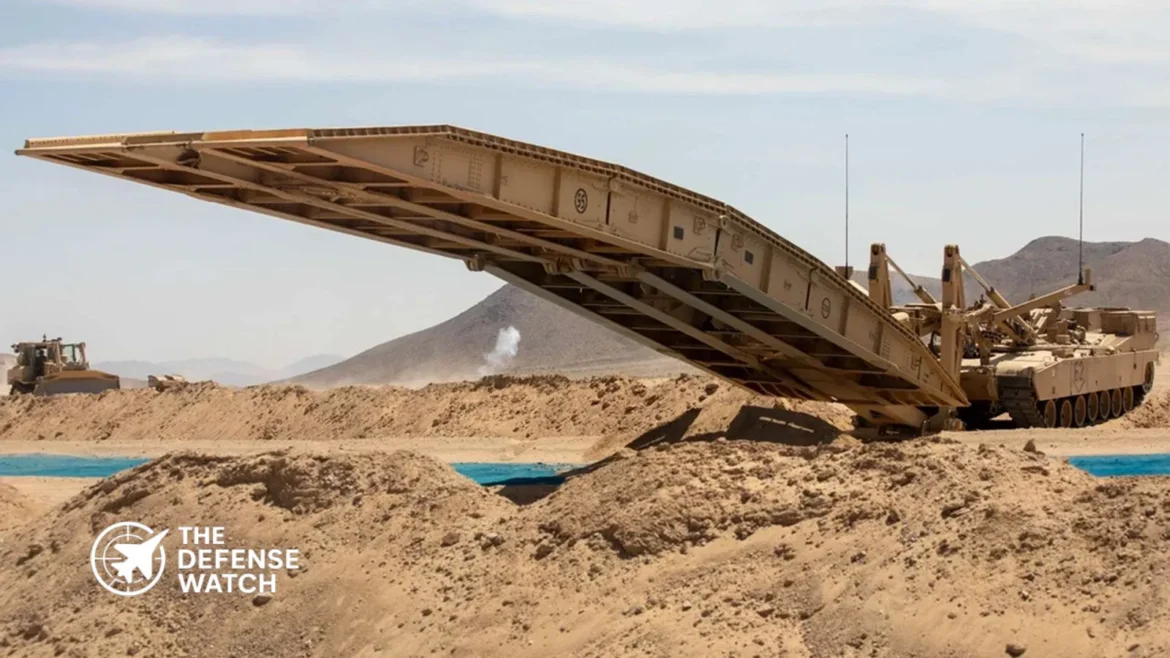
¦ KEY FACTS AT A GLANCE- U.S. Army is adding 20 M1074 Joint Assault Bridge systems to support M1 Abrams operations.
- The system is based on the M1 Abrams chassis and designed for rapid obstacle crossing.
- Bridges can span gaps of up to 18 meters and support heavy armored vehicles.
- The upgrade strengthens breaching and maneuver capabilities in contested environments.
- The move aligns with U.S. Army modernization priorities focused on mobility and survivability.
U.S. Army Expands M1 Abrams Breach Capability With M1074 Joint Assault Bridges
The U.S. Army is expanding M1 Abrams breach capability through the acquisition of 20 additional M1074 Joint Assault Bridge systems, reinforcing its ability to maneuver armored forces across complex battlefield obstacles.
The move is part of a broader effort to enhance combat engineering support for armored units, ensuring that main battle tanks can maintain operational momentum in high-intensity conflict environments.
The M1074 Joint Assault Bridge, built on the same chassis as the M1 Abrams, enables rapid deployment of armored bridges under combat conditions. This allows heavy vehicles to cross gaps, trenches, and other obstacles without delaying advancing forces.
Enhancing Armored Mobility In Contested Terrain
The expansion of M1 Abrams breach capability reflects a core operational requirement: maintaining mobility under fire. Modern battlefields, particularly in Europe and other potential theaters, are expected to feature extensive obstacles, including anti-tank ditches, destroyed infrastructure, and engineered defensive barriers.
The M1074 system addresses these challenges by deploying a scissor-type bridge capable of spanning gaps up to approximately 18 meters. Importantly, the bridge is designed to support the weight of heavy armored vehicles, including the Abrams itself.
Because the system shares the Abrams platform, it benefits from similar levels of armor protection and mobility. This reduces vulnerability during forward operations, where engineering units often operate close to enemy contact.
From an operational perspective, this significantly reduces the time required to breach obstacles, limiting exposure to enemy fires and preserving the tempo of armored advances.
Integration With M1 Abrams Formations
The decision to expand M1 Abrams breach capability is closely tied to how armored brigade combat teams are structured. Engineering assets such as the M1074 are integral to combined arms operations, enabling tanks and mechanized infantry to operate without interruption.
In practice, Joint Assault Bridges are deployed alongside Abrams units, allowing commanders to quickly respond to terrain challenges without waiting for follow-on engineering support.
This integration is especially relevant in large-scale maneuver warfare scenarios, where delays at obstacles can create bottlenecks and increase vulnerability to precision fires, drones, and artillery.
The additional 20 systems will likely be distributed across multiple units, improving redundancy and ensuring that breaching capability is available across a wider operational footprint.
Strategic Context: Lessons From Recent Conflicts
The emphasis on M1 Abrams breach capability aligns with lessons observed in recent conflicts, particularly in Eastern Europe. Combat operations have highlighted the critical importance of mobility, especially when facing layered defenses that combine mines, trenches, and anti-armor systems.
In Ukraine, for example, both Russian and Ukrainian forces have encountered significant challenges breaching fortified positions. These conditions have underscored the need for protected, rapid-deployment bridging systems that can operate under fire.
The U.S. Army’s investment in additional M1074 systems suggests a recognition that future conflicts will require not just firepower, but sustained maneuver capability in heavily contested environments.
Engineering Support As A Combat Multiplier
While often less visible than frontline platforms, combat engineering systems play a decisive role in determining battlefield outcomes. Expanding M1 Abrams breach capability effectively enhances the combat power of armored units without modifying the tank itself.
The ability to cross obstacles quickly can dictate whether a force maintains initiative or becomes stalled. In high-intensity warfare, even short delays can expose units to surveillance and targeting by advanced sensors and long-range fires.
By increasing the number of Joint Assault Bridges, the Army is strengthening a key enabler of maneuver warfare, ensuring that armored formations can adapt to terrain challenges in real time.
Industrial And Programmatic Considerations
The M1074 Joint Assault Bridge program builds on existing Abrams-based manufacturing and support infrastructure, which simplifies logistics and lifecycle management.
This commonality reduces training requirements and streamlines maintenance, as crews and support personnel are already familiar with the Abrams platform. It also ensures interoperability within armored formations.
While specific contract details were not disclosed in the report, the acquisition reflects ongoing investment in proven systems rather than entirely new platforms, a trend seen across several U.S. Army modernization efforts.
Operational Impact And Future Outlook
The expansion of M1 Abrams breach capability is likely to have immediate operational benefits, particularly for units preparing for deployment in regions where terrain and infrastructure present significant challenges.
Looking ahead, the integration of engineering systems with emerging technologies, such as autonomous breaching and remote bridge deployment, may further enhance capability. However, for now, the focus remains on fielding reliable, combat-proven systems at scale.
In the near term, the additional M1074 systems will improve the Army’s ability to sustain momentum in offensive operations, reinforcing the central role of mobility in modern warfare.
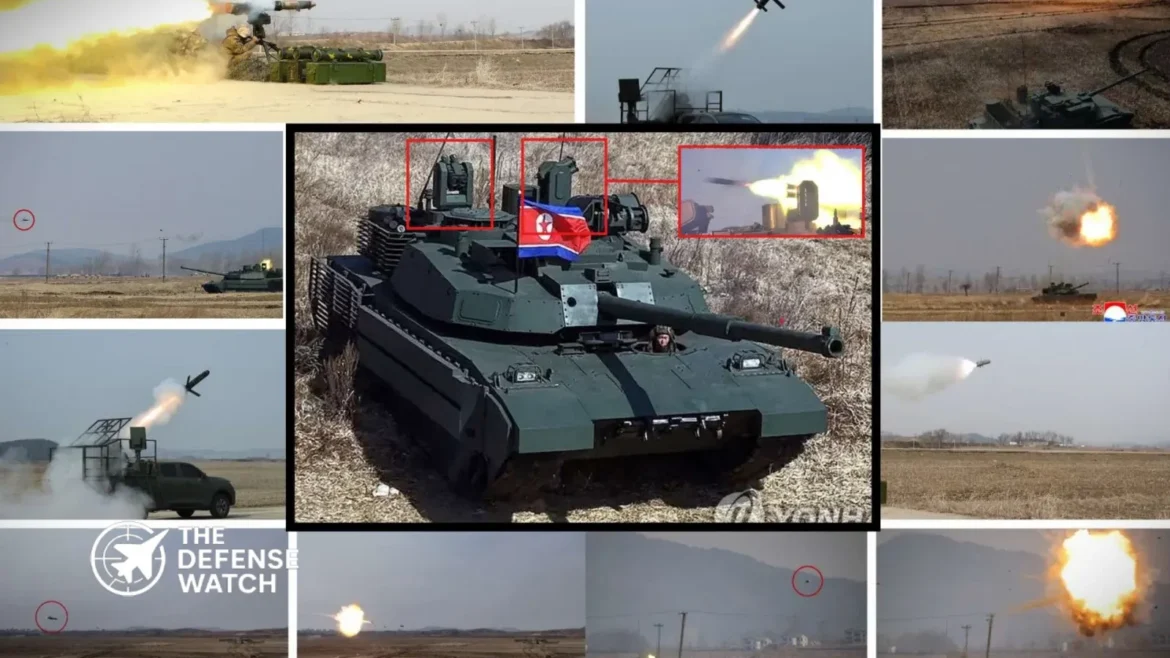
¦ KEY FACTS AT A GLANCE- North Korea tested a new tank active protection system designed to intercept incoming threats.
- The system demonstrated interception capability against anti tank guided missiles and drone threats.
- Development reflects growing focus on survivability amid evolving battlefield threats.
- Test likely conducted on a modernized North Korean main battle tank platform.
- The system signals Pyongyang’s intent to modernize armored forces in line with global APS trends.
North Korea Tank Active Protection System Test Highlights New Battlefield Focus
North Korea tank active protection system capabilities were demonstrated in a recent test aimed at countering anti tank missiles and drone threats, according to reporting by Army Recognition. The test marks a notable step in Pyongyang’s effort to improve armored vehicle survivability in modern combat environments.
The Big Picture
Modern armored warfare has shifted rapidly due to the widespread use of precision guided munitions and low cost drones. Conflicts such as those observed in Ukraine and the Middle East have shown that even advanced tanks remain vulnerable without layered protection.
Active protection systems, or APS, have become a critical component of next generation armored vehicle design. Militaries including the United States, Israel, and Russia have invested heavily in these systems to counter anti tank guided missiles and loitering munitions.
North Korea’s latest test suggests it is aligning its armored doctrine with these global trends despite limited access to advanced defense technology ecosystems.
What’s Happening
North Korea conducted a test of a new tank active protection system designed to detect, track, and intercept incoming threats before impact.
The system reportedly engaged simulated or live anti tank guided missiles and drone based threats. Visual evidence released by state media indicates the use of radar or sensor arrays paired with countermeasure launchers mounted on a tank platform.
The test likely involved one of North Korea’s more modern tank designs, potentially from its Chonma or Songun series, though official confirmation remains limited.
The demonstration highlights an integrated approach combining detection sensors and hard kill interceptors, which are typical features of contemporary APS systems.
Why It Matters
The emergence of a North Korea tank active protection system reflects a direct response to the growing effectiveness of anti tank weapons on the battlefield.
Portable systems such as anti tank guided missiles have significantly reduced the survivability of legacy armored platforms. At the same time, drones equipped with explosive payloads or used for targeting have introduced new vulnerabilities from above.
By testing an APS capable of addressing both threats, North Korea is attempting to close a critical survivability gap in its armored forces.
This development also indicates a shift from reliance on passive armor toward active defensive measures, which can defeat threats before impact rather than absorbing damage.
Strategic Implications
North Korea’s move to develop APS technology has implications for regional military balance, particularly on the Korean Peninsula.
South Korea fields advanced anti tank systems and precision strike capabilities, many of which are designed to neutralize armored formations quickly in a conflict scenario. An operational APS could complicate these calculations by reducing the effectiveness of such weapons.
Improved survivability for North Korean tanks could enhance their role in offensive or defensive operations, especially in terrain where armored maneuver remains viable.
The development also signals a broader effort by Pyongyang to modernize its conventional forces alongside its strategic weapons programs.
Competitor View
Regional actors are likely to interpret this development through the lens of evolving ground combat dynamics.
South Korea and the United States have already integrated or are testing APS solutions on platforms such as the M1 Abrams and K2 Black Panther. From this perspective, North Korea’s effort represents an attempt to narrow a technological gap rather than leap ahead.
China and Russia, both of which have developed their own APS systems, may view North Korea’s progress as consistent with broader trends in armored warfare modernization.
At the same time, limitations in industrial capacity and sensor technology could constrain the effectiveness and scalability of North Korea’s system compared to established designs.
What To Watch Next
Future developments will likely focus on additional testing and potential deployment.
Key indicators include repeated trials under varied conditions, integration across multiple tank units, and evidence of serial production.
Observers should also monitor whether North Korea expands APS integration to other armored vehicles, such as infantry fighting vehicles or self propelled artillery systems.
Any indication of export or technology sharing would also carry broader regional implications.
Capability Gap
North Korea’s armored forces have historically relied on upgraded legacy designs with limited protection against modern threats.
The introduction of an APS aims to address vulnerabilities to top attack munitions, tandem warhead missiles, and drone delivered explosives.
However, APS systems require advanced sensors, rapid processing, and reliable interceptors. These components demand a high level of engineering precision and manufacturing quality.
Without sustained testing and refinement, the system may face challenges in reliability, reaction time, and coverage against multiple simultaneous threats.
The Bottom Line
North Korea’s tank active protection system test signals a focused effort to improve armored survivability, but its real impact will depend on operational reliability and large scale deployment.