
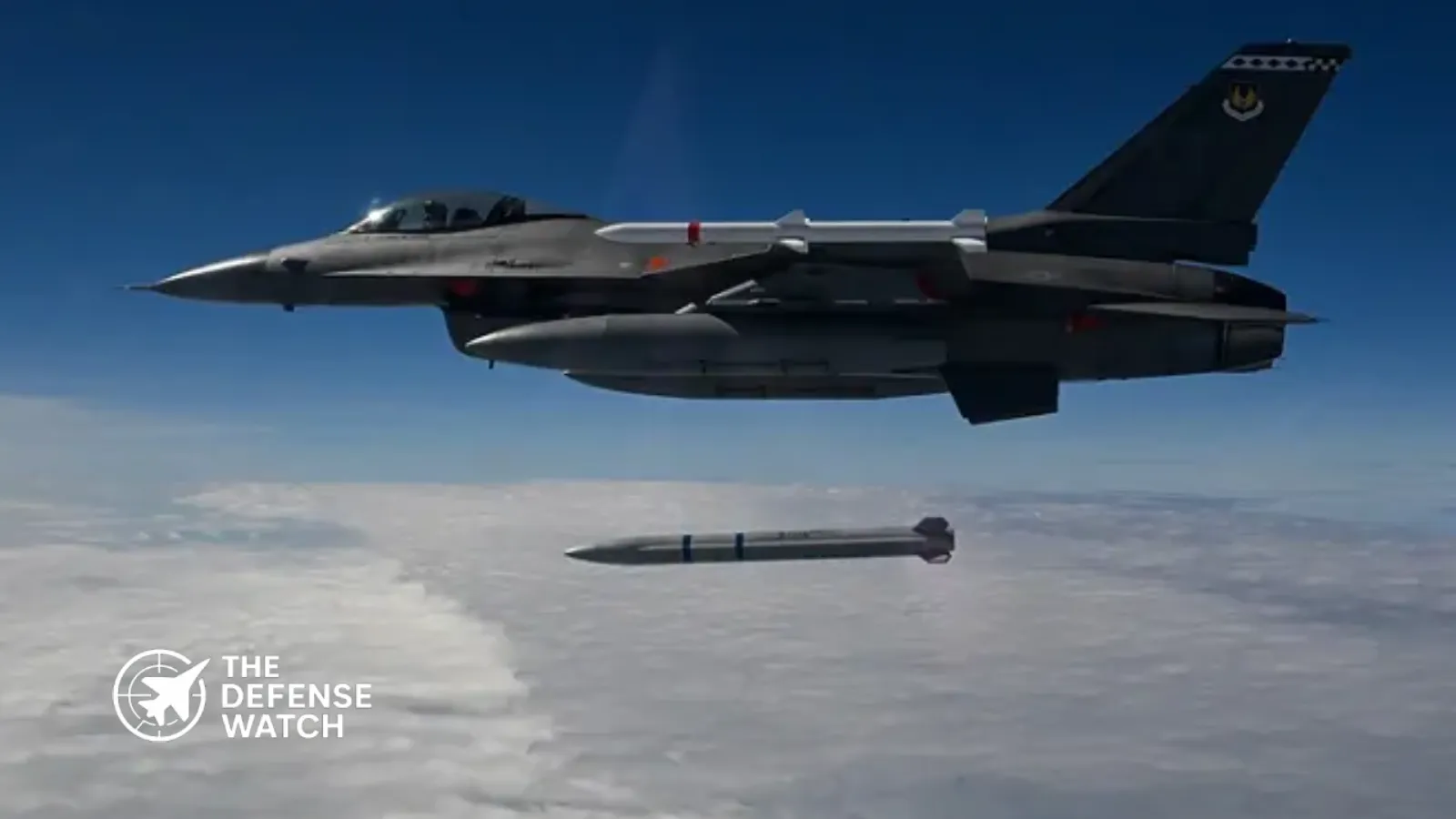
- The Air Force posted a sources-sought notice on March 4, 2026 seeking companies capable of building a missile with “similar or improved capabilities” to the Stand-in Attack Weapon (SiAW) currently under development by Northrop Grumman.
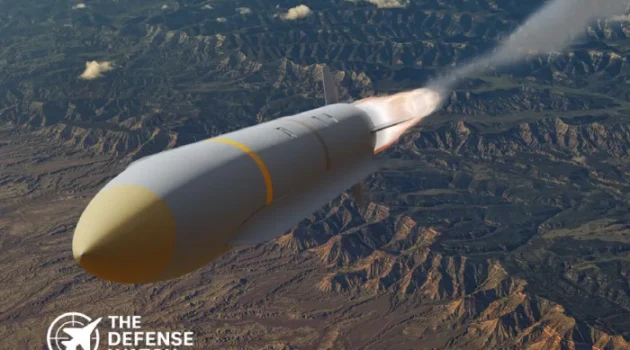
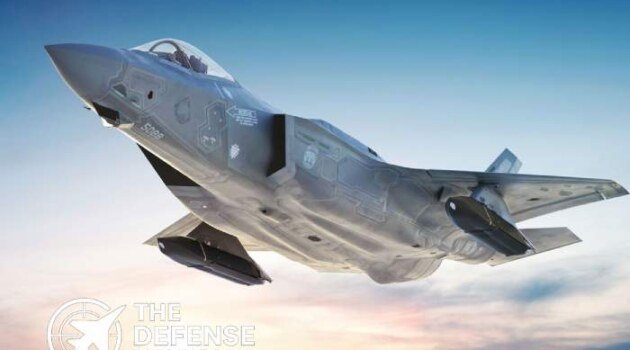
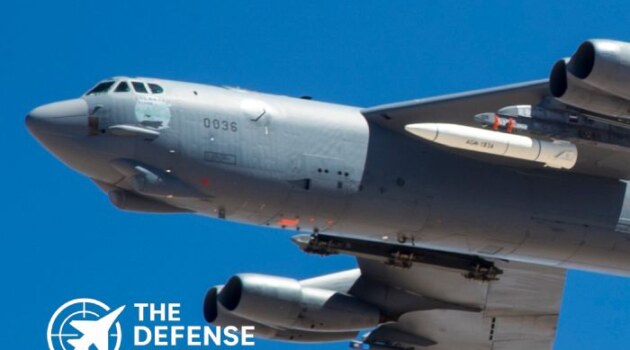
- The SiAW is a supersonic, multi-mission, air-to-ground missile designed to defeat enemy air defenses and strike high-value relocatable targets — planned for carriage by the F-35, F-16, F-47, and B-21 Raider.
- The notice seeks vendors capable of producing at least 600 SiAW-class missiles annually, signaling large-scale acquisition intent that far exceeds the current single-contractor arrangement.
- Northrop Grumman received a $705 million, three-year development contract in 2023 and delivered the first SiAW test missile in November 2024; an F-16 separation test was completed in December 2024 at Eglin AFB, Florida.
- The One Big Beautiful Bill Act included $325 million for air-launched anti-radiation missile production capacity — a congressional signal that single-vendor supply chains pose an unacceptable risk in sustained peer conflict.
Air Force Opens the Door to More Stand-in Attack Weapon Builders
The U.S. Air Force is actively seeking additional manufacturers for its Stand-in Attack Weapon, moving to break sole-source dependence on Northrop Grumman at a moment when active combat operations over Iran are consuming precision munitions stocks at rates that are straining the defense industrial base.
A sources-sought notice posted to SAM.gov on March 4 requests information from industry on whether companies could produce a supersonic, multi-mission missile with capabilities equivalent to or exceeding those of the SiAW — the Air Force’s next-generation suppression of enemy air defenses weapon. The move reflects an urgent strategic calculation: the United States cannot afford to fight a peer-capable adversary at scale if its most advanced munitions flow from a single production line.
The Big Picture: A Munitions Industrial Base Under Strain
The Air Force’s push for a second source on the Stand-in Attack Weapon is not happening in a vacuum. The ongoing air campaign against Iran — Operation Epic Fury — has illuminated a structural vulnerability in U.S. munitions production that defense analysts and Pentagon acquisition officials have warned about for years. Expensive long-range standoff weapons burn through stockpiles quickly; the SiAW is explicitly designed to change that calculus by enabling stealthy, survivable aircraft to strike from within defended airspace repeatedly and at lower cost per engagement.
Broader defense policy has also created momentum. The One Big Beautiful Bill Act reconciliation package directed $325 million toward production capacity improvements for air-launched anti-radiation missiles. While it is not confirmed whether those funds directly triggered the new sources-sought notice, the legislative signal is clear: Congress views current production capacity as inadequate for multi-theater demands.
The Air Force has simultaneously articulated a vision in which suppression of enemy air defenses is no longer the exclusive domain of specialized fighter units. Lt. Gen. Jason R. Armagost, deputy commander of Air Force Global Strike Command, stated at AFA’s Warfare Symposium in February 2026 that SEAD capabilities must become “native” across all platforms — a doctrinal shift that dramatically expands the required weapons inventory.
What’s Happening: A Second-Source Competition Takes Shape
The March 4 notice does not constitute a formal solicitation but represents the government’s first public signal that it intends to qualify additional vendors for SiAW-class production. Interested companies must demonstrate the ability to deliver missiles with extended range, advanced targeting, counter-countermeasures, and compatibility with existing and future platforms — requirements that mirror the SiAW’s current specification baseline.
The notice specifically benchmarks production at 600 missiles per year, a threshold that reflects the scale at which Air Force acquisition leadership has publicly said it intends to procure the weapon. Original SiAW solicitation documents requested vendors provide unit pricing at quantities of 500, 1,000, and 1,500 missiles — numbers consistent with a program expected to run into the thousands of airframes over its service life.
Northrop Grumman developed the SiAW from its AARGM-ER (Advanced Anti-Radiation Guided Missile-Extended Range), which is itself an evolution of the legacy AGM-88 HARM. The AARGM-ER is assessed to fly at approximately Mach 4 with a range near 180 miles; the SiAW is expected to exceed both figures while maintaining compatibility with internal weapons bays on stealth aircraft, including the F-35A and the forthcoming B-21 Raider.
“It’s the kind of weapon that if we had it in quantity would be very valuable in current operations in Iran and definitely in the Pacific.”— Ret. Col. Mark Gunzinger, Director of Future Concepts, AFA’s Mitchell Institute for Aerospace Studies
Why It Matters: Speed, Stealth, and Scale
The SiAW’s technical architecture addresses three compounding problems with the current U.S. strike inventory. First, subsonic cruise missiles — widely used as standoff weapons — require thirty minutes or more to reach their targets, giving mobile adversary systems ample time to relocate. A supersonic weapon traveling at Mach 4-plus collapses that window to minutes, fundamentally changing the geometry of strikes against mobile ballistic missile launchers, communications nodes, and GPS jamming systems.
Second, the weapon’s compact dimensions allow internal carriage aboard the F-35 and B-21, preserving low-observable signatures that external pylons would compromise. This is not a marginal consideration — against peer adversaries with modern integrated air defense systems, stealth is a prerequisite for survivable strike missions, not an enhancement.
Third, smaller size translates directly to increased sortie payload. A single F-35 can carry more SiAWs internally than larger precision-guided munitions, effectively multiplying the number of targets it can service per sortie without returning to base.
Analysis
The second-source push also reflects a maturing recognition within Air Force acquisition circles that dual-sourcing is not merely a cost-control mechanism — it is a wartime risk management tool. A single catastrophic event at a Northrop production facility, a labor disruption, or a supply chain failure affecting a critical component could effectively ground a core element of the Air Force’s SEAD arsenal. By qualifying a second manufacturer now, during peacetime development, the service preserves the industrial flexibility to surge output should a major conflict demand it. The approximately eighteen to twenty-four months typically required to qualify a new production line means that decisions made today will determine options available in 2028 and beyond — precisely the window in which U.S. strategic planning for a Taiwan contingency is most focused.
Strategic Implications: SEAD for an Era of Peer Competition
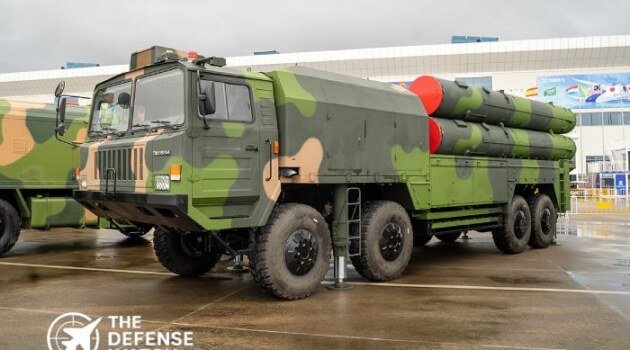
The SiAW program’s expansion directly supports the U.S. military’s pivot toward contested, high-threat operating environments. Modern integrated air defense systems — including the Russian S-400 and Chinese HQ-9 families, as well as next-generation systems now in development — have dramatically raised the cost and risk of traditional standoff strikes. The SiAW is designed specifically to operate inside these defensive envelopes aboard aircraft with sufficiently low radar cross-sections to survive the approach.
Critically, the weapon’s target set goes well beyond its anti-radiation mission roots. The Air Force lists command-and-control facilities, cruise and ballistic missile launchers, GPS jamming arrays, and anti-satellite systems among its intended targets — a list that reads directly as a Pacific contingency target deck. In any conflict scenario involving China, the ability to rapidly attrite adversary reconnaissance-strike complexes, electronic warfare nodes, and launch platforms would be foundational to establishing and maintaining air superiority.
The planned integration of SiAW with the Universal Armament Interface on the B-21 Raider adds a strategic dimension that extends beyond tactical SEAD missions. A bomber capable of internally carrying SiAWs alongside long-range standoff missiles represents a flexible, penetrating strike platform able to service both air defense suppression and deep-strike targets on a single mission — a capability the Air Force has not possessed since the retirement of legacy bomber-launched anti-radiation missiles in the 1990s.
Competitor View: How Beijing and Moscow Will Read This Move
Chinese defense analysts will likely interpret the second-source competition not merely as an industrial procurement decision but as a signal of U.S. intent to field the SiAW at operationally relevant scale. China’s People’s Liberation Army Air Force has invested heavily in SEAD-resistant integrated air defense systems, including the HQ-9B and HQ-19, precisely because it understands that suppression of those defenses would be an American priority in any conflict over Taiwan or the South China Sea. A U.S. announcement that it intends to produce SiAW-class missiles at 600 or more units per year — and is qualifying multiple vendors to ensure it can sustain that rate — underscores the seriousness of U.S. planning.
Russia will draw similar conclusions, particularly given that the SiAW is listed for integration on the F-47 — the Air Force’s sixth-generation air superiority fighter, itself a direct response to emerging Russian and Chinese advanced fighters. The combination of a stealthy platform with a penetrating, multi-mission supersonic weapon is exactly the pairing that stresses legacy integrated air defense network architecture, which is designed to manage slower, more predictable threats.
Iran, whose air defenses the U.S. is currently actively degrading in Operation Epic Fury, represents a real-time validation case. American commanders have already noted the value of faster, more survivable strike options in the current campaign. The absence of SiAW from the Iran fight — the weapon is not yet fielded — only strengthens the procurement argument for accelerated delivery.
What to Watch Next: Key Milestones
The March 4 sources-sought posting is the first formal step toward a potential second-source competition. Interested vendors will submit capability statements, after which the Air Force will assess whether the industrial base can support a qualified alternate manufacturer. A formal request for proposals could follow within six to twelve months if the service determines that viable competitors exist.
Meanwhile, Northrop Grumman continues to advance the primary development program. The company completed a successful F-16 separation test in December 2024, a critical milestone for carriage and release qualification. The Air Force’s stated fielding target of 2026 remains in play, though the compressed timeline — and the concurrent push to qualify additional vendors — suggests the service is managing a deliberate tension between near-term operational delivery and long-term industrial resilience.
Congressional attention will also be a factor. With $325 million already directed toward anti-radiation missile production capacity, the Armed Services Committees will likely scrutinize the pace of any second-source qualification in upcoming budget hearings. The Iran campaign has given lawmakers direct, real-time evidence of what happens when precision munitions stocks run short — political conditions that typically accelerate defense production decisions.
Capability Gap: What the SiAW Is Built to Close
For two decades, U.S. SEAD strategy has relied primarily on the AGM-88 HARM and its AARGM derivative, weapons designed for a threat environment that has since evolved significantly. Modern adversary air defense systems now incorporate mobile launchers, rapid frequency-hopping radars, and networked engagement architectures that limit the effectiveness of legacy anti-radiation missiles. The AGM-88 HARM, in particular, is subsonic — giving adversary operators meaningful time to react once a launch is detected.
The SiAW addresses this gap through supersonic speed, reduced radar cross-section through internal carriage, and an expanded target set that accounts for the networked nature of modern integrated air defense systems. Rather than prosecuting a single radar, the weapon is designed to attack the system — communications nodes, command posts, and launch vehicles — simultaneously degrading the network’s ability to reconstitute.
The realistic limitation is timeline. Even if a second vendor is qualified rapidly, weapons programs of this complexity take time to bring to production maturity. A second SiAW source qualified in 2027 would likely not produce operationally certified missiles in meaningful quantities until 2028 or later. In the near term, U.S. SEAD capability remains dependent on existing AARGM-ER stocks and legacy HARM variants — a reality that the current Iran campaign makes operationally visible.
The Bottom Line
The Air Force’s move to source a second Stand-in Attack Weapon manufacturer is less a routine acquisition action than a strategic acknowledgment that the era of single-vendor, low-rate precision munitions production is incompatible with the realities of sustained peer-level conflict.
Get real time update about this post category directly on your device, subscribe now.





This website uses cookies to improve your experience. We'll assume you're ok with this, but you can opt-out if you wish. Accept Read More