
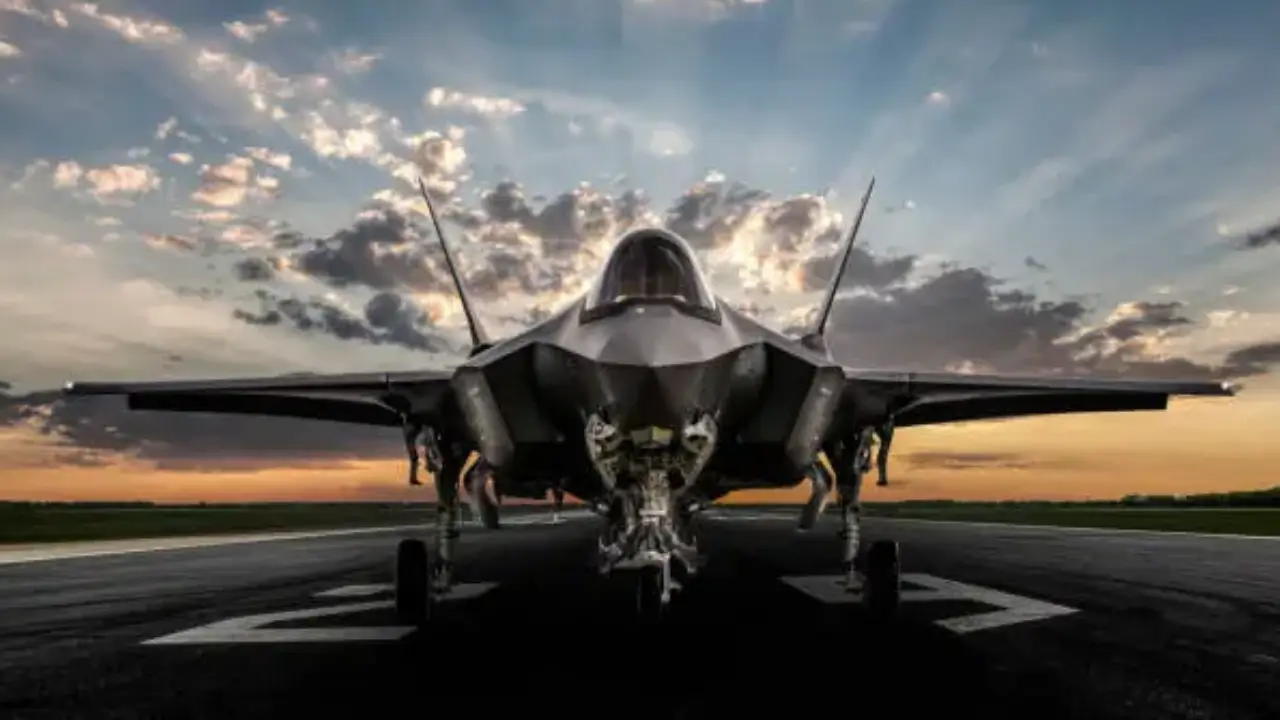
Deliveries Set for a New High
Lockheed Martin is preparing for what could be its busiest production year yet for the F-35 Lightning II. Company officials say between 170 and 190 jets may roll off the line in 2025, a figure that would surpass previous delivery records and underline both domestic and international demand for the fifth-generation fighter.
The surge comes at a time when the F-35 fleet continues to expand across the U.S. Air Force, Navy, and Marine Corps, as well as more than a dozen allied operators. But the milestone in production masks ongoing difficulties with the aircraft’s most important modernization efforts.
TR-3: A Bottleneck Upgrade
Central to current challenges is the Technology Refresh-3 (TR-3) upgrade. This package introduces more powerful processors, enhanced memory, and an improved pilot interface—foundations needed to support the future Block 4 configuration.
Although Lockheed has stated that TR-3 development is “nearly complete,” the program has slipped behind schedule. U.S. defense officials have even withheld a portion of payments per aircraft until the upgrade is fully validated. Until TR-3 reaches operational maturity, many new F-35s are being delivered but placed in a holding pattern, awaiting retrofit before they can reach their intended combat capability.
Block 4 and Engine Improvements Facing Delays
Beyond TR-3 lies the ambitious Block 4 upgrade, which will add new weapons integration, electronic warfare improvements, and next-generation sensors. The cost of Block 4 development has now climbed above $16 billion, raising questions about budgeting and timelines.
At the same time, propulsion modernization is slipping. The Pentagon’s plan to upgrade the Pratt & Whitney F135 engine, known as the Engine Core Upgrade, is running about a year late. That delay has a knock-on effect for the aircraft’s power and cooling system, which is already stressed by the demands of future electronic systems and directed energy weapons.
New Capabilities Coming in 2025
Despite these hurdles, some tangible enhancements are on the horizon. F-35s produced from Lot 17 onward are slated to carry the new AN/APG-85 radar, an advanced electronically scanned array designed for sharper tracking and improved ground mapping.
On the training side, the Joint Simulation Environment (JSE) continues to mature. This high-fidelity digital ecosystem allows F-35 pilots to rehearse complex combat scenarios that cannot be replicated in live training—an increasingly vital tool as the aircraft evolves into a node within broader joint and coalition networks.
Cost Pressures and International Concerns
The average flyaway cost of the F-35A remains near $82 million, with the short-takeoff B model and carrier-capable C model priced higher. But with additional technology being integrated, Lockheed has warned that aircraft in Lots 18 and 19 could once again cross the $100 million threshold.
International customers have taken notice. Canada, for example, has revised its F-35 program cost upward from $19 billion to almost $28 billion, with deliveries sliding into the latter half of the decade. Meanwhile, Spain recently stepped back from plans to join the program, opting instead to consider European alternatives—decisions that illustrate how rising costs can influence strategic choices.
U.S. Procurement Outlook
The U.S. services remain the backbone of the program, yet their procurement path is shifting. The Air Force has indicated it will not return to full-rate F-35 purchases until TR-3 issues are resolved. Budget documents for fiscal 2026 already show a steep reduction in orders, cutting the Air Force buy from 48 aircraft to just 24. The Navy and Marine Corps face similar adjustments.
This cautious approach underscores the Pentagon’s desire to ensure capability maturity before committing to larger numbers, even as production lines prepare for record throughput.
Analysis: Production Success, Capability Gaps
The F-35 program in 2025 is marked by a paradox: on one hand, it is producing more aircraft than ever before, demonstrating resilience in global demand and industrial output. On the other, it continues to wrestle with the timely delivery of critical upgrades that define its long-term relevance against near-peer adversaries.
For operators, the near-term question is less about how many jets they receive, and more about whether those jets can achieve the combat capabilities envisioned. As the fighter heads toward its fourth decade of service, the program’s success will hinge on aligning production milestones with technological readiness.
FAQs
Between 170 and 190 aircraft, marking a potential program record.
It is a hardware and software refresh providing the computing foundation for future F-35 capabilities, including Block 4.
Block 4 introduces expanded weapons integration, improved electronic warfare, and upgraded sensors critical for high-end conflict.
Around $82M for the F-35A, while B and C models exceed $100M. Future lots may see further increases.
he Pentagon wants TR-3 issues resolved and capability validated before resuming full-rate production buys.
Get real time update about this post category directly on your device, subscribe now.

23 comments
[…] and Strategic Posture U.S. Defense Budget 2025: Key Highlights & Global Implications F-35 Program in 2025: Record Deliveries Expected but Upgrade Delays Cloud… Hypersonic Era Accelerates: U.S. and China Race for Supremacy in High-Speed… U.S. Army’s […]
[…] and Strategic Posture U.S. Defense Budget 2025: Key Highlights & Global Implications F-35 Program in 2025: Record Deliveries Expected but Upgrade Delays Cloud… Hypersonic Era Accelerates: U.S. and China Race for Supremacy in High-Speed… U.S. Army’s […]
[…] Global Implications The New Space Race: Military Satellite Dominance – U.S., Russia &… F-35 Program in 2025: Record Deliveries Expected but Upgrade Delays Cloud… Pentagon’s Ammo Crunch: Stockpiles Strained by Global Conflicts Amid Surge in… […]
[…] starting in FY 2026, and newer carriers like the USS John F. Kennedy (CVN-79) have encountered delivery delays of up to two […]
[…] Global Implications The New Space Race: Military Satellite Dominance – U.S., Russia &… F-35 Program in 2025: Record Deliveries Expected but Upgrade Delays Cloud… SUBSCRIBE […]
[…] slated for full operational capability by 2023, the program faced significant delays, including pandemic-related disruptions and a canceled test in 2023 due to a target […]
[…] Major Step… Hypersonic Era Accelerates: U.S. and China Race for Supremacy in High-Speed… F-35 Program in 2025: Record Deliveries Expected but Upgrade Delays Cloud… How the U.S. Navy Is Training Sailors to Counter Drone-Ship Threats—and… U.S. Defense […]
[…] Drone Wingman Marks Major Step… China vs. U.S. Naval Expansion: Who Holds the Edge in the… F-35 Program in 2025: Record Deliveries Expected but Upgrade Delays Cloud… How the U.S. Navy Is Training Sailors to Counter Drone-Ship Threats—and… U.S. Defense […]
[…] Evolving Strategic Value: Carrier Strike Groups in the Indo-Pacific’s Future Security… F-35 Program in 2025: Record Deliveries Expected but Upgrade Delays Cloud… First Flight of Air Force’s YFQ-42A Drone Wingman Marks Major Step… Key Features of […]
[…] That Define Next-Gen… First Flight of Air Force’s YFQ-42A Drone Wingman Marks Major Step… F-35 Program in 2025: Record Deliveries Expected but Upgrade Delays Cloud… Global Hypersonic Arms Race Intensifies: China, India, Japan, Russia & U.S…. Forging Air […]
[…] Threats Forging Air Dominance: How NATO’s 2025 Joint Air Exercises Reinforce Global… F-35 Program in 2025: Record Deliveries Expected but Upgrade Delays Cloud… SUBSCRIBE […]
[…] Step… Dean-of-Defense Strategy 2025: U.S. Shifts Focus to Homeland and Indo-Pacific Amid… F-35 Program in 2025: Record Deliveries Expected but Upgrade Delays Cloud… China, Russia Hold Joint Submarine Patrol — What It Means for… SUBSCRIBE […]
[…] Step… Dean-of-Defense Strategy 2025: U.S. Shifts Focus to Homeland and Indo-Pacific Amid… F-35 Program in 2025: Record Deliveries Expected but Upgrade Delays Cloud… AI-Armored Cyber Defense: Securing Next-Gen Military Networks Against Evolving Threats […]
[…] Global Power Balance First Flight of Air Force’s YFQ-42A Drone Wingman Marks Major Step… F-35 Program in 2025: Record Deliveries Expected but Upgrade Delays Cloud… Dean-of-Defense Strategy 2025: U.S. Shifts Focus to Homeland and Indo-Pacific Amid… China, […]
[…] a persistent security threat in its own environment, has a robust defense-industrial base and a track record of delivery — an argument put forward to differentiate from some European […]
[…] tied to schedule performance: rewards for early delivery and penalties for delays. […]
[…] covers four aircraft plus options. For the Netherlands specifically, the firm order is for five aircraft with initial deliveries expected from 2027 following earlier schedule […]
[…] enabling seamless transitions between air-to-air intercepts and precision ground strikes. Recent deliveries and upgrades, including those to allies like Belarus in August 2025, highlight its ongoing relevance. For […]
[…] 2025, Boeing secured a $240 million deal to remanufacture five MH-47G Block II helicopters, with deliveries expected to begin in […]
[…] agreement with France in October 2024 to acquire up to 36 CAESAR Mk II 6×6 howitzers, with deliveries expected to roll out through the early […]
[…] missions serve to monitor activity near alliance airspace and allow QRA forces to identify and record aircraft […]
[…] more Rafales are expected to arrive later in 2026 as deliveries continue under the ongoing […]
[…] revised decision reflects growing interest in a comprehensive US backed package that extends beyond aircraft delivery. The F 16V Block 70 offer reportedly includes long term logistics support, training pipelines, […]