• Home
  • About
  • Defense Systems
  • Manufacturer
  • Comparisons
  • Compare 
  • Tools
TheDefenseWatch.com
  • Aerospace & Aviation
  • Military & Ordnance
  • Naval & Maritime
  • Cyber & Space Defense
  • Policy & Strategy
  • Global News
  • Tools Library
    • Smart Calculator
    • Drone Flight Time Calculator
    • Drone Range Calculator
    • Counter-Drone Jammer Effective Range Calculator
    • Counter-Battery Radar Detection Calculator
    • Artillery Fire Correction Calculator
    • Thermal Camera Detection Range Calculator
    • Missile Range & Time-of-Flight Calculator
    • Radar Detection Range Calculator
    • FPV Strike Drone Payload vs Range Calculator
    • Loitering Munition Endurance Calculator
    • Sniper Ballistic Drop & Windage Calculator
    • Bullet Drop Calculator
    • U.S. Army Combat Fitness Test (ACFT) Calculator
    • Military Pension Calculator
    • Military Retirement Calculator
    • Military Pension Calculator
    • Large Number Calculator
Font ResizerAa

TheDefenseWatch.com

The Defense Watch | U.S. & Global Defense News, Analysis & Military Updates

Search
  • Home
  • About
  • Defense Systems
  • Manufacturer
  • Comparisons
  • Compare 
  • Tools

Stay Updated

Get the latest update

Subscribe

Explore

  • Drone
  • Fighter Jets & Military Aircraft
  • Hypersonic Weapons
  • Aircraft Carriers
  • Strategic History & Missions
  • Tools Library
Home » A-12 Avenger II and the Carrier Vulnerability Debate
Aerospace & AviationAirpower Balance

A-12 Avenger II and the Carrier Vulnerability Debate

TeamDefenseWatch
Last updated: September 12, 2026 10:00 am
TeamDefenseWatch
Share
7 Min Read
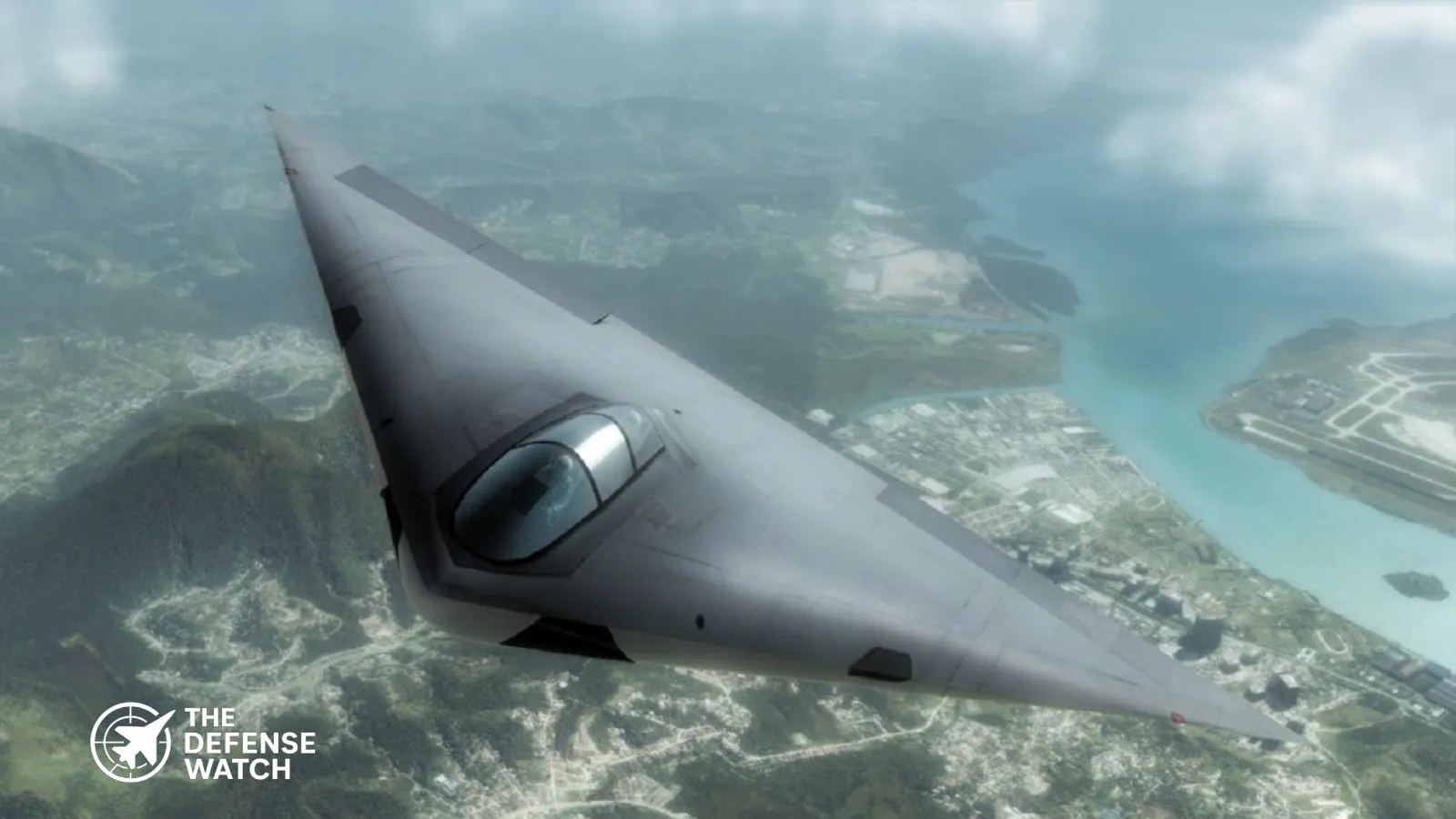
A-12 Avenger II bomber
A-12 Avenger II. Image Credit: Creative Commons.
SHARE

The revived debate around the A-12 Avenger II bomber is not about nostalgia or canceled programs. It points to a deeper and unresolved problem in U.S. naval strategy. Large aircraft carriers remain central to American power projection, yet the systems designed to find and strike them keep getting better. The A-12 Avenger II, often called the flying dorito, symbolizes a class of long range stealthy naval strike aircraft that could exploit this tension.

Contents
  • Strategic Context
  • Military Balance and Strike Reach
  • Political and Budget Constraints
  • Alliance Dynamics and Operational Assumptions
  • Technological and Industrial Limits
  • Strategic Implications
  • Conclusion
  • Key Takeaways

The strategic challenge is simple to describe and hard to solve. How does the United States protect high value carriers in an era of dense sensors, long range missiles, and precision strike networks. The A-12 debate matters because it forces planners to confront limits in current carrier defense concepts rather than assuming technological dominance will always hold.

Strategic Context

The A-12 Avenger II was conceived during the Cold War as a stealth attack aircraft designed to penetrate heavy defenses and strike enemy fleets and coastal targets. Its cancellation in the early 1990s reflected budget pressure, technical risk, and the belief that the carrier air wing faced no near peer threat.

  • A-12 Avenger II bomber

    A-12 Avenger II bomber

    • Maximum Speed: Subsonic (estimated)
    • Range: Long-range (projected)
    • Payload Capacity: ~5,800 kg (estimated)
    • Crew: 2
    • View Details →
    6.2

    That assumption no longer holds. China and Russia have invested heavily in anti access area denial systems built around satellites, over the horizon radars, submarines, bombers, and long range anti ship missiles. These networks aim to hold U.S. Navy aircraft carriers at risk hundreds or even thousands of kilometers from shore.

    Recent conflicts and exercises reinforce this trend. Precision strike, real time targeting, and layered sensors are no longer theoretical. Even regional powers now field capabilities that complicate carrier operations. In this environment, the A-12 Avenger II represents a capability gap rather than a historical curiosity. The U.S. Navy still lacks a true long range, stealthy, carrier based strike aircraft optimized for naval targets.

    Military Balance and Strike Reach

    The first major driver is range. Modern anti ship missiles often outrange carrier based aircraft, forcing carriers closer to contested areas to generate combat power. This increases exposure and reduces operational flexibility.

    The A-12 Avenger II bomber was designed to reverse that equation. Its long range and stealth would have allowed carriers to remain farther from enemy sensors while still threatening surface fleets and land targets. Without such an aircraft, the carrier strike group must rely on tanking, stand off weapons, or joint force support, all of which add complexity and risk.

    This imbalance matters because carriers are not just combat platforms. They are symbols of commitment. If adversaries believe carriers can be pushed back or neutralized, U.S. deterrence credibility suffers.

    Political and Budget Constraints

    A second obstacle is political reality. Aircraft carriers are deeply embedded in U.S. defense culture, industrial planning, and alliance signaling. Any suggestion that their dominance is fading triggers resistance across Congress, industry, and parts of the military.

    Developing an A-12 like platform today would require major investment, long timelines, and acceptance of technical risk. These factors compete with other priorities such as submarines, missiles, space systems, and cyber capabilities. Budget tradeoffs are unavoidable, and carriers remain politically protected programs.

    This creates a strategic trap. Acknowledging carrier vulnerability without funding the tools to mitigate it leaves U.S. naval power exposed by design rather than by necessity.

    Alliance Dynamics and Operational Assumptions

    Allied strategy is the third driver. Many U.S. allies depend on carrier presence as a visible security guarantee. Forward deployed carriers reassure partners in the Indo Pacific, Middle East, and Europe.

    If carriers are forced to operate farther from contested zones, the perception of U.S. commitment may weaken even if strike capability remains. An A-12 Avenger II type aircraft would help bridge this gap by extending reach without abandoning presence.

    Without it, the burden shifts to land based aircraft and allied bases, which may be politically sensitive or vulnerable themselves. This complicates coalition planning and crisis response.

    Technological and Industrial Limits

    The final factor is industrial capacity. Building a stealthy, carrier capable strike aircraft is among the hardest tasks in aerospace engineering. Weight limits, corrosion, deck handling, and maintenance all constrain design choices.

    The A-12 program struggled with these realities decades ago. Today, while technology has advanced, the complexity remains. This makes incremental upgrades to existing platforms more attractive in the short term, even if they do not fully address the strategic problem.

    Strategic Implications

    These constraints are difficult to change because they are structural. Geography, physics, budgets, and politics all shape naval power. Ignoring them does not make them disappear.

    For U.S. defense planning, the lesson is not that carriers are obsolete. It is that their effectiveness depends on complementary systems that restore initiative and range. Without a credible long range naval strike aircraft, carrier strike group vulnerability becomes a planning assumption rather than a contingency.

    For allies, the implication is a need for deeper integration. Shared sensors, distributed basing, and joint strike concepts become more important as single platforms face greater risk.

    Conclusion

    The A-12 Avenger II bomber debate highlights a strategic tension at the heart of modern naval warfare. Aircraft carriers remain indispensable, yet increasingly contested. Resolving this tension will require choices about force structure, investment, and operational concepts.

    There is no quick fix. The future will likely involve a mix of longer range aircraft, unmanned systems, and tighter integration across domains. What matters is recognizing that the problem is real and persistent. The flying dorito may never return, but the message it carries about carrier vulnerability cannot be ignored.

    Key Takeaways

    • The A-12 Avenger II symbolizes a missing long range naval strike capability.
    • Carrier strike group vulnerability is growing due to anti access area denial systems.
    • Political and budget pressures limit radical changes to carrier centric strategy.
    • U.S. and allied security depends on restoring range, flexibility, and deterrence credibility.
TAGGED:A-12 Avenger IIanti access area denialnaval aviationU.S. Navy aircraft carriers
Share This Article
Facebook Copy Link Print
ByTeamDefenseWatch
TeamDefenseWatch is the official editorial byline of TheDefenseWatch.com. Working under one umbrella, TheDefenseWatch.com, the team delivers verified, factual reporting on global defense, military technology, aerospace systems, and security developments. Articles are sourced from official statements, defense industry releases, and trusted media, with editorial review to ensure accuracy and clarity.Contact: info@TheDefenseWtach.com
Leave a Comment

Leave a Reply Cancel reply

Your email address will not be published. Required fields are marked *

New Arrivals

  • Boeing VC-25B Presidential Aircraft Boeing VC-25B Presidential Aircraft
  • SM-3 Block IB Missile SM-3 Block IB Missile
  • USS Abraham Lincoln Aircraft Carrier USS Abraham Lincoln Aircraft Carrier
  • M142 HIMARS M142 HIMARS
  • Terrex S5 Infantry Vehicle Terrex S5 Infantry Vehicle
  • A-29 Super Tucano Aircraft A-29 Super Tucano Aircraft
  • DSAR 15 Rifle DSAR 15 Rifle

Recent Compares

  • Tejas vs Gripen: Key Differences and Capabilities Tejas vs Gripen: Key Differences and Capabilities View Comparison →
  • Tejas vs MiG-21 Bison: How India Replaced Its Iconic Supersonic Fighter Tejas vs MiG-21 Bison: How India Replaced Its Iconic Supersonic Fighter View Comparison →
  • F-35 vs F-16: Stealth, Sensors and Combat Roles F-35 vs F-16: Stealth, Sensors and Combat Roles View Comparison →
  • Tejas Fighter Jet vs F-16 Fighting Falcon: Capability Compared Tejas Fighter Jet vs F-16 Fighting Falcon: Capability Compared View Comparison →
  • Rafale Fighter Jet vs F-16 Fighting Falcon : Which Fighter Has the Edge? Rafale Fighter Jet vs F-16 Fighting Falcon : Which Fighter Has the Edge? View Comparison →
  • Su-57 Fighter Jet vs J-20 Fighter Jet: Stealth and Air Combat Compared Su-57 Fighter Jet vs J-20 Fighter Jet: Stealth and Air Combat Compared View Comparison →
  • Mirage 2000 vs Tejas Mk1A: Legacy Combat Power vs Indigenous Modernization Mirage 2000 vs Tejas Mk1A: Legacy Combat Power vs Indigenous Modernization View Comparison →
  • Rafale Fighter Jet vs F-22 Raptor: Which Air Dominance Fighter Has the Edge? Rafale Fighter Jet vs F-22 Raptor: Which Air Dominance Fighter Has the Edge? View Comparison →
  • Tejas Fighter Jet vs. Rafale Fighter Jet: India’s Indigenous Fighter Meets France’s Proven Multirole Combat Aircraft Tejas Fighter Jet vs. Rafale Fighter Jet: India’s Indigenous Fighter Meets France’s Proven Multirole Combat Aircraft View Comparison →
  • F-22 Raptor vs. F-35 Joint Strike Fighter: Which Fifth Generation Fighter Has the Edge? F-22 Raptor vs. F-35 Joint Strike Fighter: Which Fifth Generation Fighter Has the Edge? View Comparison →

Recent Posts

  • USS Oregon Visits Norway as U.S. Navy Maintains High North Presence
  • Lockheed Martin Unveils PAC-3 Edge Interceptor for U.S. Army
  • Northrop Grumman Completes B-2 Spirit of Kitty Hawk Overhaul
  • Army Report Finds Systemic Failures Behind Fatal 2025 Midair Collision
  • Lockheed Martin to Supply Black Hawk Training Systems to Philippine Air Force

You Might Also Like

Best fighter jets 2025
Aerospace & AviationFighter Jets & Military Aircraft

Ranking the World’s Top 15 Best Fighter Jets in 2025: Innovation Meets Air Superiority

October 3, 2026
Vought Model 1600 navalized F-16 (1)
Aerospace & AviationFighter Jets & Military Aircraft

Vought Model 1600: The Forgotten “Sea Falcon” That Could Have Changed U.S. Naval Aviation

September 8, 2026
long-range kamikaze drones
Aerospace & AviationDrones & UAVs

France Orders First Long-Range Kamikaze Drones From MBDA and Aviation Design to Boost National Capability

January 23, 2026
F-35 Starshield satellite communications
Aerospace & AviationAirpower Balance

U.S. Moves To Equip F-35 With Starshield SATCOM For Long Range Kill Chains By 2031

September 3, 2026

Logo

Copyright © 2026 TheDefenseWatch.com

Helpful Links

  • Home
  • About Us
  • Privacy Policy
  • Terms of Use / Disclaimer
  • U.S. Privacy Notice – CCPA Compliance

Defense Systems

  • Defense Systems
  • Comparisons 
  • Manufacturer
  • Tactical Calculators

Popuplar

Which 5 Air Forces Possess the Costliest Fighter Jet Fleets in the World
Evolving Strategic Value: Carrier Strike Groups in the Indo-Pacific’s Future Security Architecture
Autonomous Weapon Systems Spark U.S. Ethics Debate Amid Rapid Military AI Integration

We report on developments involving military forces, governments, defense companies, research organizations, and security institutions around the world. 

Welcome Back!

Sign in to your account

Username or Email Address
Password

Lost your password?