• Home
  • About
  • Defense Systems
  • Manufacturer
  • Comparisons
  • Compare 
  • Tools
TheDefenseWatch.com
  • Aerospace & Aviation
  • Military & Ordnance
  • Naval & Maritime
  • Cyber & Space Defense
  • Policy & Strategy
  • Global News
  • Tools Library
    • Smart Calculator
    • Drone Flight Time Calculator
    • Drone Range Calculator
    • Counter-Drone Jammer Effective Range Calculator
    • Counter-Battery Radar Detection Calculator
    • Artillery Fire Correction Calculator
    • Thermal Camera Detection Range Calculator
    • Missile Range & Time-of-Flight Calculator
    • Radar Detection Range Calculator
    • FPV Strike Drone Payload vs Range Calculator
    • Loitering Munition Endurance Calculator
    • Sniper Ballistic Drop & Windage Calculator
    • Bullet Drop Calculator
    • U.S. Army Combat Fitness Test (ACFT) Calculator
    • Military Pension Calculator
    • Military Retirement Calculator
    • Military Pension Calculator
    • Large Number Calculator
Font ResizerAa

TheDefenseWatch.com

The Defense Watch | U.S. & Global Defense News, Analysis & Military Updates

Search
  • Home
  • About
  • Defense Systems
  • Manufacturer
  • Comparisons
  • Compare 
  • Tools

Stay Updated

Get the latest update

Subscribe

Explore

  • Drone
  • Fighter Jets & Military Aircraft
  • Hypersonic Weapons
  • Aircraft Carriers
  • Strategic History & Missions
  • Tools Library
Home » Space Force Pushes Next-Gen Space-Based Interceptors
Cyber & Space DefenseSpace Assets & Satellites

Space Force Pushes Next-Gen Space-Based Interceptors

TeamDefenseWatch
Last updated: September 8, 2026 1:00 am
TeamDefenseWatch
Share
2 Min Read
space-based interceptors
SHARE

U.S. Space Force Seeks Advanced Space-Based Interceptors

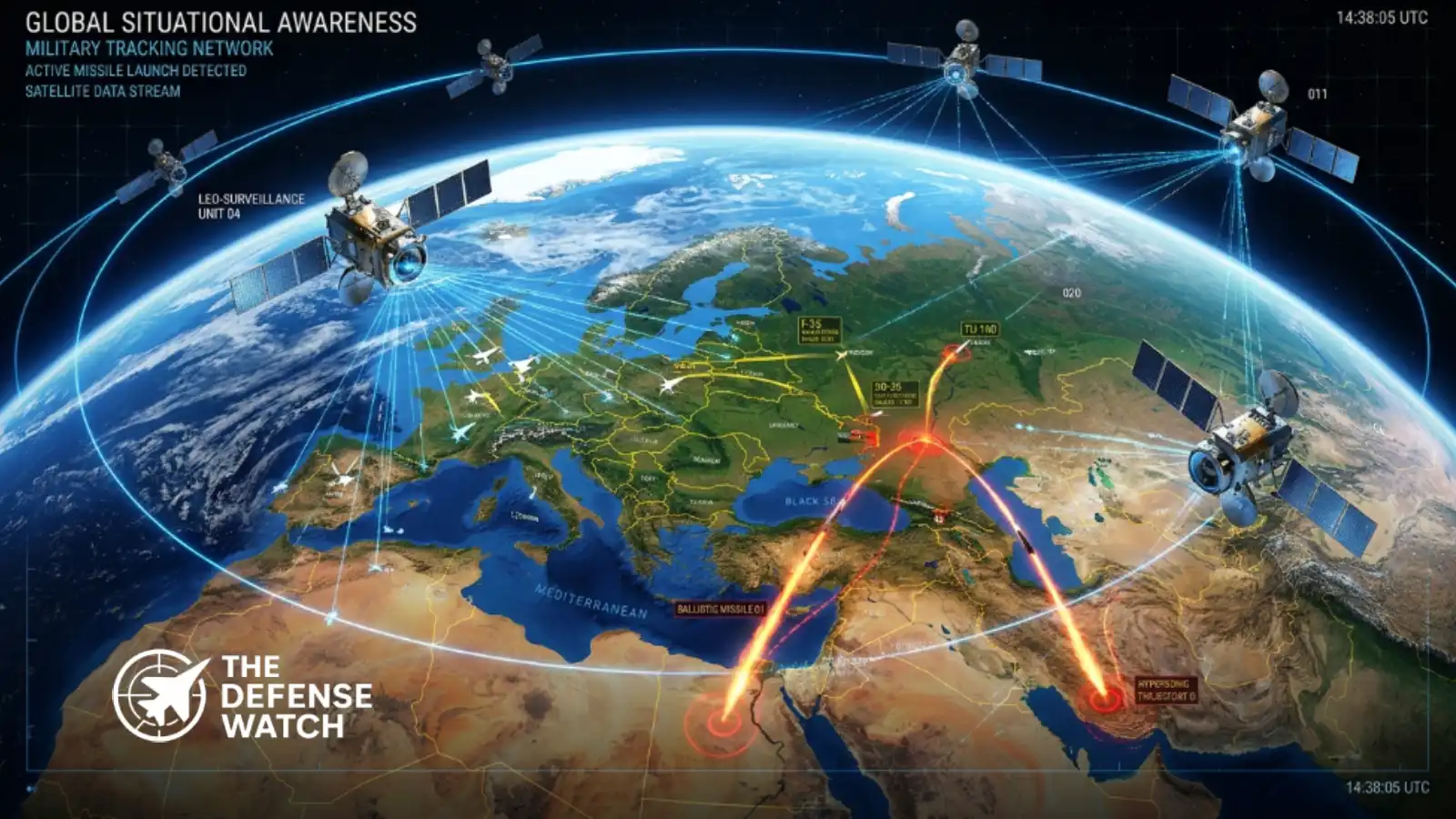
The U.S. Space Force is moving to define advanced technology requirements for future space-based interceptors as part of a broader effort to counter evolving missile threats. Senior service officials confirmed this week that the Space Force is working with the Missile Defense Agency and industry partners to explore next-generation systems capable of operating in orbit and engaging threats at unprecedented speed.

Contents
  • U.S. Space Force Seeks Advanced Space-Based Interceptors
  • Renewed Focus on Orbital Missile Defense
  • Key Technologies Under Review
  • Strategic Context and Threat Environment
  • Policy and Legal Considerations
  • Industry Engagement and Next Steps
  • What Comes Next for U.S. Space Defense

The initiative, discussed during recent defense forums in Washington, reflects growing concern over the pace of missile development by near-peer competitors. Hypersonic glide vehicles, maneuvering ballistic missiles, and advanced countermeasures are driving renewed interest in space-based interceptors as a potential layer in future U.S. missile defense architecture.

Renewed Focus on Orbital Missile Defense

Space-based interceptors have long been debated within U.S. defense planning. Earlier programs were constrained by cost, technology limits, and political concerns. However, officials say advances in sensors, propulsion, artificial intelligence, and space launch capabilities have changed the equation.

The Space Force is now examining how modern space defense systems could track and neutralize missiles during the boost or midcourse phase. By operating from orbit, these interceptors could reduce response times and expand coverage beyond what ground-based systems alone can provide.

- Advertisement -

According to service leaders, the current effort is not a formal acquisition program. Instead, it is a requirements and technology exploration phase aimed at identifying what is feasible within the next decade.

Key Technologies Under Review

Officials outlined several core capabilities needed to support future space-based interceptors.

These include persistent tracking sensors capable of detecting missile launches globally, autonomous command and control systems to shorten decision timelines, and interceptors with sufficient maneuverability and precision to engage fast-moving targets.

Artificial intelligence is expected to play a central role. Automated threat classification and targeting would be essential to manage the volume and speed of data generated by orbital sensors. Secure communications and cyber resilience are also priorities, given the vulnerability of space assets to jamming and cyberattack.

The Space Force emphasized that any future interceptor system would need to integrate seamlessly with existing missile defense networks, including ground-based interceptors, sea-based systems, and early warning satellites.

Strategic Context and Threat Environment

The push for space-based interceptors comes amid heightened concern over missile developments by China, Russia, North Korea, and Iran. U.S. defense assessments have repeatedly warned that adversaries are investing heavily in hypersonic weapons and advanced ballistic missiles designed to evade current defenses.

By placing interceptors in orbit, the United States could expand its ability to counter these threats earlier in flight. Proponents argue that space-based interceptors could complicate adversary planning by reducing confidence in their missile forces.

At the same time, officials stress that the effort remains exploratory. No deployment timelines or funding commitments have been announced, and significant policy questions remain.

- Advertisement -

Policy and Legal Considerations

Any move toward deploying space-based interceptors would require careful review under existing space policy frameworks. While current treaties do not explicitly ban conventional weapons in space, such systems raise concerns about escalation and the militarization of orbit.

Defense officials acknowledged these challenges, noting that technology development must be paired with clear policy guidance. The Space Force is coordinating closely with the Department of Defense and civilian leadership to ensure compliance with national and international obligations.

Congressional oversight will also play a critical role. Lawmakers have shown growing interest in missile defense modernization, but funding decisions are likely to hinge on cost, effectiveness, and strategic stability considerations.

Industry Engagement and Next Steps

The Space Force has begun informal engagement with defense contractors and commercial space firms to assess potential solutions. Officials say the commercial space sector, with its rapid innovation cycles and lower launch costs, could significantly influence future interceptor concepts.

Over the next year, the service plans to refine technical requirements and conduct modeling and simulation studies. These efforts will help determine whether space-based interceptors can provide a cost-effective complement to existing missile defense layers.

While deployment remains years away, the initiative signals a clear shift in thinking. Space-based interceptors are once again being considered as a viable option in the evolving U.S. missile defense strategy.

What Comes Next for U.S. Space Defense

As the Space Force continues to mature as a service, its role in homeland and global defense is expanding. Advanced space-based interceptors, if pursued, would represent a major step in integrating space operations with missile defense.

For now, officials emphasize that the focus is on understanding the art of the possible. Decisions on development and deployment will depend on technical progress, budget realities, and broader strategic priorities.


TAGGED:Missile DefenseOrbital SecuritySpace ForceSpace TechnologyU.S. Defense
Share This Article
Facebook Copy Link Print
ByTeamDefenseWatch
TeamDefenseWatch is the official editorial byline of TheDefenseWatch.com. Working under one umbrella, TheDefenseWatch.com, the team delivers verified, factual reporting on global defense, military technology, aerospace systems, and security developments. Articles are sourced from official statements, defense industry releases, and trusted media, with editorial review to ensure accuracy and clarity.Contact: info@TheDefenseWtach.com
5 Comments
  • Pingback: Destroyer vs Frigate, Key Differences Explained | TheDefenseWatch.com
  • Pingback: FalconSAT 11 Contract Awarded to Geneva Technologies by US Air Force | TheDefenseWatch.com
  • Pingback: GPS III SV09 Launch: Lockheed Martin Strengthens U.S. Military Navigation with Advanced Anti-Jam Satellite | TheDefenseWatch.com
  • Pingback: Germany Unveils $41 Billion Military Space Program with Laser Systems and Satellite Constellation | TheDefenseWatch.com
  • Pingback: France ORION 26 Military Exercise: Air Force Tests High-Intensity Combat Readiness | TheDefenseWatch.com

Leave a Reply Cancel reply

Your email address will not be published. Required fields are marked *

F-22 Reptor

Latest Defense Systems

  • B61 Nuclear Bomb B61 Nuclear Bomb
  • Japan E-767 Airborne Japan E-767 Airborne
  • Remington 870 Shotgun Remington 870 Shotgun
  • RUTA B1 Cruise Missile RUTA B1 Cruise Missile
  • XQ-67A Drone XQ-67A Drone
  • B-25 Mitchell Bomber B-25 Mitchell Bomber
  • F-100 Super Sabre F-100 Super Sabre
  • North American F-86 Sabre North American F-86 Sabre
  • North American XB-70 Valkyrie North American XB-70 Valkyrie

Recent Compares

  • J-10C vs JF-17 Thunder: Which Fighter Is More Capable? J-10C vs JF-17 Thunder: Which Fighter Is More Capable? View Comparison →
  • Tejas vs Gripen: Key Differences and Capabilities Tejas vs Gripen: Key Differences and Capabilities View Comparison →
  • Tejas vs MiG-21 Bison: How India Replaced Its Iconic Supersonic Fighter Tejas vs MiG-21 Bison: How India Replaced Its Iconic Supersonic Fighter View Comparison →
  • F-35 vs F-16: Stealth, Sensors and Combat Roles F-35 vs F-16: Stealth, Sensors and Combat Roles View Comparison →
  • Tejas Fighter Jet vs F-16 Fighting Falcon: Capability Compared Tejas Fighter Jet vs F-16 Fighting Falcon: Capability Compared View Comparison →
  • Rafale Fighter Jet vs F-16 Fighting Falcon : Which Fighter Has the Edge? Rafale Fighter Jet vs F-16 Fighting Falcon : Which Fighter Has the Edge? View Comparison →
  • Su-57 Fighter Jet vs J-20 Fighter Jet: Stealth and Air Combat Compared Su-57 Fighter Jet vs J-20 Fighter Jet: Stealth and Air Combat Compared View Comparison →
  • Mirage 2000 vs Tejas Mk1A: Legacy Combat Power vs Indigenous Modernization Mirage 2000 vs Tejas Mk1A: Legacy Combat Power vs Indigenous Modernization View Comparison →
  • Rafale Fighter Jet vs F-22 Raptor: Which Air Dominance Fighter Has the Edge? Rafale Fighter Jet vs F-22 Raptor: Which Air Dominance Fighter Has the Edge? View Comparison →
  • Tejas Fighter Jet vs. Rafale Fighter Jet: India’s Indigenous Fighter Meets France’s Proven Multirole Combat Aircraft Tejas Fighter Jet vs. Rafale Fighter Jet: India’s Indigenous Fighter Meets France’s Proven Multirole Combat Aircraft View Comparison →

Recent Posts

  • Remington 870 in Military Service: Mark 1 to MCS
  • Boeing Receives $16.9 Million Contract Modification for Japan’s E-767 AWACS Support
  • Lockheed Martin Wins $80 Million Air Force Mission Planning Software Contract
  • Pakistan Tests Indigenous Fa’az Air-to-Air Missile for First Time
  • Operation Unified Resolve Reports 70% Drop in Rio Grande Valley Border Crossings

You Might Also Like

Orbex Prime rocket assembly
Cyber & Space DefenseSpace Assets & Satellites

Orbex Prime Rocket Assembly Advances As Company Releases New Images From UK Launch Site

September 7, 2026
Illustration showing a constellation of U.S. military surveillance satellites in low Earth orbit monitoring aircraft and airborne threats across multiple regions.
Cyber & Space DefenseSpace Assets & Satellites

SpaceX Secures $4.16 Billion Deal For Pentagon Aircraft Tracking Satellite Network

September 8, 2026
Cryptographic
Cyber & Space Defense

DoD Launches Long-Term Cryptographic Modernization Program to Counter Emerging Quantum Threats

September 3, 2025
Pakistan Fatah-2 hypersonic ballistic missile
Hypersonic WeaponsMilitary & Ordnance

Pakistan Tests Extended-Range Fatah-2 Hypersonic Ballistic Missile

October 13, 2026

Logo

Copyright © 2026 TheDefenseWatch.com

Helpful Links

  • Home
  • About Us
  • Privacy Policy
  • Terms of Use / Disclaimer
  • U.S. Privacy Notice – CCPA Compliance

Defense Systems

  • Defense Systems
  • Comparisons 
  • Manufacturer
  • Tactical Calculators

Popuplar

Which 5 Air Forces Possess the Costliest Fighter Jet Fleets in the World
Evolving Strategic Value: Carrier Strike Groups in the Indo-Pacific’s Future Security Architecture
Autonomous Weapon Systems Spark U.S. Ethics Debate Amid Rapid Military AI Integration

We report on developments involving military forces, governments, defense companies, research organizations, and security institutions around the world. 

Welcome Back!

Sign in to your account

Username or Email Address
Password

Lost your password?