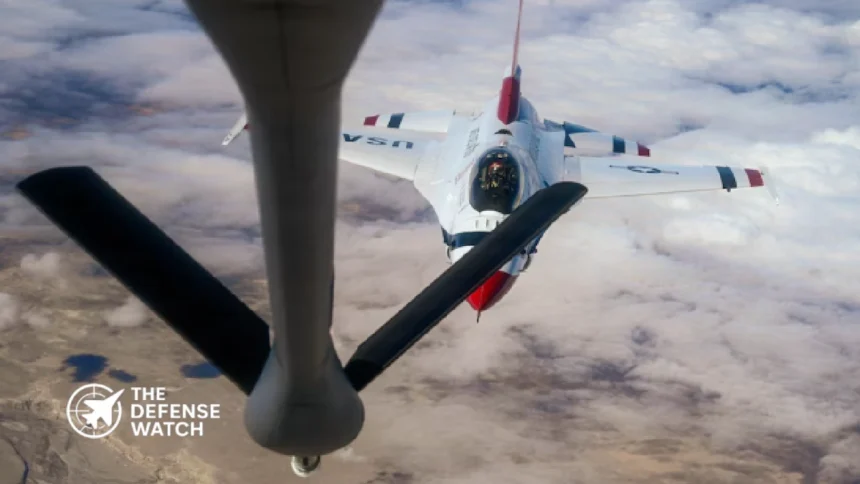
The U.S. Air Force Thunderbirds conducted an aerial refueling operation over the Gulf Coast on Oct. 15, 2026, receiving support from a KC-135 Stratotanker assigned to the 22nd Air Refueling Wing at McConnell Air Force Base, Kansas.
The flight also gave civic leaders from the McConnell area an opportunity to observe the operation aboard the tanker, according to the supplied military photo caption. The event provided a close-up view of a routine but technically demanding part of military aviation.
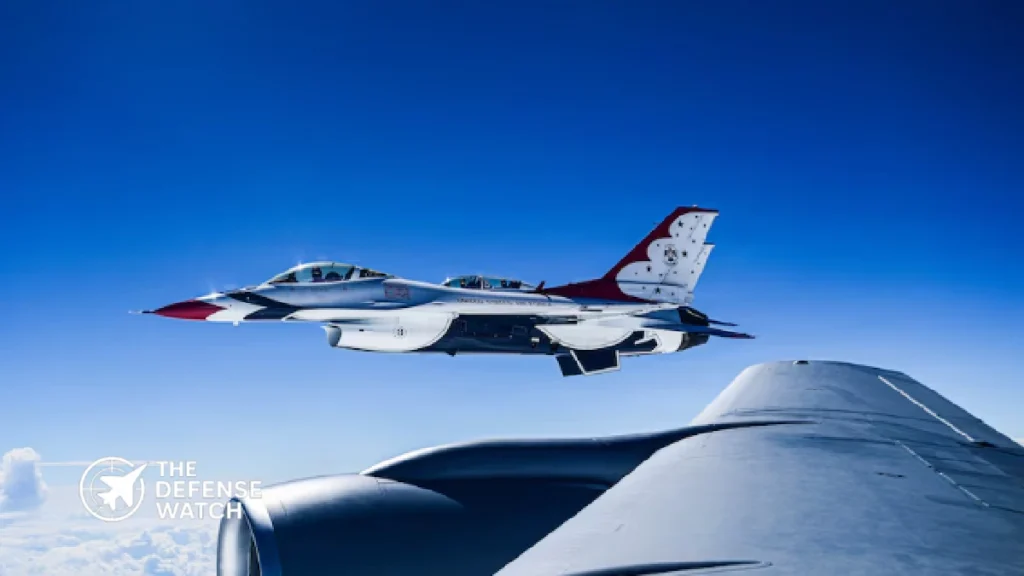
The operation demonstrates how tanker aircraft support the Thunderbirds as the demonstration team travels between appearances. It also offers a practical example of the air mobility capabilities that help the Air Force move fighter aircraft over long distances without requiring intermediate landings.
How the KC-135 Supports the Thunderbirds
The Thunderbirds, formally known as the U.S. Air Force Air Demonstration Squadron, operate F-16 Fighting Falcons during public demonstrations across the United States and abroad.
Although their primary public role is precision flying, the aircraft remain military fighters. Their travel requirements include the same basic logistical considerations that apply to other fighter units, including fuel planning, maintenance and coordination with supporting aircraft.
The KC-135 Stratotanker provides fuel to receiver aircraft while both are airborne. The tanker normally transfers fuel through a flying boom controlled by a dedicated boom operator, who guides it into the receiver aircraft’s refueling receptacle.
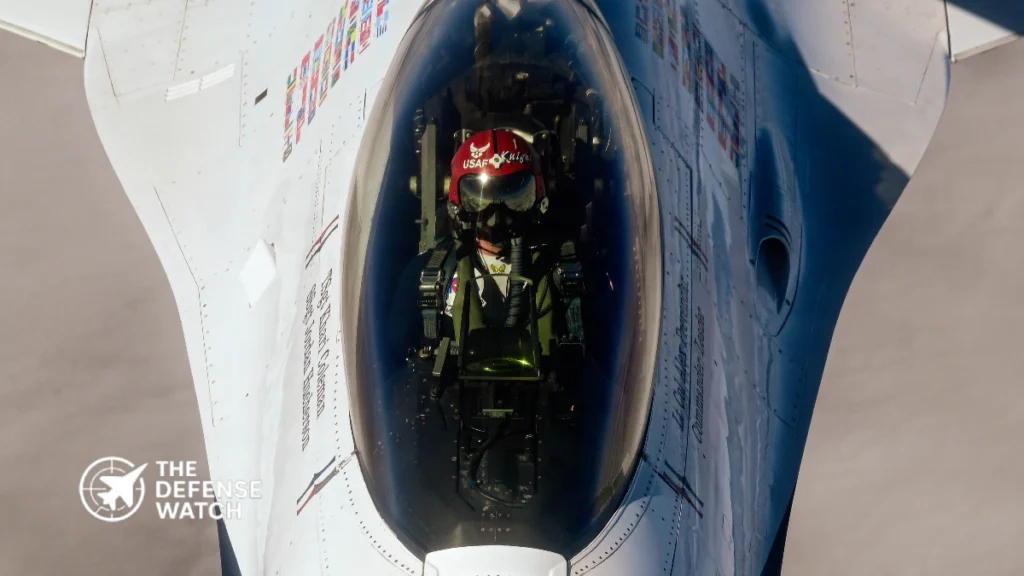
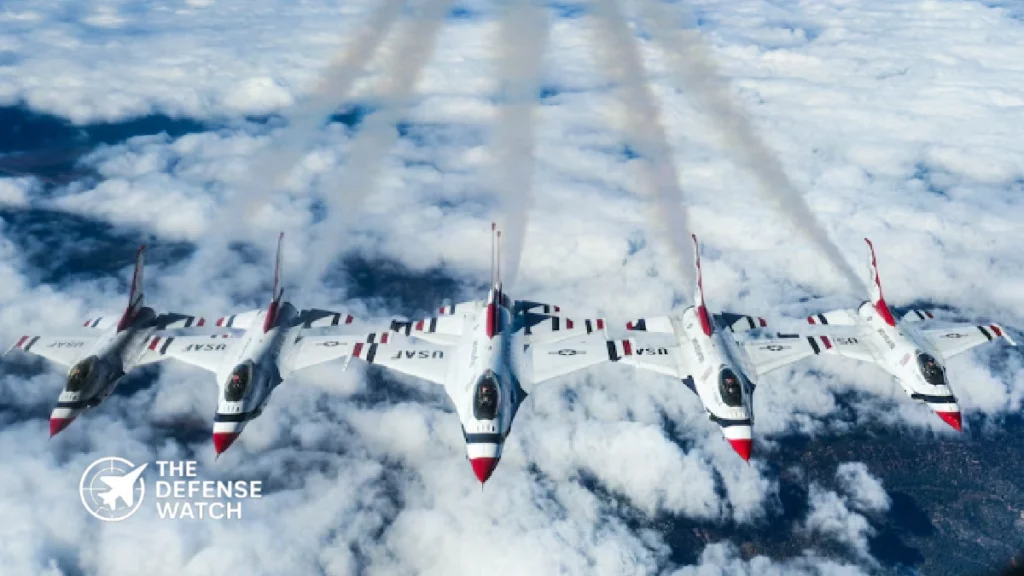
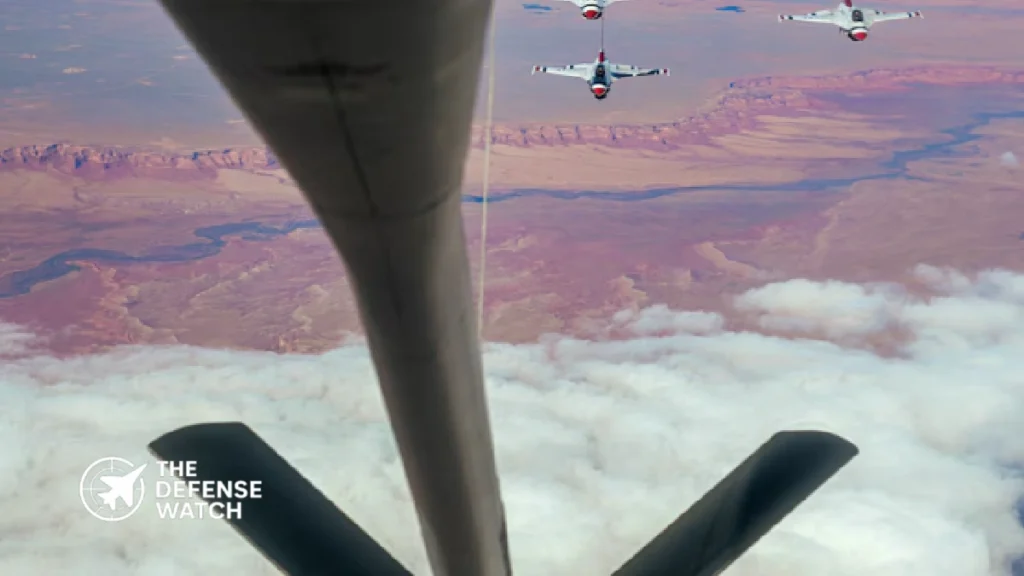
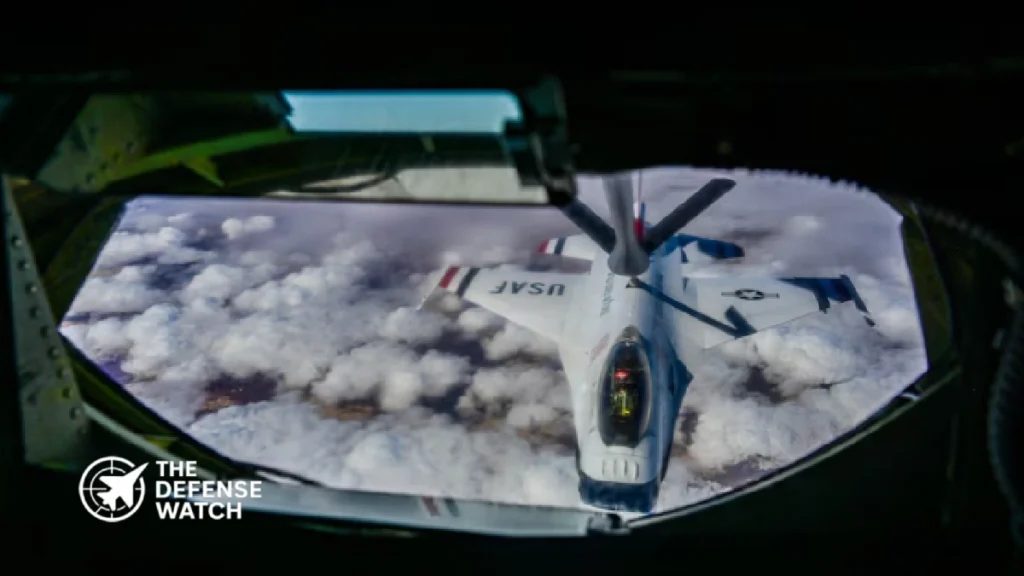
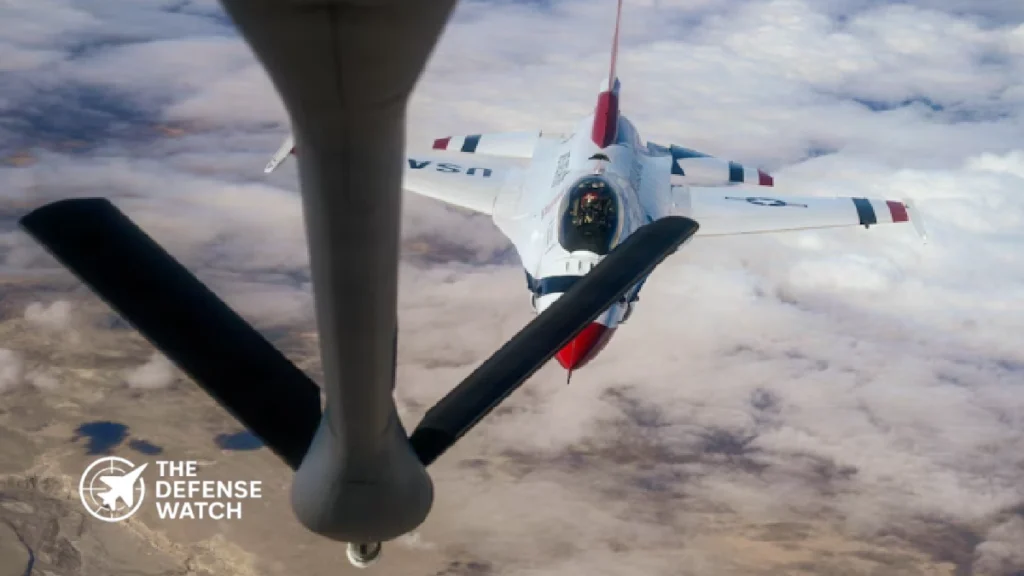
According to the U.S. Air Force’s KC-135 fact sheet, the aircraft supports Air Force, Navy, Marine Corps and allied aircraft. Its ability to transfer fuel in flight extends the distance fighters can travel and can reduce the need for intermediate stops.
For the Thunderbirds, tanker support helps the team move between performance locations while managing fuel requirements. The refueling mission also requires close coordination between the fighter pilots and tanker crew, with both aircraft maintaining a controlled flight path during fuel transfer.
Why Aerial Refueling Matters Beyond Air Shows
Aerial refueling is a routine support mission, but its operational value extends well beyond demonstration flying.
For combat aircraft, receiving fuel in flight can increase mission endurance, extend operational reach and give commanders greater flexibility in planning deployments. Tankers can support fighters operating far from their home bases, reducing the need to position those aircraft near every destination before a mission begins.
The same principle applies to long-distance movements by demonstration teams. A tanker can provide fuel along the route, allowing fighters to continue toward their destination without landing solely to refuel.
The KC-135 has performed this role for decades. The Air Force identifies it as a core element of its aerial refueling capability, supporting aircraft across multiple services and partner nations.
However, a demonstration-team refueling flight should not be confused with a combat deployment. The basic procedure is relevant to both, but operational conditions, threat exposure, mission planning and supporting force requirements can differ substantially.
A Closer Look for McConnell-Area Civic Leaders
The Oct. 15 flight also provided a public engagement opportunity for civic leaders associated with the McConnell Air Force Base area.
Such flights can help community representatives understand the work performed by military aircrews and the support activities behind visible Air Force operations. In-flight refueling involves more than the aircraft seen from the ground. It depends on the tanker crew, boom operator, receiver pilots and mission planners working together.
The supplied caption does not identify the participating civic leaders or specify how many attended. It also does not provide the flight’s route, the number of Thunderbirds aircraft refueled or the quantity of fuel transferred. Those details should not be inferred from the available description.
The event took place two days before the Thunderbirds were scheduled to headline McConnell’s Frontiers in Flight Open House and Air Show on Oct. 17 and 18, 2026, according to a March 2025 announcement from the base.
The refueling flight therefore came shortly before a major public aviation event in the local area, although the available information does not establish whether the Oct. 15 operation was directly connected to preparations for that show.
For the Air Force, the mission illustrates a familiar relationship: fighter aircraft provide the visible element of airpower, while tanker crews deliver the support that allows those aircraft to travel farther and remain airborne longer.