TAI Anka-3: Turkey’s Stealth Flying-Wing Drone, Specifications and First Flight
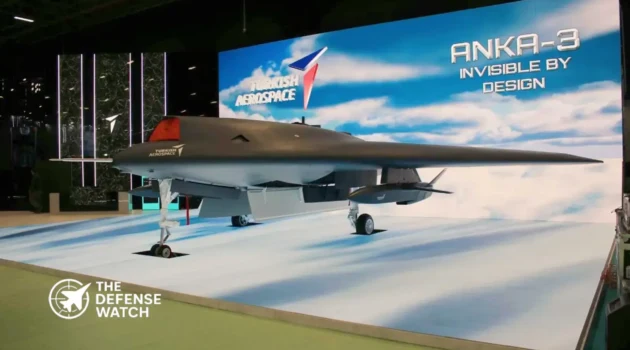
Turkey’s Anka-3 is a jet-powered unmanned combat aerial vehicle designed to combine a low-observable flying-wing configuration with internal weapons carriage, intelligence-gathering equipment and precision-strike capabilities. Developed by Turkish Aerospace Industries, the aircraft is intended to expand Turkey’s options for conducting missions in contested airspace.
- TAI Anka-3: Turkey’s Stealth Flying-Wing Drone, Specifications and First Flight
- Anka-3 specifications at a glance
- Why Turkey chose a flying-wing design
- Weapons capacity and mission options
- Published payload arrangements
- What Anka-3 could contribute to Turkish airpower
- Anka-3 vs. Boeing MQ-28 Ghost Bat
- What remains to be demonstrated
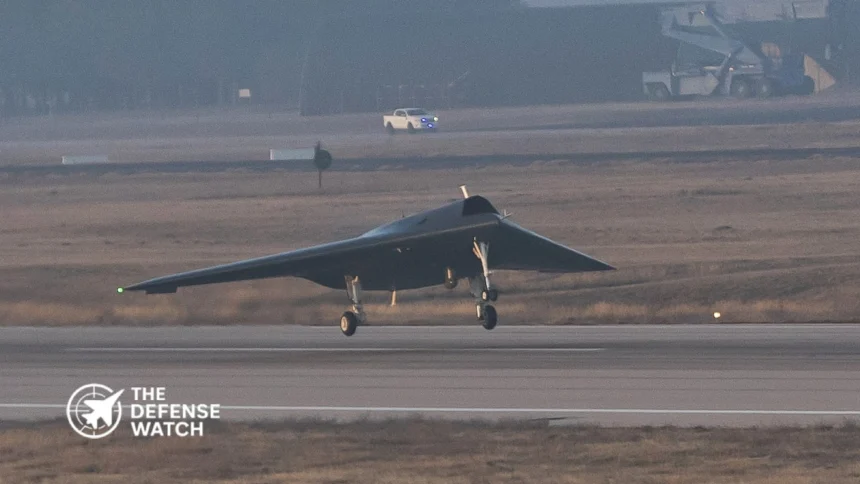
The Anka-3 completed its first flight on December 28, 2023, flying for approximately 70 minutes. Turkish Aerospace reported that the prototype reached 8,000 feet and a speed of 150 knots during the flight. These were first-flight results, not the aircraft’s published maximum performance figures.
The program has since progressed to weapons testing. Turkish Aerospace reports successful trials involving the TEBER-82 guidance kit and ASELSAN’s TOLUN munition, while its official product page identifies a second prototype that has begun flight testing. The aircraft’s development and testing progress, however, should not be confused with confirmation of operational service or combat readiness.
Anka-3 specifications at a glance
The following figures are published by Turkish Aerospace. They describe the manufacturer’s stated specifications rather than independently verified operational performance.
Specification Anka-3 Manufacturer Turkish Aerospace Industries Aircraft type Unmanned combat aerial vehicle Configuration Tailless flying wing Length 7.9 meters Wingspan 12.5 meters Height 2.5 meters Maximum takeoff weight 6,500 kg Published payload capacity 1,200 kg Propulsion Turbofan Maximum speed 425 knots, approximately Mach 0.7 Cruise speed 250 knots, approximately Mach 0.42 Service ceiling 40,000 feet Published endurance Up to 10 hours at 30,000 feet First flight December 28, 2023 Source: Turkish Aerospace Industries, official Anka-3 product information.
These specifications position Anka-3 between conventional long-endurance surveillance drones and more complex uncrewed aircraft intended to support combat aviation. Its turbofan propulsion prioritizes higher speed than the propeller-driven ANKA family, while its flying-wing shape is intended to reduce radar observability.
Why Turkey chose a flying-wing design

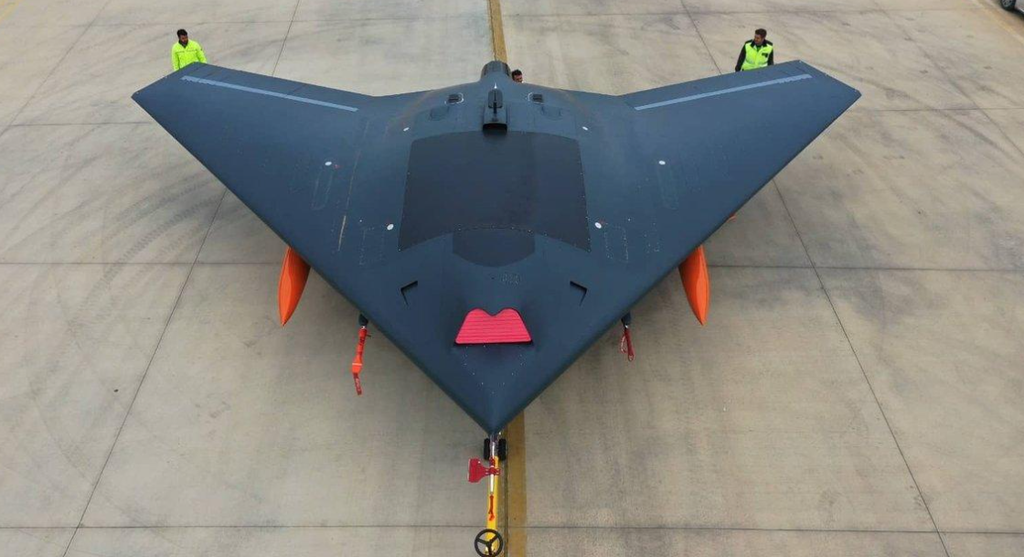
Anka-3 Anka-3’s most distinctive feature is its tailless flying-wing configuration. Unlike a conventional aircraft with a separate fuselage, vertical tail and horizontal stabilizers, the design integrates much of the aircraft’s structure into a broad wing.
This configuration can help reduce radar reflections by limiting prominent vertical surfaces and providing a shape that can be optimized for radar signature management. Internal weapons bays also allow selected weapons to be carried without exposed pylons, which can otherwise increase radar visibility.
However, a flying-wing appearance does not establish a specific radar cross-section or guarantee that an aircraft can evade modern air defenses. Radar observability depends on the aircraft’s complete design, including its inlets, exhaust, materials, antennas, weapons configuration and the angles from which it is detected.
Turkish Aerospace describes Anka-3 as having low radar observability. Publicly available manufacturer information does not establish a numerical radar cross-section or demonstrate its survivability against a defined modern integrated air defense system.
That distinction matters because Anka-3 is intended to carry out missions in which exposure to radar-guided threats may be a central concern. Its design provides a potential advantage, but operational effectiveness will depend on testing, tactics, electronic warfare support and the capabilities of opposing air defenses.
Weapons capacity and mission options
Anka-3 is designed for more than surveillance. Its published payload options include precision-guided bombs, laser-guided rockets and anti-tank missiles. Turkish Aerospace also lists electro-optical and infrared sensors, synthetic aperture radar and electronic warfare-related equipment among its planned or supported mission systems.
The aircraft has two internal payload stations and five external stations, according to the manufacturer. The distinction between internal and external carriage is important because the aircraft may need to trade reduced radar observability against greater payload flexibility.
Published payload arrangements
Internal carriage
Two internal weapon stations are intended to accommodate weapons while preserving the aircraft’s cleaner external shape.
External carriage
Wing-mounted stations provide additional weapon and payload options when a lower-observability configuration is not the overriding priority.
The published total payload capacity is 1,200 kilograms. That figure should not be interpreted as the aircraft’s guaranteed weapons load for every mission. Actual carriage depends on weapon integration, station limits, fuel requirements and flight conditions.
TEBER-82 and TOLUN testing
The Anka-3 program has moved beyond basic flight testing into weapons integration. Turkish Aerospace says the aircraft struck a target during a test using the TEBER-82 guidance kit and subsequently completed a test with the TOLUN munition.
These trials provide evidence that the program is progressing toward an armed configuration. They do not, by themselves, establish a fully operational strike capability across the full range of intended weapons, targets and weather conditions.
A combat-ready system also needs reliable mission planning, secure communications, accurate target identification, weapon-release validation and repeatable performance under operational conditions.
What Anka-3 could contribute to Turkish airpower
Anka-3 offers Turkey a potential way to combine unmanned persistence with jet-powered flight and a more discreet weapons configuration than conventional externally armed drones.
Its intended missions include intelligence, surveillance and reconnaissance, ground attack, electronic warfare and support to other aircraft. The manufacturer also identifies manned-unmanned teaming as a program feature.
Three areas will determine its eventual value.
First, survivability will depend on whether the aircraft’s low-observable design can meaningfully reduce detection and engagement opportunities in realistic threat environments.
Second, mission integration will determine whether Anka-3 can exchange targeting data and coordinate with Turkish crewed aircraft, other unmanned platforms and command networks. A drone’s performance depends not only on its airframe, but also on the sensors, communications and ground systems that support it.
Third, cost and availability will affect how often the aircraft can be deployed and how much risk commanders are willing to accept. Turkish Aerospace has not published a verified unit price or a sufficiently detailed production schedule to support a firm cost-effectiveness assessment.
The aircraft also builds on Turkey’s experience with the ANKA and AKSUNGUR unmanned aircraft programs. Turkish Aerospace says Anka-3 shares ground-system and avionics architecture with those platforms, potentially reducing some training and support burdens. The extent of any savings has not been publicly quantified.
Anka-3 vs. Boeing MQ-28 Ghost Bat

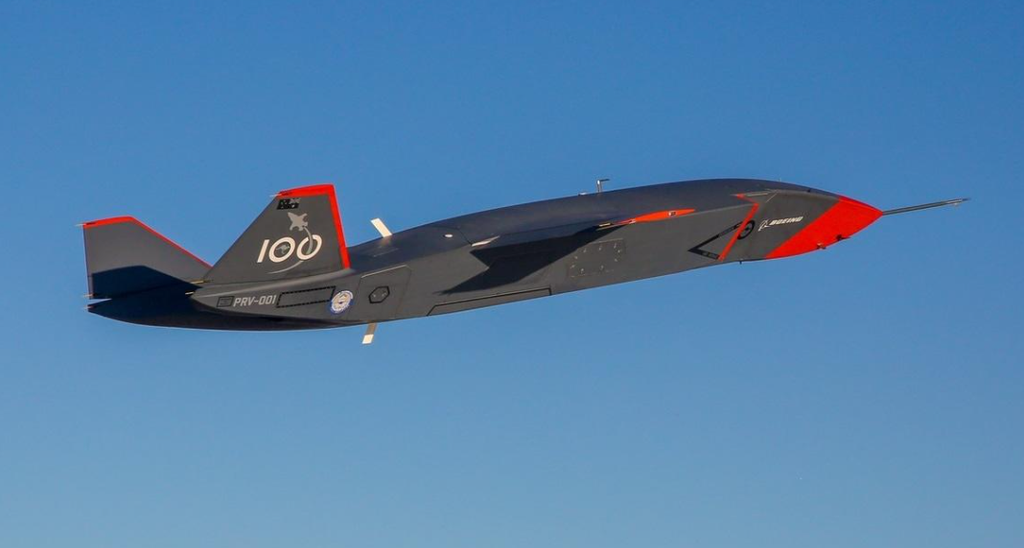
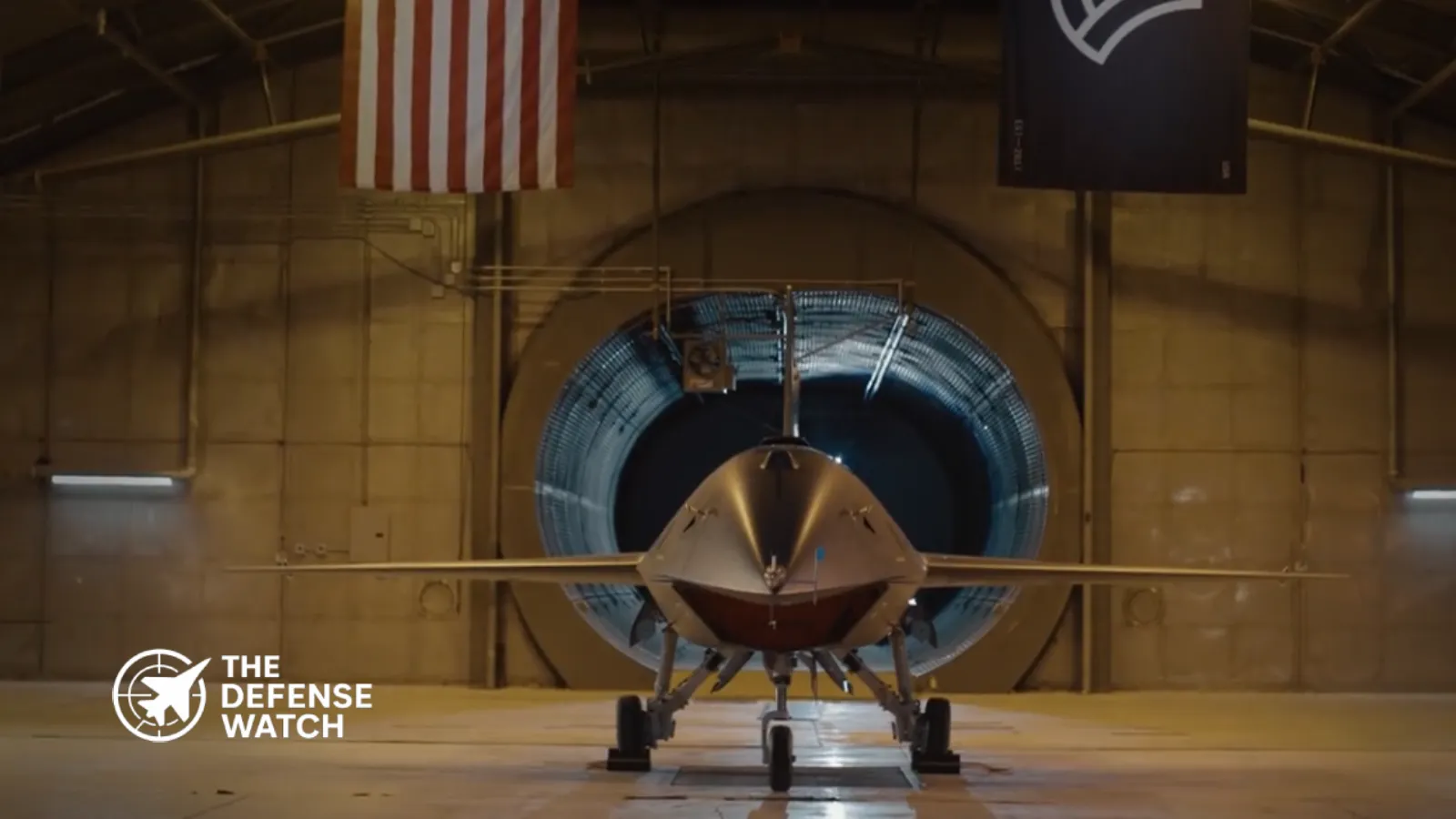
Boeing MQ-28 Ghost Bat The Boeing MQ-28 Ghost Bat is a useful comparison because both programs address the growing role of uncrewed aircraft in combat aviation. Their stated design priorities, however, are not identical.
Turkey’s Anka-3 is presented as a flying-wing unmanned combat aircraft with internal weapons stations, strike capability and a low-observability design. Boeing describes the MQ-28 primarily as a collaborative combat aircraft designed to work with crewed aircraft, extend sensing and mission reach, and operate as part of a networked force.
Attribute TAI Anka-3 Boeing MQ-28 Ghost Bat Development country Turkey Australia Manufacturer Turkish Aerospace Industries Boeing Primary design emphasis Low-observable unmanned strike and mission flexibility Collaborative combat aircraft and force multiplication Configuration Tailless flying wing Conventional aircraft configuration Propulsion Turbofan Jet-powered Published maximum speed Mach 0.7 Up to Mach 0.9 Published endurance or range Up to 10 hours at 30,000 feet More than 2,000 nautical miles Published ceiling 40,000 feet More than 40,000 feet Payload approach Internal and external stations Modular mission systems and adaptable payload architecture First flight December 28, 2023 February 2021 Development status Flight and weapons testing reported by manufacturer Flight testing, operational exercises and weapons integration reported by Boeing Sources: Turkish Aerospace Industries and Boeing. Published range and endurance figures are different measures and should not be treated as directly equivalent.
Which aircraft has the advantage?
There is no evidence-based universal winner.
Anka-3’s flying-wing layout and internal weapon stations make its low-observability and strike configuration central to its design. The MQ-28’s stated emphasis is on working alongside crewed aircraft, sharing mission information and expanding the reach of a broader combat formation.
Boeing has publicly described MQ-28 flight activity with crewed aircraft and an autonomous air-to-air weapon engagement conducted with the Royal Australian Air Force in December 2025. Turkish Aerospace has reported Anka-3 weapons trials involving ground-attack munitions. These milestones demonstrate different aspects of each program, not a direct comparison of combat effectiveness.
The two aircraft also lack publicly verified, directly comparable figures for acquisition cost, radar cross-section, electronic warfare performance and operational availability. Without those data, claims that one platform is more survivable, affordable or effective would be premature.
What remains to be demonstrated
The Anka-3 has progressed from prototype development to flight and weapons testing, but several questions remain open.
- Operational readiness: Public sources do not establish a complete operational test and evaluation result or a confirmed date for full operational service.
- Low-observable performance: No verified public radar cross-section figure establishes how the aircraft performs against particular radar systems.
- Mission endurance: The published 10-hour figure is a manufacturer specification, not proof that every armed mission can achieve that duration.
- Production and cost: Publicly available information does not establish a verified unit price or a confirmed fleet-wide delivery schedule.
- Weapons integration: Reported TEBER-82 and TOLUN trials are important milestones, but they do not confirm that every advertised weapon and mission system has completed qualification.
These are normal questions for an aircraft still moving through development. They are also essential to judging whether its design goals translate into useful capability for the Turkish Air Force.
Anka-3’s significance lies in Turkey’s effort to develop a domestically designed, jet-powered combat drone with a low-observable configuration and internal weapons carriage. Its first flight and reported weapons tests provide concrete evidence of progress. The more consequential test will be whether the aircraft can combine survivability, reliable mission systems and sustainable operating costs in a fielded military capability.