• Home
  • About
  • Defense Systems
  • Manufacturer
  • Comparisons
  • Compare 
  • Tools
TheDefenseWatch.com
  • Aerospace & Aviation
  • Military & Ordnance
  • Naval & Maritime
  • Cyber & Space Defense
  • Policy & Strategy
  • Global News
  • Tools Library
    • Smart Calculator
    • Drone Flight Time Calculator
    • Drone Range Calculator
    • Counter-Drone Jammer Effective Range Calculator
    • Counter-Battery Radar Detection Calculator
    • Artillery Fire Correction Calculator
    • Thermal Camera Detection Range Calculator
    • Missile Range & Time-of-Flight Calculator
    • Radar Detection Range Calculator
    • FPV Strike Drone Payload vs Range Calculator
    • Loitering Munition Endurance Calculator
    • Sniper Ballistic Drop & Windage Calculator
    • Bullet Drop Calculator
    • U.S. Army Combat Fitness Test (ACFT) Calculator
    • Military Pension Calculator
    • Military Retirement Calculator
    • Military Pension Calculator
    • Large Number Calculator
Font ResizerAa

TheDefenseWatch.com

The Defense Watch | U.S. & Global Defense News, Analysis & Military Updates

Search
  • Home
  • About
  • Defense Systems
  • Manufacturer
  • Comparisons
  • Compare 
  • Tools

Stay Updated

Get the latest update

Subscribe

Explore

  • Drone
  • Fighter Jets & Military Aircraft
  • Hypersonic Weapons
  • Aircraft Carriers
  • Strategic History & Missions
  • Tools Library
Home » Raytheon to Develop Software Upgrades for U.S. Navy Radar Detection
Naval & MaritimeNaval Strategy & Maritime Security

Raytheon to Develop Software Upgrades for U.S. Navy Radar Detection

Samuel Drake | Defense Analyst
Last updated: October 13, 2026 12:48 am
Samuel Drake | Defense Analyst
Share
6 Min Read
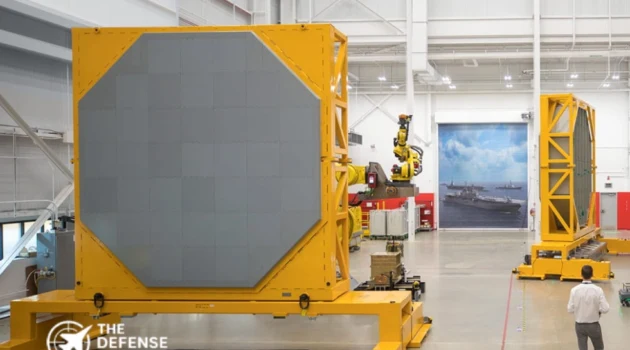
Raytheon naval radar upgrades
Image : RTX
SHARE

Raytheon will develop new signal-processing algorithms and software upgrades for naval radar systems under a contract from the U.S. Office of Naval Research (ONR), targeting improved detection of smaller objects, greater sensitivity and more efficient radar operation.

Contents
  • Software changes could improve existing radar performance
  • Why the SPY-6 radar connection matters
  • Software-defined radar and the limits of the approach
  • Development will continue through 2031

Announced on October 12, 2026, by parent company RTX, the effort will include laboratory and field testing, with the technology being prepared for potential integration into Raytheon’s AN/SPY-6 family and other future naval radar systems. The company did not disclose the contract value or specific performance targets.

Software changes could improve existing radar performance

The program focuses on signal and data processing rather than announcing an entirely new radar system. Raytheon’s Advanced Technology team will develop and evaluate algorithms intended to extract useful target information from radar returns and improve how radar systems process incoming data.

Radar performance depends on more than antenna size and transmitted power. Signal-processing techniques influence how effectively a system distinguishes targets from background clutter and interference, tracks objects and maintains useful detection performance under changing conditions.

- Advertisement -

Software improvements could therefore increase the operational value of existing radar hardware without requiring a complete replacement. However, the extent of any improvement will depend on the algorithms developed, the radar’s underlying hardware and the results of testing.

Raytheon says the upgrades are intended to help naval operators detect smaller objects at greater distances and classify targets more quickly. Those outcomes remain program objectives, rather than independently verified results from the newly announced effort.

Why the SPY-6 radar connection matters

The planned transition to the AN/SPY-6 family gives the research a potential route into a radar program already being fielded across the U.S. Navy’s surface fleet.

  • SPY-6 Radar

    SPY-6 Radar

    • Detection Range: Long-range detection; exact maximum range not publicly specified
    • Frequency Band: S-band
    • Antenna Type / Technology: Active electronically scanned array (AESA)
    • Target Tracking Capacity: Exact maximum not publicly disclosed
    • View Details →
    7.8

    SPY-6 is a family of shipboard radar systems designed to support missions that include air and missile defense. Its applications span detection and tracking requirements associated with aircraft, cruise missiles and ballistic missile threats. Different variants are tailored to different ship classes and installation requirements.

    Raytheon’s June 3, 2026, announcement of a $515 million U.S. Navy contract covered continued integration and test support for the SPY-6 family, including the SPY-6(V)4 upgrade for Flight IIA Arleigh Burke-class destroyers. A separate July 21 announcement described a $1.8 billion contract extension for SPY-6 hardware production and sustainment, with options that could bring the cumulative value to $3.3 billion.

    The new research contract addresses a different part of the program. Rather than representing another disclosed radar production order, it focuses on developing and validating processing improvements that could eventually be incorporated into naval radar systems.

    That distinction matters because producing additional radar units and improving the performance of deployed systems are separate challenges. Software development could complement the Navy’s hardware investment, although the new announcement does not establish that every SPY-6 variant will receive the resulting upgrades.

    Software-defined radar and the limits of the approach

    The project builds on Raytheon’s work in software-defined apertures, an approach intended to make radar hardware more adaptable through software changes.

    According to the company’s technical description, software-defined architectures can allow radar systems to be reconfigured for different missions and updated without replacing all their underlying hardware. Raytheon has also described applications involving surveillance, tracking, communications and electronic warfare.

    For naval forces, adaptability can be valuable when ships must monitor multiple types of potential threats while operating in crowded or electronically contested environments. A radar may need to distinguish legitimate targets from clutter, maintain tracks on multiple objects and continue operating when the electromagnetic environment changes.

    Improved processing may help address some of these demands, but it cannot eliminate every limitation. Radar performance remains affected by factors such as target characteristics, propagation conditions, interference, antenna configuration and available processing resources. Software alone does not guarantee detection of every low-observable or small target.

    The Navy will therefore need evidence from controlled tests and operationally relevant evaluations before the proposed upgrades can be judged against their intended objectives.

    Development will continue through 2031

    Raytheon said work will take place at its facilities in Portsmouth, Rhode Island, and Andover, Massachusetts, through 2031. The program will progress through laboratory and field testing intended to validate performance and operational use before potential transition to SPY-6 and other future naval radars.

    • AN/SPY-6(V)1 Air and Missile Defense Radar

      AN/SPY-6(V)1 Air and Missile Defense Radar

      • Detection Range: 300+ nautical miles
      • Frequency Band: S-Band
      • Antenna Type / Technology: AESA (Active Electronically Scanned Array)
      • Target Tracking Capacity: 600+ simultaneous targets
      • View Details →
      9.3

      The company has not publicly specified a detailed milestone schedule, a deployment date, a contract value or quantified improvements in detection distance and sensitivity. The announcement also does not identify particular threats against which the algorithms have already demonstrated improved performance.

      For the U.S. Navy, the practical measure of success will be whether the new processing methods deliver repeatable improvements under realistic operating conditions and can be integrated without unacceptable effects on existing radar functions.

      Until test results become available, the program is best understood as a research and development effort aimed at improving naval sensing through software, with SPY-6 providing a potential transition path rather than a confirmed fielding commitment.
TAGGED:Naval TechnologyRaytheonSPY-6 RadarU.S. Navy
Share This Article
Facebook Copy Link Print
BySamuel Drake | Defense Analyst
Follow:
Samuel Drake is a defense analyst at TheDefenseWatch.com covering naval warfare, military ordnance, maritime technology, fleet modernization, and defense procurement. His reporting focuses on documented capabilities, procurement programs, and military technology.

Latest Defense Systems

  • SPY-6 Radar SPY-6 Radar
  • Boeing VC-25B Presidential Aircraft Boeing VC-25B Presidential Aircraft
  • SM-3 Block IB Missile SM-3 Block IB Missile
  • USS Abraham Lincoln Aircraft Carrier USS Abraham Lincoln Aircraft Carrier
  • M142 HIMARS M142 HIMARS
  • Terrex S5 Infantry Vehicle Terrex S5 Infantry Vehicle
  • A-29 Super Tucano Aircraft A-29 Super Tucano Aircraft
  • DSAR 15 Rifle DSAR 15 Rifle
  • ASMP Missile ASMP Missile

Recent Compares

  • Tejas vs Gripen: Key Differences and Capabilities Tejas vs Gripen: Key Differences and Capabilities View Comparison →
  • Tejas vs MiG-21 Bison: How India Replaced Its Iconic Supersonic Fighter Tejas vs MiG-21 Bison: How India Replaced Its Iconic Supersonic Fighter View Comparison →
  • F-35 vs F-16: Stealth, Sensors and Combat Roles F-35 vs F-16: Stealth, Sensors and Combat Roles View Comparison →
  • Tejas Fighter Jet vs F-16 Fighting Falcon: Capability Compared Tejas Fighter Jet vs F-16 Fighting Falcon: Capability Compared View Comparison →
  • Rafale Fighter Jet vs F-16 Fighting Falcon : Which Fighter Has the Edge? Rafale Fighter Jet vs F-16 Fighting Falcon : Which Fighter Has the Edge? View Comparison →
  • Su-57 Fighter Jet vs J-20 Fighter Jet: Stealth and Air Combat Compared Su-57 Fighter Jet vs J-20 Fighter Jet: Stealth and Air Combat Compared View Comparison →
  • Mirage 2000 vs Tejas Mk1A: Legacy Combat Power vs Indigenous Modernization Mirage 2000 vs Tejas Mk1A: Legacy Combat Power vs Indigenous Modernization View Comparison →
  • Rafale Fighter Jet vs F-22 Raptor: Which Air Dominance Fighter Has the Edge? Rafale Fighter Jet vs F-22 Raptor: Which Air Dominance Fighter Has the Edge? View Comparison →
  • Tejas Fighter Jet vs. Rafale Fighter Jet: India’s Indigenous Fighter Meets France’s Proven Multirole Combat Aircraft Tejas Fighter Jet vs. Rafale Fighter Jet: India’s Indigenous Fighter Meets France’s Proven Multirole Combat Aircraft View Comparison →
  • F-22 Raptor vs. F-35 Joint Strike Fighter: Which Fifth Generation Fighter Has the Edge? F-22 Raptor vs. F-35 Joint Strike Fighter: Which Fifth Generation Fighter Has the Edge? View Comparison →

Recent Posts

  • Raytheon Tests Faster Coyote Interceptor With New Rocket Motor
  • Raytheon to Develop Software Upgrades for U.S. Navy Radar Detection
  • Kim Jong Un Opens North Korea Weapons Museum as Pyongyang Claims Missile Test Success
  • Pentagon Certifies Bath Iron Works for Second Arleigh Burke Destroyer
  • North Korea Fires Unidentified Projectile Toward East Coast, Seoul Says

You Might Also Like

HAVELSAN ADVENT AI naval combat management system displayed during a Turkish naval defense technology presentation
Naval & MaritimeNaval Strategy & Maritime Security

Havelsan Unveils ADVENT AI Naval Combat System To Counter Swarm Attacks And Electronic Warfare

May 11, 2026
Royal Navy Russian vessels tracking
Naval & MaritimeNaval Strategy & Maritime Security

Royal Navy Expands Maritime Surveillance As Russian Vessels Track Near UK Waters

April 9, 2026
TKMS Canadian Patrol Submarine Project
Naval & MaritimeSubmarines

TKMS Signs Pan Canadian Indigenous Agreements For Canadian Patrol Submarine Project

September 7, 2026
Raytheon SM-2 SM-6 contract
Artillery & Missile SystemsMilitary & Ordnance

Raytheon Secures $59M U.S. Navy Contract for SM-2 and SM-6 Support in FMS Deal

January 21, 2026

Logo

Copyright © 2026 TheDefenseWatch.com

Helpful Links

  • Home
  • About Us
  • Privacy Policy
  • Terms of Use / Disclaimer
  • U.S. Privacy Notice – CCPA Compliance

Defense Systems

  • Defense Systems
  • Comparisons 
  • Manufacturer
  • Tactical Calculators

Popuplar

Which 5 Air Forces Possess the Costliest Fighter Jet Fleets in the World
Evolving Strategic Value: Carrier Strike Groups in the Indo-Pacific’s Future Security Architecture
Autonomous Weapon Systems Spark U.S. Ethics Debate Amid Rapid Military AI Integration

We report on developments involving military forces, governments, defense companies, research organizations, and security institutions around the world. 

Welcome Back!

Sign in to your account

Username or Email Address
Password

Lost your password?