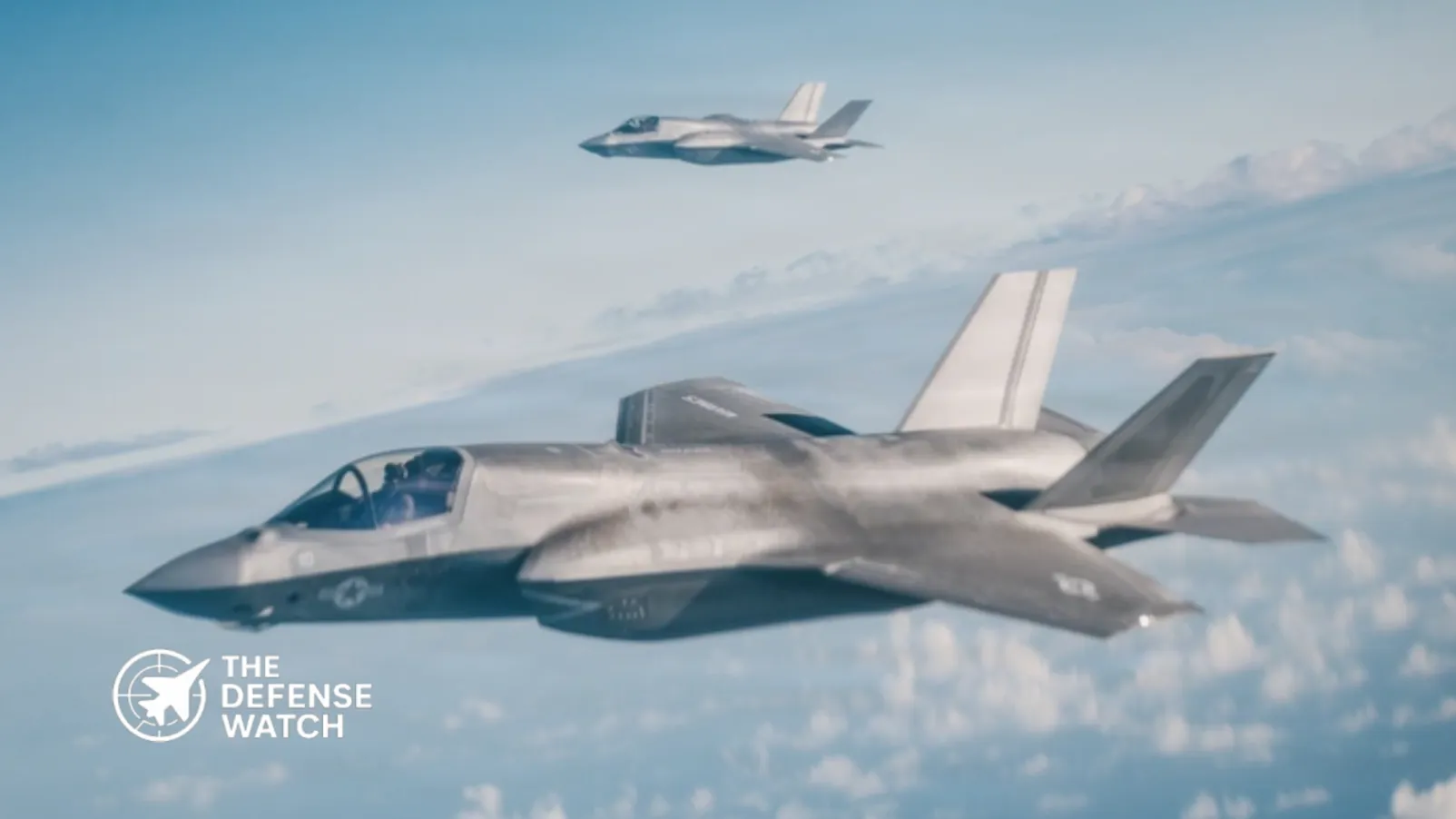
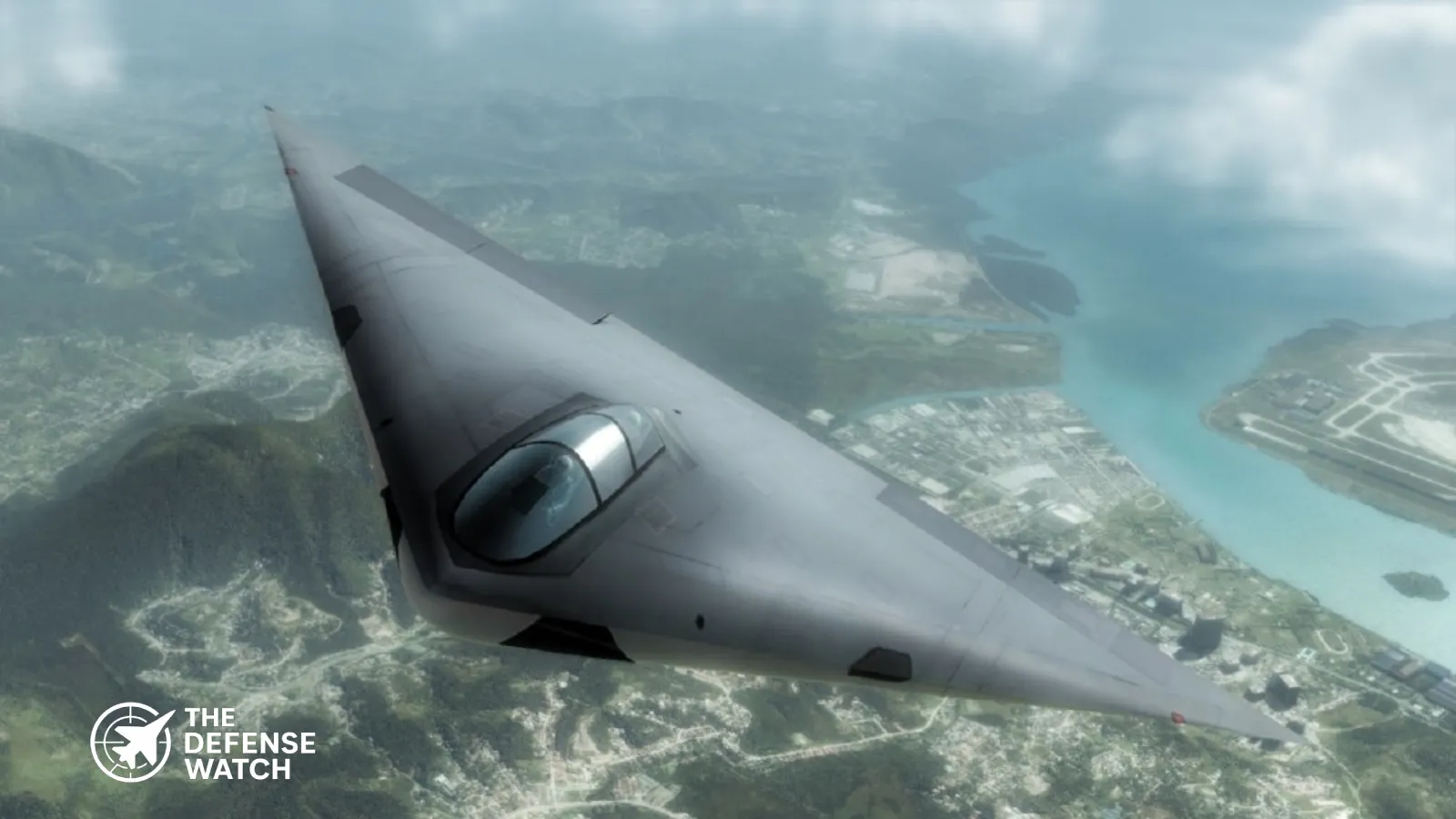
In the early 1990s, the F‑117 Nighthawk represented a pioneering leap in stealth technology for tactical operations. Fast-forward two decades and the F‑22 Raptor entered service, heralding a new era of fifth-generation stealth fighters. This article examines how fighter jet stealth evolved from the F-117 to the F-22, highlighting design, capabilities and operational context. We’ll also provide expert analysis of how this evolution shapes future air-combat dynamics.
The F-117 Nighthawk – Birth of Operational Stealth
Development and Role
The F-117 Nighthawk, developed by Lockheed Skunk Works, entered service in 1983 and became the first operational U.S. stealth aircraft. Its mission was essentially one-dimensional: penetrate the densest enemy air defences, deliver precision strike ordnance and exit without detection.
While often called a “fighter”, its role was ground attack — it lacked air-superiority weapons such as air-to-air missiles, and no guns. The skunk-works design team employed a radically faceted geometry to deflect radar energy and early radar-absorbing materials (RAM) to reduce radar cross-section (RCS).
Limitations in Capability
Although revolutionary, the F-117 had several limitations:
- It was subsonic and aerodynamically compromised due to stealth-shaping.
- It carried a modest payload (typically two laser/GPS-guided bombs) and lacked internal sensor suites for air-to-air combat.
- Maintainability was high: stealth coatings required frequent upkeep and were sensitive to environmental conditions like rain.
- Its stealth advantage, while considerable at the time, began to erode as adversaries improved air-defence radars and passive detection. The notable shoot-down of an F-117 in 1999 over Serbia demonstrated vulnerabilities.
In short: the F-117 delivered a quantum jump in stealth, but it was a first-generation system with clear trade-offs.
The F-22 Raptor – Stealth Meets Air Superiority
Program and Design Evolution
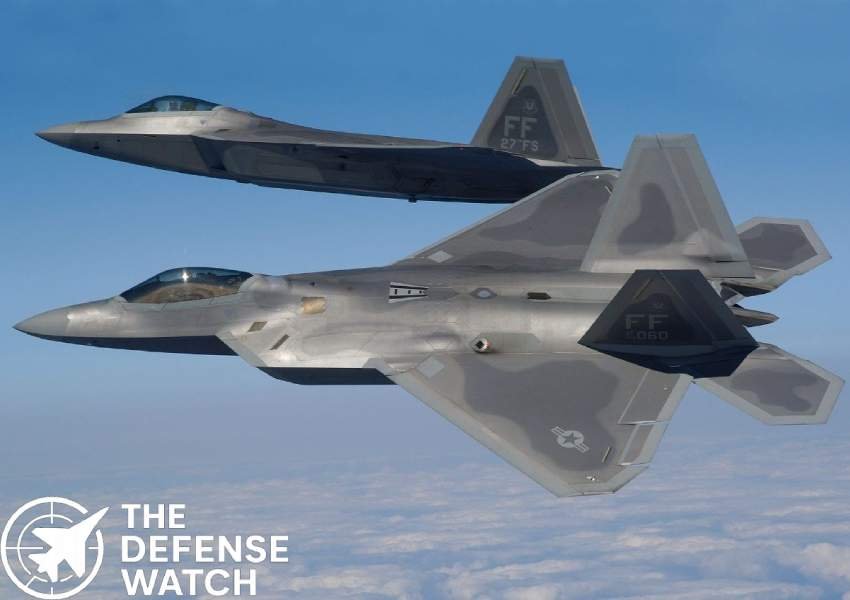
The F-22 Raptor emerged from the U.S. Air Force’s Advanced Tactical Fighter (ATF) programme and entered service in December 2005. It was designed not only for stealth but for air-superiority — meaning air-to-air and air-to-ground missions, with advanced sensors, high speed (including super-cruise capability) and full sixth-generation readiness features.
Where the F-117 was subsonic and focused on attack, the F-22 can super-cruise at Mach 1.6–1.7 without afterburner, even reaching near Mach 2 in afterburner. Its stealth measures include improved RAM coatings, internal weapon bays, optimized engine inlet/exhaust design, and much greater sensor and avionics integration.
Stealth & Survivability Advances
Compared to the F-117, the Raptor brought major stealth and survivability improvements:
- The aircraft uses smoother, blended wing-body shapes rather than faceted surfaces, reducing edge-wave scattering of radar energy.
- RAM coatings and their application were made more robust and less maintenance-intensive.
- Internal weapons carriage reduces external reflections.
- Avionics fusion, sensor networking and electronic warfare (EW) capability become integral to stealth operations, not just airframe shaping.
- The F-22 is capable of both air superiority and precision strike, merging roles long separated.
In short, the Raptor represents stealth matured into a fully-featured fighter-platform rather than a niche attack tool.
Key Differences: F-117 vs F-22
| Feature | F-117 Nighthawk | F-22 Raptor |
|---|---|---|
| Primary Role | Stealth attack aircraft (ground strike) | Air-superiority fighter with strike capability |
| Speed / Performance | Subsonic, optimized for stealth | Supersonic with super-cruise (Mach 1.6+) |
| Stealth Design | Faceted surfaces, early RAM | Blended surfaces, advanced RAM, internal bays |
| Payload / Weapons | Limited bombs, no air-to-air armament | Full internal weapon bays: AAMs, precision bombs |
| Sensor/Avionics Suite | Basic navigation/targeting only | Full sensor fusion, EW suite, datalink network |
| Maintainability | High upkeep required | Improved coatings and sustainment systems |
| Vulnerabilities | Shot-down in 1999, limited survivability | Far greater resilience against modern defences |
These differences reflect the leap from a specialized first-generation stealth platform to a full-featured fifth-generation fighter.
Why Stealth Evolved — Operational and Technological Drivers
Emerging Threat Environments
In the 1980s-90s the primary threat was radar-guided SAMs and fixed air-defence systems. The F-117 proved valuable in that era, especially during Gulf War. However, by the 2000s adversaries had deployed more advanced radars, integrated SAM networks, passive sensors and infrared search-and-track (IRST) systems. Stealth aircraft needed to evolve accordingly.
Broader Mission Demands
The nature of aerial combat changed: air superiority fighters needed stealth to penetrate enemy airspace, conduct air-to-air engagements and still strike ground targets. The F-22 addresses that need, whereas the F-117 was restricted in mission scope.
Technology Maturation
Advances in materials science (RAM), computational modelling (to optimise shapes and scattering), engine / inlet design, sensor and EW systems all matured significantly from the 1970s/80s to the 2000s. For example, the F-117 tested mirror-like coatings for IR signature reduction that later fed into F-22 developments.
Edge-treatment techniques, serpentine engine inlet ducts and more advanced RAM took hold.
These technological leaps enabled stealth aircraft to achieve greater mission flexibility and survivability.
What This Means for Airpower & Future Platforms
Multi-Domain and Networked Operations
Stealth is no longer just about shape and coating — it’s about sensor fusion, data links, EW capability and integration into a wider networked force. The F-22 exemplifies that shift. Future platforms (for example, the F‑35 Lightning II and sixth-generation systems) will further push these dimensions.
Stealth vs. Detection Arms-Race
As stealth improves, so do detection systems (e.g., low-frequency radars, passive tracking, IRST). The evolution from F-117 to F-22 is not a one-time leap — rather part of a continuous arms-race between stealth technology and counters. Analysts often note that the F-117’s limitations became more acute as adversaries adapted.
Sustaining Fleet Viability
The move from a specialist stealth bomber (F-117) to a multi-role stealth fighter (F-22) reflects shift in budget, doctrine and learnings from combat operations. The U.S. had to invest in sustainment, training, upgrades and tactics for stealth fleets. The future likely emphasises modularity, upgradeability and digital warfare integration rather than pure air-frame stealth alone.
Conclusion
From the first operational stealth aircraft in the F-117 Nighthawk to the fully networked, high-performance F-22 Raptor, stealth fighter technology has undergone a fundamental transformation. What began as a ground-strike specialist has evolved into a high-end air-superiority and strike platform. For defence planners, this evolution matters: future air-combat scenarios will demand platforms that combine stealth, speed, sensor fusion and adaptability. The F-22 stands on the shoulders of the F-117 — and the next generation will stand on the shoulders of the Raptor.
FAQs
The F-117 was designated as a fighter (“F”) largely for secrecy and programme classification. In practice its mission was strike operations and it lacked air-to-air armament.
It introduced operational use of faceted geometry, RAM coatings and signature-management tactics (night operations, specific routing) to reduce detection risk. It proved the concept of stealth in combat.
The F-22 uses blended wing-body shapes (versus faceted), improved RAM materials, internal carriage of weapons, super-cruise, sensor-fusion, full avionics integration and lower signatures (radar, IR).
While the F-117 proved foundational, its design limitations (subsonic speed, limited payload, no air-to-air capability, maintenance demands) made it less viable in modern contested air environments. The transition to platforms like the F-22 reflects that shift.
Future designs focus not only on invisibility to radar, but on emissions management, network integration, multi-role flexibility and digital warfare domains. Stealth remains vital but is just one pillar among many.