
Executive Summary
- Nokia and ICEYE announced on October 1, 2026, a partnership to develop secure, sovereign broadband LEO satellite communications systems for governments, defense and security users, emergency services and disaster response.
- The companies say participating nations will own and control the satellites, ground segment and terminals. The first communications satellites are expected to launch in 2028, although detailed constellation size, orbital parameters, bandwidth and program cost have not been disclosed.
- The initiative enters an increasingly important European satellite communications market alongside the EU’s IRIS² program and national systems such as the UK’s SKYNET 6. Its central proposition is sovereign control combined with commercial-style LEO connectivity, rather than dependence on a foreign commercial operator.
Nokia and ICEYE Target Sovereign LEO Satellite Communications
Nokia and ICEYE are moving into the sovereign satellite communications market with a planned low Earth orbit network aimed at governments and defense customers, adding a new European option for secure connectivity in environments where terrestrial networks may be disrupted or unavailable.
The Finnish companies announced the partnership on October 1, 2026. They said the system will combine ICEYE’s satellite and sovereign mission experience with Nokia’s secure networking technology, ground infrastructure and communications expertise. The first communications satellites are expected to launch in 2028.
The announcement is significant because the proposed architecture is designed around national ownership and control. Nokia and ICEYE said governments will be able to own and control the satellites, ground segment and terminals, creating a different operating model from simply purchasing connectivity from an externally controlled commercial constellation.
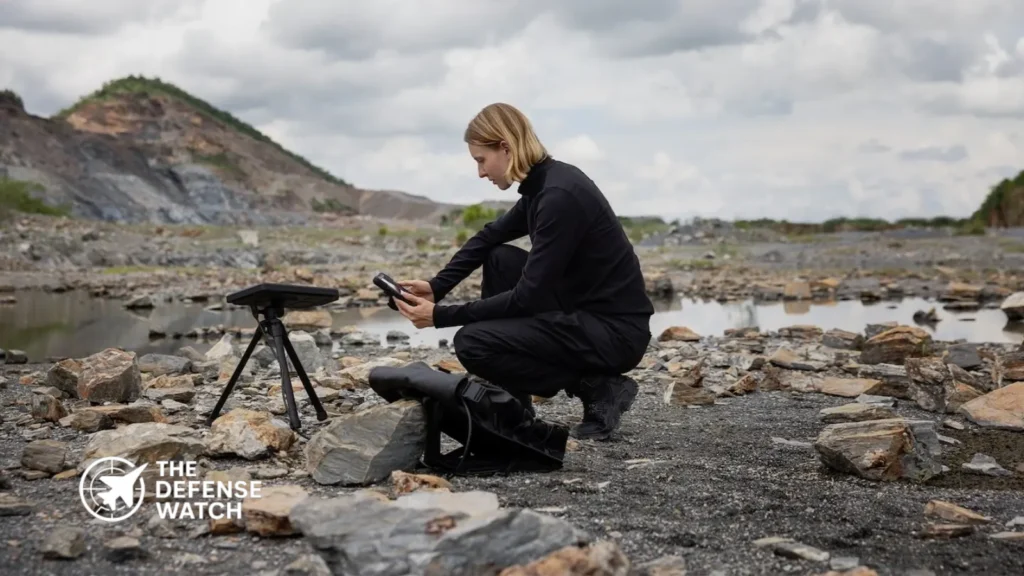
Nokia and ICEYE’s Sovereign LEO Model
The companies have not yet disclosed the final number of satellites, detailed orbital architecture, frequency bands, throughput figures, terminal specifications or total program cost.
That distinction is important. The October 1 announcement establishes a development partnership and a target for initial launches in 2028. It does not yet establish a complete operational constellation comparable in scale to mature commercial LEO networks.
ICEYE brings experience in sovereign satellite missions and operates a large synthetic aperture radar satellite business. Nokia contributes secure networking capabilities and a broader defense communications portfolio. The companies plan to integrate satellites, ground infrastructure and ruggedized user terminals into a common communications system.
ICEYE describes three potential operating models for the planned communications architecture: a dedicated national constellation, a coalition constellation for allied partners, or a hosted sovereign service. In each model, the company says national control would remain central to the system.
That flexibility could matter for smaller European governments that need sovereign communications but may not require or be able to sustain an entirely independent large constellation.
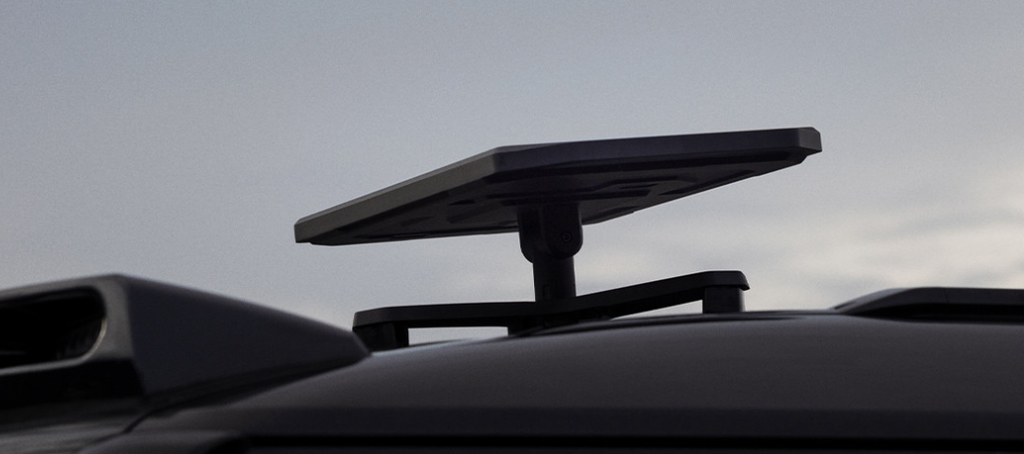
Why Sovereign Control Matters for Defense
Military communications are increasingly dependent on networks that connect sensors, command centers, aircraft, ships, ground forces and autonomous systems.
Traditional military satellite communications provide assured access, but dedicated systems can require substantial investment in spacecraft, ground infrastructure, terminals and network management. Commercial LEO networks provide another model, using large constellations to deliver broadband connectivity at scale.
The tradeoff is control.
A sovereign system gives a government greater authority over how its satellites, ground infrastructure and terminals are operated. It can also reduce dependence on the commercial terms, service policies and operational decisions of an external network provider.
Nokia and ICEYE are explicitly positioning their system around this issue. The companies say the planned network will complement existing military and commercial systems rather than replace them. They also describe targeted connectivity over priority mission areas, with an emphasis on resilience and capacity.
For defense users, that suggests a layered communications model rather than a single replacement network.
Potential Role in Contested Operations
A modern military communications architecture has to assume that some terrestrial infrastructure may become unavailable.
Fiber links, cellular networks, fixed command posts and regional communications infrastructure can be disrupted by physical attacks, cyber operations, electronic warfare or natural disasters. Space-based communications can provide an alternative path when terrestrial connectivity is degraded.
LEO systems have another operational characteristic: they rely on distributed satellite constellations rather than a small number of large spacecraft in geostationary orbit.
However, resilience cannot be inferred simply from the use of LEO. A military-grade architecture must also address jamming, cyber threats, satellite tracking, ground-station protection, terminal survivability, network authentication and the ability to continue operating when individual satellites or links are unavailable.
Nokia and ICEYE have not publicly provided detailed performance data on those areas for the new system. Claims about specific resistance levels, anti-jamming performance or network availability should therefore be treated as unverified until technical specifications or government requirements are released.
How the System Fits Europe’s Satellite Strategy
The Nokia and ICEYE announcement comes as European governments are expanding sovereign satellite communications capabilities.
The EU’s IRIS² program is being developed as a secure multi-orbit connectivity architecture for governmental, defense, security and commercial users. In August 2026, the European Commission and SpaceRISE consortium agreed on an expanded architecture involving 348 satellites, including 330 in LEO and 18 in MEO, with first launches targeted for 2029.
The EU says the expanded IRIS² architecture will increase secure governmental capacity and add dedicated capability for defense, security and emergency services.
Nokia and ICEYE therefore are not developing their system in an empty market. Instead, they are entering an expanding European ecosystem in which governments are pursuing several overlapping approaches to secure connectivity.
| System or approach | Current status | Core model | Defense relevance |
|---|---|---|---|
| Nokia and ICEYE | Partnership announced October 2026 | Sovereign LEO communications | Government, defense, border security and emergency services |
| EU IRIS² | Deployment program underway | Multi-orbit European secure connectivity | Government, defense, security and emergency services |
| UK SKYNET 6 | National military SATCOM program | Sovereign military capability plus commercial services | Strategic communications for UK forces and allies |
| Commercial LEO networks | Operational commercial services | Commercial broadband connectivity | Additional capacity and resilience |
The comparison illustrates an important point: sovereignty and commercial access are increasingly being treated as complementary rather than mutually exclusive.
The UK’s SKYNET 6 program, for example, explicitly combines sovereign military satellite communications with commercial satellite services. The UK Ministry of Defence says SKYNET 6 will provide assured military SATCOM while commercial services will add capacity and flexibility.
The UK has also committed more than £5 billion over a decade to its SKYNET program, according to the Ministry of Defence.
The Starlink Factor
The competitive context extends beyond Europe.
Reuters identified SpaceX’s Starlink as one of the systems operating in the same broad LEO communications market.
The distinction between Starlink and the Nokia ICEYE proposal is not simply technical performance. The more consequential difference is the proposed ownership model.
A commercial constellation can provide governments with rapidly available connectivity without requiring them to build and operate an entire satellite network. A sovereign architecture, by contrast, gives a government greater control over the space, ground and user segments.
Neither model eliminates the other.
For military planners, the practical question is increasingly how sovereign, allied and commercial networks can be integrated so that the loss or degradation of one service does not isolate deployed forces.
That is also consistent with the UK’s current approach, which combines sovereign SKYNET capacity, allied cooperation and commercial services.
Industrial Implications for European Defense Space
The Nokia ICEYE partnership also reflects a broader European effort to build communications infrastructure using European industrial capabilities.
ICEYE already operates in sovereign intelligence and SAR satellite missions, while Nokia has experience in terrestrial networking and secure communications. Combining those capabilities could allow the companies to offer governments a more integrated package covering spacecraft, ground systems and user terminals.
The potential advantage is industrial as much as military.
A government procuring a sovereign communications capability needs more than satellites. It needs command and control infrastructure, ground stations, terminals, network management, cybersecurity, software, maintenance and a supply chain capable of sustaining the system over years.
The Nokia ICEYE model addresses several of those components within a single partnership, although the final industrial division of responsibilities and manufacturing arrangements have not been publicly detailed.
What Remains Undisclosed
The announcement leaves several important technical and commercial questions unanswered.
| Parameter | Publicly confirmed position |
|---|---|
| First satellite launch | Expected in 2028 |
| Constellation size | Not disclosed |
| Exact orbit configuration | Not disclosed |
| Communications frequencies | Not disclosed |
| Aggregate capacity | Not disclosed |
| Terminal throughput | Not disclosed |
| Anti-jamming performance | Not disclosed |
| Program cost | Not disclosed |
| Government customers | No specific customers publicly identified in the announcement |
| Ownership model | National ownership and control is a stated design objective |
These gaps prevent a meaningful quantitative comparison with established LEO constellations.
In particular, the 2028 launch target should not be interpreted as evidence that a complete operational network will be available that year. The companies have announced that the first communications satellites are expected to launch in 2028, but have not published a full deployment schedule.
Strategic Outlook
The Nokia and ICEYE partnership points toward a broader change in how European governments are approaching military connectivity.
Instead of choosing between traditional government-owned satellites and commercial broadband networks, defense organizations increasingly have an opportunity to combine multiple layers.
A sovereign LEO system can provide government-controlled infrastructure. Commercial networks can add capacity and geographic reach. Allied systems can provide additional redundancy. Higher-orbit military satellites can support strategic communications that require different coverage and operational characteristics.
The value of the Nokia ICEYE initiative will therefore depend less on the existence of another LEO constellation and more on whether it can integrate effectively into this layered architecture.
The 2028 launch target gives the partnership a defined near-term milestone. The harder test will come afterward: demonstrating that sovereign ownership can be combined with sufficient capacity, resilient networking, secure terminals and sustainable operations at a cost governments are prepared to support.
For Europe, the timing is notable. The EU is expanding IRIS², the UK is modernizing SKYNET, and national governments are looking for alternatives that reduce dependence on externally controlled communications infrastructure.
Nokia and ICEYE are positioning their proposed system within that wider shift toward sovereign and resilient satellite communications.
The companies have established the partnership and a 2028 initial launch target. The technical details required to determine the eventual scale and military utility of the system remain to be disclosed.
Key Takeaways
- Nokia and ICEYE announced a sovereign LEO satellite communications partnership on October 1, 2026.
- First communications satellites are expected to launch in 2028, but constellation size, capacity, frequency bands and cost remain undisclosed.
- The system is intended to give governments control of satellites, ground infrastructure and terminals.
- The initiative complements Europe’s wider push for sovereign connectivity through programs such as IRIS² and SKYNET 6.
- Its defense value will depend on resilience, cybersecurity, terminal performance, interoperability and the ability to operate alongside allied and commercial networks.