RTX’s Poland Workforce Has Become a Major Defense Industrial Asset
RTX has made Poland its largest investment and employee base outside the United States, with more than 9,500 employees across Raytheon, Pratt & Whitney and Collins Aerospace. The company operates nine major facilities in the country and works with more than 2,200 Polish suppliers.
- RTX’s Poland Workforce Has Become a Major Defense Industrial Asset
- Takeaways
- Patriot Forms the Center of RTX’s Polish Air Defense Work
- Poland Becomes First International LTAMDS Customer
- Polish Plants Support the F-35 Engine Supply Chain
- The F135 Connection Extends Beyond Aircraft Deliveries
- Why the Industrial Footprint Matters to NATO
- More Than a Single Defense Program
- A Growing U.S.-Polish Defense Industrial Relationship
Takeaways
RTX has established Poland as its largest investment and employee base outside the United States, linking U.S. defense technology with a growing Polish industrial and aerospace network.
The scale is significant because RTX’s Polish presence is not limited to commercial aerospace manufacturing. Its operations span air and missile defense, military aircraft engines, aerospace components, engineering, maintenance and research and development.
RTX says its Polish workforce represents about 28% of the country’s aerospace and defense workforce, underscoring the depth of the company’s industrial footprint.
Patriot Forms the Center of RTX’s Polish Air Defense Work
One of the most strategically important elements of the operation is Raytheon’s participation in Poland’s Wisła air and missile defense program.
Wisła is built around the Patriot system and forms a major component of Poland’s effort to establish a modern, networked air and missile defense architecture. Poland declared full operational capability for its IBCS-enabled Patriot system in December 2025, becoming the first international partner to field an IBCS-enabled Patriot system at full operational capability.
RTX says Raytheon is working with 10 Polish companies through Wisła. Polish industry has already contributed components during the program’s first phase, while the second phase expands industrial participation into the LTAMDS radar program.
That local participation matters because modern air defense is not simply a launcher-and-missile procurement. Sustaining the system requires trained personnel, component manufacturing, maintenance capability, software and electronics expertise, logistics infrastructure and an industrial base capable of supporting the system over decades.
Poland Becomes First International LTAMDS Customer
The industrial relationship is expanding beyond Patriot launchers and interceptors.
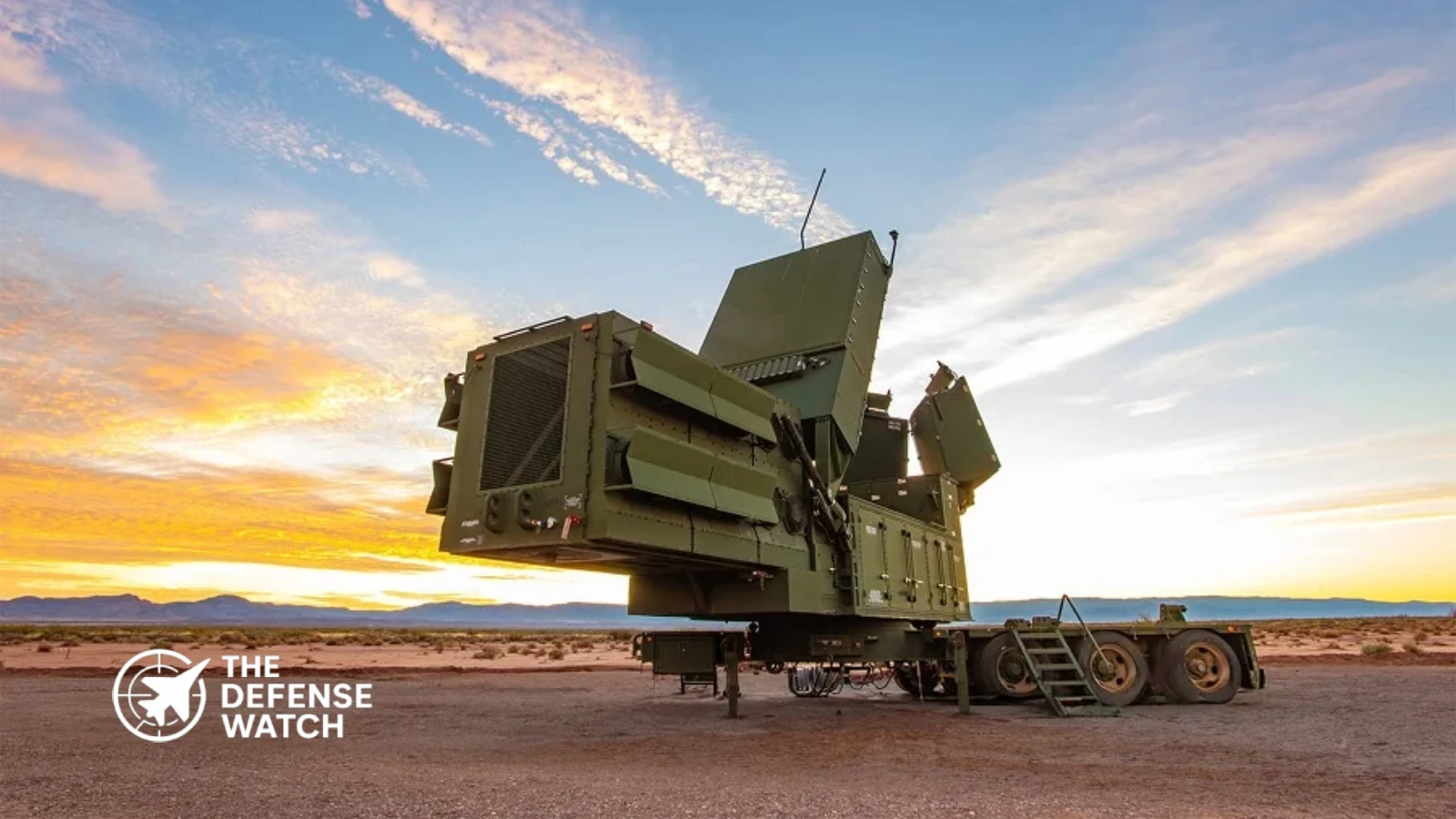
Poland is the first international customer for Raytheon’s Lower Tier Air and Missile Defense Sensor, or LTAMDS. In 2025, RTX announced that Polish industry had become the first international supplier involved in the LTAMDS global supply chain.
LTAMDS is intended to provide extended-range sensing and 360-degree coverage as part of an integrated air and missile defense architecture. For Poland, its integration with Patriot and IBCS is important because the country’s air defense force is being built around the ability to connect different sensors and effectors through a common command-and-control network.
The U.S. Army has described Poland’s IBCS-enabled architecture as a major example of allied integration. The system allows multiple sensors and weapons to operate through a common network rather than treating each battery as a separate defensive unit.
Key RTX Activities in Poland
| Area | Polish Role |
|---|---|
| Patriot | Industrial participation in the Wisła air and missile defense program |
| LTAMDS | Polish companies contributing to the radar supply chain |
| F135 | Production of critical components for the F-35 engine |
| F100 | Production of components supporting military aircraft engines |
| GTF | Manufacturing, assembly and maintenance of fan drive gear systems |
| Collins Aerospace | Aircraft systems manufacturing and maintenance |
| MRO | Aircraft component maintenance serving international customers |
| Engineering | Research, development and technical support |
Polish Plants Support the F-35 Engine Supply Chain
RTX’s second major defense connection in Poland involves Pratt & Whitney and the F135 engine.
The F135 powers all three variants of the F-35 Lightning II. Pratt & Whitney’s Polish facilities in Rzeszów, Kalisz and Niepołomice produce and maintain components for military and commercial engines, including the F135 and F100.
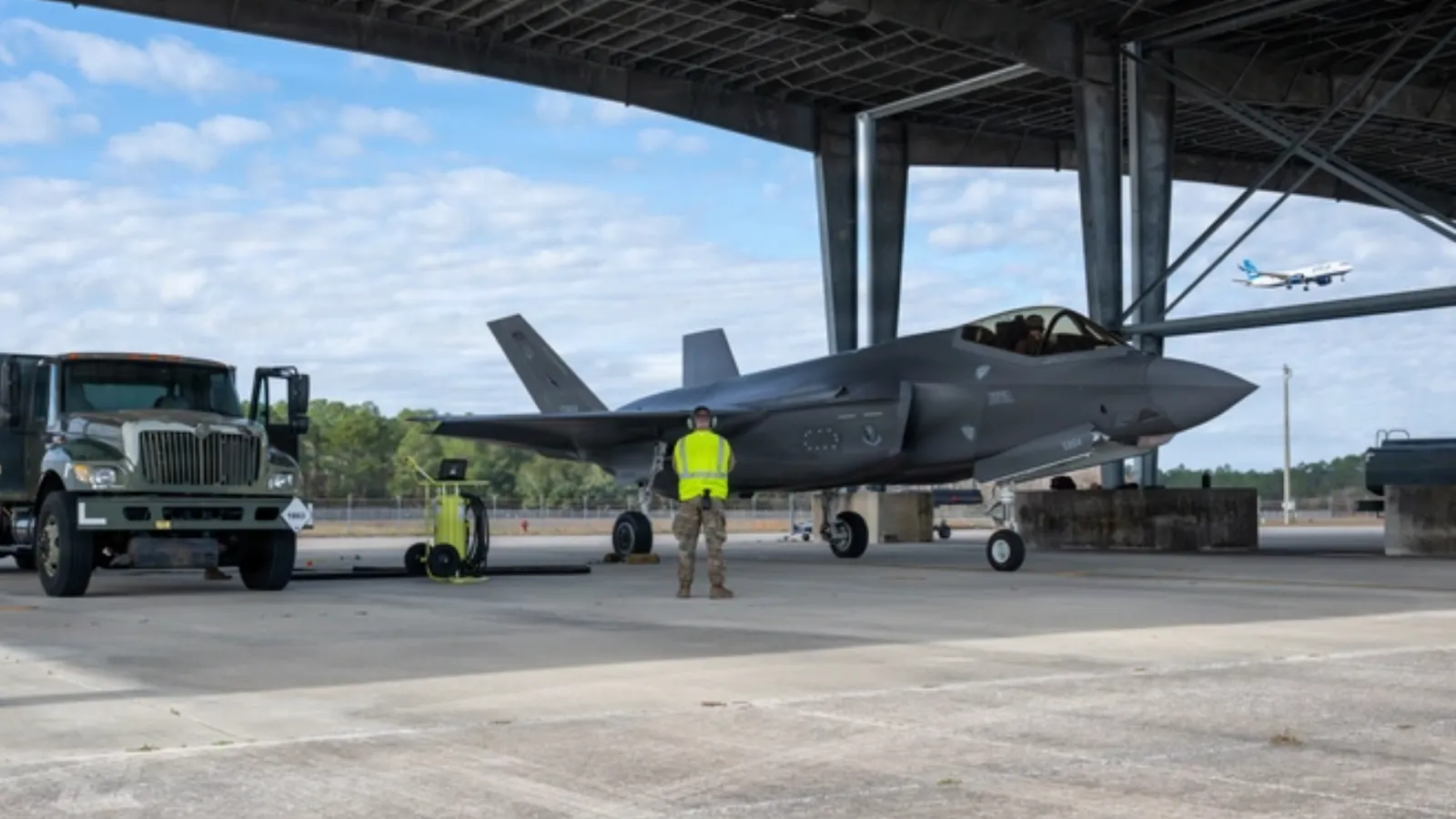
This industrial role is becoming more relevant as Poland begins operating the F-35.
Poland received its first three F-35A aircraft in-country in June 2026, marking the start of a major transition for the Polish Air Force toward fifth-generation combat aircraft.
The connection between the aircraft and engine supply chain is therefore more than an industrial statistic. Poland is becoming both an operator of the F-35 and a production location for components associated with its propulsion system.
Pratt & Whitney also announced a $25 million expansion at its Niepołomice facility in September 2026. The project is expected to create more than 120 jobs and become operational in 2028. The site produces complex tubular assemblies for commercial and military engines, including the F135.
That investment followed a separate $100 million Pratt & Whitney expansion in Rzeszów announced in April. The Rzeszów project is designed to add capabilities for processing isothermally forged components and is expected to support a 30% increase in output of critical engine parts when combined with related capacity investments.
Together, the two projects represent $125 million in newly announced Pratt & Whitney investment in Poland during 2026.
The F135 Connection Extends Beyond Aircraft Deliveries
The importance of the Polish manufacturing footprint becomes clearer when the F135 program is viewed as a long-term sustainment enterprise rather than simply an aircraft production program.
In March 2026, Pratt & Whitney received a $3.8 billion contract modification covering F135 production for Lots 18 and 19. The total value of the Lots 18 and 19 F135 contract awarded to Pratt & Whitney reached $6.6 billion.
The Polish facilities are not responsible for producing the complete F135 engine. Instead, they form part of the wider manufacturing network that produces specialized components and supports the global engine industrial base.
That distinction is important. Modern fighter programs rely on geographically distributed supply chains in which individual facilities specialize in specific parts, processes or maintenance activities.
Poland’s role gives RTX an established European manufacturing base supporting those wider programs.
Why the Industrial Footprint Matters to NATO
RTX’s expansion comes as Poland is rapidly increasing its military capabilities and strengthening its position on NATO’s eastern flank.
The country is simultaneously fielding Patriot and IBCS-enabled air defense, expanding its military aviation fleet and introducing the F-35A. Those programs create a long-term requirement for maintenance, engineering, spare parts and industrial support.
The RTX model addresses several of those requirements locally.
For Poland, domestic production and engineering can reduce reliance on long-distance supply chains for selected components and increase the pool of personnel familiar with the systems supporting the country’s armed forces.
For RTX, the Polish footprint provides access to an established engineering and manufacturing workforce inside Europe while placing production and support capacity close to major European customers.
For the United States and NATO, the arrangement creates another layer of industrial resilience within an allied country that is becoming one of Europe’s largest defense spenders.
More Than a Single Defense Program
RTX’s Polish presence also extends beyond Raytheon’s missile defense business and Pratt & Whitney’s military engine work.
Collins Aerospace operates a maintenance, repair and overhaul facility in Wrocław supporting customers across Europe, the Middle East and Africa. Its Polish operations cover areas including flight controls, safety equipment, cabin systems, cargo systems and aircraft power equipment.
Collins also expanded its Tajęcina manufacturing facility in June 2026. The $69 million expansion increased the facility’s size to 22,000 square meters and is expected to raise landing gear production capacity by nearly 25%, while creating approximately 190 jobs during 2026.
This broader industrial footprint is important because it reduces the dependence of RTX’s Polish operations on any single defense program.
The same workforce and supplier network can support military aviation, commercial aerospace and air defense requirements, creating an industrial ecosystem rather than an isolated production line.
A Growing U.S.-Polish Defense Industrial Relationship
RTX’s position in Poland illustrates how U.S. defense companies are increasingly using allied industrial bases to support major weapons programs.
The relationship is particularly significant in Poland because several high-value U.S. systems are entering service at the same time. Patriot and IBCS are strengthening ground-based air defense, LTAMDS is expanding sensor capability and the F-35 is introducing a fifth-generation fighter capability.
The industrial dimension is therefore becoming closely connected to operational capability.
A missile defense system requires more than interceptors and launchers. A fifth-generation fighter fleet requires more than aircraft. Both depend on trained personnel, parts, maintenance, engineering and a reliable industrial supply chain.
RTX’s more than 9,500-person Polish workforce provides a substantial portion of that supporting infrastructure.
The company says Poland now represents its largest investment and employee base outside the United States. With nine major facilities and more than 2,200 Polish suppliers, the footprint has developed into a significant component of the wider U.S. and allied aerospace and defense industrial network.
For Poland, the result is a deeper domestic industrial connection to some of the most important U.S.-supplied defense capabilities now entering its armed forces. For NATO, it adds manufacturing, engineering and sustainment capacity close to the alliance’s eastern flank.
That combination makes RTX’s Polish operation strategically important well beyond its employment numbers.