Takeaways
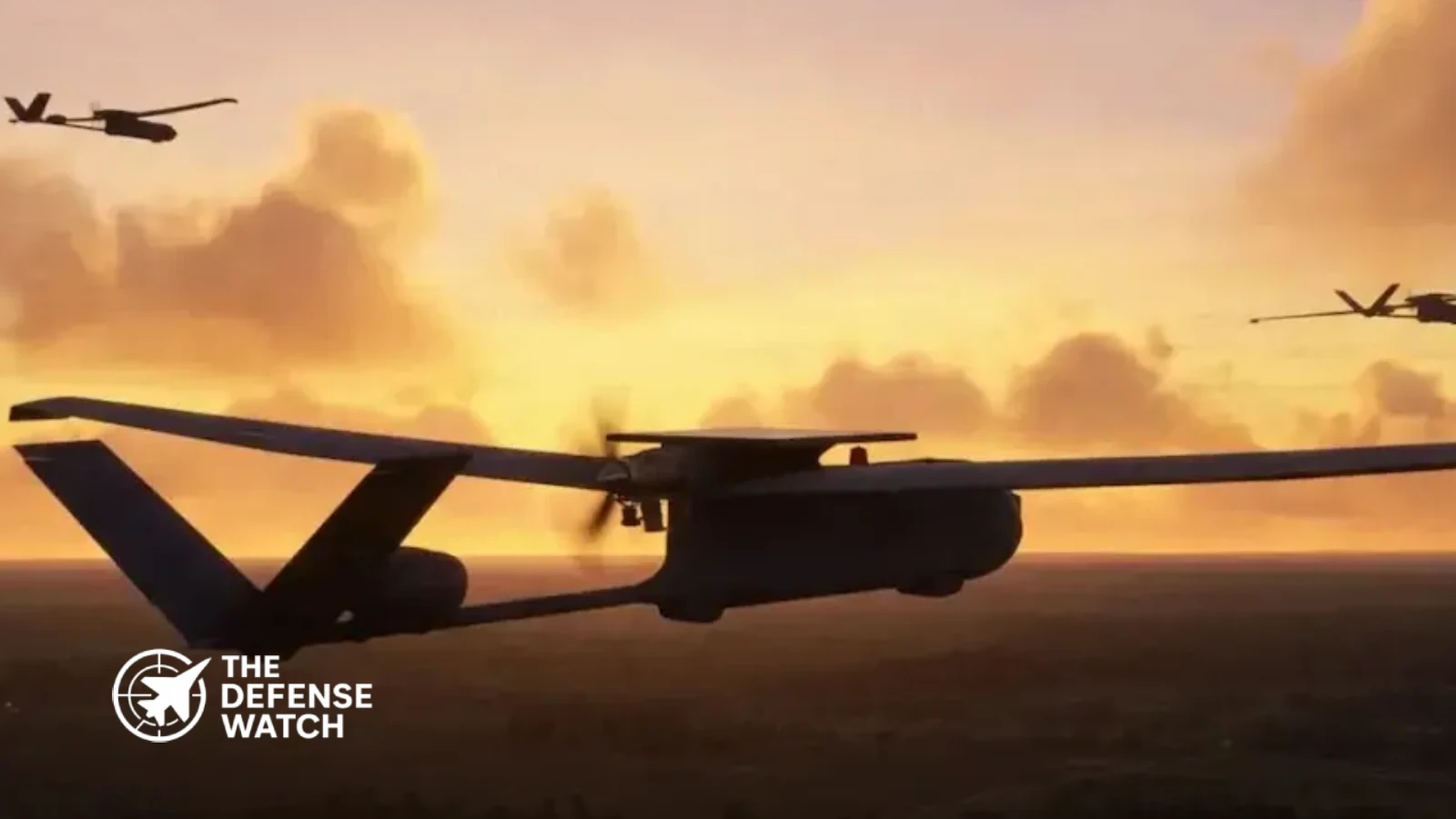
Ukraine has codified the Dovbush T40, a domestically produced long endurance unmanned aircraft designed for deep reconnaissance, fire adjustment and precision strike missions.
Ukraine Codifies Dovbush T40 Long Range Drone
Ukraine’s Ministry of Defence has codified the domestically produced Dovbush T40 drone, adding a strategic-level unmanned aircraft with a stated range exceeding 2,000 kilometers to the country’s defense inventory. The ministry says the system is intended for deep reconnaissance, artillery fire adjustment and precision strikes against targets far from the front line.
The announcement, made August 17, represents another step in Ukraine’s expansion of domestically developed long range unmanned systems. According to the ministry, the T40 can remain airborne for more than 24 hours and has sufficient operational range to reach targets beyond the Urals and in western Siberia.
The reported capabilities are significant because the T40 is not described solely as a one way attack drone. Ukraine says its configuration can support reconnaissance, fire correction and precision strike missions, allowing the same basic aircraft to perform different roles depending on its equipment and payload.
Dovbush T40 Specifications and Stated Capabilities
Capability Dovbush T40 Type Strategic-level unmanned aircraft Stated range More than 2,000 km Endurance More than 24 hours Wingspan Nearly 5 meters Primary missions Deep reconnaissance, fire adjustment, precision strike Strike configurations Munition release or one way attack Radar characteristics Ultra-low radar signature, according to Ukraine Propulsion High-performance engine with electronic fuel injection Electronic warfare Ministry reports significant resistance to EW The figures above come from Ukrainian Ministry of Defence statements reported following the system’s codification. Independent information on payload weight, cruising speed, operating altitude, communications architecture and production rate has not been publicly detailed in the available official material.
That distinction matters. A stated maximum range is not necessarily the same as the combat radius available when an aircraft carries a particular payload, flies a mission profile involving loitering, or encounters adverse weather and electronic warfare conditions.
More Than 24 Hours of Endurance Changes the Mission Set
The T40’s reported endurance is one of its most important characteristics.
An aircraft capable of remaining airborne for more than 24 hours can perform missions that require substantially more time than a conventional short-range tactical UAV. It can potentially remain available for reconnaissance, wait for target information, adjust its mission and provide extended observation without requiring an immediate return to its launch area.
For artillery operations, long endurance can also support persistent observation and fire correction. Ukraine says the T40 is designed specifically for fire adjustment as well as deep reconnaissance and precision strikes.
The combination of range and endurance also gives the platform greater mission flexibility. An aircraft does not have to spend its entire available range simply traveling toward a target. Endurance can instead provide additional time for surveillance or route adjustments before an engagement.
Low Radar Signature and Electronic Warfare Resistance
Ukraine’s Defence Ministry says testing identified an ultra-low radar signature and significant resistance to electronic warfare as advantages of the T40.
Both characteristics are particularly important for a long range UAV operating in an environment where air defense systems and electronic warfare networks can extend far beyond the immediate battlefield.
A reduced radar signature can make detection more difficult, although the ministry has not released a radar cross-section measurement or detailed information about the aircraft’s materials, shaping or flight profile.
Likewise, the statement that the system is resistant to electronic warfare does not establish immunity to jamming or other forms of electronic attack. The actual level of resilience would depend on factors such as navigation, communications, frequency management, autonomy and the specific threat environment.
Those details remain undisclosed.
Engine and Payload Architecture
The T40 uses what Ukraine describes as a high-performance engine equipped with an electronic fuel-injection system. The ministry has not publicly identified the engine manufacturer or provided detailed propulsion specifications.
Ukraine also says the aircraft can be configured for different types of missions.
One configuration can release munitions against designated targets, while another can operate as a one way attack system. This gives the platform a broader operational role than a dedicated reconnaissance aircraft.
The modular approach is particularly relevant to Ukraine’s wartime procurement model, where a single airframe can potentially support multiple mission requirements while manufacturers incorporate battlefield feedback into successive versions.
From Dovbush T20 to the T40
The Dovbush T40 is part of an evolutionary development path rather than an isolated Ukrainian UAV program.
Ukraine’s Defence Ministry says the same manufacturer has produced the Dovbush T20 and Kotyhoroshko unmanned systems, both of which have been used on the battlefield since 2022. The ministry describes the T20 as a medium-range system for reconnaissance, real-time artillery fire adjustment and precision strikes.
The T40 extends that concept into a substantially longer-range aircraft.
This development model reflects a wider feature of Ukraine’s defense industry during the war: combat employment provides manufacturers with direct operational feedback, which can then be incorporated into new designs. In the T40’s case, the result is a larger platform intended to combine surveillance and strike functions with much greater endurance and range.
Why the T40 Matters for Ukraine’s Deep Strike Capability
The most important aspect of the Dovbush T40 is not any single specification. It is the combination of range, endurance, reconnaissance capability and strike flexibility in a domestically produced system.
Ukraine has increasingly invested in long range unmanned systems that can operate well beyond the immediate battlefield. The T40 fits that broader development path by extending the distance at which Ukrainian forces can conduct reconnaissance and potentially deliver effects.
The reported ability to reach areas beyond the Urals and into western Siberia also illustrates the geographic scale of the capability claimed by Kyiv. However, the ministry’s statement should be treated as a description of stated performance rather than independent confirmation of successful combat missions at those distances.
For defense planners, the larger lesson is the growing importance of relatively low-cost unmanned aircraft in long-range operations. Such systems can provide additional options alongside more expensive cruise missiles and crewed aircraft, particularly when persistence and mission flexibility are priorities.
Ukraine’s Rapid Expansion of Domestic UAV Development
The T40 is also part of a much larger Ukrainian unmanned systems effort.
Ukraine’s Ministry of Defence has reported a rapid increase in the number of domestically produced unmanned systems being cleared for military use. Recent Ukrainian reporting cited by the ministry says 413 unmanned aerial systems had been codified and authorized for use since the beginning of 2026, with nearly all described as Ukrainian-made.
The pace of this process matters because codification is an important step between development and formal military adoption. It allows a system to enter Ukraine’s procurement and operational framework rather than remaining solely an experimental or prototype capability.
For Ukraine, this creates a pipeline in which battlefield requirements can feed into new designs, testing and eventual procurement.
What Remains Unknown About the Dovbush T40
Despite the range of information released by Ukrainian authorities, several important technical details remain undisclosed.
Public information does not currently establish the T40’s exact payload capacity, maximum speed, operating altitude, datalink architecture, navigation system, launch method, production rate or unit cost. There is also limited independent information about its performance against modern Russian air defense and electronic warfare systems.
Those limitations are important when assessing claims about long range unmanned aircraft. A platform’s theoretical range and endurance provide useful indicators, but operational effectiveness depends on the complete mission system, including intelligence, communications, navigation, target acquisition, launch and recovery arrangements.
The available evidence therefore supports describing the T40 as a newly codified Ukrainian long endurance UAV with a stated range above 2,000 kilometers, rather than treating every claimed characteristic as independently verified combat performance.
A Broader Shift Toward Long Range Unmanned Warfare
The Dovbush T40 reflects a broader change in the role of unmanned aircraft in modern warfare.
UAVs are increasingly being developed not only for tactical reconnaissance but also for persistent surveillance, artillery support and long range strike missions. Ukraine’s continued development of systems such as the T40 shows how wartime demand can accelerate this transition.
For the United States and other NATO countries, the development is relevant beyond the Russia-Ukraine conflict. Long endurance unmanned aircraft capable of operating across large geographic areas are increasingly important to concepts involving distributed sensing, persistent intelligence, surveillance and reconnaissance, and lower-cost long range strike.
The T40 does not by itself establish a new class of strategic weapon. Its importance is that Ukraine is integrating several traditionally separate missions into one domestically produced aircraft while pushing range and endurance well beyond conventional tactical UAV requirements.
Bottom Line
Ukraine’s Ministry of Defence has codified the Dovbush T40, a nearly five-meter-span unmanned aircraft that the ministry says can fly for more than 24 hours and cover more than 2,000 kilometers.
The system is designed for deep reconnaissance, artillery fire adjustment and precision strike missions, with reported options for dropping munitions or conducting one way attacks. Ukraine also says testing demonstrated a low radar signature and significant resistance to electronic warfare.
The most consequential feature is the combination of long endurance and long range in a domestically developed platform. While key technical and operational details remain undisclosed, the T40 demonstrates the continued expansion of Ukraine’s indigenous unmanned warfare capabilities and its effort to extend reconnaissance and strike options far beyond the front line.
Enjoying our coverage?
Make The Defense Watch a preferred source on Google to see more of our geopolitical and defense insights when relevant to you.