• Home
  • About
  • Defense Systems
  • Manufacturer
  • Comparisons
  • Compare 
  • Tools
TheDefenseWatch.com
  • Aerospace & Aviation
  • Military & Ordnance
  • Naval & Maritime
  • Cyber & Space Defense
  • Policy & Strategy
  • Global News
  • Tools Library
    • Smart Calculator
    • Drone Flight Time Calculator
    • Drone Range Calculator
    • Counter-Drone Jammer Effective Range Calculator
    • Counter-Battery Radar Detection Calculator
    • Artillery Fire Correction Calculator
    • Thermal Camera Detection Range Calculator
    • Missile Range & Time-of-Flight Calculator
    • Radar Detection Range Calculator
    • FPV Strike Drone Payload vs Range Calculator
    • Loitering Munition Endurance Calculator
    • Sniper Ballistic Drop & Windage Calculator
    • Bullet Drop Calculator
    • U.S. Army Combat Fitness Test (ACFT) Calculator
    • Military Pension Calculator
    • Military Retirement Calculator
    • Military Pension Calculator
    • Large Number Calculator
Font ResizerAa

TheDefenseWatch.com

The Defense Watch | U.S. & Global Defense News, Analysis & Military Updates

Search
  • Home
  • About
  • Defense Systems
  • Manufacturer
  • Comparisons
  • Compare 
  • Tools

Stay Updated

Get the latest update

Subscribe

Explore

  • Drone
  • Fighter Jets & Military Aircraft
  • Hypersonic Weapons
  • Aircraft Carriers
  • Strategic History & Missions
  • Tools Library
Home » Royal Navy Moves To Retire Three Warships As Fleet Modernization Accelerates
Naval & MaritimeNaval Strategy & Maritime Security

Royal Navy Moves To Retire Three Warships As Fleet Modernization Accelerates

Samuel Drake | Defense Analyst
Last updated: September 7, 2026 4:40 am
Samuel Drake | Defense Analyst
Share
7 Min Read
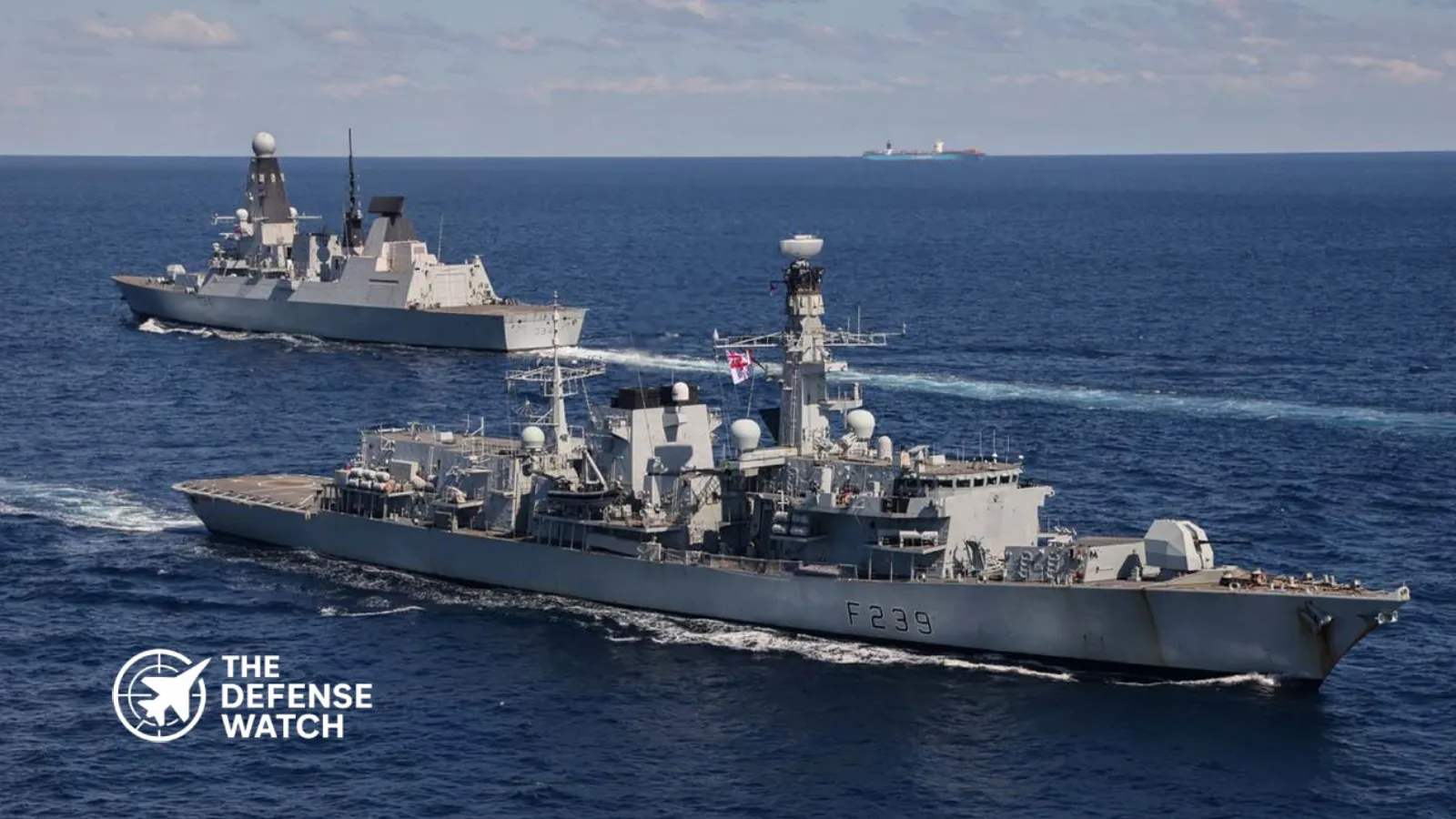
Royal Navy warship retirement
Image: Royal Navy
SHARE

Executive Summary:

The Royal Navy has confirmed the retirement of HMS Richmond, HMS Iron Duke, and HMS Chiddingfold as part of its long term fleet modernization strategy announced on July 13, 2026. The move redirects resources toward the introduction of Type 26 and Type 31 frigates while expanding the Royal Navy’s growing use of autonomous mine warfare systems.

Royal Navy Confirms Withdrawal Of Three Warships

The Royal Navy warship retirement program entered another significant phase after the service officially confirmed that HMS Richmond, HMS Iron Duke, and HMS Chiddingfold will leave active service. The announcement was made by the Royal Navy on July 13 as part of its broader transition toward what it describes as a “Hybrid Navy” combining conventional warships with autonomous maritime systems.

Contents
  • Royal Navy Confirms Withdrawal Of Three Warships
  • Which Ships Are Leaving Service?
  • Why The Royal Navy Is Retiring These Ships
  • Type 26 And Type 31 Will Replace The Type 23 Fleet
  • Autonomous Mine Warfare Replaces Traditional Minehunters
  • Strategic Analysis: What This Means For The Royal Navy
  • Looking Ahead

According to the Royal Navy, the decision reflects the increasing cost and technical risk associated with maintaining aging vessels that have served for more than three decades. Rather than continuing expensive life extension programs, the Ministry of Defence intends to shift investment toward newer platforms already under construction.

Which Ships Are Leaving Service?

The retirement includes two well known Type 23 Duke-class frigates and one Hunt-class mine countermeasures vessel.

ShipClassPrimary RoleReplacement
HMS RichmondType 23 FrigateAnti-submarine warfareType 26 City-class
HMS Iron DukeType 23 FrigateGeneral-purpose frigateType 31 Inspiration-class
HMS ChiddingfoldHunt-class MinehunterMine countermeasuresAutonomous mine hunting systems

Each vessel accumulated decades of operational service supporting NATO missions, maritime security operations, anti-submarine patrols, humanitarian assistance, and freedom of navigation deployments worldwide.

- Advertisement -

Why The Royal Navy Is Retiring These Ships

The retirement reflects a broader modernization effort rather than an isolated force reduction.

The Royal Navy stated that sustaining older Type 23 frigates has become increasingly expensive due to aging hulls, machinery, and maintenance requirements. Several vessels have already undergone extensive refits that consumed considerable time and funding while delivering diminishing operational returns.

For example, HMS Iron Duke previously completed a major refit valued at approximately £103 million, yet continued availability challenges highlighted the growing difficulty of extending the service life of aging frigates.

Instead, defense planners are prioritizing investment in modern platforms designed to remain operational well into the second half of the century.

Type 26 And Type 31 Will Replace The Type 23 Fleet

Britain’s future surface fleet centers on two complementary frigate classes.

The Type 26 City-class will become the Royal Navy’s premier anti-submarine warfare platform. Designed to protect carrier strike groups and monitor increasingly active submarine operations, the ships incorporate advanced sonar systems, quieter propulsion, and improved mission flexibility.

Meanwhile, the Type 31 Inspiration-class provides a more affordable general-purpose frigate optimized for maritime security, forward presence, escort duties, and international deployments.

The Royal Navy confirmed that HMS Richmond’s mission set will transition to the Type 26 fleet led by HMS Glasgow, while HMS Iron Duke’s responsibilities will eventually pass to the Type 31 class currently under construction.

- Advertisement -

Autonomous Mine Warfare Replaces Traditional Minehunters

Perhaps the most significant technological shift involves HMS Chiddingfold.

Rather than replacing the Hunt-class minehunter with another crewed vessel, the Royal Navy plans to rely increasingly on remotely operated and autonomous mine countermeasure systems.

These systems deploy unmanned surface vessels, underwater vehicles, and advanced sensors capable of detecting and neutralizing naval mines while keeping sailors farther from danger.

According to the Royal Navy, these technologies are already undergoing operational deployment and testing, representing a fundamental change in how mine warfare will be conducted during future naval operations.

Strategic Analysis: What This Means For The Royal Navy

The retirement of three additional vessels illustrates the difficult balance facing many Western navies between maintaining legacy fleets and funding modernization.

For the United Kingdom, the challenge is particularly acute because the retirement schedule is advancing while replacement ships are still entering service. This creates a temporary reduction in available hulls, especially among escort vessels, before the Type 26 and Type 31 fleets reach full operational strength.

From a strategic perspective, however, the Royal Navy is prioritizing long term capability over maintaining larger numbers of aging ships.

The transition also aligns with broader NATO trends emphasizing networked operations, autonomous systems, improved anti-submarine warfare, and distributed maritime capabilities. Similar modernization efforts are underway across several allied navies, including the United States, Australia, and Canada, as they prepare for increasingly contested maritime environments.

The UK’s Defence Investment Plan supports this approach through approximately £1.3 billion for the Hybrid Navy initiative and £1.1 billion for future mine hunting capabilities, complementing ongoing investment in Type 26 and Type 31 construction.

Although fleet numbers will remain under pressure during the transition period, British defense officials argue that the resulting force will be more capable, more survivable, and better suited to future maritime operations.

Looking Ahead

The retirement of HMS Richmond, HMS Iron Duke, and HMS Chiddingfold marks another milestone in the Royal Navy’s long planned transformation.

As the remaining Type 23 frigates gradually leave service over the coming years, the Royal Navy expects Type 26 and Type 31 frigates, supported by autonomous maritime systems, to become the foundation of Britain’s future surface fleet.

The transition underscores a broader shift among NATO navies toward technologically advanced, digitally connected, and increasingly unmanned maritime forces capable of operating across high threat environments.


TAGGED:Royal NavyType 23 Frigates
Share This Article
Facebook Copy Link Print
BySamuel Drake | Defense Analyst
Follow:
Samuel Drake is a defense analyst at TheDefenseWatch.com covering naval warfare, military ordnance, maritime technology, fleet modernization, and defense procurement. His reporting focuses on documented capabilities, procurement programs, and military technology.
Leave a Comment

Leave a Reply Cancel reply

Your email address will not be published. Required fields are marked *

New Arrivals

  • Boeing VC-25B Presidential Aircraft Boeing VC-25B Presidential Aircraft
  • SM-3 Block IB Missile SM-3 Block IB Missile
  • USS Abraham Lincoln Aircraft Carrier USS Abraham Lincoln Aircraft Carrier
  • M142 HIMARS M142 HIMARS
  • Terrex S5 Infantry Vehicle Terrex S5 Infantry Vehicle
  • A-29 Super Tucano Aircraft A-29 Super Tucano Aircraft
  • DSAR 15 Rifle DSAR 15 Rifle

Recent Compares

  • Tejas vs Gripen: Key Differences and Capabilities Tejas vs Gripen: Key Differences and Capabilities View Comparison →
  • Tejas vs MiG-21 Bison: How India Replaced Its Iconic Supersonic Fighter Tejas vs MiG-21 Bison: How India Replaced Its Iconic Supersonic Fighter View Comparison →
  • F-35 vs F-16: Stealth, Sensors and Combat Roles F-35 vs F-16: Stealth, Sensors and Combat Roles View Comparison →
  • Tejas Fighter Jet vs F-16 Fighting Falcon: Capability Compared Tejas Fighter Jet vs F-16 Fighting Falcon: Capability Compared View Comparison →
  • Rafale Fighter Jet vs F-16 Fighting Falcon : Which Fighter Has the Edge? Rafale Fighter Jet vs F-16 Fighting Falcon : Which Fighter Has the Edge? View Comparison →
  • Su-57 Fighter Jet vs J-20 Fighter Jet: Stealth and Air Combat Compared Su-57 Fighter Jet vs J-20 Fighter Jet: Stealth and Air Combat Compared View Comparison →
  • Mirage 2000 vs Tejas Mk1A: Legacy Combat Power vs Indigenous Modernization Mirage 2000 vs Tejas Mk1A: Legacy Combat Power vs Indigenous Modernization View Comparison →
  • Rafale Fighter Jet vs F-22 Raptor: Which Air Dominance Fighter Has the Edge? Rafale Fighter Jet vs F-22 Raptor: Which Air Dominance Fighter Has the Edge? View Comparison →
  • Tejas Fighter Jet vs. Rafale Fighter Jet: India’s Indigenous Fighter Meets France’s Proven Multirole Combat Aircraft Tejas Fighter Jet vs. Rafale Fighter Jet: India’s Indigenous Fighter Meets France’s Proven Multirole Combat Aircraft View Comparison →
  • F-22 Raptor vs. F-35 Joint Strike Fighter: Which Fifth Generation Fighter Has the Edge? F-22 Raptor vs. F-35 Joint Strike Fighter: Which Fifth Generation Fighter Has the Edge? View Comparison →

Recent Posts

  • USS Oregon Visits Norway as U.S. Navy Maintains High North Presence
  • Lockheed Martin Unveils PAC-3 Edge Interceptor for U.S. Army
  • Northrop Grumman Completes B-2 Spirit of Kitty Hawk Overhaul
  • Army Report Finds Systemic Failures Behind Fatal 2025 Midair Collision
  • Lockheed Martin to Supply Black Hawk Training Systems to Philippine Air Force

You Might Also Like

Arrowhead 120 frigate Sweden
Naval & MaritimeNaval Strategy & Maritime Security

Sweden Weighs Saab-Babcock Arrowhead 120 Frigate For Luleå-Class Surface Combatants

February 8, 2026
Nuclear Submarines
Naval & MaritimeSubmarines

Nuclear Submarines Explained: Silent Strength of the U.S. Navy

September 29, 2025
U.S. Iran blockade
Naval & MaritimeNaval Strategy & Maritime Security

U.S. Moves To Tighten Iran Blockade As 23 Ships Turn Back From Key Sea Lanes

April 19, 2026
Nuclear Submarines
Naval & MaritimeSubmarines

South Korea Moves To Acquire Nuclear-Powered Submarines As Regional Naval Competition Intensifies

September 7, 2026

Logo

Copyright © 2026 TheDefenseWatch.com

Helpful Links

  • Home
  • About Us
  • Privacy Policy
  • Terms of Use / Disclaimer
  • U.S. Privacy Notice – CCPA Compliance

Defense Systems

  • Defense Systems
  • Comparisons 
  • Manufacturer
  • Tactical Calculators

Popuplar

Which 5 Air Forces Possess the Costliest Fighter Jet Fleets in the World
Evolving Strategic Value: Carrier Strike Groups in the Indo-Pacific’s Future Security Architecture
Autonomous Weapon Systems Spark U.S. Ethics Debate Amid Rapid Military AI Integration

We report on developments involving military forces, governments, defense companies, research organizations, and security institutions around the world. 

Welcome Back!

Sign in to your account

Username or Email Address
Password

Lost your password?