• Home
  • About
  • Defense Systems
  • Manufacturer
  • Comparisons
  • Compare 
  • Tools
TheDefenseWatch.com
  • Aerospace & Aviation
  • Military & Ordnance
  • Naval & Maritime
  • Cyber & Space Defense
  • Policy & Strategy
  • Global News
  • Tools Library
    • Smart Calculator
    • Drone Flight Time Calculator
    • Drone Range Calculator
    • Counter-Drone Jammer Effective Range Calculator
    • Counter-Battery Radar Detection Calculator
    • Artillery Fire Correction Calculator
    • Thermal Camera Detection Range Calculator
    • Missile Range & Time-of-Flight Calculator
    • Radar Detection Range Calculator
    • FPV Strike Drone Payload vs Range Calculator
    • Loitering Munition Endurance Calculator
    • Sniper Ballistic Drop & Windage Calculator
    • Bullet Drop Calculator
    • U.S. Army Combat Fitness Test (ACFT) Calculator
    • Military Pension Calculator
    • Military Retirement Calculator
    • Military Pension Calculator
    • Large Number Calculator
Font ResizerAa

TheDefenseWatch.com

The Defense Watch | U.S. & Global Defense News, Analysis & Military Updates

Search
  • Home
  • About
  • Defense Systems
  • Manufacturer
  • Comparisons
  • Compare 
  • Tools

Stay Updated

Get the latest update

Subscribe

Explore

  • Drone
  • Fighter Jets & Military Aircraft
  • Hypersonic Weapons
  • Aircraft Carriers
  • Strategic History & Missions
  • Tools Library
Home » Boeing Moves MQ 25A Stingray Toward Carrier Operations As U.S. Navy Completes Second Test Flight
Aerospace & AviationDrones & UAVs

Boeing Moves MQ 25A Stingray Toward Carrier Operations As U.S. Navy Completes Second Test Flight

Daniel Mercer / Defense & Aerospace Analyst
Last updated: September 8, 2026 8:50 pm
Daniel Mercer / Defense & Aerospace Analyst
Share
7 Min Read
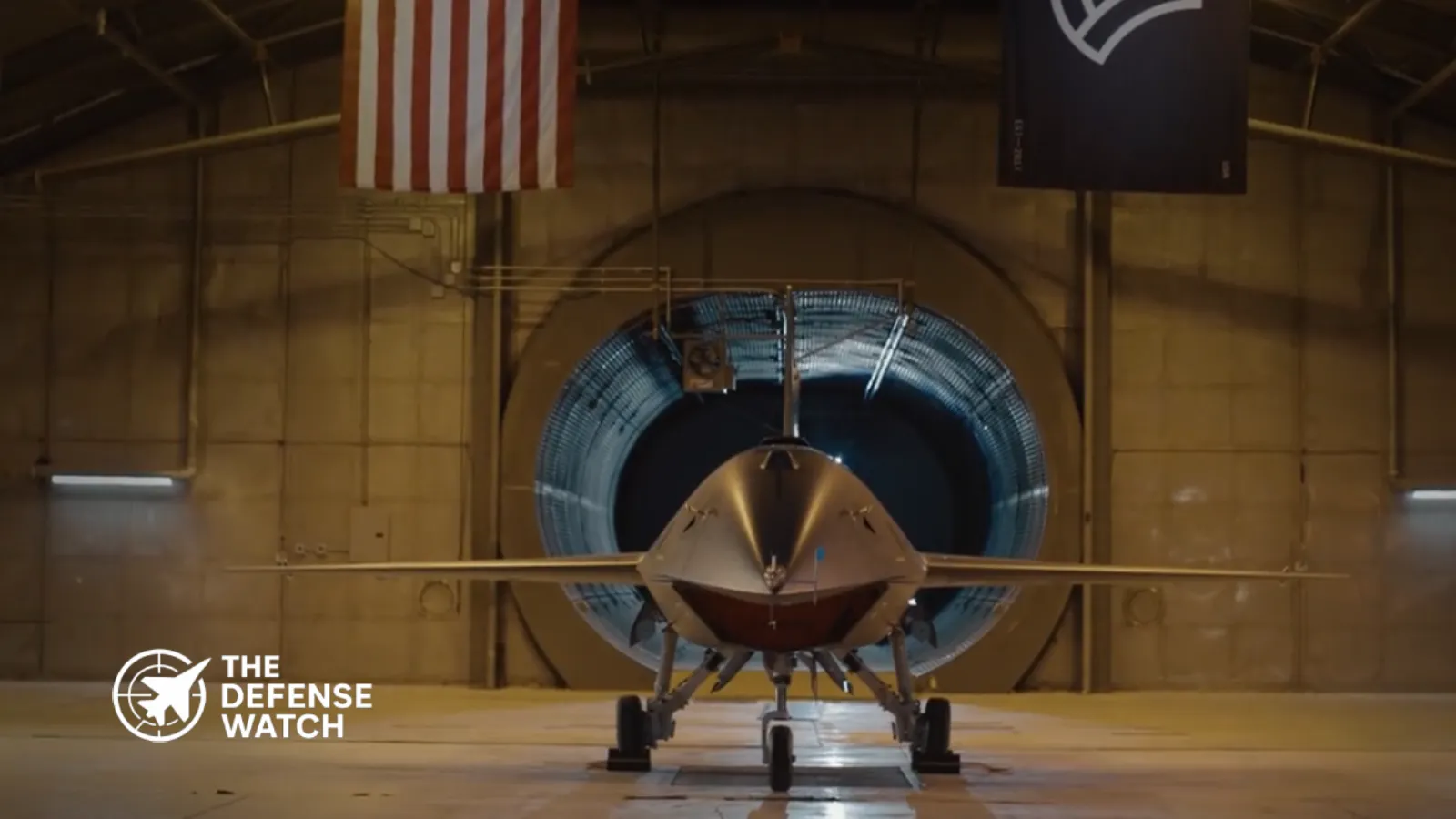
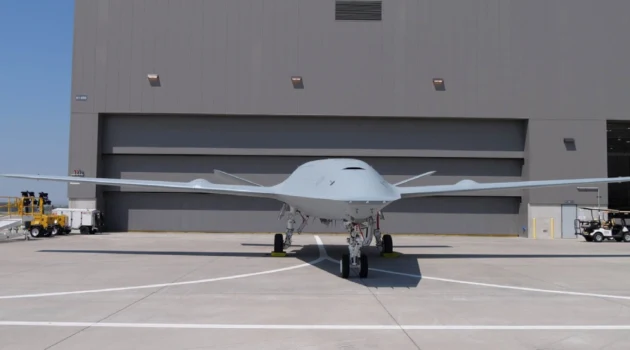
U.S. Navy MQ 25A Stingray
SHARE

Executive Summary:

Boeing announced that the U.S. Navy’s first production representative MQ 25A Stingray successfully completed its second developmental flight, marking another step toward carrier based operations. The milestone supports ongoing testing of the Navy’s first operational unmanned aerial refueling aircraft, which is expected to expand the combat reach and endurance of carrier air wings.

MQ 25A Stingray Advances U.S. Navy Carrier Aviation Modernization

Boeing’s MQ 25A Stingray has completed its second developmental flight, marking continued progress in the U.S. Navy’s effort to introduce its first carrier based unmanned aerial refueling aircraft into operational service. Boeing confirmed the successful test as part of the company’s ongoing flight test campaign supporting the Navy’s future carrier air wing modernization program.

Contents
  • MQ 25A Stingray Advances U.S. Navy Carrier Aviation Modernization
  • Second Flight Expands Developmental Test Campaign
  • Designed To Extend The Reach Of Carrier Air Wings
  • Reducing The Fighter Tanking Burden
  • Carrier Integration Remains The Critical Challenge
  • Why The MQ 25A Matters For U.S. Naval Strategy
  • Program Continues Toward Fleet Introduction

The flight involved the first production representative test aircraft, designated T1, and further validated aircraft performance following its initial flight earlier this year. According to Boeing, engineers collected additional flight data to verify aircraft handling characteristics and onboard system performance before expanding the flight envelope.

The MQ 25A represents one of the Navy’s most significant aviation modernization efforts in decades by introducing an autonomous aircraft specifically designed to conduct aerial refueling missions from aircraft carriers.

Second Flight Expands Developmental Test Campaign

The second flight focused on gathering engineering data needed to certify the aircraft for additional testing phases.

- Advertisement -

Boeing stated that the aircraft performed as expected throughout the mission while engineers monitored flight controls, propulsion systems, communications, and autonomous flight functions. Data collected during the sortie will support future developmental testing and eventual integration with carrier operations.

  • MQ-25A Stingray Drone

    MQ-25A Stingray Drone

    • Maximum Speed: High subsonic
    • Endurance: 12 plus hours
    • Operational Range: 500 plus nautical miles refueling radius
    • Payload Capacity: 15,000 lb fuel offload
    • View Details →
    8.0

    The company has been conducting ground evaluations, systems integration, and software validation in parallel with flight testing to reduce technical risks before operational demonstrations begin.

    Designed To Extend The Reach Of Carrier Air Wings

    Unlike previous unmanned aircraft developed primarily for intelligence or strike missions, the MQ 25A was designed from the outset as an aerial refueling platform.

    Its primary mission is to provide fuel to carrier based tactical aircraft, allowing fighters to operate farther from the carrier while reducing the amount of fuel carried during launch.

    Key operational objectives include:

    CapabilityOperational Benefit
    Carrier based aerial refuelingExtends combat radius of carrier aircraft
    Autonomous flight operationsReduces pilot workload and increases mission flexibility
    Deck compatible designIntegrates with existing aircraft carrier operations
    Networked mission systemsSupports future naval aviation networking and mission planning

    The aircraft is expected to refuel platforms including the F/A 18E/F Super Hornet, EA 18G Growler, and eventually the F-35C Lightning II, allowing those aircraft to dedicate more time to combat missions instead of tanker duties.

    Reducing The Fighter Tanking Burden

    For years, the U.S. Navy has relied heavily on F/A 18 Super Hornets equipped with external fuel tanks to perform “buddy tanking” missions.

    Although effective, this practice consumes valuable flight hours from frontline strike fighters while accelerating wear on expensive combat aircraft.

    The MQ 25A is intended to assume much of that refueling workload.

    Once operational, Super Hornets can return to their primary strike, air superiority, and fleet defense missions rather than serving as dedicated tankers. This shift is expected to improve aircraft availability across deployed carrier strike groups.

    Carrier Integration Remains The Critical Challenge

    While flight testing demonstrates continued technical progress, integrating an autonomous aircraft into daily carrier operations remains one of the program’s most demanding phases.

    Operating from an aircraft carrier requires precision launch and recovery procedures, coordination with manned aircraft, and reliable autonomous navigation within one of the world’s most complex aviation environments.

    Future testing will continue evaluating:

    • Catapult launch compatibility
    • Arrested carrier landings
    • Deck handling procedures
    • Autonomous mission management
    • Secure communications with carrier battle groups
    • Integration with carrier air traffic control systems

    Successfully demonstrating these capabilities will be essential before the aircraft enters operational fleet service.

    Why The MQ 25A Matters For U.S. Naval Strategy

    The MQ 25A is more than a replacement for current aerial refueling practices. It represents a broader transition toward integrating autonomous systems across naval aviation.

    • MQ-25A Stingray Drone

      MQ-25A Stingray Drone

      • Maximum Speed: High subsonic
      • Endurance: 12 plus hours
      • Operational Range: 500 plus nautical miles refueling radius
      • Payload Capacity: 15,000 lb fuel offload
      • View Details →
      8.0

      As potential adversaries field increasingly capable long range anti access and area denial (A2/AD) systems, U.S. aircraft carriers may need to operate farther from contested coastlines.

      That greater operating distance places additional demands on carrier aircraft, particularly fighters conducting long range strike or air defense missions.

      An organic carrier based tanker helps address this challenge by extending aircraft range without requiring land based tanker support. This provides carrier strike groups with greater operational independence during high intensity maritime operations.

      The aircraft also serves as a technological foundation for future carrier based autonomous systems. Lessons learned from the MQ 25A program are expected to inform future unmanned reconnaissance, electronic warfare, logistics, and potentially combat aircraft designed to operate alongside crewed naval aviation platforms.

      Program Continues Toward Fleet Introduction

      The second successful flight represents another incremental milestone rather than the program’s final objective.

      Boeing and the U.S. Navy will continue developmental testing, systems verification, and carrier integration activities before low rate production aircraft enter operational evaluation.

      As testing progresses, the MQ 25A remains central to the Navy’s long term vision of combining crewed and autonomous aircraft within future carrier air wings, improving operational reach while preserving the service life of its frontline fighter fleet.

      Although significant testing remains ahead, the latest flight demonstrates steady progress toward delivering a new capability that could reshape how carrier aviation supports sustained operations in contested maritime environments.
TAGGED:BoeingMQ-25A Stingray
Share This Article
Facebook Copy Link Print
ByDaniel Mercer / Defense & Aerospace Analyst
Follow:
Daniel Mercer is a defense and aerospace analyst at TheDefenseWatch.com covering military aviation, aerospace technology, unmanned systems, air warfare, and defense procurement. His reporting uses official documents, government and military statements, company announcements, and other public sources.
Leave a Comment

Leave a Reply Cancel reply

Your email address will not be published. Required fields are marked *

New Arrivals

  • Boeing VC-25B Presidential Aircraft Boeing VC-25B Presidential Aircraft
  • SM-3 Block IB Missile SM-3 Block IB Missile
  • USS Abraham Lincoln Aircraft Carrier USS Abraham Lincoln Aircraft Carrier
  • M142 HIMARS M142 HIMARS
  • Terrex S5 Infantry Vehicle Terrex S5 Infantry Vehicle
  • A-29 Super Tucano Aircraft A-29 Super Tucano Aircraft
  • DSAR 15 Rifle DSAR 15 Rifle

Recent Compares

  • Tejas vs Gripen: Key Differences and Capabilities Tejas vs Gripen: Key Differences and Capabilities View Comparison →
  • Tejas vs MiG-21 Bison: How India Replaced Its Iconic Supersonic Fighter Tejas vs MiG-21 Bison: How India Replaced Its Iconic Supersonic Fighter View Comparison →
  • F-35 vs F-16: Stealth, Sensors and Combat Roles F-35 vs F-16: Stealth, Sensors and Combat Roles View Comparison →
  • Tejas Fighter Jet vs F-16 Fighting Falcon: Capability Compared Tejas Fighter Jet vs F-16 Fighting Falcon: Capability Compared View Comparison →
  • Rafale Fighter Jet vs F-16 Fighting Falcon : Which Fighter Has the Edge? Rafale Fighter Jet vs F-16 Fighting Falcon : Which Fighter Has the Edge? View Comparison →
  • Su-57 Fighter Jet vs J-20 Fighter Jet: Stealth and Air Combat Compared Su-57 Fighter Jet vs J-20 Fighter Jet: Stealth and Air Combat Compared View Comparison →
  • Mirage 2000 vs Tejas Mk1A: Legacy Combat Power vs Indigenous Modernization Mirage 2000 vs Tejas Mk1A: Legacy Combat Power vs Indigenous Modernization View Comparison →
  • Rafale Fighter Jet vs F-22 Raptor: Which Air Dominance Fighter Has the Edge? Rafale Fighter Jet vs F-22 Raptor: Which Air Dominance Fighter Has the Edge? View Comparison →
  • Tejas Fighter Jet vs. Rafale Fighter Jet: India’s Indigenous Fighter Meets France’s Proven Multirole Combat Aircraft Tejas Fighter Jet vs. Rafale Fighter Jet: India’s Indigenous Fighter Meets France’s Proven Multirole Combat Aircraft View Comparison →
  • F-22 Raptor vs. F-35 Joint Strike Fighter: Which Fifth Generation Fighter Has the Edge? F-22 Raptor vs. F-35 Joint Strike Fighter: Which Fifth Generation Fighter Has the Edge? View Comparison →

Recent Posts

  • USS Oregon Visits Norway as U.S. Navy Maintains High North Presence
  • Lockheed Martin Unveils PAC-3 Edge Interceptor for U.S. Army
  • Northrop Grumman Completes B-2 Spirit of Kitty Hawk Overhaul
  • Army Report Finds Systemic Failures Behind Fatal 2025 Midair Collision
  • Lockheed Martin to Supply Black Hawk Training Systems to Philippine Air Force

You Might Also Like

Germany first F-35A
Aerospace & AviationFighter Jets & Military Aircraft

Germany’s First F-35A Takes Shape As Lockheed Martin Installs F135 Engine For Luftwaffe Fleet

September 7, 2026
US F-35 pilot arrested
Aerospace & AviationFighter Jets & Military Aircraft

Canada Keeps 72 Additional F-35s Under Review as U.S. Trade Tensions Escalate

September 7, 2026
Anduril Fury FQ-44
Aerospace & AviationDrones & UAVs

Anduril Moves To Produce Fury FQ-44 Drone Fighter As U.S. Air Force Expands Collaborative Combat Aircraft Program

September 8, 2026
New British military helicopter
Aerospace & AviationFighter Jets & Military Aircraft

New British Military Helicopter Set To Enter Service In 2031 Under NMH Program

September 7, 2026

Logo

Copyright © 2026 TheDefenseWatch.com

Helpful Links

  • Home
  • About Us
  • Privacy Policy
  • Terms of Use / Disclaimer
  • U.S. Privacy Notice – CCPA Compliance

Defense Systems

  • Defense Systems
  • Comparisons 
  • Manufacturer
  • Tactical Calculators

Popuplar

Which 5 Air Forces Possess the Costliest Fighter Jet Fleets in the World
Evolving Strategic Value: Carrier Strike Groups in the Indo-Pacific’s Future Security Architecture
Autonomous Weapon Systems Spark U.S. Ethics Debate Amid Rapid Military AI Integration

We report on developments involving military forces, governments, defense companies, research organizations, and security institutions around the world. 

Welcome Back!

Sign in to your account

Username or Email Address
Password

Lost your password?