• Home
  • About
  • Defense Systems
  • Manufacturer
  • Comparisons
  • Compare 
  • Tools
TheDefenseWatch.com
  • Aerospace & Aviation
  • Military & Ordnance
  • Naval & Maritime
  • Cyber & Space Defense
  • Policy & Strategy
  • Global News
  • Tools Library
    • Smart Calculator
    • Drone Flight Time Calculator
    • Drone Range Calculator
    • Counter-Drone Jammer Effective Range Calculator
    • Counter-Battery Radar Detection Calculator
    • Artillery Fire Correction Calculator
    • Thermal Camera Detection Range Calculator
    • Missile Range & Time-of-Flight Calculator
    • Radar Detection Range Calculator
    • FPV Strike Drone Payload vs Range Calculator
    • Loitering Munition Endurance Calculator
    • Sniper Ballistic Drop & Windage Calculator
    • Bullet Drop Calculator
    • U.S. Army Combat Fitness Test (ACFT) Calculator
    • Military Pension Calculator
    • Military Retirement Calculator
    • Military Pension Calculator
    • Large Number Calculator
Font ResizerAa

TheDefenseWatch.com

The Defense Watch | U.S. & Global Defense News, Analysis & Military Updates

Search
  • Home
  • About
  • Defense Systems
  • Manufacturer
  • Comparisons
  • Compare 
  • Tools

Stay Updated

Get the latest update

Subscribe

Explore

  • Drone
  • Fighter Jets & Military Aircraft
  • Hypersonic Weapons
  • Aircraft Carriers
  • Strategic History & Missions
  • Tools Library
Home » U.S. Space Force Expands Rapid Space Response Capability As VICTUS HAZE Begins On Orbit Operations
Cyber & Space Defense

U.S. Space Force Expands Rapid Space Response Capability As VICTUS HAZE Begins On Orbit Operations

Daniel Mercer / Defense & Aerospace Analyst
Last updated: September 9, 2026 1:50 pm
Daniel Mercer / Defense & Aerospace Analyst
Share
2 Min Read
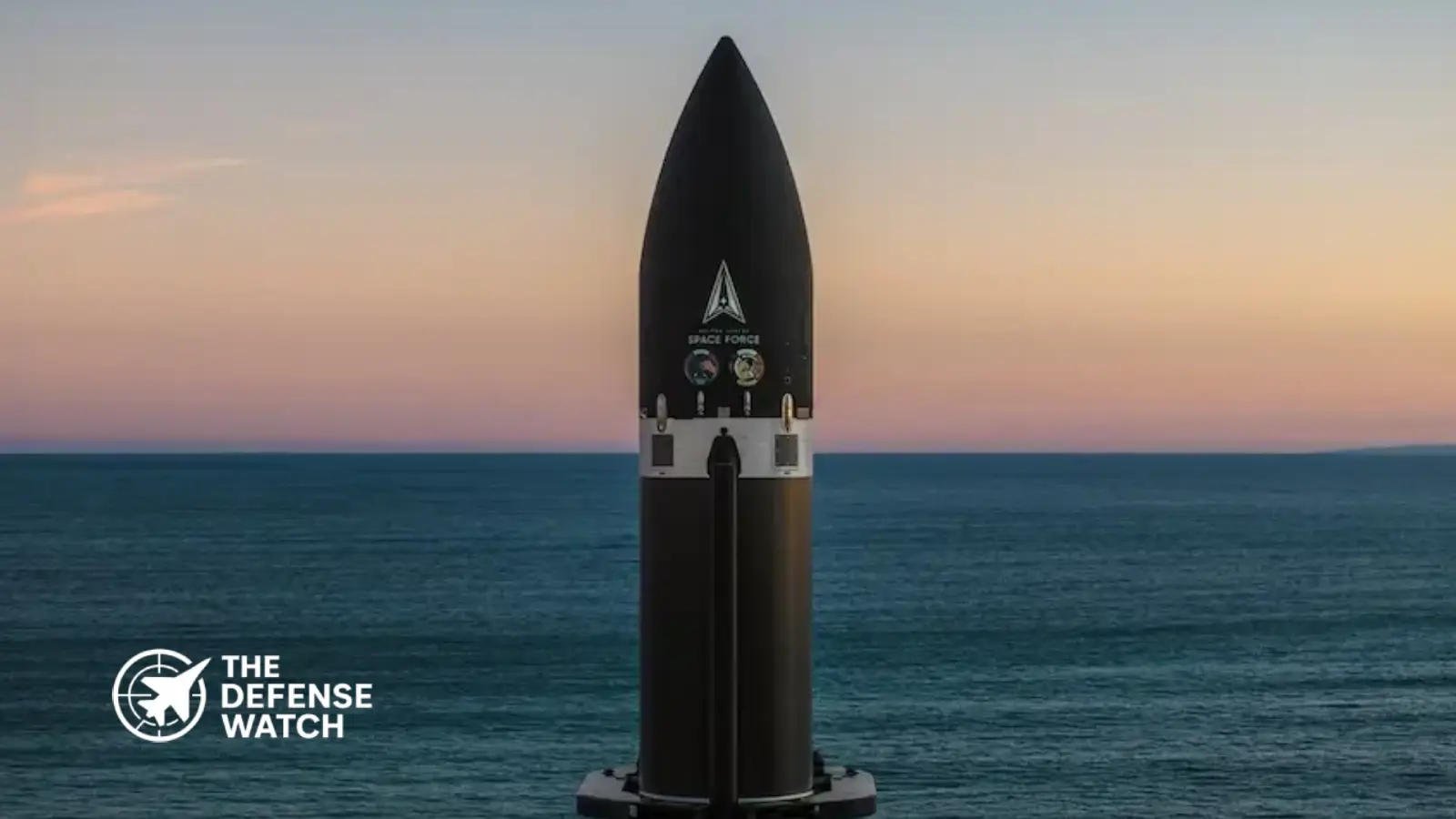
VICTUS HAZE mission
Image: U.S. Air Force.
SHARE

Executive Summary:

The U.S. Space Force has successfully demonstrated a new level of tactically responsive space operations through the VICTUS HAZE mission. Rocket Lab launched and deployed a spacecraft within 16 hours and 42 minutes of receiving a launch order, while on orbit operations involving Rocket Lab and True Anomaly vehicles are now underway to test rapid response and space domain awareness capabilities.

U.S. Space Force Demonstrates VICTUS HAZE Responsive Launch Capability

The VICTUS HAZE mission has entered a new phase as the U.S. Space Force transitions from rapid launch execution to active on orbit operations, marking a significant milestone in the service’s Tactically Responsive Space (TacRS) initiative. According to Space Systems Command and mission partners, the operation demonstrated the ability to rapidly deploy and activate space assets in response to emerging operational requirements.

Contents
U.S. Space Force Demonstrates VICTUS HAZE Responsive Launch CapabilityMission Moves From Launch To Orbital OperationsWhy VICTUS HAZE MattersGrowing Importance Of Responsive Space Operations

Rocket Lab successfully launched its Electron rocket carrying a Pioneer-class spacecraft for the mission after receiving a Notice to Launch from the U.S. Space Force. The company completed the launch just 16 hours and 42 minutes after receiving the order, establishing a new benchmark for responsive launch operations and surpassing the previous TacRS record by more than ten hours.

The launch took place from Rocket Lab’s Launch Complex 1 in New Zealand on June 19, deploying the spacecraft into low Earth orbit for the next stage of the exercise.

Mission Moves From Launch To Orbital Operations

With the launch phase complete, the focus has shifted to orbital activities designed to test advanced space domain awareness and rendezvous capabilities.

- Advertisement -

The Rocket Lab-built Pioneer spacecraft has completed commissioning and begun conducting Rendezvous and Proximity Operations (RPO), a highly specialized mission set involving the approach, observation, and characterization of another spacecraft in orbit. The operation is intended to simulate real-world responses to potential threats or unusual activity in space.

According to mission information released by Rocket Lab and Space Systems Command, Pioneer will maneuver near a second spacecraft and gather imagery and operational data in near real time. These activities are intended to evaluate how quickly military and commercial operators can identify and characterize objects in orbit during a crisis scenario.

The counterpart spacecraft involved in the exercise is True Anomaly’s Jackal Autonomous Orbital Vehicle, which serves as the target vehicle during portions of the mission’s proximity operations.

Why VICTUS HAZE Matters

The VICTUS HAZE mission represents more than a launch speed record. It is part of a broader effort by the U.S. Space Force to establish operationally relevant procedures for responding to threats in orbit on timelines measured in hours rather than months or years.

Space Systems Command has spent several years refining the TacRS concept through exercises and demonstrations designed to shorten launch preparation timelines and improve coordination between government and commercial providers. The objective is to ensure that critical space capabilities can be fielded rapidly when national security requirements demand it.

An important aspect of VICTUS HAZE is that Rocket Lab provided an end to end capability, including spacecraft design, manufacturing, launch services, and mission operations. This integrated approach reduces coordination complexity and may offer a model for future responsive space missions.

From an operational perspective, the ability to rapidly launch a satellite, place it into a specific orbit, and immediately begin proximity operations enhances U.S. capabilities in space domain awareness. Such capabilities can support the monitoring of potentially hostile or unidentified spacecraft and improve understanding of activity in increasingly congested orbital environments.

Growing Importance Of Responsive Space Operations

The mission arrives as military planners place greater emphasis on resilience and agility in space. Potential adversaries continue to expand their space capabilities, increasing demand for systems that can be deployed quickly and operate flexibly in contested environments.

- Advertisement -

VICTUS HAZE demonstrates that commercial launch providers and spacecraft manufacturers can support military timelines that were previously considered extremely difficult to achieve. The mission also validates processes for rapidly activating spacecraft and conducting complex orbital maneuvers shortly after launch.

The successful transition from responsive launch to active orbital operations suggests that future TacRS missions could play an increasingly important role in maintaining U.S. space readiness and operational flexibility. While the current exercise remains a demonstration, it provides valuable data that could shape future Space Force acquisition strategies and operational concepts.


TAGGED:Cyber & Space DefenseGlobal NewsSpace Assets & Satellites
Share This Article
Facebook Copy Link Print
ByDaniel Mercer / Defense & Aerospace Analyst
Follow:
Daniel Mercer is a defense and aerospace analyst at TheDefenseWatch.com covering military aviation, aerospace technology, unmanned systems, air warfare, and defense procurement. His reporting uses official documents, government and military statements, company announcements, and other public sources.
Leave a Comment

Leave a Reply Cancel reply

Your email address will not be published. Required fields are marked *

Search Defense Systems

Latest Defense Systems

  • F-47A Fighter Jet F-47A Fighter Jet
  • China DF-61 Missile China DF-61 Missile
  • B61 Nuclear Bomb B61 Nuclear Bomb
  • Japan E-767 Airborne Japan E-767 Airborne
  • Remington 870 Shotgun Remington 870 Shotgun
  • RUTA B1 Cruise Missile RUTA B1 Cruise Missile
  • XQ-67A Drone XQ-67A Drone
  • B-25 Mitchell Bomber B-25 Mitchell Bomber
  • F-100 Super Sabre F-100 Super Sabre

Recent Compares

  • J-10C vs JF-17 Thunder: Which Fighter Is More Capable? J-10C vs JF-17 Thunder: Which Fighter Is More Capable? View Comparison →
  • Tejas vs Gripen: Key Differences and Capabilities Tejas vs Gripen: Key Differences and Capabilities View Comparison →
  • Tejas vs MiG-21 Bison: How India Replaced Its Iconic Supersonic Fighter Tejas vs MiG-21 Bison: How India Replaced Its Iconic Supersonic Fighter View Comparison →
  • F-35 vs F-16: Stealth, Sensors and Combat Roles F-35 vs F-16: Stealth, Sensors and Combat Roles View Comparison →
  • Tejas Fighter Jet vs F-16 Fighting Falcon: Capability Compared Tejas Fighter Jet vs F-16 Fighting Falcon: Capability Compared View Comparison →
  • Rafale Fighter Jet vs F-16 Fighting Falcon : Which Fighter Has the Edge? Rafale Fighter Jet vs F-16 Fighting Falcon : Which Fighter Has the Edge? View Comparison →
  • Su-57 Fighter Jet vs J-20 Fighter Jet: Stealth and Air Combat Compared Su-57 Fighter Jet vs J-20 Fighter Jet: Stealth and Air Combat Compared View Comparison →
  • Mirage 2000 vs Tejas Mk1A: Legacy Combat Power vs Indigenous Modernization Mirage 2000 vs Tejas Mk1A: Legacy Combat Power vs Indigenous Modernization View Comparison →
  • Rafale Fighter Jet vs F-22 Raptor: Which Air Dominance Fighter Has the Edge? Rafale Fighter Jet vs F-22 Raptor: Which Air Dominance Fighter Has the Edge? View Comparison →
  • Tejas Fighter Jet vs. Rafale Fighter Jet: India’s Indigenous Fighter Meets France’s Proven Multirole Combat Aircraft Tejas Fighter Jet vs. Rafale Fighter Jet: India’s Indigenous Fighter Meets France’s Proven Multirole Combat Aircraft View Comparison →

Recent Posts

  • USA vs China Military: Comparing Global Military Power in 2026
  • USA vs UK Army: How U.S. and British Ground Forces Compare in 2026
  • Saab Wins SEK 2 Billion Contract to Equip Sweden’s Four New FDI Frigates
  • F-47 Fighter May Fly With Interim Engine as Next-Generation Propulsion Program Falls Behind Schedule
  • UK Says F-35 Agreement Guarantees Access to U.S. Support System

You Might Also Like

L3Harris Next Generation Jammer Low Band
Cyber & Space DefenseDefense Contracts

L3Harris Wins $876 Million Navy Award for Next Generation Jammer Low Band

October 20, 2026
military satellites
Cyber & Space Defense

The New Space Race: Military Satellite Dominance – U.S., Russia & China Compete Beyond Earth

September 8, 2026
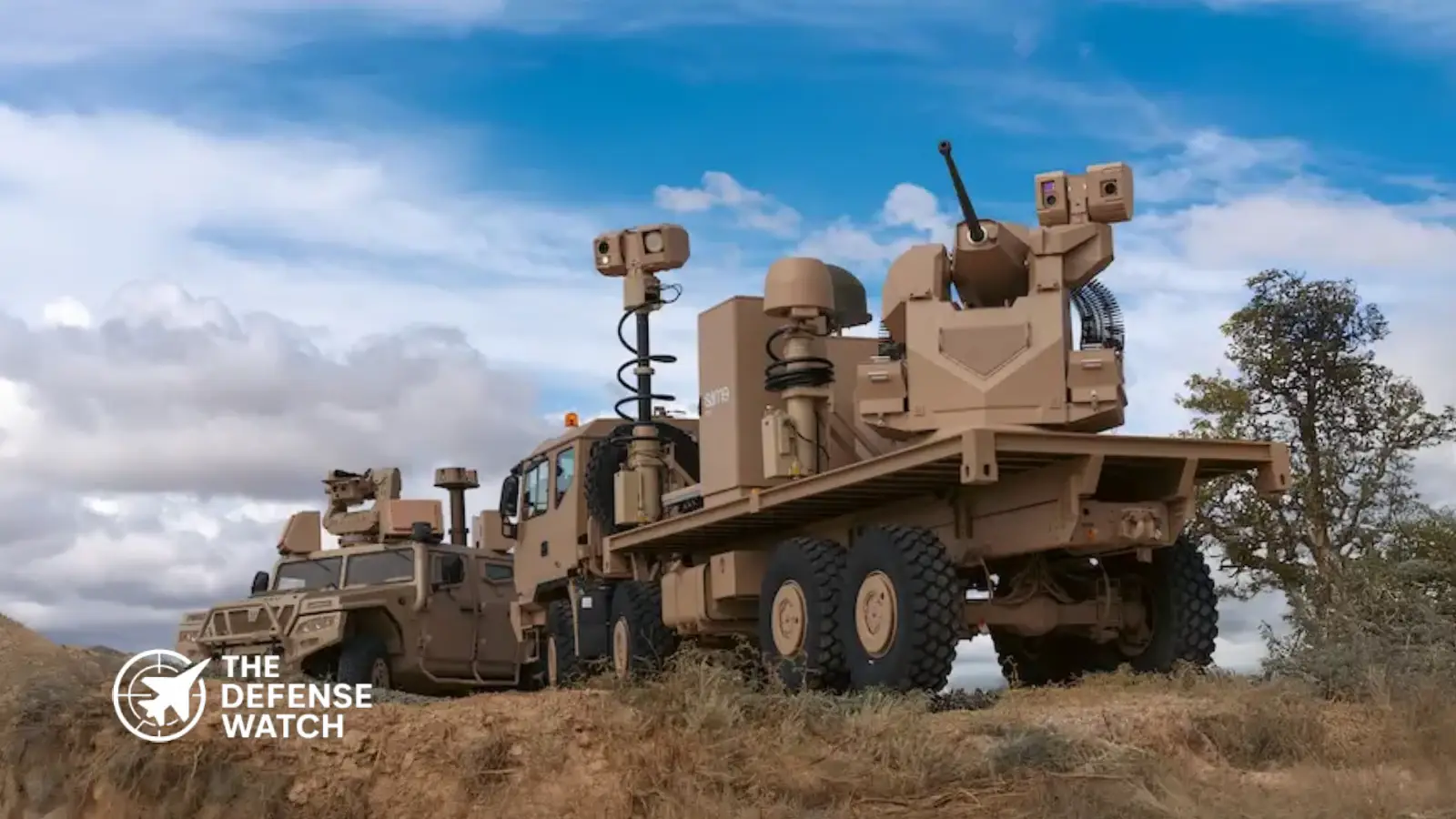
EM&E Group's ODIN-I counter-UAS vehicle equipped with sensors, electronic warfare systems, and a 30 mm remote weapon station during field operations.
AI & Electronic WarfareCyber & Space Defense

EM&E Group Unveils ODIN Integrated C-UAS System To Counter Evolving Drone Threats

September 7, 2026
Hanwha Aerospace credit rating
Asian Defense & SecurityDefense Contracts

Hanwha Aerospace Secures First S&P Global A+ Credit Rating As Defense Exports Drive Record Backlog

September 7, 2026

Logo

Copyright © 2026 TheDefenseWatch.com

Helpful Links

  • Home
  • About Us
  • Privacy Policy
  • Terms of Use / Disclaimer
  • U.S. Privacy Notice – CCPA Compliance

Defense Systems

  • Defense Systems
  • Comparisons 
  • Manufacturer
  • Tactical Calculators

Popuplar

Which 5 Air Forces Possess the Costliest Fighter Jet Fleets in the World
Evolving Strategic Value: Carrier Strike Groups in the Indo-Pacific’s Future Security Architecture
Autonomous Weapon Systems Spark U.S. Ethics Debate Amid Rapid Military AI Integration

We report on developments involving military forces, governments, defense companies, research organizations, and security institutions around the world. 

Welcome Back!

Sign in to your account

Username or Email Address
Password

Lost your password?