• Home
  • About
  • Defense Systems
  • Manufacturer
  • Comparisons
  • Compare 
  • Tools
TheDefenseWatch.com
  • Aerospace & Aviation
  • Military & Ordnance
  • Naval & Maritime
  • Cyber & Space Defense
  • Policy & Strategy
  • Global News
  • Tools Library
    • Smart Calculator
    • Drone Flight Time Calculator
    • Drone Range Calculator
    • Counter-Drone Jammer Effective Range Calculator
    • Counter-Battery Radar Detection Calculator
    • Artillery Fire Correction Calculator
    • Thermal Camera Detection Range Calculator
    • Missile Range & Time-of-Flight Calculator
    • Radar Detection Range Calculator
    • FPV Strike Drone Payload vs Range Calculator
    • Loitering Munition Endurance Calculator
    • Sniper Ballistic Drop & Windage Calculator
    • Bullet Drop Calculator
    • U.S. Army Combat Fitness Test (ACFT) Calculator
    • Military Pension Calculator
    • Military Retirement Calculator
    • Military Pension Calculator
    • Large Number Calculator
Font ResizerAa

TheDefenseWatch.com

The Defense Watch | U.S. & Global Defense News, Analysis & Military Updates

Search
  • Home
  • About
  • Defense Systems
  • Manufacturer
  • Comparisons
  • Compare 
  • Tools

Stay Updated

Get the latest update

Subscribe

Explore

  • Drone
  • Fighter Jets & Military Aircraft
  • Hypersonic Weapons
  • Aircraft Carriers
  • Strategic History & Missions
  • Tools Library
Home » Pakistan Navy Commissions Chinese-Built Hangor-Class Submarine, Bolstering Maritime Deterrence
Naval & MaritimeSubmarines

Pakistan Navy Commissions Chinese-Built Hangor-Class Submarine, Bolstering Maritime Deterrence

Kaleem Sheikh | Regional Defense Correspondent
Last updated: September 12, 2026 4:20 pm
Kaleem Sheikh | Regional Defense Correspondent
Share
2 Min Read
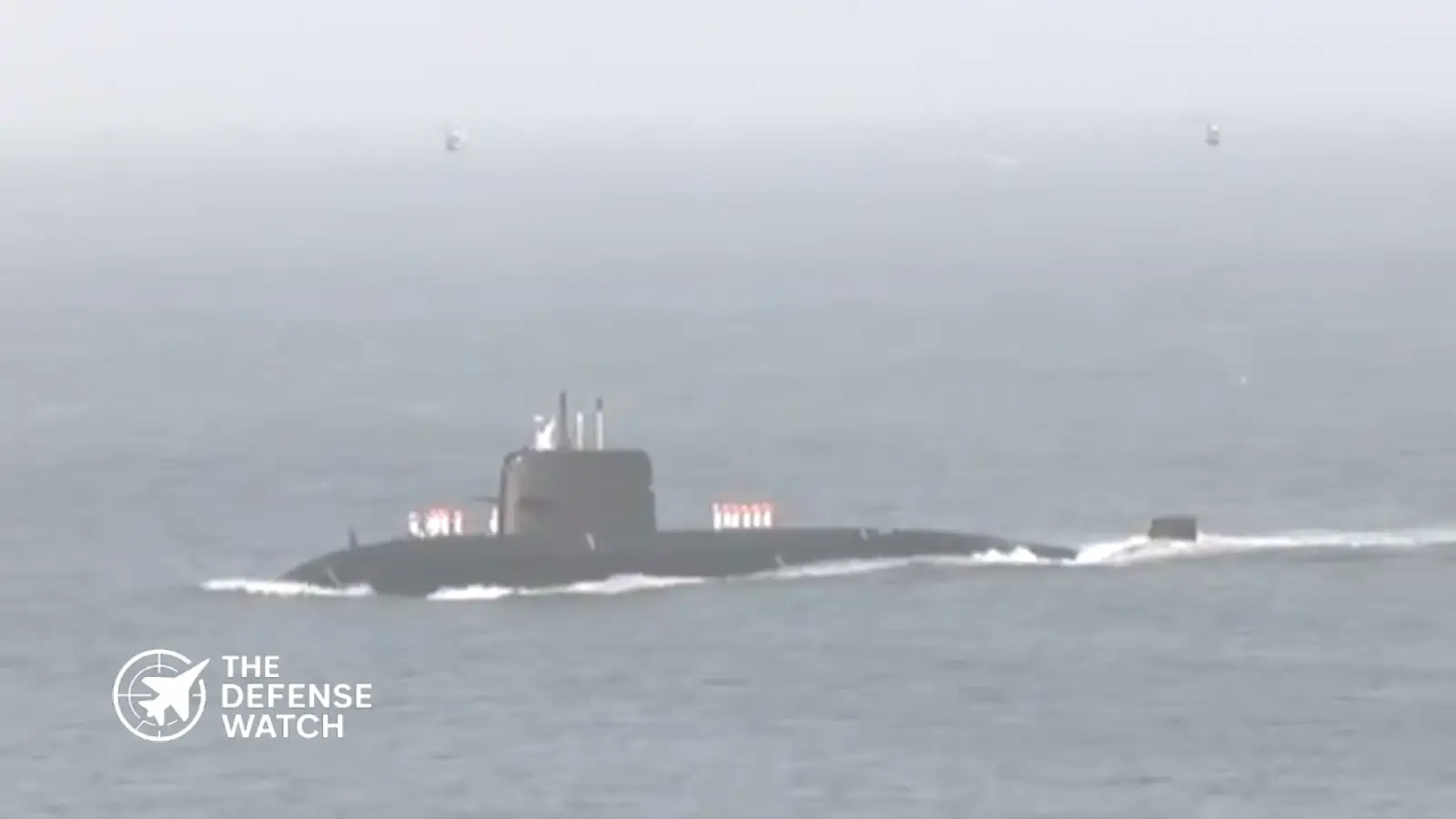
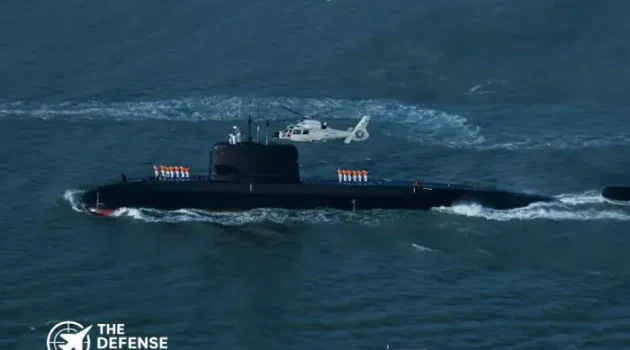
Pakistan Hangor submarine
SHARE

Executive Summary:

President Asif Ali Zardari joined Pakistan Navy leadership in Sanya, China, on April 30, 2026, for the commissioning of PNS/M Hangor, the first of the Hangor-class diesel-electric attack submarines. The vessel represents a key element of Pakistan’s naval modernization program under a major deal with China. The induction strengthens Pakistan’s maritime defense posture amid regional security dynamics in the Indian Ocean.

(adsbygoogle = window.adsbygoogle || []).push({});

The Pakistan Navy has formally commissioned PNS/M Hangor, its first Hangor-class submarine, marking a significant advancement in its undersea warfare capabilities. President Asif Ali Zardari, who attended the ceremony in Sanya, China, as chief guest, described the event as a historic milestone that enhances Pakistan’s maritime defense.

Contents
Program Background and Technical CapabilitiesStrategic Context and Regional ImplicationsPakistan-China Defense TiesOperational Path Forward

This development is part of a broader eight-submarine program initiated in 2015, underscoring the deepening strategic partnership between Pakistan and China in defense technology transfer and production.

  • Hangor-Class Submarine

    Hangor-Class Submarine

    • Power: Diesel-electric with Air Independent Propulsion (AIP)
    • Stealth: Anechoic coating, reduced acoustic signature
    • Weapons: Torpedoes, anti-ship missiles, naval mines
    • Sensors: Advanced sonar suite, radar, electronic warfare systems
    • View Details →
    7.8
    (adsbygoogle = window.adsbygoogle || []).push({});

    Program Background and Technical Capabilities

    The Hangor-class submarines are an export derivative of China’s Type 039A (Yuan-class) design, adapted for Pakistan Navy requirements. Built by China Shipbuilding & Offshore International Co. Ltd (CSOC), the lead boat PNS Hangor was launched in April 2024 and commissioned on April 30, 2026.

    Key specifications include:

    • Displacement: Approximately 2,800 tons
    • Length: 76 meters
    • Propulsion: Diesel-electric with Stirling air-independent propulsion (AIP) system
    • Speed: Up to 20 knots
    • Range: Around 8,500 nautical miles
    • Crew: Approximately 36

    The AIP system allows extended submerged operations, improving stealth and endurance compared to older conventional submarines. Armament is expected to include heavyweight torpedoes and anti-ship cruise missiles launched from six 533mm torpedo tubes, though specific Pakistani configurations remain classified.

    (adsbygoogle = window.adsbygoogle || []).push({});

    Four submarines are being constructed in China, with the remaining four to be built in Pakistan at Karachi Shipyard & Engineering Works under a technology transfer agreement. This aims to develop indigenous submarine construction expertise.

    Strategic Context and Regional Implications

    Pakistan operates a mixed submarine fleet, including aging Agosta-class boats. The Hangor program addresses capability gaps by introducing modern, quieter vessels with improved underwater endurance. This enhances Pakistan’s ability to secure sea lines of communication, deter potential adversaries, and protect its exclusive economic zone.

    The commissioning occurs against the backdrop of ongoing naval modernization efforts in South Asia. India operates a larger and more diverse submarine fleet, including nuclear-powered vessels, prompting Pakistan to seek asymmetric advantages through advanced conventional submarines.

    Original Analysis: From a U.S. perspective, the Hangor program exemplifies China’s growing role as a submarine exporter and technology provider. By enabling co-production, Beijing not only strengthens a key partner but also gains valuable operational feedback on its designs in real-world conditions. For Pakistan, the deal represents one of its largest defense procurements, estimated at $4-5 billion, and supports broader goals of self-reliance in naval platforms.

    • Hangor-Class Submarine

      Hangor-Class Submarine

      • Power: Diesel-electric with Air Independent Propulsion (AIP)
      • Stealth: Anechoic coating, reduced acoustic signature
      • Weapons: Torpedoes, anti-ship missiles, naval mines
      • Sensors: Advanced sonar suite, radar, electronic warfare systems
      • View Details →
      7.8
      (adsbygoogle = window.adsbygoogle || []).push({});

      This partnership fits into wider China-Pakistan military cooperation, which includes Type 054A/P frigates and other systems. It contributes to a more capable Pakistan Navy that can operate effectively in contested waters, potentially complicating future contingency planning for regional powers. However, integration, training, and maintenance challenges will be critical factors in realizing full operational potential.

      Pakistan-China Defense Ties

      President Zardari thanked the Government and people of China for their cooperation, emphasizing that the Hangor program reflects the enduring strategic partnership between the two nations. The ceremony was also attended by Pakistan’s Chief of the Naval Staff, Admiral Naveed Ashraf.

      Chinese officials have described the cooperation as standard defense collaboration. The program builds on decades of bilateral ties, with China providing platforms, technology transfer, and support for Pakistan’s defense industrialization.

      (adsbygoogle = window.adsbygoogle || []).push({});

      Operational Path Forward

      Following commissioning, PNS Hangor has conducted port visits, including stops in Malaysia and Sri Lanka, before arriving in Pakistan. Subsequent vessels in the class are progressing through construction and trials, with the program targeting full delivery by the late 2020s.

      The Pakistan Navy is expected to focus on crew training, doctrine development, and integration of the new submarines into its fleet operations to maximize their contribution to maritime security.
TAGGED:Naval ModernizationPakistan-China Defensesubmarines
Share This Article
Facebook Copy Link Print
ByKaleem Sheikh | Regional Defense Correspondent
Follow:
Kaleem Sheikh is a regional defense correspondent at TheDefenseWatch.com covering defense and security developments across Asia and the Middle East, including military operations, procurement, and regional security issues.
Leave a Comment

Leave a Reply Cancel reply

Your email address will not be published. Required fields are marked *

Search Defense Systems

Latest Defense Systems

  • B61 Nuclear Bomb B61 Nuclear Bomb
  • Japan E-767 Airborne Japan E-767 Airborne
  • Remington 870 Shotgun Remington 870 Shotgun
  • RUTA B1 Cruise Missile RUTA B1 Cruise Missile
  • XQ-67A Drone XQ-67A Drone
  • B-25 Mitchell Bomber B-25 Mitchell Bomber
  • F-100 Super Sabre F-100 Super Sabre
  • North American F-86 Sabre North American F-86 Sabre
  • North American XB-70 Valkyrie North American XB-70 Valkyrie

Recent Compares

  • J-10C vs JF-17 Thunder: Which Fighter Is More Capable? J-10C vs JF-17 Thunder: Which Fighter Is More Capable? View Comparison →
  • Tejas vs Gripen: Key Differences and Capabilities Tejas vs Gripen: Key Differences and Capabilities View Comparison →
  • Tejas vs MiG-21 Bison: How India Replaced Its Iconic Supersonic Fighter Tejas vs MiG-21 Bison: How India Replaced Its Iconic Supersonic Fighter View Comparison →
  • F-35 vs F-16: Stealth, Sensors and Combat Roles F-35 vs F-16: Stealth, Sensors and Combat Roles View Comparison →
  • Tejas Fighter Jet vs F-16 Fighting Falcon: Capability Compared Tejas Fighter Jet vs F-16 Fighting Falcon: Capability Compared View Comparison →
  • Rafale Fighter Jet vs F-16 Fighting Falcon : Which Fighter Has the Edge? Rafale Fighter Jet vs F-16 Fighting Falcon : Which Fighter Has the Edge? View Comparison →
  • Su-57 Fighter Jet vs J-20 Fighter Jet: Stealth and Air Combat Compared Su-57 Fighter Jet vs J-20 Fighter Jet: Stealth and Air Combat Compared View Comparison →
  • Mirage 2000 vs Tejas Mk1A: Legacy Combat Power vs Indigenous Modernization Mirage 2000 vs Tejas Mk1A: Legacy Combat Power vs Indigenous Modernization View Comparison →
  • Rafale Fighter Jet vs F-22 Raptor: Which Air Dominance Fighter Has the Edge? Rafale Fighter Jet vs F-22 Raptor: Which Air Dominance Fighter Has the Edge? View Comparison →
  • Tejas Fighter Jet vs. Rafale Fighter Jet: India’s Indigenous Fighter Meets France’s Proven Multirole Combat Aircraft Tejas Fighter Jet vs. Rafale Fighter Jet: India’s Indigenous Fighter Meets France’s Proven Multirole Combat Aircraft View Comparison →

Recent Posts

  • General Atomics to Supply Components for U.S. Army and Navy Hypersonic Weapons
  • Lockheed Martin Tests Mk21A Reentry Vehicle for Sentinel ICBM
  • Lockheed Martin Wins $122.4 Million Trident II Navigation Contract
  • Pentagon Prepares Review of Military Legal System and JAG Corps
  • U.S. and Colombia Launch Southern Vanguard 2027 Exercise

You Might Also Like

Kimon-class frigates Greece
Naval & Maritime

France Offers Greece Three More Kimon-Class Frigates After U.S. Constellation Setback

February 2, 2026
China's next-generation nuclear submarine
Naval & MaritimeSubmarines

China Addresses Report on New Nuclear Submarine Missile Test

October 29, 2026
SM-6 Block IAU production
Naval & MaritimeNaval Strategy & Maritime Security

U.S. Navy Funds SM-6 Block IAU Transition as Production Expands

October 7, 2026
South China Sea naval buildup
Naval & Maritime

China vs. U.S. Naval Expansion: Who Holds the Edge in the South China Sea?

September 8, 2026

Logo

Copyright © 2026 TheDefenseWatch.com

Helpful Links

  • Home
  • About Us
  • Privacy Policy
  • Terms of Use / Disclaimer
  • U.S. Privacy Notice – CCPA Compliance

Defense Systems

  • Defense Systems
  • Comparisons 
  • Manufacturer
  • Tactical Calculators

Popuplar

Which 5 Air Forces Possess the Costliest Fighter Jet Fleets in the World
Evolving Strategic Value: Carrier Strike Groups in the Indo-Pacific’s Future Security Architecture
Autonomous Weapon Systems Spark U.S. Ethics Debate Amid Rapid Military AI Integration

We report on developments involving military forces, governments, defense companies, research organizations, and security institutions around the world. 

Welcome Back!

Sign in to your account

Username or Email Address
Password

Lost your password?