• Home
  • About
  • Defense Systems
  • Manufacturer
  • Comparisons
  • Compare 
  • Tools
TheDefenseWatch.com
  • Aerospace & Aviation
  • Military & Ordnance
  • Naval & Maritime
  • Cyber & Space Defense
  • Policy & Strategy
  • Global News
  • Tools Library
    • Smart Calculator
    • Drone Flight Time Calculator
    • Drone Range Calculator
    • Counter-Drone Jammer Effective Range Calculator
    • Counter-Battery Radar Detection Calculator
    • Artillery Fire Correction Calculator
    • Thermal Camera Detection Range Calculator
    • Missile Range & Time-of-Flight Calculator
    • Radar Detection Range Calculator
    • FPV Strike Drone Payload vs Range Calculator
    • Loitering Munition Endurance Calculator
    • Sniper Ballistic Drop & Windage Calculator
    • Bullet Drop Calculator
    • U.S. Army Combat Fitness Test (ACFT) Calculator
    • Military Pension Calculator
    • Military Retirement Calculator
    • Military Pension Calculator
    • Large Number Calculator
Font ResizerAa

TheDefenseWatch.com

The Defense Watch | U.S. & Global Defense News, Analysis & Military Updates

Search
  • Home
  • About
  • Defense Systems
  • Manufacturer
  • Comparisons
  • Compare 
  • Tools

Stay Updated

Get the latest update

Subscribe

Explore

  • Drone
  • Fighter Jets & Military Aircraft
  • Hypersonic Weapons
  • Aircraft Carriers
  • Strategic History & Missions
  • Tools Library
Home » BAE Systems Secures $535 Million Deal For U.S. Army Self-Propelled Howitzer Production
Defense Contracts

BAE Systems Secures $535 Million Deal For U.S. Army Self-Propelled Howitzer Production

Samuel Drake | Defense Analyst
Last updated: September 7, 2026 10:00 am
Samuel Drake | Defense Analyst
Share
2 Min Read
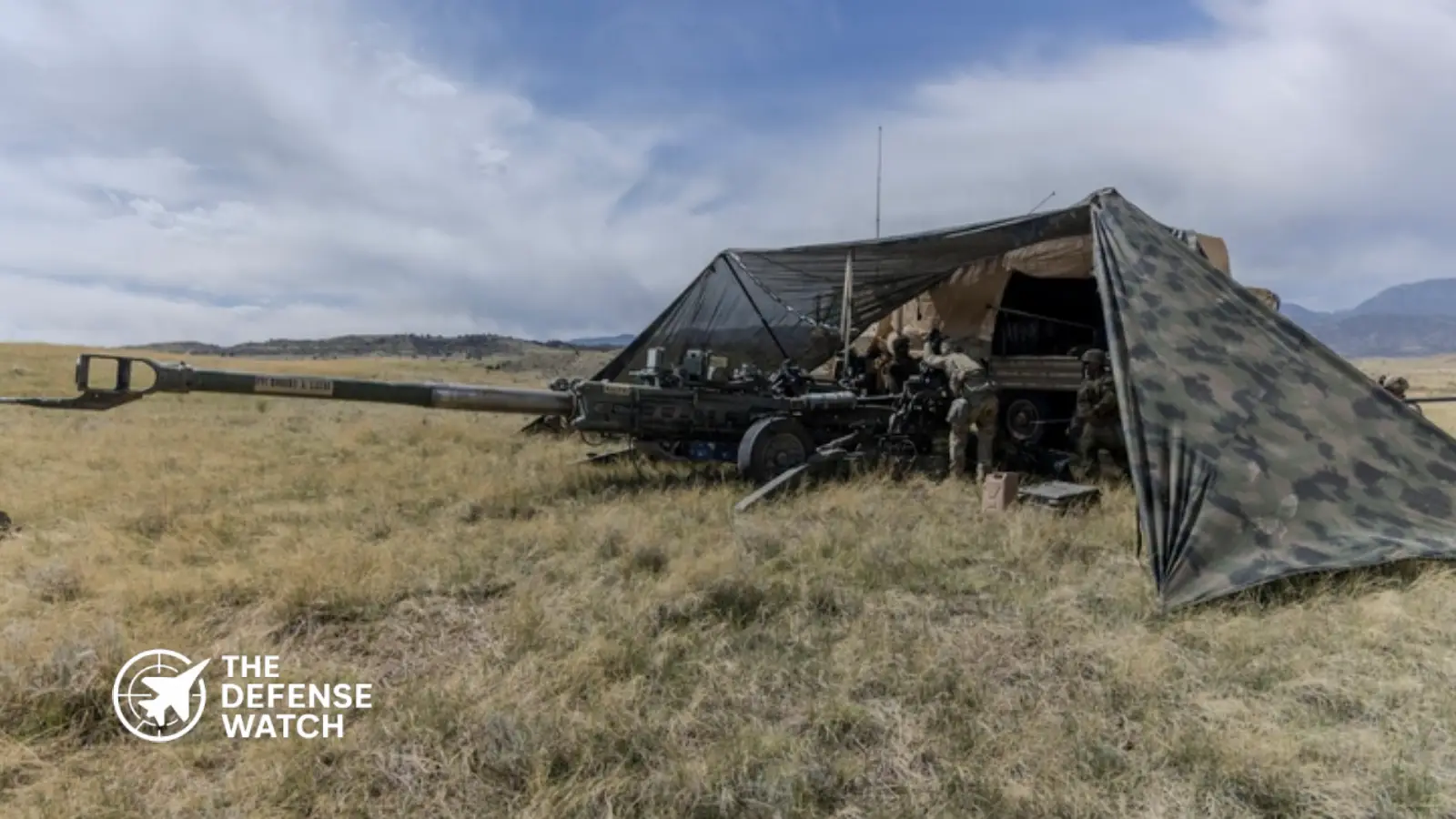
BAE Systems self-propelled howitzer vehicle during U.S. Army artillery operations
SHARE

Executive Summary:
BAE Systems has received a $535.6 million U.S. Army contract for the production of self-propelled howitzer systems, support vehicles, and total package fielding kits. The award reinforces the Army’s ongoing artillery modernization efforts and ensures continued production activity through the end of 2029.

BAE Systems Howitzer Contract Supports Long-Term Army Modernization

The BAE Systems howitzer contract marks another major investment in U.S. Army artillery modernization as the service continues expanding its long-range precision fire capabilities.

Contents
BAE Systems Howitzer Contract Supports Long-Term Army ModernizationExpanding U.S. Army Artillery ReadinessProduction Stability Through 2029Artillery Remains A Core Battlefield CapabilityIndustrial Base And Strategic Implications

According to the Department of Defense contract announcement, BAE Systems Land and Armaments L.P., based in York, Pennsylvania, was awarded a $535,623,041 fixed-price-incentive contract for the production of self-propelled howitzer systems, related vehicles, and total package fielding kits.

The contract was awarded by Army Contracting Command at Detroit Arsenal, Michigan. Officials stated that bids were solicited online and one proposal was received.

Work locations and funding allocations will be determined on an order-by-order basis under the contract structure. The estimated completion date is Dec. 31, 2029.

- Advertisement -

Expanding U.S. Army Artillery Readiness

The award reflects the Army’s sustained focus on artillery readiness and armored combat capability modernization amid increasing global security competition.

Self-propelled howitzer systems remain central to modern ground warfare because they combine mobility, survivability, and long-range indirect fire support. These systems allow mechanized formations to conduct rapid maneuver operations while maintaining artillery coverage across contested environments.

Although the Pentagon announcement did not specify the exact howitzer variant covered under the contract, BAE Systems is widely associated with production and sustainment work tied to the M109 Paladin family of tracked artillery systems.

The M109 platform continues to serve as the backbone of U.S. Army armored artillery brigades. Modernized variants such as the M109A7 integrate upgraded power systems, improved survivability features, and enhanced networking capabilities designed to support multi-domain operations.

Production Stability Through 2029

The multi-year nature of the award provides production continuity for both the Army and the U.S. defense industrial base.

Long-duration contracts are increasingly important as the Pentagon seeks to maintain manufacturing capacity for critical combat systems while reducing procurement disruptions. Defense officials and industry leaders have repeatedly highlighted the importance of stable production lines following lessons learned from recent conflicts involving high rates of ammunition and artillery consumption.

The contract also supports industrial activity in Pennsylvania and across the broader supplier network connected to armored vehicle and artillery manufacturing programs.

Artillery Remains A Core Battlefield Capability

The war in Ukraine and rising tensions across multiple regions have reinforced the strategic importance of conventional artillery systems. Militaries worldwide are investing in longer-range fires, improved targeting networks, and more survivable mobile artillery platforms.

- Advertisement -

For the U.S. Army, self-propelled artillery remains essential for supporting armored brigade combat teams and delivering sustained firepower during large-scale operations.

Programs tied to artillery modernization are also linked to broader Pentagon priorities that include precision strike capability, logistics resilience, and interoperability with allied forces.

The BAE Systems howitzer contract aligns with these efforts by sustaining production capacity for one of the Army’s key indirect fire platforms while supporting future operational readiness requirements.

Industrial Base And Strategic Implications

The award underscores the Pentagon’s continued reliance on established defense manufacturers to maintain operational capability during a period of rising global demand for artillery systems and munitions.

BAE Systems remains one of the largest suppliers of combat vehicles and artillery systems for the U.S. military. Its land systems portfolio includes armored combat vehicles, amphibious platforms, artillery systems, and survivability technologies.

The contract also reflects a wider trend within the defense sector toward sustained procurement cycles rather than short-term acquisition spikes. Analysts increasingly view long-term production agreements as critical to preserving skilled labor, supplier networks, and surge manufacturing capacity.


TAGGED:Artillery & Missile SystemsDefense contractsTanks & Armored Vehicles
Share This Article
Facebook Copy Link Print
BySamuel Drake | Defense Analyst
Follow:
Samuel Drake is a defense analyst at TheDefenseWatch.com covering naval warfare, military ordnance, maritime technology, fleet modernization, and defense procurement. His reporting focuses on documented capabilities, procurement programs, and military technology.
Leave a Comment

Leave a Reply Cancel reply

Your email address will not be published. Required fields are marked *

Search Defense Systems

Latest Defense Systems

  • TRML-4D Radar TRML-4D Radar
  • F-47A Fighter Jet F-47A Fighter Jet
  • China DF-61 Missile China DF-61 Missile
  • B61 Nuclear Bomb B61 Nuclear Bomb
  • Japan E-767 Airborne Japan E-767 Airborne
  • Remington 870 Shotgun Remington 870 Shotgun
  • RUTA B1 Cruise Missile RUTA B1 Cruise Missile
  • XQ-67A Drone XQ-67A Drone
  • B-25 Mitchell Bomber B-25 Mitchell Bomber

Recent Compares

  • J-10C vs JF-17 Thunder: Which Fighter Is More Capable? J-10C vs JF-17 Thunder: Which Fighter Is More Capable? View Comparison →
  • Tejas vs Gripen: Key Differences and Capabilities Tejas vs Gripen: Key Differences and Capabilities View Comparison →
  • Tejas vs MiG-21 Bison: How India Replaced Its Iconic Supersonic Fighter Tejas vs MiG-21 Bison: How India Replaced Its Iconic Supersonic Fighter View Comparison →
  • F-35 vs F-16: Stealth, Sensors and Combat Roles F-35 vs F-16: Stealth, Sensors and Combat Roles View Comparison →
  • Tejas Fighter Jet vs F-16 Fighting Falcon: Capability Compared Tejas Fighter Jet vs F-16 Fighting Falcon: Capability Compared View Comparison →
  • Rafale Fighter Jet vs F-16 Fighting Falcon : Which Fighter Has the Edge? Rafale Fighter Jet vs F-16 Fighting Falcon : Which Fighter Has the Edge? View Comparison →
  • Su-57 Fighter Jet vs J-20 Fighter Jet: Stealth and Air Combat Compared Su-57 Fighter Jet vs J-20 Fighter Jet: Stealth and Air Combat Compared View Comparison →
  • Mirage 2000 vs Tejas Mk1A: Legacy Combat Power vs Indigenous Modernization Mirage 2000 vs Tejas Mk1A: Legacy Combat Power vs Indigenous Modernization View Comparison →
  • Rafale Fighter Jet vs F-22 Raptor: Which Air Dominance Fighter Has the Edge? Rafale Fighter Jet vs F-22 Raptor: Which Air Dominance Fighter Has the Edge? View Comparison →
  • Tejas Fighter Jet vs. Rafale Fighter Jet: India’s Indigenous Fighter Meets France’s Proven Multirole Combat Aircraft Tejas Fighter Jet vs. Rafale Fighter Jet: India’s Indigenous Fighter Meets France’s Proven Multirole Combat Aircraft View Comparison →

Recent Posts

  • Raytheon JR3 Rocket: History, Design and Military Role
  • Raytheon Wins DARPA Contract to Develop All-Optical Signal Processing Technology
  • Lockheed Martin Delivers 100,000th GMLRS Rocket as Production Reaches 14,000 a Year
  • L3Harris CEO Sam Mehta Discusses Defense Spending and Missile Production on CNBC
  • L3Harris Demonstrates Multi-Domain Defense Network for Pacific Security

You Might Also Like

SM-3 Block IB missile
Defense Contracts

Raytheon Secures $1.36B Contract To Restart SM-3 Block IB Missile Production

September 12, 2026
Royal Navy Type 31 frigate under construction at Babcock’s Rosyth shipyard in Scotland
Naval & MaritimeNaval Strategy & Maritime Security

Babcock Takes $190 Million Hit On Royal Navy Type 31 Frigate Program

September 7, 2026
U.S. helicopter sale to Iraq
Aerospace & AviationDefense ContractsFighter Jets & Military Aircraft

U.S. Approves $800 Million Helicopter Sale To Iraq As Baghdad Expands Rotary-Wing Capability

September 1, 2026
MK 41 VLS engineering contract
Defense Contracts

General Dynamics Wins $22.4M MK 41 VLS Engineering Contract

September 22, 2026

Logo

Copyright © 2026 TheDefenseWatch.com

Helpful Links

  • Home
  • About Us
  • Privacy Policy
  • Terms of Use / Disclaimer
  • U.S. Privacy Notice – CCPA Compliance

Defense Systems

  • Defense Systems
  • Comparisons 
  • Manufacturer
  • Tactical Calculators

Popuplar

Which 5 Air Forces Possess the Costliest Fighter Jet Fleets in the World
Evolving Strategic Value: Carrier Strike Groups in the Indo-Pacific’s Future Security Architecture
Autonomous Weapon Systems Spark U.S. Ethics Debate Amid Rapid Military AI Integration

We report on developments involving military forces, governments, defense companies, research organizations, and security institutions around the world. 

Welcome Back!

Sign in to your account

Username or Email Address
Password

Lost your password?