• Home
  • About
  • Defense Systems
  • Manufacturer
  • Comparisons
  • Compare 
  • Tools
TheDefenseWatch.com
  • Aerospace & Aviation
  • Military & Ordnance
  • Naval & Maritime
  • Cyber & Space Defense
  • Policy & Strategy
  • Global News
  • Tools Library
    • Smart Calculator
    • Drone Flight Time Calculator
    • Drone Range Calculator
    • Counter-Drone Jammer Effective Range Calculator
    • Counter-Battery Radar Detection Calculator
    • Artillery Fire Correction Calculator
    • Thermal Camera Detection Range Calculator
    • Missile Range & Time-of-Flight Calculator
    • Radar Detection Range Calculator
    • FPV Strike Drone Payload vs Range Calculator
    • Loitering Munition Endurance Calculator
    • Sniper Ballistic Drop & Windage Calculator
    • Bullet Drop Calculator
    • U.S. Army Combat Fitness Test (ACFT) Calculator
    • Military Pension Calculator
    • Military Retirement Calculator
    • Military Pension Calculator
    • Large Number Calculator
Font ResizerAa

TheDefenseWatch.com

The Defense Watch | U.S. & Global Defense News, Analysis & Military Updates

Search
  • Home
  • About
  • Defense Systems
  • Manufacturer
  • Comparisons
  • Compare 
  • Tools

Stay Updated

Get the latest update

Subscribe

Explore

  • Drone
  • Fighter Jets & Military Aircraft
  • Hypersonic Weapons
  • Aircraft Carriers
  • Strategic History & Missions
  • Tools Library
Home » U.S. Air Force Moves To Expand EA-37 Fleet As Electronic Warfare Demands Grow
Aerospace & AviationAI & Electronic Warfare

U.S. Air Force Moves To Expand EA-37 Fleet As Electronic Warfare Demands Grow

Daniel Mercer / Defense & Aerospace Analyst
Last updated: September 12, 2026 5:50 pm
Daniel Mercer / Defense & Aerospace Analyst
Share
2 Min Read
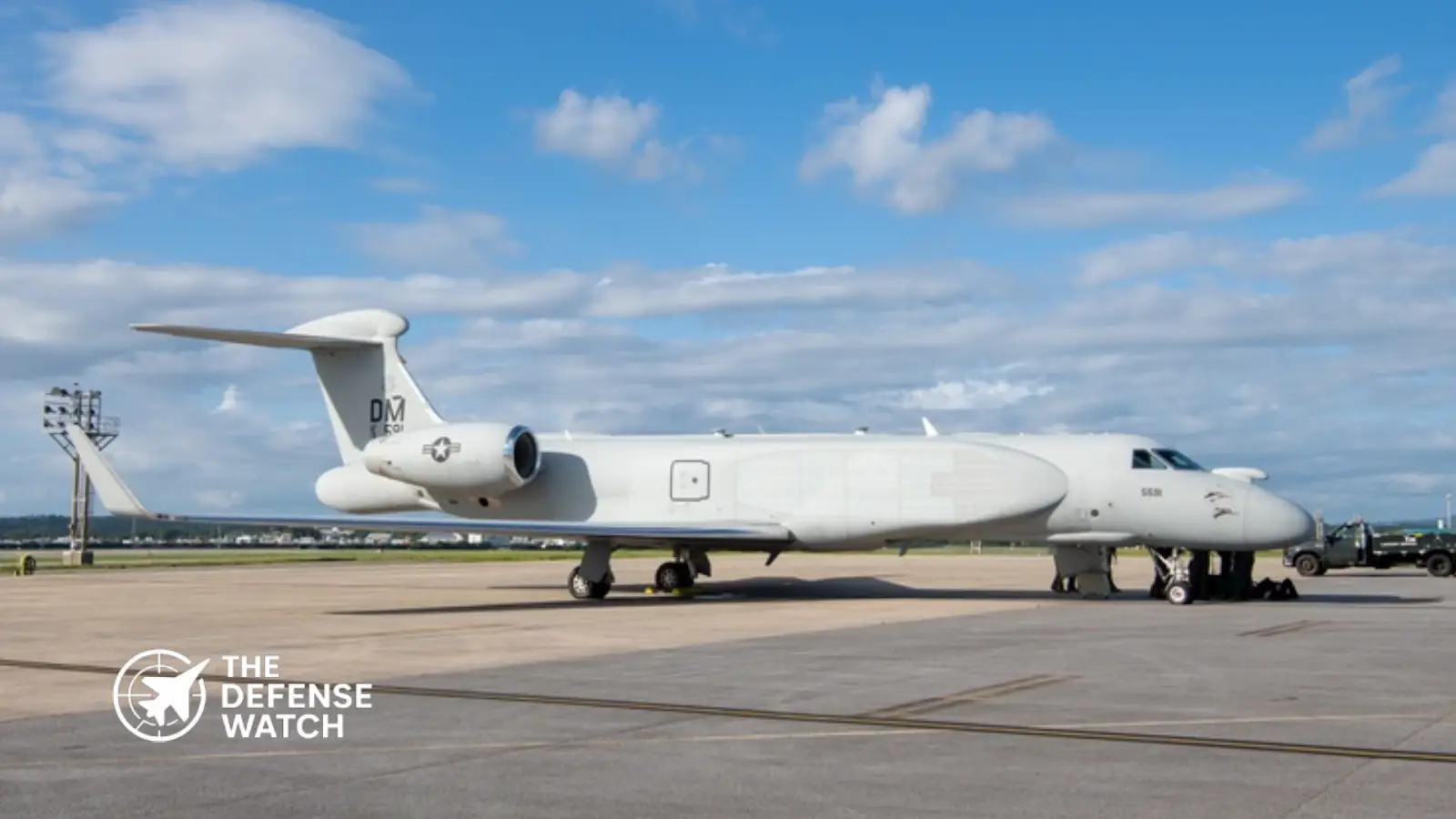
U.S. Air Force EA-37B Compass Call electronic warfare aircraft flying during operational testing mission
Image : U.S. Air Force
SHARE

Executive Summary:
The U.S. Air Force is seeking to expand its EA-37B Compass Call fleet from 10 to 19 aircraft as electronic warfare becomes increasingly critical in modern conflict. The move reflects growing concerns over contested electromagnetic environments and the need to maintain operational advantages against peer adversaries.

U.S. Air Force Seeks Major EA-37 Electronic Warfare Expansion

The U.S. Air Force’s planned expansion of the EA-37 electronic attack fleet signals a broader shift toward electromagnetic warfare as a core operational requirement for future conflicts.

Contents
U.S. Air Force Seeks Major EA-37 Electronic Warfare ExpansionWhy The EA-37 MattersGrowing Demand For Electromagnetic WarfareTransition From The EC-130H FleetStrategic Implications

Air Force officials now want to increase the planned EA-37B Compass Call fleet from 10 aircraft to 19. The platform is designed to replace the aging EC-130H Compass Call fleet, which has served for decades in airborne electronic attack missions.

  • EA-37B Compass Call

    EA-37B Compass Call

    • Maximum Speed: High subsonic
    • Range: Long-range
    • Payload Capacity: Classified EW systems
    • Crew: 4 to 5
    • View Details →
    8.0

    The EA-37B is based on the Gulfstream G550 business jet platform and integrates advanced jamming and electronic attack systems intended to disrupt enemy communications, radar, and command networks.

    The proposed fleet expansion comes as the Pentagon places increasing emphasis on electronic warfare capabilities across potential high-end conflict scenarios, particularly in the Indo-Pacific and Europe.

    Why The EA-37 Matters

    The EA-37B Compass Call is expected to provide improved survivability, longer range, and reduced operating costs compared to the older EC-130H aircraft.

    Unlike the turboprop-powered EC-130H, the jet-powered EA-37B offers faster transit speeds and greater operational flexibility. The aircraft is being developed by BAE Systems and L3Harris Technologies under the Compass Call modernization effort.

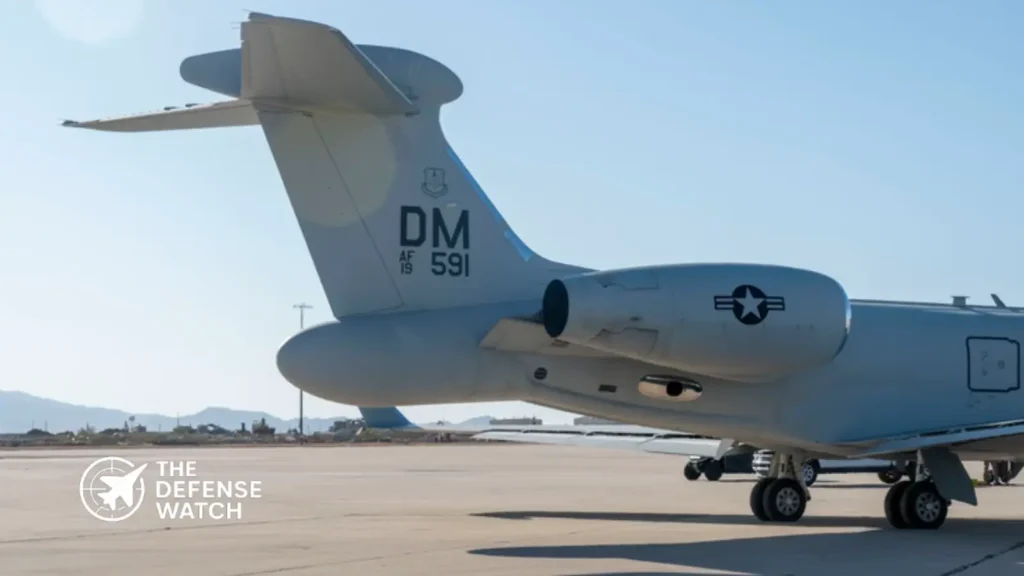
    EA-37 electronic attack fleet
    Image : U.S. Air Force

    Electronic attack aircraft play a critical role in suppressing enemy air defenses, degrading battlefield communications, and supporting strike packages during contested operations. Modern military operations increasingly depend on uninterrupted access to the electromagnetic spectrum, making airborne jamming assets more strategically valuable.

    The Air Force’s decision to reconsider the fleet size also reflects lessons observed from ongoing conflicts where electronic warfare, drones, and network disruption have become central battlefield factors.

    Growing Demand For Electromagnetic Warfare

    Senior Air Force leaders have repeatedly warned that the electromagnetic spectrum is now a heavily contested domain.

    Potential adversaries including China and Russia continue investing in advanced radar systems, integrated air defenses, cyber-electromagnetic operations, and long-range sensing networks. In such environments, aircraft capable of disrupting enemy command and control systems become increasingly important.

    The EA-37B is expected to support joint force operations by enabling strike aircraft, bombers, and intelligence platforms to operate more effectively in hostile airspace.

    The Air Force originally planned for a smaller fleet partly because of budget pressures and assumptions about future operational requirements. However, growing concerns about pacing threats and operational tempo appear to be driving reassessments inside the service.

    Transition From The EC-130H Fleet

    The retirement of the EC-130H Compass Call fleet has been ongoing for several years as the Air Force transitions toward the newer platform.

    • EC-130H Compass Call

      EC-130H Compass Call

      • Maximum Speed: ~300 knots
      • Range: 2,000+ miles
      • Payload Capacity: Classified electronic warfare systems
      • Crew: 9 to 13
      • View Details →
      8.0

      The legacy aircraft proved valuable during operations in Iraq, Afghanistan, and other counterinsurgency campaigns where electronic attack missions were used to disrupt insurgent communications and remote detonation systems.

      However, future conflicts against technologically advanced adversaries require faster and more survivable platforms capable of operating in highly contested environments.

      The EA-37B addresses several of those concerns through improved altitude performance, reduced maintenance demands, and updated mission systems.

      Air Force officials have also emphasized that modern electronic warfare is no longer a niche support capability. Instead, it is becoming an integrated component of air dominance and joint operations planning.

      Strategic Implications

      The move to nearly double the EA-37 fleet reflects a wider Pentagon effort to rebuild electronic warfare capacity after years of focus on counterterrorism operations.

      The U.S. military is increasingly prioritizing capabilities that can survive in denied environments, disrupt enemy sensor networks, and support distributed operations across large theaters.

      For the Air Force, the EA-37B represents part of a larger modernization effort that includes next-generation fighters, collaborative combat aircraft, long-range weapons, and advanced networking systems.

      Electronic attack platforms may also become increasingly important for coalition operations, particularly as NATO and Indo-Pacific allies seek stronger interoperability in contested spectrum environments.

      While budget approval and procurement timelines remain subject to congressional review, the Air Force’s revised requirement signals that electronic warfare aircraft are regaining prominence in U.S. defense planning.

TAGGED:Compass CallEA-37Electronic WarfareMilitary AircraftU.S. Air Force
Share This Article
Facebook Copy Link Print
ByDaniel Mercer / Defense & Aerospace Analyst
Follow:
Daniel Mercer is a defense and aerospace analyst at TheDefenseWatch.com covering military aviation, aerospace technology, unmanned systems, air warfare, and defense procurement. His reporting uses official documents, government and military statements, company announcements, and other public sources.
Leave a Comment

Leave a Reply Cancel reply

Your email address will not be published. Required fields are marked *

Search Defense Systems

Latest Defense Systems

  • F-47A Fighter Jet F-47A Fighter Jet
  • China DF-61 Missile China DF-61 Missile
  • B61 Nuclear Bomb B61 Nuclear Bomb
  • Japan E-767 Airborne Japan E-767 Airborne
  • Remington 870 Shotgun Remington 870 Shotgun
  • RUTA B1 Cruise Missile RUTA B1 Cruise Missile
  • XQ-67A Drone XQ-67A Drone
  • B-25 Mitchell Bomber B-25 Mitchell Bomber
  • F-100 Super Sabre F-100 Super Sabre

Recent Compares

  • J-10C vs JF-17 Thunder: Which Fighter Is More Capable? J-10C vs JF-17 Thunder: Which Fighter Is More Capable? View Comparison →
  • Tejas vs Gripen: Key Differences and Capabilities Tejas vs Gripen: Key Differences and Capabilities View Comparison →
  • Tejas vs MiG-21 Bison: How India Replaced Its Iconic Supersonic Fighter Tejas vs MiG-21 Bison: How India Replaced Its Iconic Supersonic Fighter View Comparison →
  • F-35 vs F-16: Stealth, Sensors and Combat Roles F-35 vs F-16: Stealth, Sensors and Combat Roles View Comparison →
  • Tejas Fighter Jet vs F-16 Fighting Falcon: Capability Compared Tejas Fighter Jet vs F-16 Fighting Falcon: Capability Compared View Comparison →
  • Rafale Fighter Jet vs F-16 Fighting Falcon : Which Fighter Has the Edge? Rafale Fighter Jet vs F-16 Fighting Falcon : Which Fighter Has the Edge? View Comparison →
  • Su-57 Fighter Jet vs J-20 Fighter Jet: Stealth and Air Combat Compared Su-57 Fighter Jet vs J-20 Fighter Jet: Stealth and Air Combat Compared View Comparison →
  • Mirage 2000 vs Tejas Mk1A: Legacy Combat Power vs Indigenous Modernization Mirage 2000 vs Tejas Mk1A: Legacy Combat Power vs Indigenous Modernization View Comparison →
  • Rafale Fighter Jet vs F-22 Raptor: Which Air Dominance Fighter Has the Edge? Rafale Fighter Jet vs F-22 Raptor: Which Air Dominance Fighter Has the Edge? View Comparison →
  • Tejas Fighter Jet vs. Rafale Fighter Jet: India’s Indigenous Fighter Meets France’s Proven Multirole Combat Aircraft Tejas Fighter Jet vs. Rafale Fighter Jet: India’s Indigenous Fighter Meets France’s Proven Multirole Combat Aircraft View Comparison →

Recent Posts

  • USA vs China Military: Comparing Global Military Power in 2026
  • USA vs UK Army: How U.S. and British Ground Forces Compare in 2026
  • Saab Wins SEK 2 Billion Contract to Equip Sweden’s Four New FDI Frigates
  • F-47 Fighter May Fly With Interim Engine as Next-Generation Propulsion Program Falls Behind Schedule
  • UK Says F-35 Agreement Guarantees Access to U.S. Support System

You Might Also Like

L3Harris FMS contract modification
Aerospace & AviationFighter Jets & Military Aircraft

L3Harris Awarded $13.1M FMS Contract Modification for Aircraft and Ground Station Support

September 7, 2026
ALQ-99 Tactical Jamming System
AI & Electronic WarfareCyber & Space Defense

AN/ALQ-99 Tactical Jamming System: The Pod That Blinded Enemy Radar for 50 Years

August 19, 2026
MQ-28 Ghost Bat Germany
Aerospace & AviationFighter Jets & Military Aircraft

Germany Evaluates MQ-28 Ghost Bat As Loyal Wingman To Support Eurofighter Fleet

September 9, 2026
The Northrop Grumman B-21 Raider stealth bomber during a flight test maneuver.
Aerospace & AviationFighter Jets & Military Aircraft

U.S. Air Force Moves To Combat-Focused B-21 Raider Testing As Operational Evaluation Phase Begins

September 7, 2026

Logo

Copyright © 2026 TheDefenseWatch.com

Helpful Links

  • Home
  • About Us
  • Privacy Policy
  • Terms of Use / Disclaimer
  • U.S. Privacy Notice – CCPA Compliance

Defense Systems

  • Defense Systems
  • Comparisons 
  • Manufacturer
  • Tactical Calculators

Popuplar

Which 5 Air Forces Possess the Costliest Fighter Jet Fleets in the World
Evolving Strategic Value: Carrier Strike Groups in the Indo-Pacific’s Future Security Architecture
Autonomous Weapon Systems Spark U.S. Ethics Debate Amid Rapid Military AI Integration

We report on developments involving military forces, governments, defense companies, research organizations, and security institutions around the world. 

Welcome Back!

Sign in to your account

Username or Email Address
Password

Lost your password?