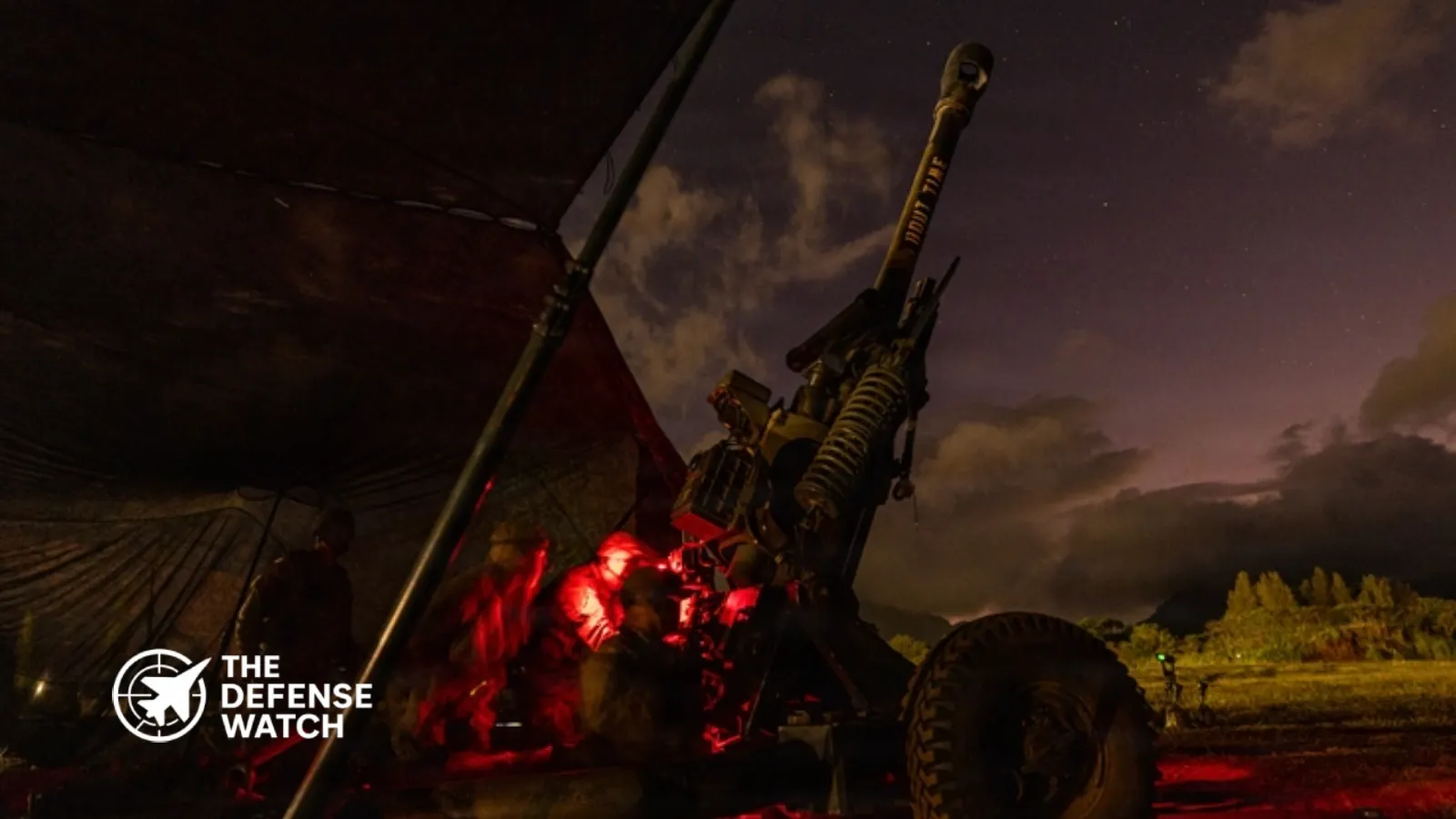
U.S. Army Expands 155mm Ammunition Production Capacity
The U.S. Army 155mm ammunition production effort has taken a significant step forward with the opening of a new facility in Kansas, aimed at increasing output of critical artillery shells and reinforcing the country’s defense industrial base.
The expansion comes as demand for 155mm ammunition continues to rise sharply, driven by ongoing support for Ukraine and renewed emphasis on large-scale conventional warfare planning within NATO.
The Kansas facility will help scale production rates, improve manufacturing resilience, and address supply chain constraints that have limited output in recent years.
- U.S. Army has opened a new facility in Kansas to expand 155mm artillery ammunition production capacity.
- The move is part of a broader effort to strengthen the U.S. defense industrial base and sustain high demand.
- 155mm artillery shells remain critical for modern ground warfare, particularly in Ukraine and NATO planning.
- The facility supports scaling production rates and reducing supply chain bottlenecks.
- Expansion reflects long-term U.S. strategy to ensure ammunition readiness in high-intensity conflicts.
Addressing Industrial Bottlenecks
The new site is part of a broader modernization push across the U.S. ammunition enterprise. For decades, artillery shell production operated at relatively low peacetime levels. That model has proven insufficient under current operational demands.
The U.S. Army 155mm ammunition production surge highlights structural challenges. These include aging facilities, limited surge capacity, and reliance on specialized components such as explosives and propellants that require dedicated production lines.
By expanding infrastructure in Kansas, the Army aims to distribute manufacturing more effectively and reduce single points of failure. This approach aligns with recent Pentagon efforts to build redundancy across critical supply chains.
From an operational perspective, this shift is essential. Modern conflicts, particularly those involving high-intensity artillery exchanges, consume ammunition at rates far exceeding Cold War planning assumptions.
Strategic Importance of 155mm Artillery
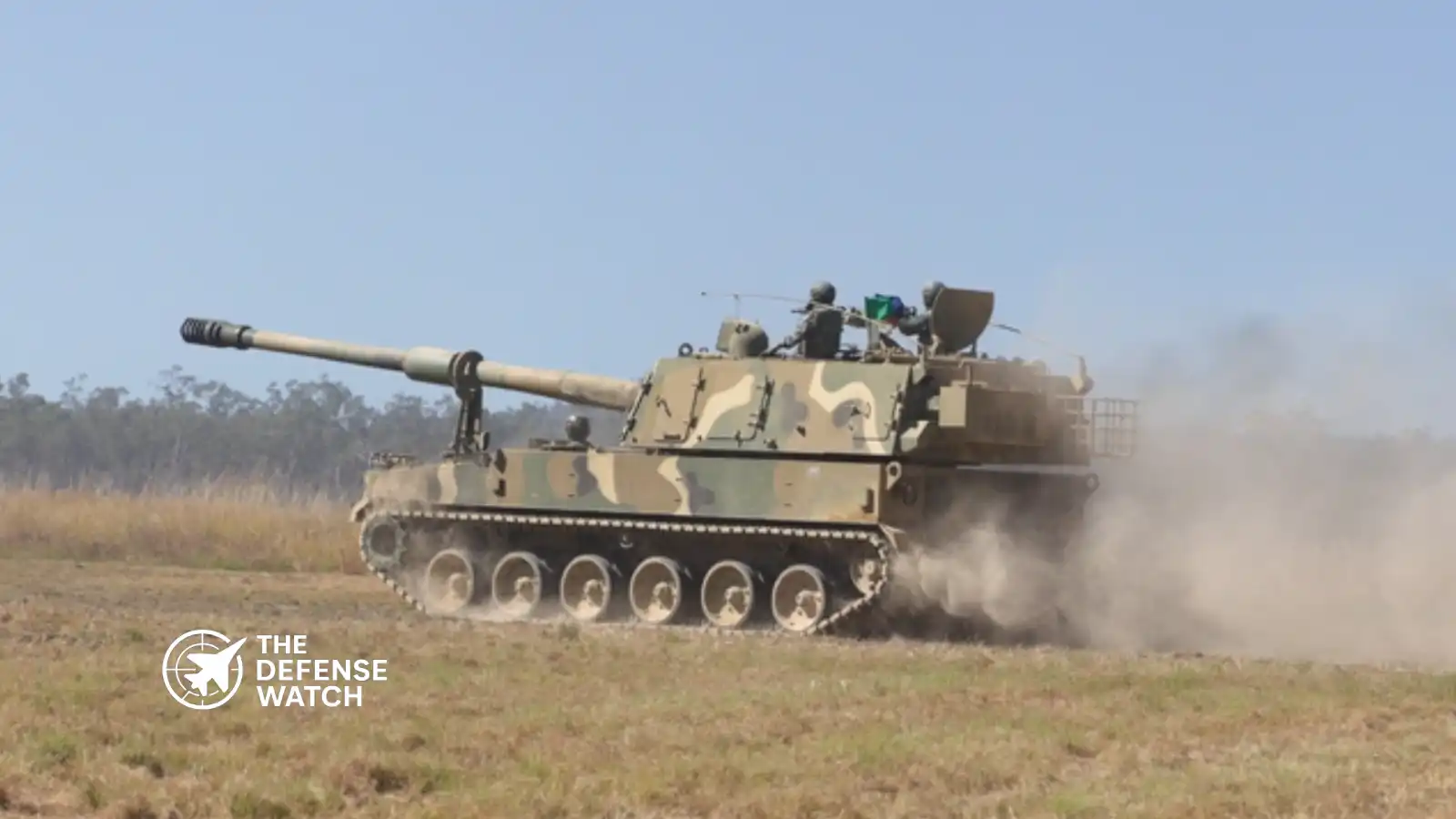
The 155mm artillery round remains a cornerstone of U.S. and allied land warfare doctrine. It is widely used across NATO-standard systems, including howitzers deployed in Europe and other theaters.
The war in Ukraine has underscored its importance. Ukrainian forces have relied heavily on Western-supplied 155mm shells for counter-battery fire, defensive operations, and offensive maneuver support.
This real-world usage has provided a clear data point for planners. Sustained artillery operations require not only advanced platforms but also a steady and scalable supply of ammunition.
The expansion of U.S. Army 155mm ammunition production reflects a recognition that industrial capacity is as critical as battlefield capability.
Long-Term Industrial Strategy
The Kansas facility is not a standalone effort. It fits into a wider U.S. strategy to rebuild and modernize the defense industrial base after decades of contraction.
Key priorities include increasing monthly production rates, investing in automation, and strengthening partnerships with private industry. The goal is to create a more flexible system that can rapidly scale in response to crises.
This also has implications for allied cooperation. A stronger U.S. production base supports not only domestic requirements but also foreign military aid and coalition operations.
In practical terms, expanding U.S. Army 155mm ammunition production helps ensure that the United States can sustain prolonged operations while supporting partners without depleting its own stockpiles.
Operational and Geopolitical Impact
The timing of the expansion reflects shifting global security dynamics. U.S. defense planners are increasingly focused on readiness for high-end conflict, where logistics and sustainment play a decisive role.
Artillery ammunition, often overlooked compared to advanced weapons systems, has emerged as a critical enabler of combat effectiveness. The ability to maintain consistent supply can determine the tempo and outcome of operations.
The Kansas facility contributes directly to this capability. By increasing output and reducing production delays, it strengthens the Army’s ability to respond to contingencies in Europe, the Indo-Pacific, and beyond.
Analysis: From Efficiency to Resilience
A key takeaway from this development is the shift in U.S. defense planning from efficiency to resilience.
For years, the industrial base prioritized cost-effectiveness and lean production. That approach limited excess capacity but left little room for rapid expansion during crises.
The current push, including the Kansas facility, reflects a different model. It emphasizes redundancy, scalability, and long-term sustainability.
This change is driven by lessons learned from recent conflicts and growing competition with near-peer adversaries. In such environments, supply chains are not just logistical concerns but strategic assets.
Expanding U.S. Army 155mm ammunition production is therefore not only about increasing output. It is about ensuring that the United States can sustain operations over time, adapt to changing conditions, and maintain a credible deterrent posture.