• Home
  • About
  • Defense Systems
  • Manufacturer
  • Comparisons
  • Compare 
  • Tools
TheDefenseWatch.com
  • Aerospace & Aviation
  • Military & Ordnance
  • Naval & Maritime
  • Cyber & Space Defense
  • Policy & Strategy
  • Global News
  • Tools Library
    • Smart Calculator
    • Drone Flight Time Calculator
    • Drone Range Calculator
    • Counter-Drone Jammer Effective Range Calculator
    • Counter-Battery Radar Detection Calculator
    • Artillery Fire Correction Calculator
    • Thermal Camera Detection Range Calculator
    • Missile Range & Time-of-Flight Calculator
    • Radar Detection Range Calculator
    • FPV Strike Drone Payload vs Range Calculator
    • Loitering Munition Endurance Calculator
    • Sniper Ballistic Drop & Windage Calculator
    • Bullet Drop Calculator
    • U.S. Army Combat Fitness Test (ACFT) Calculator
    • Military Pension Calculator
    • Military Retirement Calculator
    • Military Pension Calculator
    • Large Number Calculator
Font ResizerAa

TheDefenseWatch.com

The Defense Watch | U.S. & Global Defense News, Analysis & Military Updates

Search
  • Home
  • About
  • Defense Systems
  • Manufacturer
  • Comparisons
  • Compare 
  • Tools

Stay Updated

Get the latest update

Subscribe

Explore

  • Drone
  • Fighter Jets & Military Aircraft
  • Hypersonic Weapons
  • Aircraft Carriers
  • Strategic History & Missions
  • Tools Library
Home » U.S. Army Moves To Field XM8 Carbine As Infantry Modernization Accelerates
Military & OrdnanceSmall Arms & Infantry Weapons

U.S. Army Moves To Field XM8 Carbine As Infantry Modernization Accelerates

Samuel Drake | Defense Analyst
Last updated: September 12, 2026 6:50 pm
Samuel Drake | Defense Analyst
Share
7 Min Read
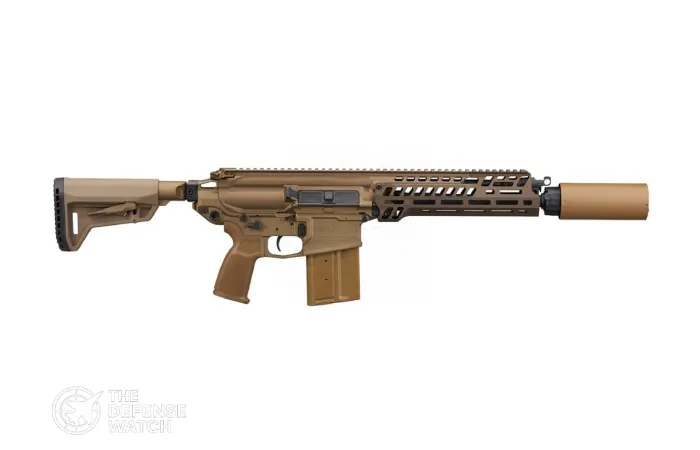
XM8 carbine U.S. Army
SHARE

U.S. Army Accepts First XM8 Carbine Delivery

The XM8 carbine U.S. Army program has reached a key milestone with the acceptance of the first delivery from SIG Sauer, marking a renewed push to modernize frontline infantry capabilities.

Contents
  • U.S. Army Accepts First XM8 Carbine Delivery
  • A Renewed Push for Infantry Modernization
  • SIG Sauer’s Expanding Role
  • Operational Implications on the Battlefield
  • Strategic Context: Preparing for Peer Conflict
  • Challenges and Considerations
  • What Comes Next

The initial batch of XM8 carbines has been formally delivered to the U.S. Army, signaling progress in efforts to replace or supplement legacy small arms systems. The move comes as the Army continues to prioritize lethality, reliability, and adaptability in evolving combat environments.

While details on deployment timelines remain limited, the delivery confirms that the XM8 platform is moving from concept and evaluation toward operational integration.

¦ KEY FACTS AT A GLANCE
  • U.S. Army has accepted its first XM8 carbine delivery from SIG Sauer as part of ongoing infantry modernization efforts.
  • The XM8 platform is designed to enhance reliability, modularity, and battlefield adaptability over legacy systems.
  • The delivery supports broader efforts to upgrade small arms capability across frontline combat units.
  • SIG Sauer continues to expand its role as a key supplier of next generation U.S. Army infantry weapons.
  • The move reflects a strategic shift toward more advanced, modular, and future ready weapon systems.

A Renewed Push for Infantry Modernization

The XM8 carbine U.S. Army initiative reflects a broader modernization strategy aimed at addressing emerging threats and closing capability gaps in small arms performance.

- Advertisement -
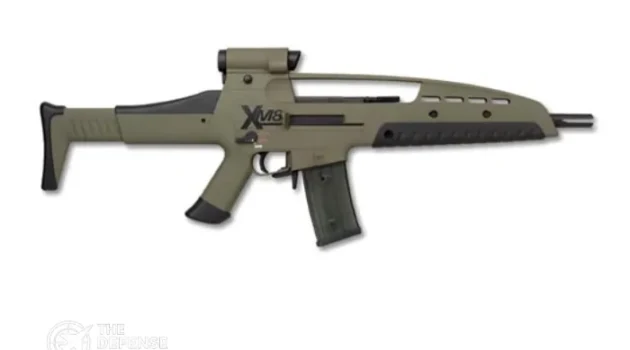
  • XM8 Carbine Rifle

    XM8 Carbine Rifle

    • Caliber: 5.56×45mm NATO
    • Effective Range: 500 m (effective)
    • Rate of Fire: ~750 RPM
    • Weight: ~2.6–3.4 kg
    • View Details →
    8.0

    For years, the Army has relied heavily on the M4 carbine platform. While proven in combat, the M4 faces limitations in range, lethality, and modular flexibility against near peer adversaries. The XM8, originally developed as part of earlier modernization efforts, has re-emerged as a potential solution to these challenges.

    The system is designed with a modular architecture, allowing it to be configured for different mission profiles, including standard infantry use, designated marksman roles, and close quarters operations. This flexibility is increasingly important as U.S. forces prepare for multi domain operations across diverse theaters.

    SIG Sauer’s Expanding Role

    The SIG Sauer XM8 rifle delivery underscores the company’s growing footprint in U.S. military small arms programs. SIG Sauer has already secured major contracts in recent years, including the Next Generation Squad Weapon program, which introduced the XM7 rifle and XM250 automatic rifle.

    By delivering the XM8 platform, SIG Sauer is reinforcing its position as a central player in the Army’s transition toward next generation infantry weapons.

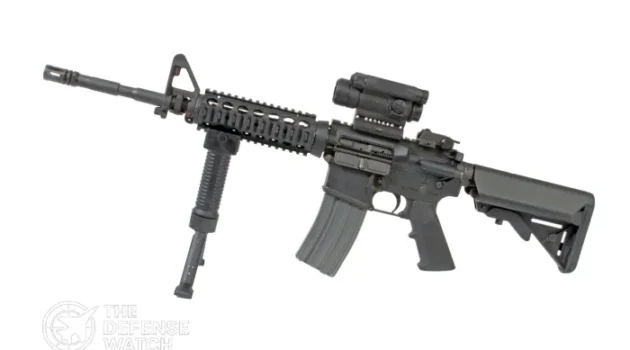
    • M4 Carbine Rifle

      M4 Carbine Rifle

      • Caliber: 5.56×45mm NATO
      • Effective Range: 500–600 m
      • Rate of Fire: 700–950 rpm
      • Weight: ~6.4 lbs (empty)
      • View Details →
      8.3

      This consolidation of suppliers may also streamline logistics and training, as multiple systems share design philosophies and operational concepts. However, it also places increased responsibility on a single manufacturer to meet performance and delivery expectations.

      Operational Implications on the Battlefield

      The introduction of the XM8 carbine U.S. Army system could have tangible effects on battlefield performance, particularly in terms of reliability and adaptability.

      One of the key advantages often associated with the XM8 design is improved durability under harsh conditions. Past small arms programs have emphasized the need for weapons that can perform consistently in extreme environments, from desert heat to arctic cold.

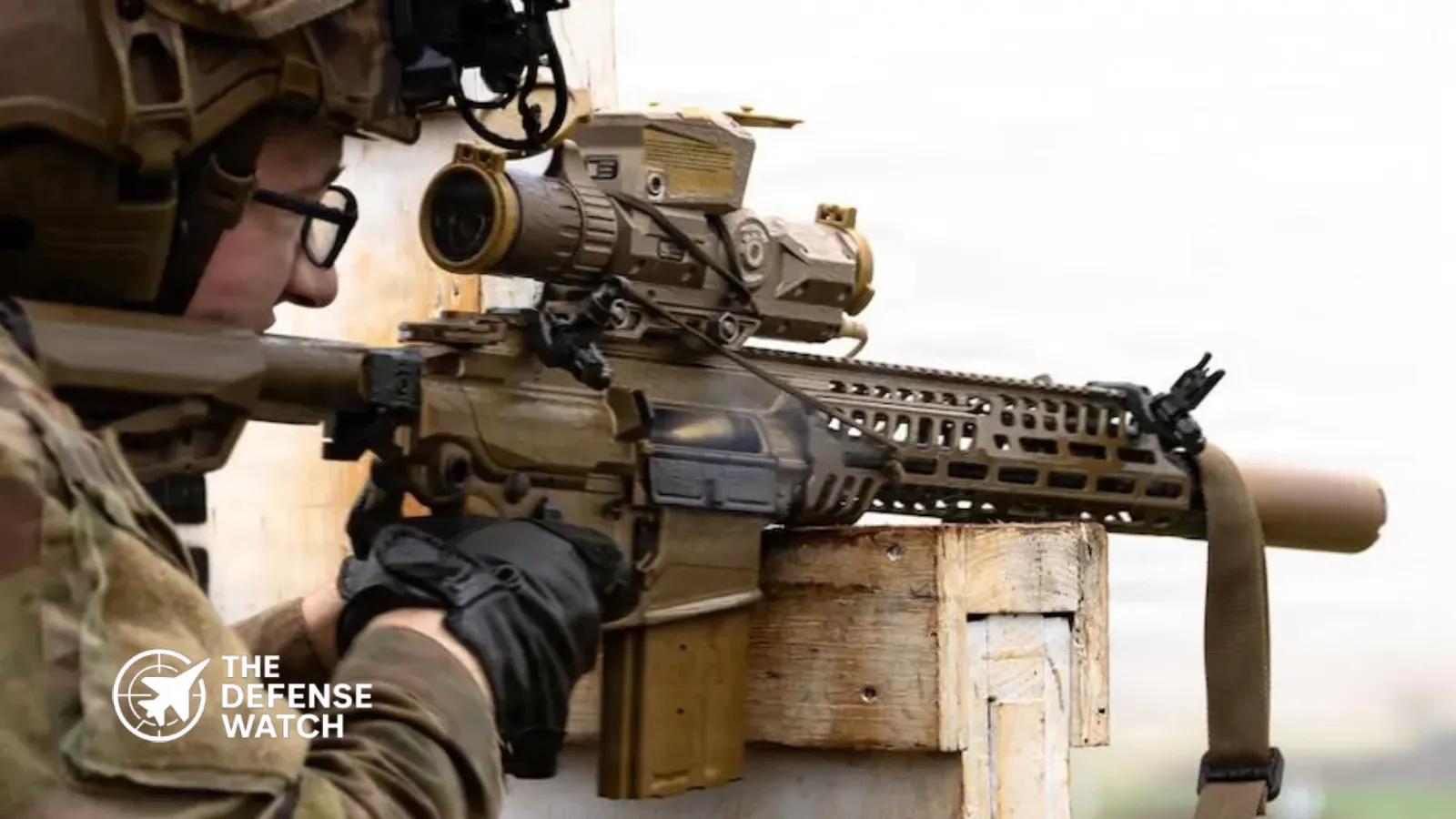
      XM8 Carbine Rifle

      Additionally, the XM8’s modular design supports rapid customization. Units can adjust configurations based on mission requirements without needing entirely different weapon systems. This reduces logistical burden while increasing tactical flexibility.

      From a combat perspective, enhancements in ergonomics, weight distribution, and accessory integration may also improve soldier effectiveness and reduce fatigue during extended operations.

      Strategic Context: Preparing for Peer Conflict

      The U.S. Army infantry modernization effort, including the XM8 program, is closely tied to preparations for potential high intensity conflict against near peer adversaries.

      In such scenarios, small arms are not just individual weapons but part of a larger system of systems that includes sensors, communications, and precision targeting. The XM8’s design aligns with this approach, enabling integration with advanced optics, fire control systems, and digital battlefield networks.

      This shift reflects lessons learned from recent conflicts, where adaptability and rapid decision making have proven critical. Modern infantry units must be equipped with weapons that support these requirements without adding unnecessary complexity.

      Challenges and Considerations

      Despite the progress, the XM8 carbine U.S. Army program is not without challenges.

      First, integration into existing force structures will require training, maintenance adjustments, and logistical planning. Transitioning from established platforms like the M4 is a complex process that involves more than simply issuing new weapons.

      Second, questions remain about long term procurement scale. It is unclear whether the XM8 will fully replace existing systems or serve as a complementary platform within a broader small arms ecosystem.

      Finally, budget pressures and competing priorities could influence the pace of adoption. The Army must balance investments across multiple modernization programs, including armored vehicles, long range fires, and air defense.

      What Comes Next

      The initial SIG Sauer XM8 rifle delivery is likely just the first step in a phased rollout. Future deliveries, testing, and operational feedback will determine how widely the system is adopted across the force.

      • XM8 Carbine Rifle

        XM8 Carbine Rifle

        • Caliber: 5.56×45mm NATO
        • Effective Range: 500 m (effective)
        • Rate of Fire: ~750 RPM
        • Weight: ~2.6–3.4 kg
        • View Details →
        8.0

        If the XM8 meets performance expectations, it could play a significant role in shaping the next generation of U.S. Army infantry weapons. Its success will depend not only on technical performance but also on how well it integrates into the broader modernization framework.

        For now, the delivery marks a clear signal that the Army is accelerating efforts to equip its soldiers with more capable and adaptable small arms.
TAGGED:infantry weaponsMilitary ModernizationSIG SauerU.S. ArmyXM8 Carbine
Share This Article
Facebook Copy Link Print
BySamuel Drake | Defense Analyst
Follow:
Samuel Drake is a defense analyst at TheDefenseWatch.com covering naval warfare, military ordnance, maritime technology, fleet modernization, and defense procurement. His reporting focuses on documented capabilities, procurement programs, and military technology.
Leave a Comment

Leave a Reply Cancel reply

Your email address will not be published. Required fields are marked *

Latest Defense Systems

  • B-25 Mitchell Bomber B-25 Mitchell Bomber
  • F-100 Super Sabre F-100 Super Sabre
  • North American F-86 Sabre North American F-86 Sabre
  • North American XB-70 Valkyrie North American XB-70 Valkyrie
  • Northrop YF-23 Fighter Northrop YF-23 Fighter
  • P-51 Mustang Fighter Aircraft P-51 Mustang Fighter Aircraft
  • Rafale F5 Fighter Rafale F5 Fighter
  • Tomahawk Block V Missile Tomahawk Block V Missile
  • Tomahawk Block IV Missile Tomahawk Block IV Missile

Recent Compares

  • J-10C vs JF-17 Thunder: Which Fighter Is More Capable? J-10C vs JF-17 Thunder: Which Fighter Is More Capable? View Comparison →
  • Tejas vs Gripen: Key Differences and Capabilities Tejas vs Gripen: Key Differences and Capabilities View Comparison →
  • Tejas vs MiG-21 Bison: How India Replaced Its Iconic Supersonic Fighter Tejas vs MiG-21 Bison: How India Replaced Its Iconic Supersonic Fighter View Comparison →
  • F-35 vs F-16: Stealth, Sensors and Combat Roles F-35 vs F-16: Stealth, Sensors and Combat Roles View Comparison →
  • Tejas Fighter Jet vs F-16 Fighting Falcon: Capability Compared Tejas Fighter Jet vs F-16 Fighting Falcon: Capability Compared View Comparison →
  • Rafale Fighter Jet vs F-16 Fighting Falcon : Which Fighter Has the Edge? Rafale Fighter Jet vs F-16 Fighting Falcon : Which Fighter Has the Edge? View Comparison →
  • Su-57 Fighter Jet vs J-20 Fighter Jet: Stealth and Air Combat Compared Su-57 Fighter Jet vs J-20 Fighter Jet: Stealth and Air Combat Compared View Comparison →
  • Mirage 2000 vs Tejas Mk1A: Legacy Combat Power vs Indigenous Modernization Mirage 2000 vs Tejas Mk1A: Legacy Combat Power vs Indigenous Modernization View Comparison →
  • Rafale Fighter Jet vs F-22 Raptor: Which Air Dominance Fighter Has the Edge? Rafale Fighter Jet vs F-22 Raptor: Which Air Dominance Fighter Has the Edge? View Comparison →
  • Tejas Fighter Jet vs. Rafale Fighter Jet: India’s Indigenous Fighter Meets France’s Proven Multirole Combat Aircraft Tejas Fighter Jet vs. Rafale Fighter Jet: India’s Indigenous Fighter Meets France’s Proven Multirole Combat Aircraft View Comparison →

Recent Posts

  • Pratt & Whitney Begins $100 Million Polish Expansion for F-35 Engine Parts
  • Northrop Grumman Wins $43.9 Million Contract for Trident II Rocket Motor Facilities
  • Ukraine Drone Strikes Disrupt Russian Data Centers, Raising Questions About AI Infrastructure Security
  • Lockheed Martin Wins $114.6 Million Contract to Redesign F-35 Navigation Systems
  • Project Agincourt Pushes Pentagon to Speed Up Autonomous Weapons Fielding

You Might Also Like

THAAD interceptor production increase
Military & OrdnanceMissile Defense Systems

Lockheed Martin, U.S. Department of War Agree to Quadruple THAAD Interceptor Production

September 7, 2026
ER GMLRS operational fielding
Artillery & Missile SystemsMilitary & Ordnance

Lockheed Martin Scales Up Production for Long-Range ER GMLRS Rockets

October 20, 2026
Greece Israel air defense deal
Military & OrdnanceMissile Defense Systems

Greece Signs €3.035 Billion Israel Deal for Achilles Shield Air Defense

September 7, 2026
Leidos containerized cruise missiles
Artillery & Missile SystemsDefense Contracts

Leidos Secures Deal To Build 3,000 Containerized Cruise Missiles For U.S. Military

May 14, 2026

Logo

Copyright © 2026 TheDefenseWatch.com

Helpful Links

  • Home
  • About Us
  • Privacy Policy
  • Terms of Use / Disclaimer
  • U.S. Privacy Notice – CCPA Compliance

Defense Systems

  • Defense Systems
  • Comparisons 
  • Manufacturer
  • Tactical Calculators

Popuplar

Which 5 Air Forces Possess the Costliest Fighter Jet Fleets in the World
Evolving Strategic Value: Carrier Strike Groups in the Indo-Pacific’s Future Security Architecture
Autonomous Weapon Systems Spark U.S. Ethics Debate Amid Rapid Military AI Integration

We report on developments involving military forces, governments, defense companies, research organizations, and security institutions around the world. 

Welcome Back!

Sign in to your account

Username or Email Address
Password

Lost your password?