• Home
  • About
  • Defense Systems
  • Manufacturer
  • Comparisons
  • Compare 
  • Tools
TheDefenseWatch.com
  • Aerospace & Aviation
  • Military & Ordnance
  • Naval & Maritime
  • Cyber & Space Defense
  • Policy & Strategy
  • Global News
  • Tools Library
    • Smart Calculator
    • Drone Flight Time Calculator
    • Drone Range Calculator
    • Counter-Drone Jammer Effective Range Calculator
    • Counter-Battery Radar Detection Calculator
    • Artillery Fire Correction Calculator
    • Thermal Camera Detection Range Calculator
    • Missile Range & Time-of-Flight Calculator
    • Radar Detection Range Calculator
    • FPV Strike Drone Payload vs Range Calculator
    • Loitering Munition Endurance Calculator
    • Sniper Ballistic Drop & Windage Calculator
    • Bullet Drop Calculator
    • U.S. Army Combat Fitness Test (ACFT) Calculator
    • Military Pension Calculator
    • Military Retirement Calculator
    • Military Pension Calculator
    • Large Number Calculator
Font ResizerAa

TheDefenseWatch.com

The Defense Watch | U.S. & Global Defense News, Analysis & Military Updates

Search
  • Home
  • About
  • Defense Systems
  • Manufacturer
  • Comparisons
  • Compare 
  • Tools

Stay Updated

Get the latest update

Subscribe

Explore

  • Drone
  • Fighter Jets & Military Aircraft
  • Hypersonic Weapons
  • Aircraft Carriers
  • Strategic History & Missions
  • Tools Library
Home » Lockheed Martin To Increase Precision Strike Missile Production As U.S. Army Expands Long Range Fires Capability
Artillery & Missile SystemsMilitary & Ordnance

Lockheed Martin To Increase Precision Strike Missile Production As U.S. Army Expands Long Range Fires Capability

Daniel Mercer / Defense & Aerospace Analyst
Last updated: September 7, 2026 4:40 pm
Daniel Mercer / Defense & Aerospace Analyst
Share
2 Min Read
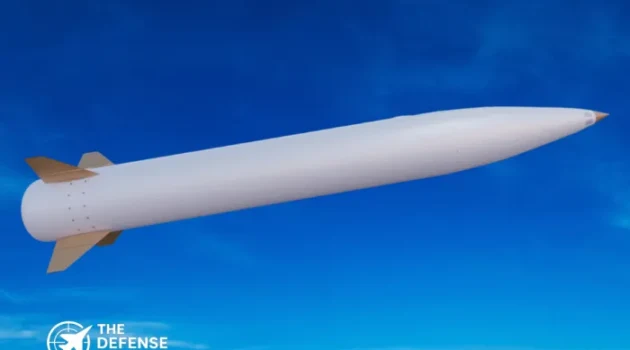
Precision Strike Missile production increase
Image: dvidshub
SHARE
¦ KEY FACTS AT A GLANCE
  • Lockheed Martin is increasing Precision Strike Missile production to meet U.S. Army demand.
  • PrSM replaces ATACMS with extended range and improved targeting capability.
  • Expansion supports U.S. long range fires modernization and multi domain operations.
  • Production ramp up aligns with planned fielding timelines later this decade.
  • Program strengthens deep strike deterrence against near peer adversaries.

Precision Strike Missile Production Expands To Meet U.S. Army Demand

Precision Strike Missile production is increasing as Lockheed Martin moves to scale output in response to growing U.S. Army requirements for long range precision fires. The expansion reflects sustained demand for next generation surface to surface strike capabilities as the Army accelerates modernization efforts.

Contents
Precision Strike Missile Production Expands To Meet U.S. Army DemandThe Big PictureWhat’s HappeningWhy It MattersStrategic ImplicationsCompetitor ViewWhat To Watch NextCapability GapThe Bottom Line

The move follows continued investment in the Precision Strike Missile program, widely known as PrSM, which is set to replace the legacy Army Tactical Missile System.

The Big Picture

The U.S. Army has prioritized long range precision fires as one of its top modernization pillars. This shift reflects lessons from recent conflicts and evolving operational concepts focused on contested environments.

Future battlefields will likely involve denied access zones, advanced air defenses, and dispersed forces. In that context, ground launched long range missiles provide a critical capability to strike high value targets without relying solely on airpower.

- Advertisement -

PrSM sits at the center of this transformation. It supports multi domain operations by enabling deep strikes against command nodes, air defenses, logistics hubs, and mobile targets.

  • PrSM Increment 2 Missile

    PrSM Increment 2 Missile

    • Guidance System: GPS / INS with advanced targeting sensors
    • Maximum Speed: High Supersonic (Estimated Mach 3+)
    • Launch Compatibility: HIMARS, M270 MLRS
    • Warhead Technology: High Explosive precision warhead
    • View Details →
    8.0

    What’s Happening

    Lockheed Martin is increasing Precision Strike Missile production capacity to meet rising demand from the U.S. Army. The company is scaling manufacturing processes and supply chains to support higher output rates.

    The PrSM is designed to replace the ATACMS system, offering improved range, accuracy, and flexibility. It is compatible with existing launch platforms, including the M270 Multiple Launch Rocket System and the M142 HIMARS.

    • M142 HIMARS

      M142 HIMARS

      • Caliber & Firepower: 227 mm Rockets / ATACMS Missile
      • Maximum Effective Range: 80 km (GMLRS) / 300 km (ATACMS)
      • Mobility / Platform Type: Truck-mounted (6×6 FMTV)
      • Fire Control & Targeting System: Digital FCS with GPS/INS Guidance
      • View Details →
      8.0

      The missile has already progressed through testing phases, and the Army has begun initial fielding efforts. Production increases aim to support both U.S. inventory requirements and potential future foreign military sales.

      Why It Matters

      The Precision Strike Missile production ramp up directly supports the Army’s ability to conduct long range precision fires at scale.

      PrSM delivers several operational advantages:

      It increases engagement range, allowing forces to strike targets deeper behind enemy lines.
      It improves targeting flexibility with modern guidance systems.
      It enables higher missile loadouts per launcher compared to ATACMS.

      These improvements translate into greater battlefield effectiveness, particularly in high intensity conflicts where rapid targeting and strike density are critical.

      Strategic Implications

      Expanding Precision Strike Missile production strengthens U.S. deterrence posture by enhancing deep strike capability.

      The system allows ground forces to hold adversary assets at risk across extended distances. This reduces reliance on air superiority in early phases of conflict and complicates enemy planning.

      In the Indo Pacific, long range fires are especially important due to vast distances and contested maritime zones. In Europe, they reinforce NATO’s ability to counter advanced anti access and area denial systems.

      Higher production rates also ensure stockpile resilience, a key factor highlighted by recent conflicts where munitions consumption exceeded peacetime expectations.

      Competitor View

      China and Russia are likely to view increased Precision Strike Missile production as part of a broader U.S. effort to enhance long range strike capabilities.

      Both countries have invested heavily in their own ground based missile systems, particularly those designed to target logistics hubs, airfields, and command infrastructure.

      From their perspective, PrSM adds another layer to U.S. strike options, particularly when integrated with joint and allied systems.

      This development reinforces an ongoing trend where long range precision fires play a central role in great power competition.

      What To Watch Next

      The next phase of the Precision Strike Missile program will focus on continued testing, incremental capability upgrades, and expanded procurement.

      Future variants are expected to include enhanced seekers for maritime targets, enabling the missile to engage moving ships. This would significantly expand its operational role.

      Observers should also watch for increased international interest, as allied nations look to acquire similar capabilities.

      Production scaling will remain a key factor, especially as the Army seeks to build sufficient inventory levels for sustained operations.

      Capability Gap

      The Precision Strike Missile addresses a critical gap left by the aging ATACMS system.

      ATACMS offers limited range and fewer missiles per launcher, constraining operational flexibility. PrSM improves both factors, enabling more efficient use of launch platforms and greater strike depth.

      However, limitations remain. The system still depends on targeting data from external sensors, including satellites and reconnaissance platforms. This reliance highlights the importance of resilient command and control networks.

      The Bottom Line

      The Precision Strike Missile production increase signals a decisive U.S. Army shift toward scalable, long range strike power designed for high intensity conflict against advanced adversaries.
TAGGED:Lockheed MartinLong Range Firesmissile productionPrecision Strike MissileUS Army
Share This Article
Facebook Copy Link Print
ByDaniel Mercer / Defense & Aerospace Analyst
Follow:
Daniel Mercer is a defense and aerospace analyst at TheDefenseWatch.com covering military aviation, aerospace technology, unmanned systems, air warfare, and defense procurement. His reporting uses official documents, government and military statements, company announcements, and other public sources.
Leave a Comment

Leave a Reply Cancel reply

Your email address will not be published. Required fields are marked *

Search Defense Systems

Latest Defense Systems

  • F-47A Fighter Jet F-47A Fighter Jet
  • China DF-61 Missile China DF-61 Missile
  • B61 Nuclear Bomb B61 Nuclear Bomb
  • Japan E-767 Airborne Japan E-767 Airborne
  • Remington 870 Shotgun Remington 870 Shotgun
  • RUTA B1 Cruise Missile RUTA B1 Cruise Missile
  • XQ-67A Drone XQ-67A Drone
  • B-25 Mitchell Bomber B-25 Mitchell Bomber
  • F-100 Super Sabre F-100 Super Sabre

Recent Compares

  • J-10C vs JF-17 Thunder: Which Fighter Is More Capable? J-10C vs JF-17 Thunder: Which Fighter Is More Capable? View Comparison →
  • Tejas vs Gripen: Key Differences and Capabilities Tejas vs Gripen: Key Differences and Capabilities View Comparison →
  • Tejas vs MiG-21 Bison: How India Replaced Its Iconic Supersonic Fighter Tejas vs MiG-21 Bison: How India Replaced Its Iconic Supersonic Fighter View Comparison →
  • F-35 vs F-16: Stealth, Sensors and Combat Roles F-35 vs F-16: Stealth, Sensors and Combat Roles View Comparison →
  • Tejas Fighter Jet vs F-16 Fighting Falcon: Capability Compared Tejas Fighter Jet vs F-16 Fighting Falcon: Capability Compared View Comparison →
  • Rafale Fighter Jet vs F-16 Fighting Falcon : Which Fighter Has the Edge? Rafale Fighter Jet vs F-16 Fighting Falcon : Which Fighter Has the Edge? View Comparison →
  • Su-57 Fighter Jet vs J-20 Fighter Jet: Stealth and Air Combat Compared Su-57 Fighter Jet vs J-20 Fighter Jet: Stealth and Air Combat Compared View Comparison →
  • Mirage 2000 vs Tejas Mk1A: Legacy Combat Power vs Indigenous Modernization Mirage 2000 vs Tejas Mk1A: Legacy Combat Power vs Indigenous Modernization View Comparison →
  • Rafale Fighter Jet vs F-22 Raptor: Which Air Dominance Fighter Has the Edge? Rafale Fighter Jet vs F-22 Raptor: Which Air Dominance Fighter Has the Edge? View Comparison →
  • Tejas Fighter Jet vs. Rafale Fighter Jet: India’s Indigenous Fighter Meets France’s Proven Multirole Combat Aircraft Tejas Fighter Jet vs. Rafale Fighter Jet: India’s Indigenous Fighter Meets France’s Proven Multirole Combat Aircraft View Comparison →

Recent Posts

  • Saab Wins SEK 2 Billion Contract to Equip Sweden’s Four New FDI Frigates
  • F-47 Fighter May Fly With Interim Engine as Next-Generation Propulsion Program Falls Behind Schedule
  • UK Says F-35 Agreement Guarantees Access to U.S. Support System
  • Pakistan and Tajikistan Conclude Dosti-III Counterterrorism Exercise at Cherat
  • Lockheed Martin Self-Funds Five Vectis Collaborative Combat Aircraft

You Might Also Like

anti-ship ballistic missile China
Artillery & Missile SystemsNaval Strategy & Maritime Security

China’s “Carrier Killer” Arsenal: How the DF-21D, DF-26, and YJ-21 Reshape Naval Power Projection

October 3, 2026
UK Air Rifles and Airsoft
Military & OrdnanceSmall Arms & Infantry Weapons

UK Air Rifles And Airsoft: How Precision Shooting And Pest Control Continue To Shape Britain’s Shooting Culture

September 7, 2026
Italy SAMP/T deployment
Military & OrdnanceMissile Defense Systems

Italy Moves To Deploy SAMP/T Air Defense System In Türkiye As NATO Strengthens Southern Flank Defenses

September 7, 2026
U.S. Army counter-drone technology
Conventional Weapons & ModernizationMilitary & Ordnance

U.S. Army Tests Counter-Drone Systems Along Mexico Border

October 5, 2026

Logo

Copyright © 2026 TheDefenseWatch.com

Helpful Links

  • Home
  • About Us
  • Privacy Policy
  • Terms of Use / Disclaimer
  • U.S. Privacy Notice – CCPA Compliance

Defense Systems

  • Defense Systems
  • Comparisons 
  • Manufacturer
  • Tactical Calculators

Popuplar

Which 5 Air Forces Possess the Costliest Fighter Jet Fleets in the World
Evolving Strategic Value: Carrier Strike Groups in the Indo-Pacific’s Future Security Architecture
Autonomous Weapon Systems Spark U.S. Ethics Debate Amid Rapid Military AI Integration

We report on developments involving military forces, governments, defense companies, research organizations, and security institutions around the world. 

Welcome Back!

Sign in to your account

Username or Email Address
Password

Lost your password?