China Long March 10 And Mengzhou Test Marks Key Human Spaceflight Milestone
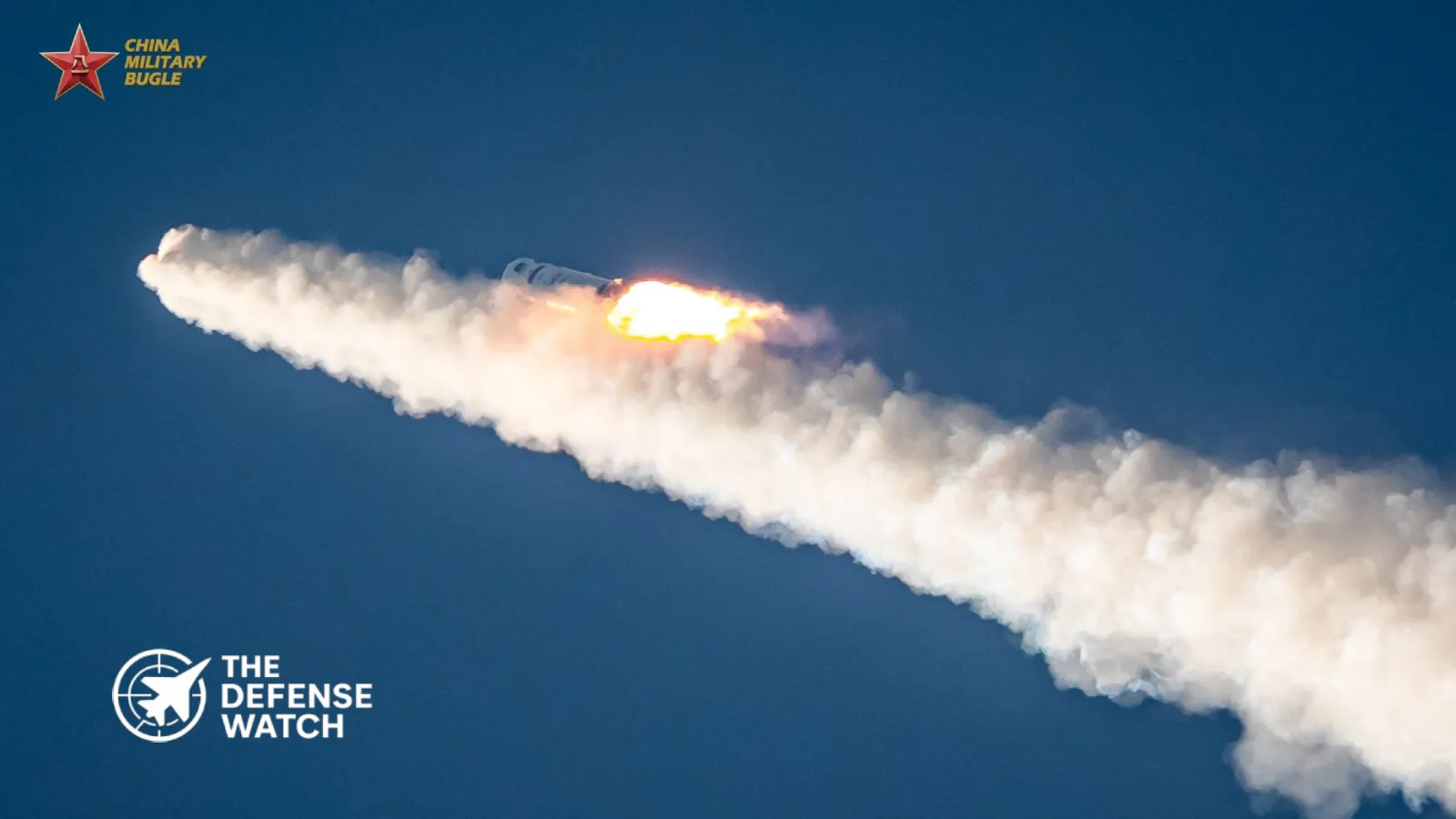
China on Feb. 11 conducted a successful low altitude demonstration flight of its Long March 10 carrier rocket alongside a maximum dynamic pressure abort test of the new generation Mengzhou crewed spacecraft, according to Chinese state media. The test took place in south China’s Hainan Province and is part of Beijing’s broader effort to field a next generation crewed launch system for future space missions.
The test verified critical escape and recovery systems designed to protect astronauts during the most stressful phase of launch, reinforcing China’s steady progress toward expanded human spaceflight operations.
Test Objectives And Execution
The Feb. 11 test combined two major objectives. First, China carried out a low altitude flight demonstration of the Long March 10 rocket’s first stage. Second, engineers executed a maximum dynamic pressure abort test of the Mengzhou crewed spacecraft system.
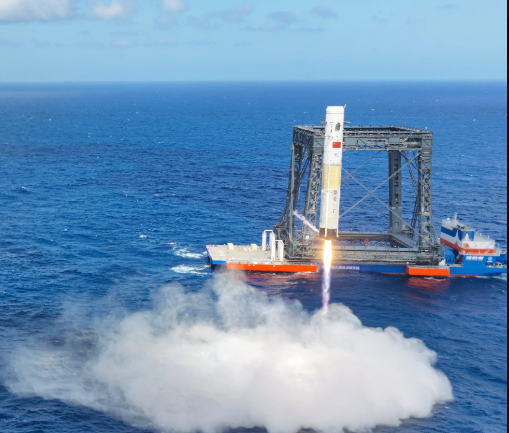
Maximum dynamic pressure, often referred to as max Q, occurs when aerodynamic stress on a rocket is at its peak during ascent. Demonstrating a safe abort at this stage is considered one of the most demanding tests for any crewed launch system.
During the flight, the escape system activated as planned, separating the Mengzhou return capsule from the launch vehicle. Both the Long March 10 first stage and the spacecraft return capsule splashed down safely in a designated sea area, meeting all planned test parameters.
Chinese authorities described the test as a full success, validating design assumptions for crew escape, separation, descent, and maritime recovery.
Long March 10 Rocket Overview
The Long March 10 is China’s next generation heavy lift carrier rocket developed primarily to support future human spaceflight missions. It is expected to play a central role in launching crewed spacecraft beyond low Earth orbit, including planned lunar missions.
Unlike earlier Long March variants, the Long March 10 is specifically optimized for crew safety, reliability, and mission flexibility. The rocket incorporates upgraded propulsion systems, improved avionics, and enhanced fault tolerance to meet human rating requirements.
The successful low altitude demonstration of the first stage provides early validation of its flight control, structural integrity, and recovery behavior during off nominal scenarios.
Mengzhou Crewed Spacecraft And Safety Systems

Mengzhou is intended to support a wider range of missions, including low Earth orbit operations and future deep space flights. Its design emphasizes improved habitability, modularity, and higher safety margins.
A key feature of the Mengzhou system is its launch escape architecture, which must reliably pull the crew capsule away from a failing rocket within milliseconds. The successful abort at maximum dynamic pressure demonstrates that the system can function under extreme aerodynamic and mechanical loads.
Chinese space officials noted that the test verified coordinated performance across propulsion, guidance, separation mechanisms, parachute deployment, and splashdown recovery.
Strategic Significance For China’s Space Program
This test is a notable step in China’s long term human spaceflight roadmap. Beijing has publicly stated its intent to conduct crewed lunar missions in the coming decade, and the Long March 10 and Mengzhou systems are central to that goal.
Abort tests are a standard requirement for crewed launch vehicles globally and are closely watched indicators of program maturity. Comparable tests have been conducted by NASA for the Apollo, Space Shuttle, and Commercial Crew programs, as well as by Russia for its Soyuz system.
By demonstrating an abort at maximum dynamic pressure, China joins a small group of spacefaring nations that have validated this critical safety capability.
Regional And Global Implications
From a geopolitical perspective, China’s steady progress in human spaceflight reinforces its position as a major space power. While the Feb. 11 test was civilian in nature, space launch capabilities often carry dual use implications, particularly in areas such as propulsion, guidance, and reentry technologies.
U.S. and allied defense analysts routinely monitor such developments as part of broader assessments of China’s aerospace industrial base and technological trajectory.
At the same time, the test underscores Beijing’s emphasis on incremental, methodical development rather than rapid public demonstrations. This approach mirrors earlier phases of China’s space station program, which progressed through extensive ground and flight testing before operational deployment.
What Comes Next
Chinese space authorities have not released a public timeline for the first crewed flight of the Long March 10 and Mengzhou system. However, additional tests are expected, including higher altitude abort trials, integrated launch rehearsals, and uncrewed orbital missions.
Each step will further refine system reliability and crew safety ahead of operational use. Analysts expect the program to continue advancing steadily through the late 2020s.