War Department Announces Major AI Platform Expansion
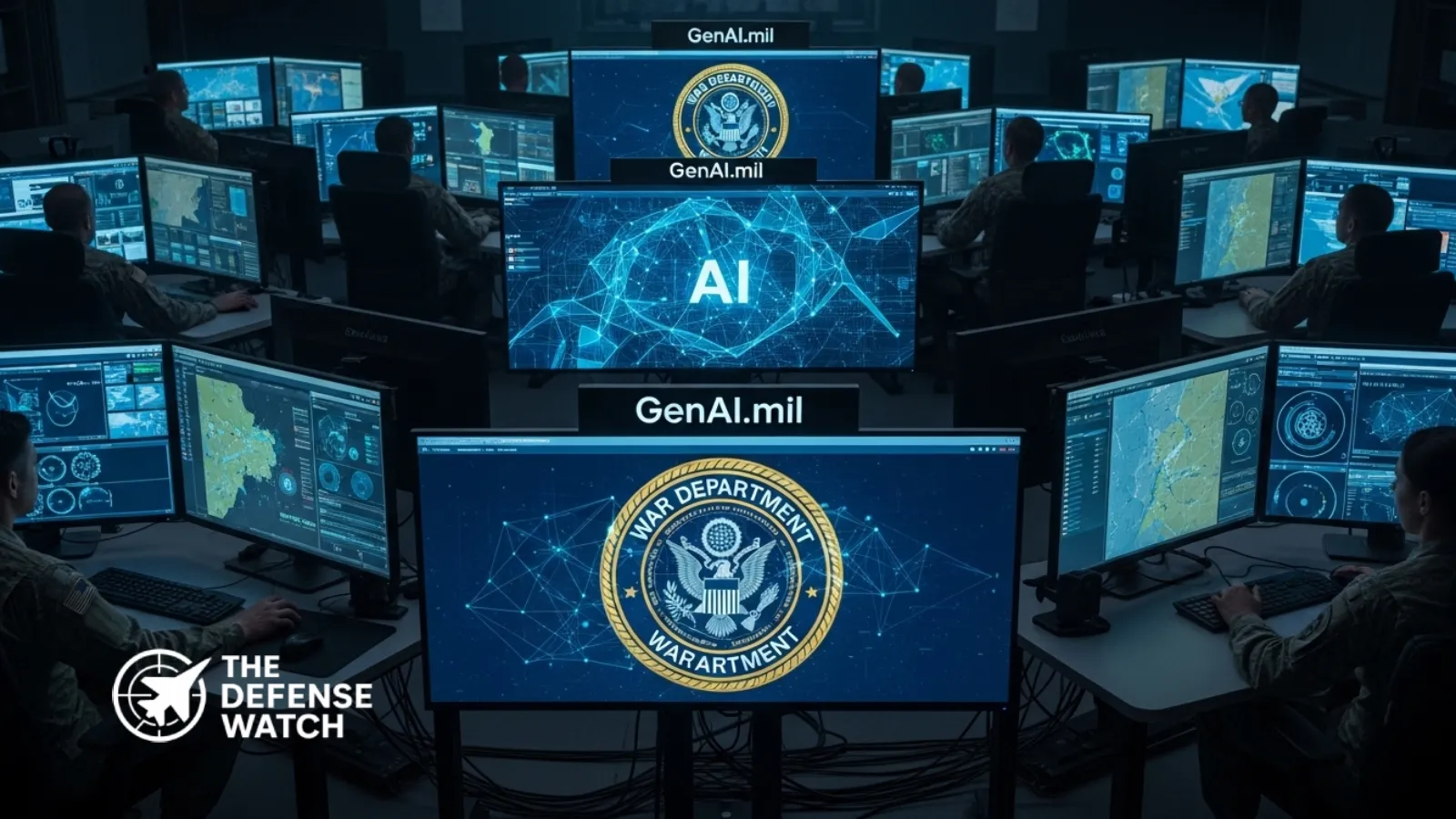
The Department of War announced February 9, 2026, a partnership with OpenAI to integrate ChatGPT into its GenAI.mil enterprise artificial intelligence platform, expanding advanced AI capabilities to all 3 million department personnel. The integration represents a significant milestone in the military’s push to become an “AI-first” warfighting force.
GenAI.mil, the department’s unified AI environment launched in December 2025, has surpassed one million unique users across all military services in just two months of operation. The platform maintains a 100% uptime record since deployment and has been adopted by the Army, Navy, Air Force, Space Force, and Marine Corps as their preferred generative AI solution.
“This partnership will make OpenAI’s advanced large language models readily available to all 3 million Department personnel,” according to the official War Department release. “ChatGPT will be made available to enhance mission execution and readiness, delivering reliable capabilities to the joint force.”
Platform Integration Follows AI Acceleration Strategy
The OpenAI integration directly executes the War Department’s Artificial Intelligence Acceleration Strategy released in January 2026 and implements President Trump’s White House AI Action Plan mandate. Secretary of War Pete Hegseth announced the acceleration strategy on January 9, 2026, directing the department to become an “AI-first” warfighting force across all components.
The AI Acceleration Strategy establishes seven Pace-Setting Projects designed to unlock critical foundational enablers for military AI deployment. These projects focus on warfighting capabilities, intelligence operations, and enterprise mission areas, with aggressive timelines and designated program leaders reporting monthly progress to the Deputy Secretary of War.
According to DefenseScoop reporting, the platform’s adoption is “accelerating operational tempo and sharpening the decision superiority” of users across the department. Comprehensive training programs continue rolling out to ensure all personnel can effectively integrate AI capabilities into daily workflows.
Multiple Frontier AI Vendors Support Platform
GenAI.mil launched initially with Google’s Gemini for Government products as its first integrated AI models. The platform provides specialized versions of commercial AI tools approved to handle Controlled Unclassified Information at Impact Level 5 security certification.
(adsbygoogle = window.adsbygoogle || []).push({});The War Department awarded $200 million contracts to four frontier AI companies in 2025: OpenAI, Google, Anthropic, and xAI. These agreements enable majority department personnel access to advanced commercial generative AI capabilities, including large language models, agentic AI workflows, and cloud-based infrastructure.
xAI’s Grok models from the Elon Musk-led company were announced for GenAI.mil integration in December 2025, with deployment targeted for early 2026. The platform will provide users access to real-time global insights from the X platform alongside AI model capabilities, according to War Department officials.
OpenAI announced its “OpenAI for Government” initiative alongside the department contract, with a pilot program through the Chief Digital and Artificial Intelligence Office. The company stated the partnership will help identify and prototype frontier AI applications for administrative operations, healthcare delivery, program acquisition data analysis, and proactive cyber defense.
Service-Wide Adoption Accelerates Implementation
Five of six military services have formally designated GenAI.mil as their enterprise AI platform, with only the Coast Guard maintaining separate systems. The Coast Guard, which falls under Department of Homeland Security authority rather than Department of War, continues developing its “Ask Hamilton” internal AI tool while providing personnel access to GenAI.mil.
The Marine Corps issued a force-wide message in January 2026 announcing GenAI.mil as its enterprise solution. The Army, Space Force, and Air Force proclaimed themselves “AI-first” organizations embracing the new platform through official communications in recent weeks.
The Navy confirmed full alignment with the Pentagon’s AI-first strategy. “The department has designated GenAI as the mandated platform for mission owners and all Department of the Navy users,” a Navy spokesperson stated to DefenseScoop.
(adsbygoogle = window.adsbygoogle || []).push({});The Air Force announced it will sunset NIPRGPT, its previous generative AI chatbot, in favor of GenAI.mil adoption. The Army will maintain some access to preexisting frontier AI models alongside the new platform for specialized applications.
Strategic Context And Implementation Timeline
The War Department’s AI push reflects broader administration priorities around artificial intelligence development and deployment. The Trump administration has emphasized matching the pace of adversaries like China in AI capabilities while reversing restrictions on high-end chip exports to enhance domestic AI development.
Secretary Hegseth’s January 2026 speech at SpaceX’s Starbase facility outlined drastic reforms to Pentagon technology enterprise and innovation ecosystems. The reorganization unified six execution organizations under Undersecretary for Research and Engineering Emil Michael, serving as Chief Technology Officer.
“We must transform how the department fights, buys, and builds,” Hegseth stated in the AI Acceleration Strategy memorandum. “Speed defines victory in the AI era, and the War Department will match the velocity of America’s AI industry.”
The strategy directs the Chief Digital and Artificial Intelligence Office to ensure vendors’ latest AI models become available within 30 days of public release as a primary procurement criterion. This represents a sharp departure from previous timelines that took 18 months to make GPT-4 available in Azure Government Top Secret cloud environments.
Data Access And Infrastructure Expansion
The AI Acceleration Strategy mandates comprehensive data availability across all classification levels to support AI training and analysis. Military departments and components must deliver federated data catalogs to the Chief Digital and Artificial Intelligence Office within 30 days, with authority granted to direct data release to cleared users with valid purposes.
(adsbygoogle = window.adsbygoogle || []).push({});The department is investing substantial resources in expanding AI compute infrastructure from data centers to edge deployments. These investments aim to provide the computational power necessary to run advanced AI models across global military operations.
The strategy emphasizes competition by small teams with transparent metrics rather than centralized planning, mirroring the commercial AI ecosystem that has driven American AI leadership. Continuous field experimentation will measure success, putting AI capabilities directly in operators’ hands for real-world testing.
Security And Responsible AI Considerations
While the War Department press release announcing the OpenAI partnership did not address specific security concerns related to military ChatGPT adoption, the platform operates under Impact Level 5 security certification for handling Controlled Unclassified Information.
The AI Acceleration Strategy redefines “responsible AI” for military applications as “objectively truthful AI capabilities employed securely and within the laws governing the activities of the department.” The strategy mandates incorporating “any lawful use” language into AI service contracts within 180 days.
This approach applies the same legal standards governing use of force in general to AI systems, rather than requiring special higher standards for autonomy in warfare. The strategy explicitly rejects AI models incorporating “ideological tuning” that officials believe interferes with providing objectively truthful responses to user prompts.
Critics have raised concerns about rapidly deploying still-maturing AI technologies that can produce factually inaccurate outputs known as “hallucinations.” However, department leadership has prioritized speed and removing bureaucratic barriers over extended testing cycles.
Industry And Congressional Reaction
Defense industry analysts view the GenAI.mil expansion as signaling significant opportunities for both traditional defense contractors and non-traditional technology companies. The unified platform approach reduces fragmentation that previously hindered military AI adoption across different services and agencies.
Mike Brown, former Defense Innovation Unit director, told Air & Space Forces Magazine that previous innovation organizations “had 1,000 flowers bloom, and it became confusing.” The restructuring under unified leadership provides rational design to previously unwieldy ecosystems.
Congressional oversight of AI deployment continues through provisions in the Fiscal Year 2026 National Defense Authorization Act. Section 1513 requires development of risk-based frameworks for cybersecurity and physical security standards relating to certain AI systems. Section 1533 mandates cross-functional teams developing compliance frameworks for ethical principles in AI model development and procurement.
The department’s approach to implementing these requirements favors speed and fewer constraints on use, according to legal analysis from Inside Government Contracts. How this intersects with Congressional intent for ethical AI frameworks remains an area for continued monitoring.
Future Developments And Timeline
Initial OpenAI ChatGPT demonstrations within GenAI.mil are expected within the coming weeks as integration proceeds. Pace-Setting Projects under the AI Acceleration Strategy require monthly progress demonstrations to senior leadership, with initial showings scheduled for July 2026.
Each military department, combatant command, and defense agency must identify at least three priority projects to “fast-follow” the Pace-Setting Projects within 30 days of the strategy release. These projects will leverage the AI enablers—infrastructure, data, models, policies, and talent—developed through the initial seven projects.
(adsbygoogle = window.adsbygoogle || []).push({});The department continues recruiting top American AI talent through initiatives including the Office of Personnel Management’s “Tech Force” program. Each component must provide AI hiring and talent development plans to the Under Secretary of War for Personnel and Readiness for approval within specified timelines.
As the platform expands to include multiple frontier AI vendors’ latest models, the War Department aims to establish decision superiority and warfighting advantage through comprehensive AI integration across all mission areas from strategic planning to tactical execution.