
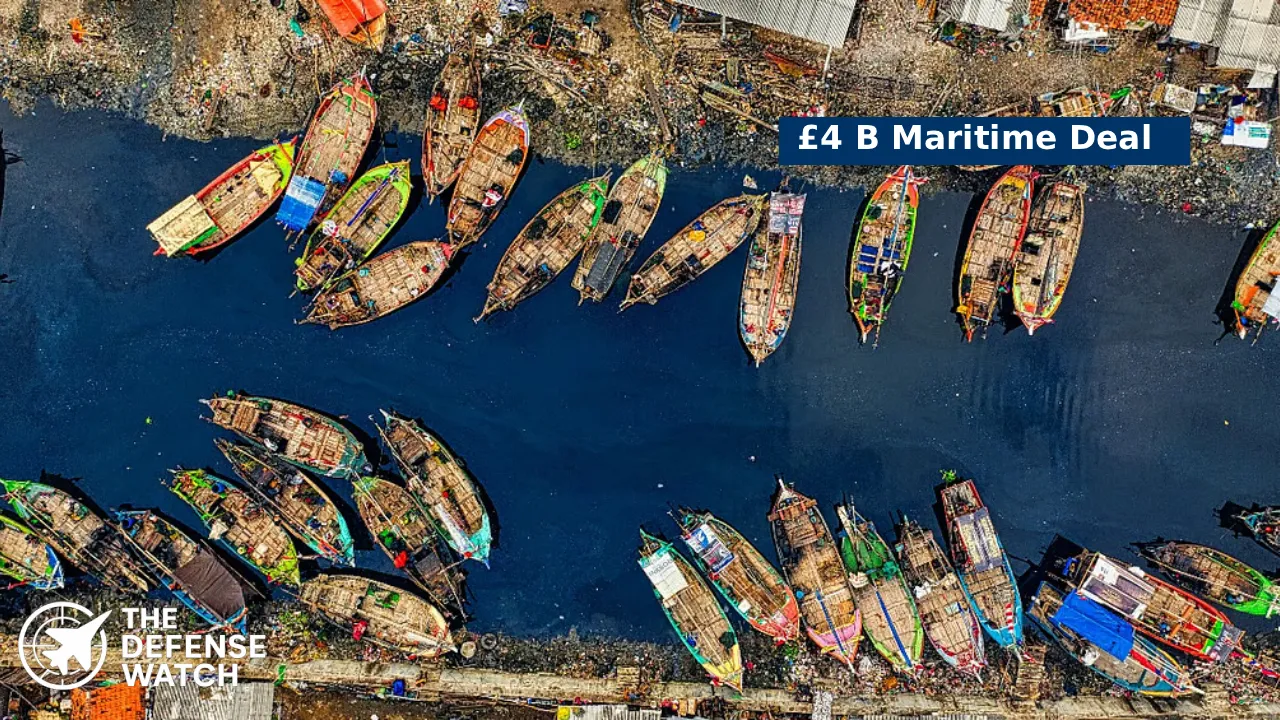
The United Kingdom and Indonesia announced a landmark £4 billion (roughly US$5.24 billion) maritime agreement. The deal, led by British defense firm Babcock, will see vessels built in Indonesia using UK shipbuilding expertise, while also supporting 1,000 jobs back in the UK.
Background: Why This Matters
This agreement builds on a new strategic partnership between the UK and Indonesia, formalized in November 2024. GOV.UK Under that framework, both countries committed to deepen cooperation across defence, maritime security, and sustainable economic development.
For the UK, the deal aligns with efforts to expand its defense exports and industrial base in the Indo-Pacific. For Indonesia, it represents a significant step in strengthening its naval and maritime capabilities — both for security and civilian (fishing) sectors.
Key Details of the Deal
Scope and Structure
- Lead contractor: Babcock International.
- Vessel production: To be carried out in Indonesia, leveraging local shipyards.
- Types of vessels: A mix of naval ships and more than 1,000 fishing vessels, under a joint Maritime Partnership Program (MPP).
- Jobs:
- ~1,000 UK jobs secured — with roles at Babcock’s Rosyth, Bristol, and Devonport sites.
- In Indonesia, construction is expected to catalyze domestic shipbuilding and coastal community development.
Strategic Motivation
- The UK frames the deal as part of its Indo-Pacific security commitment, emphasizing a rules-based maritime order and freedom of navigation.
- Indonesia aims to boost food security by expanding its fishing fleet, while modernizing its coastal and naval infrastructure.
- There is a strong technology-transfer component: the partnership includes joint R&D, and knowledge sharing in automation, AI, and digital ship design.
Sustainability and Environment
- Supported by the UK’s Blue Planet Fund, the program emphasizes environmental sustainability.
- Future vessels will be deployed in a socially and ecologically conscious manner — including dynamic fish-stock assessment, marine conservation, and coastal resilience efforts.
Expert & Policy Perspectives
- From the UK’s viewpoint, Prime Minister Keir Starmer said the deal “reinforces our joint commitment to global stability and bolsters our shared national security.”
- Babcock CEO David Lockwood underscored the economic and industrial benefits: the program “will advance critical Indonesian naval and maritime programs … while stimulating the supply chain and SME opportunities” in the UK.
- Diplomatically, analysts see this as part of a broader Indo-Pacific tilt — not only advancing UK economic interests but also deepening strategic ties with a key ASEAN nation.
On Indonesia’s side, the deal supports President Prabowo Subianto’s priorities: modernizing the navy, enhancing maritime security, and strengthening food security via its fishing industry.
Broader Context
This maritime deal is one in a series of recent UK moves to expand its defense footprint in Southeast Asia.
- Earlier in 2025, the UK-Export Finance (UKEF) agency backed a €157.9 million contract to support Indonesia’s National Maritime Security System (NMSS) using a UK-developed AI-powered surveillance system.
- The HMS Spey, a Royal Navy offshore patrol vessel known for its green propulsion features, visited Jakarta earlier in the year — highlighting a mutual interest in sustainable defense tech.
- Indonesia itself is diversifying its naval procurement: earlier deals involve French Scorpène submarines, indicating that its modernization agenda is technologically and geopolitically broad.
Strategically, this deal also comes amid intensifying geopolitical competition in the Indo-Pacific, where major powers are vying for influence through security partnerships, infrastructure investments, and defense exports.
Implications & What to Watch
- Naval Capacity Building: The MPP could significantly expand Indonesia’s coastal and naval fleet, enhancing its maritime sovereignty in a region with complex security dynamics.
- Industrial Growth: For the UK, the deal secures hundreds of high-value jobs while maintaining shipbuilding relevance. For Indonesia, technology transfer and local build could help strengthen its shipbuilding sector long-term.
- Sustainable Security: The inclusion of environmental and social sustainability aligns with growing global demand for green defense — making this a potential model for future maritime partnerships.
- Geopolitical Strategy: This deepening UK-Indonesia military-industrial cooperation may factor into wider regional strategies involving the US, NATO, and other Indo-Pacific partners.
- Follow-On Deals: Watch for future contracts, particularly in surveillance (building on the NMSS), training, and possibly even more advanced warship construction or dual-use vessels.
Conclusion
The £4 billion UK-Indonesia maritime deal represents a multifaceted strategic win: bolstering Indonesia’s naval and fishing capacity, safeguarding UK jobs, and reinforcing a rules-based order in the Indo-Pacific. It signals a deepening defense-industrial partnership with long-term implications for regional security, economic growth, and technological collaboration. As both nations move into implementation, the broader geopolitical and industrial consequences will warrant close monitoring.
Get real time update about this post category directly on your device, subscribe now.
