
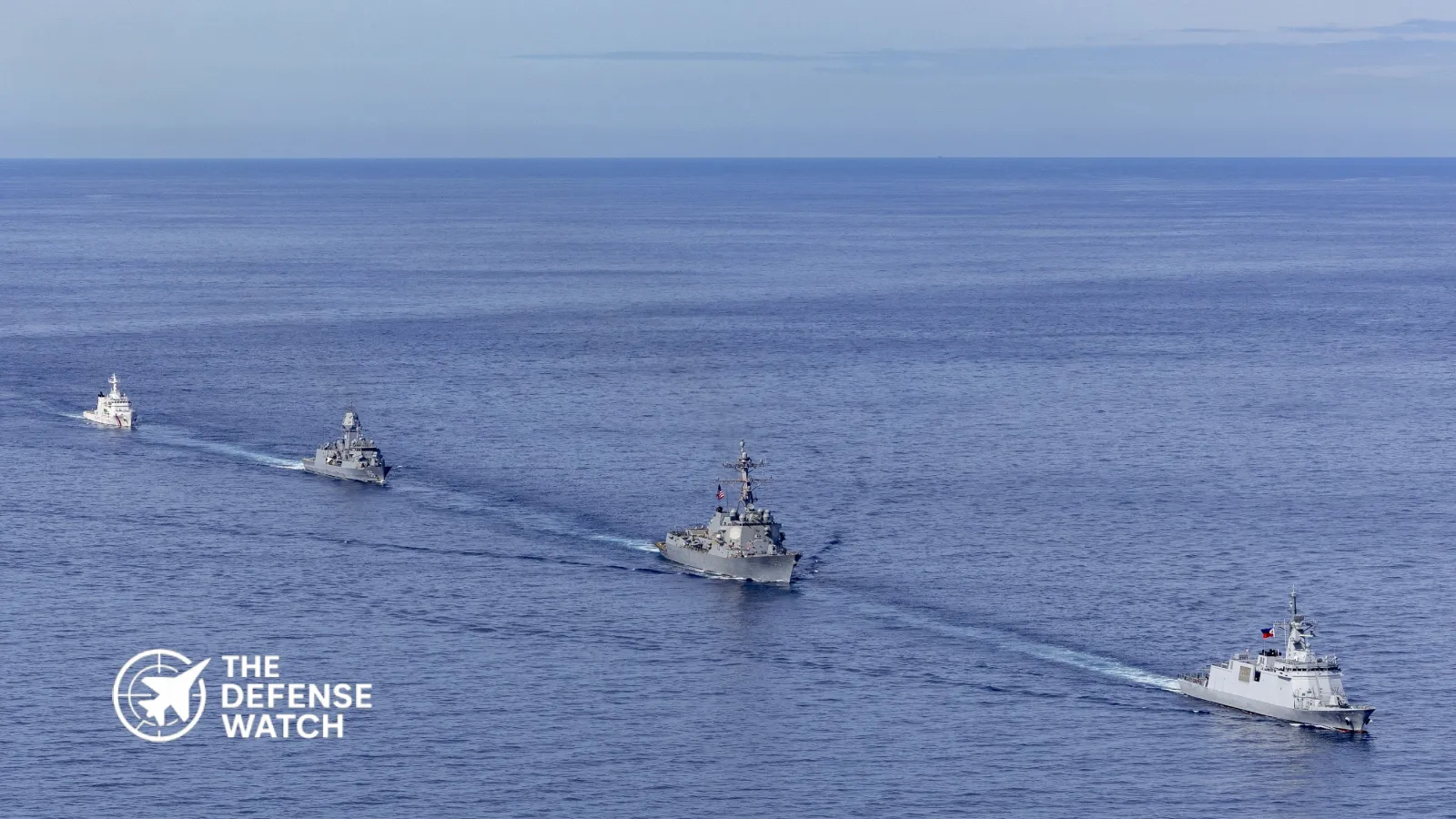
- ► Australia, the Philippines, and the United States conducted a Maritime Cooperative Activity inside the Philippine EEZ.
- ► Activities included joint sail, communication drills, and maritime domain awareness coordination.
- ► The operation supports freedom of navigation and adherence to international law.
- ► Trilateral cooperation builds on existing bilateral alliances and expanding Indo-Pacific partnerships.
- ► The Maritime Cooperative Activity reflects growing alignment among U.S. allies in the region.
Maritime Cooperative Activity Conducted In Philippine EEZ
The recent Maritime Cooperative Activity in the Philippine Exclusive Economic Zone brought together naval and air forces from Australia, the Philippines, and the United States in a coordinated display of trilateral defense cooperation.
According to official releases from the Armed Forces of the Philippines and the U.S. Indo-Pacific Command, the activity was conducted within the Philippines’ internationally recognized Exclusive Economic Zone, consistent with international law.
The drills are part of a series of expanding multilateral engagements aimed at improving operational coordination, domain awareness, and maritime security in the Indo-Pacific.
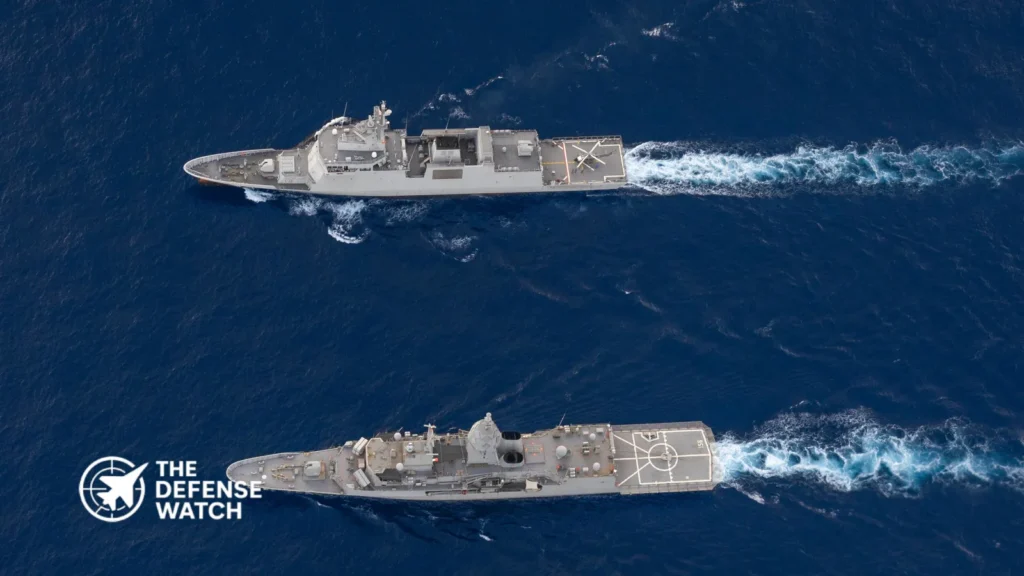
Expanding Trilateral Maritime Coordination
The Maritime Cooperative Activity Philippines engagement reflects a steady shift from bilateral to trilateral maritime security coordination in Southeast Asia.
The Philippines remains a treaty ally of the United States under the 1951 Mutual Defense Treaty. Australia has deepened defense ties with Manila in recent years, including the signing of a Status of Visiting Forces Agreement in 2023, enabling closer military cooperation.
By conducting operations inside the Philippine Exclusive Economic Zone, the three nations are reinforcing Manila’s sovereign rights under the United Nations Convention on the Law of the Sea. While officials did not disclose the exact location, previous Maritime Cooperative Activity Philippines drills have taken place in waters facing the South China Sea.
This is significant. The South China Sea remains one of the world’s most contested maritime regions, with overlapping claims and increasing coast guard and naval presence from regional actors.
Operational Focus: Interoperability And Maritime Domain Awareness
Officials stated that the Maritime Cooperative Activity focused on improving interoperability between participating forces.
Typical components of such engagements include communication exercises, division tactics, cross deck coordination, and maritime domain awareness sharing. These activities are designed to ensure that allied ships and aircraft can operate safely and effectively together in real world scenarios.
The United States, through U.S. Navy assets assigned to Indo-Pacific Command, regularly conducts similar operations with treaty allies. Australia’s navy has expanded its operational footprint in Southeast Asia, while the Philippines continues to modernize its naval and coast guard capabilities.
The Philippine military has emphasized that these exercises are defensive in nature and aimed at strengthening collective maritime security.
Strategic Significance In The Indo-Pacific
The Maritime Cooperative Activity Philippines drill carries broader strategic weight beyond routine training.
First, it signals that trilateral cooperation is becoming institutionalized rather than episodic. Joint maritime patrols and coordinated presence operations are now occurring with greater frequency.
Second, it reinforces the concept of distributed deterrence. Rather than relying on a single nation’s presence, multiple allied forces operate together, complicating potential coercive actions in contested waters.
Third, it aligns with Washington’s Indo-Pacific strategy, which emphasizes networked security partnerships. Australia’s participation demonstrates that U.S. allies are increasingly coordinating among themselves, not only through Washington.
For Manila, such engagements serve a dual purpose. They enhance operational readiness while signaling diplomatic alignment with key security partners.
Legal And Policy Context
Under international law, an Exclusive Economic Zone extends up to 200 nautical miles from a coastal state’s baseline, granting sovereign rights over natural resources and certain economic activities.
By conducting the Maritime Cooperative Activity within the Philippine EEZ, participating nations reinforce recognition of these rights. This carries symbolic and practical importance in a region where maritime claims remain disputed.
Statements from participating governments have consistently referenced adherence to international law, freedom of navigation, and respect for sovereignty. These principles remain central to Indo-Pacific maritime policy frameworks.
Growing Pattern Of Multilateral Maritime Engagements
The Maritime Cooperative Activity Philippines drill is part of a broader trend.
Over the past several years, the United States and the Philippines have expanded the scope of their annual Balikatan exercises. Australia has increasingly joined such engagements, reflecting deeper integration among allied forces.
This pattern indicates a gradual normalization of multilateral maritime patrols in Southeast Asia. Rather than one off symbolic sail throughs, these activities now emphasize coordination, communication, and practical interoperability.
For defense planners, that shift matters. Routine coordination reduces friction during crises and strengthens shared situational awareness across maritime domains.
Get real time update about this post category directly on your device, subscribe now.
