Hanwha Demonstrates Comprehensive Defense Portfolio in Riyadh
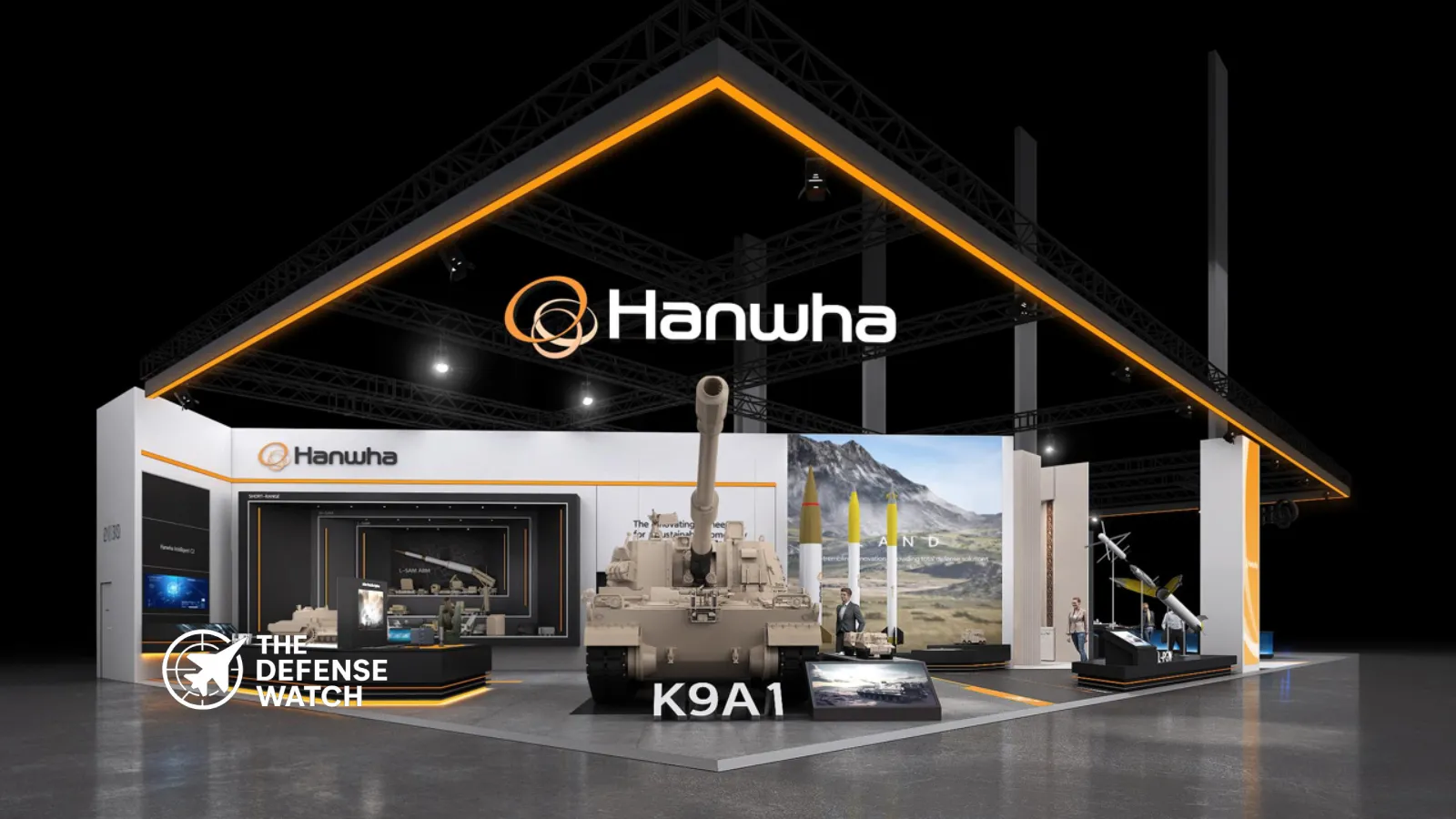
Hanwha Aerospace unveiled an extensive array of multi-domain defense solutions at the World Defense Show (WDS) 2026 in Riyadh, Saudi Arabia, from February 8-12, 2026. The South Korean defense contractor’s exhibition centers on supporting Saudi Vision 2030 through deep localization and technology transfer initiatives designed to establish a self-reliant defense ecosystem in the Kingdom.
The company’s presentation emphasizes strategic industrial cooperation rather than simple equipment sales, directly addressing Saudi Arabia’s “Saudization” goals and defense self-sufficiency requirements. Hanwha’s approach includes localized production facilities, comprehensive technology transfer programs, and domestic talent development initiatives.
K9A1 Artillery System Features Indigenous Engine Technology
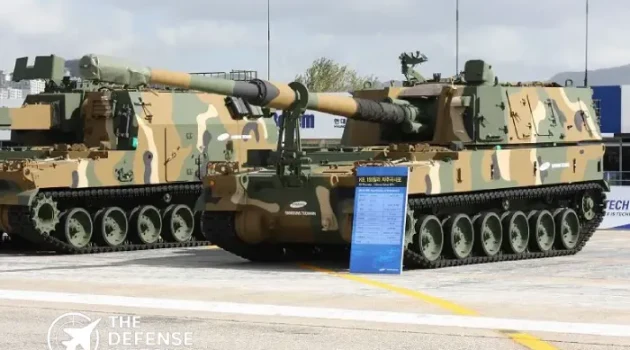
The centerpiece of Hanwha’s display is the full-scale K9A1 self-propelled howitzer, now equipped with a South Korean-manufactured engine. This technological advancement eliminates external regulatory dependencies and establishes an independent supply chain for the 155mm artillery platform.
The K9A1 self-propelled howitzer delivers a 54-kilometer firing range and is exhibited alongside the K10 ammunition resupply vehicle, demonstrating a fully automated artillery solution. The indigenous engine integration positions the K9A1 as an optimal candidate for local production in Saudi Arabia, enabling unrestricted technology transfer without third-party licensing constraints.
According to Hanwha officials, the domestically-produced engine enhances operational efficiency and provides Saudi Arabia with a robust technology transfer roadmap free from external restrictions. The artillery system has been adopted by multiple countries worldwide and represents proven technology with extensive operational history.
Advanced Ground Combat Vehicles Showcased
Hanwha’s land warfare portfolio includes the NIFV-ME next-generation infantry fighting vehicle and the Tigon 8×8 armored vehicle platform. Both systems integrate the company’s Active Protection System (APS), which combines AESA radar technology, artificial intelligence-driven threat analysis, and electro-optical/infrared sensors.
The Active Protection System maximizes vehicle survivability in contemporary battlefield environments by providing 360-degree threat detection and automated countermeasure deployment. Hanwha’s AI-driven TOMMS maintenance, repair, and operations platform supports these armored platforms through predictive maintenance capabilities designed to ensure peak combat readiness.
The NIFV-ME represents Hanwha’s latest infantry fighting vehicle development specifically configured for Middle Eastern operational requirements, while the Tigon 8×8 provides tactical mobility across diverse terrain conditions.
Integrated Multi-Layered Air Defense Architecture Highlighted
Responding to regional airspace protection requirements, Hanwha demonstrated an integrated multi-layered air defense architecture combining M-SAM medium-range and L-SAM long-range surface-to-air missile systems. The integrated architecture provides 360-degree defensive coverage against aerial threats across all altitude ranges.
The system debut includes the Multi Mission Radar (MMR), which enhances detection precision and tracking capabilities for diverse aerial targets. For low-altitude threats, Hanwha presented a counter-unmanned aerial vehicle suite featuring short-range AESA radars integrated with the Sky Light laser air defense system.
The Sky Light laser air defense system represents the world’s first mass-produced laser weapon platform, according to Hanwha. The directed energy weapon provides cost-effective engagement of small unmanned aerial systems and other low-altitude threats without ammunition expenditure.
All air defense assets operate through an AI-driven command and control system enabling coordinated management of multiple defense platforms and rapid response to complex, multi-domain threats. The integration allows commanders to synchronize kinetic and directed energy weapons based on threat priority and engagement economics.
Naval and Space Capabilities Demonstrated
Hanwha Ocean showcased the KSS-III submarine, a 3,600-ton diesel-electric platform distinguished as the world’s only conventional submarine with submarine-launched ballistic missile capabilities. The submarine demonstrates Hanwha Ocean’s naval shipbuilding expertise and advanced maritime warfare solutions.
In the space domain, Hanwha presented AI-based satellite imagery analytics enabling continuous, all-weather strategic monitoring and intelligence gathering. The satellite analysis capabilities provide 24/7 surveillance supporting strategic decision-making and tactical operations planning.
Localization Strategy Supports Saudi Industrial Development
Sung Il, Head of Middle East and North Africa region at Hanwha Aerospace, emphasized the company’s commitment to economic value creation in Saudi Arabia through strategic localization and sustained cooperation. “By bringing our most advanced multi-domain solutions to Riyadh, we demonstrate our commitment to being the Kingdom’s most reliable partner,” Sung stated.
Hanwha’s localization strategy extends beyond manufacturing to encompass supply chain development, workforce training, and sustainable technology transfer. The approach aligns with Saudi Vision 2030’s objectives for industrial diversification and reduced dependence on hydrocarbon revenues.
The company’s long-term commitment focuses on establishing domestic defense production capabilities that support both Saudi Arabian military requirements and potential export opportunities to regional partners. Local production facilities would create employment opportunities for Saudi nationals while building indigenous defense industrial capacity.
Strategic Implications For Middle East Defense Market
Hanwha’s comprehensive display at WDS 2026 reflects intensifying competition among global defense contractors for Middle Eastern market share. The region represents significant growth potential due to ongoing modernization programs and evolving security requirements.
The emphasis on localization and technology transfer distinguishes Hanwha’s approach from traditional foreign military sales models, potentially providing competitive advantages in securing long-term contracts with Saudi Arabia and neighboring Gulf Cooperation Council states.
South Korean defense exports have expanded significantly in recent years, with artillery systems, armored vehicles, and air defense platforms gaining international adoption. Hanwha’s participation in WDS 2026 demonstrates continued focus on the Middle East as a strategic priority market.
The integration of artificial intelligence, directed energy weapons, and multi-domain command and control systems showcased at WDS 2026 represents current trends in defense technology development globally. Hanwha’s portfolio addresses contemporary threats including unmanned aerial systems, precision strike capabilities, and integrated air and missile defense requirements.
Get real time update about this post category directly on your device, subscribe now.