
Elbridge Colby Urges Europe To Lead Conventional Defense At NATO 3.0 Talks
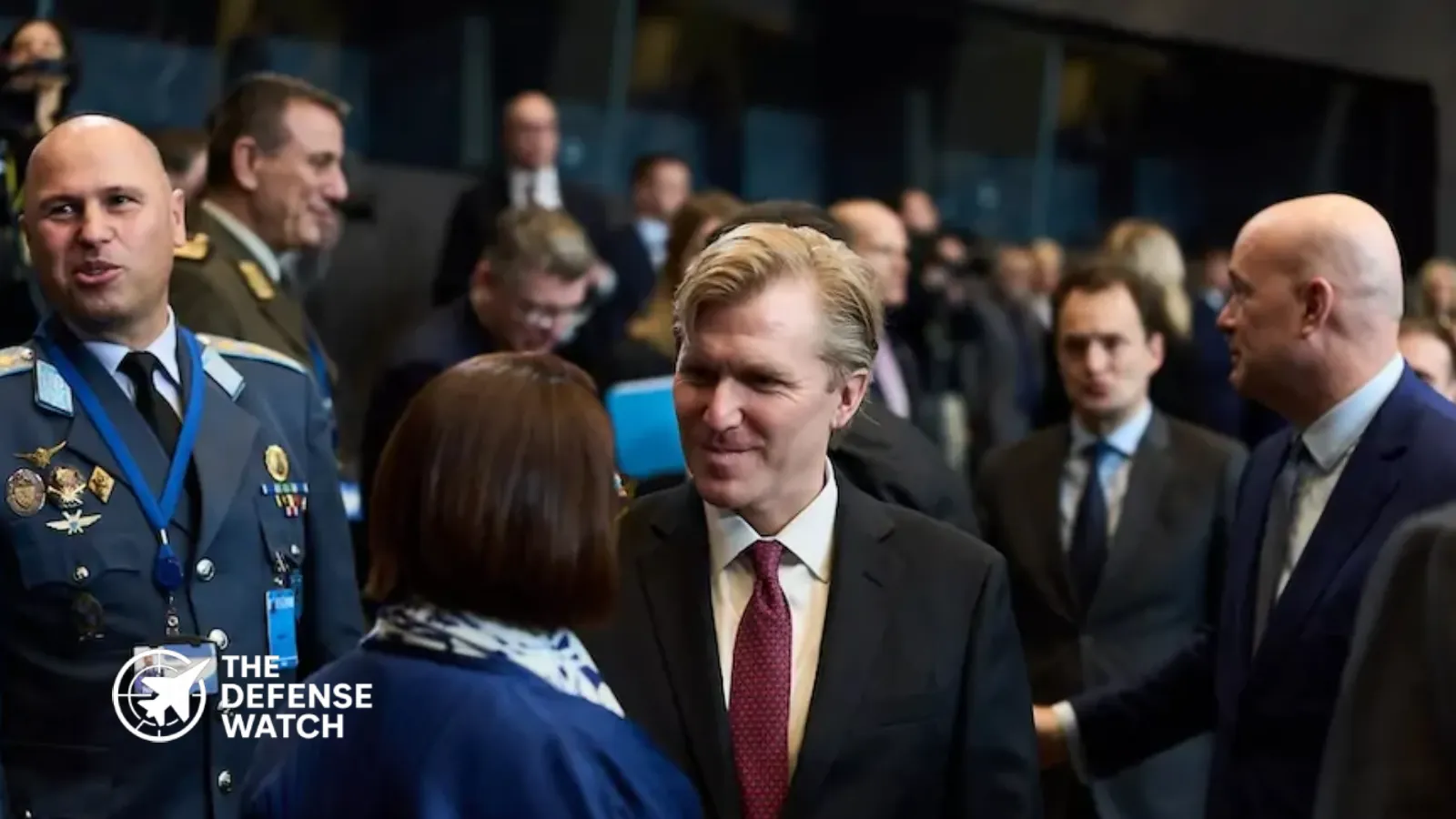
Elbridge Colby urged European allies to take primary responsibility for conventional defense in Europe as the United States advanced its NATO 3.0 framework during a ministerial meeting in Brussels.
Speaking on the sidelines of a North Atlantic Treaty Organization gathering in Brussels, Colby outlined Washington’s view that European nations must increase their conventional force contributions while the United States prioritizes strategic competition elsewhere. The remarks were reported by Defence Industry Europe and align with broader U.S. defense policy debates over force allocation and alliance burden sharing.
Colby, who has previously served in senior Pentagon roles, has long argued for a strategic rebalance of U.S. military resources. His comments reflect a continued emphasis on urging European NATO members to expand investment in land forces, air power, logistics, and readiness to deter potential aggression on the continent.
NATO 3.0 And Strategic Rebalancing
The concept often described as NATO 3.0 centers on modernizing alliance deterrence, strengthening regional defense plans, and clarifying burden-sharing expectations among members. While NATO has significantly increased force posture and readiness since Russia’s full-scale invasion of Ukraine in 2022, debates persist over long-term sustainability and equitable contributions.
According to NATO’s own published defense spending data, a growing number of member states now meet or exceed the alliance’s 2 percent of GDP guideline. However, U.S. officials continue to stress that spending levels must translate into deployable, combat-ready capabilities.
Colby’s position emphasizes that European allies, given their economic weight and proximity to potential threats, are capable of assuming greater responsibility for conventional deterrence in Europe. That would allow the United States to allocate more resources to other strategic priorities while remaining committed to NATO’s collective defense obligations under Article 5.
European Capabilities Under Scrutiny
Since 2022, European governments have announced major procurement and modernization programs. Germany launched its special defense fund, Poland accelerated armored and air defense acquisitions, and Nordic states strengthened integration following NATO enlargement.
Yet capability gaps remain. NATO planning documents highlight ongoing shortfalls in ammunition stocks, air and missile defense systems, logistics infrastructure, and rapid reinforcement capacity. Allied commanders have repeatedly stressed the importance of sustained production and industrial base expansion.
Colby’s remarks in Brussels reinforce a view within segments of U.S. defense leadership that Europe must institutionalize recent spending increases rather than treat them as temporary responses to crisis.
Alliance Cohesion And Strategic Clarity
The Brussels ministerial meeting comes at a time of intensified alliance activity. NATO has implemented new regional defense plans, expanded forward deployments along its eastern flank, and deepened coordination on force readiness.
Public statements from NATO Secretary General and allied defense ministers continue to emphasize unity and shared responsibility. While Washington remains the alliance’s largest military contributor, officials have consistently called for a more balanced distribution of capabilities.
Colby’s framing does not suggest a withdrawal from NATO commitments. Instead, it reflects a strategic argument that long-term deterrence in Europe should increasingly rely on European conventional strength, supported by U.S. strategic enablers.
Implications For Defense Planning
If adopted broadly within U.S. policy, the approach outlined by Colby could influence future force posture reviews, defense budget allocations, and procurement priorities. It may also shape discussions ahead of upcoming NATO summits where capability targets and readiness metrics are reviewed.
For European governments, the message is clear. Sustained investment in heavy land forces, air defense, integrated command systems, and munitions production will be central to maintaining credibility within the alliance framework.
As NATO adapts to evolving security conditions, debates over burden sharing and regional responsibility are likely to remain central. The Brussels discussions underscore that alliance modernization is not only about new capabilities, but also about redefining roles within a changing strategic landscape.
Get real time update about this post category directly on your device, subscribe now.
