RTX Tomahawk Deal Marks Major U.S. Production Push
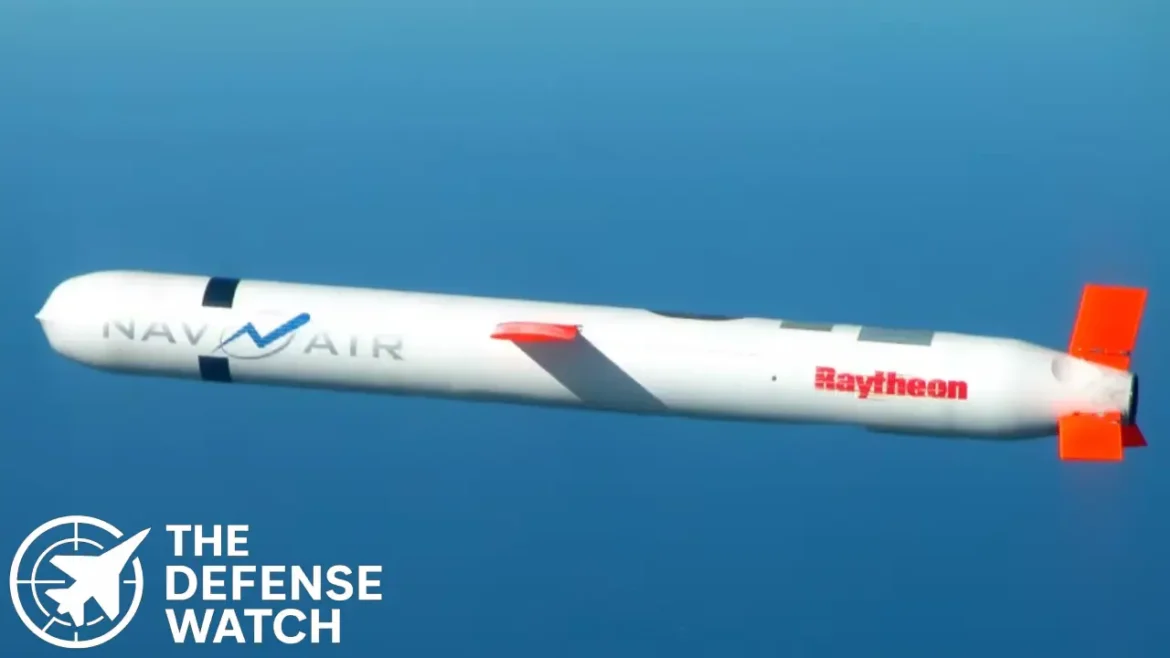
RTX has secured a $22.9 billion, seven-year agreement with the U.S. Navy to accelerate production of Tomahawk cruise missiles, according to the Navy and reporting by Reuters. The agreement is intended to increase annual Tomahawk production to more than 1,000 missiles, a major expansion from the current production rate of about 60 missiles per year.
Takeaways
The U.S. is committing major resources to expand Tomahawk production and strengthen its long range strike inventory.
1. $22.9 Billion, Seven-Year Agreement
The U.S. Navy awarded Raytheon, an RTX business, a $22.9 billion contract covering accelerated production of Tomahawk missiles.
2. Production To Exceed 1,000 Missiles Annually
The agreement is designed to increase Tomahawk output from roughly 60 missiles per year to more than 1,000 annually.
3. Long-Range Strike Capacity Is The Focus
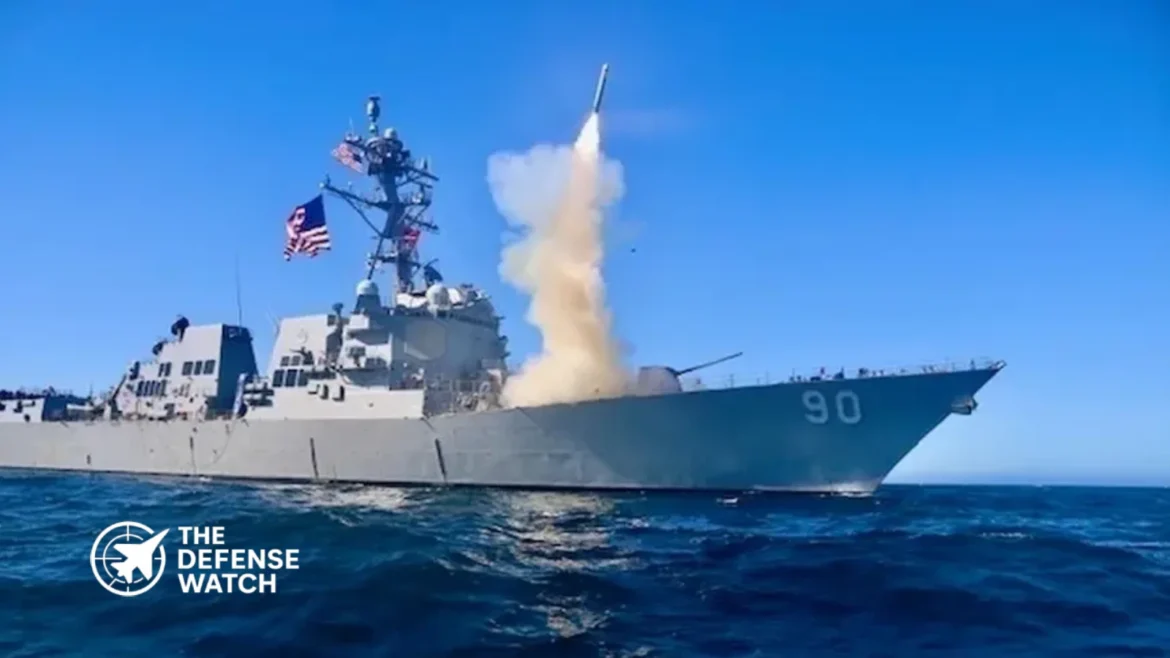
Tomahawk provides the Navy with a ship and submarine launched long range precision strike capability and remains a major part of the U.S. conventional strike inventory.
4. Industrial Capacity Is Central To The Deal
The production expansion builds on investments by RTX in manufacturing facilities, workforce capacity and the wider supply chain supporting critical missile programs.
5. Part Of A Wider Munitions Expansion
The Tomahawk agreement follows broader U.S. efforts to accelerate production of critical munitions, including Patriot, THAAD, AMRAAM, SM-3 and SM-6 systems.
The contract formalizes a production expansion framework established between Raytheon and the Department of War in February 2026. That earlier agreement called for annual Tomahawk production to rise above 1,000 missiles as part of a broader effort to increase output of critical U.S. precision weapons.
The scale of the new agreement reflects a shift in U.S. defense acquisition priorities. Rather than focusing only on individual missile purchases, Washington is committing to longer production horizons intended to give industry greater certainty to expand factories, hire workers and strengthen suppliers.
What The $22.9 Billion Contract Covers
The Navy identifies Tomahawk as a critical long-range strike capability. The weapon can be launched from surface ships and submarines and has been used extensively by U.S. forces in operational environments.
RTX said earlier in 2026 that the company was investing in Tomahawk manufacturing capacity in Tucson, Arizona. The expansion is part of a broader $2.6 billion capital investment announced by RTX in 2025 to increase production capacity across several missile programs.
Metric Current or Announced Position Contractor Raytheon, an RTX business Customer U.S. Navy Contract value $22.9 billion Contract duration Seven years Current annual Tomahawk production About 60 missiles Target annual production More than 1,000 missiles Launch platforms U.S. Navy surface ships and submarines Production expansion Tucson, Arizona and supporting industrial base Earlier production framework Announced February 2026 The contract value should not be interpreted simply as the price of a fixed number of missiles. The seven-year arrangement is tied to a broader effort to expand production capacity and accelerate deliveries, making the industrial base itself a central part of the investment.
Why The Navy Wants More Tomahawks
Tomahawk gives the U.S. Navy a long-range strike option that can be carried by surface combatants and submarines. This allows the Navy to generate strike effects without relying exclusively on tactical aircraft operating close to defended airspace.
That distinction matters in a conflict involving sophisticated air defenses. A submarine or surface ship equipped with Tomahawks can launch weapons from considerable standoff distances, allowing the attacking force to distribute strike capacity across multiple platforms.
RTX says the Tomahawk can strike targets more than 1,000 miles away and has been used operationally more than 2,300 times.
The missile therefore occupies a different role from shorter-range weapons carried by aircraft and ships. Its value is tied not only to the performance of an individual missile but also to the number of weapons available when a campaign requires repeated strikes.
Production Capacity Has Become A Strategic Issue
The most important aspect of the agreement may be the change in production scale.
Moving from roughly 60 Tomahawks annually to more than 1,000 represents an increase of more than 16 times the previous production rate. Achieving that level requires considerably more than expanding a final assembly line.
Missile production depends on a network of specialized suppliers producing propulsion components, electronics, guidance equipment, structures, warheads and other controlled components. Bottlenecks in any one of these areas can limit total output.
The U.S. Navy has responded to this wider challenge by establishing a Portfolio Acquisition Executive for Munitions in May 2026. The organization was created to develop enterprise-level acquisition strategies and accelerate the delivery of munitions while expanding production capacity.
That approach is significant because modern missile inventories can be consumed much faster than they can be replaced. A production line designed around peacetime demand may not provide enough capacity during a sustained high-intensity conflict.
Tomahawk Expansion Fits A Broader Missile Surge
The RTX agreement is not an isolated procurement effort.
In February, Raytheon announced five framework agreements covering Tomahawk, AMRAAM, SM-3 Block IB, SM-3 Block IIA and SM-6. The company said those agreements would increase annual production of Tomahawk to more than 1,000 missiles, AMRAAM to at least 1,900 and SM-6 to more than 500.
The Pentagon has also pursued separate efforts to expand production of Patriot and THAAD missile components. Reuters reported in August that a deal involving Lockheed Martin and Northrop Grumman was designed to substantially increase production capacity for those air and missile defense systems.
Taken together, these programs show that U.S. munitions policy is increasingly focused on production depth. The objective is not simply to maintain enough weapons for existing requirements, but to create industrial capacity capable of replenishing inventories while continuing to support ongoing operations.
The Industrial Base Is Now Part Of Combat Power
For the U.S. Navy, the ability to launch Tomahawks is only one part of the equation. The Navy also needs sufficient stocks, trained personnel, mission planning infrastructure, launch systems and maintenance support to sustain the capability.
This creates a direct relationship between industrial capacity and operational endurance.
A ship may have the launch system and the crew required to fire a missile, but those capabilities provide limited value if available missile stocks cannot be replenished at an adequate rate. Increasing production therefore strengthens the Navy’s ability to sustain long-range strike operations over extended periods.
The issue is particularly important for the U.S. because the Navy operates a large global fleet and must preserve credible strike capacity across multiple theaters.
Tomahawk And The Indo-Pacific Requirement
The production expansion also has implications for long-term U.S. planning in the Indo-Pacific.
The geography of the region places a premium on long-range weapons. U.S. forces may have to operate across large distances while facing increasingly capable surveillance, missile and air defense networks.
Tomahawk does not solve every operational problem associated with a highly contested maritime environment. However, a larger inventory gives commanders more options for distributing strike capacity among ships and submarines.
The Navy’s ability to generate long-range fires from dispersed platforms is particularly relevant to concepts that seek to complicate an adversary’s targeting process. More available missiles can support a larger number of firing opportunities without requiring every strike to originate from aircraft operating close to hostile defenses.
The Production Challenge Is Bigger Than The Missile Factory
Reaching more than 1,000 Tomahawks annually will require sustained industrial performance.
The first challenge is supply chain capacity. Specialized components may require long lead times, limited production sources or highly qualified suppliers. Increasing final assembly without expanding those upstream sources could create bottlenecks elsewhere in the production process.
The second challenge is workforce expansion. High-end missile manufacturing depends on skilled engineers, technicians, machinists, quality personnel and other specialized workers. Building that workforce takes time, particularly where security requirements and specialized training are involved.
The third challenge is quality control. Higher production rates cannot come at the expense of reliability. Missile programs require extensive testing and inspection because failures in operational weapons carry significant consequences.
The fourth challenge is sustaining production over several years. A short production surge can be achieved through overtime and existing capacity. Maintaining output above 1,000 missiles annually requires a more durable manufacturing model.
RTX Had Already Increased Missile Output
RTX entered the new agreement after increasing production across its missile portfolio.
The company said in February that its investments included facility expansions and manufacturing improvements intended to support faster deliveries. A $115 million expansion in Alabama had been completed for missile production, while Tomahawk manufacturing investment was focused on facilities in Tucson.
The company also reported increased deliveries across its broader Raytheon portfolio during 2026. That matters because the same industrial base is supporting multiple high-demand weapons programs at the same time.
This creates a balancing problem for the defense industry. Expanding one missile production line may compete for labor, electronics, machine tools and supplier capacity with other programs that are also being accelerated.
A Seven-Year Commitment Changes The Acquisition Model
The seven-year structure gives Raytheon a longer planning horizon than a sequence of short-term production orders.
For industry, longer commitments can support capital investment because factories and suppliers have greater visibility into future demand. That can make it easier to justify equipment purchases, facility expansion and workforce increases.
For the government, the benefit is potentially faster and more predictable replenishment. The tradeoff is that long-term contracts require careful management to ensure production targets, costs and performance remain aligned with military requirements.
The February framework agreements already represented a move in this direction. The August contract turns that policy into a much larger financial commitment centered on Tomahawk production.
What The Deal Means For U.S. Long-Range Strike
The immediate effect of the contract is straightforward: the United States intends to build substantially more Tomahawk missiles and deliver them faster.
The broader significance is industrial.
Recent U.S. weapons procurement has demonstrated that stockpile size alone is not enough. The ability to replace weapons after they are expended is equally important, particularly when several conflicts or security commitments place simultaneous demands on the same production base.
For the Navy, the Tomahawk expansion strengthens one of its established long-range strike capabilities. For the wider U.S. defense establishment, it is another major step toward rebuilding the manufacturing capacity required to sustain precision munitions at wartime consumption rates.
The $22.9 billion agreement therefore represents more than an increase in missile orders. It is a long-term commitment to expand the industrial base behind one of the U.S. military’s most established conventional strike weapons.
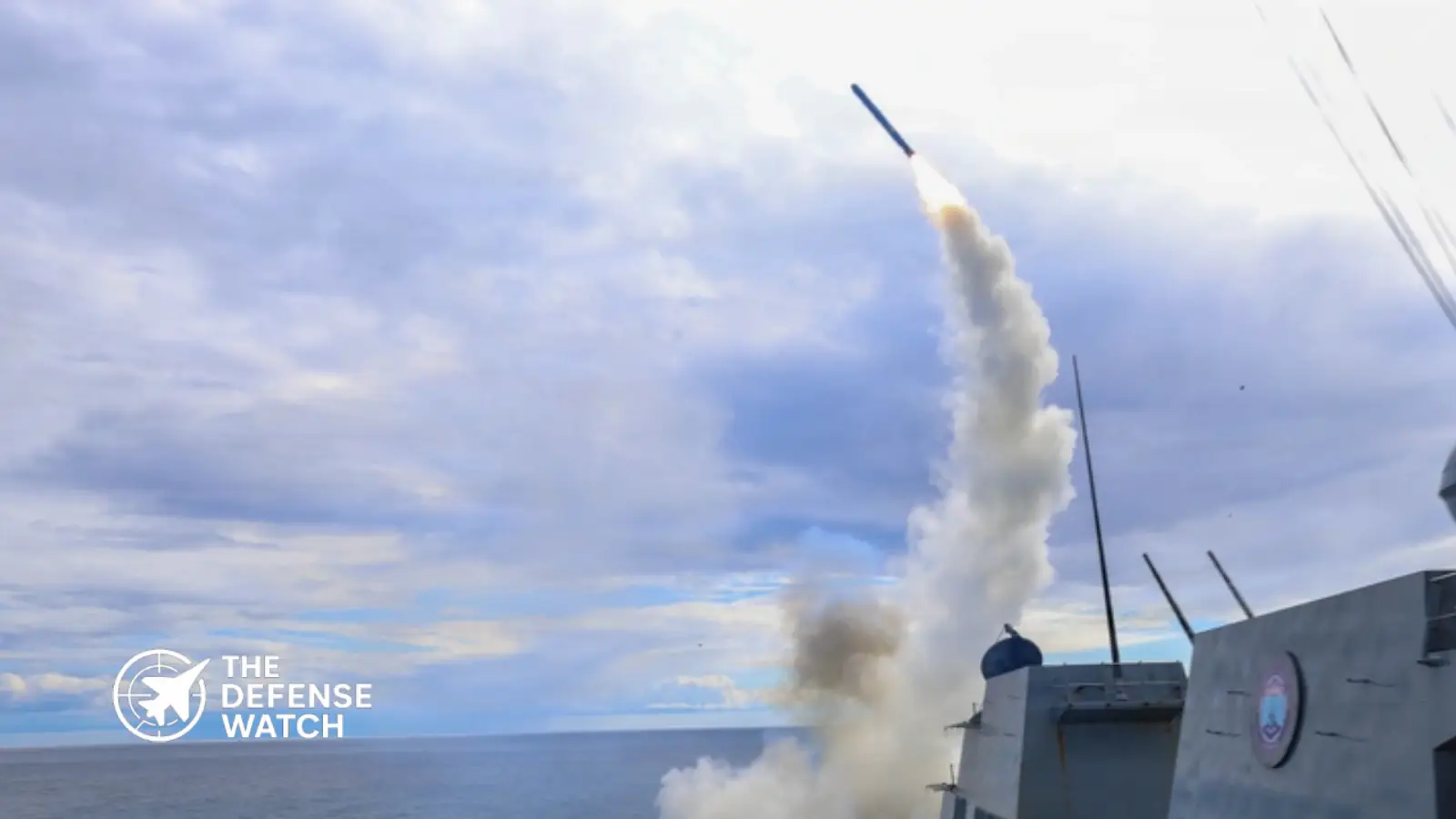
(adsbygoogle = window.adsbygoogle || []).push({});Executive Summary: The Tomahawk cruise missile costs roughly $2 million to $2.5 million per missile and offers long-range strike capability exceeding 1,000 miles, making it a strategic weapon for attacking high-value targets deep inside enemy territory. The Naval Strike Missile (NSM) typically costs $1 million to $1.5 million, prioritizing stealth, anti-ship warfare, and flexible deployment from ships and coastal launchers. Rather than competing directly, the two missiles fulfill complementary roles in modern naval strategy.
The Tomahawk cruise missile cost is typically estimated at $2 million to $2.5 million per round, while the Naval Strike Missile (NSM) generally falls between $1 million and $1.5 million. That price gap raises an obvious question: why would navies pay nearly twice as much for a Tomahawk?
The answer lies in mission design. The Tomahawk is a strategic strike weapon capable of reaching targets more than 1,000 miles away, while the NSM is a stealth-focused anti-ship missile built to dominate naval engagements closer to the battlespace. Comparing them is less about price and more about understanding two very different approaches to maritime warfare.
Modern fleet planners increasingly view the missiles as complementary systems rather than direct competitors. One delivers deep-strike capability across an entire theater of operations. The other helps secure sea control against hostile surface fleets.
Technical Analysis: Cost, Range, and Mission Profiles
The Tomahawk remains one of the most combat-proven cruise missiles ever developed. First introduced during the Cold War, the weapon has evolved through multiple upgrades and remains a cornerstone of U.S. naval strike capability. The latest Block V variants can engage both land targets and certain maritime threats while maintaining exceptional stand-off range.
- (adsbygoogle = window.adsbygoogle || []).push({});
The Naval Strike Missile represents a different generation of thinking. Developed by Norway’s Kongsberg and now fielded by the U.S. Navy and Marine Corps, the NSM prioritizes survivability, stealth, and advanced terminal attack profiles designed to penetrate modern air defenses.
Tomahawk vs NSM Comparison
Metric Tomahawk Block V Naval Strike Missile (NSM) Approximate Unit Cost $2.0M to $2.5M+ $1.0M to $1.5M Primary Role Land attack and maritime strike Anti-ship warfare Range 1,000+ miles (1,600+ km) 100 to 150+ miles (185 to 250+ km) Launch Platforms Destroyers, cruisers, submarines Surface ships, coastal batteries, mobile launchers Guidance GPS, INS, terrain matching, seeker GPS, INS, imaging infrared seeker Warhead Approximately 1,000 lbs Approximately 275 lbs Flight Profile Subsonic cruise Sea-skimming, low observable The most significant difference is range. A Tomahawk can strike strategic infrastructure, command centers, logistics hubs, and air defense sites deep inside enemy territory. Few conventional naval weapons offer comparable reach.
The NSM is optimized for a different mission set. Rather than attacking inland targets hundreds of miles away, it focuses on destroying enemy surface combatants. Its sea-skimming flight profile and sophisticated target recognition capabilities make interception significantly more difficult.
For naval commanders, the question is not which missile is better. The real question is which missile best supports the mission at hand.
(adsbygoogle = window.adsbygoogle || []).push({});Surface Ship vs Submarine Launch: The Logistics Battle
Launch platform considerations often shape procurement decisions as much as missile performance.
Tomahawk missiles are typically carried aboard major surface combatants equipped with the Mk 41 Vertical Launch System. These ships function as mobile strike platforms capable of influencing operations far beyond the horizon.
Submarine-launched Tomahawks add another layer of strategic value. Attack submarines can approach contested areas undetected, launch precision strikes, and withdraw before adversaries can respond. This combination of stealth and range has repeatedly proven effective during combat operations in the Middle East and elsewhere.
The NSM follows a more distributed model. It can be mounted on smaller warships, truck-based coastal defense systems, and expeditionary launchers. This flexibility aligns closely with emerging U.S. and allied concepts of distributed maritime operations.
Rather than concentrating firepower aboard a handful of expensive platforms, commanders can disperse missile batteries across multiple locations. This creates a targeting challenge for adversaries and improves force survivability.
From a logistics perspective, the NSM offers affordability and flexibility. The Tomahawk offers reach and strategic impact. Modern navies increasingly seek both capabilities.
(adsbygoogle = window.adsbygoogle || []).push({});Why Cost Alone Doesn’t Determine Value
Defense procurement rarely revolves around unit price alone.
A missile costing $2.5 million may appear expensive until planners consider what it replaces. A Tomahawk can strike a target more than a thousand miles away without risking a pilot, tanker aircraft, escort fighters, or support assets.
The cost equation changes further when considering strategic effects. Destroying a high-value command center or disabling a critical air defense network can influence an entire campaign.
Meanwhile, NSM delivers value through quantity and operational flexibility. A force equipped with larger numbers of anti-ship missiles can create significant challenges for hostile fleets operating in contested waters.
This is why many Western navies continue investing in both long-range strike missiles and dedicated anti-ship weapons rather than choosing one category over the other.
The Gaming Parallel: What Tomahawk And NSM Teach Us About Competitive Strategy
The distinction between Tomahawk and NSM mirrors the difference between strategic and tactical play in competitive gaming.
In Call of Duty esports, legendary players such as Clayster built their reputation not simply through mechanical skill, but through map control, timing, and understanding when to commit valuable resources. The Tomahawk fills a similar role. It is the high-value strategic asset that can reshape the battlefield from extreme distance, much like a perfectly timed game-changing play during a championship match.
The NSM operates differently. It resembles a dominant meta weapon that excels in repeated engagements. Rather than delivering one dramatic strategic strike, it focuses on controlling the immediate fight through survivability, precision targeting, and flexible deployment options.
Military planners face the same challenge that elite esports teams face. Should resources be concentrated into a few powerful capabilities, or distributed across larger numbers of specialized tools?
(adsbygoogle = window.adsbygoogle || []).push({});The Tomahawk wins through reach and strategic impact. The Naval Strike Missile wins through flexibility, survivability, and sea control. Modern naval doctrine increasingly relies on both.
Conclusion & Takeaway
Comparing the Tomahawk cruise missile cost to the Naval Strike Missile reveals two fundamentally different philosophies of naval warfare.
Tomahawk delivers strategic depth, long-range precision, and multi-domain strike capability. NSM provides a cost-effective, highly survivable anti-ship weapon designed for distributed maritime operations and contested naval environments.
The future of naval warfare is unlikely to be defined by a single missile. Instead, success will depend on combining long-range strike systems with agile anti-ship capabilities that can survive in increasingly dangerous battlespaces.
In the end, the million-dollar question is not whether Tomahawk or NSM is superior. It is whether a navy can effectively integrate both into a coherent strategy. The fleets that master that balance will hold a decisive advantage in the maritime conflicts of the coming decades.
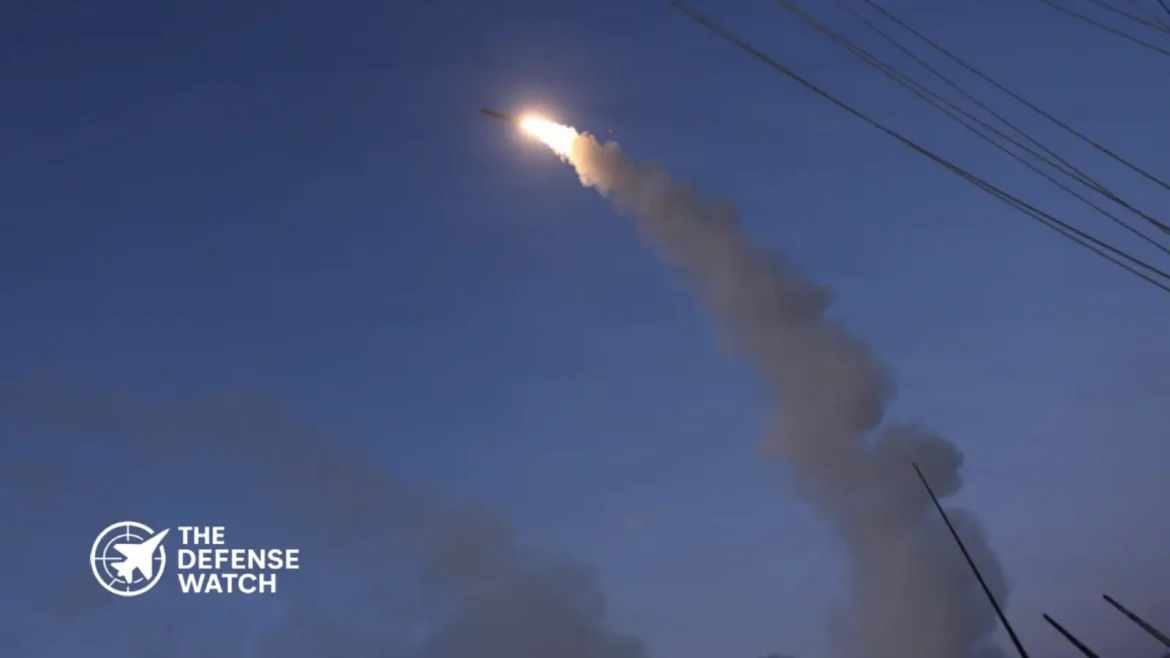
Executive Summary:
Germany is seeking to acquire 400 Tomahawk cruise missiles and three Typhon launcher systems from the United States following Washington’s decision to cancel a planned missile deployment in Germany. The move reflects Berlin’s growing focus on long-range strike capabilities and NATO deterrence in Europe.
Germany Pursues Tomahawk Missile Capability After US Policy Shift
Germany is moving to acquire 400 Tomahawk cruise missiles and three Typhon launcher systems from the United States after the Pentagon reportedly canceled plans to deploy long-range US missiles on German territory.
German Defence Minister Boris Pistorius is expected to raise the issue during meetings in Washington, where discussions could include US Defense Secretary Pete Hegseth. The proposed acquisition would mark one of Germany’s most significant efforts in decades to expand its long-range conventional strike capability.
The potential deal comes amid continued NATO concerns over Russia’s military posture in Europe and the growing importance of land-based precision strike systems in modern deterrence strategies.
Why Germany Wants Tomahawk Missiles
The Tomahawk is a long-range, precision-guided cruise missile developed for deep strike missions against high-value targets. The missile has been widely used by the US military and allied forces in multiple operational theaters over the past three decades.
Germany’s interest in the missile appears closely tied to uncertainty surrounding US forward deployments in Europe. Washington had previously discussed stationing long-range fires capabilities in Germany as part of broader NATO deterrence efforts. However, reports indicate those deployment plans have now been canceled or delayed.
Berlin is now seeking an independent capability rather than relying entirely on rotational US deployments.
The proposed package also includes the Typhon Weapon System, a ground-based launcher developed by the US Army capable of firing both Tomahawk cruise missiles and SM-6 missiles. The system is part of the US Army’s Mid-Range Capability program designed to close long-range strike gaps in the Indo-Pacific and Europe.
Strategic Importance For NATO
The possible acquisition highlights a broader shift in European defense planning since Russia’s invasion of Ukraine. NATO members are increasingly investing in long-range strike systems, integrated air defense, and precision-guided munitions.
For Germany, acquiring Tomahawk missiles would represent a substantial expansion of conventional deterrence options. The country has historically maintained a more limited land-based strike profile compared with France or the United Kingdom.
The move could also strengthen NATO’s ability to hold critical targets at risk across extended ranges without relying exclusively on airpower.
Military analysts have noted that systems like Typhon provide operational flexibility because they can be rapidly relocated and integrated into alliance operations. The launcher’s compatibility with multiple missile types also offers future modernization potential.
Typhon System Expands Operational Reach
The Typhon system has gained increasing attention since the US Army began fielding the capability. Unlike traditional artillery systems, Typhon is designed to engage targets at significantly greater ranges using precision-guided missiles.
The launcher bridges the gap between short-range tactical fires and strategic strike systems.
The US Army previously deployed Typhon during exercises in the Indo-Pacific region, reflecting Washington’s emphasis on distributed long-range strike operations. Germany’s interest suggests European allies are now evaluating similar capabilities for continental defense.
If approved, the deal could deepen US-German defense industrial cooperation while accelerating NATO modernization efforts.
Political And Procurement Challenges Remain
Despite growing momentum, the proposed purchase would still require US government approval under the Foreign Military Sales process. Funding, delivery timelines, and industrial integration details also remain unclear.
The acquisition could generate debate within Germany over escalation risks and the role of long-range strike systems in European security policy. Berlin has traditionally approached missile deployments cautiously due to historical and political sensitivities.
However, the changing European security environment has already pushed Germany toward major defense modernization initiatives, including increased military spending and procurement of advanced US-made systems such as the F-35 Lightning II.
Broader European Missile Modernization Trend
Germany’s pursuit of Tomahawk missiles aligns with a wider European trend toward strengthening conventional deterrence capabilities. Several NATO states are expanding missile inventories, investing in integrated air and missile defense, and increasing defense spending targets.
The development also underscores the growing role of land-based strike systems in alliance planning after the collapse of the Intermediate-Range Nuclear Forces Treaty reshaped the strategic environment in Europe.
Should the deal proceed, Germany would become one of the few European operators of the Tomahawk system, significantly enhancing its long-range precision strike reach within NATO’s collective defense framework.
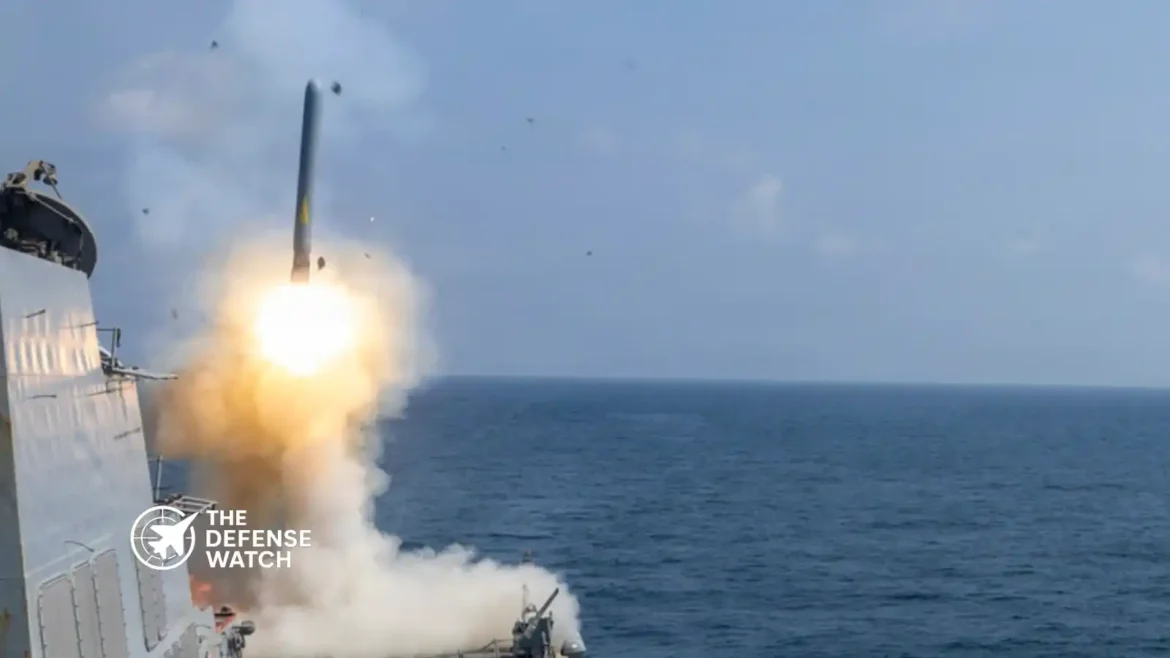
U.S. Tomahawk Missile Stockpile Faces Pressure After Record Expenditure in Iran Campaign
The United States has fired at least 850 Tomahawk long-range cruise missiles in just over one month of Operation Epic Fury, the joint U.S.-Israeli military campaign against Iran — a figure that marks the highest single-campaign expenditure of the weapon in its four-decade operational history. The burn rate has prompted serious concern among Pentagon planners and defense analysts, not primarily over the current conflict, but over what depletion means for U.S. deterrence commitments elsewhere — most critically in the Indo-Pacific.
(adsbygoogle = window.adsbygoogle || []).push({});- The U.S. has launched at least 850 Tomahawk cruise missiles in just over one month of Operation Epic Fury, the joint U.S.-Israeli campaign against Iran — the highest expenditure rate in any single conflict in the missile’s operational history.
- The Center for Strategic and International Studies (CSIS) estimates the U.S. retains roughly 3,000 Tomahawks, meaning the current campaign has consumed approximately 28% of the total estimated inventory.
- Each Tomahawk Block V costs approximately $3.5 million and carries a 1,000-pound warhead with a range exceeding 1,000 miles — making it one of the most capable and expensive conventional strike weapons in the U.S. arsenal.
- Raytheon secured a contract in February 2026 to build thousands of additional missiles, including Tomahawks, but analysts estimate it will take two to three years to replenish current expenditures at existing production rates.
- The Maritime Strike Tomahawk (MST) variant, capable of engaging surface ships, has reportedly been employed in Operation Epic Fury and represents a critical capability for any future conflict in the Indo-Pacific.
The Big Picture
The Tomahawk Land Attack Missile has served as the backbone of U.S. long-range conventional strike capability since the 1991 Gulf War. Its combination of standoff range, precision, and launch flexibility — from surface ships and submarines — has made it the weapon of choice for opening salvos against defended targets.
The missile has been upgraded continuously over time, with the Block V being the current operational version. That iterative modernization has kept the Tomahawk relevant across decades of conflict, but it has not solved the fundamental problem of industrial production capacity. Building a Tomahawk is not like producing small arms or even artillery rounds. It requires precision manufacturing, sophisticated guidance systems, and a supply chain that cannot be surged overnight.
The Iran campaign has forced that structural constraint into the open at a strategically inconvenient moment.
What’s Happening
The Washington Post reported that the U.S. launched at least 850 Tomahawks in the first month of Operation Epic Fury, a rate far exceeding the missile’s use in any previous conflict, according to a CSIS assessment by analysts Mark Cancian and Chris Park.
While the Department of Defense does not publicly disclose precise Tomahawk inventory figures, CSIS estimates the U.S. retains approximately 3,000 missiles. That estimate, if accurate, means the Iran campaign has already consumed roughly one-quarter to one-third of the total U.S. cruise missile stockpile in approximately 30 days of combat.
Tomahawks were employed heavily during the early stages of Epic Fury, until the United States and Israel had suppressed what remained of Iran’s air defense network. Once air superiority was established, the rate of Tomahawk use declined — not to zero, but significantly — as shorter-range, cheaper munitions became viable.
The cost differential is stark. A Tomahawk costs approximately $3.5 million per unit and carries a range of 1,000 miles. A JDAM — a precision guidance kit fitted to an unguided bomb — costs around $80,000 and delivers comparable accuracy and explosive effect at a range of roughly 20 miles. Once the threat environment permits, the operational calculus shifts decisively toward cheaper alternatives.
Why It Matters
The immediate operational concern is manageable. According to CSIS analyst Mark Cancian, the U.S. has sufficient Tomahawks and other precision munitions to sustain Operation Epic Fury. The more serious issue is the second and third-order effect on global deterrence posture.
The strategic concern centers on the effect of stockpile depletion on other theaters, particularly Ukraine and the Western Pacific, where a potential conflict with China looms as the primary pacing threat. Defense strategists warn that degraded inventories weaken the U.S. ability to deter — or fight — a conflict in the Indo-Pacific, where standoff precision strike is not a supporting capability but a central pillar of warfighting strategy.

Image : U.S. Central Command The Tomahawk’s role in a Taiwan contingency is not hypothetical. U.S. war planners have long relied on the missile’s ability to hold Chinese naval and ground forces at risk from beyond the reach of China’s formidable anti-access/area denial (A2/AD) defenses. Burning through that inventory against Iran — even in a justified and necessary campaign — directly degrades the depth of that deterrent.
Strategic Implications
The Maritime Strike Tomahawk, a relatively new variant capable of engaging moving surface targets, represents a particularly valuable asset in any Indo-Pacific conflict scenario. In the event of a Chinese invasion of Taiwan, the ability to strike naval vessels at standoff range would be operationally significant. Reports suggest this variant has seen employment in Operation Epic Fury, which, while providing real-world validation of the system, simultaneously draws down an inventory that took years to build.
The parallel Patriot missile situation reinforces the broader concern. CSIS estimated the U.S. entered the Iran conflict with approximately 4,000 Patriot interceptors. After roughly one month of combat, approximately 1,000 have been expended — about one quarter of the total inventory — with the U.S. producing around 600 Patriots annually, split equally between domestic and allied requirements.
The combined drawdown of Tomahawks and Patriots across a single theater engagement illustrates a systemic vulnerability: the U.S. defense industrial base, despite years of effort, has not achieved the production surge capacity required to sustain simultaneous high-intensity operations in multiple theaters. This is not a new problem — it has been documented in DoD reports and congressional testimony for years — but Operation Epic Fury is now providing the most consequential real-world stress test that vulnerability has ever faced.
Competitor View
China’s military planners will draw careful conclusions from Operation Epic Fury’s opening phase. The expenditure of 850-plus Tomahawks in approximately 30 days — well above any historical precedent — provides Beijing with invaluable empirical data on U.S. sustained strike capacity, consumption rates, and the industrial constraints limiting rapid replenishment.
Chinese strategists have long studied U.S. precision strike dependencies. The People’s Liberation Army Rocket Force (PLARF) has developed its own extensive land-attack and anti-ship cruise missile arsenal partly to offset U.S. standoff advantages and partly to impose a cost-exchange calculus that favors attrition of American stockpiles. Seeing that calculus play out in real time — even in a different theater — will inform Chinese assessments of how long the U.S. could sustain high-intensity operations in a Taiwan contingency.
Russia and Iran’s other strategic partners will similarly note the constraints revealed by Epic Fury, potentially calculating that a protracted conflict could erode U.S. conventional strike depth faster than the American defense industry can reconstitute it.
What To Watch Next
Raytheon secured a contract in February 2026 to produce thousands of additional missiles, including Tomahawks. Defense Secretary Hegseth has conducted an “Arsenal of Freedom” tour of defense manufacturing facilities, emphasizing the need to accelerate production rates. The effort reflects bipartisan recognition of the stockpile problem, with groundwork laid during the Biden administration and continued under the current Pentagon leadership.
According to Cancian, replacing the 850 to 1,000 Tomahawks already expended in Epic Fury will require two to three years at current production rates. That timeline assumes no further major escalation and no additional high-intensity campaigns drawing on the same stockpile — assumptions that are far from guaranteed given the current geopolitical environment.
Congressional appropriators will face growing pressure to fund accelerated production contracts. The key decision point is whether Congress will authorize multi-year procurement agreements that provide Raytheon with sufficient long-term demand signal to invest in production line expansion. Without such commitments, manufacturers cannot justify the capital expenditure required to meaningfully increase output.
Capability Gap
The Tomahawk stockpile situation exposes a structural gap between U.S. operational demand in sustained high-intensity conflict and the industrial throughput required to match that demand. The missile’s 1,000-mile standoff range is effectively irreplaceable in contested environments where aircraft cannot safely operate — a scenario that applies directly to early-phase operations against advanced adversaries.
No currently fielded U.S. munition replicates the Tomahawk’s combination of range, payload, precision, and in-flight retargeting capability at comparable cost efficiency relative to its operational effect. The Joint Air-to-Surface Standoff Missile (JASSM) family provides some complementary capability but is air-launched and faces its own inventory constraints.
The deeper problem is structural: the U.S. military spent decades optimizing for technological overmatch and relatively low-volume precision strike, without building the industrial surge capacity required for prolonged peer or near-peer conflict. Operation Epic Fury is not that conflict, but it is demonstrating, in real time, what the industrial shortfall looks like under conditions far less demanding than a full-scale Taiwan contingency would impose.
The Bottom Line
The Tomahawk stockpile pressure revealed by Operation Epic Fury is not simply a logistics challenge — it is a strategic warning that the U.S. defense industrial base must be restructured for sustained high-intensity warfare before, not after, a crisis in the Indo-Pacific forces the issue.
 ¦ KEY FACTS AT A GLANCE
- Japan has enabled its destroyers to launch Tomahawk cruise missiles for long-range strike missions.
- The capability relies on vertical launch systems compatible with U.S.-made Tomahawk missiles.
- The move strengthens Japan’s deterrence posture amid rising Indo-Pacific security tensions.
- Tokyo plans to deploy hundreds of Tomahawks as part of its broader defense buildup through the late 2020s.
- The development marks a shift toward counterstrike capability in Japan’s defense policy.
Japanese Destroyer Tomahawk Capability Expands Operational Reach
Japanese destroyer Tomahawk capability now allows Japan’s Maritime Self-Defense Force to conduct long-range precision strikes, marking a major shift in the country’s defense posture and operational reach.
Japan has begun integrating U.S.-made Tomahawk land-attack cruise missiles into its destroyer fleet, enabling strikes at ranges exceeding 1,000 kilometers. The move reflects Tokyo’s evolving security strategy as it responds to increasing regional threats.
The Big Picture
Japan’s decision to field long-range strike weapons aligns with a broader shift in Indo-Pacific security dynamics. Regional military competition continues to intensify, particularly amid growing missile inventories and naval expansion by China and North Korea.
The United States has encouraged allies to enhance their strike capabilities to support distributed deterrence. Japan’s adoption of Tomahawk missiles fits within this framework, improving interoperability with U.S. forces while expanding its own independent options.
Tokyo’s updated National Security Strategy explicitly calls for counterstrike capabilities, signaling a departure from its traditionally defensive-only posture.
What’s Happening
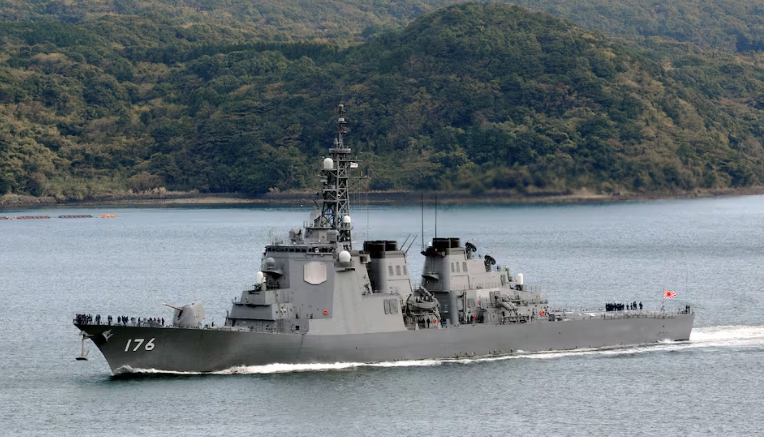
Japan is equipping select destroyers with Tomahawk cruise missiles, according to reporting from Defense News. The capability builds on existing vertical launch systems already deployed on Aegis-equipped ships.
The Tomahawk is a proven, long-range, subsonic cruise missile designed for precision strikes against land targets. It uses terrain-following guidance and GPS navigation to reach targets with high accuracy.
Japan has agreed to purchase hundreds of these missiles from the United States, with deliveries expected to begin in the coming years. Initial deployment will focus on enhancing maritime strike flexibility.
The destroyers involved are expected to include Aegis-class vessels capable of integrating advanced missile systems without major structural changes.
Why It Matters
This development significantly expands Japan’s operational toolkit.
Tomahawk integration provides Japan with a credible stand-off strike capability. This allows engagement of targets without exposing ships to high-risk zones, increasing survivability in contested environments.
The move also enhances joint operations with U.S. forces. Shared systems simplify logistics, targeting coordination, and mission planning.

AFP Photo / Jiji Pres From a technological perspective, the integration demonstrates Japan’s ability to adapt existing platforms to new mission profiles, reducing the need for entirely new ship classes.
Strategic Implications
Japan’s new capability strengthens deterrence by complicating adversary planning.
Long-range strike options allow Japan to hold critical infrastructure, command centers, and missile sites at risk. This raises the cost of potential aggression.
The capability also supports distributed maritime operations. Japanese destroyers can now contribute to offensive strike missions alongside U.S. naval forces, extending the reach of allied operations across the Indo-Pacific.
At the same time, the move reinforces Japan’s role as a more proactive security actor. This shift aligns with broader efforts to balance regional power dynamics.
Competitor View
China is likely to interpret the Japanese destroyer Tomahawk capability as part of a broader containment strategy led by the United States and its allies.
Beijing has consistently criticized regional missile deployments that expand strike ranges. The addition of Tomahawks to Japan’s arsenal introduces new variables into China’s military planning, particularly regarding coastal and inland targets.
North Korea may also view the development as a direct threat to its missile infrastructure. Pyongyang’s emphasis on survivable and mobile systems reflects an effort to counter such capabilities.
Russia, while less directly affected in the Pacific context, has also raised concerns about the proliferation of long-range precision strike systems among U.S. allies.
What To Watch Next
Japan’s next steps will focus on operational integration and doctrine development.
Key milestones include:
Crew training and mission planning adaptation
Integration with targeting and intelligence networks
Coordination with U.S. Indo-Pacific Command
Expansion of missile inventory over timeObservers will also track whether Japan expands the capability to additional platforms, including future surface combatants or submarines.
Capability Gap
Japan historically lacked a long-range strike option beyond its immediate defensive perimeter.
The Japanese destroyer Tomahawk capability addresses this gap by providing a credible counterstrike option. This is particularly relevant in scenarios involving missile launches from adversary territory.
However, limitations remain.
Tomahawk missiles are subsonic and can be vulnerable to advanced air defense systems. Their effectiveness depends heavily on accurate targeting data and mission planning.
Japan must also integrate intelligence, surveillance, and reconnaissance systems to fully exploit the capability.
The Bottom Line
Japan’s adoption of Tomahawk missiles transforms its destroyers into long-range strike platforms, strengthening deterrence and reshaping its role in Indo-Pacific security.
Raytheon Secures Major Pentagon Deal to Expand Tomahawk and Critical Missile Production Through 2033
Raytheon Secures Landmark Deal to Expand U.S. Missile Production
RTX’s Raytheon division announced five framework agreements with the Pentagon on February 4, 2026, to significantly increase production capacity for critical precision munitions including Tomahawk cruise missiles, AMRAAM air-to-air missiles, and Standard Missile variants. The up-to-seven-year agreements mark a strategic shift in U.S. defense acquisition policy aimed at rebuilding weapons stockpiles depleted by recent global conflicts.
(adsbygoogle = window.adsbygoogle || []).push({});Under the frameworks, RTX will increase annual Tomahawk production to more than 1,000 units, AMRAAM output to at least 1,900 missiles, and SM-6 production to more than 500 rounds annually. The company will also accelerate production of Standard Missile-3 Block IB and Block IIA interceptors across facilities in Tucson, Arizona, Huntsville, Alabama, and Andover, Massachusetts.
The Raytheon Tomahawk missile production expansion represents a dramatic increase from current output levels. Tomahawk production currently stands at approximately 60 missiles per year for U.S. forces, meaning the new framework will boost annual capacity by more than 1,500 percent.
Rebuilding Depleted Stockpiles After Global Operations
The boost to defense industrial base comes as Washington’s forces tap into stockpiles for various contingencies, most notably operations in the Middle East amid recent conflicts including Israel and Iran’s 12-Day War and operations against the Houthis in Yemen. American forces have employed Tomahawk cruise missiles and Standard Missile variants at unprecedented rates over the past three years.
The agreements follow similar long-term production deals between the Pentagon and major defense contractors under the Trump administration. Lockheed Martin signed deals in January 2026 to quadruple THAAD interceptor production to 400 units annually and boost Patriot PAC-3 output to 2,000 per year under seven-year contracts.
The framework agreements announced are the first between RTX’s Raytheon weapons unit and the Trump administration, which has called on defense contractors to make larger investments in their factories and prioritize speeding up weapons production.
Multi-Year Framework Enables Industry Investment
The collaborative funding approach incorporated in these framework agreements allows RTX to invest confidently in expanding production capacity without shouldering excessive upfront financial risk. The company investments associated with these framework agreements have been contemplated in RTX’s recently announced financial outlook for 2026, with long-term agreements designed to preserve upfront free cash flow.
(adsbygoogle = window.adsbygoogle || []).push({});RTX announced during its recent earnings call that capital investments in facilities and factories would increase from $2.6 billion to $3.1 billion in 2026, reflecting the company’s commitment to expanding defense production capabilities.
Production rates for many of these munitions will grow two to four times their existing levels, according to the company’s announcement. This expansion addresses both immediate U.S. military requirements and growing demand from allied nations seeking American-made precision weapons.
Tomahawk: Proven Strike Capability With Global Demand
The Tomahawk is a precision weapon launched from ships and submarines that can strike targets from 1,000 miles away, even in heavily defended airspace. Its combat record speaks to its reliability and effectiveness across multiple conflict environments.
U.S. and allied militaries have flight tested the Tomahawk over 550 times and used it in operational environments more than 2,300 times. The cruise missile routinely serves as the first strike option for U.S. forces targeting hostile assets worldwide, offering commanders a standoff precision strike capability that minimizes risk to aircraft and personnel.
International demand for Tomahawk missiles continues to grow. In 2024, Tokyo ordered 400 Tomahawks to equip its destroyers with land attack capabilities, marking a significant enhancement to Japan’s offensive strike options amid rising tensions in the Indo-Pacific region.
The framework agreements cover both Land Attack and Maritime Strike variants of Tomahawk, providing flexibility for anti-ship missions as well as traditional land-based target engagement.
AMRAAM Production Surge Addresses Air Defense Needs
AIM-120 Advanced Medium-Range Air-to-Air Missiles will increase to 1,900 missiles annually, likely restoring and strengthening stocks attrited by air defense actions in the Middle East and missiles sent in defense of Ukraine.
Since 2024, Raytheon has been producing the fifth-generation AMRAAM, featuring advanced guidance, software-defined capabilities and enhanced electronic protection for highly contested combat environments. The weapon serves dual roles as both an air-to-air missile for fighter aircraft and as the primary interceptor for the National Advanced Surface-to-Air Missile System (NASAMS).
With more than 40 allied nations operating AMRAAM-equipped systems, increased production supports both U.S. forces and partner nations requiring modern air defense capabilities. The missile has demonstrated proven performance through more than 6,000 test shots and 13 confirmed air-to-air combat victories.
Standard Missile Family Expansion
The framework agreements also encompass significant production increases for the Standard Missile family, which provides layered defense against aircraft, cruise missiles, and ballistic threats.
Standard Missile-6 (SM-6) offers unique multi-mission capabilities. SM-6 is the only missile that supports anti-air warfare, anti-surface warfare and sea-based terminal ballistic missile defense in one solution, providing naval commanders with maximum flexibility in magazine loading and tactical employment.
Standard Missile-3 (SM-3) variants focus on ballistic missile defense. SM-3 IB is a combat proven interceptor uniquely designed for exo-atmospheric intercept of short- to intermediate-range ballistic missiles with hypersonic hit-to-kill accuracy, and can be launched from both ships and land-based sites.
The SM-3 Block IB saw its combat debut in April 2024, successfully intercepting Iranian ballistic missiles targeting Israel. This operational validation underscores the weapon’s critical role in regional missile defense architectures.
Strategic Implications for Defense Industrial Base
The Raytheon framework agreements represent a fundamental shift in Pentagon acquisition strategy. Rather than ordering weapons on a year-by-year basis through traditional contracting mechanisms, these multi-year frameworks provide industry with demand certainty that justifies major capital investments in production infrastructure.
(adsbygoogle = window.adsbygoogle || []).push({});This approach addresses longstanding concerns about U.S. defense industrial capacity to sustain high-intensity warfare. Deals signed by Lockheed Martin in recent months indicate a shift in defense acquisition strategy aimed at rebuilding America’s industrial capacity to sustain high-intensity warfare.
Geographic diversification of production across multiple states also enhances supply chain resilience. Manufacturing distributed among Tucson, Huntsville, and Andover reduces vulnerability to disruption from natural disasters, accidents, or deliberate targeting.
Indo-Pacific Focus Drives Munitions Demand
Munitions deemed critical for countering China in the Indo-Pacific such as Tomahawk cruise missiles and the fleet’s ubiquitous Standard Missile series have been used at scale globally over the last three years. Pentagon planning scenarios for potential conflict in the Western Pacific project extraordinary consumption rates for precision-guided munitions.
U.S. Navy leadership has emphasized the importance of these weapons for future force structures. The Surface Navy Association annual symposium in January 2026 saw service leaders highlight the role SM-6 and Tomahawk missiles would have across the upcoming Golden Fleet, specifically aboard unmanned surface vessels via modular missile payloads.
Expanded production capacity enables the Navy to distribute strike and defensive firepower across a larger number of platforms, including lower-cost unmanned systems that can operate in high-risk environments where crewed vessels would face unacceptable exposure.
Collaborative Supply Chain Expansion
RTX has partnered with multiple defense contractors to address potential bottlenecks in missile production, particularly solid rocket motors which serve as critical components across multiple weapon systems. The company has collaborated with defense contractors such as Anduril, Northrop Grumman, Avio USA and Nammo to increase the supply of solid rocket motors.
This collaborative approach recognizes that expanding final assembly capacity alone is insufficient if subcomponent suppliers cannot scale accordingly. By investing across the entire supply chain, the defense industrial base can achieve sustainable, long-term production rate increases.
Looking Ahead
The Raytheon framework agreements establish a foundation for sustained U.S. missile production through 2033. With annual Tomahawk output projected to exceed 1,000 units, AMRAAM production reaching 1,900 missiles, and Standard Missile variants seeing similar expansion, American forces will possess significantly deeper magazines for both offensive strike and defensive operations.
(adsbygoogle = window.adsbygoogle || []).push({});These production increases also strengthen allied capabilities, as partner nations increasingly purchase U.S.-manufactured precision weapons to modernize their arsenals. The combination of domestic stockpile reconstitution and expanded foreign military sales supports both American security interests and the defense industrial base.
RTX’s capital investment commitments, paired with Pentagon demand certainty through multi-year frameworks, position the company to deliver these critical munitions at unprecedented scale. As global security challenges intensify, particularly in the Indo-Pacific, expanded missile production capacity provides military planners with essential tools for deterrence and, if necessary, sustained combat operations.
US Navy Tomahawk Strike in Nigeria
The United States Navy launched a precision Tomahawk cruise missile strike against Islamic State positions in northwest Nigeria on December 25, 2025, from an Arleigh Burke-class guided-missile destroyer, US Africa Command said. This operation marks a notable use of sea-launched strike capabilities in West Africa and was carried out at the request of the Nigerian government.
The attack targeted militants linked to Islamic State West Africa Province, an extremist group responsible for attacks on civilians, including religious communities in the region, US officials said. According to the Pentagon and the White House, multiple militant fighters were killed, though exact numbers and damage assessments have not been released.
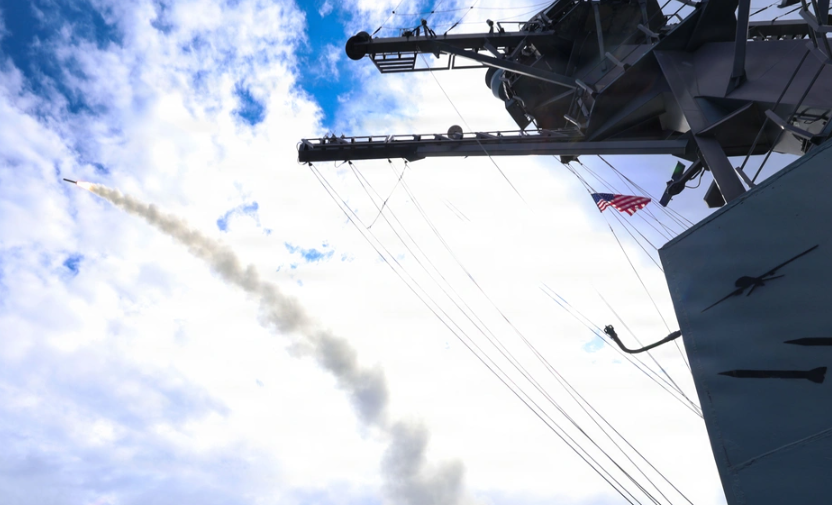
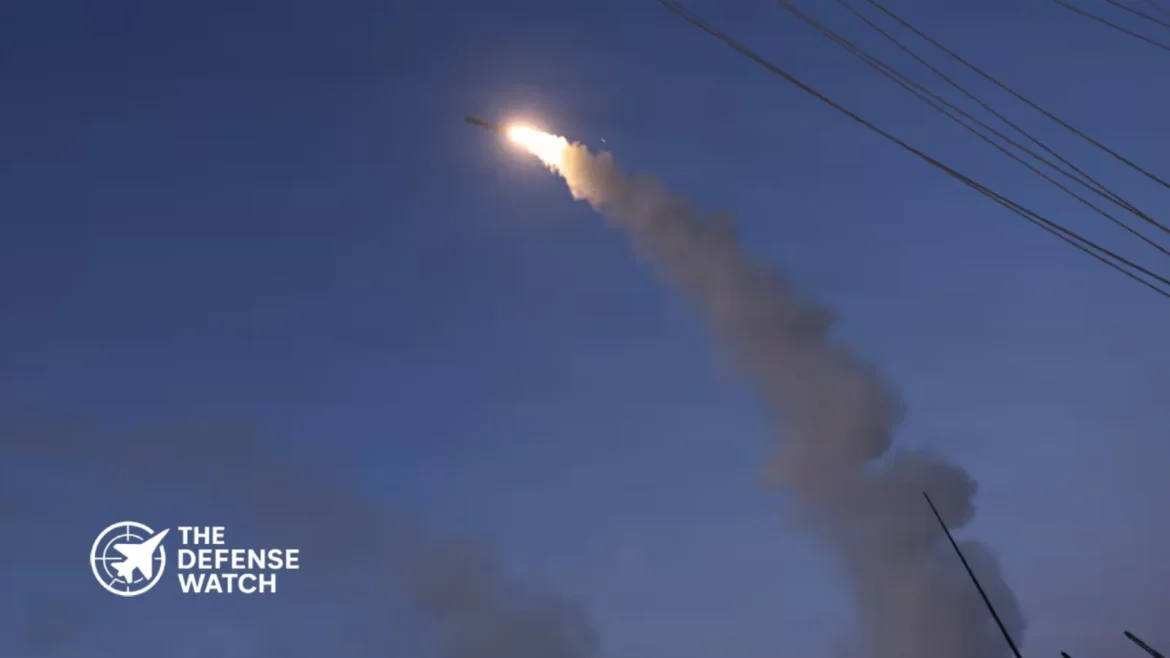
Video released by the Department of War shows a missile launch from a Navy surface combatant operating offshore. Defense analysts say the visual profile is consistent with the long-range BGM-109 Tomahawk cruise missile fired from a Mk 41 Vertical Launching System aboard an Arleigh Burke destroyer. The US military has not publicly confirmed the specific vessel or weapon type used.
Coordination With Nigerian Authorities
US Africa Command said the operation was conducted in coordination with Nigerian authorities and under presidential direction. The coordinated nature of the strike reflects a partnership approach rather than unilateral action by US forces in the region.
Arleigh Burke Destroyers and Tomahawk Capability
Arleigh Burke-class destroyers serve as the backbone of the US Navy’s surface combat fleet. Equipped with the Aegis Combat System and up to 96 Mk 41 VLS cells, these ships can launch a variety of munitions, including Standard Missiles for air defense and Tomahawk cruise missiles for long-range land attack missions.
The Tomahawk is a subsonic, long-range cruise missile capable of striking fixed targets with high precision at ranges beyond 1,000 miles. It uses GPS, inertial guidance, and terrain contour matching for navigation and has been a key naval strike weapon since the 1991 Gulf War.
Strategic Implications
Using a maritime launch platform for strikes inland gives the US military flexibility to engage distant targets without relying on regional airfields. This approach reduces diplomatic friction and limits the need for a ground presence in politically sensitive areas.
The December 25 strike could signal a broader shift in how US forces support counterterrorism operations in West Africa, complementing existing drone and land-based air missions.
Background: The Tomahawk cruise missile debate and Ukraine’s request
Ukraine has for months pressed its key backer, the United States, to provide the Tomahawk long-range cruise missile system to expand its capability to strike deep inside Russian territory. In recent weeks, U.S. officials and media sources confirmed that while the Tomahawk remains one of the most capable deep-strike weapons in the U.S. inventory, its transfer to Kyiv is unlikely at this time.
According to analysis by the Center for Strategic and International Studies (CSIS), the U.S. arsenal of Tomahawks numbers around 1,000 missiles available for transfer — though many are committed to the U.S. Navy’s force structure.
Additionally, Russia has vocally warned that supplying Tomahawks to Ukraine would trigger “a whole new level of escalation.”Why the U.S. says “no” for now: Inventory, training and strategic prioritisation
Inventory and commitments
One of the key obstacles is the limited production and availability of Tomahawks. According to Reuters, the U.S. Navy plans to procure only 57 Tomahawks in 2026, and many of the existing missiles are already allocated to U.S. force posture in the Pacific and other regions.
CSIS estimates that although around 1,000 missiles could be made available for Ukraine, diverting large numbers would strain U.S. operational readiness in other theatres.Training and operational complexity
Even if the missiles were supplied, the U.S. views the training and integration burden as significant. The weapons system is complex, and the U.S. military regards itself as the only fully trained operator in major numbers. Some U.S. commentary suggests that a six-month to one-year learning curve would be required for a foreign operator to employ Tomahawks independently.
Strategic priorities and escalation risk
The U.S. is also balancing its global defence priorities — including the Indo-Pacific — and views Ukraine’s long-range strike capability through a lens of escalation risk with Russia. Moscow has made clear that Tomahawk transfers would provoke a new stage of confrontation.
As a practical alternative, the U.S. is said to be exploring the supply of shorter-range strike weapons through allied channels rather than direct Tomahawk transfers.Analysis: Implications for U.S. Defence and Global Security
The decision not to provide Tomahawks to Ukraine at this time carries multiple ramifications:
U.S. force posture and munitions supply chain
Keeping Tomahawks locked within U.S. inventory underscores how scarce high-end precision strike munitions are — even for an advanced military power. The limited annual procurement rate (less than 100 missiles per year) means that large transfers undermine reload capability and forward posture, especially given the missile’s role in the Indo-Pacific pivot.
This highlights a broader challenge for the U.S. defence industrial base: scaling production of long-range precision munitions to meet both alliance commitments and peer-competitor deterrence demands.Ukraine’s war-fighting strategy
For Kyiv, the denial of Tomahawks narrows one potential avenue to strike deep into Russian rear areas or critical infrastructure. Analysts at CSIS argue that while a few dozens of Tomahawks might not change the war on their own, supplies on the order of hundreds might shift leverage.
Without them, Ukraine will continue to rely on shorter-range missile systems, existing Western-supplied artillery rockets, and tactical counter-battery operations. This may limit Kyiv’s ability to impose direct costs on Russian logistics hubs far from the front line.Escalation dynamics and deterrence
From a global security viewpoint, the U.S. decision reflects caution about escalation management. Supplying very long-range strike weapons into a major great-power conflict zone could open risks of mis-calculation, particularly given Russia’s repeated warnings. Upholding that restraint may help avoid a rapid spiral into a broader confrontation.
At the same time, this may embolden Russia’s calculus in Ukraine by reducing the deterrent penalty for deep-strike attacks. The intensification of Russian strikes on Ukraine’s energy infrastructure — coinciding with the Tomahawk discussion — suggests that Moscow is betting on a war of attrition rather than direct counter-attacks.Technology and long-range strike trend
The Tomahawk debate also feeds into the broader technological trend in defence: the increasing importance of standoff precision strike, multi-domain launch networks (ground, sea, subs), and the integration of sensors and command links. The U.S. Marine Corps ground-based variant of Tomahawk (Block V) and the Army’s “Typhon” launch system suggest the evolution of cruise missiles beyond just naval platforms.
For the U.S., prioritising long-range cruise missiles and hypersonics emerges as a core capability in great-power competition. The Ukraine conflict thus becomes a pivot point: how much U.S. munitions are diverted from peer-competitor deterrence to proxy war support?Conclusion and Forward Outlook
While the U.S.’s decision not to deliver Tomahawks to Ukraine reflects current inventory constraints, strategic calculus, and escalation concerns, the debate is likely far from over. As the war in Ukraine persists, Kyiv’s allies may circle back to revisit long‐range strike options – either through allied transfer mechanisms or new U.S. production ramp-ups.
For the U.S. defence sector, the pressure builds to increase procurement of next-generation long-range precision munitions to satisfy ally needs without sacrificing great-power readiness. As Washington balances support for Ukraine with its Indo-Pacific priorities, the question remains: how many high-end missiles can it afford to supply — and how will that shape the future of deep-strike capability and deterrence in the 21st century.