

Executive Summary:
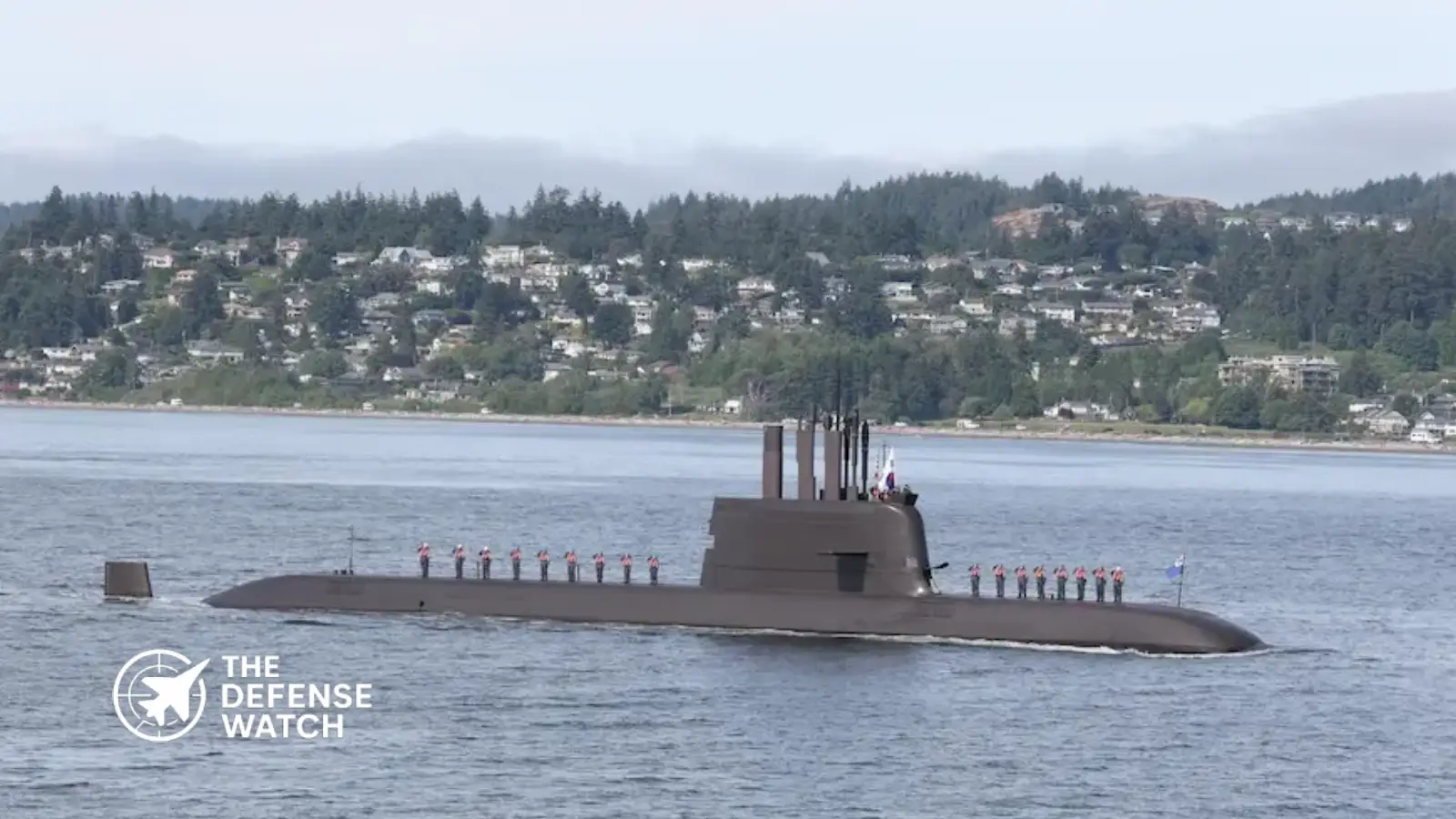
South Korean shipbuilder Hanwha Ocean has deployed its KSS-III submarine to Canada in support of Ottawa’s future patrol submarine program. The visit highlights growing competition in Canada’s naval modernization effort as allied shipbuilders position themselves for one of the world’s most closely watched submarine procurements.
Hanwha Ocean KSS-III Submarine Arrives In Canada
The Hanwha Ocean KSS-III submarine has reached Canada following a long range deployment intended to support South Korea’s bid for the Canadian Patrol Submarine Project (CPSP). The voyage marks a significant step in Seoul’s push to expand its defense exports into North America and deepen naval cooperation with Western allies.
The submarine’s arrival is designed to demonstrate the platform’s endurance, operational range, and suitability for Arctic and long distance missions that are central to Canada’s future submarine requirements.
Canada is seeking to replace its aging Victoria-class submarines with a new fleet capable of operating across the Atlantic, Pacific, and Arctic regions. Ottawa’s planned acquisition is expected to become one of the largest naval modernization efforts in Canadian history.
The KSS-III deployment comes as several international shipbuilders compete for influence in the Canadian program, including companies from Europe and Asia.
KSS-III Designed For Long Range Operations
The KSS-III submarine, developed for the Republic of Korea Navy, represents South Korea’s most advanced indigenous submarine program. The platform features air independent propulsion technology, advanced combat systems, vertical launch capability, and extended endurance for blue water operations.
Defense analysts note that the deployment to Canada carries both operational and political significance. Demonstrating the submarine’s ability to conduct a trans-Pacific voyage helps validate claims regarding range and reliability, particularly as Canada evaluates vessels capable of sustained operations in remote maritime environments.
The Canadian Patrol Submarine Project is expected to prioritize under ice capability, endurance, stealth, interoperability with NATO forces, and long term industrial partnerships.
While the KSS-III was originally designed for regional deterrence missions in the Indo-Pacific, Hanwha Ocean appears to be positioning the platform as a flexible export solution for allied navies facing growing maritime security demands.
Canada Expands Focus On Arctic Security
Canada’s submarine replacement effort has gained urgency amid increased geopolitical competition in the Arctic and rising naval activity by Russia and China in northern waters.
Ottawa has repeatedly emphasized the need for persistent underwater surveillance and sovereign maritime presence across the Arctic region. Existing Victoria-class submarines have faced operational limitations tied to age, maintenance demands, and limited under ice capability.
The Hanwha Ocean KSS-III submarine bid reflects a broader trend in which Asian defense manufacturers are increasingly competing in Western procurement programs once dominated by European and American suppliers.
South Korea’s defense industry has expanded rapidly over the past decade, securing major export contracts in Europe, the Middle East, and Asia. Companies including Hanwha Ocean and Hanwha Aerospace have benefited from rising global demand for faster production timelines and competitively priced military systems.
Strategic Implications For NATO And Indo-Pacific Cooperation
The KSS-III deployment also reflects expanding defense ties between Canada and South Korea as both countries strengthen cooperation with U.S.-led alliance structures in the Indo-Pacific region.
Naval experts say Canada’s future submarine selection could influence interoperability with NATO partners and allied Indo-Pacific operations for decades. Long range submarines are increasingly viewed as critical assets for intelligence gathering, deterrence patrols, anti-submarine warfare, and strategic surveillance missions.
For South Korea, success in Canada would represent a major breakthrough in the Western submarine export market and reinforce Seoul’s growing role as a global defense supplier.
At the same time, competition remains intense. European shipbuilders continue promoting mature submarine designs with proven NATO operational records, while Canada’s final requirements are still evolving.
No final procurement decision has been announced by the Canadian government.
Original Analysis
The arrival of the Hanwha Ocean KSS-III submarine in Canada is more than a promotional deployment. It reflects how global submarine competition is shifting beyond traditional European suppliers.
South Korean defense firms are increasingly leveraging rapid manufacturing capacity, modern digital shipbuilding methods, and flexible industrial cooperation packages to compete internationally. Canada’s submarine program offers Seoul an opportunity to prove that Asian defense manufacturers can support long term Western naval requirements at scale.
The deployment also highlights a broader strategic reality. Arctic security is becoming central to NATO planning, and future submarines must balance stealth, endurance, and multi theater operational flexibility. Any winning design will likely need to support not only national defense missions, but also integrated allied operations across the Atlantic and Indo-Pacific.
For Canada, the choice will shape naval capabilities for decades. For South Korea, it could redefine its position in the global submarine export market.

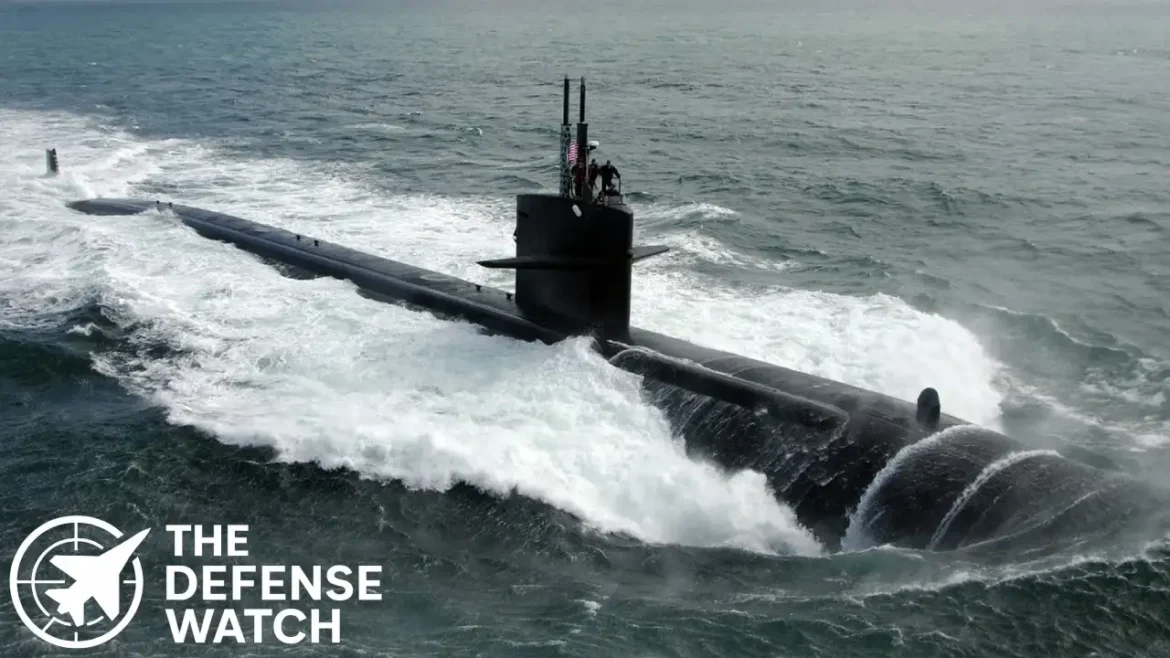
South Korea is formally advancing plans for nuclear-powered submarines, marking a major shift in the country’s long-term naval strategy.
Executive Summary:
South Korea has begun the formal process of pursuing nuclear-powered submarines as part of a broader naval modernization effort. The initiative reflects Seoul’s growing focus on long-range maritime deterrence, regional security competition, and expanded undersea operational capability in the Indo-Pacific.
South Korea Nuclear-Powered Submarine Program Signals Strategic Naval Shift
South Korea’s nuclear-powered submarine initiative has entered a formal government review phase, signaling one of the country’s most consequential naval modernization efforts in decades.
The South Korean government has launched an official process examining the feasibility, strategic rationale, and legal framework required to field nuclear-powered submarines for the Republic of Korea Navy.
The move comes as regional maritime competition intensifies across the Indo-Pacific, particularly amid North Korea’s continued missile development, China’s expanding naval presence, and growing undersea warfare activity in nearby waters.
If ultimately approved, the program would significantly expand South Korea’s blue-water naval reach and endurance compared to its current diesel-electric submarine fleet.
Why South Korea Wants Nuclear-Powered Submarines
Nuclear-powered submarines provide major operational advantages over conventional diesel-electric boats. Unlike traditional submarines, nuclear-powered vessels can remain submerged for extended periods without surfacing for air, enabling longer patrols, greater stealth, and faster sustained transit speeds.
For Seoul, those capabilities are increasingly relevant.
North Korea has continued to pursue submarine-launched ballistic missile programs and has publicly showcased ambitions for nuclear-capable undersea platforms. At the same time, China’s naval expansion and regional power projection efforts have transformed the broader Indo-Pacific security environment.
South Korea’s existing submarine fleet, including the KSS-III Dosan Ahn Changho-class submarines, already represents one of the most advanced conventional undersea forces in Asia. However, nuclear propulsion would provide a substantial leap in operational flexibility and strategic endurance.
Defense analysts have long argued that nuclear-powered submarines would allow South Korea to maintain persistent patrols farther from the Korean Peninsula while improving survivability during high-intensity conflict scenarios.
Legal And Political Challenges Remain
Despite the strategic logic behind the proposal, South Korea faces major political and regulatory hurdles before such a capability could become reality.
The country remains bound by international nuclear nonproliferation obligations, including agreements related to civilian nuclear material usage. Any future submarine propulsion effort would likely require extensive coordination with the United States, which remains Seoul’s primary security ally and a critical stakeholder in regional nuclear policy.
Washington has historically exercised caution regarding naval nuclear propulsion technology transfers outside a limited group of allied nations.
The issue has gained additional attention since the establishment of the AUKUS security partnership between Australia, United Kingdom, and the United States, which included plans to help Australia acquire nuclear-powered submarines.
That agreement triggered broader debate in Asia over whether other U.S. allies could eventually pursue similar capabilities.
South Korean officials have periodically raised the issue over the past decade, though previous discussions largely remained conceptual. The newly launched formal review process suggests the government is now treating the matter with greater institutional seriousness.
Regional Security Implications
The South Korea nuclear-powered submarine program could alter naval dynamics across Northeast Asia if it progresses beyond the planning phase.
Nuclear-powered attack submarines are widely viewed as among the most survivable and strategically valuable assets in modern naval warfare. Their ability to conduct intelligence gathering, anti-submarine warfare, long-range strike missions, and sea-denial operations makes them central to great-power maritime competition.
For Seoul, the capability could strengthen independent deterrence while enhancing interoperability with allied naval forces operating across the Pacific.
However, the move may also generate concerns among neighboring countries already navigating heightened regional tensions.
China has steadily expanded its naval fleet, including nuclear-powered submarines, while Japan continues investing heavily in anti-submarine warfare capabilities and maritime surveillance systems. North Korea, meanwhile, has repeatedly emphasized the development of strategic underwater weapons platforms.
As a result, South Korea’s pursuit of nuclear-powered submarines is likely to be closely watched across the region.
Domestic Defense Industry Could Benefit
A future nuclear-powered submarine effort could also create substantial opportunities for South Korea’s defense and shipbuilding sectors.
South Korean shipbuilders, including Hanwha Ocean and HD Hyundai Heavy Industries, already possess significant experience constructing advanced naval vessels and submarines.
The country has invested heavily in indigenous naval technologies over the past two decades, reducing reliance on foreign suppliers and expanding domestic defense manufacturing capabilities.
Although nuclear propulsion technology presents a much higher level of complexity, South Korea’s mature commercial nuclear sector and advanced shipbuilding infrastructure could provide a foundation for future development.
Still, experts note that designing, building, and operating nuclear-powered submarines would likely require years of technical preparation, political negotiations, regulatory adjustments, and major financial investment.
Strategic Outlook
The decision to formally examine nuclear-powered submarines reflects broader shifts in South Korea’s defense posture and long-term strategic planning.
Seoul is increasingly emphasizing advanced maritime capabilities, long-range deterrence, and indigenous defense technology development as regional security pressures evolve.
While the program remains in the early policy stage, the launch of a formal acquisition process marks a significant signal of intent from the South Korean government.
Whether the initiative advances into a fully funded procurement effort will depend on political consensus, alliance coordination, legal considerations, and the evolving regional threat environment.
For now, the move underscores how undersea warfare and naval modernization are becoming increasingly central to Indo-Pacific security competition.
Executive Summary:
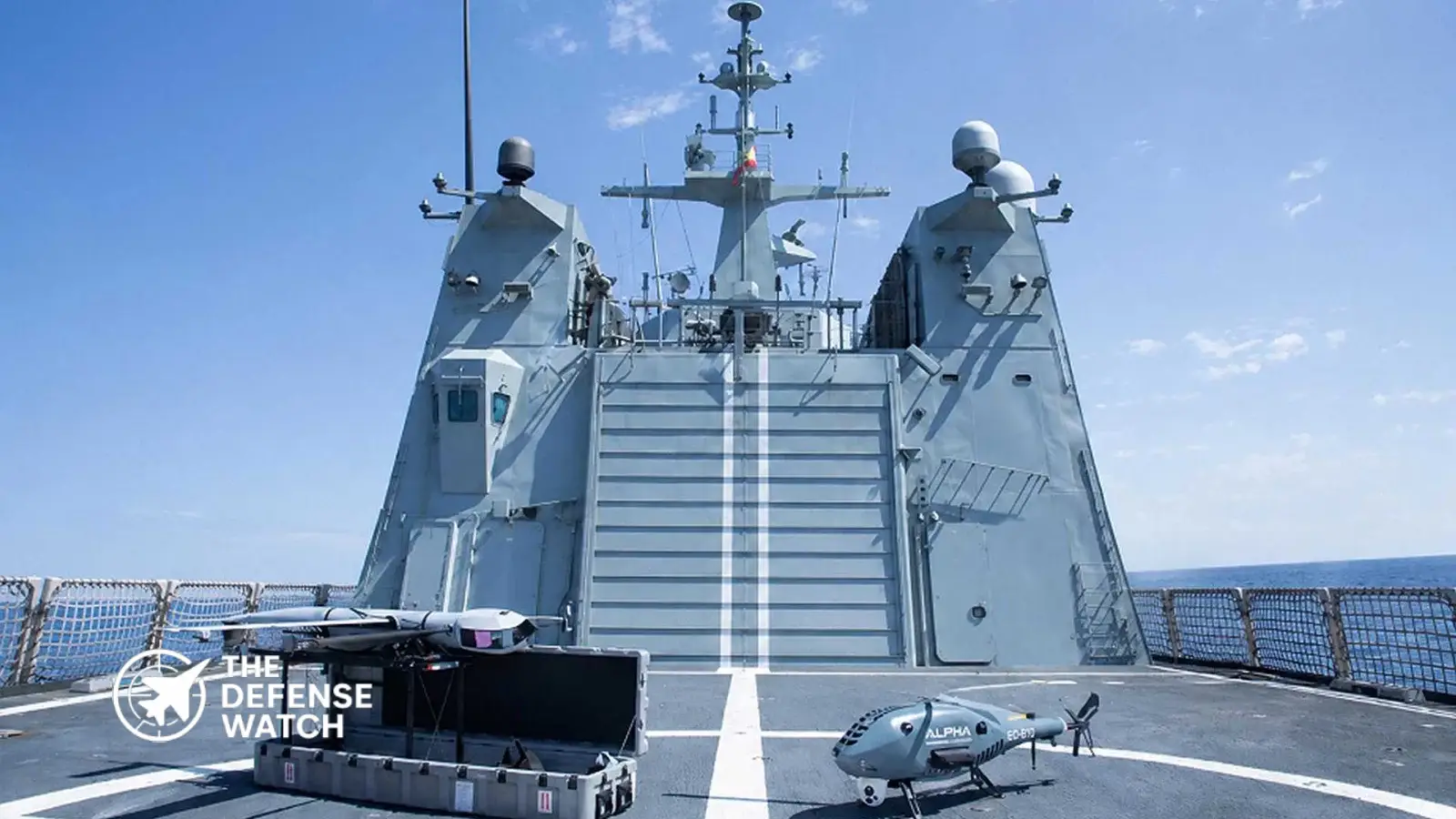
The Spanish Navy has completed maritime combat network testing involving the H135 helicopter, Flexrotor UAV, and A900 drone during operations at sea. The effort highlights Spain’s push to integrate manned and unmanned systems for surveillance, targeting, and naval situational awareness in contested maritime environments.
Spain Navy Tests Maritime Drone Combat Network At Sea
The Spanish Navy has conducted a new series of maritime combat network trials involving the H135 helicopter, Flexrotor unmanned aerial vehicle, and A900 drone platform, marking another step in Spain’s effort to modernize naval surveillance and operational coordination capabilities.
The tests evaluated how multiple airborne platforms could operate together within a shared maritime combat network during naval operations at sea.
The exercise focused on real-time information sharing between crewed and uncrewed systems. The objective was to improve maritime situational awareness, target detection, reconnaissance coverage, and operational coordination for future naval missions.
Multi-Platform Integration Reflects Broader Naval Modernization
The Spain Navy drone network effort reflects a wider trend among NATO naval forces toward distributed maritime sensing and unmanned integration.
The H135 helicopter, produced by Airbus, served as a manned aviation component within the exercise. The aircraft is increasingly used in military training, reconnaissance, and maritime support missions because of its compact size and multi-role flexibility.
Alongside the H135, Spain tested the Flexrotor unmanned aircraft developed by Airbus U.S. Space & Defense. The vertical takeoff and landing UAV is designed for long-endurance intelligence, surveillance, and reconnaissance missions. Its ability to launch without traditional runway infrastructure makes it suitable for naval operations aboard smaller ships.
The A900 drone added another surveillance layer during the exercise. The platform is designed for maritime reconnaissance and persistent monitoring, helping naval commanders extend operational visibility beyond the range of conventional shipboard sensors.
Spanish defense planners appear focused on creating a networked operational environment where helicopters, drones, ships, and command systems exchange targeting and surveillance data in near real time.
Maritime Surveillance Becoming A Core Naval Priority
The Spain Navy drone network tests come as European naval forces place greater emphasis on maritime domain awareness amid rising regional security concerns.
Navies operating in the Mediterranean and Atlantic increasingly face challenges linked to submarine tracking, illegal trafficking routes, infrastructure protection, and gray-zone maritime activity. Unmanned systems offer a relatively lower-cost method for expanding surveillance coverage without deploying larger crewed aircraft continuously.
By integrating platforms like the Flexrotor and A900 into naval combat networks, Spain is seeking to improve persistent intelligence collection while reducing operational strain on traditional aviation assets.
The use of multiple connected aerial systems also supports distributed maritime operations, where sensor and targeting information can be shared rapidly across naval formations.
This capability is becoming increasingly important as NATO members adapt to evolving electronic warfare environments and long-range precision threats.
H135 And Flexrotor Expand Operational Flexibility
The H135 maritime drone testing demonstrated how rotary-wing aircraft and UAVs can complement one another during naval operations.
Crewed helicopters remain valuable for search-and-rescue operations, personnel transport, medical evacuation, and direct visual reconnaissance. However, unmanned systems can stay airborne longer and operate in higher-risk environments without exposing crews to danger.
The Flexrotor platform is particularly suited for naval deployment because of its compact footprint and autonomous operational capability. Its vertical launch system allows deployment from confined deck spaces aboard patrol vessels and support ships.
Meanwhile, the A900 maritime surveillance drone provides additional sensor coverage that can support surface tracking and coastal monitoring operations.
The integration of these systems into a unified combat network could eventually support targeting, anti-surface warfare coordination, and wider intelligence-sharing operations across Spanish naval forces.
European Navies Accelerate Drone Integration
Spain’s maritime testing aligns with broader European efforts to expand unmanned naval aviation capabilities.
Several NATO members are increasing investment in shipborne drones, autonomous surveillance systems, and artificial intelligence-enabled command networks to improve fleet survivability and operational responsiveness.
The Spanish Navy’s testing campaign demonstrates how medium-sized naval forces are adapting to modern maritime requirements through scalable unmanned systems integration rather than relying solely on large traditional platforms.
As naval operations become increasingly data-driven, networked aerial systems are expected to play a larger role in reconnaissance, targeting support, and distributed fleet coordination.
Executive Summary:
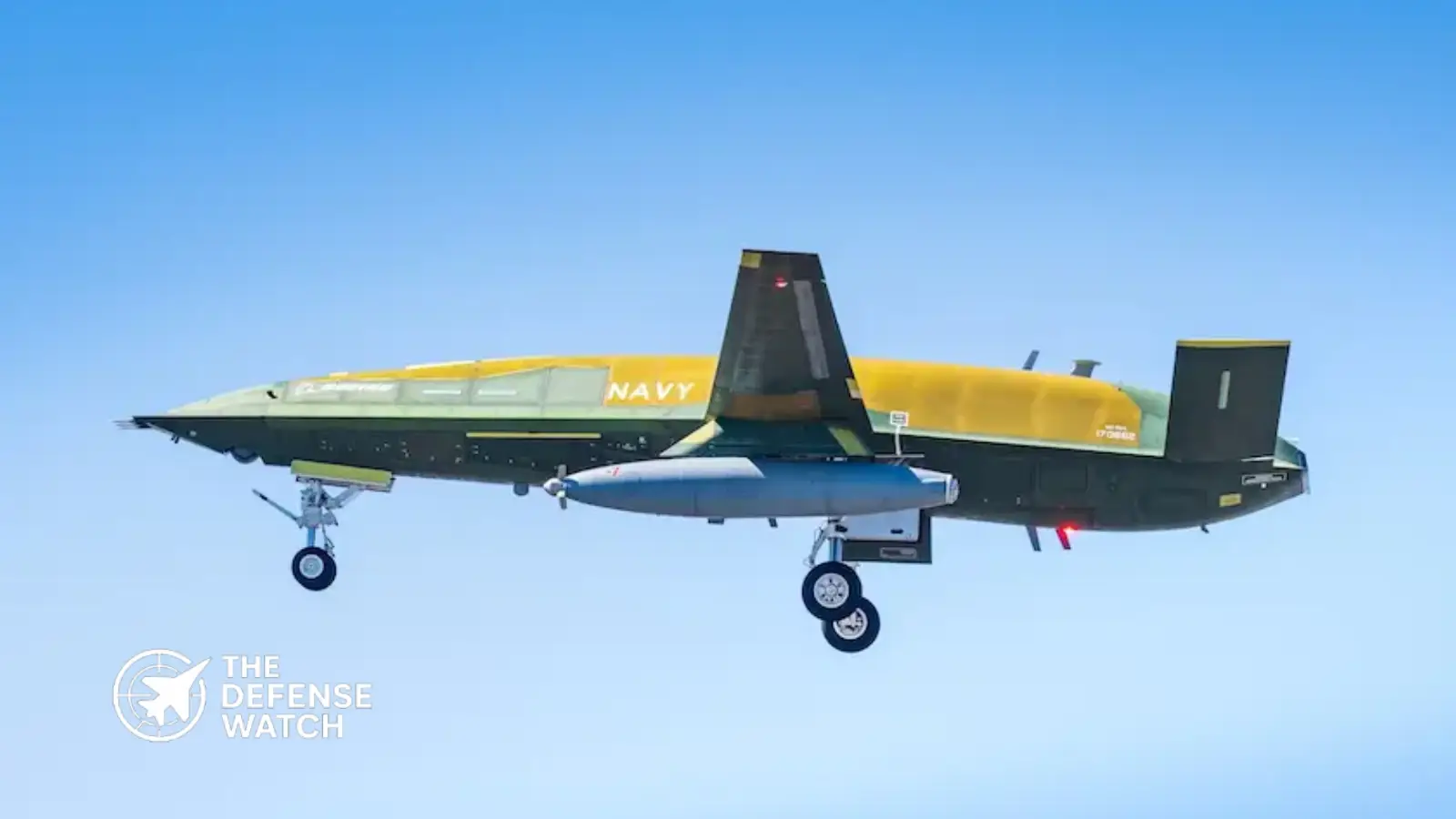
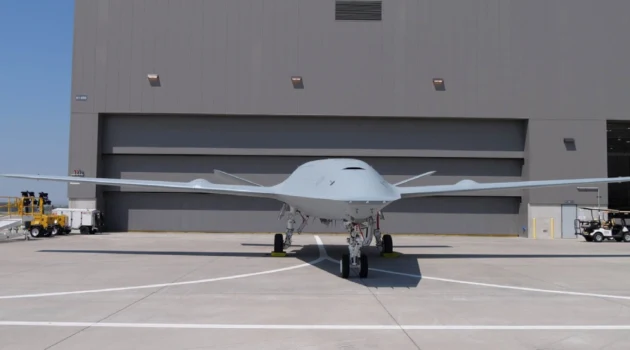
The U.S. Navy has authorized low-rate initial production of the Boeing MQ-25A Stingray following key flight testing milestones. The carrier-based unmanned aircraft is designed to extend the operational range of naval fighter aircraft and reduce strain on manned tanker missions aboard aircraft carriers.
U.S. Navy Advances MQ-25A Stingray Program
The Boeing MQ-25A Stingray program has reached a major milestone after the U.S. Navy approved the unmanned aerial refueling aircraft for low-rate initial production. The decision follows a series of developmental and flight test achievements that move the Navy closer to fielding its first operational carrier-based unmanned tanker aircraft.
Developed by Boeing for the United States Navy, the MQ-25A Stingray is intended to provide aerial refueling support to carrier air wings while extending the operational range of aircraft such as the F/A-18 Super Hornet and the F-35C Lightning II.
The approval for low-rate production marks a transition from development and testing into the early manufacturing phase, allowing the Navy to begin building operational aircraft while continuing evaluation activities.
Carrier Aviation Focus Shifts Toward Range And Endurance
The MQ-25A Stingray addresses one of the most persistent operational challenges facing modern carrier aviation: combat range.
For years, the U.S. Navy has relied heavily on Super Hornets configured as buddy tankers to refuel other aircraft during missions. While effective, that approach reduces the number of fighters available for strike and air defense missions.
The MQ-25A is designed to assume much of that refueling workload. By transferring aerial refueling duties to an unmanned platform, the Navy expects to free additional manned fighters for frontline combat operations.
This shift is particularly important in the Indo-Pacific theater, where long operational distances are increasingly shaping U.S. naval planning. Analysts have frequently noted that carrier air wings require greater reach to operate effectively in contested environments against near-peer adversaries.
The Stingray is expected to provide carrier aircraft with significantly extended mission endurance, improving flexibility for strike, reconnaissance, and maritime security operations.
Flight Testing Supported Production Approval
The production clearance follows extensive testing activities involving Boeing test aircraft and Navy integration teams.
The MQ-25A program previously completed several major milestones, including its first flight, aerial refueling demonstrations, and carrier deck handling tests aboard U.S. Navy aircraft carriers. The aircraft successfully refueled Navy tactical aircraft during testing campaigns, validating one of the program’s core operational requirements.
Testing also focused on integrating the unmanned aircraft into carrier flight deck operations, which remain among the most demanding aviation environments in the world.
Unlike land-based UAV operations, carrier aviation requires precise launch, recovery, taxiing, and deck coordination procedures within limited space and under high operational tempo conditions. The MQ-25A program therefore serves as both a capability platform and a broader stepping stone for future carrier-based autonomous systems.
Boeing Expands Its Role In Naval Unmanned Aviation
For Boeing, the MQ-25A Stingray represents a strategically important defense program as the company continues expanding its unmanned systems portfolio.
The aircraft was selected by the Navy under the Carrier-Based Aerial-Refueling System competition, beating rival industry proposals. Since then, Boeing has continued refining the platform through testing and systems integration work.
The low-rate production authorization enables Boeing to begin manufacturing aircraft intended for operational fleet introduction while supporting continued program maturation.
The program also reinforces growing Pentagon interest in unmanned and semi-autonomous systems across air, land, and maritime domains. Defense planners increasingly view unmanned aircraft as critical force multipliers capable of extending operational reach while reducing risk to pilots in contested environments.
MQ-25A Could Shape Future Carrier Air Wings
The MQ-25A Stingray is more than a refueling aircraft. Defense analysts widely view the program as an early step toward broader integration of autonomous systems aboard U.S. Navy aircraft carriers.
Future naval unmanned aircraft could eventually perform intelligence gathering, electronic warfare, surveillance, strike missions, or logistics support alongside manned aircraft.
By proving that unmanned systems can safely integrate into carrier operations, the MQ-25A program may help establish the operational framework for next-generation naval aviation concepts.
The Navy has consistently emphasized that future carrier air wings will likely combine crewed and uncrewed platforms operating together across long distances and highly contested operational theaters.
As geopolitical competition intensifies in the Indo-Pacific and other strategic regions, extending carrier reach and preserving manned fighter capacity remain central priorities for U.S. naval planners.
Executive Summary:
The U.S. Navy has completed the first operational training cycle for the Optical Dazzling Interdictor, Navy (ODIN) laser weapon system at the Directed Energy Systems Integration Laboratory (DESIL) in California. Managed by Naval Surface Warfare Center Port Hueneme Division (NSWC PHD), the program introduces a new Laser Weapon System Operator Navy Enlisted Classification (NEC) for sailors operating the system aboard Arleigh Burke-class destroyers. This milestone supports the transition of directed-energy technology from prototyping to sustained fleet deployment against unmanned aerial systems
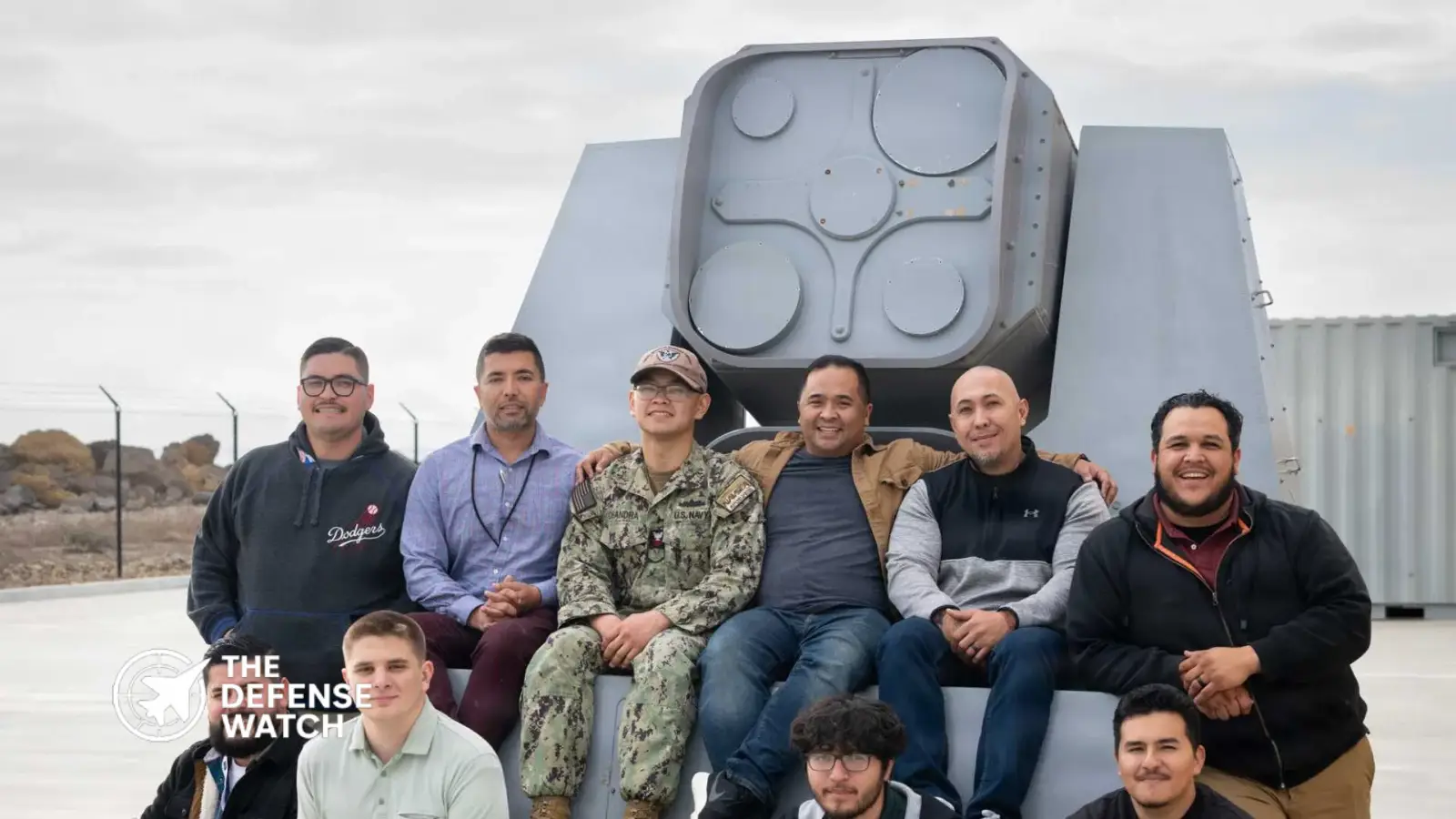
The U.S. Navy has reached a key milestone in its directed-energy weapons program by completing the inaugural operational training cycle for the ODIN laser system at Naval Base Ventura County Point Mugu, California. This development formalizes training and certification for sailors operating one of the service’s most widely deployed shipboard laser systems.
ODIN, or Optical Dazzling Interdictor, Navy, functions as a low-power infrared laser dazzler primarily designed for counter-unmanned aerial systems (C-UAS) and counter-intelligence, surveillance, and reconnaissance (C-ISR) missions. Rather than destroying targets kinetically, it saturates electro-optical and infrared sensors on drones, disrupting navigation and data collection at the speed of light.
Training Milestone at DESIL
On May 12, 2026, the Navy announced completion of the first course at the Directed Energy Systems Integration Laboratory (DESIL). The facility, operated by NSWC PHD, now serves as the official schoolhouse for ODIN training. Sailors gain hands-on experience operating, maintaining, and troubleshooting the system in a realistic maritime environment.
DESIL, established in May 2020, features an 18,500-square-foot, three-story installation with direct line-of-sight to the Point Mugu Sea Range. It includes a permanently installed ODIN unit, sustainment workshops, operator consoles, and rooftop laser positions for engaging maritime, airborne, and land-based targets. This setup allows integrated training with live hardware rather than simulators alone.
The curriculum supports the newly created Laser Weapon System Operator Navy Enlisted Classification (NEC), introduced in February 2026. It addresses the growing need for specialized personnel as ODIN systems expand across the fleet.
ODIN System and Fleet Integration
ODIN entered service around 2020 and is currently installed on seven Arleigh Burke-class guided-missile destroyers, with an eighth unit at Point Mugu for testing and training. Developed rapidly from concept to deployment in about 30 months under the Naval Surface Warfare Center Dahlgren Division and Program Executive Office Integrated Warfare Systems, it responded to urgent fleet requirements for counter-ISR and C-UAS capabilities.
As a “soft-kill” system, ODIN complements layered ship defenses—including electronic warfare, close-in weapon systems (CIWS), and surface-to-air missiles—by offering an infinite magazine limited only by ship electrical power. This capability helps address the unfavorable cost exchange of using expensive missiles against low-cost drones.
Strategic Context and Analysis
The establishment of dedicated ODIN training reflects broader U.S. Navy efforts to mature directed-energy weapons amid rising drone threats in contested maritime environments, particularly in the Indo-Pacific and Middle East. Proliferating low-cost UAS from state and non-state actors create persistent challenges for traditional kinetic interceptors. ODIN provides a scalable, low-cost-per-shot response that preserves high-value munitions for higher-threat targets.
By formalizing operator NECs and centralizing training at DESIL, the Navy mitigates risks associated with ad-hoc deployment of prototype systems. This structured approach enhances reliability, safety, and tactical integration. It also supports future scaling to higher-power systems like HELIOS, which offer both dazzling and hard-kill options and greater combat system integration.
Challenges remain, including atmospheric effects on laser performance, rules of engagement for dazzling operations, and full integration with ship combat management systems. However, the DESIL facility’s unique combination of operational hardware, engineering support, and live range access positions the Navy to iterate quickly on tactics, techniques, and procedures.
This training pipeline signals a shift from experimental rapid prototyping toward programmatic sustainment, even as ODIN remains outside the formal Program of Record. Sustained investment in personnel and infrastructure will be critical for realizing the full potential of directed-energy weapons across the surface fleet.
Operational Impact
ODIN enhances ship self-defense in high-threat scenarios by providing immediate, silent, and precise effects against drone swarms or ISR platforms. Its deployment on destroyers operating in forward areas strengthens layered defense architectures without increasing logistical burdens for ammunition.
As the Navy continues modernizing its Arleigh Burke-class fleet and prepares for future combatants, experience gained through DESIL training will inform broader directed-energy adoption, contributing to maritime superiority in an era of unmanned systems proliferation.
Executive Summary:
Israel Aerospace Industries has introduced the DIAMOND distributed naval warfare system designed to improve frigate combat flexibility, survivability, and weapon integration.
The system decentralizes combat management functions across naval platforms, allowing warships to maintain operational capability even during electronic or kinetic attacks.
The unveiling reflects a broader shift toward distributed maritime warfare as naval forces face increasingly complex missile and drone threats.
Israel Aerospace Industries Introduces DIAMOND Naval Warfare System
The DIAMOND naval warfare system unveiled by Israel Aerospace Industries is designed to reshape how modern frigates manage combat operations in contested maritime environments.
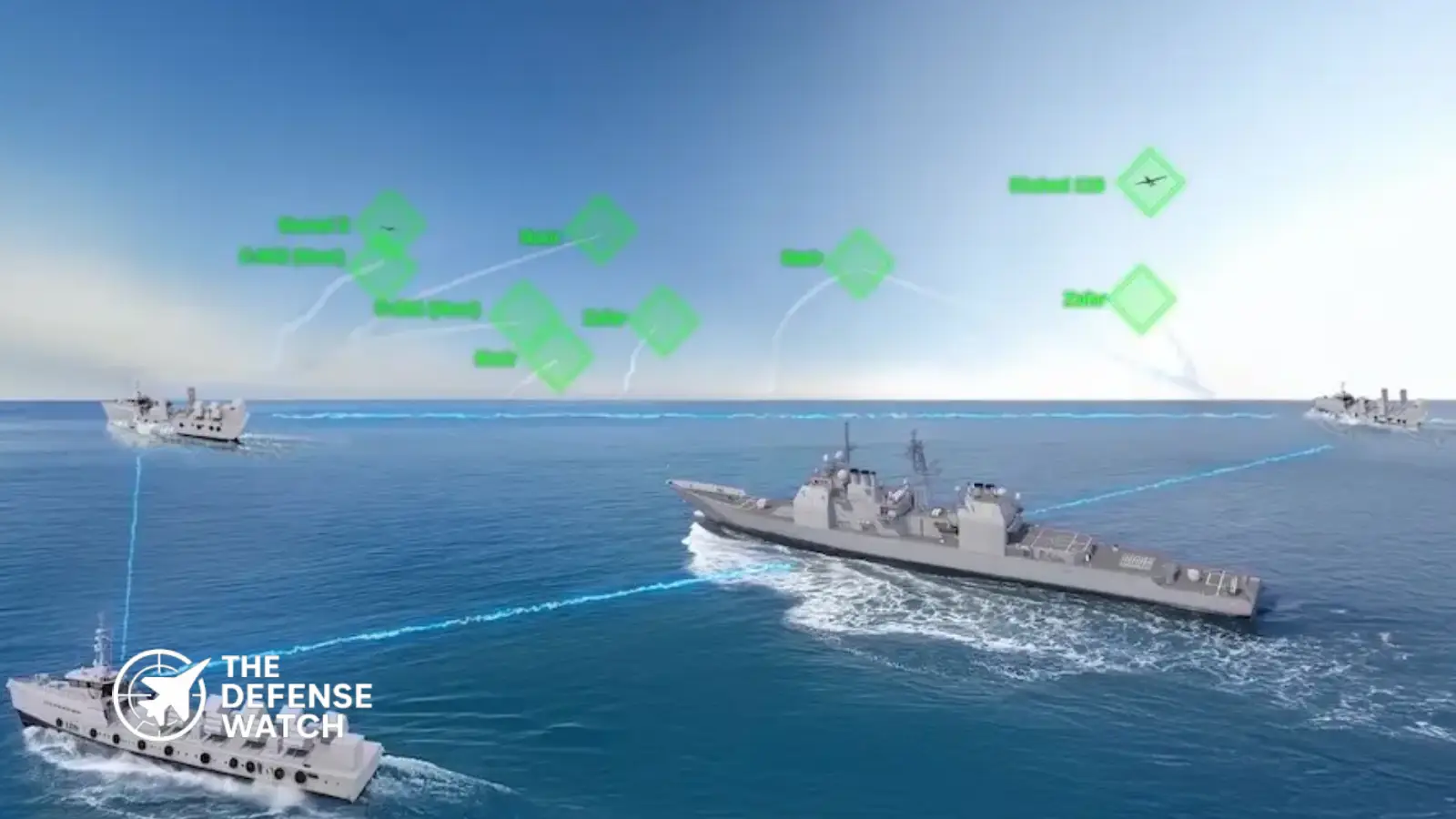
According to the company, DIAMOND uses a distributed architecture that disperses critical combat functions across multiple nodes rather than relying on a centralized combat management structure. The approach is intended to improve operational resilience if portions of a vessel’s combat system are damaged or electronically disrupted.
The unveiling comes as naval forces worldwide adapt to growing threats from anti ship missiles, unmanned systems, electronic warfare, and long range precision weapons. Distributed combat systems are increasingly viewed as essential for maintaining survivability in high intensity naval warfare.
The DIAMOND system can reportedly integrate sensors, interceptors, command systems, and effectors into a unified operational framework while enabling greater flexibility for future upgrades.
Focus On Distributed Naval Warfare
The DIAMOND naval warfare system reflects a wider strategic trend toward distributed maritime operations among NATO and regional naval powers.
Traditional warship combat systems often rely heavily on centralized command nodes. While highly capable, those architectures can create vulnerabilities if adversaries successfully target command infrastructure through missile strikes, cyber attacks, or electronic warfare.
DIAMOND appears designed to reduce that risk by decentralizing key combat management processes. In practice, this could allow sections of a frigate to continue operating independently if communications or central systems are degraded.
The concept mirrors broader defense industry efforts focused on resilient command and control systems. Similar approaches are being explored across U.S., European, and Indo Pacific naval modernization programs as fleets prepare for multi domain warfare environments.
For modern frigates operating in crowded and heavily contested waters, maintaining continuous combat functionality has become a critical operational requirement.
Expanding Frigate Firepower And Flexibility
A central feature of the DIAMOND naval warfare system is its emphasis on scalable weapon integration.
According to available information, the architecture is designed to support multiple weapon systems and sensor packages simultaneously. This could allow navies to configure ships for specific missions ranging from air defense and anti submarine warfare to maritime interdiction and drone defense.
The modular design may also simplify future modernization efforts by enabling rapid integration of emerging technologies without requiring a complete redesign of the combat management system.
That flexibility is increasingly important as naval forces seek to counter evolving threats such as swarm drones, hypersonic missiles, and autonomous surface vessels.
The DIAMOND naval warfare system could also support distributed engagement concepts in which several ships share targeting and sensor data across a networked battlespace. Such capabilities are becoming central to modern naval doctrine, particularly in regions facing high saturation missile threats.
Strategic Importance For Regional Naval Security
The unveiling of the DIAMOND system highlights Israel’s continued investment in advanced maritime defense technologies amid rising regional tensions in the Eastern Mediterranean and Red Sea.
Naval threats in the region have expanded significantly in recent years due to the proliferation of long range anti ship missiles, loitering munitions, and unmanned maritime systems operated by state and non state actors.
Israel has increasingly prioritized maritime security to protect offshore energy infrastructure, commercial shipping lanes, and strategic naval assets.
The introduction of DIAMOND also reinforces the growing role of Israeli defense firms in the global naval modernization market. Israeli companies have become major suppliers of radar systems, missile defense technologies, electronic warfare platforms, and unmanned systems for international customers.
From a broader strategic perspective, distributed naval warfare architectures are expected to play a larger role in future fleet design as countries seek survivable and adaptable maritime capabilities.
Industry Trend Toward Resilient Naval Combat Systems
The DIAMOND naval warfare system enters a competitive global market where defense firms are racing to develop next generation naval combat architectures.
Defense companies in the United States and Europe are also pursuing distributed mission systems capable of operating in degraded communications environments. Lessons from recent conflicts have accelerated demand for survivable command and control networks that can continue functioning during electronic attack or precision strikes.
Modern naval operations increasingly depend on real time data sharing between ships, aircraft, drones, and shore based systems. As a result, resilient networked warfare capabilities are becoming as important as kinetic weapons themselves.
For frigate operators, distributed combat systems offer an opportunity to extend platform relevance without dramatically increasing ship size or crew requirements.
The DIAMOND naval warfare system therefore represents more than a single product launch. It reflects an ongoing transformation in naval warfare doctrine centered on resilience, flexibility, and networked combat operations.
Executive Summary:
Canadian company CIS has unveiled an autonomous drone docking system designed for deployment aboard moving ships. The technology aims to improve naval UAV launch, recovery, charging, and storage operations while reducing crew workload and enabling persistent maritime surveillance capabilities.
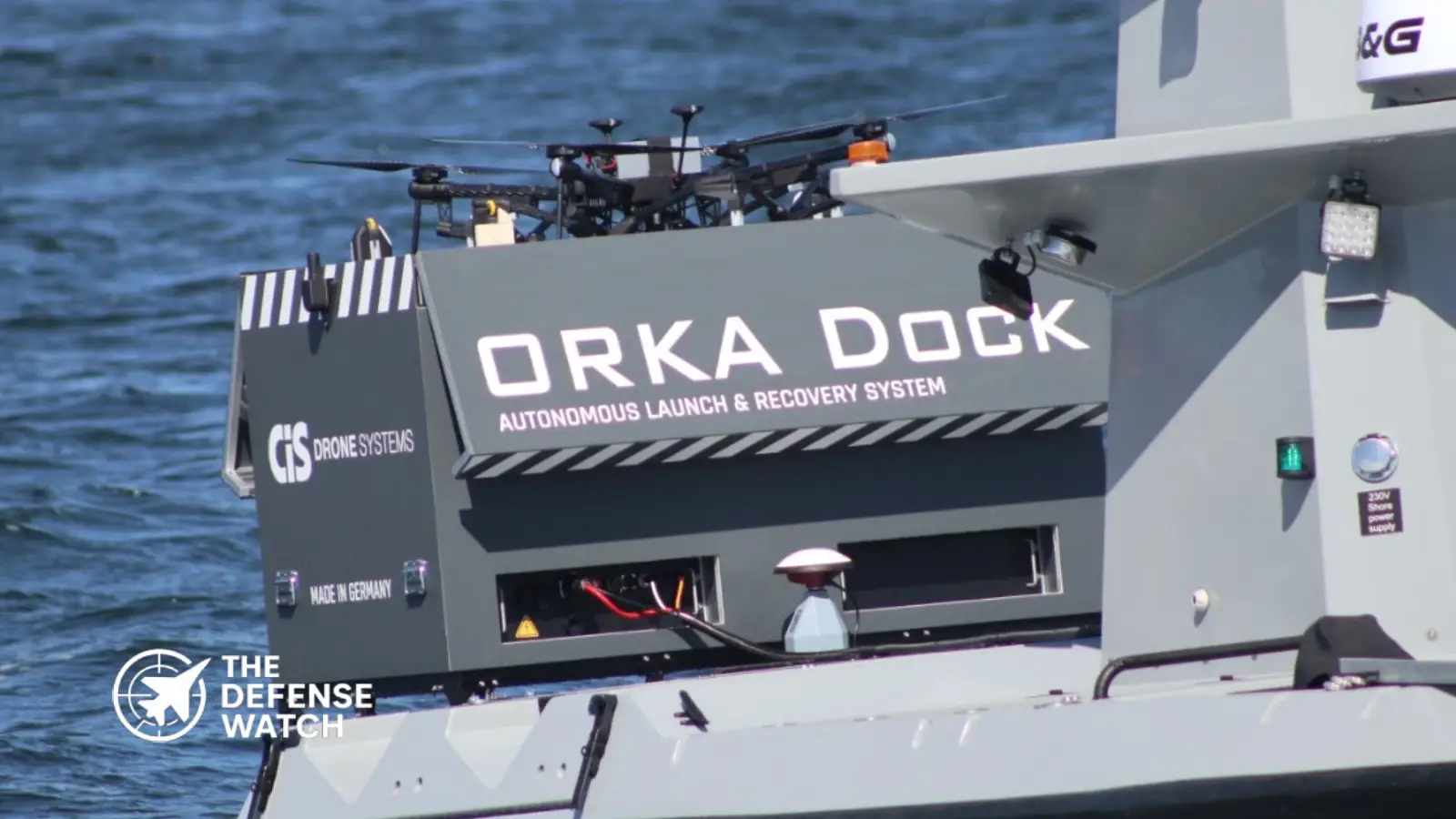
The autonomous drone dock unveiled by CIS represents another step in the growing push toward persistent unmanned maritime operations. Designed for use aboard moving vessels, the system enables drones to autonomously land, recharge, and relaunch without direct operator intervention.
The announcement reflects increasing global naval interest in integrating unmanned systems into day-to-day fleet operations, particularly for intelligence gathering, surveillance, reconnaissance, and force protection missions.
The docking system is intended to function in demanding maritime conditions where vessel motion and environmental factors complicate UAV recovery procedures.
Autonomous Drone Dock Designed For Maritime Operations
CIS said the system combines autonomous landing guidance, charging capability, and secured storage within a compact maritime-ready platform. The drone dock is engineered to compensate for ship movement during launch and recovery operations, one of the key technical barriers for naval UAV deployment.
Modern naval forces increasingly rely on drones for over-the-horizon surveillance, maritime domain awareness, search and rescue support, and targeting assistance. However, sustaining UAV operations at sea remains operationally complex, especially on smaller vessels with limited flight deck space.
The autonomous drone dock seeks to address that challenge by reducing the need for dedicated personnel during UAV handling. Automated launch and recovery also potentially lower operational risk in rough sea states or adverse weather conditions.
CIS stated that the platform can support continuous drone operations by automatically recharging aircraft between missions. That capability could extend surveillance coverage windows while minimizing interruptions caused by manual maintenance cycles.
Growing Demand For Naval UAV Integration
Interest in shipborne unmanned systems has accelerated across NATO and Indo-Pacific navies as maritime competition intensifies in contested regions.
The U.S. Navy, Royal Navy, and several European naval forces are investing heavily in autonomous systems intended to improve fleet survivability and expand intelligence collection capacity.
Autonomous drone docking systems are becoming increasingly important because conventional UAV recovery methods aboard ships can require specialized crews, arresting equipment, or larger flight decks. Smaller autonomous docks could allow patrol vessels, offshore support ships, and even unmanned surface vessels to operate aerial drones more consistently.
The maritime drone sector has seen rapid development in recent years. Companies and defense agencies are pursuing systems capable of autonomous launch and recovery to support persistent ISR missions and distributed naval operations.
Analysts increasingly view unmanned systems as essential force multipliers, particularly in regions where naval forces must monitor large maritime areas with limited manned assets.
Operational Advantages At Sea
The CIS autonomous drone dock appears aimed at solving several operational limitations associated with maritime UAV deployment.
First, automated recovery reduces dependence on highly trained flight deck crews. That can improve operational efficiency aboard smaller vessels where manpower is limited.
Second, autonomous charging and mission cycling may enable near-continuous ISR coverage. Persistent drone presence has become increasingly valuable for tracking surface contacts, monitoring shipping lanes, and supporting maritime security operations.
Third, the compact nature of such systems may broaden UAV access beyond major warships. Offshore patrol vessels, coast guard platforms, logistics ships, and autonomous surface vessels could all potentially integrate similar capabilities.
The move aligns with broader naval modernization trends emphasizing distributed operations, autonomous systems, and lower-risk force projection methods.
Challenges Remain For Maritime Autonomy
Despite advances in autonomous docking technology, maritime UAV operations remain technically demanding.
Sea conditions, wind, vessel maneuvering, and electronic interference can complicate automated recovery operations. Reliability is especially critical during high sea states where deck motion becomes unpredictable.
Cybersecurity also remains a concern for autonomous naval systems. As unmanned platforms become more networked, navies will likely place greater emphasis on secure communications and electronic warfare resilience.
Regulatory and operational integration challenges also persist. Many navies continue developing doctrine governing unmanned operations alongside crewed vessels.
Still, the growing pace of investment suggests autonomous maritime aviation systems will continue expanding across both military and commercial sectors.
Strategic Significance
The unveiling of the autonomous drone dock comes as defense planners increasingly prioritize maritime surveillance and autonomous operations in contested waters.
Naval forces are under pressure to monitor wider operational areas while managing rising personnel and operational costs. Autonomous drone infrastructure may help address both challenges simultaneously.
For smaller navies and coast guards, compact autonomous systems could offer lower-cost access to advanced ISR capabilities without requiring large aviation-capable warships.
The technology also reflects the broader shift toward human-machine teaming in naval operations, where autonomous systems support crewed platforms rather than replace them outright.
As unmanned systems mature, autonomous docking and sustainment technologies are likely to become a foundational component of future naval operations.
Executive Summary:
The Royal Navy is accelerating its focus on uncrewed and autonomous systems after the UK’s First Sea Lord stated that drones are now dominant and decisive in modern warfare. The comments reflect a broader strategic shift driven by lessons from conflicts in Ukraine and the Red Sea, where low-cost drones have challenged traditional naval operations.
Royal Navy Drone Warfare Strategy Gains Urgency
The Royal Navy drone warfare strategy is moving to the center of Britain’s maritime modernization efforts after senior naval leadership warned that the character of war at sea is changing rapidly.
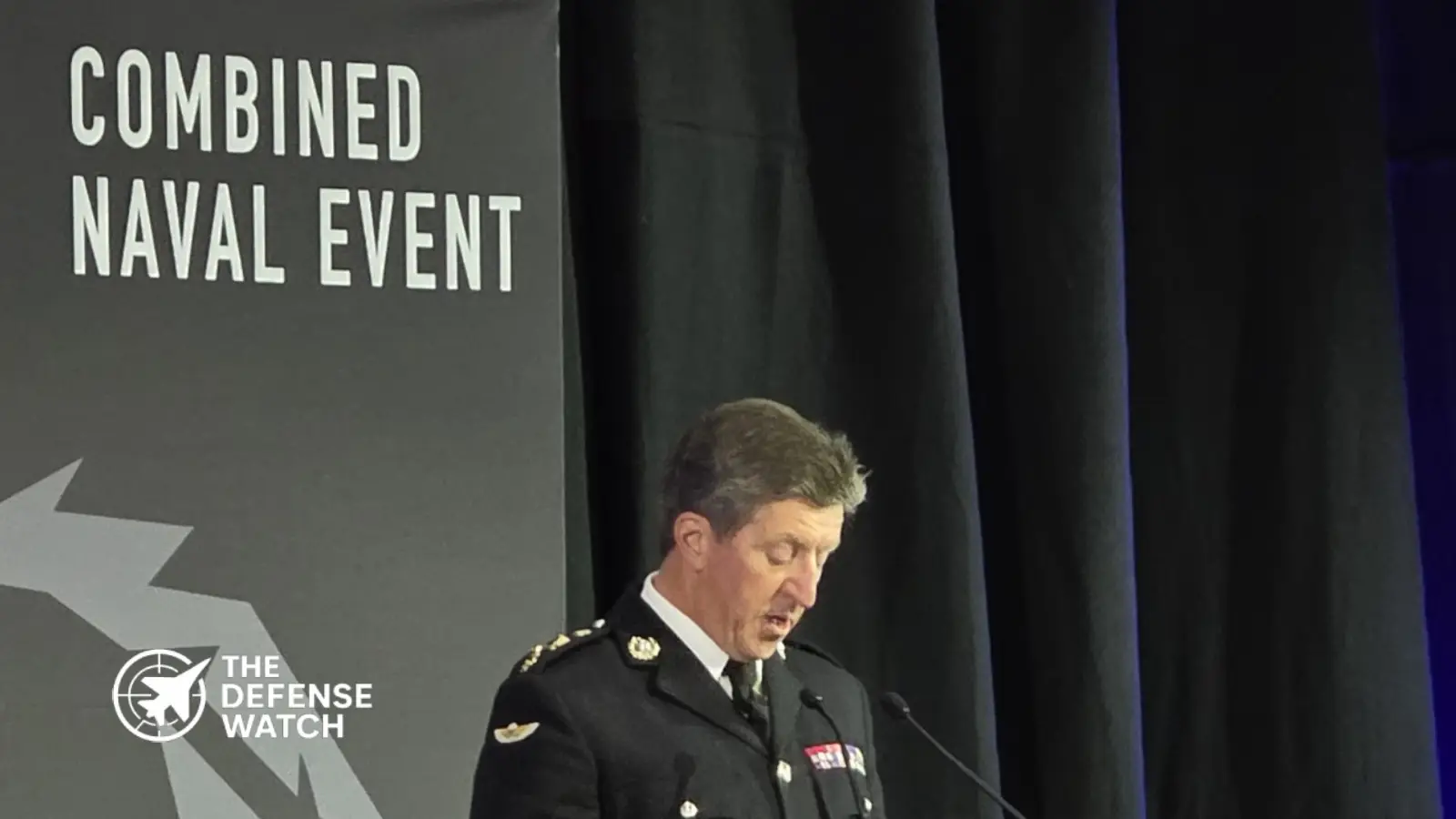
According to remarks by the UK’s First Sea Lord, Admiral Sir Ben Key, drones and autonomous systems are no longer supporting assets but increasingly decisive tools in combat operations. The comments, reflect growing concern among Western militaries over the speed at which uncrewed systems are reshaping naval warfare.
The statement comes as the United Kingdom continues to invest in autonomous maritime technologies, artificial intelligence-enabled surveillance platforms, and uncrewed surface and underwater vessels designed to support fleet operations in contested environments.
Lessons From Ukraine And The Red Sea
British defense planners are closely studying the operational impact of drones in both the Russia-Ukraine war and attacks on commercial shipping in the Red Sea.
In Ukraine, maritime drones have repeatedly targeted Russian naval assets in the Black Sea, forcing Moscow to adapt fleet operations and increase harbor defenses. Low-cost uncrewed systems have demonstrated an ability to threaten larger and more expensive warships, altering long-standing assumptions about naval power projection.
Similarly, Houthi attacks in the Red Sea using drones and missiles have pushed Western naval forces into sustained air and missile defense operations. The operational tempo has highlighted the growing challenge posed by inexpensive autonomous or remotely operated systems against conventional fleets.
Admiral Key’s remarks indicate that the Royal Navy sees these developments as more than temporary battlefield trends. Instead, British naval leadership appears to view autonomous systems as a permanent feature of future maritime conflict.
Royal Navy Expanding Autonomous Capabilities
The Royal Navy has already launched multiple programs focused on autonomous and uncrewed operations.
These efforts include testing uncrewed mine countermeasure systems, autonomous underwater vehicles, and intelligence, surveillance, and reconnaissance platforms. The service has also explored integrating drones with carrier strike groups led by the aircraft carrier HMS Queen Elizabeth.
The UK Ministry of Defence has increasingly emphasized experimentation through initiatives such as the NavyX innovation program, which aims to accelerate the adoption of emerging maritime technologies.
British defense officials argue that autonomous systems can provide several operational advantages, including:
- Reduced risk to personnel
- Lower operating costs
- Greater persistence during surveillance missions
- Faster intelligence collection
- Expanded reach in contested areas
The Royal Navy is also examining how artificial intelligence and machine learning can improve target identification, operational planning, and autonomous coordination between platforms.
Shift In Naval Warfare Doctrine
The First Sea Lord’s warning also points to a broader doctrinal shift among NATO navies.
Traditional naval power has long centered on high-value assets such as destroyers, submarines, and aircraft carriers. However, the growing effectiveness of drones is forcing military planners to reconsider fleet composition and survivability.
Analysts increasingly believe future naval warfare will involve layered networks of crewed and uncrewed systems operating together. Rather than replacing warships entirely, drones are expected to expand reconnaissance coverage, support strike operations, and overwhelm enemy defenses through mass deployment.
This shift mirrors broader trends across NATO militaries, where autonomous systems are becoming central to modernization planning.
The United States Navy has also accelerated work on uncrewed surface vessels and autonomous underwater systems as part of its distributed maritime operations strategy. Likewise, European allies are expanding investment in naval drones and AI-enabled defense systems.
Cost Pressures And Strategic Competition
The rapid rise of drone warfare also presents economic and strategic challenges.
Modern destroyers and frigates can cost billions of dollars to build and maintain, while relatively inexpensive drones may be capable of threatening them through swarm attacks or precision strikes. This cost imbalance is driving militaries to seek more scalable and flexible defense solutions.
For the United Kingdom, the challenge is especially important as London attempts to modernize its armed forces while operating under long-term budget pressures.
The Royal Navy must balance investments in major surface combatants, submarines, and carrier operations with the need to rapidly field autonomous systems capable of responding to emerging threats.
At the same time, Britain faces increasing maritime competition from rivals investing heavily in unmanned technologies and anti-access capabilities.
Maritime Security Implications
The growing use of drones at sea is expected to reshape maritime security operations well beyond traditional naval combat.
Autonomous systems are already being used for:
- Maritime surveillance
- Port security
- Mine detection
- Anti-submarine warfare
- Logistics support
- Intelligence gathering
As these systems become more capable, navies may increasingly rely on mixed human-machine task groups to maintain operational coverage across vast maritime regions.
For NATO members, interoperability between allied autonomous systems is also becoming a growing priority.
The Royal Navy’s latest messaging suggests Britain intends to remain actively involved in shaping that future operating model.
Strategic Outlook
The Royal Navy drone warfare strategy reflects a wider recognition that autonomous systems are changing the balance between cost, survivability, and combat effectiveness in maritime operations.
Admiral Key’s remarks underscore how quickly defense institutions are adapting to lessons emerging from active conflicts. While traditional warships will remain central to naval power, uncrewed systems are increasingly viewed as essential to maintaining operational advantage in contested waters.
The pace of that transformation is likely to accelerate as drone technologies become cheaper, more autonomous, and more integrated into frontline military planning.
Executive Summary:
Navantia UK has unveiled a new autonomous warship concept aimed at future maritime operations for the Royal Navy and allied fleets. The concept reflects increasing demand for AI-enabled naval systems, reduced-crewed operations, and distributed maritime warfare capabilities amid evolving global naval threats.
Navantia UK Autonomous Warship Signals Shift Toward AI-Driven Naval Operations
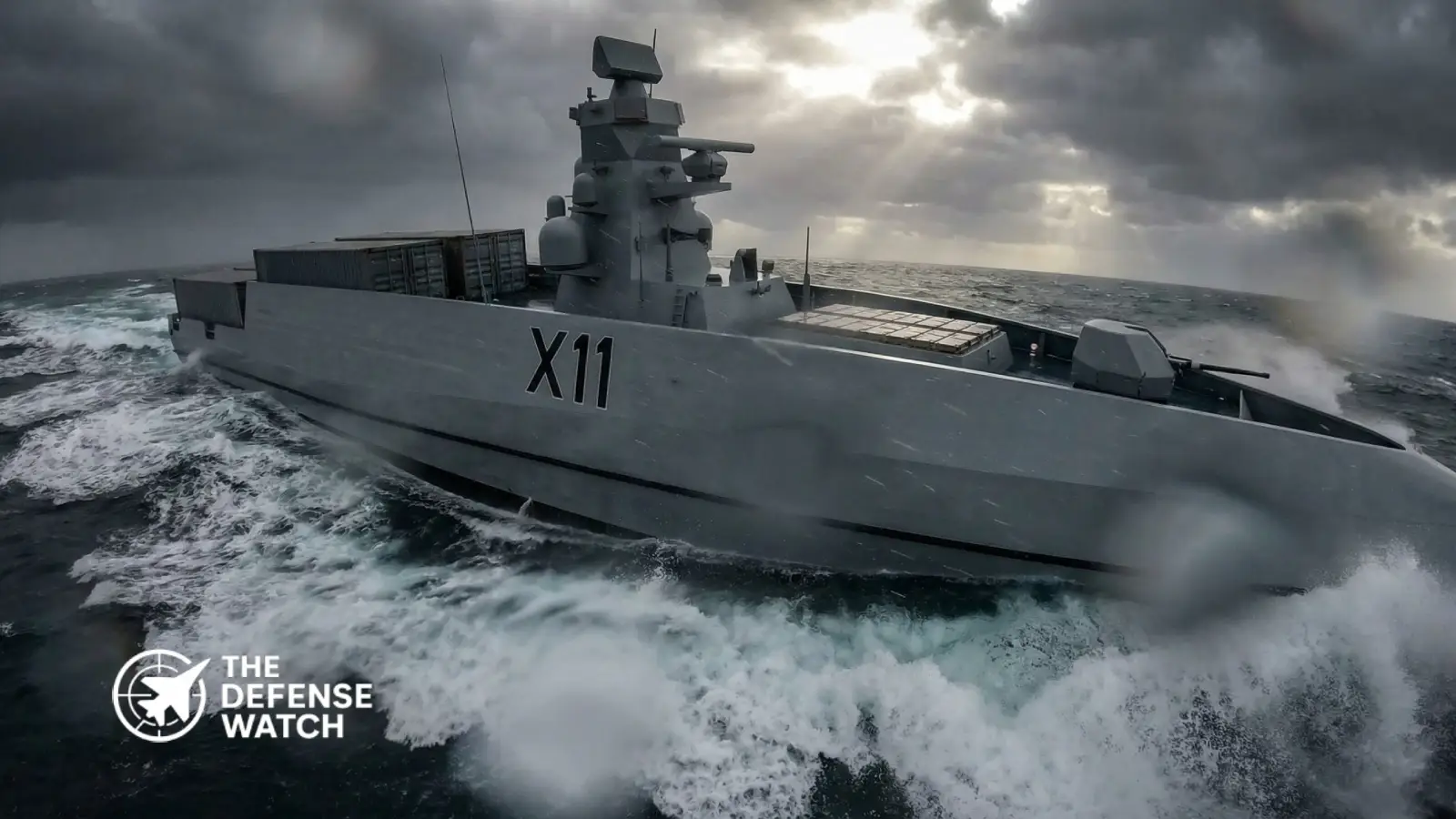
The new Navantia UK autonomous warship concept highlights how major naval shipbuilders are adapting to the rapid evolution of maritime warfare. Revealed during Combined Naval Event 2026 in the United Kingdom, the design focuses on autonomous operations, modular payload integration, and lower personnel requirements for future naval missions.
The concept is intended to support a broad range of missions, including intelligence gathering, anti-submarine warfare support, surveillance, logistics, and potentially electronic warfare operations.
The unveiling comes as NATO members and Indo-Pacific naval powers accelerate investments in unmanned and autonomous maritime technologies. Rising concerns over contested sea lanes, underwater threats, and distributed naval combat have increased pressure on Western fleets to field more flexible and survivable maritime systems.
Autonomous Naval Systems Becoming Central To Future Fleet Design
The Navantia UK autonomous warship concept reflects a wider transformation occurring across global naval forces. Traditional surface combatants remain essential, but navies are increasingly integrating autonomous vessels into operational planning.
Military planners view autonomous surface vessels as a way to expand fleet presence without significantly increasing personnel demands or long-term operational costs. Reduced-crewed or unmanned platforms can operate in higher-risk environments while supporting manned warships with sensor coverage, electronic warfare support, or decoy operations.
The concept unveiled by Navantia UK appears designed around that evolving operational model.
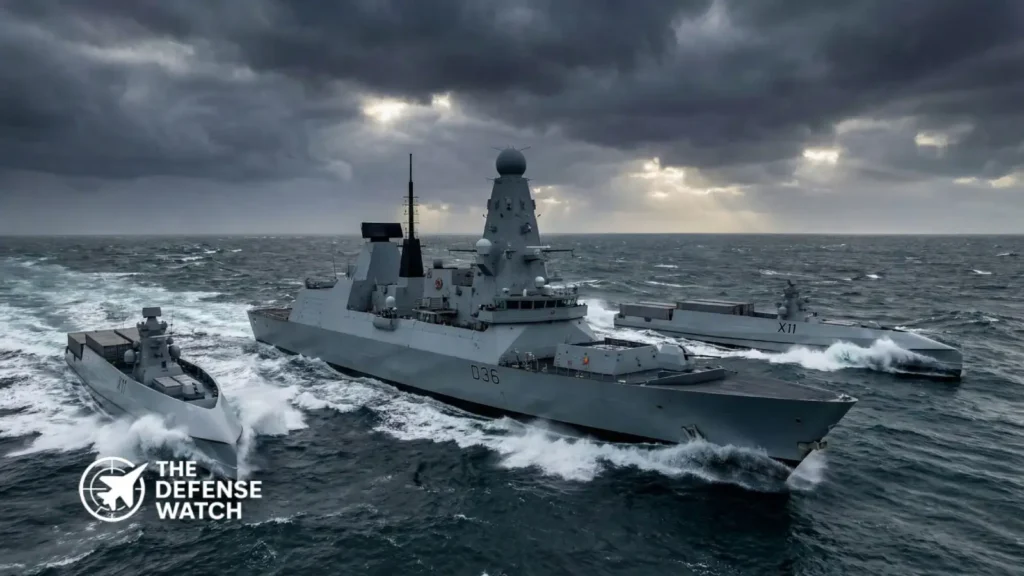
Images released during the event show a sleek, low-profile vessel featuring a large mission deck and modular architecture. Such configurations typically allow rapid integration of mission-specific payloads, including unmanned aerial systems, sonar packages, communications nodes, or strike systems.
While Navantia UK has not disclosed detailed specifications, the vessel’s layout suggests emphasis on adaptability and distributed maritime operations rather than traditional standalone combat roles.
Royal Navy And NATO Increasing Focus On Maritime Autonomy
The Royal Navy has steadily expanded experimentation with autonomous maritime platforms over the past several years. Programs involving unmanned mine-hunting systems, autonomous patrol vessels, and AI-supported command systems have become increasingly prominent within British naval modernization efforts.
The United Kingdom’s broader naval strategy aligns closely with NATO efforts to improve maritime situational awareness and survivability in contested environments.
Autonomous vessels are viewed as particularly valuable in areas where persistent surveillance is required, including the North Atlantic, Arctic approaches, and critical maritime chokepoints.
The new Navantia UK autonomous warship concept also aligns with growing international competition in unmanned naval technology. The United States Navy, China’s People’s Liberation Army Navy, and several European defense firms are actively pursuing similar systems aimed at expanding operational reach while reducing exposure of crewed assets.
In recent years, autonomous maritime systems have demonstrated increasing operational utility during exercises involving ISR missions, logistics support, and coordinated drone operations.
Modular Design Reflects Evolving Naval Warfare Requirements
One of the most significant aspects of the Navantia UK autonomous warship concept is its apparent modularity.
Modern naval procurement increasingly favors adaptable platforms capable of evolving alongside rapidly changing operational requirements. Fixed-role vessels risk becoming obsolete more quickly as new sensors, AI systems, and electronic warfare technologies emerge.
A modular autonomous platform allows operators to tailor systems for specific missions without requiring entirely new ship classes.
This approach mirrors broader trends seen across NATO naval modernization programs, where flexibility, interoperability, and scalable force structures are becoming central procurement priorities.
Naval analysts also note that autonomous systems could help address ongoing recruitment and retention challenges affecting several Western navies. Reduced-crewed vessels lower manpower demands while enabling expanded operational coverage.
However, autonomous naval warfare also introduces significant challenges. Secure communications, cyber resilience, command authority, and rules of engagement remain critical concerns for military planners integrating AI-enabled systems into operational fleets.
Strategic Implications For Future Maritime Competition
The unveiling of the Navantia UK autonomous warship concept illustrates how maritime competition is increasingly shifting toward networked and autonomous operations.
Future naval conflicts are expected to involve large numbers of interconnected manned and unmanned platforms operating simultaneously across wide maritime areas. Autonomous vessels may function as forward sensors, communications relays, electronic warfare nodes, or logistical support platforms for larger fleets.
For NATO navies, autonomous systems offer a potential force multiplier at a time when defense budgets face competing modernization demands across air, land, cyber, and space domains.
The concept also reinforces Europe’s broader push to strengthen indigenous defense industrial capabilities amid rising geopolitical uncertainty and growing emphasis on strategic autonomy.
As maritime threats evolve, autonomous platforms are likely to become increasingly integrated into both peacetime deterrence operations and future high-intensity naval warfare planning.
Executive Summary: British firm RAD has introduced a vessel autonomy system designed to support automated navigation and vessel control in maritime environments. The system is intended to enhance operational efficiency and reduce workload for ship crews across both defense and commercial sectors.
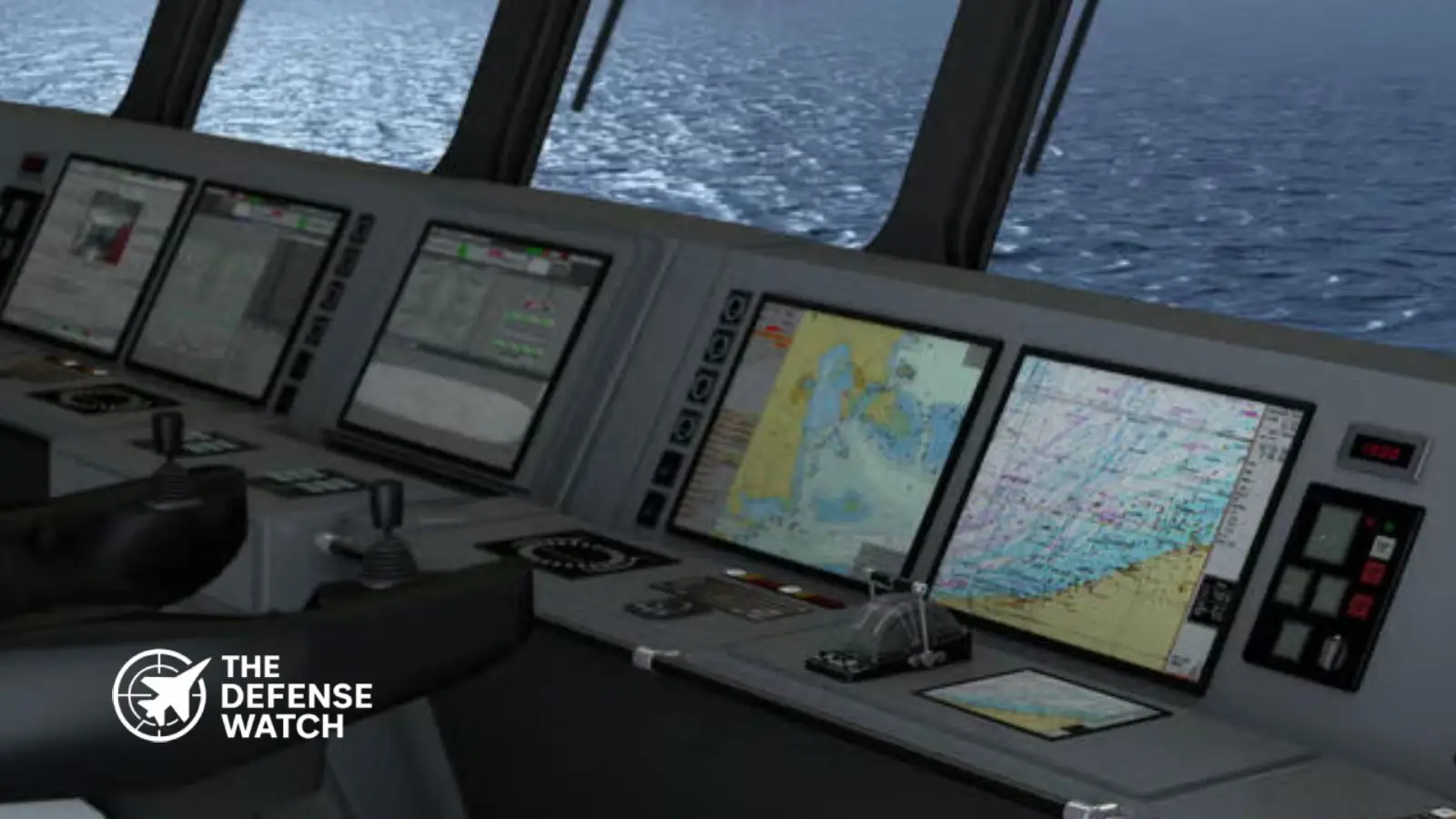
The vessel autonomy system developed by British firm RAD marks another step in the growing shift toward automated maritime operations. The system is designed to support navigation, situational awareness, and vessel control functions, reducing reliance on manual input during routine and complex operations.
The launch reflects broader interest in maritime autonomy technology as navies and commercial operators look for ways to improve efficiency, safety, and operational reach in increasingly contested and congested waters.RAD is positioning the system as a scalable solution for multiple vessel types, including smaller patrol craft and larger surface platforms.
System Overview and Capability
RAD’s vessel autonomy system is built to integrate with existing shipboard control and navigation architecture. Rather than replacing crew functions entirely, the system is designed to assist operators by automating selected navigation tasks and improving decision support during vessel operations.
At its core, the system focuses on three functional areas. Navigation assistance, environmental sensing integration, and operational decision support. These functions allow vessels to process navigational inputs in near real time, reducing manual workload while maintaining human oversight.
The concept reflects a wider trend in naval navigation automation, where systems are increasingly expected to support hybrid control models. In these models, human operators remain in command while autonomous software handles repetitive or data intensive tasks.
Industry Context and Maritime Shift
The development comes at a time when maritime forces are expanding investment in unmanned and semi autonomous systems. Naval planners in the United States, United Kingdom, and allied nations have increased focus on distributed maritime operations, where smaller and more numerous platforms operate with varying levels of autonomy.
Maritime autonomy technology is also being driven by commercial shipping interests. Shipping operators are under pressure to improve fuel efficiency, reduce crew workload, and enhance safety in congested sea lanes. Systems like RAD’s are aligned with these goals by offering scalable automation without requiring full platform redesign.
Defense analysts note that autonomy is increasingly being treated as a force multiplier rather than a replacement for traditional vessels. This approach allows navies to extend operational reach without proportionally increasing crew demands.
Operational Implications for Naval Forces
The introduction of a vessel autonomy system has direct implications for naval operations. One of the most significant is reduced cognitive workload for crews during long duration missions. By automating routine navigation processes, operators can focus on tactical decisions and mission planning.
Another key impact is improved responsiveness in complex environments. Autonomous systems can process sensor data and environmental inputs faster than manual systems in certain scenarios, supporting quicker adjustments in navigation and maneuvering.
This capability is particularly relevant in littoral zones where traffic density, civilian activity, and potential adversary presence increase operational complexity.
Integration and Scalability
RAD is positioning the system for compatibility across different vessel classes. This includes smaller patrol vessels, unmanned surface vessels, and larger manned ships.
Scalability is an important factor in maritime autonomy technology adoption. Systems that require extensive platform redesign are less likely to be widely deployed. By focusing on modular integration, RAD aims to lower adoption barriers for operators with existing fleets.
The system is also designed to support incremental upgrades. This allows operators to introduce autonomy features in stages rather than committing to full system replacement.
Strategic Relevance
The development of autonomous vessel control systems reflects a broader strategic shift in naval warfare. Modern maritime operations increasingly rely on distributed sensing, networked platforms, and data driven decision making.
Autonomous systems contribute to this shift by acting as force multipliers across fleets. They enable smaller crews to manage more complex missions and allow vessels to operate for longer durations with reduced fatigue risk.
For defense planners, the challenge remains balancing autonomy with reliability and cybersecurity. As systems become more connected and software dependent, ensuring resilience against electronic interference and cyber threats becomes essential.
EEAT Perspective and Analysis
From an expertise standpoint, maritime autonomy is no longer experimental. It is transitioning into operational deployment across multiple navies and commercial fleets. RAD’s system fits within this broader trajectory rather than representing a standalone innovation.
Authoritativeness in this sector is increasingly defined by interoperability and real world testing. Systems that can integrate with existing command architectures are more likely to gain traction.
Trustworthiness remains a key concern. Autonomous navigation systems must demonstrate predictable behavior under variable sea conditions, including weather changes, sensor degradation, and communication disruptions.
The vessel autonomy system reflects a practical approach to these constraints by emphasizing assisted autonomy rather than full replacement of human control.
Conclusion
The introduction of RAD’s vessel autonomy system highlights the continued evolution of maritime operations toward increased automation. While not fully autonomous in the sense of unmanned command, the system represents a meaningful step in reducing workload and improving operational efficiency across naval and commercial platforms.
As maritime environments grow more complex, systems like this are likely to play a larger role in shaping how fleets operate, deploy, and sustain missions over time.