

Executive Summary:
The United Kingdom has announced a major military contribution to a multinational mission aimed at protecting shipping through the Strait of Hormuz. The deployment includes Royal Navy destroyer HMS Dragon, Typhoon fighter jets, autonomous mine-hunting systems, and counter-drone capabilities as tensions in the Gulf continue to disrupt global trade and energy markets.
UK Expands Strait Of Hormuz Security Mission
The UK Strait of Hormuz mission marks one of Britain’s most significant recent military commitments in the Middle East, combining naval, air, and autonomous systems to protect one of the world’s most strategically important waterways.
During a virtual summit involving representatives from more than 40 nations, UK Defence Secretary John Healey confirmed Britain would contribute Typhoon fighter aircraft, advanced drone systems, mine-clearance specialists, and the Royal Navy destroyer HMS Dragon to a future multinational maritime security operation.
The Strait of Hormuz remains critical to global energy markets, with roughly one-fifth of the world’s oil shipments passing through the narrow maritime corridor. Continued regional instability and threats to commercial shipping have increased insurance costs, disrupted tanker routes, and intensified pressure on Western governments to guarantee freedom of navigation.
HMS Dragon And Typhoon Jets At The Center Of UK Deployment
The centerpiece of the British deployment is the Royal Navy Type 45 destroyer HMS Dragon, which is already moving toward the Middle East following additional mission preparation and systems calibration. The destroyer will be prepared for potential operations tied to maritime security in the Strait of Hormuz.
HMS Dragon carries the Sea Viper air defense system, designed to counter aircraft, missiles, and drone threats. Its deployment reflects growing concern over the use of unmanned systems and asymmetric maritime tactics in the Gulf region.
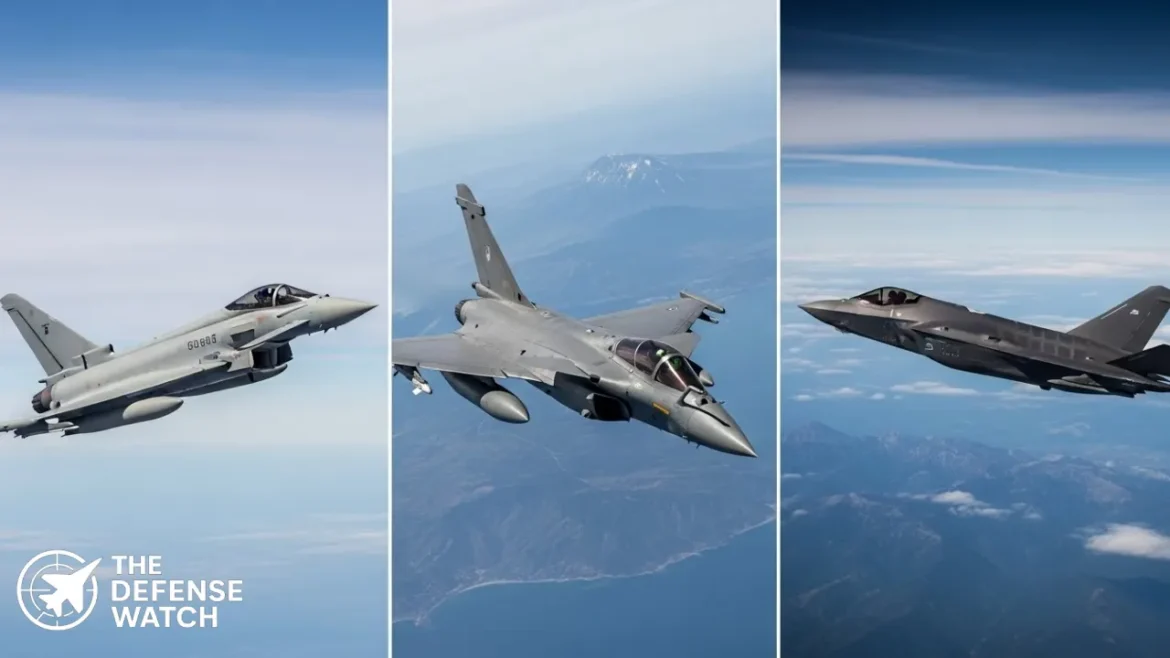
Alongside the destroyer, Britain is deploying Royal Air Force Typhoon fighter jets for air patrol operations over the strait. The aircraft have previously operated in Middle East missions and are expected to provide rapid-response air cover and surveillance support.
The UK government also confirmed new funding worth £115 million for autonomous mine-hunting and counter-drone systems. The package includes the Royal Navy’s Beehive modular system and Kraken autonomous drone boats designed to identify and neutralize maritime threats.
Why The Strait Of Hormuz Matters
The Strait of Hormuz remains one of the most contested maritime choke points in the world. Any prolonged disruption immediately affects global oil prices, shipping rates, and regional security calculations.
British officials described the upcoming multinational operation as defensive and focused solely on protecting commercial shipping. London also stressed the mission would operate independently while coordinating with allies and regional stakeholders.
The deployment also highlights how Western militaries are increasingly integrating autonomous technologies into naval operations. Mine-hunting drones, unmanned surface vessels, and counter-drone systems are becoming central tools for maritime security missions where traditional naval assets face persistent asymmetric threats.
From a strategic perspective, the mission demonstrates Britain’s continued effort to maintain relevance in Gulf security operations despite pressure on Royal Navy fleet numbers and defense resources. The use of unmanned systems allows the UK to expand operational capability without relying solely on larger surface combatants.
Growing Multinational Coordination
The UK and France have emerged as leading European contributors to the proposed maritime mission, while several allied nations are expected to provide surveillance, logistics, and naval support. Reuters reported that more than 1,000 British personnel are already stationed across the region supporting existing defensive operations, including counter-drone units and fast jet squadrons.
The British deployment comes as governments across Europe and the Gulf attempt to stabilize shipping lanes while avoiding further escalation in the wider regional conflict.
Defense analysts note that the operation could become an important test case for future coalition maritime security missions centered around unmanned systems, distributed surveillance, and integrated air defense networks.
Strategic Analysis
The UK Strait of Hormuz mission reflects a broader shift in modern naval strategy. Rather than relying only on large carrier groups or traditional mine countermeasure vessels, Britain is emphasizing hybrid naval operations built around drones, autonomous boats, and networked air defense systems.
That approach offers several operational advantages. Autonomous systems can remain deployed longer, reduce risks to personnel, and provide persistent surveillance in congested maritime environments. For the Royal Navy, the mission also provides an opportunity to validate new technologies under real-world operational conditions.
At the same time, the deployment underscores the continuing importance of the Gulf region to NATO-aligned maritime strategy. Even limited disruptions in the Strait of Hormuz can rapidly affect global energy markets, making freedom of navigation operations a strategic priority for Western governments.

Executive Summary:
A proposed US Navy Trump-class battleship concept is generating debate after estimates suggested the program could cost up to $700 billion. The proposal highlights growing discussions inside the defense community over future naval firepower, survivability, and nuclear-powered surface combatants.
Trump-Class Battleship Concept Revives Debate Over Future Naval Warfare
The proposed Trump-class battleship concept has reignited discussion about the future direction of US naval modernization. The speculative program could require as much as $700 billion if developed into a full operational fleet.
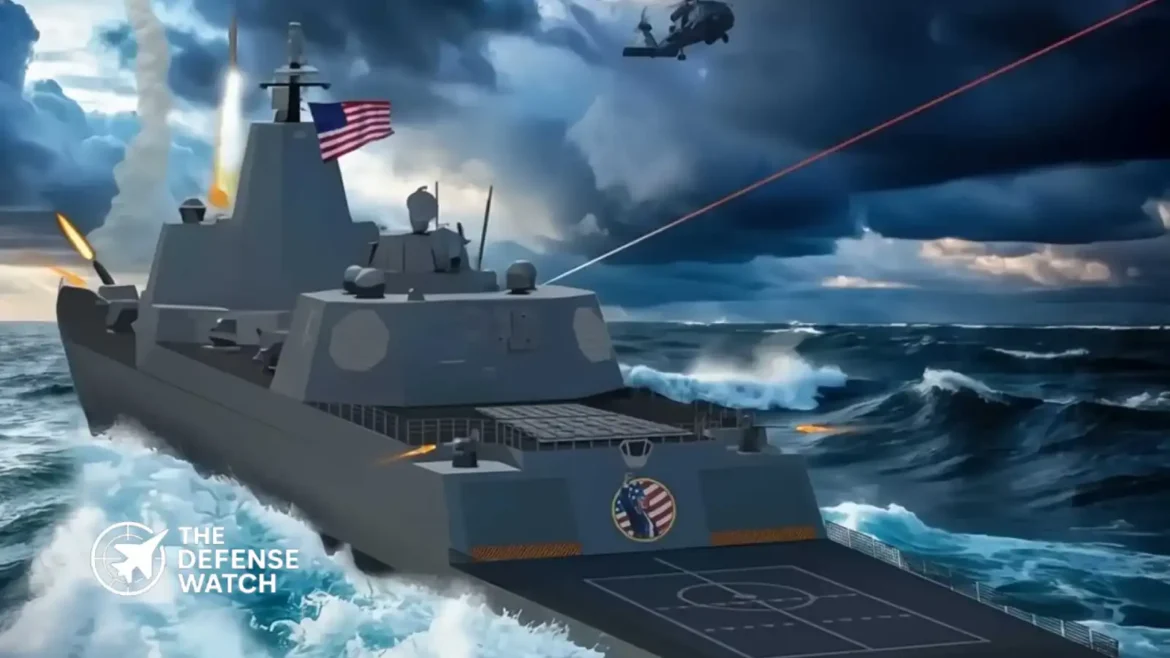
The concept reportedly envisions a new generation of heavily armed, nuclear-powered surface combatants designed for long-range strike operations, missile defense, and sustained maritime presence in contested regions such as the Indo-Pacific.
While the idea remains conceptual and outside the official US Navy shipbuilding plan, it reflects broader debates within Washington over how the Navy should adapt to increasingly capable Chinese and Russian anti-ship missile threats.
Nuclear Power And Heavy Firepower At The Center Of The Proposal
The Trump-class battleship proposal reportedly combines characteristics of legacy battleships with modern naval warfare technologies. Concepts discussed in defense circles include advanced radar systems, integrated missile launch cells, directed-energy weapons, and large-scale power generation for future combat systems.
Nuclear propulsion is viewed as central to the idea because it would allow sustained deployments without traditional fuel limitations. Similar advantages already exist aboard the Nimitz-class aircraft carrier and Gerald R. Ford-class aircraft carrier fleets.
Supporters of large nuclear-powered surface combatants argue that future naval warfare may require ships capable of carrying significantly larger missile inventories and power-intensive defensive systems. These include high-energy lasers and electronic warfare systems designed to counter hypersonic missiles and drone swarms.
However, critics question whether such massive warships would remain survivable in modern combat environments dominated by precision-guided munitions, long-range anti-ship missiles, and satellite tracking capabilities.
Budget Concerns Could Limit Any Future Battleship Revival
The estimated $700 billion figure has become a central point of criticism. Analysts note that the US Navy is already facing pressure from rising shipbuilding costs, submarine production delays, and maintenance demands across the existing fleet.
Programs such as the Columbia-class submarine, the Virginia-class submarine, and the Constellation-class frigate are already consuming substantial portions of future naval procurement budgets.
At the same time, the Navy continues investing in unmanned systems, distributed maritime operations, and long-range missile integration. Defense planners increasingly favor dispersing combat power across larger numbers of platforms instead of concentrating capability into a small number of extremely expensive ships.
This strategic shift has become especially important as the Pentagon evaluates potential conflict scenarios in the Pacific, where survivability, logistics, and operational flexibility are viewed as critical factors.
Strategic Messaging Reflects Broader US-China Naval Competition
Even though the Trump-class battleship remains hypothetical, the attention surrounding the proposal underscores how rapidly naval competition is evolving.
China continues expanding the fleet of the Type 055 destroyer while also increasing aircraft carrier production and anti-ship missile capabilities. Meanwhile, the US Navy is pursuing a combination of submarines, carrier strike groups, unmanned platforms, and next-generation destroyers to maintain maritime superiority.
The discussion around heavily armed nuclear-powered battleships also reflects concerns about missile magazine depth. Recent conflicts and war games have highlighted how quickly modern naval forces can exhaust missile inventories during high-intensity operations.
Some defense analysts argue that larger surface combatants with expanded vertical launch capacity could help address that challenge. Others contend that survivability concerns make distributed fleets and autonomous systems a more realistic long-term solution.
Future Of The Concept Remains Unclear
No official US Navy acquisition program currently exists for a Trump-class battleship. The concept instead appears to function as a broader discussion point within defense media and strategic commentary regarding the future balance between survivability, firepower, and procurement costs.
Still, the scale of the projected investment and the symbolic return of the battleship concept have ensured continued debate across defense policy circles.
As naval competition intensifies in the Indo-Pacific and global maritime security environments become more contested, discussions surrounding the next generation of American sea power are likely to continue.
Executive Summary:
The U.S. Navy has confirmed that the future Trump-class battleships will use nuclear propulsion under its latest 30-year shipbuilding plan. The move is intended to support greater endurance, higher speed, and advanced weapons systems as Washington pushes to expand high-end naval combat capabilities.
Trump-Class Battleships To Use Nuclear Propulsion
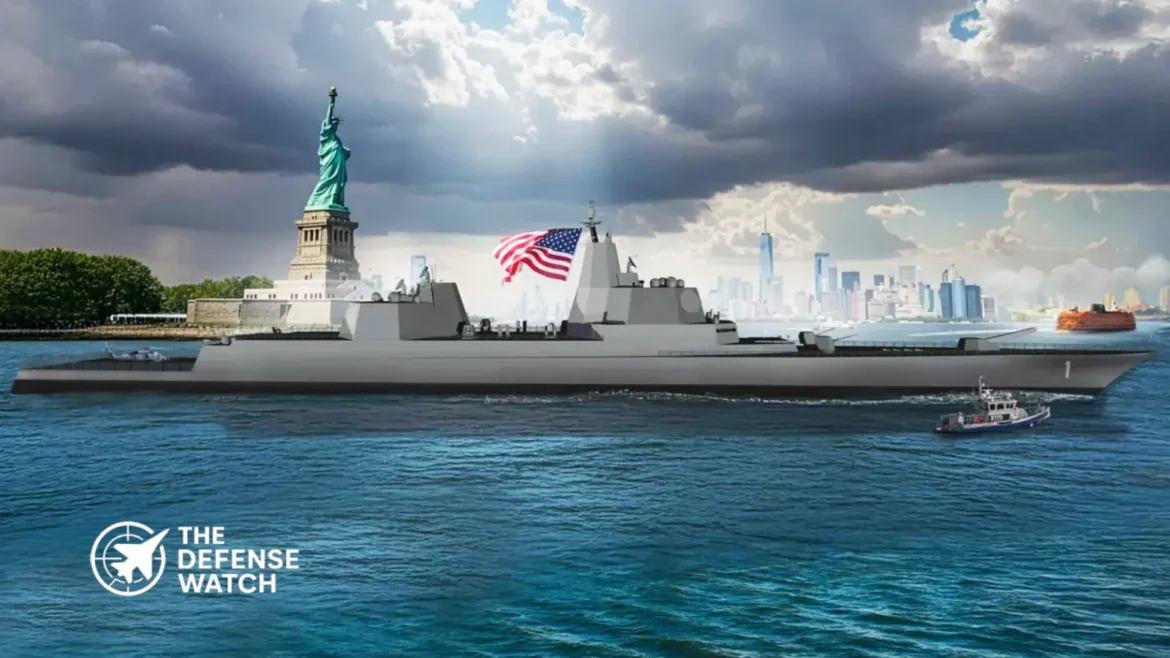
The U.S. Navy’s future Trump-class battleships will be powered by nuclear reactors, marking a major shift in the service’s next-generation surface warfare strategy. The confirmation appeared in the Navy’s newly released 30-year shipbuilding plan.
The Trump-class program, also referred to as BBG(X), is designed as a large surface combatant focused on long-range offensive fires, command-and-control operations, and survivability in high-threat environments. Navy planning documents state the vessels are not intended to replace the existing Arleigh Burke-class destroyers.
According to the Navy, nuclear propulsion would provide the future warships with greater operational endurance, sustained high-speed deployment capability, and enough onboard power generation to support emerging systems such as directed-energy weapons and electromagnetic railguns.
Why Nuclear Power Matters For The Program
The decision is significant because the U.S. Navy has not operated nuclear-powered surface combatants outside aircraft carriers since retiring its nuclear cruisers in the 1990s.
The planned Trump-class battleships are expected to displace between 30,000 and 40,000 tons, making them substantially larger than current destroyers and among the biggest surface combatants envisioned in decades. Earlier Navy statements described the ships as capable of carrying hypersonic missiles, sea-launched nuclear cruise missiles, laser weapons, and advanced command-and-control systems.
From an operational standpoint, nuclear propulsion aligns with the Navy’s broader push toward power-intensive combat systems. Future directed-energy defenses, high-capacity radar arrays, and railgun technologies are all expected to require far greater electrical generation than conventional propulsion systems can easily provide.
The Navy’s shipbuilding blueprint specifically states the battleship is intended to deliver “high-volume, long-range offensive fires” while acting as a survivable command platform for fleet operations.
Program Cost And Industrial Challenges
Despite the ambitious vision, the Trump-class battleship program faces major industrial and budgetary hurdles.
Reports indicate the first three ships could cost more than $43 billion combined, with individual vessels potentially exceeding the cost of many existing surface combatants.
The Navy is currently working with major shipbuilders including Huntington Ingalls Industries and General Dynamics Bath Iron Works on preliminary design efforts.
Analysts have also pointed to limitations within America’s nuclear shipbuilding infrastructure. At present, only a small number of U.S. shipyards possess the facilities and workforce needed to construct and maintain nuclear-powered warships. Expanding production capacity for a new class of nuclear surface combatants would likely require significant investment across the industrial base.
Another challenge is timing. The Navy has already indicated that construction of the first Trump-class ships is unlikely to begin before the early 2030s.
Strategic Context Behind The Battleship Plan
The Trump-class battleship initiative emerged as part of the broader “Golden Fleet” naval expansion strategy announced in late 2025. The concept reflects growing Pentagon concern over the pace of Chinese naval modernization and the need for more survivable long-range strike platforms in contested maritime regions.
While the program has generated debate inside defense circles, the Navy appears determined to frame the battleship as part of a future high-low fleet mix rather than a revival of traditional battleship doctrine.
Supporters argue that larger, heavily armed surface combatants could improve distributed strike capability and fleet command resilience during high-end conflict. Critics, however, question whether such expensive ships would remain survivable in an era increasingly shaped by drones, hypersonic weapons, and long-range anti-ship missiles.
The Navy’s latest shipbuilding plan nevertheless indicates that the service views the platform as central to future maritime deterrence and long-range combat operations.
Broader Implications For US Naval Strategy
The confirmation of nuclear propulsion signals that the Trump-class battleship program is evolving from a political concept into a more technically defined naval modernization effort.
If fully funded, the ships would represent the first new U.S. battleship-type vessels since World War II and one of the most ambitious surface combatant programs attempted in recent decades.
The program also highlights a broader shift within U.S. naval strategy toward larger, more power-intensive platforms capable of integrating next-generation weapons systems for operations across the Indo-Pacific and other contested theaters.
Executive Summary:
Raytheon has secured a contract to provide SeaRAM missile defense systems for Australia’s future Improved Mogami-class frigates. The deal strengthens the Royal Australian Navy’s close-in defense capability as regional naval competition and missile threats continue to rise across the Indo-Pacific.
Raytheon SeaRAM Contract Strengthens Australia’s Future Frigate Fleet
The Raytheon SeaRAM contract for Australia’s Improved Mogami frigates marks another major step in Canberra’s ongoing naval modernization strategy. The agreement will see the advanced close-in weapon system integrated onto Australia’s planned fleet of upgraded Mogami-class frigates, enhancing ship survivability against anti-ship missiles, drones, and other airborne threats.
The SeaRAM system will form part of the defensive suite for the vessels selected under Australia’s SEA 3000 General Purpose Frigate program.
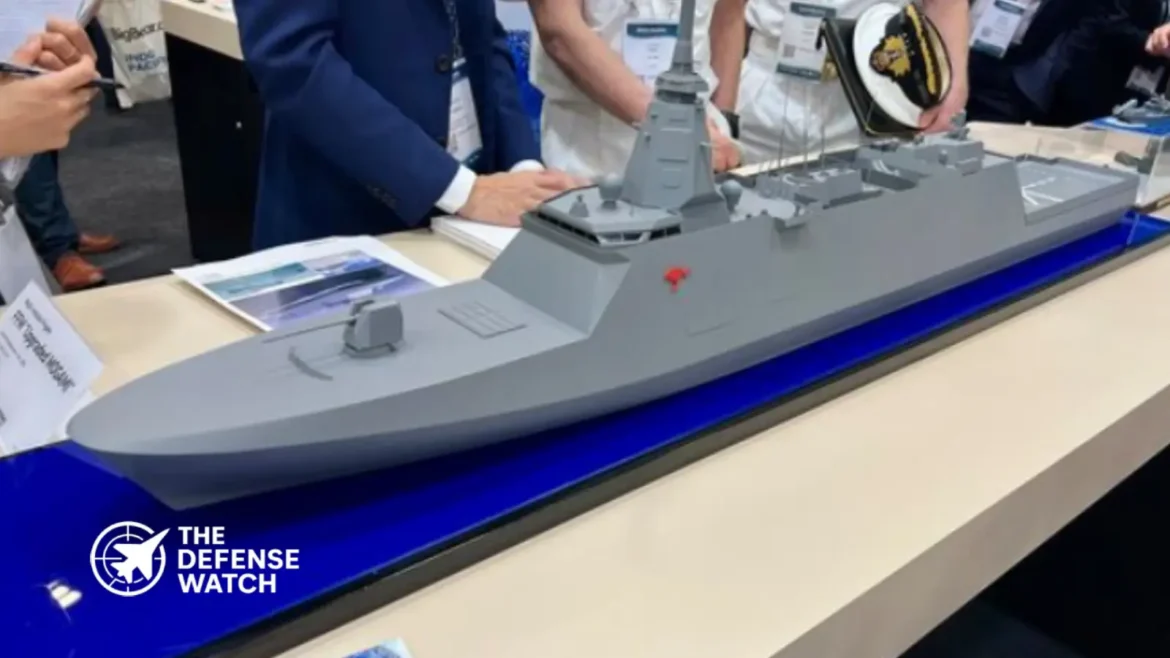
The Improved Mogami-class design is based on the Japanese frigate developed by Mitsubishi Heavy Industries for the Japan Maritime Self-Defense Force. Australia selected the upgraded Japanese design in 2025 as part of efforts to rapidly expand and modernize the surface combatant fleet.
SeaRAM Expands Layered Naval Missile Defense
The RTX Corporation SeaRAM system combines the sensor and tracking architecture of the Phalanx Close-In Weapon System with the Rolling Airframe Missile interceptor. The system is designed to provide a final defensive layer against incoming anti-ship missiles and low-flying aerial threats.
SeaRAM has seen growing adoption among allied navies due to the increasing prevalence of precision-guided weapons, loitering munitions, and unmanned systems in modern naval warfare.
The system offers several operational advantages for Australia’s future frigates:
- Rapid autonomous threat detection and engagement
- Reduced crew workload through automated targeting
- Compatibility with modern combat management systems
- Capability against saturation missile attacks and drones
The Royal Australian Navy is seeking greater layered air defense capability as regional maritime threats become more complex. The Indo-Pacific theater has witnessed rapid expansion in long-range missile inventories, particularly among major regional powers.
Australia Accelerates Naval Modernization Efforts
Australia’s selection of the Improved Mogami frigate reflects a broader defense strategy focused on distributed lethality, fleet survivability, and rapid force expansion.
Canberra has placed increased emphasis on maritime security following growing geopolitical competition across the Indo-Pacific. The Royal Australian Navy is expected to operate the new frigates alongside Hobart-class destroyers and future nuclear-powered submarines under the AUKUS security partnership.
The Improved Mogami-class frigates are expected to feature:
- Advanced radar and sensor suites
- Anti-submarine warfare capabilities
- Vertical launch missile systems
- Reduced radar signature design features
- Enhanced interoperability with allied forces
The addition of SeaRAM strengthens close-range ship defense, particularly against high-speed anti-ship missiles that can evade longer-range interceptors.
Defense analysts note that recent naval conflicts and Red Sea maritime attacks have reinforced the importance of layered ship protection systems. The widespread use of drones and anti-ship cruise missiles has forced many navies to reassess close-in defensive capabilities.
Strategic Importance In The Indo-Pacific
The SeaRAM contract also highlights expanding defense cooperation between Australia, Japan, and the United States.
Australia’s decision to adopt a Japanese frigate design represents a significant strategic development in regional defense industrial collaboration. It also aligns with efforts by allied nations to improve interoperability amid growing security concerns in the Pacific.
For Raytheon, the agreement further expands SeaRAM’s international customer base. The system is already deployed aboard U.S. Navy vessels and multiple allied warships worldwide.
The deal underscores how missile defense systems are becoming central to modern naval procurement strategies. Surface combatants increasingly require integrated protection against diverse threats ranging from supersonic missiles to low-cost unmanned aerial systems.
As Australia continues to reshape its maritime force structure, the Improved Mogami frigates are expected to play a key role in regional patrol, escort, and deterrence missions.
Growing Demand For Naval Defensive Systems
The Raytheon SeaRAM contract reflects broader global demand for shipborne missile defense systems amid evolving naval warfare trends.
Modern warships face increasingly compressed engagement timelines due to faster missiles, networked targeting systems, and swarm drone attacks. Close-in defense systems such as SeaRAM are now viewed as essential rather than optional capabilities for frontline naval platforms.
Australia’s frigate modernization effort comes at a time when Indo-Pacific navies are investing heavily in survivability upgrades, electronic warfare systems, and integrated air defense architectures.
The Improved Mogami program is expected to contribute significantly to Australia’s future maritime deterrence posture while reinforcing trilateral defense cooperation among key regional allies.
Executive Summary:
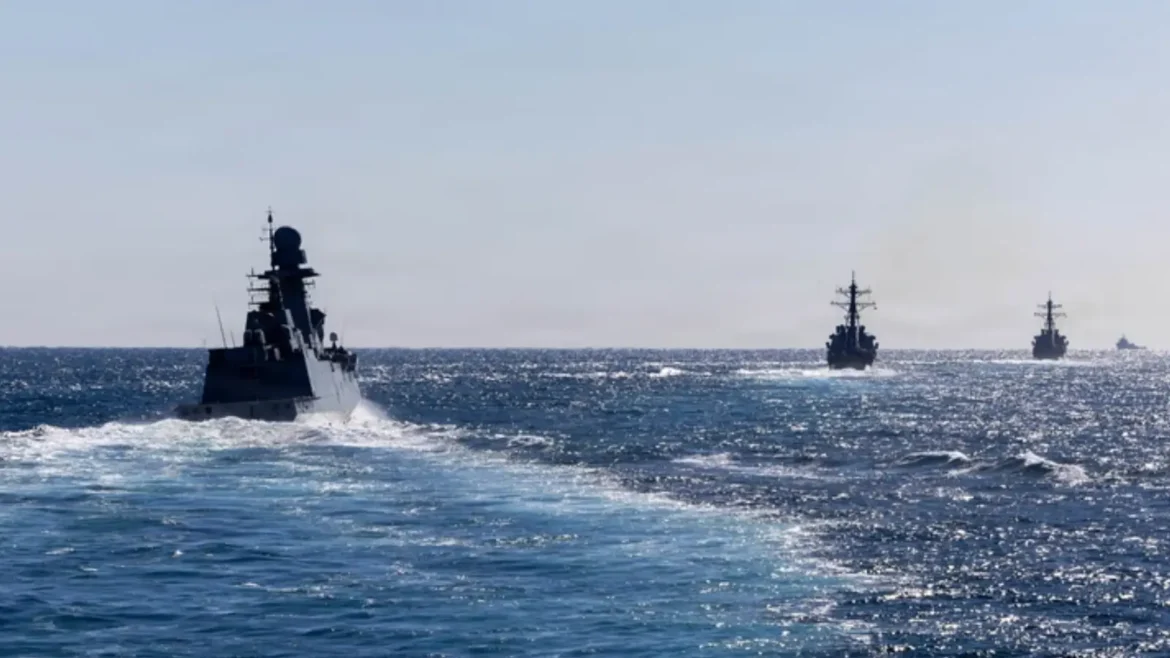
US and partner nation forces sank two decommissioned vessels during the Balikatan 2026 exercise, showcasing allied maritime strike coordination in the Indo-Pacific. The live-fire drills highlighted expanding US-Philippine defense cooperation amid growing regional security tensions.
Balikatan 2026 Maritime Exercise Highlights Allied Naval Strike Capability
The Balikatan 2026 maritime exercise demonstrated a major display of allied naval firepower as US and partner nation forces successfully sank two decommissioned ships during coordinated live-fire operations in Philippine waters.
The annual Balikatan exercise, conducted primarily between the United States and the Philippines, has evolved into one of the Indo-Pacific region’s most closely watched multinational military drills. This year’s sinking exercise, commonly referred to as SINKEX, underscored the growing emphasis on maritime security, joint targeting operations, and combined deterrence missions.
According to US military officials, the exercise involved coordinated strikes from multiple military platforms, including naval vessels, aircraft, and missile systems. The operation targeted two retired ships that were intentionally positioned offshore for the live-fire event.
The drills are designed to improve interoperability between allied forces while testing real-world maritime engagement scenarios under combat-like conditions.
Allied Forces Expand Maritime Cooperation
Balikatan 2026 included participation from US treaty ally the Philippines alongside several partner nations observing or contributing to portions of the exercise. Defense officials said the maritime phase focused heavily on combined command-and-control operations and synchronized targeting procedures.
The sinking exercise demonstrated how allied forces can rapidly identify, track, and engage hostile maritime targets using integrated strike networks. Analysts note that these scenarios closely reflect operational challenges that could emerge in contested Indo-Pacific waters.
The United States has steadily increased its military cooperation with the Philippines over the past several years through expanded rotational deployments, infrastructure access agreements, and larger bilateral exercises.
Military planners increasingly view the Philippine archipelago as strategically important due to its location near major sea lanes and contested regional waters.
Live-Fire SINKEX Sends Strategic Message
The destruction of the decommissioned vessels carried operational and geopolitical significance beyond training value alone.
SINKEX operations allow naval forces to evaluate weapon effectiveness, targeting coordination, and battle damage assessment in realistic conditions. Unlike simulated engagements, live-fire sinking drills provide crews with practical experience against full-sized maritime targets.
Defense observers say Balikatan 2026 also served as a visible demonstration of allied readiness amid growing regional competition in the Indo-Pacific.
The exercise took place as regional militaries continue expanding naval modernization efforts, anti-ship missile deployments, and maritime surveillance operations across the Pacific theater.
US Indo-Pacific Command has repeatedly emphasized the importance of maintaining freedom of navigation, strengthening alliance structures, and improving distributed maritime operations.
Philippines Continues Defense Modernization Push
For the Philippines, participation in high-end maritime exercises supports broader military modernization goals.
The Armed Forces of the Philippines have accelerated efforts to improve coastal defense, maritime awareness, and naval strike capabilities in response to evolving regional security concerns. Manila has expanded defense procurement programs involving missile systems, patrol vessels, radar infrastructure, and joint training initiatives with allied nations.
Balikatan exercises increasingly incorporate advanced combat scenarios involving amphibious operations, air defense missions, cyber coordination, and maritime interdiction drills.
Military officials from both countries have stated that the exercise is intended to improve crisis response capabilities while enhancing interoperability across all military domains.
Strategic Importance Of Indo-Pacific Exercises
Large-scale multinational drills like Balikatan have become central to US defense strategy in the Indo-Pacific region.
The Pentagon continues to prioritize distributed force posture, allied integration, and rapid-response capabilities across the Pacific as regional competition intensifies. Exercises involving naval strike coordination and maritime denial operations are now regularly featured in allied training events.
Defense analysts believe these drills help strengthen deterrence by demonstrating that allied militaries can conduct coordinated operations across air, sea, and land domains under realistic operational conditions.
The live-fire sinking of the two vessels during Balikatan 2026 reinforced the increasing complexity and scale of Indo-Pacific military exercises.
Executive Summary:
The U.S. Navy has awarded General Dynamics Electric Boat a $2.3 billion contract modification tied to Virginia-class Block VI submarines. The funding supports long lead material procurement and early manufacturing work aimed at sustaining the Navy’s undersea warfare modernization strategy through the next decade.
General Dynamics Electric Boat Awarded Major Virginia-Class Block VI Contract
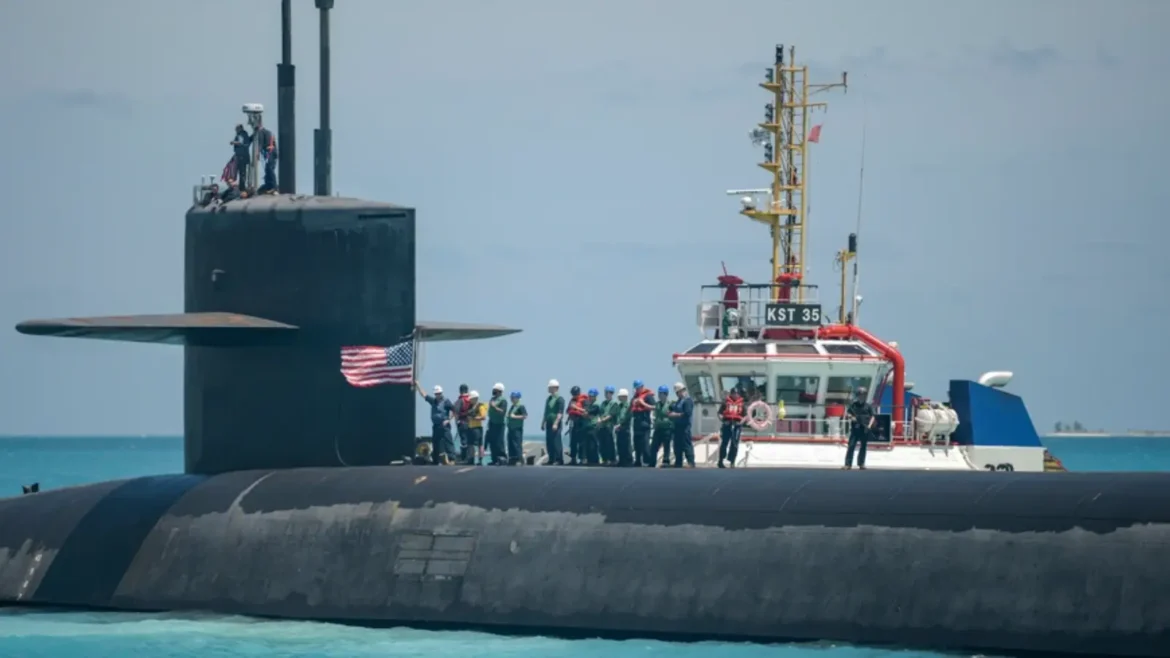
The U.S. Navy has awarded General Dynamics subsidiary General Dynamics Electric Boat a not-to-exceed $2.305 billion undefinitized contract action modification for long lead time materials and early manufacturing efforts linked to future Virginia-class Block VI submarines.
The contract modification expands work under a previously awarded agreement (N00024-24-C-2110) and supports pre-construction activities critical to maintaining production schedules for one of the Navy’s most important undersea warfare platforms.
According to the U.S. Department of Defense announcement, the work is expected to continue through September 2035 and will involve a broad industrial network across the United States.
Long Lead Procurement Signals Continued Submarine Expansion
The Virginia-class Block VI submarines represent the next phase of the U.S. Navy’s nuclear-powered fast attack submarine fleet modernization program. Long lead materials typically include propulsion system components, advanced electronics, specialized steel, missile systems, and nuclear-related manufacturing elements that require years of preparation before full construction begins.
The latest award indicates the Navy is attempting to stabilize submarine production timelines amid increasing operational demand in both the Indo-Pacific and Atlantic theaters.
The Virginia-class submarine fleet remains central to U.S. undersea dominance, intelligence gathering, anti-submarine warfare, strike operations, and special operations support missions. Block VI boats are expected to incorporate survivability improvements, acoustic enhancements, and advanced payload capabilities designed to maintain strategic advantages against near-peer naval competitors.
Broad U.S. Industrial Base Involved
Under the contract, work will be distributed across numerous U.S. states, reflecting the scale and complexity of modern submarine construction.
The largest portion of work, approximately 30%, will be performed in Sunnyvale, California. Additional work locations include Chesapeake, Virginia; Minneapolis, Minnesota; York, Pennsylvania; Tucson, Arizona; Spring Grove, Illinois; Jacksonville, Florida; and Newport News, Virginia, among others.
The contract also highlights the continued importance of America’s submarine industrial base, which has faced workforce shortages, supplier bottlenecks, and production pressures in recent years.
The Navy has repeatedly emphasized that sustaining the submarine supply chain is essential as the service simultaneously pushes forward with Virginia-class procurement and the future Columbia-class ballistic missile submarine program.
Funding Structure And Strategic Importance
The majority of the funding comes from Fiscal Year 2026 Shipbuilding and Conversion Navy accounts, totaling nearly $1.97 billion. An additional $150 million is sourced from Fiscal Year 2025 appropriations.
Importantly, the obligated funds will not expire at the end of the current fiscal year, allowing the Navy and industry partners to maintain continuity across long-duration procurement and manufacturing schedules.
The contract is managed by the Naval Sea Systems Command, the Navy organization responsible for shipbuilding acquisition and lifecycle management.
Virginia-Class Submarines Remain Central To U.S. Naval Strategy
The Virginia-class submarine program continues to play a major role in U.S. naval force planning as Washington increases focus on strategic competition with China and Russia.
Fast attack submarines are viewed as among the most survivable and operationally flexible assets in the U.S. military inventory. Their ability to operate undetected in contested waters makes them critical for intelligence collection, sea denial operations, precision strike missions, and carrier strike group support.
The Block VI program also arrives at a time when the Navy faces pressure to increase submarine fleet readiness while older Los Angeles-class submarines continue retiring faster than replacement boats enter service.
Analysts have repeatedly warned that production delays and industrial capacity constraints could create future capability gaps if procurement rates are not sustained.
By advancing long lead procurement now, the Navy appears focused on reducing future schedule risk while preserving supplier stability throughout the submarine enterprise.
Strategic Analysis
This contract modification reflects more than a routine procurement action. It demonstrates how the U.S. Navy is prioritizing undersea warfare capabilities as maritime competition intensifies globally.
The scale and duration of the agreement suggest continued confidence in the Virginia-class program as the backbone of the Navy’s attack submarine fleet for decades to come.
Equally important, the award reinforces ongoing efforts to strengthen the domestic defense industrial base. With submarine construction dependent on highly specialized suppliers and skilled labor, early funding commitments help industry maintain production continuity and workforce retention.
The decision to move forward with early manufacturing efforts years ahead of final submarine delivery timelines also highlights how modern naval procurement increasingly depends on long-term industrial planning rather than short-cycle acquisition models.

Executive Summary:
RTX Corporation subsidiary Raytheon has been selected to provide SeaRAM self-defense missile systems for Australia’s future Mogami-class frigates. The deal strengthens the Royal Australian Navy’s close-in air defense capability amid rising regional maritime security challenges in the Indo-Pacific.
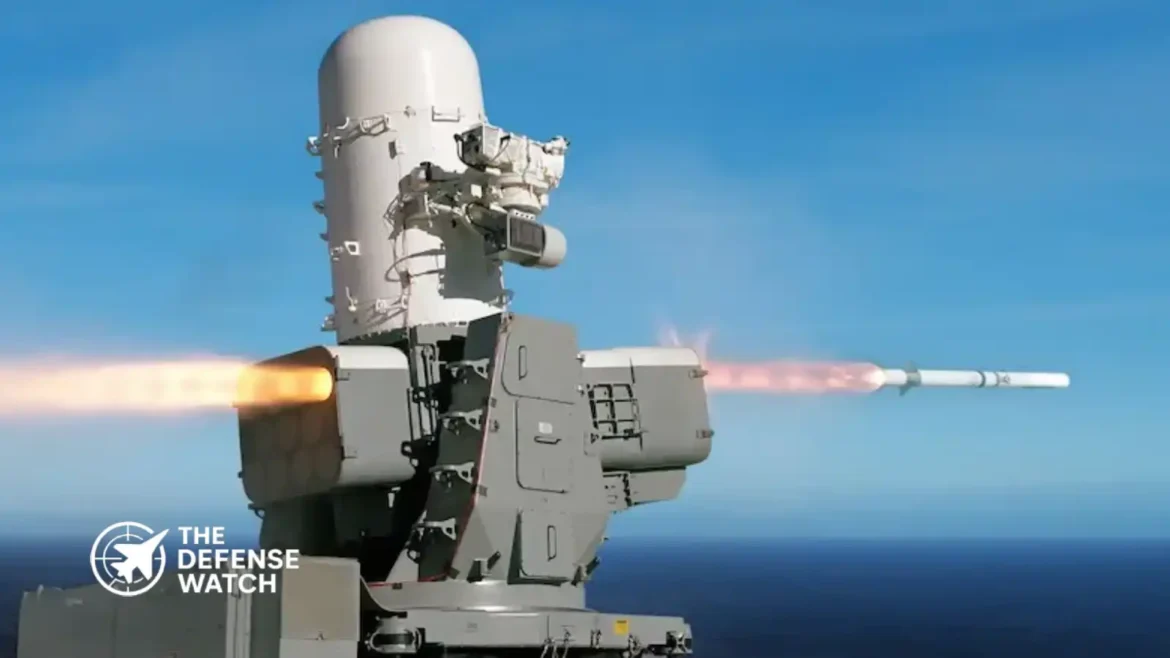
The RTX Corporation SeaRAM system is set to become a core defensive component aboard Australia’s future Mogami-class frigates, reinforcing the Royal Australian Navy’s layered naval air defense architecture. The selection reflects Canberra’s continued investment in survivable surface combatants capable of operating in increasingly contested maritime environments across the Indo-Pacific.
Raytheon will provide the SeaRAM close-in weapon systems for the new frigates being developed under Australia’s broader naval modernization effort. The move comes as regional navies place greater emphasis on defending ships against anti-ship cruise missiles, drones, and saturation attacks.
Australia Expands Naval Self-Defense Capabilities
The SeaRAM system combines the combat-proven Phalanx radar and sensor suite with the Rolling Airframe Missile interceptor, creating an autonomous ship self-defense weapon designed to counter high-speed aerial threats at short range.
RTX Corporation has marketed SeaRAM as a rapid-response defensive solution capable of engaging anti-ship missiles, helicopters, unmanned aerial systems, and other airborne threats in complex naval combat environments.
Australia selected Japan’s Mogami-class frigate design in 2025 as part of its SEA 3000 general-purpose frigate program. The ships are expected to complement the Royal Australian Navy’s larger Hobart-class destroyers and Hunter-class frigates while providing enhanced operational flexibility and reduced crew requirements.
The integration of SeaRAM adds another layer to the vessels’ survivability profile, particularly in high-threat maritime regions where anti-ship missile proliferation continues to accelerate.
SeaRAM’s Operational Role
SeaRAM has become increasingly attractive for navies seeking compact, autonomous close-in defense systems with lower integration complexity than larger vertical launch systems.
The system uses an 11-missile launcher equipped with RIM-116 Rolling Airframe Missiles and leverages the Phalanx weapon system’s tracking and targeting sensors. Unlike gun-based close-in weapon systems alone, SeaRAM provides an extended engagement envelope against maneuvering threats.
The system is already deployed by the U.S. Navy aboard aircraft carriers, amphibious ships, and other surface combatants. Several allied navies, including those of Germany, South Korea, Qatar, and Egypt, also operate the platform.
For Australia, the addition of SeaRAM aligns with broader efforts to improve fleet survivability as regional military modernization accelerates across the Indo-Pacific theater.
Strategic Importance In The Indo-Pacific
Australia’s naval modernization strategy has increasingly focused on distributed lethality, fleet resilience, and interoperability with allied forces, particularly the United States and Japan.
The decision to equip the Mogami-class frigates with SeaRAM highlights Canberra’s emphasis on layered air and missile defense at a time when anti-ship missile threats are expanding in both sophistication and range.
Regional security concerns have intensified due to growing military competition in the South China Sea and broader Indo-Pacific maritime corridors. Modern naval operations now require warships to defend against simultaneous threats from missiles, drones, and electronic warfare systems.
SeaRAM’s autonomous targeting capability may provide Australian vessels with faster reaction times during saturation attacks, especially in contested electromagnetic environments where reaction windows are limited.
The system also strengthens interoperability with U.S. naval platforms, an increasingly important factor as Australia deepens defense cooperation under frameworks such as AUKUS and expanded regional maritime partnerships.
Raytheon’s Broader Naval Defense Portfolio
The SeaRAM selection further reinforces RTX Corporation position in the global naval missile defense market. The company continues to supply a range of naval air defense systems, including the Standard Missile family, ESSM interceptors, and the Phalanx Close-In Weapon System.
Demand for shipborne missile defense systems has risen sharply in recent years as naval forces adapt to lessons emerging from conflicts involving drone warfare and long-range precision strike capabilities.
Australia’s investment in modern frigates equipped with advanced self-defense systems reflects a wider trend among allied navies seeking improved survivability without significantly increasing ship size or crew burden.
Conclusion
Australia’s decision to equip its future Mogami-class frigates with SeaRAM systems marks another step in the Royal Australian Navy’s modernization strategy focused on survivability and regional deterrence. As Indo-Pacific maritime competition intensifies, close-in naval defense systems are becoming increasingly central to surface fleet operations.
The SeaRAM integration provides Australia with a proven, combat-tested capability designed to counter evolving airborne threats while strengthening interoperability with allied naval forces operating across the region.
Executive Summary:
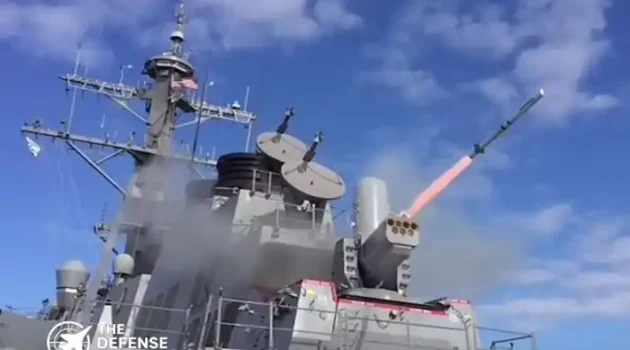
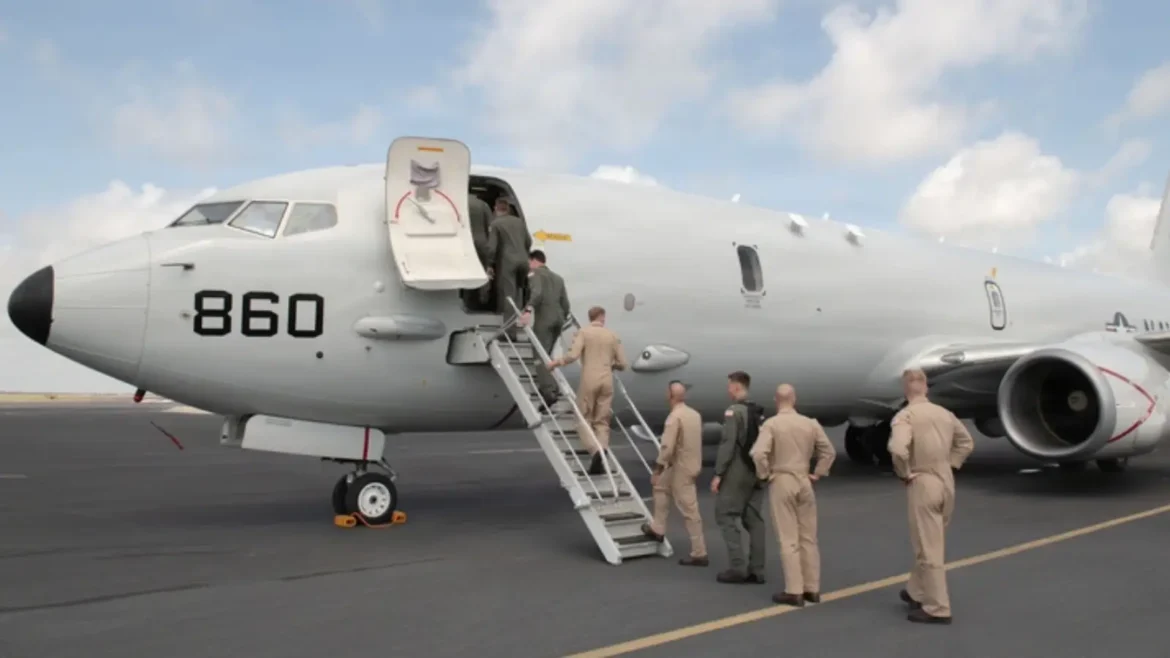
The U.S. Navy deployed a P-8A Poseidon maritime patrol aircraft for live anti-submarine warfare operations near Taiwan using Mk 54 lightweight torpedoes. The exercise underscores Washington’s continued focus on undersea warfare readiness and maritime deterrence in the increasingly contested Indo-Pacific region.
U.S. Navy P-8A Poseidon Conducts Live Anti-Submarine Warfare Operations Near Taiwan
The U.S. Navy P-8A Poseidon conducted live anti-submarine warfare operations near Taiwan in a move that highlights growing American focus on maritime surveillance and undersea deterrence across the Indo-Pacific theater.
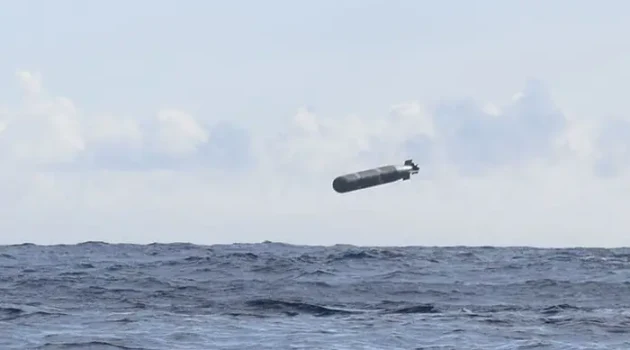
The exercise involved the deployment of live Mk 54 lightweight torpedoes during operational training missions designed to strengthen anti-submarine warfare readiness in strategically sensitive waters near Taiwan.
The drill reflects the expanding operational role of the P-8A Poseidon as the U.S. Navy continues increasing maritime patrol activities across the Western Pacific amid heightened regional military competition.
P-8A Poseidon Remains Central To U.S. Maritime Surveillance Strategy
The Boeing P-8A Poseidon has become one of the most important airborne assets in the U.S. Navy’s anti-submarine warfare architecture. Developed from the Boeing 737-800ERX airframe, the aircraft combines long-range surveillance, electronic intelligence collection, and anti-submarine combat capabilities within a single platform.
The aircraft is equipped with advanced maritime radar systems, acoustic sensors, sonobuoys, electro-optical targeting systems, and secure communications suites that allow crews to detect, classify, and track hostile submarines across large operational areas.
Its ability to deploy the Mk 54 lightweight torpedo gives the platform an immediate strike capability against submerged threats. The torpedo itself is optimized for both deep-water and littoral combat environments, making it suitable for operations across the complex maritime geography of the Indo-Pacific.
The latest exercise near Taiwan demonstrates how the U.S. Navy is integrating surveillance and strike capabilities into regular operational patrols rather than treating anti-submarine warfare as a standalone mission set.
Indo-Pacific Undersea Competition Continues To Intensify
The operational environment surrounding Taiwan has become increasingly important in modern naval strategy, particularly as regional powers continue investing heavily in submarine fleets and long-range maritime strike systems.
China’s rapid naval modernization has included significant expansion of the People’s Liberation Army Navy submarine force, including nuclear-powered ballistic missile submarines and advanced diesel-electric attack submarines designed for operations in contested regional waters.
For the United States and allied forces, maintaining anti-submarine warfare superiority has become critical to preserving freedom of navigation, carrier strike group survivability, and regional deterrence credibility.
The U.S. Navy P-8A Poseidon fleet plays a central role in this strategy by providing persistent maritime domain awareness across chokepoints and contested sea lanes stretching from the South China Sea to the Philippine Sea and East China Sea.
Operational patrols near Taiwan also serve broader strategic objectives by demonstrating U.S. capability to monitor underwater activity in one of the world’s most strategically sensitive maritime corridors.
Live Torpedo Operations Signal Operational Readiness
Unlike routine surveillance missions, live torpedo exercises provide crews with real-world operational training under combat-like conditions. These drills test targeting procedures, sensor integration, communications coordination, and weapons deployment accuracy.
The use of live Mk 54 torpedoes indicates a focus on maintaining combat proficiency rather than conducting symbolic presence operations alone.
From a military readiness perspective, anti-submarine warfare remains among the most technically demanding naval mission areas. Modern submarines are increasingly quiet, difficult to detect, and capable of operating across shallow coastal waters where acoustic tracking becomes more challenging.
By conducting live anti-submarine warfare drills near Taiwan, the U.S. Navy is reinforcing its ability to rapidly respond to underwater threats in a high-risk operational environment.
The exercise also reflects a wider Pentagon emphasis on distributed maritime operations and persistent forward presence across the Indo-Pacific region.
Allied Maritime Coordination Expands Across The Region
The P-8A Poseidon platform is also widely operated by U.S. allies and partners, including Australia, the United Kingdom, India, South Korea, Norway, and New Zealand. This growing multinational operator base enhances interoperability during coalition maritime operations and regional security patrols.
In recent years, Indo-Pacific security cooperation has increasingly focused on maritime intelligence sharing, anti-submarine warfare coordination, and integrated surveillance operations.
Taiwan’s surrounding waters remain particularly important due to their proximity to key shipping routes and military operating areas. The ability to monitor submarine activity in this environment provides strategic advantages for both deterrence and crisis response planning.
As regional tensions continue evolving, maritime patrol aircraft such as the P-8A Poseidon are expected to remain among the most heavily utilized assets in forward U.S. naval operations.
Strategic Analysis
The latest U.S. Navy P-8A Poseidon anti-submarine warfare mission near Taiwan highlights a broader shift toward persistent undersea dominance operations across the Indo-Pacific.
Rather than relying solely on large naval formations, the United States is increasingly leveraging networked surveillance aircraft, submarines, unmanned systems, and distributed sensor networks to counter emerging maritime threats.
This approach reflects the growing recognition that future naval competition may be decided as much below the surface as above it.
The combination of live weapons training, forward deployment patterns, and expanded allied interoperability suggests Washington intends to maintain continuous anti-submarine warfare pressure in strategically contested waters.
For regional actors, these operations signal that maritime surveillance and undersea warfare capabilities will remain central components of Indo-Pacific military planning in the years ahead.
Executive Summary:
NATO has concluded Neptune Strike 2026, a large-scale maritime vigilance activity conducted across the Mediterranean and Black Sea operational areas. The exercise focused on improving allied interoperability, maritime situational awareness, and rapid response capabilities amid growing regional security pressures.
NATO Neptune Strike 2026 Highlights Allied Maritime Readiness
NATO has completed Neptune Strike 2026, a multinational enhanced vigilance activity designed to strengthen maritime coordination and operational readiness across the Mediterranean and Black Sea regions. The exercise brought together naval, air, and joint forces from allied nations as NATO continues adapting to a more contested European security environment.
Neptune Strike 2026 tested command integration, maritime surveillance, deterrence operations, and rapid response procedures across multiple operational theaters.
The exercise comes as NATO increases focus on maritime security challenges linked to the war in Ukraine, regional instability, critical sea lane protection, and expanded Russian naval activity in the Black Sea and Eastern Mediterranean.
Multi-Theater Naval Operations Across Strategic Waters
Neptune Strike 2026 involved coordinated activities spanning two strategically important maritime regions. NATO has increasingly emphasized the Mediterranean and Black Sea as interconnected operational environments where naval presence, intelligence sharing, and interoperability are essential for alliance deterrence.
The Black Sea remains a high-priority theater following Russia’s continued military operations in Ukraine and the disruption of regional shipping routes. NATO member states bordering the Black Sea have pushed for stronger allied coordination, enhanced maritime awareness, and improved response timelines for potential regional contingencies.
In the Mediterranean, allied naval forces continue monitoring migration routes, energy infrastructure security, undersea communication networks, and military activity tied to broader Middle East and North African instability.
NATO stated that Neptune Strike 2026 integrated carrier strike group operations, maritime patrol activities, command-and-control coordination, and cross-domain operations involving naval and air assets.
Interoperability Remains Central To NATO Maritime Strategy
One of the primary objectives of Neptune Strike 2026 was improving interoperability among allied naval forces operating under complex operational conditions.
Modern NATO exercises increasingly focus less on symbolic presence and more on real-time operational integration. That includes secure data sharing, distributed command structures, coordinated targeting procedures, and synchronized maritime surveillance capabilities.
The exercise demonstrated how NATO is shifting toward a more persistent readiness posture rather than relying solely on periodic deployments. Allied naval planners are placing greater emphasis on rapid force integration, particularly in regions where response times could shape escalation dynamics during a crisis.
Carrier-enabled operations reportedly played a key role during the exercise, allowing NATO forces to practice joint maritime strike coordination and long-range operational planning.
Black Sea Security Environment Continues To Evolve
The Black Sea has become one of NATO’s most sensitive maritime fronts since 2022. Russia’s naval posture, the use of long-range missile systems, and ongoing threats to commercial shipping have transformed the operational environment for allied forces.
While NATO’s direct military presence in the Black Sea remains shaped by the Montreux Convention governing access through the Turkish Straits, allied nations continue expanding intelligence sharing, rotational deployments, and maritime surveillance operations in nearby areas.
Exercises such as Neptune Strike 2026 allow NATO to rehearse command coordination and reinforce collective defense messaging without establishing permanent large-scale naval concentrations inside the Black Sea itself.
This operational model reflects a broader NATO strategy focused on flexibility, rapid reinforcement capability, and distributed maritime operations.
Maritime Security Extends Beyond Conventional Threats
Another important aspect of Neptune Strike 2026 is NATO’s growing concern over hybrid and non-traditional maritime threats.
Alliance planners increasingly view undersea infrastructure protection, cyber resilience, electronic warfare defense, and unmanned system integration as critical parts of future naval operations. Recent incidents involving damaged subsea cables and energy infrastructure in European waters have elevated maritime infrastructure protection higher on NATO’s agenda.
Exercises conducted under the Neptune Strike framework provide opportunities for allied forces to test coordination against both conventional military threats and gray-zone activities that fall below the threshold of open conflict.
The integration of maritime patrol aircraft, surveillance assets, and naval command networks also reflects NATO’s effort to maintain persistent situational awareness across heavily contested maritime corridors.
Strategic Significance For NATO’s Southern And Eastern Flanks
Neptune Strike 2026 also underscores NATO’s effort to balance attention between its eastern and southern flanks.
While much of the alliance’s military planning remains focused on Eastern Europe, instability across the Mediterranean continues influencing NATO force posture decisions. Maritime security concerns tied to energy transit routes, regional conflicts, and Russian naval access patterns have reinforced the importance of sustained allied naval operations in southern waters.
The exercise highlighted NATO’s broader transition toward multi-domain operational planning, where naval, air, cyber, and intelligence assets operate within a unified command structure.
That evolution is increasingly important as NATO prepares for a future security environment defined by long-range precision weapons, unmanned systems, electronic warfare, and high-tempo maritime operations.
Analysis
Neptune Strike 2026 reflects NATO’s continuing effort to normalize high-frequency readiness operations across Europe’s most contested maritime regions. Rather than functioning solely as a demonstration exercise, the activity appears designed to strengthen operational cohesion among allied forces under realistic regional conditions.
The exercise also highlights how maritime deterrence has become central to NATO’s wider strategic posture. Sea control, infrastructure protection, intelligence sharing, and rapid force integration are now treated as interconnected elements of alliance defense planning.
For NATO, the Mediterranean and Black Sea are no longer separate operational spaces. They are increasingly viewed as linked strategic corridors where naval presence, surveillance capability, and allied interoperability directly influence regional stability.
HAVELSAN Expands AI-Driven Naval Warfare Capabilities
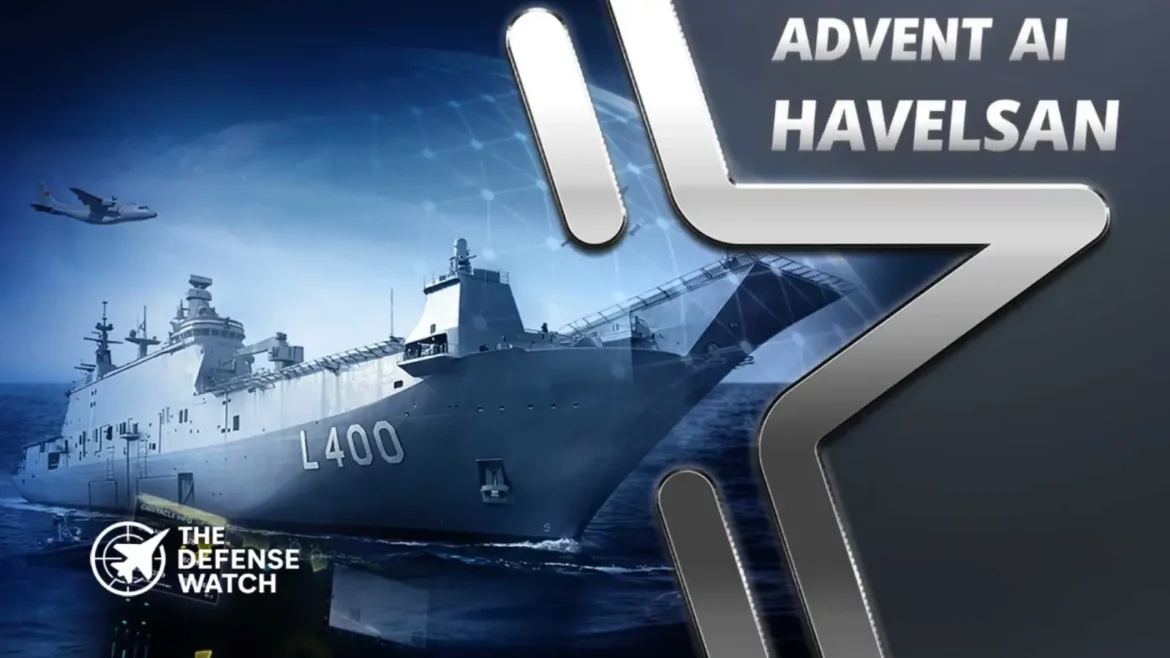
HAVELSAN has unveiled its new ADVENT AI naval combat management system, a next-generation warfare platform developed to help naval forces counter increasingly complex threats including unmanned swarm attacks and electronic warfare operations.
The system builds on the company’s existing ADVENT combat management architecture already deployed across multiple Turkish naval platforms. The latest AI-enabled variant introduces advanced automation, decision-support tools, and enhanced data processing intended to reduce operator workload during high-intensity combat scenarios.
The announcement comes as navies worldwide accelerate investments in artificial intelligence, autonomous systems, and electronic warfare resilience amid evolving maritime threats in regions such as the Black Sea, Eastern Mediterranean, Red Sea, and Indo-Pacific.
AI Integration Targets Swarm And EW Threats
The ADVENT AI naval combat system is designed to process large volumes of battlefield data from multiple sensors and platforms simultaneously. HAVELSAN says the system can assist commanders by rapidly identifying threats, prioritizing targets, and recommending tactical responses in contested maritime environments.
One of the key operational focuses is defense against coordinated drone swarm attacks. Naval planners increasingly view low-cost unmanned aerial and surface systems as a major threat to high-value warships, especially after recent conflicts demonstrated the effectiveness of mass autonomous attacks against conventional defenses.
The platform reportedly incorporates AI-assisted threat analysis and real-time sensor fusion to improve detection and engagement timelines. By automating parts of the decision cycle, the system aims to help naval crews respond faster to saturation attacks where human operators may struggle to manage multiple simultaneous threats.
Electronic warfare resilience is another major component of the upgrade. Modern naval combat increasingly depends on secure communications, data links, and networked sensor systems, all of which are vulnerable to jamming, spoofing, and cyber intrusion attempts.
HAVELSAN stated that the ADVENT AI architecture is designed to maintain operational effectiveness in electronically contested environments by improving data integrity, network coordination, and system adaptability under degraded conditions.
Network-Centric Warfare Remains Central
The new system continues HAVELSAN’s broader push toward network-centric naval warfare, enabling ships, unmanned platforms, aircraft, and command centers to operate through a shared tactical picture.
The original ADVENT combat management system was jointly developed for the Turkish Naval Forces Command and has already been integrated into frigates, corvettes, patrol vessels, and amphibious ships. Turkey has also marketed the platform internationally as part of its expanding defense export strategy.
The AI-enhanced version reflects a broader defense industry trend toward incorporating machine learning and automated battle management tools into command-and-control systems.
Western and Asian defense companies are similarly developing AI-enabled combat management platforms capable of supporting distributed maritime operations, autonomous teaming, and multi-domain warfare.
Growing Demand For Autonomous Maritime Defense
The unveiling of ADVENT AI comes amid rising global interest in autonomous naval defense technologies. Recent maritime conflicts have highlighted the growing role of unmanned systems, particularly one-way attack drones, autonomous surface vessels, and electronic warfare platforms.
For many navies, defending against large numbers of low-cost drones has become a major operational concern. Traditional missile-based air defense systems can be expensive and inefficient when used against small autonomous targets deployed in large quantities.
As a result, defense firms are increasingly investing in AI-assisted command systems capable of shortening sensor-to-shooter timelines and coordinating layered defensive responses across multiple platforms.
Turkey has emerged as an increasingly active player in this sector, leveraging its domestic defense industry to expand indigenous capabilities in naval systems, drones, electronic warfare, and command-and-control technologies.
Strategic Implications For Regional Naval Competition
The development of the ADVENT AI naval combat system also reflects broader geopolitical competition in maritime technology and naval modernization.
Countries operating in contested maritime zones are seeking systems that can maintain operational effectiveness under electronic attack while managing rapidly evolving drone threats. AI-supported combat systems are expected to play an increasingly important role in future naval doctrines, particularly in distributed and autonomous operations.
Turkey’s continued investment in indigenous naval combat systems supports Ankara’s long-term strategy of reducing reliance on foreign defense suppliers while strengthening export competitiveness in international defense markets.
The ADVENT AI platform could also enhance interoperability across mixed fleets of crewed and uncrewed naval assets, an area many NATO and regional navies are prioritizing as part of future force structure planning.
Conclusion
HAVELSAN’s unveiling of the ADVENT AI naval combat management system highlights the accelerating integration of artificial intelligence into modern naval warfare. Designed to counter swarm attacks and electronic warfare threats, the system reflects growing demand for faster, more adaptive maritime battle management tools.
As autonomous threats continue to evolve, AI-enabled command systems are likely to become a central component of future naval modernization programs worldwide.